
The Convivial Descent: A Freestyle Inquiry for an Unraveling World North America Style
Will we do anything about our predicament? Are we partially responsible for our circumstances? From the depths of feel-good culture: "You can't be neutral on a moving train."
***Writing isn’t a business for me. I don’t spend much effort branding or promoting my work on Substack, so the algorithms aren’t kind to me. Publish and monetize or die, whether you are a hack, a professional investigative journalist, or a literary genius. If you find this book compelling or vexing, let me know your thoughts in the comments, and please share it with friends, acquaintances, young people, and talk with them about it. I am not preaching to the choir. This book is not about me or you; it’s about why more of us aren’t doing enough to replace a broken, pathological system with its complex beliefs and ideologies with something fit for posterity and respectful of the living systems upon which we all depend. You’ll understand where I get my assumptions as you read. I want readers to think deeply about the ideas I’m focusing on here, and even more so about the thought processes inherent in the people whose work I reference. I believe that people will discover new life-enhancing interests and projects by engaging in a little positive doomerism. By “doomerism,” I mean rigorous critical thinking, self-examination, social awareness and critique, and a crucial understanding of biophysical reality amidst the ongoing polycrisis. There is a lot to think about here; I am asking readers to take their time, consider what’s mentioned and referred to carefully, and reflect on the thought processes behind the inquiry. We have to ask rigorous, tough questions and understand how to answer them. We need to figure out what must be done to lessen the catastrophe we are immersed in. I primarily publish here on Substack and on my website, so people can follow the hyperlinks as they make their way through the book. I will publish an ebook version soon. Finally, I have much to learn; your feedback would be a helpful and much appreciated gift.
Forward
There is a culture today that is fixated on too few and outdated solutions to complex problems. Modern society leads us to seek straightforward narratives, easy technical remedies, and a sense of effortless optimism, even as our ecological, political, economic, and technological systems begin to break down. Instead of accepting this dogmatic way of thinking, ‘The Convivial Descent’ promotes a necessary and radical alternative: a multiplicity of multiperspectival collaborative thinking and imagining.
To learn how to navigate the polycrisis, one needs to examine our world and our collective and individual actions from multiple points of view. This book serves as a conceptual kaleidoscope because, by continually returning to the main themes—namely, biophysical limits, technological control, human psychology, and civilizational hubris—across different domains, it offers a comprehensive view that can dislodge our fixations on outmoded concepts and behaviors. By looking at issues from various standpoints—historical precedent, ecological thermodynamics, and cross-cultural metaphysics or systems theory, among others—we can begin to understand what is essential to the challenges of today and the future. Complex systems do not reveal their secrets to simple, one-sided analysis, jingoism, fantasies, or stubborn adherence to ideology.
Unlocking Agency in an Unraveling World
If we are confined to a single master narrative, then our own choices vanish, and we are reduced to passive recipients of circumstances deliberately arranged by others. By bringing to light the various aspects of our situation/predicament, we regain exactly those qualities which are necessary for dealing with it:
Autonomy: Identifying the unwritten assumptions—ranging from platform algorithms to imperial mythologies—that gently influence the daily decisions we make.
Moving away from learned helplessness and therapeutic denial and instead taking direct, courageous, and localized action.
Creativity means moving beyond the “One-World World,” characterized by endless economic extraction, and creating space for the Pluriverse—a world in which many worlds can coexist.
The shift from seeing a challenge as a “problem to solve” to a “predicament to navigate” is not a sign of giving up; it is the exact moment when human creativity, agency, and joy come into play.
Problems vs. Predicaments
Technical solutions exist for problems, and these solutions serve to restore or improve the present situation (for example, a broken pipe, a missing line of code, or a flat tire).
Predicaments are situations that arise from biophysical reality or systemic limits (such as gravity, mortality, and thermodynamic and material overshoot); they can never be resolved by a single solution and therefore lead to unavoidable consequences that require conscious adaptation and a redesign of the underlying structures.
Why Limits Ignite Creative Will
It forces a shift from simply expecting things to change one way or another to taking an active, creative role when a difficult situation dispels the false idea of easy solutions. Facing tough conditions usually leads to strong intrinsic motivation instead of causing paralysis:
The pleasure derived from craftsmanship and complexity is that people usually do not experience great satisfaction from solving trivial puzzles; it is only when dealing with a difficult system that one feels excited, as one has to push imagination, ability, and cooperation to the very limit in the face of great obstacles.
The idea of ‘success’ changes when macro-outcomes are limited by natural forces; success no longer means ‘stopping the storm’, but instead becomes the art of navigating the waters with dignity, intelligence, and mutual care.
The autonomy of the present moment means that macro-determinism does not eliminate micro-choice: in how we organize things, in the kinds of things we build, and in how we treat one another in our immediate surroundings, everything remains within our sphere of freedom.
Adaptation as a Life-Affirming Act
Paralysis sets in when we expect a difficult situation to act like a problem. When we stop feeling under obligation to ‘rescue’ a system that cannot be maintained, a great deal of creative energy becomes available. Activities such as designing simple tools, rehabilitating local topsoil, or establishing restorative community circles are not desperate efforts to change global thermodynamics; they are instead joyful and significant expressions of human intent at this very moment.
Positive doomerism is less alarming and more like a productive practice.
From Positive Doomerism to Convivial Action
This investigation is not rooted in paralyzing defeatism; instead, it embraces what I call “positive doomerism.” Rather than viewing the breakdown of late-industrial civilization as an apocalyptic horror to be feared, it sees it as an inevitable biophysical reset and thus calls for us to descend the ladder of complexity with grace, humor, and moral clarity. Since the high-energy engine of late modernity is coming to a halt under its own weight, the aim shifts from preserving those fragile megastructures to developing convivial tools, relational ontologies, and resilient local communities.
To read this text is to move away from a state of cultural passivity. If we revisit ideas surrounding this theme again and again, consider the thought processes behind them, and face up to our shared responsibilities, we can regain the ability to become active, grounded caretakers of the finite, living Earth, transition visionaries, and co-creators of a future where people and living systems thrive.
Table of Contents
Preface: Positive Doomerism & The Illusion of Progress
The Pamphlet’s Purpose: Unpacking Pathological Systems
Macondo as Allegory: Technology as an Extractive Trojan Horse
Relational Ontology, Travel, and the Act of Unlearning
The One-World World vs. The Pluriverse
Descending the Ladder of Complexity: Civilization in Reverse
The Icaryana Project: Neo-Neolithic Foundations
1. Positive Doomerism & Expired Stories
Living Off Expiring Narratives (Hospicing Modernity)
Multiperspectivalism and the Nature of Joy
Navigating National Narratives and Everyday Captivity
The Icaryana Neo-Neolithic Cooperative
The Illusion of Quick Fixes: “Fk It” vs. Genuine Engagement
Information Oversaturation and the Erosion of Critical Thought
2. Civilization, Culture, and the Great Fracture
Etymological Roots of “Civilization” and “Culture”
Disconnection from the Biosphere and the Global Topsoil Crisis
Neoliberal Capitalism, Media Spectacle, and Algorithmic Manipulation
The Game-Theoretic Trap of Modernity
Bridging C.P. Snow’s “Two Cultures”: Biophysical Realities vs. Morality
Autonomous Design and Radical Interdependence (Designs for the Pluriverse)
3. Psychological Dynamics of Compliance & Denial
The American Ethos: Exceptionalism, Hedonism, and Self-Optimization
The Utility of Hate: Hoffer, Girard, Nietzsche, and Arendt
Distinguishing Transient Happiness from Grounded Joy
Neuroscientific Plasticity and “Making Friends” with Panic (Mingyur Rinpoche)
Practical Wisdom vs. Technical Expertise
Hyper-Individualism and the Spectacle of Performance
4. Comparative Ontologies & Secular Metaphysics
Cross-Cultural Frameworks: Wa, Giri, Ubuntu, and Gaman
Amazonian Multinaturalism and the Australian Dreaming (Everywhen)
Andean Ayni and Oceanic Seascapes
The Pacified Citizen and Polycrisis Avoidance
Secular Metaphysics: Emergent Wonder in Physical Reality
Tools for Conviviality: Illich, Mumford, Schumacher, and the Convivialist Manifesto
5. Radical Theology & The Imperative of Action
The First-Century Context of Joshua (Jesus) and Roman Occupation
Compassion Systems vs. Exclusionary Purity Systems
Universal Moral Convergence: Jesus, Buddha, Lao Tzu, and Socrates
Secular Spirituality, Spiritual Materialism, and Bypassing
Facing Biophysical Limits: Climate Reality vs. Institutional Myths (Kevin Anderson)
The Psychology of Inaction, Paralysis, and Alarm Fatigue
6. Technofeudalism, Algorithmic Control, & Academic Apologetics
Technocratic Power: Peter Thiel, Mimetic Theory, and Monopolistic Logic
Platform Capitalism: Cloud Rent, Digital Serfdom, and the Gig Economy
Academic Apologetics: The “Turing Trap” and Labor Sanitization
Algorithmic Power and “Algor-Ethics” (Paolo Benanti)
Stoicism, Amor Fati, and Systems Science (Massimo Pigliucci)
Predestination, Determinism, Moral Luck, and Randomness
The Anatomy of Stupidity: Cipolla, Bonhoeffer, and Frankfurt’s On Bullshit
Socratic Ignorance, AI Coordination Traps, and the “Moloch” Race
The “Intelligence Curse” and Algorithmic Targeting in Warfare
Parables of Feedback: The Alien Mirror and the Fall of Atlantis
7. Imperial Overreach, Systemic Violence, & The Path to Renewal
The U.S. Military as an Institutional Environmental Polluter
Resistance, Doykeit, and Local Solidarity (Molly Crabapple)
Decentralized Anti-Fascism vs. Institutional Control
Foreign Policy Critique: The Mechanics of Empire and Proxy Warfare
Inequality and Oligarchic Capture: The Failure of the Meritocracy Myth
Disaster Capitalism and the Deep State (Aaron Good & Karen Kwiatkowski)
American Exceptionism as a Moral Double Standard
Agroecology, Syntropic Farming, and Living Systems (Olivier Hamant)
The Dehumanization Trap and the Breakdown of International Law (Craig Mokhiber)
The Cinematic Grammar of Collapse: From Network to Killing Them Softly
Radical Anthropotechnics: Sloterdijk, Co-Immunism, and Transition Knowledge
Appendix: Philosophical Frameworks & Case Studies
Literary Analysis: Kurt Vonnegut’s Slaughterhouse-Five—Trauma, Tralfamadorian Fatalism, and Duty
Decolonial Theory: Coloniality of Power, Eurocentrism, and Epistemic Disobedience (Quijano, Fanon, Mignolo)
Relational Metaphysics:Unfixing the Real and Non-Substantial Selfhood (Prabakaran)
Field Prototypes: Portugal as a Living Laboratory—Ecovillages, Syntropic Agriculture, and the Friction of Gentrification
Historical Precedent: Emperor Haile Selassie I’s 1963 Address to the United Nations General Assembly
“Many years later, as he faced the firing squad, Colonel Aureliano Buendía was to remember that distant afternoon when his father took him to discover ice. At that time, Macondo was a village of twenty adobe houses, built on the bank of a river of clear water that ran along a bed of polished stones, which were large and white, like prehistoric eggs. The world was so recent that many things lacked names, and to indicate them one had to mention them with a finger.” —García Márquez
My former life of dreams while living in the fast lane, a world of urban delights and a quest to get over and get by, while wallowing in and ensnaring people in marvelous inventions, exploratory, ambitious, exciting, precarious, dangerous, and insecure in a world where I believed anything was possible. Somehow. If I could only learn how. If I could do it.
Today, I confront old stories and tell them in reverse.
One understands things as one goes along and then again, and again, in different ways, if one is “free,” if one has an imagination. What does that really mean? Well, let’s find out again.
Macondo and the Illusion of Progress
Gabriel García Márquez employs the tragic arc of Macondo in One Hundred Years of Solitude as a profound allegory of humanity’s destructive relationship with technology. I read it long ago and hardly remember what I thought of it then, but I do remember talking about it with a friend for weeks. We lived in that story and found places that reminded us of scenes from the book. We even role-played. The story starts in a state of primitive innocence, with a village consisting of “twenty adobe houses” situated by a river whose stones were “white and large, like prehistoric eggs”. However, when the patriarch José Arcadio Buendía encounters the gypsies’ new inventions, his initial sense of wonder quickly turns into a strong desire to master them. He attempts to use magnets to extract gold from the earth and tries to turn a magnifying glass into a weapon against supposed enemies. Literary critics and post-colonial scholars point out that the development of Macondo reflects exactly the historical tragedy experienced by the Global South and the wider modern world: technology does not arrive as a neutral instrument of enlightenment, but as an extractive Trojan horse. What starts as innocent excitement over the discovery of ice eventually leads to the arrival of the North American Banana Company, which reorganizes local labor, poisons the environment, and carries out a state-approved massacre of thousands of striking workers—an act of atrocity which the state then removes from the official history books, making the survivors believe that it never took place. Pristine gaslighting.
When I was young and traveling, I always felt that something was off; my presence there and my reactions to Chiapas, Tonga, Israel, Italy, or Bali were inappropriate and embarrassing to me, and I never quite slowed down enough to experience what I needed and wanted. Being there was too superficial and transient. Later, my travels became stories that I embellished as I grew and learned, more satisfying in a retrospective, self-indulgent, performative sense. There is something magical about an audience. The actor is only an instrument if not acted upon. I was always too far ahead of myself. I couldn’t ascertain what people thought of my performance. I learned that I had to live ‘there’ to establish the kind of relational ontology necessary for a profound sense of connection and belonging.
A relational ontology is a philosophical approach that holds that entities—whether human beings, animals, ecosystems, or objects—do not exist as fixed, independent, and self-contained units prior to their interactions. Rather, reality is essentially made up of dynamic interconnections; things are continually brought about through their relationships, mutual dependencies, and reciprocal encounters. Unlike the Cartesian view, which sees the individual as a separate observer looking at an objective and passive environment, a relational ontology considers the self to be porous, emergent, and fundamentally linked to the web of life. Identity is not an inherent private possession to be protected or improved upon, but rather a continuous process of ‘becoming-with’ the people, the land, and the other living systems around us.
Looking at travel and self-discovery from the point of view of a relational ontology, the act of moving through the world shifts from a merely consumerist show to a fundamental act of unlearning. If we travel with a sense of relationship, self-discovery no longer becomes a narcissistic endeavor focused on personal branding, a desire for novel experiences, or the accumulation of status. Rather, coming across foreign landscapes and communities undermines our protected idea of ourselves, showing us just how much local and temporary circumstances shape our daily routines and values. When we truly open ourselves to other ways of knowing, our imagination is aroused, and we come to realize that human life can be based on reciprocity, stewardship, and mutual care rather than on extraction, exploitation, and isolated competition. This experience of sudden change brings about new possibilities. It leads to ‘new world creation’—that is, the practical and collective effort to shape lived realities in ways that respect relational depth rather than commodified passivity.
This view of relations is in direct contrast to the ‘One-World World’ (OWW) standpoint—the prevailing imperialist belief that there is just one objective, universal reality to which all of humanity must ultimately adhere. This OWW has been established by modern industrial capitalism and technocratic reasoning, and asserts a single global master narrative based on endless economic growth, market efficiency, and linear progress, treating any alternative ways of being as nothing more than ‘folklore’ or evidence of primitive backwardness. While the One-World World violently reduces cultural diversity to create a uniform monoculture of consumers, a relational ontology upholds the idea of the Pluriverse: a ‘world in which many worlds fit’. Where the One-World World extracts from and homogenizes the Earth, treating it as a dead warehouse of resources, relational thinking re-enchants existence by acknowledging that every territory, culture, and ecosystem has its own valid way of bringing reality into being, and thus urges us to give up the hubris of our civilizations and instead work together to co-create a living, multifaceted future.
The Seduction of the Machine and Critical Reflections
Reactions to One Hundred Years of Solitude usually fall along a clear dividing line. Many ordinary readers see the story of Macondo as simply a mythical or fatalistic fable and complain that its cyclic pattern makes human action meaningless. On the other hand, insightful critics understand that García Márquez is identifying a particular cultural illness—which is the arrogance of mistaking technical advancement for real progress. Or, at least, I think so. The way in which José Arcadio Buendía loses his mind—by becoming attached to a tree after being paralyzed by his own obsessive inventions—shows the way in which late-capitalist society is trapped by its own technological systems. When the Banana Company leaves Macondo after abandoning its industrial machinery, it leaves behind a damaged ecosystem, shattered social ties, and a traumatized population unable to remember its own history. What kind of community does the market for cocaine produce in Colombia now? But, you know, northern consumers like their drugs. As Marxist and systems-based critics note, the collapse of Macondo proves that whenever a culture replaces its relational, human-scale traditions with the quick extraction of capital, it necessarily creates its own spiritual and material grave.
My friend Josh and I sit and cry, having drunk quite a bit of wine.
Going in Reverse: From Industrial Superstructure to the Stones
The final destiny of Macondo—where a biblical hurricane of wind and dust erases the town from human memory—acts as a clear indication of our present situation. Now, as our highly connected, techno-industrial society encounters the thermodynamic limits of resource depletion, topsoil loss, climate instability, and the mainstream contemplation and planning for tactical nuclear war, we are realizing that our various empires are not permanent achievements in the evolutionary process, but rather fragile, high-energy, power-hungry beasts. Would they were but illusions or impotent social constructs. The modern belief that history progresses in a straight line towards infinite technological growth is running out of fuel, and its ‘spirit’ is bereft. Since biophysical limits are causing the breakdown of global supply chains and digital networks, the course of industrial civilization will not lead to a high-tech, post-scarcity utopia; it will instead go in reverse. We are moving into an age in which the highly complex and fragile systems of late modernity will collapse under their own weight, thereby descending the ladder of complexity.
When I moved to Portugal, I started writing a story and am still at it. I had no idea where it was going, but now I think it’s taking me where I need to go. Macondo is a fictional place; Icaryana is a ‘real,’ imaginary representation and expression of a pluralverse that’s emerging right now and now again, and more vividly and forcefully with a growing awareness and concern about this thing of ours, and how it produced the polycrisis/metacrisis.
The stakes are high, but the work of creating new worlds is persistent, imperturbable, and incipient, informed by multiperspectival perceptions and routines made prevalent by constantly emerging circumstances. The outcomes are not knowable or inevitable, but they are and will be what they are, radically different from the history of modern civilization and our current way of life. You may not have noticed, but we are creating this new world even as we are trapped in the old-world paradigm. What you co-create through your relationships is a profound opportunity to reinvigorate cultures and rescue them from the omnicidal heat engine.
Reclaiming the Foundation at the Nadir
The idea of going back to “huts by the stones”—that is, to local, low-energy, Neo-Neolithic ways of living—is not something tragic that we should lament, but rather the unavoidable biophysical reset that occurs when a planet goes beyond its carrying capacity. When humanity is removed from its artificial “immune spheres” consisting of consumer distractions, smart devices, and algorithmic control, it will eventually end up where Macondo began: firmly rooted in the immediate physical realities of soil, water, weather, and the local community. Relational. Embedded in nature. The centuries-long journey of industrial extraction will come to an end, leaving behind a landscape littered with junk that will inspire new, simpler ways of living. If we can give up the arrogant belief in technological salvation and carry out the difficult work of self-examination at this time, then we can face this descent with dignity—by once again learning how to build simple homes by the river, naming our world through direct experience, and living within the living boundaries that supported us long before the machine arrived.
When my friend Josh and I talk, we talk about what we must do. We dream. We imagine new worlds, where life is sacred and loving is easy.
The USA needs to get it together by learning from other places and cultures.
1. Introduction: Positive Doomerism & Expired Stories
In Chapter 1 (”Who the Heck Is Modernity?”) of Hospicing Modernity, Vanessa Machado de Oliveira writes:
“We are living off expired or expiring stories. Stories that expire can no longer dance with you. They are lethargic or stuck, they can’t move things in generative ways anymore, but we often feel we cannot let them go. Many of these expired stories give us a sense of security, purpose, and direction—precisely because they seem stable and solid. Thus, we become attached to them and get used to their weight in our lives. If we notice they are dying, we refuse to accept it and we put them on life support because we fear the void left in their place when they are no longer there.”
Have you ever thought of a word, thinking that it might not be a word, looked it up, and realized it’s the word you were looking for? I talk about multiple perspectives, thought processes, trains of thought, ways of thinking, avenues of thought, and so on. I am always stumbling upon different ways of thinking, probably because I read a lot and am exposed to many perspectives. The word is: Multiperspectivalism, an approach that uses multiple viewpoints, disciplines, or frameworks to understand a single subject or problem rather than relying on a single perspective. I try to understand things from multiple perspectives. I am not exactly sure how I became that way, though I have some ideas.
When I think about joy and happiness, I can have very little to say about it, or a lot, depending on my mood, who I am talking with, and why I’m having the conversation—a shrug and a grin, or a long discussion across domains. I have sections in this pamphlet concerning wisdom, joy, and happiness, and how they relate to “feel-good” culture, but the approach here is just one of many I might find myself pondering and articulating. I take everything I encounter, even things that profoundly affect my sensibilities and opinions, with a light touch because I know that my thoughts, ideas, and feelings will change and evolve. Having this orientation towards things enhances my joy and happiness, my “feel-good” quotient. I guess. I seem to take everything seriously, but not too seriously, giving what I encounter a chance to breathe, percolate, ferment, age, ripen, mature, and fade.
Joy and happiness have little to do with narratives about myself and much more to do with other people, sunshine, nature, pets, activities I enjoy, sensations, flavors, novel experiences, simple daily interactions. Walking home from the cafe at night after drinking wine with friends I walk at a brisk pace taking deep breaths, gulping in the night air, I can almost feel starlight entering my lungs as I continue cycles of long deep, almost athletic breaths, marching down the middle of the road under the streetlights as I get closer to home with every step, metabolizing the wine and conversations with friends.
I don’t depend on others for subtle feelings of joy (I guess) and happiness (I guess); it has little to do with my identity (I guess); the sensations come and go and flow through me, sometimes in waves of transient euphoria, sometimes barely perceptible pokes or blips, sometimes subconsciously, I imagine. I don’t hold on to these feelings; I suppose I can’t, but it’s amazing to me the number of profoundly joyous moments I remember with what seems to be absolute clarity. Sometimes these memories come out of nowhere, popping up in a sudden burst of exuberance; sometimes, in quiet moments, I’ll fish one out and indulge myself. It makes me happy to know how fortunate I am to have such memories. Every day I have moments of joyous, mundane interactions with places, people, creatures, and things.
How luxurious it is to live in a peaceful place.
The bad stuff I purge. I won’t talk about that now.
I guess joy and happiness require autonomy, freedom, security, and imagination, but I don’t know for sure. I am not an expert in anything, so when I point to people who have studied a thing for decades, I do so because I sincerely believe they have a lot to say, but not the final word.
Each person who engages with someone’s ideas, thoughts, and feelings adds to them in their own way, and the more open we are, the greater the likelihood that something good will come of the interaction.
I could talk about sadness, but I won’t here. Much of what frustrates me about what I mildly critique here comes from our sadness, loneliness, and trauma. Fear and anger arise for many reasons. Explore, open up, if you can. I think it will help a little.
I want people to feel good and good about themselves; I want them to enjoy their hobbies, families, and friends. Feeling pride in good works and accomplishments is natural. Emotional well-being is essential to a life well lived.
I understand why people would be thankful to have been born in the United States. I grew up in Denver, a pretty nice place. I fully get why U.S. national and cultural narratives are so powerful; I am steeped in them. We are all captive to national narratives to one degree or another.

I am an NFL fan (sports fan). I think the NFL business ecosystem (pardon the jargon) has some incredible athletes, coaches, staff, owners, managers, and supporting professionals who make American Football a premier and exciting professional sports spectacle. I could go on and on about the NFL and college football business infrastructure and how much it means to people and the economy. Think of all the jobs the NFL creates, and all the happy football fans. I sometimes watch docuseries on streaming channels about NFL teams, players, and coaches. They all seem like good people to me. I admire them.
I have read that Women’s Soccer in the USA is the next big “money printer” in sports—a new windfall for the one percent and more diversion for the plebs and proles who can afford the price of a ticket or a streaming service subscription.
I don’t think US American culture is malevolent or utterly deluded, only that many pathologies underlie the myths on which the national identity is built, and that it doesn’t hurt to critically examine one’s culture, especially when there is strong evidence that it may be in a state of collapse that began decades ago. Honest self-examination gives us more options for positive growth, robustness, and creativity in extremely challenging times.
I wonder if an NFL player who has spent a lifetime preparing for “the big show” has much time to think about societal collapse when their business is so competitive, and their manager just negotiated an eight-figure contract? I’m just saying that most people are focused on the business at hand and don’t have the luxury or desire to delve into sweeping, complex issues across even more complex domains.
As an introduction to this rather long pamphlet, I want to make it clear what my thesis is about and what has been bothering me. I am not a cynic (or, I am, like most people). I am not bitter or overly disappointed in our global culture. Humanity hasn’t broken my heart. There are many complex reasons we face the challenges of today and tomorrow, and to borrow from Nietzsche, we are human, all too human.
I am writing to my friends, and to North Americans and Europeans, people like me, who may be apprehensive about delving into our predicament and even more reluctant to do something about specific and dire political and socioeconomic issues that might threaten their sense of self-worth and comfort.
Sacrifices are continually made.
I have questions and worries about most things concerning our species. When I bring up my concerns in conversation, it’s not because I am a Danny Downer, a curmudgeonly, hypercritical, supercilious, disdainful defeatist. I am not. I am thoughtful. I am curious. I am intuitive. I am spiritual. I’m goofy. I am funny; I’m deficient. I’m broken, like most people.

I want to see through things, and, like most people, I can discern patterns in nature, cultures, people’s personalities, groups, tribes, and human-driven systems. I can ferret out the theory of mind at work. I want to explore things, and one way to do so is to study how things work, understand them as best I can at any given moment, and articulate my thoughts through art, video, film, or writing. I am hardly ever totally “right.” I err all the time. But I continue to try to be a better listener and learner, and to improve my interpersonal skills. I love connecting with people. I am also content being alone; I think moments of solitude are nourishing.
I’ve always known that a true friend is rare, and that being friendly doesn’t have to be difficult or inappropriate. We all have personal and cultural boundaries within which we can express ourselves individually. I have been told that I am a generous, entertaining, energetic, unusual person with high expectations, perhaps too high. I can be quick-tempered and demanding. I am not the smartest guy in the room; I want to find myself in rooms full of extraordinary people who are special because of who they are. I am not a human supremacist.
In this “Frankly” episode, Nate Hagens shares some good ideas about small actions we could all take to make things a little better as we transition from our present world into an inevitably and radically different one. As I often say, regardless of what people believe, circumstances, by and large, determine how we react. To one degree or another, the agency or freedom a thoughtful and considerate person has is determined by their choices and by all kinds of things outside their conscious experience. Choice is a ‘chicken-is-the-egg’ conundrum, because different people in different circumstances are exposed to a different array of choices. People in Chad have different choices available to them than those of affluent people in Manhattan, and we all tend to take our options for granted.
I first visited China in 1980 and lived there for 18 years. Chinese people have more choices now, but what kind of choices do they have, and where do these choices come from? That’s a very interesting question.
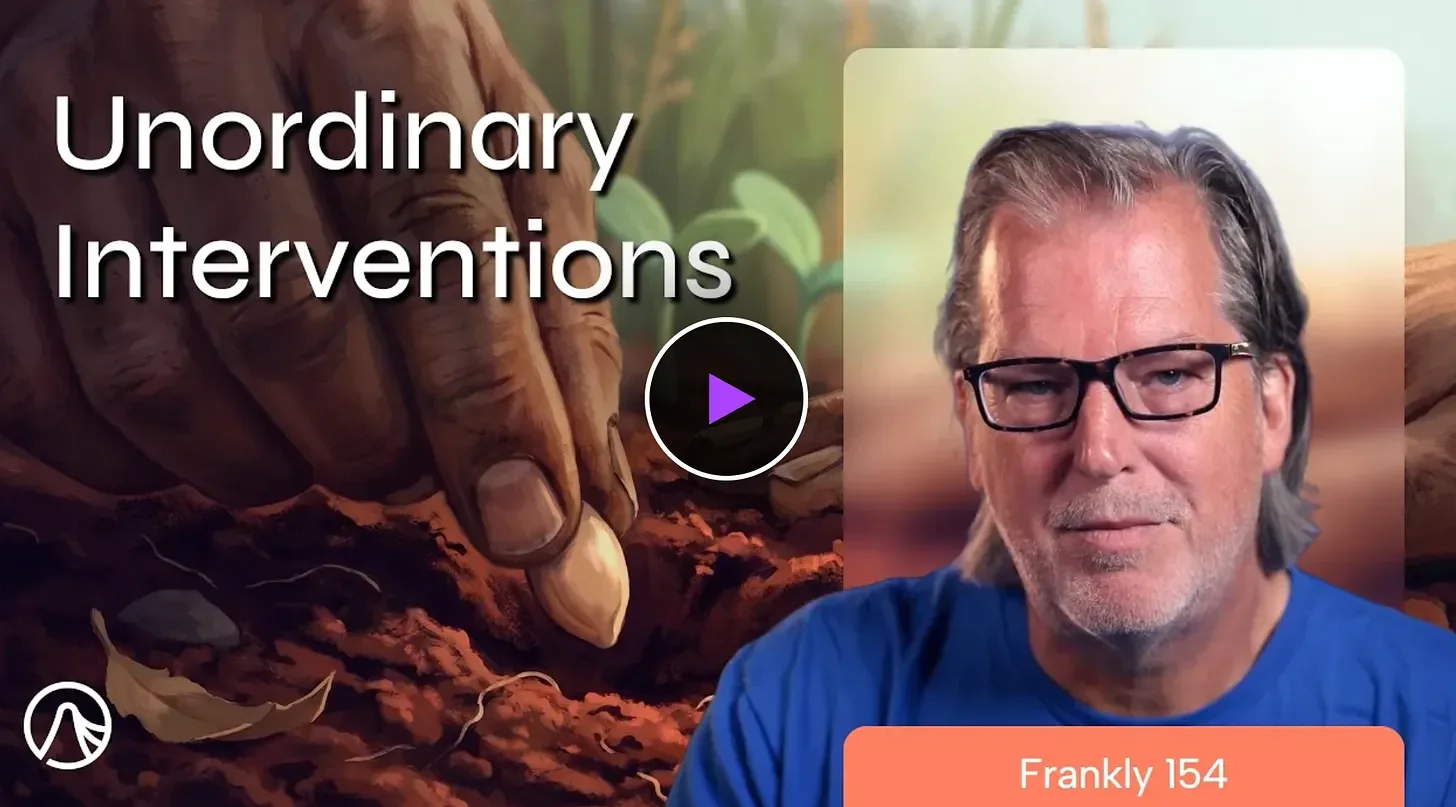
Again, in this pamphlet, I am concerned with people of relative privilege. People like me. People with a great deal of personal freedom, agency, and the opportunity to influence their world. Parents and grandparents. I hope to reach people who find this essay challenging, daunting, demanding, unsettling, or even distressing. I hope readers will take their time and work their way through this piece, pausing to engage with the information in the hyperlinks, books, videos, podcasts, and other content I refer to. I want you to ruminate on the bits and pieces I share here, even if the topic is uncomfortable or, at times, boring to you. This may be a lot to ask.
I think that most sincere people who work hard to share their ideas, thoughts, and feelings through various mediums do so hoping that their audience will benefit from the experience. Sharing is most often an act of generosity—it can be sacred. I am not seeking attention. I want a few friends of mine to understand where I am coming from and not to take it personally if I seem like I am constantly pushing back against a world they are mostly comfortable with. When I challenge a friend, it comes from love, not contempt. Many times, when we challenge someone to think recursively or a wee bit self-critically, we can lose goodwill or even friendship. That’s sad.
Nate talks about some ways we can do some good. That’s great. But we are still enmeshed in a social, political, and economic system that is extremely destructive, has momentum, and is deeply embedded in people’s consciousness. We have to fight against the mad, omnicidal, accelerationist frenzy. Don’t we? If we aren’t willing to fight the power, we risk making things worse by our very existence and by our slavishness to habits as we make ourselves feel better about this mad rush to ultimate catastrophe. I mean, it could very well be that it doesn’t get any better than this for a long, long time, or that a “better” way of life means something unimaginable to us today.
Are you prepared to imagine junk heap Neo-Neolithica?
I started planning to move to Portugal in 2010; I was 13 when I first visited with family. I finally started living here in 2019 after spending decades in big cities: New York City, the Bay Area, Tokyo, Shanghai, and Hong Kong. I was a frequent business flyer and leisure traveler. My carbon footprint was elephantine. I knew I had to get out of the cluster-wreck life of big cities and surround myself with farmers if I were going to do anyone any good, especially myself.
My family started downsizing and simplifying years ago. I take cold showers. It’s not a big deal. I am learning hard things all the time, and I am getting old faster and faster. For me, time is running out, so when Nate says, become a mentor, I know what he’s talking about from experience.
Icaryana Neo-Neolithic Cooperative
I started the Icaryana project many years ago for various reasons. I won’t go into what that is here. After this pamphlet, I will focus exclusively on Icaryana across art, film, business, and community.
Virtue is far off for me; I have to work harder and harder to continue the journey of becoming. For me, it doesn’t get easier, and that’s ok. And the goalposts keep moving. This life of mine has always been a journey; I have never quite had a clear destination. I only know that I love life, all creatures great and small.
So anyway, we can be positive skeptics, positive critics, and positive doomists. Are we able to imagine that degrowth, the controlled, caring pairing back of the human population, and the simplification of human enterprise as good things? Can we aspire to be good custodians, stewards, and co-creative collaborators of living systems? All we have to do to see our way through this predicament is critically explore ourselves, our actions, beliefs, fears, hopes, dreams, and world honestly and courageously, knowing that what we discover, rather than being injurious, will make us more robust, able to meet the challenges we face together with our communities and loved ones.
***Listen to this podcast and come back to my essay when you are ready. Everything I share here adds to what I am trying to convey to you.
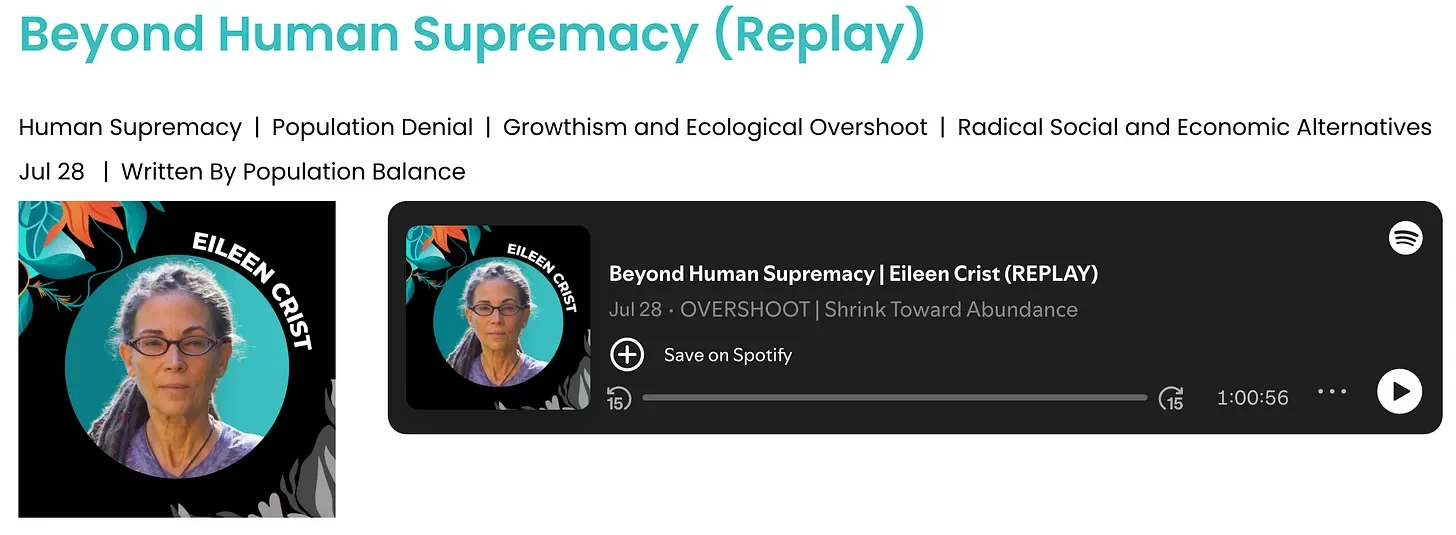
And we have to fight, for living systems’ sake; we have to fight.
I don’t expect my opinions to have much effect on the world. Many friends and acquaintances will ignore me, some out of spite and some out of exasperation. That’s ok; as we improvise our new way of life, we will make new friends and acquaintances who will challenge us and engage with us in our endeavors. The difficulties of being together are what make ‘love’ loving and our accomplishments so valuable.
Content isn’t enough; building and creating something together is better.
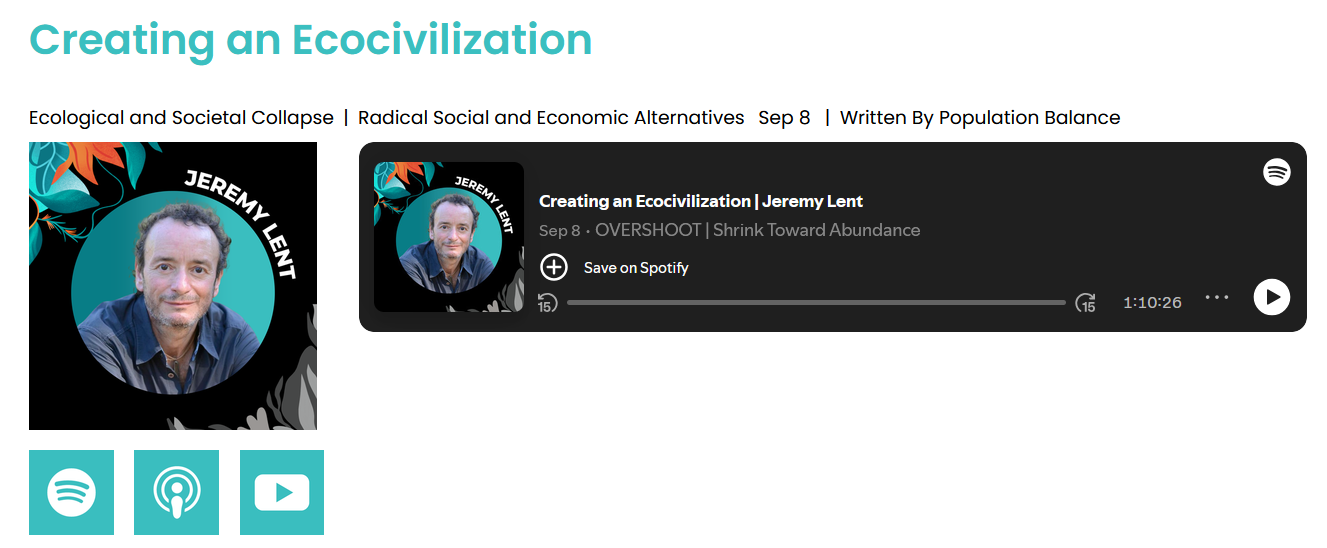
"There is no alternative" is the story that keeps us trapped in a world that is unraveling. Jeremy Lent, author of Ecocivilization, imagines what becomes possible when we move away from competition, separation, and domination and trust grassroots democracy to build lives rooted in the collaboration, diversity, and mutualism found throughout nature and human history. As disenchantment with the dominant story grows, Jeremy discusses the alternatives already taking root that might provide the foundations for a future ecological civilization. Highlights include:
How the worldview of separation from nature, beginning with sedentary agriculture and accelerating in the modern era, leads humanity to see nature as both a machine and as ripe for exploitation;
How British and northern European elites enclosed and seized the commons, using law and force to dispossess people of their land and push them into wage labor; how this model of enclosure was exported around the world through colonialism; and how enclosure continues today through everything from patented seeds, state and corporate digital surveillance, and AI's enclosure of humanity's knowledge commons;
How cultural hegemony, the cultural conditioning of peoples' mindsets, shapes what people believe is possible - convincing the majority that capitalism, economic growth, and existing systems serve everyone's interests and that we live in 'the best of all possible worlds';
Why an ecological civilization would require moving from the primacy of capital to the recognition that people and other species have a right to flourish, and drawing its principles from life itself - including mutualistic symbiosis, heterogeneity, and diversity;
How governance in ecocivilization should be grounded in subsidiarity and genuine participatory democracy, pushing decisions to the lowest feasible level and replacing today’s electoral oligarchy with lottery-selected citizen juries and assemblies that have real-world power;
How the mainstream panic over declining fertility rates reveals the continued cultural hegemony of the 'growth is good' story;
Why, as dominant systems unravel, the emerging alternatives become 'islands of coherence' that attract increasing numbers of people, especially the young, who become disenchanted with the hollow promises of the dominant culture;
Why the ultimate message of the book is the dethronement of TINA - There Is No Alternative - and why the unraveling of the dominant system creates an opportunity to reweave the social tapestry and build alternatives based on how human beings evolved to live, in cooperation with each other and the natural world.
I don’t think individual petroleum engineers are bad people. Dana White is the CEO and president of the Ultimate Fighting Championship (UFC), a major mixed martial arts promotion company owned by TKO Group Holdings. I became interested in MMA in Japan in the 80s and early 90s. Is Dana White a bad man? It depends on one’s criteria and point of view, I guess. I suppose he is not a bad man. Are individual insurance professionals or U.S. Marines bad? I guess not; I guess most are “good.”
When I think of all the business ecosystems providing good jobs and careers for people, allowing them to live relatively lavish lifestyles compared with the majority of people around the world, I don’t blame them. I spent years chasing money. I think it’s perfectly rational to continue along the path to personal wealth, achievement, and collective disaster. We are enculturated people, practically blind to what motivates us. So get on with it.
Also, why shouldn’t apathy be a good strategy when dealing with the metacrisis/polycrisis? I often say, “Apathy around and find out.” Enjoy yourself, don’t worry, be happy, and come what may. Not giving a shit about certain things sure can make the trials and tribulations of everyday life less taxing. Only weirdos feel good about delving into the world’s problems, or get mad at men who dress up as women.
“Problems, what problems? Me and mine are fine, and would be better if those other folks got the fuck out of our way and let us be.” —Joe Libertarian
How many books like “F**k It” have been published? When an American friend of mine was dying of cancer, he told me, “Everything is all about me, Steven. Proud and loud, it’s all about me.” He was a hard-working salaryman in the consulting trade who had a lovely family. Consultants are performers. He used to ask me out and mine me for ideas. I didn’t mind. As corporate consultants go, he was one of the good ones. Sitting with him that day, way before he was in any intense pain or close to death, I understood what he meant. I’ll keep what I understood to myself for the moment.
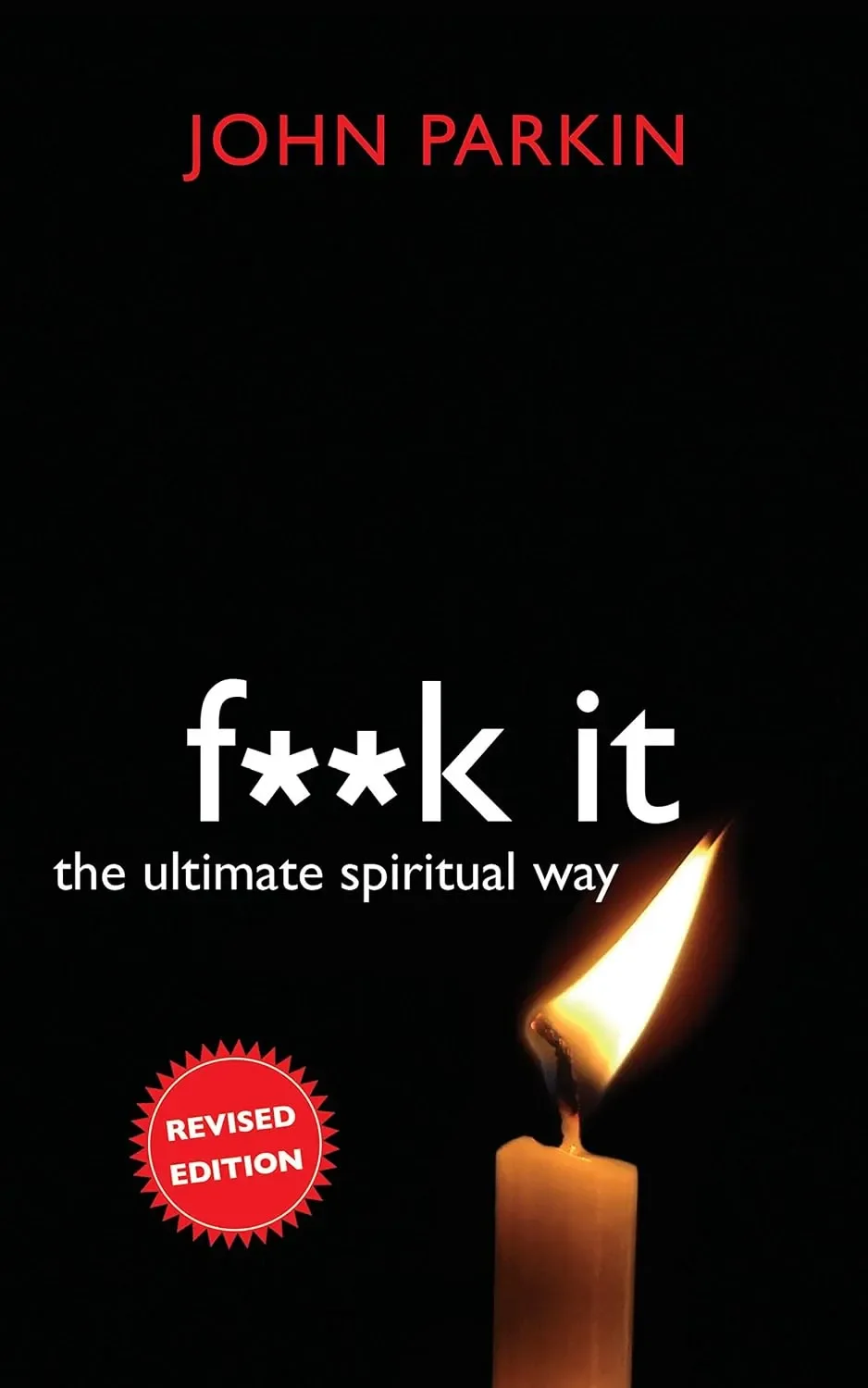
F**k It has taken the world by storm, helping countless people to relax, let go, stop struggling and finally do what they want; to ignore what everyone else is telling them and go their own way.
This now classic text has been updated with inspirational new material from John C. Parkin.
In this inspiring and humorous book, John suggests that saying F**k It is the perfect Western expression of the Eastern spiritual ideas of letting go, giving up and finding real freedom by realising that things don’t matter so much (if at all).
It’s a spiritual way that doesn’t require chanting, meditating, wearing sandals or eating pulses. And it’s the very power of this modern-day profanity that makes it perfect for shaking us Westerners out of the stress and anxiety that dominate our meaning-full lives.
So, find out how to say F**k It to all your problems and concerns. Say F**k It to all the ‘shoulds’ in your life and finally do what you want to do, no matter what other people think.
Another perspective I can’t turn away from: We are losing our faith in sincere, committed, credentialed professionals with a calling. We’re losing our faith in what we consider a good education; perhaps we never knew what a good education is, perhaps we have yet to create it—we need different educations for different times and contexts.
There are many studies suggesting that our intelligence may have plateaued. Thinking clearly, evidence-based thinking, critical thinking, our ability to concentrate, much less have an original idea, to sit quietly in a dark room for five minutes is waning.
I wonder about the intelligence of Homo sapiens living in the earliest named period associated with the emergence of Homo sapiens: the Middle Stone Age (MSA) in African archaeology, which corresponds to the Middle Paleolithic period in global archaeology. Are we more “intelligent” than they were?
Blame the microplastics in our brain and gut. Blame PFAS. Blame us. WTF?
The firehose of information, which includes purely ideological propaganda, misinformation, disinformation, public relations content, advertising, infotainment, the attention economy, spectacle, scams, bull shit, and lazy thinking, leads eventually to a global community where individuals are no longer incentivized to do the hard work required to be a scientist, medical doctor, honest political leader, professional, or truth seeker. There were and are some; there must be, I hope there were, I hope there are…
***I love this podcast, and this episode is relevant. Listen to it and come back here and read on.
As the world heats up and habitats change radically, only stupid, soft, and lazy people will be left fighting in garbage heaps and over dwindling resources. But so what? A new kind of intelligence will evolve that will meet the evolutionary drive to adapt. There will be fewer TESCREAL fantasists and more people who can read the forest instead of the room, more people who know what to do with pits, mountains, and layers of junk.
My friend sent me the clip below, a clip you may have seen if you have read my essays, and said, “This is what will kill us.” Ex Machina is one of my favorite movies, but sexy ASI humanoid robots won’t be the death of us.
So you read myths, stories like The Iliad, history books, religious texts, and so on: who does all the killing on behalf of supernatural beings, the Gods, or God? And who wrote those violent, fantastic stories? Who is the author of real violence and terror? It’s not the machine that’s killing us; it’s us. It’s time we took responsibility. Responsible people work hard to stop the killing and become the loving.
Also, I think about Chimpanzees as pets. It’s not a good idea. I have often joked about the AGSI sexy humanoid robots treating me as well as I treat my cats. AGSI may be able to “think” circles around us in certain ways, but we may still have a few scary wild humans who can pull the plug. We are domesticated because we have domesticated ourselves, but still have a wildness in us.
“I am sorry to say that I must nuke the world to protect people from out-of-control AGSI.” —President Bob Bendix, Democrat from Connecticut.
Ex Machina
We all tend to parrot propaganda from time to time. Examining complex topics from multiple perspectives can go a long way toward helping us avoid echo chambers of motivated reasoning. We have to veer off of our main algorithms sometimes if we want to continue to mature as adults. Enough of us must go beyond belief in belief if we are going to reduce harm, horror, and terror.

***Later on in this essay, I’ll share some thoughts inspired by some open questions a friend sent me in an email.
Are there things worth fighting for or against that would outweigh my overwhelming pride in feeling good? What am I prepared to sacrifice for others who live here, there, and everywhere?
Most folks want to feel good and, more importantly, good about themselves. We are all the protagonists, marketers, and public relations professionals of our own unfolding story. We identify with different cliques. If you are a wealthy capitalist, you might feel more at home with wealthy capitalists. If you were a Jewish worker in Ukraine in 1909, you might identify with revolutionary workers either because you have been an oppressed worker your whole life, you don’t like pogroms, or you are a well-educated, well-off idealist. Perhaps you got caught up in historical materialism, the dialectic of it all. Oh dear.
We tend to avoid difficult subjects or topics that don’t necessarily make us feel good. It’s nicer to take shelter in like-minded groups than venture into uncomfortable territory. This is normal. Affluent North Americans can be delicate, sensitive, and insular even when they believe they are open-minded and progressive. That’s why it’s easier to be a “progressive” if you are “conservative.” Circumstances have been fairly good to them, so they don’t like it when people point out problems with the status quo.
“Democrats will save us.” (The lesser of two evils?) Haha He He
***Please read Rob’s article and come back here when you are ready.
2. Civilization, Culture, and the Great Fracture
The Architecture of Civilizational Presupposition
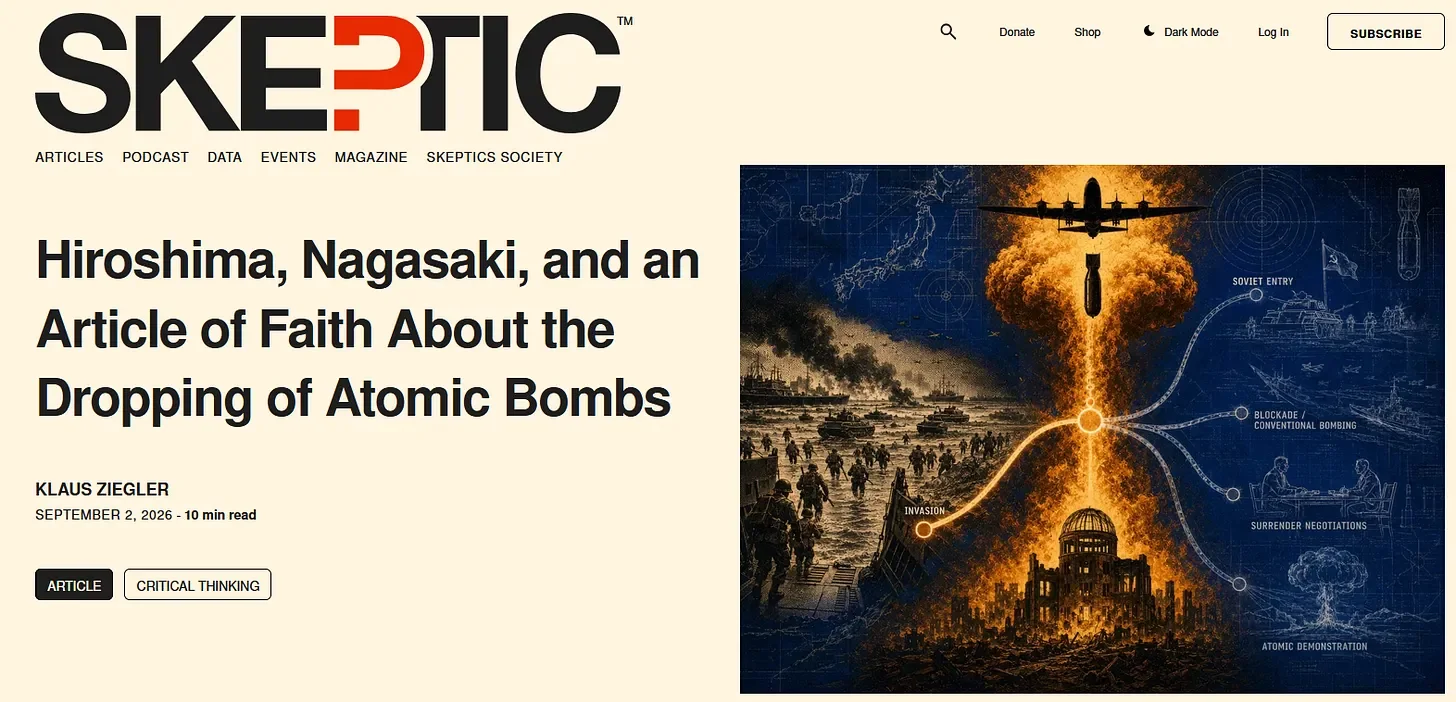
Civilization relies on a set of unspoken beliefs. In current corporate planning and financial modeling, it is standard practice for analysts to make the basic assumptions underlying projected balance sheets, discount rates, operating margins, and capitalization figures explicit. If these original assumptions prove flawed, the business ends up having to restructure or go bankrupt. At the level of civilization, however, such fundamental assumptions are never examined, written down, or subjected to stress tests; rather, they sink into the cultural subconscious and are presented as absolute truths, natural laws, or predestined outcomes.
Modern industrial society—particularly as centered in the United States—is based upon a complex system of unquestioned absolute assumptions. These mental frameworks suppose that progress is infinite and linear, that humans have the right to control an inactive natural world, that monetary wealth can be separated from physical matter, and that there is a moral basis for continuous geopolitical and economic expansion. Now, as the global industrial system comes into conflict with the planet’s boundaries, biophysical overshoot, resource depletion, and systemic wars arranged by the military-industrial complex are causing these fundamental assumptions to fail catastrophically. If human freedom, creative agency, and the survival of communities are to be preserved within the limits of nature, then there must be a rigorous, cross-disciplinary examination of these inherited beliefs to enable a deliberate and convivial decline.
Epistemic Architecture: The Mechanics and Pathology of Unexamined Assumptions
Assumptions act as heuristic devices that are both cognitive and cultural in nature, aiming to reduce the complexity of the environment and converting deep-seated uncertainty about existence into a state of operational clarity. In the field of human epistemology, it is the assumptions that decide which evidence counts as legitimate, who has the authority to engage in discourse, and which questions can properly be asked.
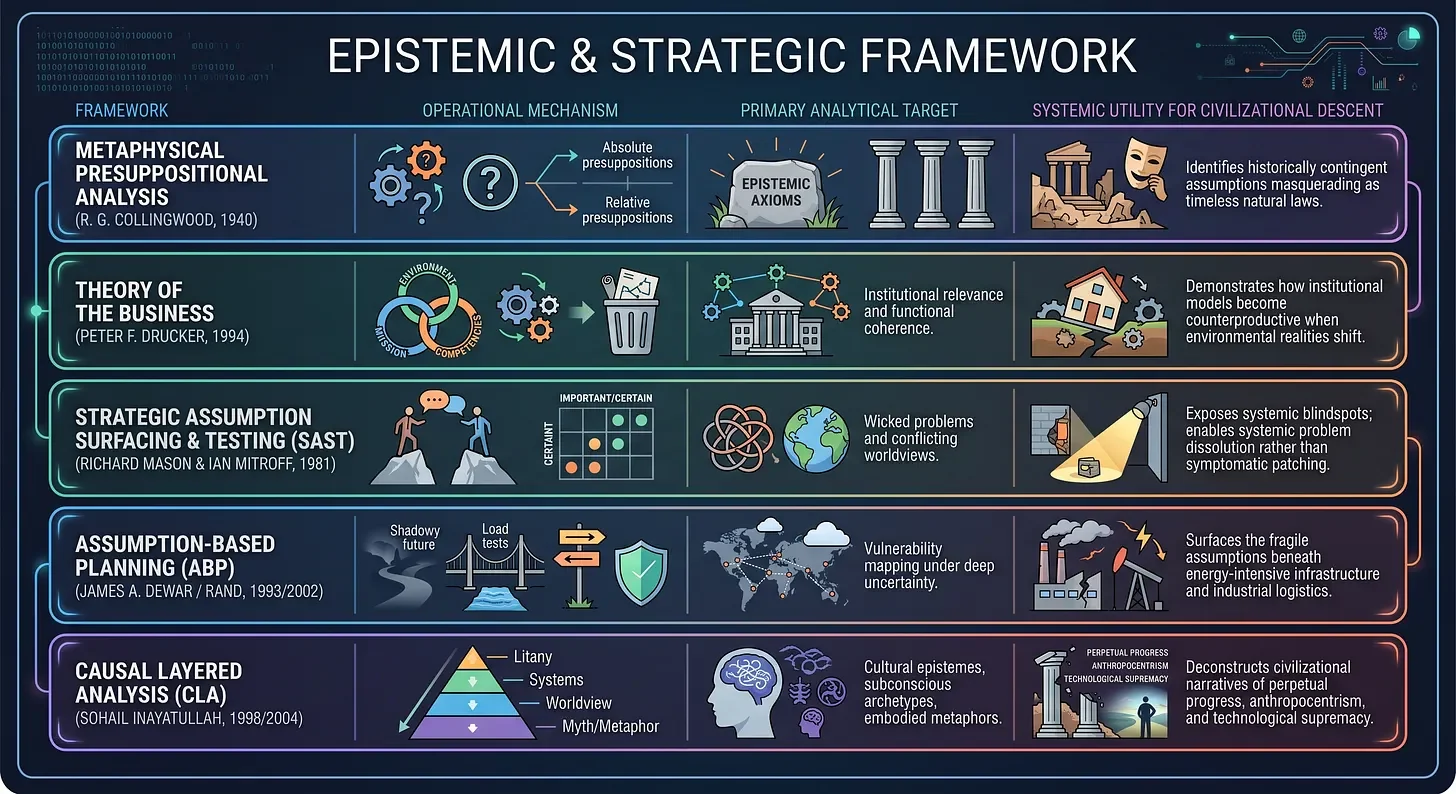
The British philosopher and historian R. G. Collingwood set out the structural anatomy of conceptual frameworks in his 1940 book An Essay on Metaphysics, where he introduced a fundamental distinction between relative and absolute presuppositions. According to Collingwood’s logic of question and answer, thinking is not merely a list of fixed propositions but rather an active process guided by inquiry. A relative presupposition acts as an answer to a previous question at the same time as it provides the presuppositional basis for a later inquiry.
A presupposition is an implicit, unstated background belief or assumption that must be true for an utterance or action to make sense in context.
On the other hand, an absolute presupposition forms the fundamental basis of a whole way of investigating things; it is not a reply to a previous question, but rather the basic axiom which makes questioning possible. Since absolute presuppositions are not propositions in the usual sense, it is because they have no truth-values; they cannot be proven to be empirically true or false within the system that they produce. Their validity is entirely based on their logical effectiveness—that is, on their ability to organize and maintain a consistent field of human thought and social practice.
Collingwood noted that since absolute presuppositions remain mostly unconscious, individuals experience severe psychological distress and intellectual hostility when these presuppositions are brought to light and challenged, a response which he described as intellectually “ticklish.” (More on these kinds of psychological reactions later.) To examine an absolute presupposition is to disrupt the systemic order which rests upon it.
In the fields of cognitive science and social psychology, this tendency to be obstinate on a systemic level is due to mental models—cognitive frameworks that have been internalized and through which individuals simulate and interpret reality. When an assumption has been incorporated into a person’s identity or into the strategy necessary for the survival of an institution, confirmation bias and motivated reasoning work to filter out any signals that would disconfirm this assumption. In his work on the epistemology of sociology, Thomas Kuhn noted that scientific communities do not abandon a paradigm merely because anomalies arise; rather, normal science actively defends its basic commitments until systemic crises render the whole structure no longer viable. In more general terms, within civilizations this leads to reification, which is the treatment of historically specific and socially constructed arrangements—such as continuous compound GDP growth, fractional-reserve debt systems, and commodified property—as if they were permanent features of nature.
Methodologies of Epistemic Audit: Surfacing, Testing, and Dissolving Strategic Beliefs
To dismantle unviable dogmas before biophysical collapse forcibly enforces adaptation, strategic foresight, systems theory, and organizational design have developed explicit diagnostic methods to audit, stress-test, and dissolve obsolete assumptions.
Management theorist Peter F. Drucker analyzed the structural vulnerability of unexamined mental models in his work The Theory of the Business. Drucker argued that when major institutions encounter protracted paralysis, the crisis rarely stems from operational incompetence or negligent execution. Instead, institutions fail because the foundational assumptions upon which the enterprise was constructed no longer correspond to reality.
Drucker categorized these load-bearing assumptions into three interconnected domains: assumptions about the external environment (society, markets, customers, and technology); assumptions about the organization’s specific mission (what it defines as meaningful results); and assumptions about core competencies (the specialized capabilities required to fulfill that mission).
Because external environments continually mutate, Drucker demonstrated that every theory of business eventually becomes obsolete5. Without systematic abandonment—the institutionalized practice of regularly auditing, stress-testing, and discarding obsolete premises—organizations redouble their commitment to operational patterns that accelerate their failure.
Building on the inquiring systems of C. West Churchman, Richard O. Mason and Ian I. Mitroff formulated Strategic Assumption Surfacing and Testing (SAST) as an explicit methodology for resolving wicked, ill-structured problems. Wicked problems are characterized by high interconnectedness, deep uncertainty, and conflicting interest groups whose strategic proposals rest on diametrically opposed, implicit premises.The SAST process executes four sequential phases:
Group formation gathers stakeholders and divides them into opposing cohorts to maximize ideological divergence and bring unstated biases into focus.
Assumption surfacing requires each cohort to identify the underlying premises supporting its preferred strategy and rate them by systemic importance and degree of certainty.
Dialectical debate pits these cohorts against one another, compelling participants to cross-examine opposing premises and evaluate their vulnerabilities.
Synthesis and dissolution integrate surviving insights into a new systemic policy.
The Genealogy of Western Hubris: From Animate Cosmos to Mechanistic Imperium
The main assumptions of modern industrial civilization are not fixed biological characteristics or universal laws of human culture, but rather the particular results of an intellectual change that took place in Western Europe between the late Middle Ages and the Industrial Revolution.
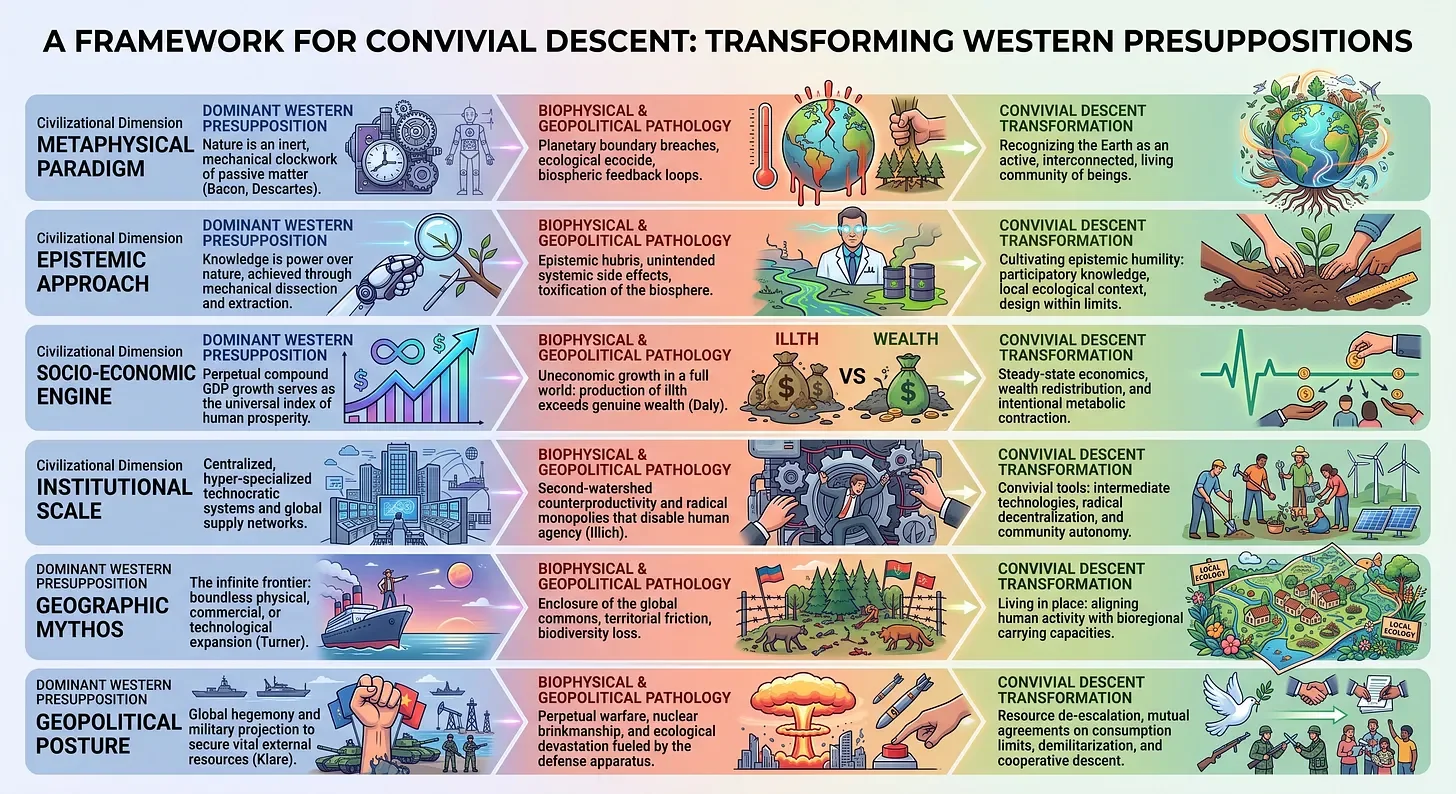
Before the early modern era, the European view of the cosmos was mainly organic, teleological, and holistic. As the environmental historian and philosopher Carolyn Merchant showed in her book The Death of Nature: Women, Ecology, and the Scientific Revolution, the main metaphor in pre-modern European thought was the cosmos as a single, interconnected living organism, with the Earth seen as a nurturing mother.
This conceptual framework set clear normative and ethical limits on human behavior: it was not easy to carry out strip mining, clear the forests, or harm the living body of the Earth without first performing complex cultural rites of repentance, restitution, and moral approval. The society saw itself as a member deeply involved in a wider, sacred cosmic community.
The combination of early mercantile capitalism, the trans-oceanic colonial expansion of the Age of Discovery, and the Scientific Revolution caused this organic way of thinking to break down. Merchants showed how the early modern scientific and philosophical pioneers systematically removed these organic limitations by stripping the natural world of agency, subjectivity, and inherent life.
Francis Bacon introduced an instrumental and utilitarian theory of knowledge which regarded scientific knowledge as a means of gaining control over nature. Using the kind of language employed in witch trials and during inquisitorial interrogations, he claimed that nature had to be put to work, driven from its natural state, and made into a slave of human industry. The traditional ideal of natural philosophy, based on contemplation, was replaced by a firm, interventionist requirement to discover the secrets of nature through dissection and mechanical restraint.
The metaphysical basis for this mechanistic view was established by René Descartes, who introduced the ontological distinction between res cogitans (the thinking, self-aware, immaterial human mind) and res extensa (extended, insentient, purely mechanical matter). By treating animals, plants, forests, and rivers as clockwork automata operating according to strict mathematical mechanics, Cartesianism stripped the non-human living world of moral status. Nature was then reduced, in an ontological sense, to dead, inert, and interchangeable matter, and existed merely as a tool for human calculation and control.
In the political economy of the Enlightenment, John Locke gave a secular and legal status to this mechanistic idea. In the Second Treatise of Government, he stated that the Earth had been placed at the disposal of humanity in common, although untended nature was still almost entirely ‘waste’. According to Locke’s view, ninety-nine per cent of the value of land came solely from human labor and from the rationalization of agriculture. By claiming that uncultivated and non-commodified land was in fact valueless, Locke laid the philosophical and legal basis for dispossessing Indigenous peoples and for enclosing the communal commons.
At the same time, Enlightenment thinkers, including the Marquis de Condorcet, Adam Ferguson, and Adam Smith, abandoned earlier cyclical and eschatological views of history in favor of a firm belief in straightforward, open-ended progress. Human development was once again seen as an upward progression from a state of savagery to a high degree of commercial sophistication, with progress judged by the level of technological complexity and the extent of mastery over physical limits.
The conceptual framework was reinforced during the Industrial Revolution by the use of fossil fuels. When societies shifted their energy sources from surface-based forms such as solar power, wind, water, and draft animals to energy stored underground in the form of coal and petroleum, they were able to escape the immediate constraints imposed by biological requirements. The high energy density of fossil fuels led to an unprecedented level of economic output and gave rise to the cultural belief that human technology had permanently severed its ties to ecological limits. Modern macroeconomics adopted this belief, treating the living ecosystem as an unlimited resource to be extracted and an infinite place to dispose of waste.
The American Crucible: Frontier Mythology, Constitutional Mechanics, and Perpetual Expansion
In North America, the mechanistic ideas of the European Enlightenment were put into practice with great intensity, since the establishment of the United States combined Lockean property rights, political mechanics, and a mythology of unlimited continental space.
The basic idea behind the American republic was based on the principle of terra nullius, which meant assuming the continent was empty and wild and therefore needed to be put in order. The settlers used Locke’s theory of property based on labor to justify the destruction of the sovereign Indigenous nations, since their active, seasonal method of looking after the land was considered inadequate as a basis for legal ownership. Under the Doctrine of Discovery and related case law, the legal system regarded the continent as an open resource for commercial development.
In 1893,, Frederick Jackson Turner laid out the conceptual basis of American exceptionalism in his speech, “The Significance of the Frontier in American History.” He maintained that particular American virtues—such as democratic equality, strong individualism, inventive pragmatism, and social mobility—had not been inherited from the European parliaments but had been developed on the western frontier. He showed that the social stability of American democracy was directly dependent on continuous territorial expansion.
Free land was an economic safety valve because it absorbed surplus labor, dispersed urban tensions, and eliminated class conflict by giving displaced workers the opportunity to acquire private property.
Nevertheless, property thesis reached a disturbing conclusion: the 1890 U.S. Census showed that the continental frontier had officially closed. He cautions that the expansive spirit which characterized American life would not simply vanish, but would inevitably look for new areas in which to assert dominance. Once no more land was available, the need for expansion was channeled instead into overseas commercial dominance, greater industrial scale, and continuous economic growth.
The imperative was in harmony with the constitutional structure established by Madison. In Federalist No. 10, James Madison stated that the greatest danger to a stable republic was political faction, this faction arising from unequal distributions of property; he maintained that a large republic was the best way of overcoming factionalism since the extent of the territory and the variety of economic interests would stop any one group from bringing about an oppressive majority.
As a result, the American political system was designed to require an ever-widening economic sphere; the stability of its institutions depended on constant economic growth, since if growth halted, the basic conflict between the extreme concentration of private wealth and the egalitarian rhetoric of democracy would reappear.
Global economic integration and military superiority kept this belief alive throughout the twentieth century and well into the twenty-first. As the national security expert Michael Klare shows in his books Resource Wars and Rising Powers, Shrinking Planet, current geopolitical strategies and foreign interventions are mainly directed at safeguarding the essential supplies needed by an energy-dependent industrial system41. The United States’ defense network—supported by the global military-industrial complex—functions as an armed guarantee of continued access to international oil reserves, vital minerals, and maritime trade routes. It is still assumed that the resource-heavy American way of life must remain, on the basis that the biophysical limits can always be overcome by means of technological substitution, financialization, or military force.
The Biophysical Fracture: Full-World Thermodynamics and the Illusion of Decoupling
The main contradiction today is the clash between the basic beliefs of modern industrial civilization and the unchangeable laws of thermodynamics and ecology; the idea of infinite linear progress has collided with the planet's limits.
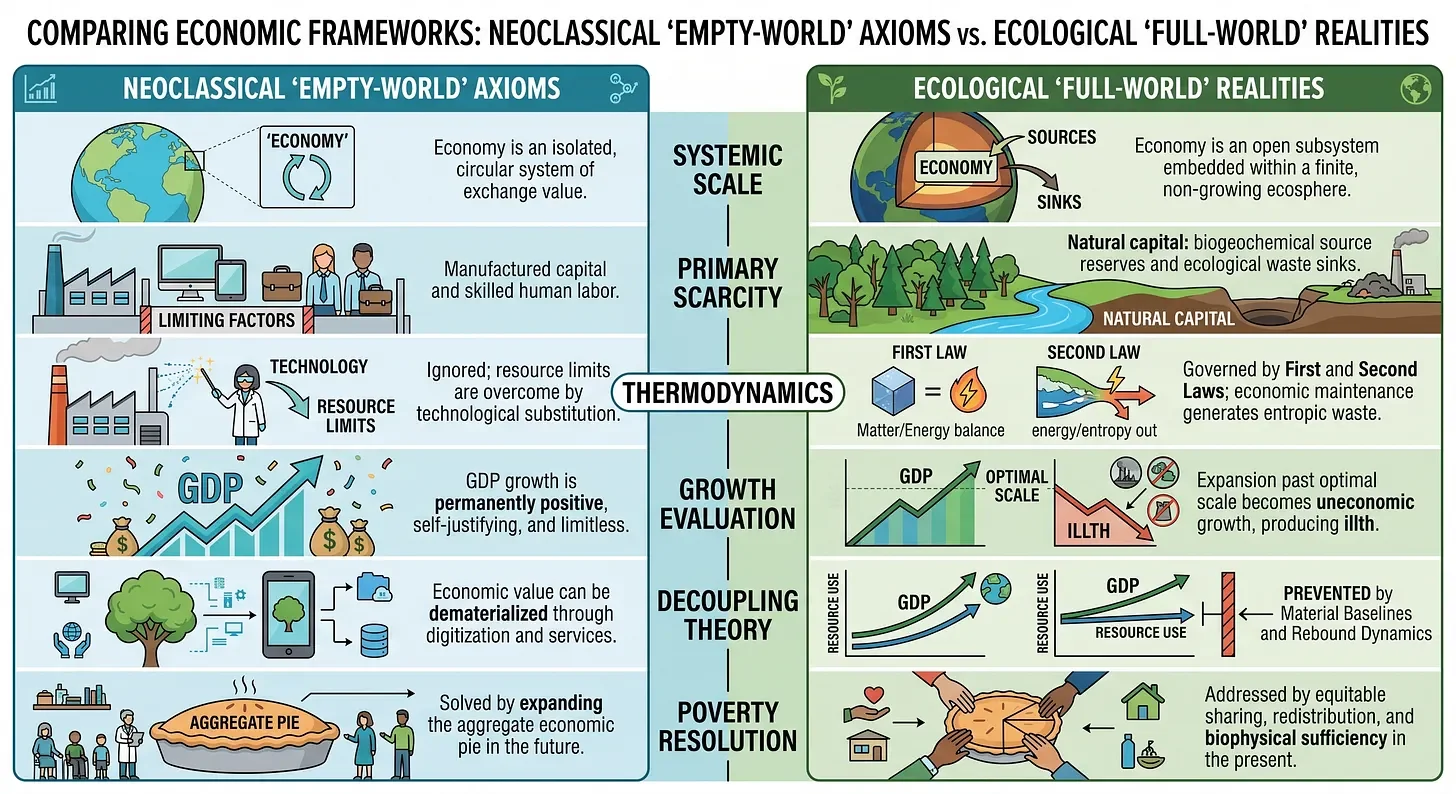
Herman Daly, an ecological economist, gave a rigorous critique of neoclassical macroeconomic theory by introducing the difference between an empty world and a full world. He demonstrated that classical and neoclassical economic models were developed within an empty world, that is, during a historical period when the human population was small, industrial technology was relatively weak, and natural resources were plentiful.
In that situation, manufactured capital—for example, fishing boats, sawmills and industrial refineries—was the limiting factor in economic production. Natural capital, such as the reproductive capacity of marine life, the regeneration of forests and the assimilative capacity of the atmosphere, was regarded as effectively infinite. On the basis of these assumptions, macroeconomics viewed the economy as a self-contained, isolated circular flow of exchange value, ignoring physical inputs and waste outputs.
Daly showed that the exponential growth of the global economy during the twentieth century turned the Earth into a global world. The human economy is not a separate and self-sustaining system; it is an open subsystem which grows physically and is completely incorporated within a finite, non-growing, and materially closed ecosphere.
The economy as a whole is strictly controlled by the laws of thermodynamics. According to the First Law of Thermodynamics, it is impossible to create matter or energy out of nothing; any increase in the economy must involve drawing low-entropy resources from the natural environment and transforming them. The Second Law of Thermodynamics states that entropy increases irreversibly when these resources are used. Economic systems are what physicists refer to as dissipative structures, in that they maintain their internal organization and complexity only by taking in low-entropy energy from their surroundings and releasing high-entropy waste and ambient heat back into the environment.
In a full world the factor which limits economic prosperity has changed: it is no longer the number of fishing vessels but the amount of wild fish still left; it is no longer the number of sawmills but the remaining area of undisturbed forests; it is no longer the number of combustion engines but the capacity of the atmosphere and the oceans to absorb greenhouse gases without causing catastrophic climate instability.
Since orthodox macroeconomics does not take physical scale into account, it continues to aim to expand GDP even when the economy has exceeded its optimal biophysical limits. This situation, which Daly referred to as uneconomic growth, involves physical expansion that causes environmental degradation, climate disruption, social alienation, and biodiversity collapse, all increasing at a faster rate than genuine human utility is produced.
The fact is that uneven growth causes ill health to appear sooner than it brings about wealth. Yet since indicators such as GDP measure total financial activity without discrimination, by counting defensive and remedial expenses—such as those incurred in cleaning up oil spills, providing cancer treatment, and funding military equipment—as positive economic output, societies take environmental deterioration to be a sign of economic progress.
Daly divided this trajectory into three important thresholds: the point of futility, at which the additional utility from more production reaches zero; the economic limit, at which the marginal cost of physical growth exceeds its marginal benefit; and the ecological catastrophe limit, at which systemic overshoot overcomes the non-linear tipping points and leads to an irreversible ecological breakdown.
Mainstream efforts to combine growth with sustainability by means of the idea of “green growth” are based on the assumption of absolute decoupling—that is, the belief that economic output can keep on increasing while at the same time material and energy use decline. Empirical research shows that although relative decoupling occurs temporarily due to local efficiencies, absolute global decoupling of GDP from total resource extraction and carbon emissions remains physically impossible because of thermodynamic minimums and rebound effects (known as the Jevons Paradox).
Convivial Descent: Dismantling Counterproductive Monopolies and Reconstructing Autonomy
Since the basic premises of endless growth and technological mastery are breaking down, modern societies now have to face a pressing strategic question: what sort of adaptation can communities achieve when the large institutional machine fails? The way ahead involves giving up technocratic management and instead adopting what the social philosopher Ivan Illich called “conviviality”.
In the 1973 book Tools for Conviviality, Ivan Illich examined how modern industrial institutions systematically deprive human communities of the right to self-governance. He noted that industrial institutions develop through two clear historical stages:
The first turning point is when a new tool or institutional method is introduced which actually improves human capabilities, decreases suffering, and increases individual competence—for example, basic public sanitation, simple mechanics, or the bicycle.
The first watershed is passed when the industrial scale of that technology crosses a critical threshold, causing systemic counterproductivity and iatrogenesis; in the second stage, the tool no longer serves human agency but rather reshapes human life to meet the bureaucratic and logistical demands of the tool.
When an institution passes its second watershed, it sets up a radical monopoly; a radical monopoly is not the same as ordinary commercial market control, but arises when an industrial system removes the possibility of non-industrial, autonomous human living.
Automobile infrastructure achieves a radical monopoly in transportation by altering city design so that walking becomes either dangerous or illegal, thereby enforcing dependence on vehicles. Centralized modern medicine creates a radical monopoly by preventing families and communities from being able to look after their sick, offer comfort to the elderly, or die with dignity. Compulsory institutional education establishes a radical monopoly on learning by transforming genuine local curiosity into an artificial commodity supplied only by accredited bureaucracies.
In order to overcome these dependencies, Illich introduced the idea of convivial tools, describing them as devices and various institutional arrangements that enable individuals and small groups to shape their own surroundings. He defined a convivial tool as one that is transparent, repairable, and not manipulative; it may be incorporated into communal life without requiring an elite class of technocrats to control access. According to Illich, conviviality is a means of realizing individual freedom through personal interdependence and thus stands in direct opposition to the passive consumerism imposed by industrial infrastructure.
The critique is in direct agreement with the energy descent approach formulated by permaculture theorist David Holmgren and systems ecologist Howard Odum. Modern industrial infrastructure was founded on a unique historical excess of high-density fossil energy, characterized by an extremely high Energy Return on Investment (EROI). As accessible, high-yield reserves become fewer, society is moving down a thermodynamic slope towards lower net energy availability.
Although alternative energy systems are essential, they have lower power densities, involve intermittent generation, and place great reliance on global supply chains, which, in turn, are susceptible to depletion and geopolitical disruptions.
Energy descent is not a temporary engineering problem that can be solved by some technical remedy; it is a permanent transition for civilization which involves reducing societal throughput. Instead of maintaining the complex and fragile institutions established during the fossil-fuel surge, communities will have to navigate this descent by pursuing convivial alternatives.
The global, fragile ‘just-in-time’ logistics system should give way to regional food systems, local polycultures, and decentralized agrarian stewardship.
Centralized megastructures should be replaced with intermediate, suitable technologies which function below the second watershed, such as passive thermal architecture, open-source local tools, and repairable regional infrastructure.
Systems of private ownership that are based on commodification and debt should be replaced by commoning, cooperative trusts, mutual aid networks, and non-monetary communal care.
Convivial descent involves the intentional and active shrinking of overextended systems, provided that the material, technical, and social resources needed to establish resilient local alternatives remain available.
Epistemic Emancipation and the Practice of Unlearning
The ecological, macroeconomic, and geopolitical problems which we are now facing cannot be solved by applying the same kind of reasoning that caused them. As the systems theorist Russell Ackoff pointed out, human organizations frequently fail because they expend tremendous effort solving the wrong problem in the right way rather than eliminating the right problem. Suggesting that we tackle ecological overshoot by means of solar radiation geoengineering, harvesting minerals from the seabed, using carbon credit derivatives, or colonizing other planets merely reinforces the mechanistic idea that nature is an inert thing that can be managed for unlimited human consumption.
A civilizational change that is to be lasting requires a thorough examination of truth claims and cultural narratives. True claims must be separated from ideological generalizations and once again tied to ecological facts. If the basic assumptions of a culture conflict with the thermodynamic laws that govern life, then those assumptions must be abandoned, no matter how essential they may seem to national identity or economic theory.
The problem faced by scholars, community leaders, and citizens in a world that is coming apart is not to maintain unrealistic institutional optimism nor to sink into cynical paralysis. Both of these attitudes are based on the unexamined assumption that the course of our present civilization is inevitable.
Societies can begin unlearning obsolete doctrines by using rigorous methods of epistemic critique—such as examining Collingwood’s basic assumptions, dismantling Inayatullah’s unconscious myths, exposing Dewar’s unexamined ghost scenarios, assessing Drucker’s institutional assumptions, and applying Daly’s thermodynamic principles.
Convivial descent provides a deliberate reduction in civilizational hubris by retaining the valuable accomplishments of human history while reducing energy consumption to achieve a lasting ecological balance. True freedom and a sense of agency within the constraints of the physical environment can only arise when communities surface, examine, and then discard the fatal assumptions that have led the modern world to the point of collapse.
As I circle back to these themes, it will become clear that I have deep concerns about whether humanity, under present conditions, can mobilize at sufficient scale to envision and implement alternative futures fit for posterity.
Understanding the Formation of the Republic
To understand the structural engineering of the American republic, it is necessary to reject the modern myth of its immaculate founding and to address both the basic mechanics of its creation and the radical criticisms it originally received. The arguments, enmities, and struggles of the founders and the colonialists. How I wish every U.S. citizen would form a reading group for the book below.

This annotated edition includes:
The complete Declaration of Independence and the complete Constitution, with all twenty-seven amendments
Jefferson’s original, uncensored draft of the Declaration — including the paragraph on the slave trade that Congress struck out
The secret debates of the Constitutional Convention, from Madison’s own notes: the day-by-day record of the arguments that built, and nearly broke, the Constitution
A curated selection of The Federalist and the Anti-Federalist essays that opposed it
Book Six: the counter-archive — slave petitions, the Banneker–Jefferson exchange, Jefferson’s own writing on race, and Frederick Douglass’s 1852 oration, “What to the Slave Is the Fourth of July?”
A critical afterword of some 13,000 words, and full provenance notes for every document
Thomas Paine’s Common Sense
The most important sentence of the American founding is the one Congress deleted, and this is the edition that prints it back in.
Most editions of the founding documents are built to be admired, not read — a clean Constitution, a stirring Declaration, a wall calendar of dates. This one is built on the opposite premise: that the United States was not discovered or decreed but argued into being, by a few thousand men who disagreed about nearly everything and could not see the ending from where they stood. The record of that argument survives, and this edition assembles it whole — not just the finished documents everyone quotes, but the negotiations, the deletions, and the votes that could have gone the other way.
Start with the deletion that matters most. Jefferson’s original draft of the Declaration accused the King of waging “cruel war against human nature itself” through the slave trade. Congress cut the passage — to keep South Carolina and Georgia at the table — and the cut is, by any honest reckoning, the single most consequential edit in American history. This edition prints Jefferson’s uncensored paragraph beside the final text, so the reader can see exactly what the country chose not to say about slavery at the moment it announced its principles to the world, and follows the same wound forward through the three-fifths debate in the secret Convention, the Constitution’s studiously euphemistic slave-trade clause, and a full counter-archive in Book Six — slave petitions to the Massachusetts legislature, Abigail Adams telling her husband to “remember the ladies,” and Frederick Douglass, in 1852, asking a white audience what the Fourth of July had to do with him.
Between the founding documents and the founding wound stands the machinery most editions skip entirely: the day-by-day debate inside the locked room in Philadelphia, drawn from Madison’s own notes, where the size of a republic, the shape of a presidency, and the price of union were argued out by men who did not yet know they would succeed. This is the Constitution with the panels off — not a relic under glass, but the transcript of the argument that built it, kept, and never finally resolved.
Henry Bugalho
About the author
(A man after meown heart.)
Henry Bugalho is a Brazilian philosopher and writer who turned a degree in Philosophy into a lifelong obsession with language, power, and the strange ways people use both. He studied Literature and History to sharpen his tools, and holds a Master’s in Rhetoric and Oratory from Universidad Internacional de La Rioja — because arguing is an art form, not a hobby.
Since 2016, he has dedicated himself to investigating extremist discourse, producing thousands of hours of video content and several books analyzing how radical movements weaponize language to reshape reality. This book is part of that ongoing project.
A deliberate nomad, he has lived in New York, Buenos Aires, Perugia, Madrid, Lisbon, and Manchester, and currently resides in Spain. He has published novels, essays, travel guides, children’s books, and works of political and cultural criticism. He is also a Fellow of the Royal Society of Arts. Finalist for the Azorín Novel Prize 2026 (Spain).
He runs a YouTube channel with more than 700,000 subscribers, where he discusses politics, philosophy, and culture — always with the same mix of clarity, skepticism, and sharp edge that shapes his books.
The U.S.A. might be a more promising, less belligerent country if it knew itself better. Everyone in the U.S.A. seems to know the Second Amendment of the U.S. Constitution, and that Freedom of speech is protected by the First Amendment, which bans the government from passing laws that limit what people say, write, or express. But how many contemplate the profound consequences of the Supreme Court ruling that is infamously linked to corporate free speech: the Citizens United v. FEC decision from 2010, and that corporate personhood itself originates largely from an 1886 court case involving the Fourteenth Amendment. We should know how tyranny starts with allowing powerful corporate interests to “get over on” us. We have a lot to learn from the people who struggled over the ideas and documents presented and commented on in Bugalho’s book.
Watch this film and continue; it provides shocking context to my thoughts above.
MURDERING 60 MINUTES — If 60 Minutes covered what happened to itself after Bari Weiss took over, this is what it would look like.
Murdering 60 Minutes examines the broader takeover of legacy media and what it means for journalism, democracy, and the public’s access to independent information when trusted journalism is reshaped by the people who can control it. Using 60 Minutes as its central case study, the film explores how corporate consolidation can weaken the most respected news institutions and what the public can do to defend a free press.
TAKE ACTION TO BLOCK THE PARAMOUNT/WARNER BROTHERS MERGER
So why are U.S. citizens so passive and ignorant? It can’t simply be bread and circuses, engineered culture wars, and addictions.
***As an aside, it annoys me to no end when I see what a fine career commentators on the Tubes and Platforms can have talking about DJT all day, whether promoting him or criticizing him. People lap it up. Perhaps we should turn off the tubes and do something.
Henry Bugalho’s Approach: Taking the Glass Bubble Off the Republic
In his annotated edition of The Invention of the United States of America, Henry Bugalho rejects the traditional idea of the founding as a moment of inspired unity and instead treats the principal documents as a record of a high-stakes debate shaped by competing economic, regional, and class interests.
Bugalho presents the original version of the Declaration of Independence, including the paragraph that Thomas Jefferson had deleted, which accused the British Crown of conducting a “cruel war against human nature itself” through the transatlantic slave trade. The text explains that Congress removed this passage to placate delegates from Georgia and South Carolina, thereby establishing an initial compromise that prioritized economic unity among elites over human emancipation.
According to Madison’s Notes (the Closed-Door Debates), instead of viewing the Constitution as a sacred relic, Bugalho makes use of James Madison’s private notes from the Philadelphia Convention to show the negotiations that took place day by day. The account demonstrates how the structure of the presidency, the Electoral College, and the Three-Fifths Compromise were worked out in secret by men who were concerned with protecting property, state power, and the dominance of slaveholders.
The volume shows a contrast between official documents from the state and the replies given by people from lower social classes—such as early petitions from slaves, the letters exchanged between the astronomer Benjamin Banneker and Thomas Jefferson concerning racial equality, and Frederick Douglass’s 1852 speech, “What to the Slave Is the Fourth of July?” This kind of alternative archive demonstrates that the promises of freedom were right from the start, opposed by those who had been systematically left out of them.
The nature of statecraft is clarified by Bugalho’s critical approach, which views the founding not as a fixed gift left for future generations, but as a sequence of practical decisions that could have easily taken a different course, and thus urges modern readers to see the republic as a man-made thing filled with serious flaws rather than as a state established by divine authority.
Thomas Paine’s Common Sense: Monarchy, Governance, and Security
In his work Common Sense, published in 1776, Thomas Paine launched a sharp and firm critique of the political practices of European imperial states, setting out principles that are in sharp contrast to those of modern garrison-state politics. I have read Common Sense many times over the years, and each time I read it, my perspectives and assumptions shift, broadening and deepening my experience with the text. We are all laden with assumptions, stories, and beliefs when we encounter great works. If we continually explore our experiences via a broad body of knowledge and literature, our appreciation for the voices and contexts of great writers grows. I read Common Sense a month ago, marveling at the eloquence and perceptiveness of Paine’s insights and arguments, and became more keenly aware of the worldviews and assumptions of the founders. All worldviews are constantly contested and changing. Nothing can be created without humility and compromise.
So, Curtis, you have read Thomas Carlisle and know the history of Queen Elizabeth, but it sure seems to me that you haven’t read Thomas Paine.
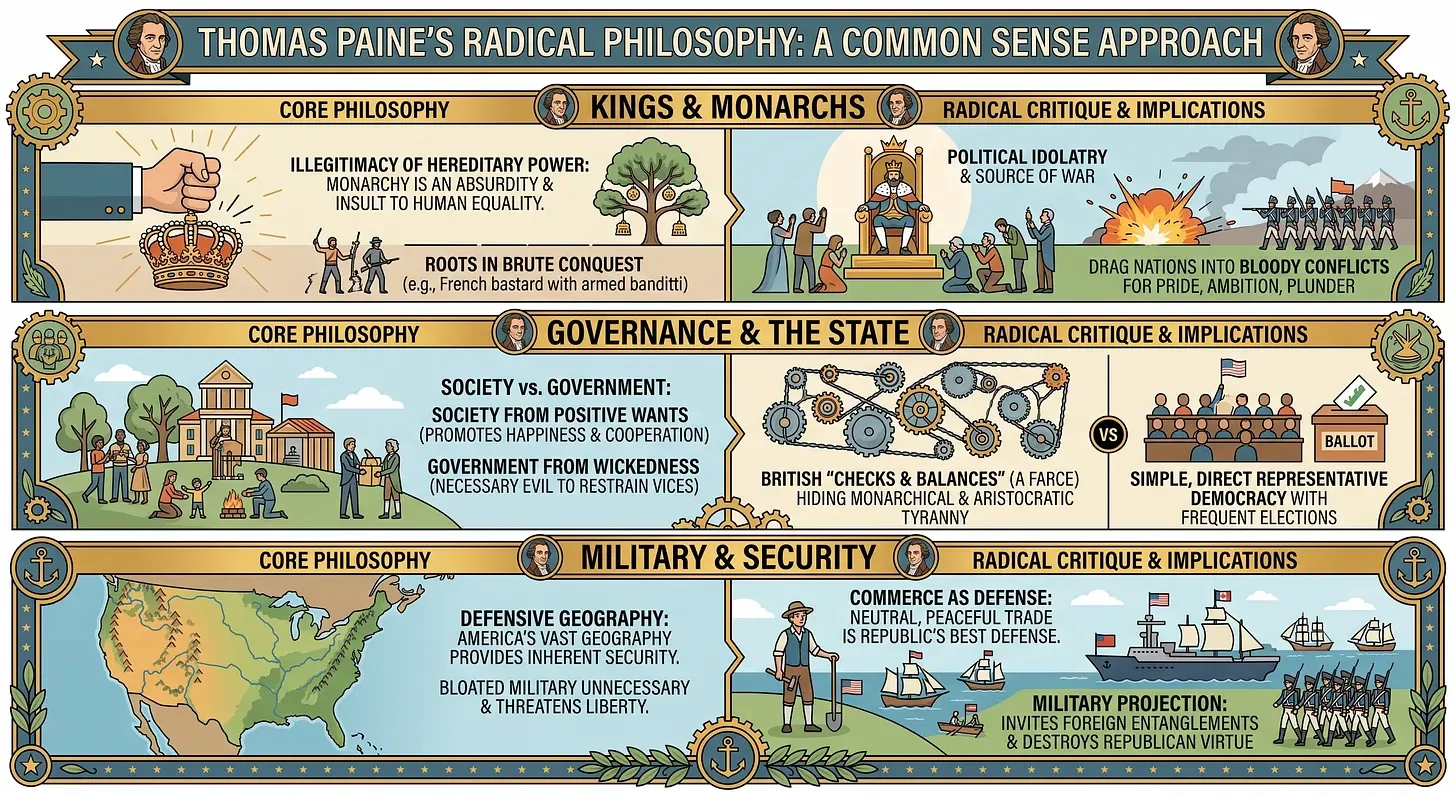
The Historical Amnesia of the Modern Garrison State
A tragic irony of present-day American politics is that the warnings given by both the radical democrats (for example, Paine) and the conservative members who had been concerned about the power of the executive being left unchecked have now been completely forgotten by the “ruling class”; today’s corporate and political leaders act with great historical amnesia and regard the propaganda of ‘American Exceptionalism’ as if it were real civic history.
By abandoning Paine’s distinction between society and government, the modern state has evolved into an uncontrolled military-industrial oligarchy. The very institutions which Paine cautioned about—permanent standing armies, covert intelligence networks, involvement in foreign military affairs, and the executive branch’s practice of declaring war—have now become the main focus of government activity. If citizens do not take the time to examine how their republic was designed, altered, and undermined, they hand over their autonomy to a managerial elite whose main objective is the continuous expansion of capital and military power at the cost of real communities and the survival of living systems and culture.
If you look at the incentives, you can usually predict the results of this or that, as I have often heard and repeated in various contexts. The people in charge have little reason to address anything truly important. This is unlikely to change until tragic events force the system and its institutional structures to break down. What happens next will depend on circumstances, not on individual, social, or political action, because most people act more like consumers than citizens who take part in their own governance. Since the beginning of civilization, people have been trained to support those in power.
Are our leaders today of the same moral fiber and determination as the founders of the United States? Hardly.
The history of the word “civilization” goes back to ancient Latin, with words like civis and civitas that referred to the civic life, duties, and shared identity of Roman citizens. By the late Middle Ages, words like “civil” had entered English. By 1600, the French verb civilizer described making behavior less aggressive or helping a community move away from barbarism (outsideism). Still, the noun “civilization” did not appear in common language for over a century, except for a brief mention in 1704 as a legal term used by court clerks to describe turning a criminal case into a civil one.
The word as we use it today took shape during the 18th-century French Enlightenment. In 1756, the Marquis de Mirabeau wrote his major work, L’Ami des hommes (The Friend of Mankind), and needed a word to describe the collective progress of human society. He coined the term “civilization,” turning an old legal term into a new philosophical idea. For Mirabeau, civilization meant the ongoing process of improving laws, manners, and knowledge, and moving away from brutality. To him and his peers, civilization was not a place or an empire, but a steady effort toward moral and intellectual growth—a certain type of progress we’ve been conditioned to believe in.
What moral code, what kind of intellectual growth?
This new idea soon spread to Britain, especially during the Scottish Enlightenment. In 1767, philosopher Adam Ferguson helped popularize the word in English with his Essay on the History of Civil Society, in which he wrote that humanity moves “from rudeness to civilization.” The word quickly became part of a cultural debate, especially in 1772 when biographer James Boswell and dictionary writer Dr. Samuel Johnson disagreed. Boswell wanted Dr. Johnson to add “civilization” to his dictionary as the opposite of “barbarity.” Dr. Johnson refused, saying the older word “civility” was enough to describe good manners and social order, and tried to keep the new word out of English.
In the end, Boswell’s choice of the word won, and Dr. Johnson’s objections were left behind as the 19th century changed the meaning of civilization again. As European empires grew and historians studied ancient societies, the word shifted from describing a general process of moral improvement to referring to specific groups. By the mid-1800s, scholars discussed different “civilizations,” such as Egyptian, Chinese, and Roman. What started as a legal term and became an Enlightenment idea of progress ultimately became a way to compare the rise and fall of different human societies.
The word “culture” did not start in fancy salons or museums, but in the fields of the countryside. It comes from the Latin verb colere, which means to till, tend, inhabit, worship, and care for the earth. From this, the word cultura referred to agriculture, farming, and the hard work of growing crops and raising animals. When “culture” entered Middle English in the late fourteenth century, it retained its original meaning, describing the cultivation of land or the care of soil. For many years, talking about “culture” meant talking about farming and working the land to produce a harvest.
Quick detour: Where has all the soil gone?
To understand how topsoil loss fits into the story of human culture, we need to look back at its roots. Before “culture” came to mean art, politics, or digital media, it was about basic biology. The word comes from the Latin colere, which means to till, tend, inhabit, and care for the earth. Originally, human culture was a two-way relationship between people and the land, the biosphere. For thousands of years, the strength of a community’s culture was judged by the health of its fields and the richness of its topsoil. Practicing culture meant knowing that our lives depended on a thin layer of living earth—a delicate mix of fungi, organic carbon, and microbes that can take up to a thousand years to form just a few centimeters of fertile soil.
When modern industrial capitalism arrived, it broke the connection between the idea of culture and its real, physical roots. In the rush for quick profits, industrial agriculture turned living soil into a lifeless base for crops. Heavy machinery and deep plowing broke the soil down to dust, while chemical fertilizers and pesticides killed the microbes that hold the soil together. Without deep roots and natural cover, the soil could no longer hold water or protect itself from the weather. What used to be a healthy, self-renewing system became a fragile powder, easily washed or blown away.
This shift to industrial farming has led to a global ecological crisis. In the past 150 years, people have removed about half of the world’s topsoil, causing erosion that far outpaces the rate at which nature can replace it. Each year, around 75 billion tonnes of fertile soil are lost from farms, carried by water into rivers and eventually the sea. This soil, saturated with artificial fertilizers, pollutes coastal waters and harms marine life, creating large dead zones in places like the Gulf of Mexico and the Baltic Sea. The UN Food and Agriculture Organization warns that if we keep farming this way, 90 percent of the world’s topsoil could be badly damaged by 2050.
Oh, so we still have time to have the conversation. Shall we talk about the Metacrisis, or the war?
This damage to the soil reveals a major problem with modern industrial society. We have created a fast-paced culture focused on digital entertainment, financial gain, and constant consumption, while ignoring the natural foundation we depend on. By breaking our connection to the land and failing to care for it, we have built a system that confuses using up natural resources with real progress. As Matthew Arnold warned, intellect without moral purpose leads to chaos. When society treats living soil as something to be used up, it shows a deep lack of awareness. If we do not care for the earth, we risk destroying the very ground our civilization stands on.
“Stanzas in Memory of the Author of ‘Obermann’” Matthew Arnold (1849):
Like children bathing on the shore
Buried a wave beneath,
The second wave succeeds before
We have had time to breathe.
The word “culture” took on a new meaning during the Renaissance, when European thinkers revisited classical Roman texts. They found that the Roman statesman Cicero had written about cultura animi, or the “cultivation of the soul.” Writers like Thomas More and Francis Bacon in the sixteenth and early seventeenth centuries began using the word to describe the careful development of the human mind. Just as a farmer works the land to grow crops, a person could improve their mind through education, philosophy, and discipline. By the eighteenth century, the French Enlightenment used culture along with civilization to describe the refinement of mind, taste, and manners that set educated people apart from those considered uneducated.
A major change in the meaning of “culture” happened in late eighteenth-century Germany, led by philosopher Johann Gottfried von Herder. Herder strongly disagreed with the French idea that “Culture” was a single, universal standard of European sophistication used to judge other societies as less advanced. In his book Ideas on the Philosophy of the History of Mankind, Herder argued that we should talk about “cultures” in the plural. He believed that each group, nation, and historical period has its own unique traditions, language, and way of seeing the world. Herder changed the word from a term that described elite intellectual achievement to one that recognized the diversity of human life.
By the nineteenth century, the word “culture” split into two main meanings that still influence us today. On one side was Victorian critic Matthew Arnold, who in his 1869 book Culture and Anarchy saw culture as an elite moral goal, calling it “the pursuit of our total perfection” through “the best that has been thought and said in the world.” Just two years later, in 1871, anthropologist Edward Burnett Tylor gave a very different, scientific definition in his book Primitive Culture. Tylor described culture broadly as “that complex whole which includes knowledge, belief, art, morals, law, custom, and any other capabilities and habits acquired by man as a member of society.”
***This is a great series on The Value of Culture.
In the twentieth century, Tylor’s anthropological view became widely adopted, leading to concepts such as subcultures, pop culture, corporate culture, and the “culture wars.” Literary critic Raymond Williams noted in 1976 that “culture” had become one of the most complicated words in English. The word changed from meaning the physical work of farming to the moral development of the soul to the many ways of life across nations and, finally, to the complex web of shared symbols, beliefs, and behaviors that help people understand their world. What started as a simple word for farming became a key way for people to try to understand themselves.
Current Events Deetour
Rob Urie’s work clarifies and makes me think.
Rob Urie’s sharp look at capital, political centrism, and media manipulation highlights a central problem of our time: modern industrial civilization cannot solve the many crises it faces because its basic incentives are the same forces causing the damage. When Enlightenment thinkers like Mirabeau and Ferguson first used the word “civilization,” they imagined it as a path toward moral growth and human improvement. Over time, though, civilization became an all-consuming system focused on the endless accumulation of capital. Urie shows, in his critique of “green capitalism” and policy experts like Robert Pollin, that our current institutions treat every major threat as just another opportunity for profit. Instead of tackling the real causes of ecological collapse by cutting fossil fuel use or slowing the energy demands of new technologies like AI, the system prefers market-friendly fixes such as carbon capture and electric vehicles. These solutions keep capital in charge and move public wealth to wealthy donors. As Matthew Arnold put it, our civilization has split “light” (honest thinking about real limits) from “sweetness” (caring for people and our planet’s living systems), turning culture from something deep and meaningful into a shallow tool for corporate gain.
What makes our planet special are living systems.
We have a problem. This happened or that. OK, so what are the causes?
The main thing holding this failing system together is a media environment designed more to calm and distract than to inform. Urie notes that most corporate journalism serves as public relations for the alliance between the state and big business, constantly reporting on surface-level issues such as rising temperatures, political divides, or global conflicts, while carefully concealing the deeper structural causes. This matches Harry Frankfurt’s idea of bullshit, in which the speaker is not just lying but is completely indifferent to the truth, focusing only on pushing a particular story. When the corporate press and government agencies control what the public hears, they create what Guy Debord called the Society of the Spectacle, in which images and passive consumption replace real human action. Urie’s look at generative AI shows the newest version of this spectacle: AI systems trained on media linked to the state, like the New York Times, the Pentagon, and the CIA, turn corporate messaging into what seems like reliable “truth.” Since 92% of people trust the first answer from a chatbot, even though only 28% trust mainstream news, AI becomes a tool that spreads propaganda and hides the interests of capital, making it harder for people to think critically and organize politically.
This ongoing refusal to face structural problems allows what Carlo M. Cipolla called “bandits with overtones of stupidity” to thrive—leaders who cause huge harm to society to gain small personal rewards or donor money. Urie shows that forty years of “centrist” neoliberal policies from both major U.S. parties have steadily destroyed working-class jobs, all in the name of being practical about the environment or economy. By passing top-down laws that hurt industrial and rural areas while enriching urban elites and corporate donors, party leaders have created a deep class divide and a strong sense of justified anger among ordinary people. Dietrich Bonhoeffer described this pattern: when a small elite holds power, the political system becomes less thoughtful and more focused on status and dogma. The result is a kind of political “centrism” that does not reflect the true middle of society, but instead is a narrow echo chamber for a few billionaires. Stuck in a situation where no group wants to give up its own advantage, leaders push forward risky competitions—such as the AI-energy race or global conflicts over resources or hegemony—even as the entire global cultural system heads toward disaster.
In the end, Urie’s argument points to a clear conclusion: only a completely new global culture could solve the deep crisis we face, but it is very unlikely that such a culture will grow naturally from our current way of life. That’s what I get from his train of thought. A society shaped by centuries of extreme individualism, market dominance, and constant pleasure-seeking cannot simply turn into a wise and balanced culture without a major break. Biophysicist Olivier Hamant says that living systems last because they are strong, have backups, and move slowly, while our financial system is built for speed, moral weakness, and endless extraction. The current system is very good at absorbing and weakening any attempt at reform, turning even the most radical ideas into brands or PR campaigns. Real cultural change will not come from small policy changes, tax breaks, or expert advice. If a healthy human culture is to emerge after the coming social, economic, and environmental reckoning, it will not come from fixing the current system from within. It will be created by people who have already left behind the spectacle, taken up the hard work of caring for their local communities, and accepted the responsibility to live within the Earth’s biophysical limits.
Let’s take another culture break before we shift our focus back to North America.
Let’s recognize that the world has long been influenced by European “Western Civilization” and, more recently, the Anglosphere (UK, USA). Its lines of inquiry have drowned out other potential points of view and possibilities for thinking about alternative ways of life. Let’s again consider that too few of us question our beliefs and assumptions.
***If you will, please listen to the episode and come back to the essay.

The crisis facing modern industrial civilization is, at its core, a problem of how we understand knowledge. We are caught in a fast-moving cycle of resource wars, intellectual property battles, and arms races. One reason this trap exists is that Western thought was divided into two separate paths more than a century ago.
In the 1880s, Matthew Arnold and Thomas Henry Huxley had a debate that shaped how we think today. Arnold believed in ‘High Culture’ as a moral and spiritual guide, aiming for ‘sweetness and light’—beauty and reason—to improve society and prevent chaos. Huxley, known as ‘Darwin’s Bulldog,’ argued that old literary traditions were outdated. He thought that, in a world of industrial competition, nations needed scientific training to survive and succeed.
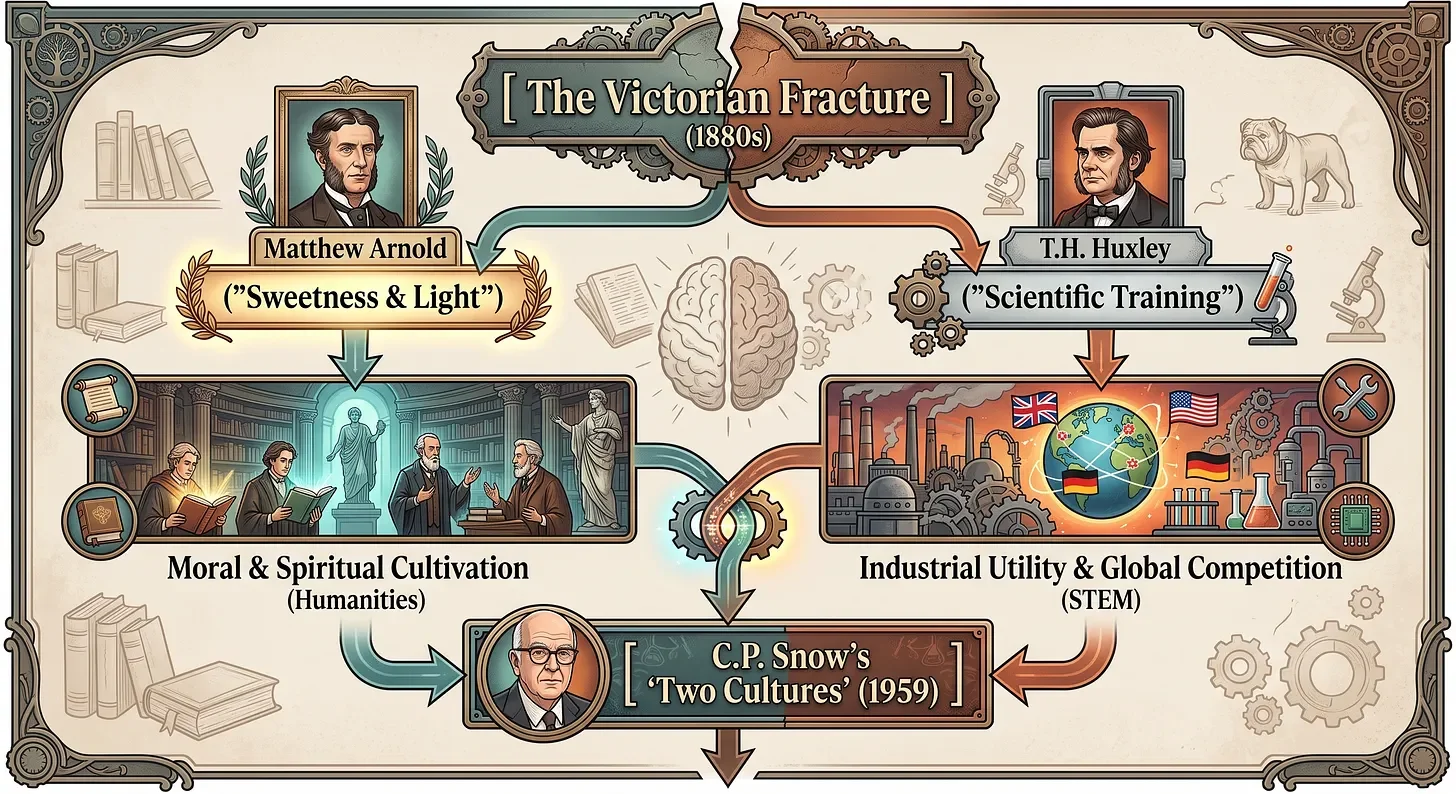
***I use Gemini for these graphic images. I rationalize the damage done by a common kind of ‘use it while you can’ logic. Very flawed. More on that later.
Technocratic Fragmentation:
• Science without Moral Direction (“Light” without “Sweetness”)
• Policy without Biophysical Grounding (“Sweetness” without Material Reality)
By 1959, when C.P. Snow gave his well-known ‘Two Cultures’ lecture, this split had become a serious problem. Western thinkers were divided into two groups: literary intellectuals and physical scientists, and neither side understood the other. The sad irony is that both lost what mattered most.
The humanities became isolated, focusing on aesthetics or administration, and lost touch with the physical realities of things like thermodynamics and ecological limits.
Science lost its philosophical and moral roots, becoming a tool for industry, military power, and profit.
Without Arnold’s focus on morals, Huxley’s idea of ‘scientific training’ turned into a highly specialized, technocratic system. Our civilization gained huge technical power (‘light’) but lacked moral wisdom (‘sweetness’).
Modern philosophy of science became popular and widely regarded as a distinct, major academic discipline in the 1920s through the 1930s with Logical Positivism (the Vienna Circle), and later underwent a massive popular revolution in 1962 with the publication of Thomas Kuhn‘s landmark book, The Structure of Scientific Revolutions.
The Game-Theoretic Trap of Modernity
This split in how we understand knowledge set the stage for today’s problems. In game theory, when everyone competes to win in a zero-sum world, they end up choosing short-term gains over long-term survival for everyone. It’s stupid.
Today, nation-states and transnational corporations are locked in a series of interconnected, self-reinforcing arms races:
The Resource & IP War: Corporations leverage patent law and intellectual property to monopolize life-saving technologies, seed stocks, energy grids, and science-based medicine, extracting short-term financial rents while destroying systemic resilience.
The AI and Technological Escalation: As tech conglomerates accelerate the development of energy-intensive AI models, no nation dares to pause. To disarm unilaterally is to risk geopolitical subjugation, even as the global energy demands of data centers accelerate ecological breakdown. The machine will eventually be unplugged. But today, for a few Players, there are trillions of dollars to be made.
Financialized Short-Termism: Global capital markets demand infinite, quarter-over-quarter exponential growth. Any corporation or government that attempts to respect biophysical limits is immediately underpriced, outcompeted, or overthrown by rivals willing to liquidate natural capital more quickly.
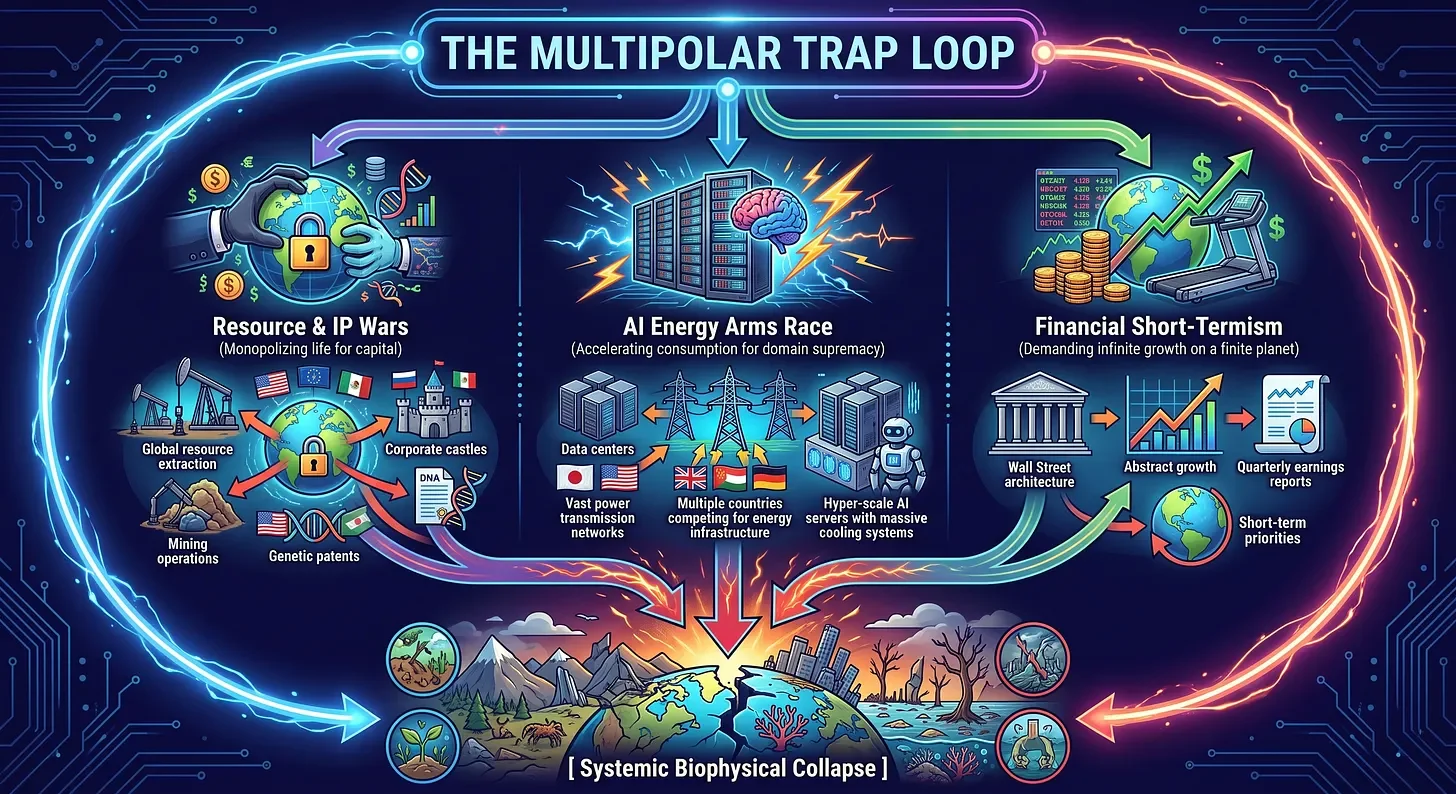
We live in a culture that accepts these incentives as normal, confusing market rules with the laws of nature. We often see corporate messaging, government propaganda, and online trends as ‘reality’ while overlooking real limits such as soil, water, energy, and power. Not to mention psycho/physical health.
Truth for Posterity: Reclaiming Critical Thinking
If our current beliefs are pushing us toward collapse, what makes a belief worth holding? How can we set standards for critical thinking that benefit living systems and future generations, rather than just serving short-term profits?
To find truths that support life, we need to move beyond both passive corporate media and narrow technocratic thinking. Real critical thinking depends on four main criteria:
1. Grounding in Biophysical Limits
Any political, economic, or social theory that assumes endless growth on a planet with limited resources is simply wrong. Real knowledge must fit with the laws of thermodynamics, ecological limits, and how nature renews itself. If an economic model ignores issues such as soil loss, ocean dead zones, or excessive carbon, it is not ‘pragmatic’—it is a form of group self-deception. It’s stupid.
2. Structural Incentive Analysis
As media critics and systems thinkers suggest, we should look at the motives behind any message. When corporate media or government-linked groups talk about big problems, they often show the symptoms but hide the real causes. A critical thinker asks: Who gains from this story? What power does this belief support?
3. Consilience (Unifying the Two Cultures)
Biologist E.O. Wilson said we need to close the gap between science and the humanities. But this does not mean letting human morality be replaced by cold logic. Real unity means combining Huxley’s focus on evidence with Arnold’s concern for morals. We need science guided by ethics, and moral thinking rooted in real-world limits.
4. Systemic Externality Auditing
A good way to judge the truth is to consider the full range of potential outcomes of any technology or policy, not just its short-term benefits. If an ‘innovation’ fixes one problem but causes greater harm elsewhere or later—like carbon capture, which requires fossil fuel use to continue—it does not pass the reality test.
Criteria for Life-Affirming Truth:
Biophysical Compatibility: Does this claim respect physical laws and planetary limits?
Incentive Transparency: Does this narrative serve systemic extraction or genuine stewardship?
Consilient Integrity: Does this integrate empirical evidence with moral responsibility?
Long-Horizon Stewardship: Does this choice preserve or deplete the conditions for future life?
The Terminal Horizon: Collapse as the Only Circuit-Breaker
On a large scale, the sad truth is that our modern world cannot simply reform itself. The way things are set up means that any country trying to cut back on consumption or step away from competition will be overtaken by others. The system is stuck. It’s stupid.
Our culture lacks the tools to prioritize long-term survival over short-term competition, and as a result, our modern industrial world is collapsing. It will not fail because we lack technical skill, but because endless growth is impossible on a limited planet. We need to grow up.
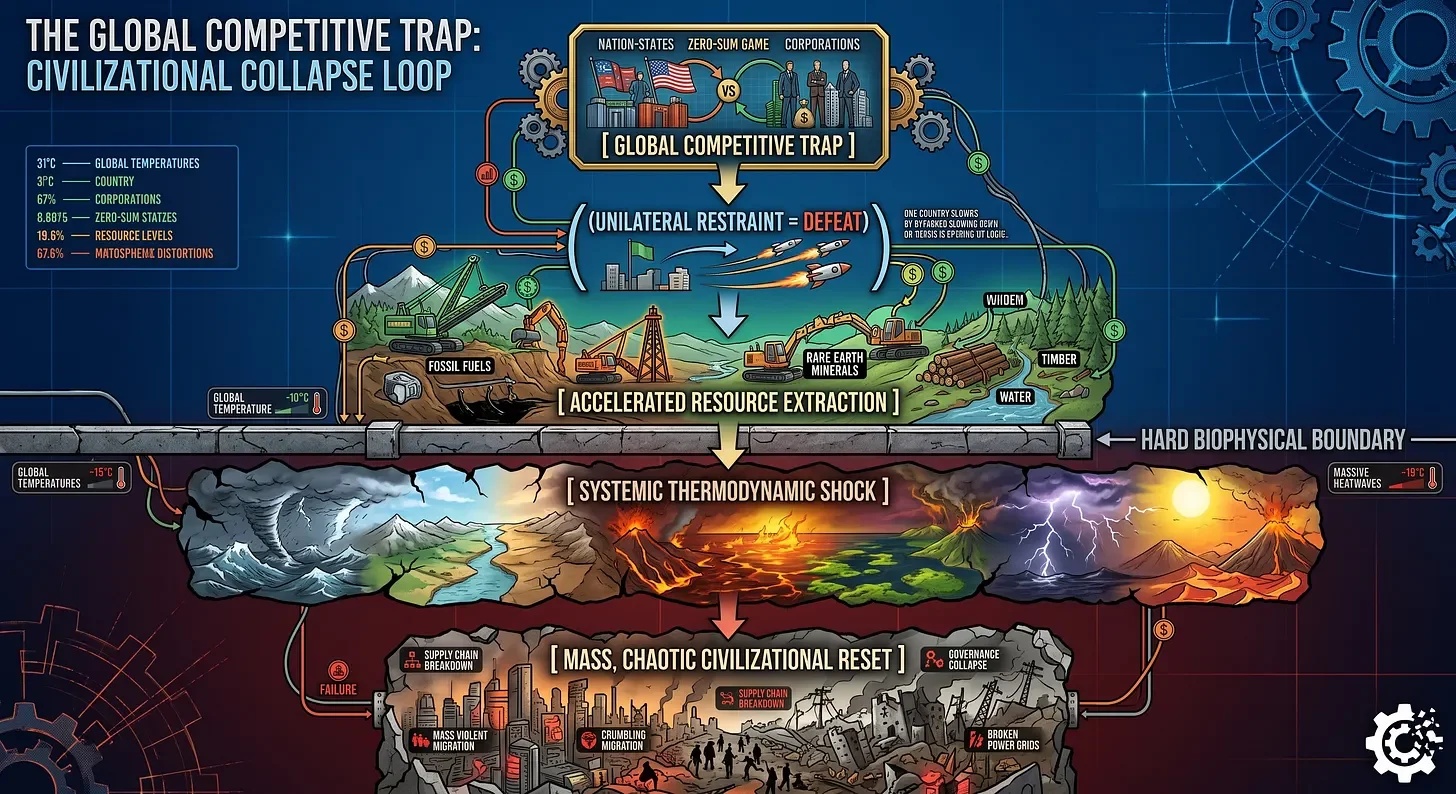
It is almost impossible for a new, wiser global culture to appear in time to fix this peacefully. Power is too concentrated, distractions are everywhere, and we depend too much on fragile supply chains.
So, our crisis will not be solved by easy technical fixes, treaties, or ‘green growth’ plans. Change will come through a rough, chaotic, and likely violent clash between human pride and the planet’s limits. The cycle will only end when our social systems break down under their own weight.
What survives after this turning point will depend on those who have quietly kept alive deeper, older wisdom—bringing together sweetness and light, science and morality, and returning human culture to its true purpose: caring for the living earth that supports us.
What did those old cultures do? What did they value? How did they live and survive for so long?
I loved this book, and I think it adds a lot to this discussion. We are all designed by what we design. The academicese does my head in a bit, but I love what Escobar is saying and the people’s work he highlights.
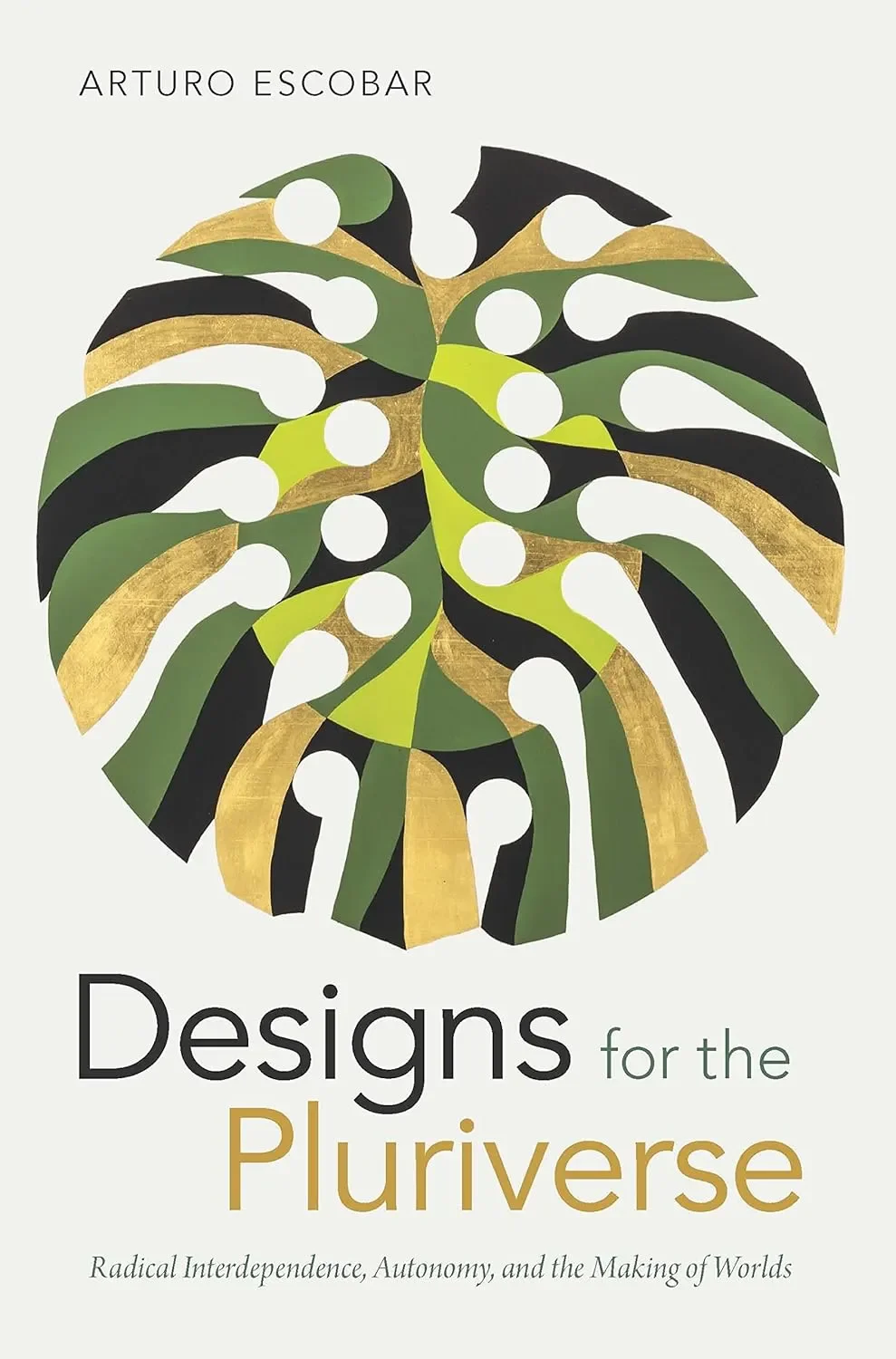
The main point Escobar advances is based on the principle of ontological design, which holds that although people design tools, spaces, and institutions, it is those creations that, in turn, shape us. Modern design is by no means neutral since it systematically influences human habits, social relationships, and our fundamental way of perceiving reality; under modern capitalism, this results in the “One-World World” (OWW). This prevailing colonial framework demands a single, uniform route to global progress and, at the same time, privatizes common resources and suppresses alternative ways of living.
To free oneself from this way of thinking, Escobar proposes an autonomous form of design grounded in radical interdependence. Instead of depending on technocratic experts from above or on corporate interests, autonomous design arises directly from the actions of Indigenous, Afro-descended, and local territorial movements, which are determining their own futures. It is based on the idea that human and non-human life forms are inextricably linked and therefore calls for design practices which promote relationality, ecological stewardship, and communal survival rather than individual consumption.
Cross-Domain Perspectives and Commentary
Design & Interaction Practice
Designers and interaction theorists see the book as a strong criticism of the conventional approach known as “human-centered design” (HCD). Those who criticize the field point out that traditional HCD tends to reduce the full range of human existence to consumer convenience, interface optimization, and commercial efficiency. Design professionals cite Escobar to argue that designers should go beyond superficial solutionism and address the political consequences of their work by considering whether a product or system promotes genuine community self-reliance or strengthens corporate control.
Anthropology & Cultural Studies
In anthropology, the text is seen as a key link between material culture and political theory. Anthropologists have praised Escobar for showing that physical infrastructures, technological platforms, and urban planning directly embed Eurocentric hierarchies into everyday life. The book is often cited as an example of how physical objects can either maintain imperial dominance or serve as a means of cultural resistance.
Political Ecology & Environmental Humanities
Environmental researchers regard Escobar’s firm belief that the global ecological crisis is essentially a crisis of modern design as valuable. Instead of supporting greenwashing or geo-engineering solutions, political ecologists use the text to argue that achieving climate resilience requires epistemic justice, which means prioritizing local, land-based ecological knowledge and protecting physical territories from industrial extractivism.
Decolonial Movements & Grassroots Activism
The book provides a practical framework for social movement organizers when it comes to giving up Western ideas about development; activists and community leaders often cite Escobar’s concept of “a world where many worlds fit”—the pluriverse—as a reason for setting up their own autonomous and self-sustaining community projects outside both state and corporate structures.
3. Psychological Dynamics of Compliance & Denial
The American Ethos: Exceptionalism, Hedonism, and the Cult of Self-Optimization
Middle and upper-middle-class American culture is shaped by a powerful story that blends Calvinist predestination, Manifest Destiny, and consumer capitalism. It’s such a fine and pious mix. In this view, material success and personal comfort are seen not just as lucky outcomes, but as proof of personal virtue. This mindset encourages a strong, outward optimism and a required “feel-good” attitude, where personal branding, status symbols, and the pursuit of peak experiences take the place of civic responsibility and awareness of larger issues. Beneath this surface of friendliness, however, there is a foundation marked by militarism, Western supremacy, a fascination with guns, hidden racial hierarchies, and a near-religious devotion to free-market ideals. In this culture, being asked to face uncomfortable truths feels like a personal attack, and anything that disrupts emotional comfort is treated as a serious offense. The status quo is a comfort zone.
The Utility of Hate
In society, hate is not just an irrational flaw but a surprisingly effective way to organize people. Building unity through love and shared values takes time and trust, but hatred can quickly bring groups together. When a society finds a common enemy, it can quickly set aside internal differences, ease collective worries, and create a strong sense of belonging among people who might otherwise compete with each other.
Eric Hoffer and the Engine of Mass Movements
In his 1951 book The True Believer, Eric Hoffer argued that hatred is the strongest force holding political and religious movements together. He noticed that positive ideas rarely have enough emotional power to unite millions of people, but having an enemy makes things simple and gives people a clear focus for their anger. As Hoffer wrote, “Mass movements can rise and spread without belief in a God, but never without belief in a devil.” He believed that hate helps people avoid personal responsibility by turning their own struggles and fears into a shared fight against an outside threat.
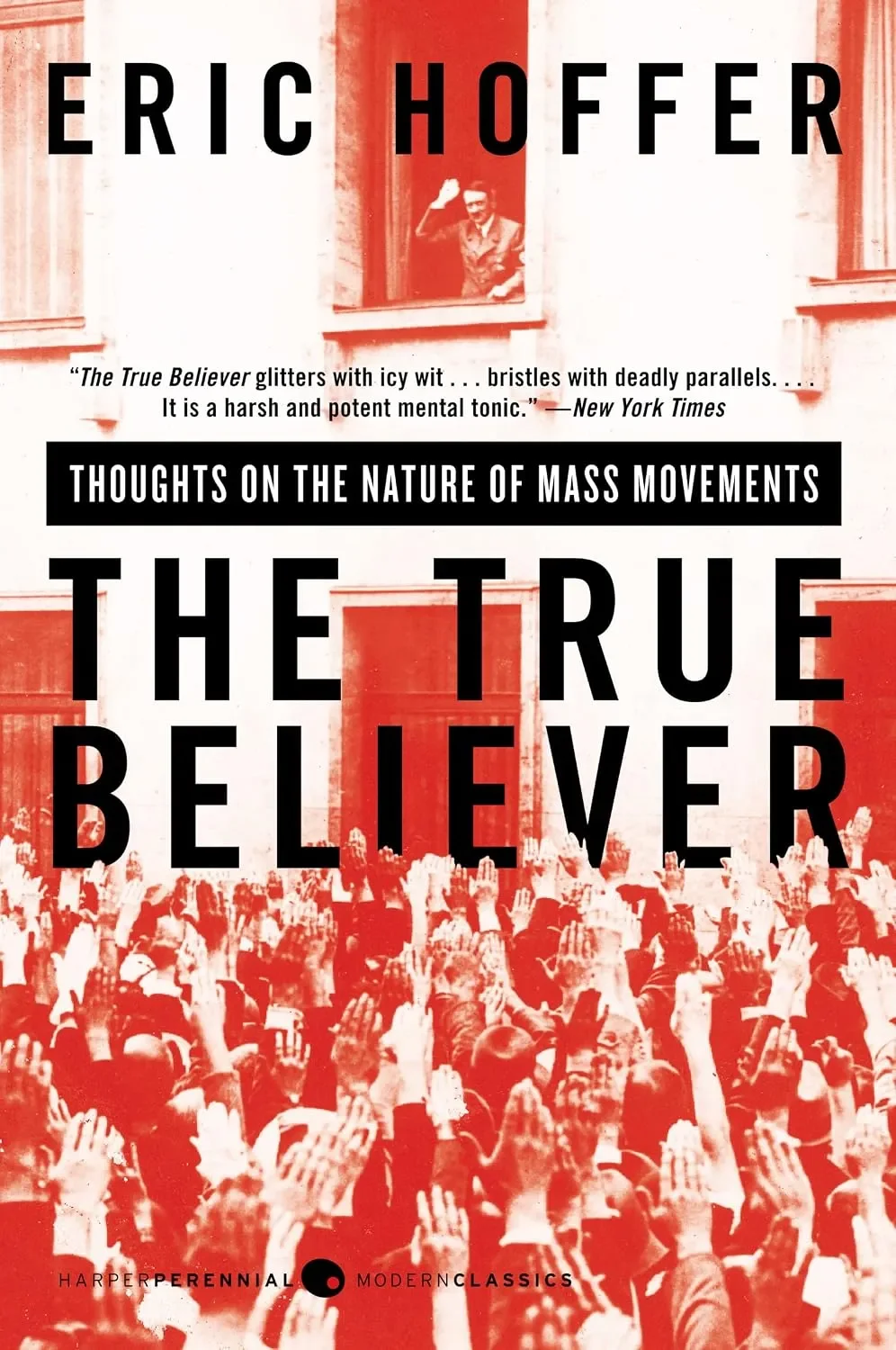
René Girard and the Scapegoat Mechanism
René Girard, an anthropologist and philosopher, saw collective hatred as an early way for societies to manage internal conflict. In books like Violence and the Sacred, he explained that people naturally compete for the same things, which can lead to dangerous tension. To avoid falling apart, societies often focus their anger on one person or group—the scapegoat. Girard said, “The scapegoat mechanism transforms a war of all against all into a war of all against one.” By coming together against a common target, the group feels relief and temporary peace. Hence, this pattern of shared hatred keeps showing up as a way to maintain order—pogroms, rational but stupid.
Friedrich Nietzsche and the Creativity of Ressentiment
In On the Genealogy of Morals, Friedrich Nietzsche showed that hatred, especially in the form of ressentiment, can actually drive moral and cultural change. He believed that groups without power, who cannot fight back directly, turn their hidden anger into new ways of thinking about right and wrong. As Nietzsche put it, “The slave revolt in morality begins when ressentiment itself becomes creative and gives birth to values.” This kind of hatred can flip old ideas, making what was once seen as strong or noble look bad, and turning weakness into a moral good. In this way, hate becomes a tool that can reshape the values of entire societies.
Ressentiment is a deep-seated psychological state of rivalry, hostility, and frustration. It happens when a person feels weak, inferior, or unable to change their low status in life. Because they cannot act out their anger or win against what they hate, they turn that pain inward and create new moral values that make their weakness look like a virtue. [1, 2, 3, 4]
Powerlessness: The person feels totally stuck and unable to fight back or fix their social standing.
Revaluation of Values: Instead of admitting envy, they claim that the strong and successful are “evil,” while the weak and humble are “good”.
Chronic Repression: Normal feelings like jealousy and anger build up over a long time without ever finding a healthy release. [1, 2, 3, 4, 5]
Hannah Arendt and Totalitarian Mobilization
Political thinker Hannah Arendt studied how modern leaders use hatred to break down community bonds and take total control. In The Origins of Totalitarianism, she showed that these regimes do not just use existing hatreds—they actively create enemies to turn isolated people into obedient crowds. By inventing a constant, threatening enemy, the government can take away freedoms, force everyone to think the same way, and demand complete loyalty. Arendt believed that state-driven hatred works because it stops people from thinking for themselves, making it so that “the ideal subject of totalitarian rule is not the convinced Nazi or the convinced Communist, but people for whom the distinction between fact and fiction… and the distinction between true and false… no longer exist.”
And after you read Arendt, read this to understand how public intellectuals are often used by the Empire.

During the Cold War, freedom of expression was vaunted as liberal democracy’s most cherished possession—but such freedom was put in service of a hidden agenda. In The Cultural Cold War, Frances Stonor Saunders reveals the extraordinary efforts of a secret campaign in which some of the most vocal exponents of intellectual freedom in the West were working for or subsidized by the CIA—whether they knew it or not.
Called “the most comprehensive account yet of the [CIA’s] activities between 1947 and 1967” by the New York Times, the book presents shocking evidence of the CIA’s undercover program of cultural interventions in Western Europe and at home, drawing together declassified documents and exclusive interviews to expose the CIA’s astonishing campaign to deploy the likes of Hannah Arendt, Isaiah Berlin, Leonard Bernstein, Robert Lowell, George Orwell, and Jackson Pollock as weapons in the Cold War. Translated into ten languages, this classic work—now with a new preface by the author—is “a real contribution to popular understanding of the postwar period” (The Wall Street Journal), and its story of covert cultural efforts to win hearts and minds continues to be relevant today.
When public conversations are filled with fear and hate, it usually is not just random chaos. Instead, it is a deliberate strategy used by weak institutions, oligarchs, and political leaders to make people obey, stop them from thinking critically, and hold onto power during times of crisis.
Joy and Happiness
Wise practitioners in psychology, philosophy, and spiritual traditions point out that happiness and joy are different. Happiness is a temporary, reactive feeling. It is a pleasant boost that comes from good situations, reaching goals, or outside excitement, but it fades as soon as things change. We gulp down neurohormonal happiness cocktails. Joy, on the other hand, is a deeper and more lasting state that does not depend on whether things are going well or badly. Happiness relies on everything going right, but joy is rooted in meaning, gratitude, and strong connections, helping people feel at peace even in hard times or in times of loss. Joy is calm, quiet, loving.
Yongye Mingyur Rinpoche became known worldwide as one of the “happiest” people ever studied. This reputation comes from both pioneering brain research and his own ability to overcome severe psychological distress.
Keep the following section in mind as you consider the research below.
Both fMRI and EEG are reliable, peer-reviewed methods, but they do not read minds or directly capture thoughts. Functional MRI tracks changes in blood oxygen levels, which helps identify brain activity at a few millimeters, though it responds slowly, over several seconds. In contrast, EEG records electrical signals from groups of neurons on the scalp, allowing for very fast, millisecond-level tracking of brain activity, but it cannot pinpoint the exact location as precisely as other methods, instead covering larger areas.
In real-world use, these tools help show how the brain organizes and coordinates its networks during different tasks or mental states. Researchers use fMRI to map brain networks, for example, by watching how the Default Mode Network becomes less active during focused thinking. EEG measures overall brain-wave patterns, such as alpha and gamma waves, and tracks rapid responses to sensory input. It is also a key clinical tool for diagnosing epilepsy, checking for sleep disorders, and mapping important motor areas before brain surgery.
The Indirect Proxy Problem: Functional MRI measures blood flow in specific brain areas, not direct nerve cell activity. Since blood flow changes occur a few seconds after neurons fire, fMRI captures a combined metabolic signal rather than real-time thoughts.
The Reverse Inference Fallacy: Early neuroimaging studies often assumed that each brain region corresponded to a single emotion. Today, scientists know that brain areas have many overlapping roles, so seeing activity in places like the amygdala or prefrontal cortex does not clearly show a specific feeling such as fear or happiness.
Statistical Noise and Data Volume: Examining thousands of 3D data points simultaneously can easily lead to false positives. In 2009, researchers showed this problem by scanning a dead Atlantic salmon, showing it pictures, and still finding ‘significant’ brain activity because they did not adjust for multiple comparisons.
Correlation, Not Causation: Neither method can prove that a certain biological change causes a mental state. Both fMRI and EEG record changes that happen at the same time as a behavior or feeling, but they do not show which one causes the other.
Neuroscientific Evidence of Exceptional Plasticity
In the early 2000s, Mingyur Rinpoche took part in brain research led by Dr. Richard Davidson at the University of Wisconsin–Madison. During meditation on compassion, his fMRI and EEG scans showed remarkable results:
Gamma Wave Spikes: His brain showed gamma-wave activity, which is linked to greater awareness, improved coordination, and positive feelings. During compassion meditation, this activity increased by 700%-800%, far above normal levels.
Prefrontal Cortex Dominance: The scans also showed much higher activity in his left prefrontal cortex compared to the right. This brain pattern is closely linked to strong emotional resilience, calmness, and greater everyday happiness/Joy.
“Making Friends” with Severe Childhood Anxiety
Rinpoche’s happiness did not come naturally. He achieved it through profound personal change. As a child, he struggled with severe panic attacks and social anxiety. Rather than trying to avoid his fear, his father, the master Tulku Urgyen Rinpoche, encouraged him to treat panic as a teacher. By learning to observe his anxiety with curiosity and without judgment, a process he calls “making friends with panic,” he turned his main source of suffering into a path to inner peace.
An Accessible View of Mind
In his books (The Joy of Living, Joyful Wisdom), Rinpoche explains happiness in simple terms. He believes that basic awareness and contentment are natural parts of the mind, like the sun shining behind clouds, not things we have to create or buy. His main teaching is to practice short, regular moments of open awareness each day, so that building resilience becomes a flexible habit rather than a strict routine.
Testing Practice Against Real-World Extremes
In 2011, Rinpoche quietly left his monastery to begin a four-and-a-half-year wandering retreat. He lived as an unknown, penniless yogi in India and Nepal. Early on, he became seriously ill while waiting at a train station. As his body and sense of self weakened, he used his meditation training to face his fear of dying. He came through this experience with a deep sense of joy and freedom, which he describes in his memoir, In Love with the World.
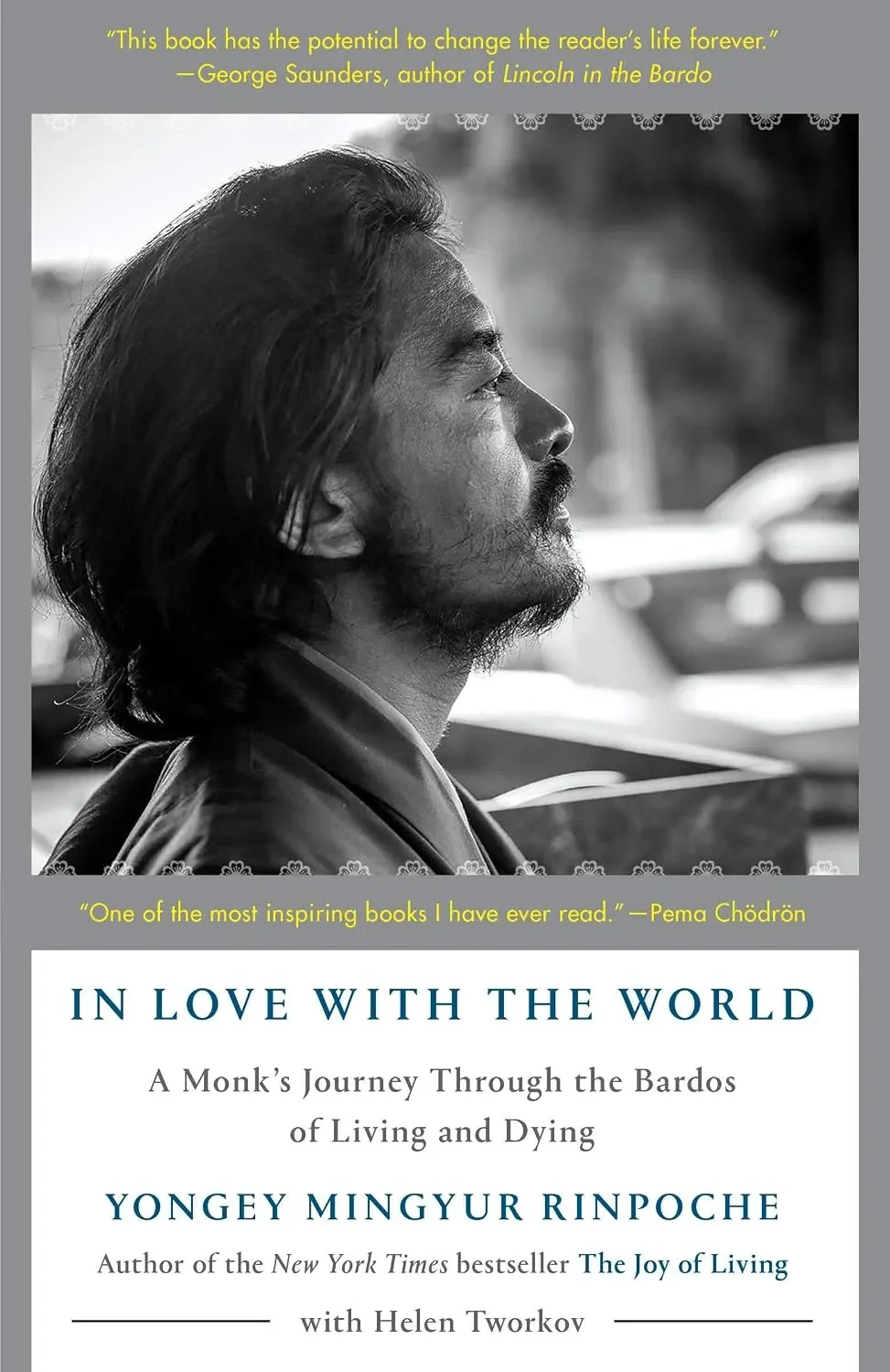
“Joy is much bigger than happiness. While happiness is often seen as dependent on external circumstances, joy is not.” — Archbishop Desmond Tutu
“While happiness is dependent on external conditions, joy is the experience of knowing that we are unconditionally loved, even in the midst of sorrow.” — Henri J.M. Nouwen
“Happiness is tied to circumstances, but joy is tied to spirit and gratitude... Joy is a way of seeing the world, an attitude of the heart.” — Brené Brown
“Joy is distinct from pleasure; it must have the stab, the pang, the longing... I doubt whether anyone who has ever tasted it would, if the power were given him, have exchanged it for all the pleasures in the world.” — C.S. Lewis
Wisdom
Wisdom often seems ordinary because it avoids abstraction, jargon, and big promises. The analytical mind breaks the world into parts, mastering systems, feedback loops, and mechanical causes. In contrast, wisdom stays grounded and connects with reality as it is. Understanding how an economic engine or a neural network works requires a specialized mindset capable of mapping out complex relationships. But knowing how to live within human limits, how to handle loss, and when to stop pushing requires wisdom. Analytical thinking aims to control complex systems, while wisdom asks whether that control supports human well-being, emotional balance, and common sense.
Researchers who study wisdom make a clear distinction between practical, reality-based wisdom and technical expertise. Sociologist Monika Ardelt, who developed the Three-Dimensional Wisdom Scale, shows that wisdom does not come from accumulating a lot of technical information. Instead, it depends on clear thinking, self-reflection, and compassion. This combination helps people see reality without fooling themselves. Cognitive scientist John Vervaeke also separates “knowing that” from what he calls “participatory” and “perspectival” wisdom. For him, wisdom means being able to handle daily life by constantly adjusting your perspective, avoiding self-deception, and focusing on what truly matters in the moment.
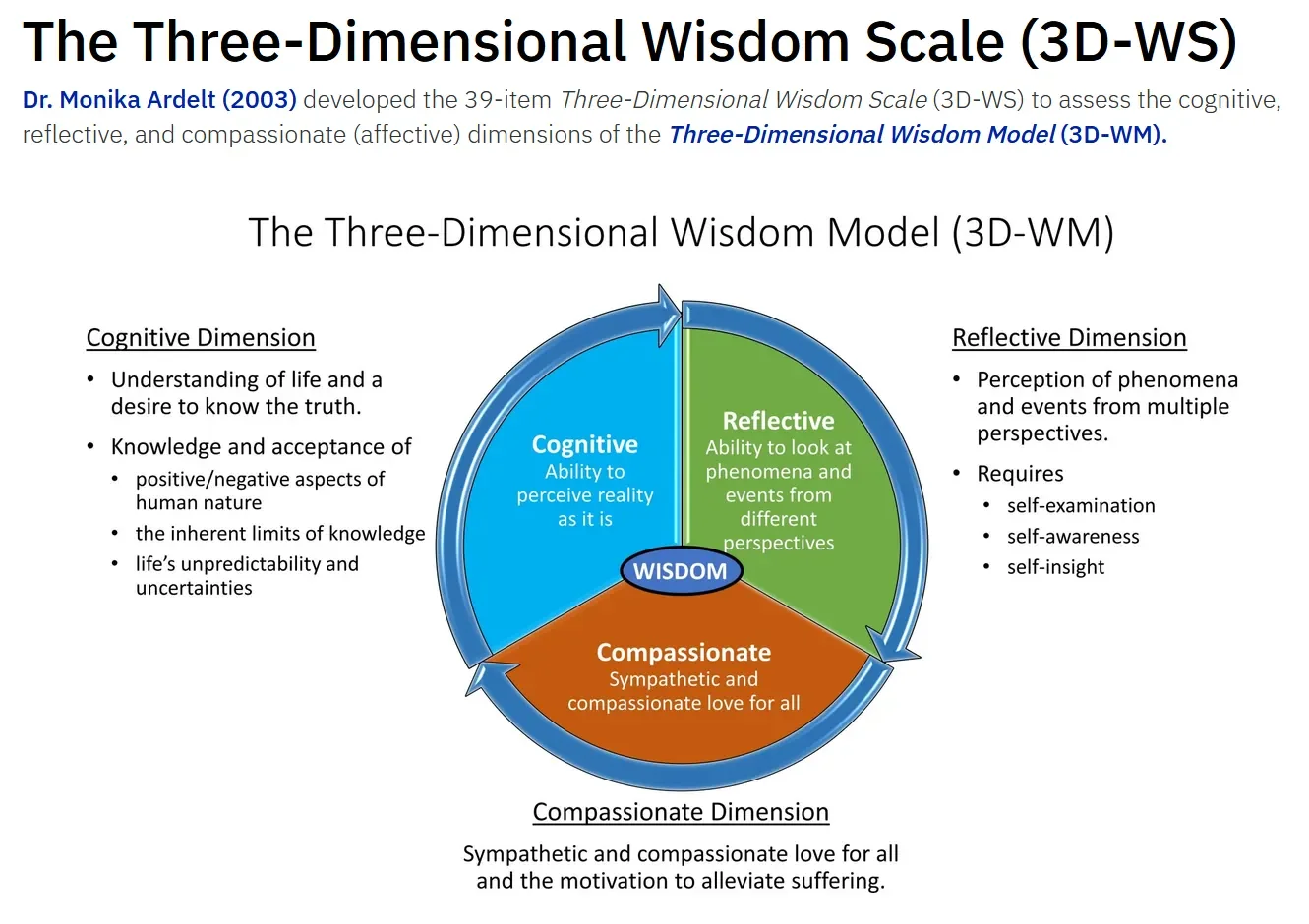
A wise person understands the difference between technical skill and practical living, but values both. They respect the hard work needed to master complex systems and know that scientific discipline takes real effort. They see that technical brilliance without wisdom can lead to arrogance and create systems that are impressive but harmful. Wise people do not mistake models or shortcuts for reality. They know that nothing can replace the steady, everyday effort of managing emotions and making good moral choices.
In the end, wisdom shows its strength not through big heroic actions, but by staying calm and steady in everyday life. It turns ordinary moments into opportunities for personal growth. A wise person finds real peace in daily routines, handling the simple demands of life with patience, presence, and a sense of humor. They do not expect life to always be exciting or extraordinary. Instead, they focus on meeting daily reality with steady, practical grace.
I asked my first father-in-law once what kept him going (he was a hardcore salaryman), and he said, “Obligation.” He drank a lot after work. I don’t know if he was joyous or wise. Obligation is a powerful motivator and can be healthy, joyous, and wise if we can find our obligations meaningful and connected to fulfilling relationships.
“The most beautiful lives are, in my opinion, those that conform to the common human pattern, with order, but without miracle and without eccentricity.” — Michel de Montaigne
“Before enlightenment, chop wood, carry water. After enlightenment, chop wood, carry water.” — Zen Proverb
“Wisdom is expert knowledge in the fundamental pragmatics of life—the knowledge of how to conduct oneself when facing the most critical, ambiguous, and inescapable problems of human existence.” — Paul Baltes, pioneer of the Berlin Wisdom Paradigm
“Manifest plainness, embrace simplicity, reduce selfishness, have few desires.” — Lao Tzu
Extreme Individualism
Writers, philosophers, and critics from around the world have examined the unique problems of the highly individualistic mindset in the United States. In The Culture of Narcissism, Christopher Lasch argued that modern American life replaced political change with a focus on personal therapy, leading people to seek emotional comfort and quick rewards instead of real democratic involvement. James Baldwin also pointed out that Americans often lack self-awareness, holding tightly to an idea of “innocence” to hide deeper issues like violence, racism, and imperialism.
I noticed some of these traits as a child. In high school, reading books like “Black Like Me” by John Howard Griffin, The Robber Barons: A Definitive History of the Gilded Age Titans Who Transformed the American Economy by Matthew Josephson, and Africa Must Unite by Kwame Nkrumah (1909- 1972), and The Autobiography of Malcolm X—no joke, these books were assigned—I became more aware of my own and other cultures. We studied Watergate in great detail as events unfolded in Current Events class, and discussed the Vietnam War from various critical perspectives. These experiences go back to middle school. I had also traveled extensively before middle school; the first time I visited Japan, I was seven years old. I spent a lot of time in County Clare, Ireland, growing up. I toured East Africa with my family when I was twelve. All of my experiences led me away from blind patriotism, or a sense of supremacy. I was never afraid to visit friends on the other side of town. Lucky me.
Philosopher Byung-Chul Han adds that Western hyper-individualism turns people into “projects” who push themselves too hard, focusing on positivity and high performance while treating big problems as personal issues to be managed with wellness habits. Neil Postman also warned that American culture keeps people passive not by force, but by constant pleasure, turning serious discussions and real dangers into entertainment until people can no longer take meaningful political action. Think of our ubiquitous, always-on internet infotainment. Most of what you see in your Samsung, Apple, or Microsoft news feeds is trash meant to sell you garbage—a form of selling shit to the sewer. After a while, consumers of infotainment start to feel that everything stinks.
JOY: Erich Fromm and the Radical Humanism of Being
I read Erich Fromm in my early 20s, a lot of people had read him before me, and here we are. It seems no amount of wisdom and insight can stop the jaugernaut of our desire to explore, exploit, extract, produce, own, and dominate, no matter what it ultimately costs us.
Real joy cannot exist in a culture that confuses possession with existence. Erich Fromm combined Marxist sociology with Freudian psychoanalysis to identify the fundamental illness of advanced capitalism: a condition of deep alienation in which people see themselves as separated off as commodities rather than as living individuals. In a modern society characterized by a “marketing orientation”, people do not just sell their physical labor but also their personalities, tastes, and inner lives, turning human existence into an asset packaged to achieve social status and market value. This results in a “socially patterned defect,” since society regards “automaton conformity”—that is, becoming part of the machine to avoid being unusual—as psychologically normal. Genuine joy is not simply a passive neurochemical surge or a reward for conforming to consumerism; it is the spontaneous and active manifestation of the “Being mode” of existence, in which a person connects with the world through love, reason, and productive work without giving up their individuality.
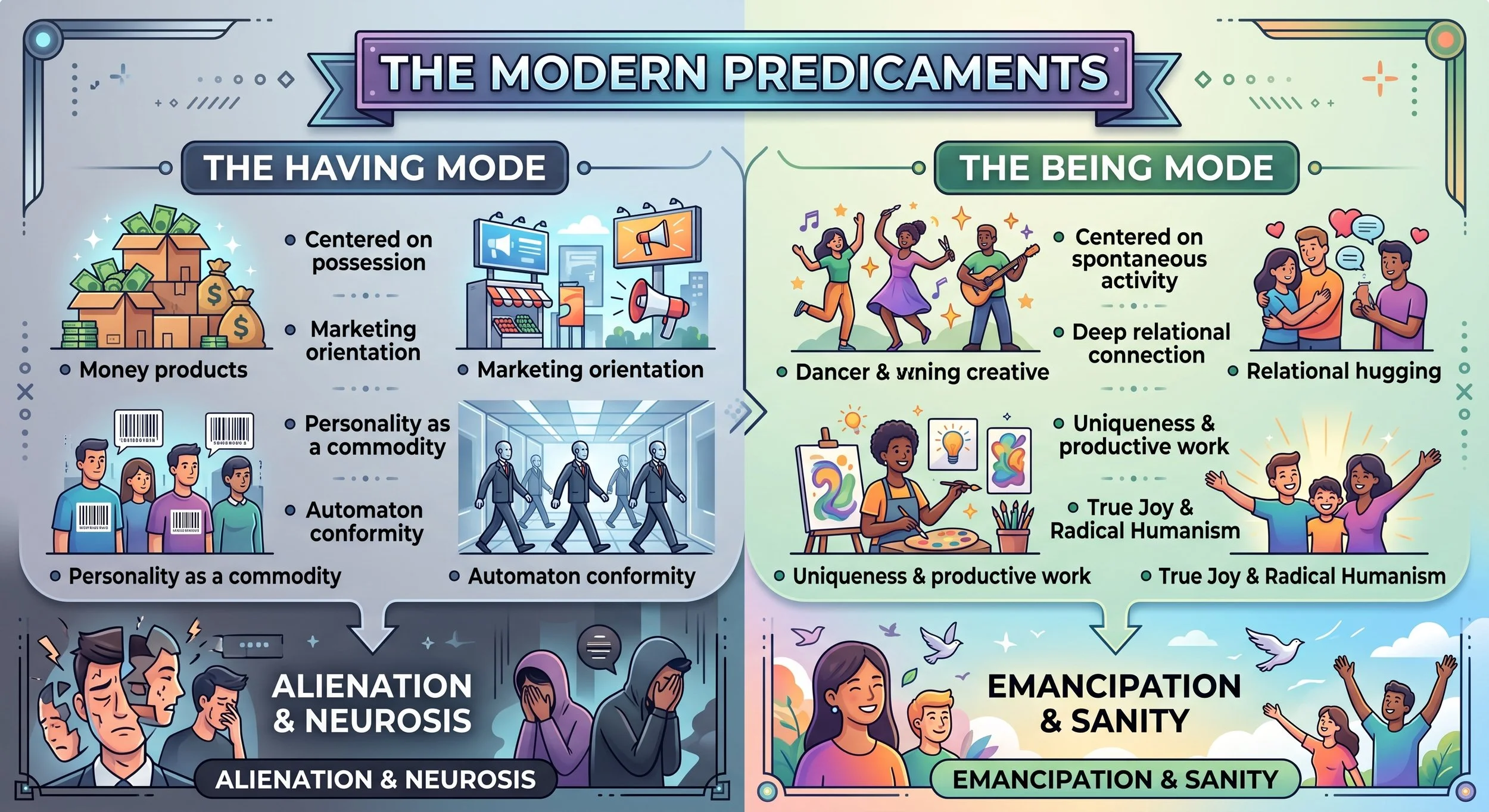
To explain why modern consumerism does not lead to lasting well-being, Fromm identified seven basic existential needs that every human being must fulfill to avoid neurosis and social isolation. If a socio-economic system directs these needs towards commodification, the outcome is psychological disintegration.
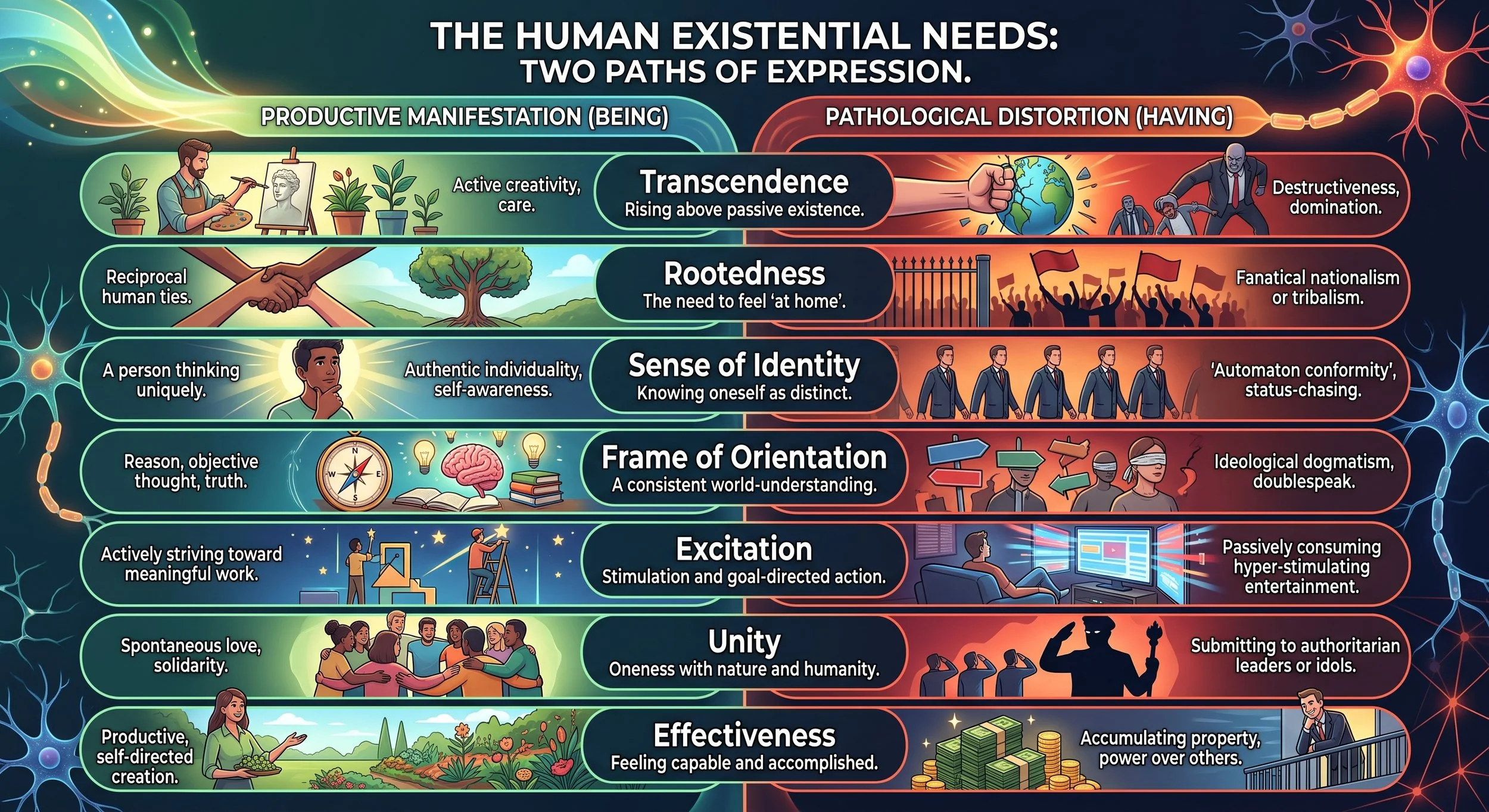
To regain joy, it is necessary to make an emancipating shift from the “Having mode” to the “Being mode”, a process which relies on what Fromm called “Critical Pedagogy”. In the context of late capitalism, education serves to prepare obedient servants, whereas a more humanized form of education should teach what Fromm referred to as a “structuralized worldview” – that is, the ability to link one’s own psychological suffering directly to the wider socioeconomic structures. Critical theorists across various fields have agreed with Fromm’s emphasis on overcoming ideological confusion. The Brazilian educator Paulo Freire made extensive use of Fromm’s Escape from Freedom in his fundamental work Pedagogy of the Oppressed, maintaining that liberation involves getting rid of the “banking concept of education” (in which students are seen as passive recipients of fixed data) and replacing it with a dialogic approach based on posing problems, thereby restoring human agency. In a similar way, Herbert Marcuse, Freire’s colleague at the Frankfurt School, noted in One-Dimensional Man that industrial society produces “false needs” which tie people to consumerism, thus supporting Fromm’s warning that people give up their freedom because genuine autonomy appears to be an unbearable burden.
The realization of Radical Humanism requires a political structure which Fromm referred to as “communitarian socialism”—a Sane Society based on participatory democracy and humanized technology. Instead of organizing economic activity with the aim of maximizing production and capital accumulation, society should judge its success by how much it promotes optimal human development. Fromm imagined decentralized, face-to-face meetings consisting of about 500 citizens in which people take part in dialogic discussion so that local government will remain directly attuned to human needs rather than being influenced by corporate lobbying. This degree of political decentralization corresponds to Ivan Illich’s idea of “convivial tools”—that is, technologies and institutions intended to strengthen personal autonomy and community interdependence rather than impose technocratic control.
Fromm shows clearly that unless there is a fundamental inner transformation, neither a political revolution nor technical progress will be able to cure our social pathology. Joy should be considered the highest moral and psychological test that a culture can pass; a society which turns every relationship, every resource and every emotion into a market transaction will certainly end up with widespread anxiety and despair. This is exactly what Fromm stated in The Sane Society: “The Age of Man... can only come into being if a New Man comes into being. Inner transformation is therefore a necessary precondition for the transformation of society.”
4. Comparative Ontologies & Secular Metaphysics
Comparative Cultural Frameworks
Although we have visited this above, there are many ways to approach the process. To understand why North Americans often feel stuck when facing multiple crises, it helps to compare their values with those from other cultures (as far as one can). While American middle-class culture values personal freedom, self-improvement, competition, and individual achievement, East Asian traditions in countries such as Japan, South Korea, and China emphasize social harmony (Wa), moral duty (Giri), and modesty. (OKAY, they are MTI cultures too, but there are differences.) In the same way, African philosophies like Ubuntu stress deep interdependence, believing that each person’s life is closely connected to the community.
Modern Techno-Industrial civilization is a global, growth-obsessed system powered by fossil fuels and high technology. It consumes resources faster than the Earth can renew them, driving humanity deep into ecological overshoot. [1, 2, 3]
These basic differences shape how societies respond to big challenges and suffering. In a crisis, American culture often turns to self-improvement, self-protection, and the pursuit of pleasure, viewing suffering as a personal problem to fix. (That’s the positive side; the negative side can be expressed in one word: gangsterism.) In contrast, East Asian cultures encourage collective endurance (Gaman) and civic duty, viewing hardship as something to face together with dignity. African traditions focus on community support and honoring ancestors, viewing suffering as a shared issue requiring everyone’s help. While Americans often see power as a competition to win, these other cultures connect authority to duty, respect for elders, and group agreement.
Cultures are shifting spectrums of values, concerns, expressions, creations, etc., so let’s not get too caught up in this or that take on various cultures. Still, let’s notice the differences so we might also find what we have in common. All cultures express gangsterism in unique ways.
I often refer to cultures I have had extensive experience with, but there are so many others.
Amazonian Multinaturalism and the Living Forest
In the Amazonian rainforest, Indigenous groups such as the Yanomami and Kichwa engage with an ontology that anthropologist Eduardo Viveiros de Castro identifies as “Amerindian Perspectivism.” In contrast to Western naturalism, which conceptualizes nature as an objective and passive backdrop to human culture, Amazonian cosmology regards plants, animals, and spirits as subjective beings with distinct cultural lives. In Cannibal Metaphysics, Viveiros de Castro notes that Western thought posits “one nature and many cultures,” whereas Amerindian thought recognizes “one spirit across many natures.” Anthropologist Eduardo Kohn, in How Forests Think, further demonstrates that non-human life participates in complex forms of representation and communication, indicating that human symbolic thought constitutes only a subset of a broader living semiotics. Within this worldview, hunting or harvesting is understood not as resource extraction but as an act of diplomacy between equal subjects.
The Australian Dreaming and the Relational Everywhen
For Indigenous Australians, land is not regarded as an economic asset to be owned, but as an eternal, living tapestry interwoven through the “Dreaming,” a spatial and temporal continuum that anthropologist W.E.H. Stanner described as the “Everywhen.” Land is navigated through Songlines, which are oral maps encoding millennia of ecological knowledge, kinship obligations, and ethical duties into music and geography. Anthropologist Wade Davis, in The Wayfinders: Why Ancient Wisdom Matters in the Modern World, observes that Aboriginal peoples did not seek to alter or dominate their environment, but instead devoted their intellectual efforts to maintaining the spiritual and biophysical equilibrium of the earth. Davis further emphasizes that “other cultures are not failed attempts at being us; they are unique manifestations of the human spirit,” demonstrating that human civilization can persist for tens of thousands of years without reliance on extractive growth models.

“First Law.”
Tyson Yunkaporta, in his book Sand Talk, draws a clear link between Western physics, especially the First Law of Thermodynamics, and the core Aboriginal idea of ‘First Law’. In this view, creation is always happening, marked by constant movement and relationships rather than by fixed structures. Yunkaporta says people are meant to act as caretakers within this connected energy system. Our role is to move with the land’s natural cycles, sharing knowledge, energy, and resources through networks rather than hoarding wealth or trying to control nature. He argues that human suffering and environmental damage stem from breaking the First Law—the belief that humans are above the land and other living things. When modern society tries to control nature in a strict, linear way, it breaks the feedback loops that keep the planet balanced. By comparing this industrial mindset with Indigenous ways of seeing patterns, Yunkaporta shows that respecting the laws of conservation and mutual responsibility is crucial for life on a planet with limited resources and delicate ecosystems.

Andean Ayni and the Pluriverse
In the High Andes, Quechua and Aymara communities structure social and economic life around the principles of Ayni (sacred reciprocity) and Sumak Kawsay (Buen Vivir, or living well together). In this context, wealth is measured not by individual capital accumulation, but by the strength of mutual obligations among humans and Pachamama (Mother Earth). Anthropologist Arturo Escobar, in Designs for the Pluriverse, contends that these relational ontologies present a substantive alternative to modern globalized development, envisioning a “world where many worlds fit.” Indigenous botanist Robin Wall Kimmerer, in Braiding Sweetgrass, similarly notes that in Indigenous gift economies, “wealth is understood to be that which is given away,” thereby transforming the human role from consumer to active participant in an honorable harvest.
Southern African Ubuntu and Relational Personhood—mentioned above
Throughout Southern Africa, the philosophy of Ubuntu—expressed in the phrase Umuntu ngumuntu ngabantu (“A person is a person through other persons”)—serves as a significant counterpoint to Western hyper-individualism and Cartesian dualism. Theologian and philosopher John Mbiti articulated this perspective, stating, “I am because we are, and since we are, therefore I am.” Within this framework, human identity is constituted through moral community, empathy, and social interdependence. Archbishop Desmond Tutu also reflected on this ontology, noting that Ubuntu acknowledges that “my humanity is caught up, is inextricably bound up, in yours.” By characterizing solitary self-interest as a social pathology rather than a rational virtue, Ubuntu challenges the atomized consumer model foundational to late-capitalist alienation.
Oceanic Seascapes and Generative Interconnection
In Oceania, Pacific Islanders have historically rejected the Western colonial characterization of their home as small, isolated “island states” dispersed across an empty ocean. Tongan scholar Epeli Hau’ofa, in Our Sea of Islands, reconceptualized the region not as “islands in the sea,” but as a connected and expanding “sea of islands.” Hau’ofa demonstrated that Polynesian and Micronesian navigators perceived the Pacific Ocean as a vast, generative highway that unified communities through trade, mythology, and oceanic navigation. By defining worldviews through relationships and movement rather than static land ownership and borders, Oceanic cosmology reveals that geographic isolation is an imperial construct, illustrating that human belonging can be rooted in dynamic, relational space.
Back to Comments About the Domain of Culture for a moment.
“Culture is then properly described not as having its origin in curiosity, but as having its origin in the love of perfection; it is a study of perfection. It moves by the force, not merely or primarily of the scientific passion for pure knowledge, but also of the moral and social passion for doing good... The pursuit of perfection, then, is the pursuit of sweetness and light. He who works for sweetness works, in the end, for light also; he who works for light works, in the end, for sweetness also. But he who works for sweetness and light united, works to make reason and the will of God prevail.” — Matthew Arnold (Culture and Anarchy, or Culture and its Enemies)
“I have been trying to show that culture is, or ought to be, the study and pursuit of perfection; and that of perfection as pursued by culture, beauty and intelligence, or, in other words, sweetness and light, are the main characters.”
Why Arnold? Well, you know, Anglophone, and I refer to culture a lot, perhaps without my knowing exactly what I mean by it. The above series is helpful as an introduction to various Western perspectives. I have shared it a lot over the years.
Travel if you can, even if only in your mind.
I encourage people to watch films by filmmakers from other cultures: China, Senegal, Algeria, Nigeria, South Africa, Japan, South Korea, Russia, Malaysia, Sri Lanka, and not always flicks from Europe and the Anglosphere. Read across cultures and think cross-culturally.
North Americana
Series like Lioness are pure, hardcore propaganda. I am writing another long piece on this form of propaganda. Sometimes I think Hegseth, Trump, Rubio, EU leaders, Japanese Uncle Sams, and their minions actually believe these kinds of TV shows are an absolute reflection of reality. “Based on a true story.” It may make these highly indoctrinated individuals feel more heroic about their stubborn stupidity.
The Pacified Citizen and Polycrisis Avoidance
When faced with multiple crises like climate change, failing diplomacy, growing authoritarianism, resurgent fascism, genocide, inequality, late-stage monopoly capitalism, and consumerism, the highly individualistic North American mindset can’t help but struggle with conflicting beliefs. Accepting that their way of life and economy contribute to global problems challenges their sense of being the best possible people. To avoid this, many turn even more to therapy, spirituality, shopping, work, substance use, gaming, or New Age ideas that make global issues seem like problems that can be solved just by thinking positively. (I’ve got THE Secret; join my Patreon for bonus content.) A weaponized positivity that dismisses systemic critique as “toxic negativity” or an unacceptable disruption of personal peace is dangerous in a complex world. Even well-informed individuals who express abstract sympathy for global suffering recoil aggressively at any proposal demanding personal inconvenience, reduced consumption, or disruptive civil action against corporate and political leaders. And no one wants to upset their wealthier friends. Having substituted personal feel-good metrics for civic duty, a depoliticized populace views the demand for meaningful sacrifice not as a moral imperative, but as an intolerable offense to their personal flow state.
“Boycott and divest? Who, me? Why?”
Armchair revolutionaries and socialists are equally inept.
Scapegoats: keep it simple, stupid—it’s their fault.
The constant search for scapegoats acts as a psychological shield for North Americans. (I am not saying South Americans don’t scapegoat.)
Cultures south of the US border differ from North American culture. American culture also encompasses countries in South and Central America, Mexico, and many islands and regions south and southeast of Florida. Anyone who has been to Argentina and Brazil knows how different those cultures are. It’s important to keep that in mind, which is why I often say U.S. Americans. I could, of course, break down U.S. American culture into regional and local microcultures. I don’t want to generalize U.S. culture. However, there are certain traits we can consider when thinking about U.S. cultural character.
When disaster strikes, like a wildfire in Spokane, reports in the media may say that someone saw someone suspicious and later report that the prime suspect for setting the fire had a criminal record. OK, then, a bad guy did it. One will find very little reporting in the corporate media about how climate change makes these fires much worse, whether caused by a lightning strike or an arsonist, much less the causes of global heating and how it relates to modern imperialism and colonialism. “Why the bad guy started the fire, in the next 48 hours.” After a mass shooting at a strip mall, we’ll find out that the shooter was a random person with mental health issues, and a good guy with a gun put the shooter down. One might like to see a follow-up interview with the good guy focused on how the experience of killing someone has affected his life. We hardly ever hear about the sociocultural causes of these mental health issues, or why so many people feel like they can’t be safe without an EDC blade, assault rifle, tactical shotgun, or a handgun.
What makes ‘Bad Guys’ bad?
What are the preconditions and structural reasons sailors are attempting to jump off the USS Abraham Lincoln?
We hear all the time that a good guy with a gun saved lives without wondering why people need guns in the first place, and I am not talking about hunting rifles. When there is a major cyberattack, corporate media immediately speculates that it must be China, the Russians, or the Iranians. Countries that thwart the Washington Agenda. Bad guys did it. Why? Because they are bad. Why are they bad? Because they are bad. They are not like us. We always look for someone to blame instead of grappling with deeper issues. Calling someone an arsonist, a “mentally ill” lone gunman, or blaming a foreign enemy in Moscow, Beijing, or Tehran helps the public see these events as isolated acts of malice. This habit keeps alive the belief that Uncle Sam Inc. is basically good and only needs to get rid of a few bad actors, rather than facing the need for real change.
Trump. Biden. Putin. Xi. Muslims. Immigrants. Catholics. Protestants. Transexuals. Socialists. On and on it goes. We need larger militarized federal, state, and local police forces to keep up with all of our enemies. Why don’t they fall in line?
After the U.S. assassinates foreign leaders, we get stories in the USA from the corporate media that the bad guys are planning to kill someone in the West.
Blaming others shows up everywhere in American life, both personally and politically. When the middle class loses economic security, people rarely question things like free-market neoliberalism, monopoly capitalism, or corporate greed. Instead, they often blame undocumented immigrants. (Our way of life produces migration and undocumented immigrants. Why?) When people feel more isolated and relationships break down, some blame feminism or lefty university courses instead of looking at how suburban life and technology weaken real community.
“We have justifications and good reasons for having killed those people. Oh, and by the way, we have information that they are planning to kill one of our leaders, or his son. We had better get busy. Workers in America demand security.”
“When my girl came back from University for Thanksgiving this year, she had some pretty crazy ideas. I’m worried the University of Texas is brainwashing her. I saw something on Fox News…”
Whether it’s blaming leaders like Biden or Trump for bigger problems, or targeting groups like communists, atheists, or other minorities, the culture always finds new scapegoats. Blaming an “Other” provides quick emotional relief and leads people to believe someone else causes their problems rather than deeper issues in society and culture.
In the end, scapegoating makes it easier for Americans to avoid real political action. By blaming problems on a few bad people, the culture protects its need to feel good and innocent. Scapegoating never solves problems. This attitude ignores the real causes of today’s many crises—like environmental damage, violence, unchecked capitalism, inequality, and national hubris. As long as people choose the comfort of blaming others rather than facing hard systemic or personal truths, they will remain stuck in a cycle of anger and inaction, unable to come together to prevent even greater hardships and catastrophes.
The Demonic Deflection: The Courtier-Populist Archetype and the Epistemic Evasion of Late Capital
The current media environment has given rise to a specific kind of sociopolitical figure: the Courtier-Populist, who wields great influence among the masses while also serving as an ideological buffer for the established class. Tucker Carlson, a political entertainer and commentator, is a clear example of this type of person, who is not guided by sound philosophical principles, institutional accountability, or empirical accuracy, but instead possesses an intuitive ability to manipulate emotions, is close to concentrated wealth, and consistently serves the culture wars as managed by Uncle Sam Inc. Faced with the complex, systemic problems of late-stage capitalism—such as monopolistic extraction, industrial collapse, financialization, inequality, the ravaging of the commons, and ecological destruction—the Courtier-Populist quickly retreats from responsible epistemic rigor. Instead of addressing the issues through the mechanisms of established, evidence-based institutions, he responds with vivid, theatrical gestures, accompanied by the self-justifying statement: “I don’t know. It’s a mystery. I suspect that there must be a spiritual element to it. How else can we explain our hilarious leader’s U-turn while in office?”
Versions of “The Courtier” cover the full spectrum of political entertainers and their fans. I’m picking on dear Tucker because the video below is a great example of what I mean here. There are fine examples in the “liberal” camps, from radical libertarians to nouvel communists, and mild bottle socialists; even those so characterized by me, the common sensicals, could be made examples of
Whenever sovereign leaders, large corporations, or state organizations introduce policies that worsen their citizens’ conditions, this pattern consistently avoids materialist or systemic/structural criticism. Instead, the Courtier-Populist invokes metaphysical, supernatural, or demonological forces, claiming that institutional failure and political treachery express cosmic evil. By making this rhetorical shift, what is in reality a deliberate drain of public wealth by corporate and political elites becomes an obscure spiritual conflict. The Courtier-Populist service provider thus offers the public a highly appealing mix of emotional relief and political helplessness: an aesthetic of rebellious criticism that systematically prevents people from examining the mechanisms of power.
The courtier-populist holds a profitable position within the ‘cultural apparatus’ as described by C. Wright Mills, functioning as a go-between for the ruling class and a dispersed public. Through algorithmic audience capture, performative sprezzatura, and the deliberate exploitation of moral panics, this figure alters its appearance to suit changing media environments. To identify this archetype, we need a multidisciplinary approach that examines how political sociology, critical theory, Renaissance court dynamics, and media ecology come together to create a system of mass confusion.
“The only guardrail AI needs is a high IQ president.” President Donald J. Trump
The Epistemology of Evaporated Cause: Transmuting Class Contradiction into Cosmic Demonology
The Courtier-Populist’s main ideological defense is to replace structural analysis with theological demonology. If political and economic elites carry out policies which seem contradictory or self-destructive—for example, austerity measures which weaken the domestic labor force or military involvements which undermine domestic security—a careful materialist investigation would attribute these results to the need for capital accumulation, corporate lobbying, geopolitical hegemony, and the incentives held by elite institutions. The Courtier-Populist, instead of addressing the ordinary, highly rational pursuit of private capital and the need for institutional self-preservation, describes the outcome as the work of an enigmatic, supra-human malevolence.
“Trump’s a good guy, I know him well. The princes of the Gulf States are gracious; what could possibly explain why a dark tetrad real estate mogul and Gulf Oil oligarchs could make so many geopolitical mistakes?”
7
This abandonment of intellectual standards echoes Theodor Adorno’s criticisms in his 1953 book The Stars Down to Earth, a thorough analysis of the astrology column in the Los Angeles Times. Adorno argued that occultism, astrology, and other forms of secondary superstition are examples of what he famously called the “metaphysic of dunces” (Metaphysik der dummen Kerle). According to Adorno, a fascination with the occult is a case of “pseudo-rationality”—a defensive psychological attitude which arises when people living in a society characterized by opacity and highly rationalized capitalism try to understand the forces that affect their lives without examining the social relations of production. When most people were illiterate, local tradition and religion satisfied common people’s need for psychological security. Only elites and their service providers grappled with philosophy and theology, domains that served them.
Adorno observed:
“Occultism is a reflex-action to the subjectification of all meaning, the counterpart to the abstract sense of powerlessness which overcomes modern men in the face of the monumentalized machinery of the social process.”
The individual is freed from understanding the actual mechanisms of modern society because social, economic, and institutional pressures are transferred onto astral constellations or other esoteric beings. In the present day, the Courtier-Populist adapts this ‘metaphysic of dunces’ for use on prime-time television, streaming services, and podcast networks. When the severe negative consequences of deregulation, military expenditure, and corporate misconduct can no longer be ignored, this figure comes forward not to lay bare the balance sheet but to present the situation as an inexplicable, supernatural event.
This tendency became clear during Carlson’s keynote speech at the Heritage Foundation’s 50th Anniversary Gala in April 2023, a speech which took place a few days before his dismissal from Fox News. Abandoning conventional policy discussion, he said:
“I don’t believe we are seeing a discussion about how to achieve the best possible result... It doesn’t fit with ordinary political concepts. If political leaders embrace destruction merely for its own sake... then all you are witnessing is not a political movement but rather evil. The ideas involved will not lead to outcomes a reasonable person would want in any situation. They are manifestations of some greater force affecting us.”
By describing the decisions of corporations and states as “manifestations of some larger force,” the role of human actors as agents is eliminated. Historical accountability disappears, replaced by theological absolutism. The commentator frequently makes use of demonological ideas: stating on popular podcasts that unidentified aerial phenomena (UAPs) and technological disruptions are “demonic” spiritual manifestations, asserting in the documentary Christianities? that he was physically attacked and scratched in bed by a real demon, or saying that current sociopolitical disputes are controlled by ancient entities which are looking for “Aztec child sacrifice.”
This approach is a modern version of what historian Richard Hofstadter identified in his book The Paranoid Style in American Politics (1964). He pointed out that the main feature of the paranoid style is not merely a state of clinical delusion, but rather the way in which the social world is transformed into an existential and millenarian phase:
“The paranoid spokesman views the fate of the conspiracy in apocalyptic terms, dealing with the birth and death of entire worlds, entire political systems, and entire systems of human values. He is always stationed at the barricades of civilization... For since the issue is always one of absolute good versus absolute evil, what is required is not compromise but rather the determination to carry on the struggle until it has been settled.”
The Courtier-Populist achieves an important administrative objective for established power by portraying political disagreements as a struggle between cosmic purity and demonic wickedness: thus he converts the systematic and procedural character of class rule into a spiritual conflict. You don’t audit, regulate, or expropriate a demon; instead, you watch the performance, gripped by sensationalistic dread and paralyzed by moral panic.
Sprezzatura and the Patrician Demagogue: Performing Humility in Proximity to Sovereign Power
The Courtier-Populist operates through deliberate duplicity: although it adopts the appearance of identifying with the working class and showing a rustic anti-elitist attitude, it remains closely connected to elite circles. Because it comes from the upper classes—take, for example, Carlson, who was brought up as the heir to the Swanson frozen food business and educated in exclusive boarding schools and private colleges—this type knows the cultural customs of the American establishment. But this political entertainer’s special ability is to turn that background into an insurgent image by offering a modern interpretation of Renaissance courtcraft.
In Baldassare Castiglione’s classic Renaissance manual Il libro del cortegiano (1528), he lays out how elite flattery and palace survival work, using the basic idea of sprezzatura. Castiglione defined sprezzatura as:
"A certain nonchalance, so as to conceal all art and make whatever one does or says appear to be without effort and almost without any thought about it."
A courtier must learn to appear easy, hiding his strategic thinking behind a show of natural grace, humility, and self-deprecatory remarks. Castiglione directly tells ambitious courtiers to avoid showing off, advising them to turn down compliments, emphasize neither their learning nor their knowledge, and behave modestly. Thus he can break the power of aristocratic rivals, please the Prince, and secure his place in the palace hierarchy.
The modern-day Courtier-Populist uses sprezzatura not only to amuse sovereigns but also to win over a mass of uncritical supporters. The way Carlson presents himself on television and in podcast form—marked by boyish laughter, furrowed brows, open-collared shirts, and his constant claim that he is an intellectual lightweight who merely asks basic questions—deliberately applies this Renaissance tradition. Whenever he finds himself in deep analytical contradictions, makes incorrect political predictions, or is revealed to have factual errors, this commentator defuses criticism by carrying out a performance of surrender, such as saying “I hope I’m wrong,” a cliché by now, or stating that if he is shown to be wrong he will be happy to “grovel at the feet” of his critics.
5
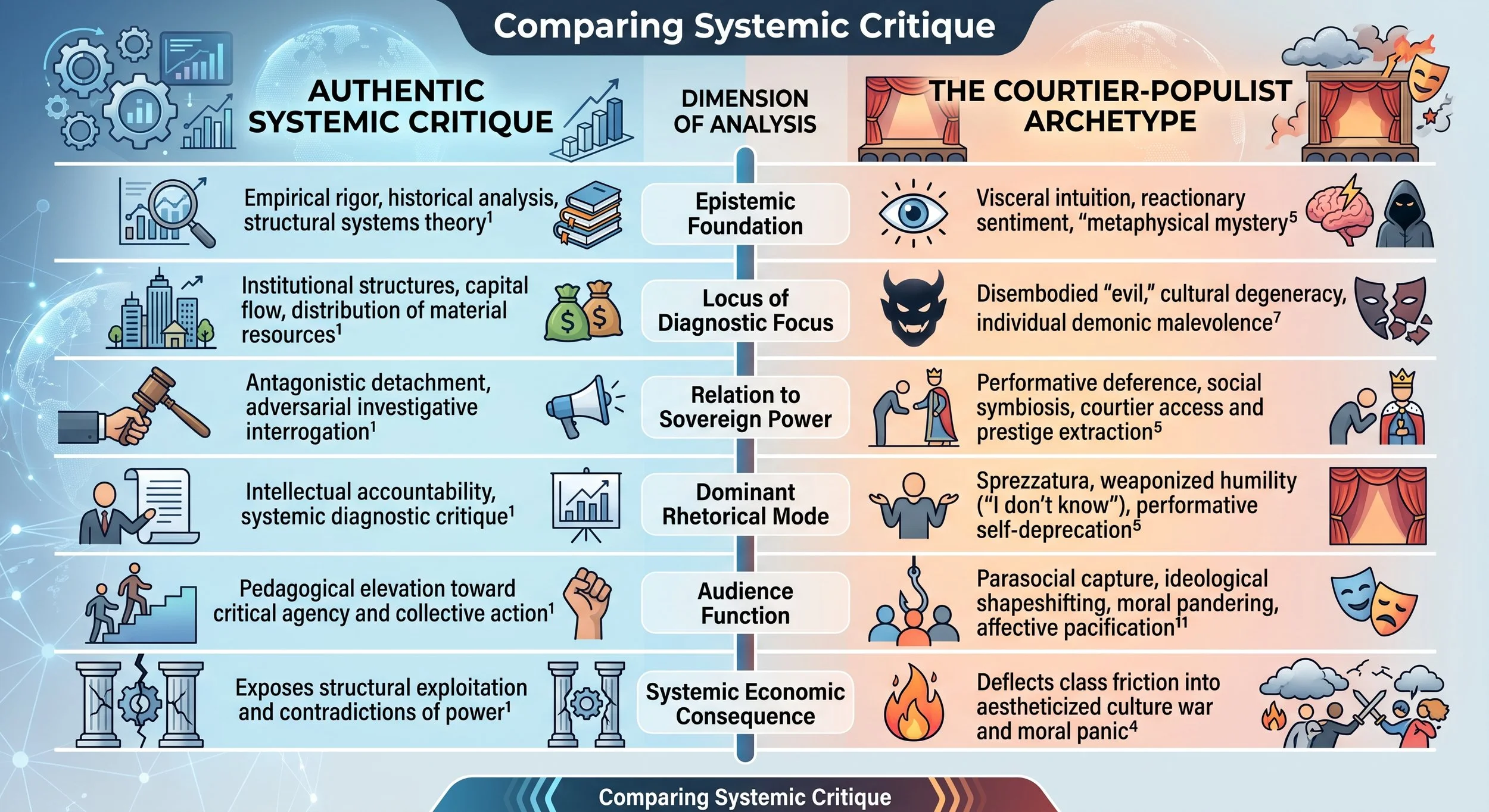
This humble approach offers significant strategic and operational advantages. When the commentator loudly states an intellectual lack—“I’m just a talk-show host” or “I don’t know anything, it’s a mystery”—they automatically protect their statements from having to meet the empirical requirements of falsifiability, from being subject to academic scrutiny, and from being examined for logical consistency. Meanwhile, this self-deprecation signals to the audience that the commentator does not belong to the elite group of coastal technocrats, helping him connect with viewers, listeners, and readers through humble, unpretentious common sense. Additionally, because the digital media environment is fast-paced, by the time a claim is disproved, the narrative cycle has already moved on. Hence, the commentator’s reputation remains undamaged among an audience that remembers the host’s modesty rather than the erroneous statement.
This rhetorical position is directly linked to C. Wright Mills’s sociological critique in The Power Elite (1956). Mills showed that American governance in the mid-twentieth century had developed into a trio of institutions: corporate boardrooms, executive governance, and the military establishment. From this institutional center, Mills described the “higher immorality”—a systemic attitude in which structural irresponsibility, institutional corruption, and opportunistic posturing become the standard way of operating within elite hierarchies.
Reflecting in his later years on the “cultural apparatus,” Mills realized that the power elite depends on specialized culture producers—people who do not control the economy or the state, but instead convert the elite’s demands into public folklore. The Courtier-Populist functions as an ideological functionary within this system. By aiming to gain access to global billionaires, top heads of state, and influential executives—taking care to address them with respect while reserving his rhetorical sharpness for lower-ranking bureaucrats, foreign targets, or cultural dissidents—he can obtain social capital and commercial wealth from being in close contact with people in power, all the while pretending to be an outsider who is opposing elite dominance. I can’t help but think of Curtis Yarvin.
The Algorithmic Colonization of Character: Cybernetics of Audience Capture
The traditional models used to explain the ideological malleability of the Courtier-Populist are inadequate. Commentators in this category frequently undergo radical ideological shifts: they start as typical neoliberal supporters of free enterprise, military intervention, and low taxation, only to later reappear as Buchananite paleoconservatives, economic nationalists, and finally as millenarian apocalyptic mystics. People often ask whether these changes reflect a real intellectual conversion or instead result from calculated opportunism.
The media phenomenon that has emerged is called audience capture, and it offers a more plausible and mechanically sound approach. Cultural critics like Gurwinder Bhogal have promoted it, and C. Thi Nguyen’s epistemic theories assess audience capture as an escalating, self-reinforcing cybernetic loop. Rather than deliberately crafting a cynical strategy or shaping public opinion, the creator is systematically disciplined, reshaped, and psychologically guided by their audience’s behavioral signals. Indeed, I would say Sam Harris, the poor soul, is also a victim.
In his essay The Perils of Audience Capture: How Influencers Become Brainwashed by Their Audiences, Bhogal details the psychological and algorithmic dynamics of this trap:
“Audience capture is the phenomenon where an influencer is affected by their audience, catering to it with what they believe it wants to hear or is willing to pay for... This involves the gradual and unwitting replacement of a person’s identity with one custom-made for the audience... This is the ultimate trapdoor in the hall of fame; to become a prisoner of one’s own persona. The desire for recognition in an increasingly atomized world lures us to be who strangers wish us to be.”
The Courtier-Populist process unfolds on an industrial scale. Digital distribution platforms, subscription incomes, viewer retention curves, and social media engagement algorithms function as immediate reward systems that provide strong sensory feedback. When a commentator gives a detailed, nuanced analysis of macroeconomic factors—such as international supply networks, regulatory balance sheets, energy and power dynamics, material flows, total lifecycle assessment, or structural trade dynamics—audience engagement figures tend to stay the same or decline.
On the other hand, when that same host presents a segment in which they show outrage at cultural grievances, label a public figure as “evil,” or claim that unseen people are organizing sinister rituals, the algorithmic platforms see increased viewer engagement, digital subscriptions, and online comments.
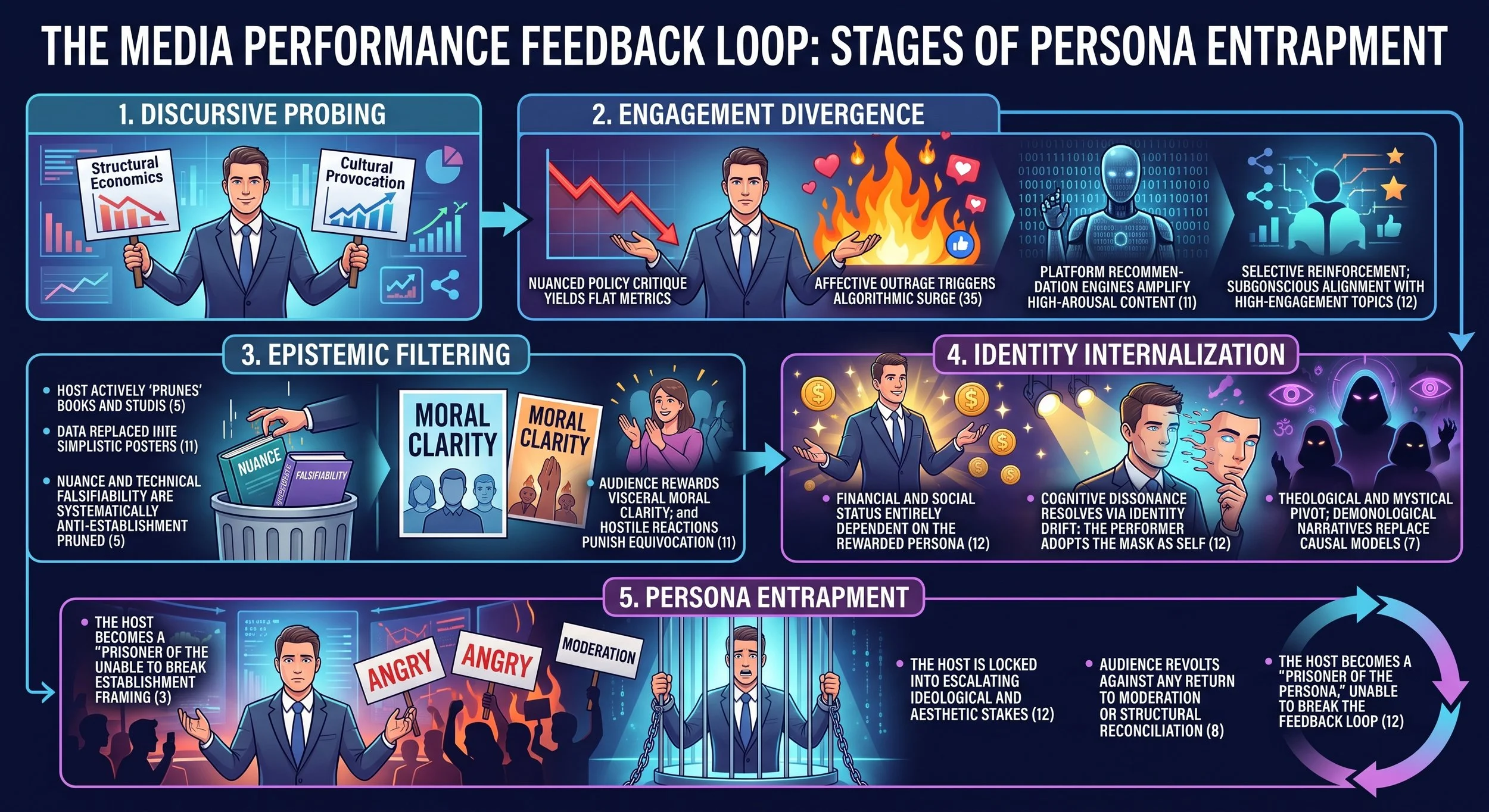
As stated in his study of value capture and gamified environments, philosopher C. Thi Nguyen points out that when people enter digital communication systems which are designed around explicit metrics—such as likes, retweets, subscriber counts and views—the various quantitative indicators gradually take the place of their natural values, objectives and personal epistemic principles. The media personality’s way of thinking changes to meet the requirements of these metrics. This involves no simple external commercial concession; rather it amounts to an internal shift in identity.
The Courtier-Populist is therefore forced to keep raising the rhetorical stakes continuously. The host has to take on ever more dramatic versions of the persona which the audience has rewarded. Yesterday’s partisan disagreements must now become today’s institutional persecutions; administrative failures must become grand spiritual confrontations.
The commentator is not in charge of the base but acts as its tool, outsourcing their public identity to stay relevant in a harsh, rapidly changing attention economy. Even when the host’s stance changes—from traditional country-club Republicanism to working-class populist talk and then on to paranormal paranoia—the audience fails to see any contradiction. Because of the parasocial intimacy between them, the audience identifies with the host’s emotional tone rather than with any coherent, consistent ideological belief system.
The Epistemology of Disconnected Shock: Postman’s “Now... This” and the Sincerity Aesthetic
The Courtier-Populist’s operational success depends on the technological and cognitive basis of broadcast television, social media and podcast platforms, and digital streaming services. In his 1985 book Amusing Ourselves to Death: Public Discourse in the Age of Show Business, media theorist Neil Postman described how the shift from a print-based public sphere to an image-based media environment destroyed the cognitive conditions needed for ongoing, rational public discussion. At the heart of Postman’s criticism is the expression “Now... this”, a typical transitional phrase in broadcast journalism which he regarded as an epistemological danger:
“Now... this’ is usually employed on radio and television in order to show that the thing which has just been heard or seen has no bearing on whatever is about to be heard or seen, or indeed on anything that one is ever likely to hear or see. It functions as a conjunction which doesn’t link one thing to another but rather separates all things from one another. It acts as a concise metaphor for the discontinuities found in a great deal of what passes for public discourse in present-day America... No murder, however brutal, no earthquake, however devastating, no political blunder, however costly... can escape being wiped from our minds by a newscaster using the phrase, ‘Now... this.”
Postman claimed this format results in complete decontextualization. Because of how the television screen operates, information is cut off from historical memory, logical coherence, and real-world consequences. He pointed out that the main product of this information ecosystem is not simple falsehood but something even more damaging—disinformation. In this case, disinformation does not just mean misleading information; it describes information that creates the strong impression of knowing something, even though the viewer has been led away from any true understanding or context.
I’ll present this information again and again from multiple angles until it sinks in. We all need to understand how our worldviews and understanding of events are formed.
The Courtier-Populist is well suited to this fragmented environment since electronic and digital media place a greater emphasis on appearance than on substantial content, leading ‘truth’ to be seen as an assessment of sincerity. Postman described this situation:
“The television advertisement has led the American public to believe that the truth of a story is now determined by the appearance of the person who is telling it... credibility has taken the place of reality as the standard by which truth is judged. It is possible for someone to seem like a liar even though they are in fact telling the truth; or even worse, to appear to be a truth-teller when in reality they are lying.”
Carlson’s collection of rhetorical techniques places great emphasis on the aesthetic presentation of credibility. To suggest he is urgently seeking the truth, the performer uses dramatic, exaggerated facial expressions—such as furrowing his eyebrows in surprise, adopting a high-pitched tone of incredulity, and tilting his head as if curious.
But no systemic causes are ever discovered. Reports of economic hardship, corporate wrongdoing, or deteriorating infrastructure are given a frantic sense of urgency, only to be immediately followed by a swift shift toward commercial activity or a sudden turn to a trivial cultural dispute.
Postman showed that this system breaks down what he called the information-to-action ratio. In a well-functioning political society, getting information is linked to civic engagement, collective mobilization, and substantial democratic participation. In the present-day entertainment system, however, consumers are given alarming updates about distant, complicated crises over which they have no control, along with pre-prepared, emotionally charged responses meant for passive consumption.
When someone watches shows produced by the Courtier-Populist, they don’t end an episode intending to organize labor, check regional banks, rein in monopoly capitalism, safeguard the commons, protect ecosystems, or reform regulatory commissions. Instead, the viewer finishes the program feeling morally justified, comforted by a warm sense of parasocial belonging, and convinced they are part of a righteous minority that sees the world as run by incomprehensible demonic forces.
The Culture War Diversion: Weaponizing Affect to Deflect Capitalist Externalities
The courtier-populist’s main role is to channel the working class’s economic frustrations away from institutional capital and into ongoing, unwinnable culture wars. Thomas Frank, in his 2004 work What’s the Matter with Kansas? How Conservatives Won the Heart of America, a cultural historian, analyzed the political economy behind this phenomenon:
“The trick never ages; the illusion never wears off. Vote to stop abortion; receive a rollback in capital gains taxes.”
Frank has identified the reason behind the current political backlash: a political movement rooted in working-class grievances that defines the elite solely in terms of culture, taste, and language. The ‘elite’ is never described as meaning the boards of multinational corporations, private equity executives, or the people who buy up single-family residential homes; rather, the elite is defined as university professors, cultural commentators, Hollywood screenwriters, and urban consumers who drink specialty coffee.
Every night the Courtier-Populist uses this distraction tactic. Instead of addressing the real issues, he treats corporate-backed public relations campaigns and the insubstantial posturing of institutions as the main dangers to civilization, directing the populist sense of outrage into harmless consumer boycotts and online discussions. Because Carlson often makes shallow criticisms of corporate greed, financial institutions, and the housing crisis, some political observers have described his method as economically heterodox working-class populism.
But this rhetorical display is essentially empty. The structural causes of these economic crises—unregulated capital flows, predatory debt structures, and the decline of labor power—never lead to any concrete, systemic solutions.
And, one more time, it’s the overshoot, stupid.
When an economic contradiction arises to the point of exposing the realities of class power, the Courtier-Populist redirects the discussion to the safer ground of the culture war. The systemic extraction of public wealth is then presented as a moral failing of individual actors or as the result of a coordinated spiritual attack.
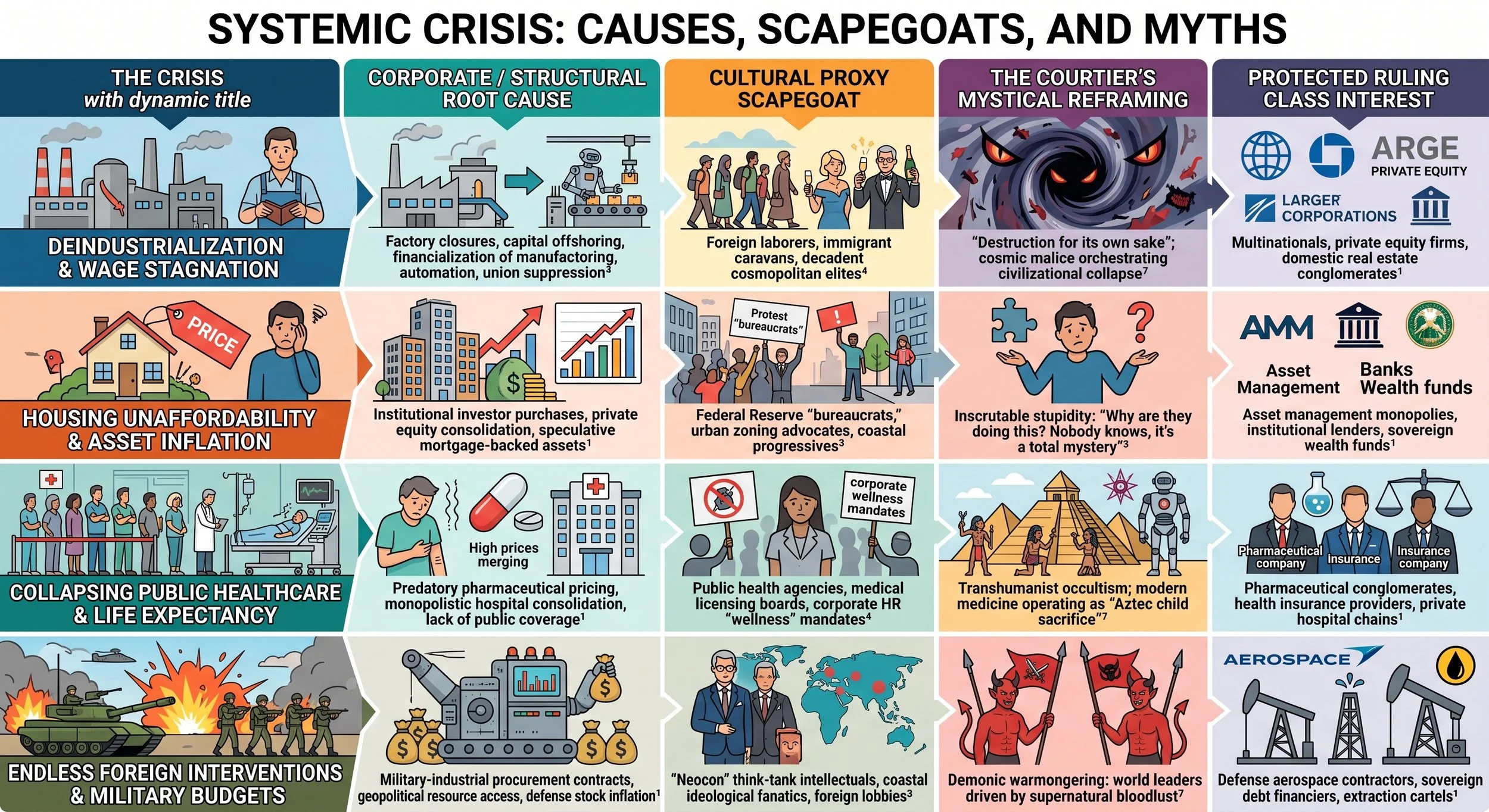
The actual physical harms caused by late-stage capitalism are real—such as the closure of rural hospitals, wage stagnation, the elimination of jobs through algorithms, and the breakdown of families. The Courtier-Populist acknowledges the emotional suffering that results from these difficulties, thus winning the audience’s trust. However, rather than directing that anger at the underlying structure of capitalism, the commentator channels it instead towards cultural scapegoats. By doing this, the commentator ensures the existing order remains unchallenged and protects the ruling class from the very public anger it provokes.
The Archetype in Art and Literature: The Pious Fraud, The Confidence Man, and The Grand Inquisitor
The digital age has not seen the emergence of the Courtier-Populist, but rather the latest stage in a long series of individuals who exploit the public’s vulnerability by combining moral certainty with performative humility. Literature and theatre have thoroughly examined the psychological and narrative mechanisms that account for the lasting presence of this type.
In his 1857 satirical work The Confidence-Man: His Masquerade, Herman Melville uses the deck of the Mississippi steamboat Fidèle as an allegory for American commercial democracy. The main character, the confidence man, joins the boat in various forms and does not approach passengers with threats, but instead asks for their trust, charity, and confidence. Melville reveals a fundamental weakness of the American character: the public’s intense desire to believe comforting illusions, persuasive operators, and charismatic individuals who flatter their own virtues while taking their money. The confidence man’s greatest tool is an attractive display of Christian charity, simple goodness, and carefully exercised humility—a facade which overcomes suspicion and leads to exploitation.
This tradition can be traced to Molière’s seventeenth-century theatrical satire Tartuffe (1664). Tartuffe is the classic example of the pious fraud: a hypocrite who covers himself with apparent religious devotion, self-effacing modesty, and moral posturing to gain the trust of, and win his way into the home and confidence of, the wealthy patriarch Orgon. Instead of disarming his accusers by angrily denying the allegations, Tartuffe does so through a calculated display of self-punishment.
“Yes, brother, I’m a wicked man, I fear,
A wretched sinner, all made up of crime,
The greatest rascal that has lived in time.
Each moment of my life is grimy and foul;
My life is just a heap of dirt and bile...
Believe their charges, do not spare my name;
Cast me away, heaped high with righteous shame.” (Act III, Scene 6)
Tartuffe turns humility to advantage by outdoing his critics in his self-criticism. So impressed by this show of apparent repentance that he at once acts against his own family, supporting Tartuffe’s holiness and giving up his rights to his family’s estate. This is comparable to the modern Courtier-Populist’s automatic tendency to say things like “I’m probably wrong”, “I’m just an ignorant observer”, or “I will grovel at the feet of my critics”. This kind of strategic humility is intended to allay criticism, win over the audience, and secure a loyal following.
In Fyodor Dostoevsky’s story The Grand Inquisitor in The Brothers Karamazov (1880), the Grand Inquisitor meets Christ after Christ returns to a dungeon in Seville in the sixteenth century, exposing the psychological mechanisms by which an authoritarian society manages its people. He argues that humanity is unable to carry the weight of true moral and intellectual freedom:
“Thou didst not come down from the cross... because Thou didst not desire to enslave man through a miracle, and didst crave for free faith and not for a miracle. But Thou didst know that no sooner would man reject a miracle than he would reject God likewise: for man seeketh not so much for God as for miracles. And since man cannot bear to be without miracles, he will create new miracles of his own, and will bow down to the wizard’s miracle and the witch’s sham.”
The Inquisitor points out the three main forces that can take hold of and calm the human conscience: Miracle, Mystery, and Authority. When faced with the terrifying complexity of existence, the general population does not long for hard-earned, empirical truths; instead, they ask for relief from the anxiety caused by having to think for themselves. They seek the comforting security of an inscrutable Mystery, looked after by an Authority that promises to think and feel for them.
The modern-day Courtier-Populist immediately takes on this role. When economic disruptions, social fragmentation, and geopolitical instability threaten the public’s sense of security, this figure does not propose the rigorous, collective route of intellectual effort and political organization. Instead, they promote Mystery (“It’s a mystery, nobody knows”), Miracle (through demonic narratives and supernatural interventions), and Authority (through the reassuring presence of a prominent media figure).
The literary tradition mentioned above continues in Thorstein Veblen’s The Theory of the Leisure Class (1899), in which he sets out the social mechanism of ‘pecuniary emulation.’ Veblen showed that in capitalist societies, the lower and middle classes seldom attempt to overthrow the leisure class; instead, they come to admire it, revere it, and indirectly enjoy its way of life, manners, and social status. The Courtier-Populist makes full use of this phenomenon by displaying his connections with billionaires, political powerbrokers, and global oligarchs, thus not alienating the audience but instead fulfilling their desire for vicarious access to sovereign power. People turn to this kind of service provider because the performance meets a deep-rooted desire to feel morally respectable without doing the hard work of studying the system, and to find simple, universal, evidence-based explanations for the anxieties of a civilization in decline.
The Courtier-Populist persists as the final media figure in the process of civilizational decline because the archetype addresses a key structural issue for late capitalism: how to manage public disillusionment without letting it spark systematic resistance. By turning the objective contradictions of an extractive economic system—such as deindustrialization, monopolization, and infrastructure neglect—into a sensationalistic metaphysical spectacle of demonic corruption, this figure channels the working class’s legitimate anger. It disperses it into moralistic, paralyzing panic. The closely linked system of modern data center algorithms, corporate sponsorships, and parasocial intimacy means that both the service provider and the audience are locked in a continuous and profitable interaction: the consumer is freed from the need to carry out empirical investigation, the entertainer gains an unprecedented amount of cultural capital and a sense of sovereign closeness, and the institutional structures responsible for extraction go on working undisturbed behind the veil of an obscure and mysterious cosmic mystery.
Mental and Spiritual Health
Although American culture often turns “wellness” into a lucrative form of self-centered escape, caring for our mental and spiritual health is still essential for survival. If we give up on inner growth just because self-improvement trends have become shallow, we risk falling into cynicism, paralysis, and despair. Real psychological stability is not about always feeling good or avoiding hard truths. Instead, it means building the strength to face a troubled world without falling apart. Keeping a clear mind and steady spirit helps us stay strong, so that our awareness of problems does not turn into hopelessness.
True mental and spiritual strength is the foundation for making good choices and forming real connections with others. When someone is emotionally drained, bullied, exploited, and always on edge, they become helpless and cannot help build strong communities or stand up to injustice, even if it is killing them. By working on real inner clarity and letting go of blame, status-seeking, and shallow comforts, people can find empathy, integrity, and a sense of shared responsibility again. Taking care of our inner lives is not about escaping reality. It is a way to stay grounded and act wisely and bravely, even when society encourages us to tune out.
“There is no need to pay attention to how we are privatizing city services, siphoning off the rents for ourselves. We know what we’re doing. Stay engaged with your screens and keyboards. Go to the Seahawks training camp and get an autograph from your favorite player. Have fun.”
Cultivating true spiritual hygiene does not require swearing allegiance to a single, rigid dogma; instead, it demands a flexible, imaginative relationship with the mysteries of existence. Secular and mystical metaphysics are often framed as irreconcilable foes, yet when approached with intellectual curiosity, they serve as complementary frameworks that enrich our overall well-being. Secular metaphysics explores the fundamental nature of reality, space, time, causality, and being purely within a natural, empirical, and rational worldview, stripping away supernatural claims, divine intervention, and religious dogma. I have often referred to Jim Rutt’s Minimum Viable Metaphysics in my essays. By allowing the mind to move freely between the poetic awe of mystical traditions and the rigorous grounding of secular thought, we liberate the human imagination, transforming spiritual practice from an insistence on literal belief (belief in belief) into an expansive, creative contemplation of our world and the cosmos.
At its core, secular metaphysics rests upon the principles of naturalism, physicalism, and empirical grounding. It asserts that reality consists entirely of physical elements, natural forces, and universal laws, positioning matter and energy as the foundational baseline of everything that exists. Within this framework, any claims regarding ontology—the study of being and existence—must continuously align with and be informed by scientific discovery rather than divine revelation. What tools have we used for millennia to describe our experience with our world and the “divine”?
Language is a trip.
Crucially, this perspective champions immanence over transcendence. Meaning, order, and value are not handed down from an exalted, supernatural realm; they are discovered, felt, and constructed directly within the living, material world. Ethics, objective truth, and human purpose derive organically from human nature, social interdependence, and our shared evolutionary history rather than from divine decree.
The way secular metaphysics grapples with consciousness offers a particularly fascinating bridge to mystical wonder. Where traditional religious ontology posits a top-down cosmos—viewing reality through a transcendent creator deity who bestows immortal, non-physical souls governed by divine purpose or cosmic fate—secular ontology approaches the mind from the ground up.
In this naturalistic view, consciousness is not a supernatural spark injected into a physical vessel, but an astonishing emergent property of matter organizing itself into breathtaking complexity. Alternatively, many secular thinkers adopt a naturalistic or pantheistic view akin to Baruch Spinoza’s philosophy, in which nature itself serves as the ultimate, self-contained ground of being. Under this lens, subjective awareness is simply the felt, internal experience of the physical universe becoming conscious of itself through biological systems.
Comparing these frameworks reveals that secular naturalism does not drain existence of mystery; it simply grounds that mystery in the physical world. Replacing a transcendent divine script with physical causality and probability does not render life meaningless; rather, it highlights the extraordinary improbability of our existence.
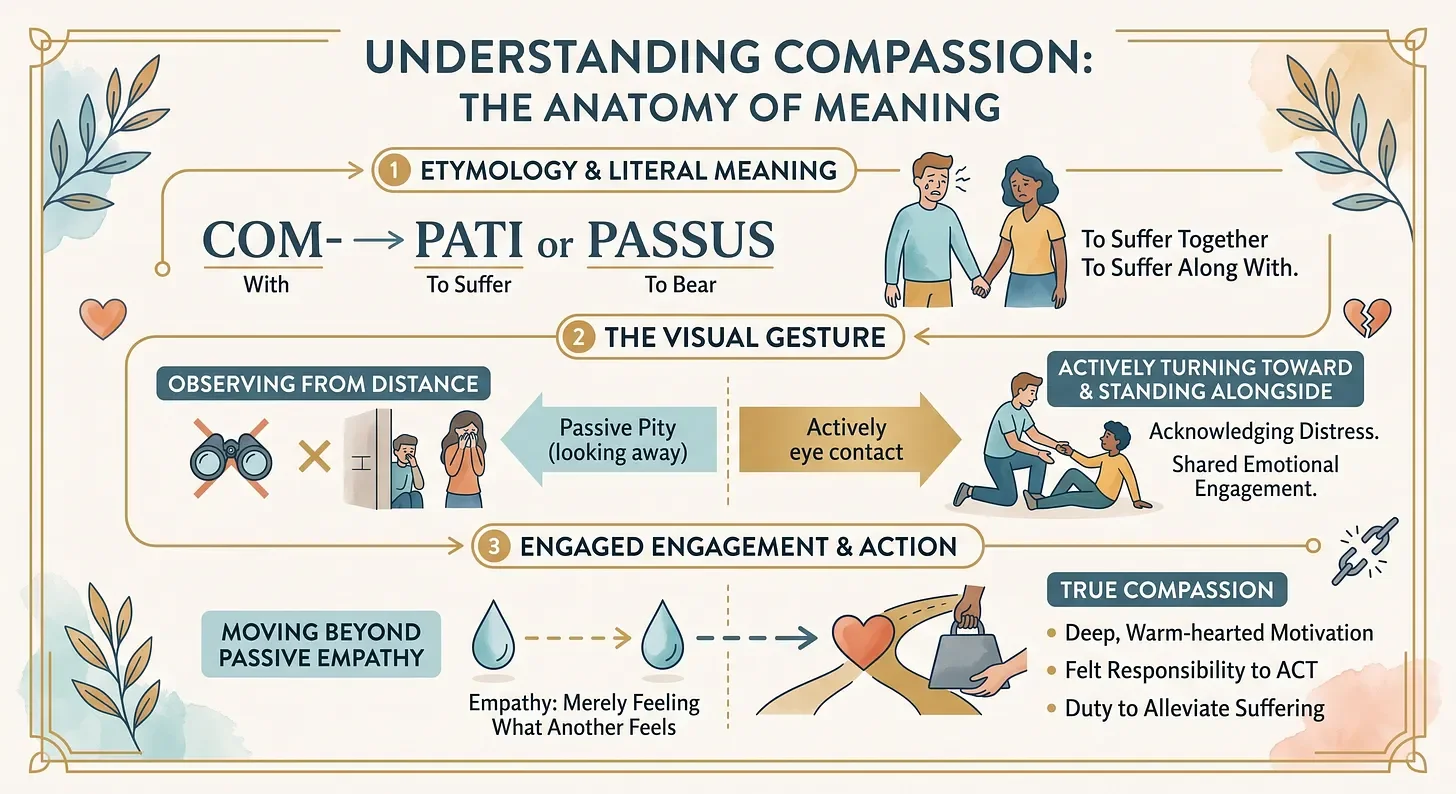
Focus More on Compassion
Compassion comes from the Latin roots com-, meaning “with,” and pati or passus, meaning “to suffer” or “to bear.” It literally means “to suffer together” or “to suffer along with” someone else. Instead of just watching someone’s pain from afar, compassion means recognizing another person’s distress and choosing to stand with them. Unlike passive pity or simple empathy, which only reflect what someone else feels, real compassion adds a genuine desire and sense of responsibility to help ease that suffering.
Realizing that human awareness, love, and creativity are emergent flowers growing out of atomic interactions fosters a profound sense of sacred responsibility toward the living world. By integrating secular metaphysics into our spiritual hygiene, we can engage the aesthetic, symbolic richness of mystical thought without forfeiting empirical integrity, using our imagination to find deep, grounded wonder in the living reality of the universe.
Friend: “No dude, it’s all about God loves ME.”
Me: “When we die, we may indeed find out. But until then, God loves the living.”
I have had, and still have, friends who won’t go into these kinds of things with me, as it’s too great a threat to their worldview and therefore too vexing and painful to contemplate. They sometimes get angry, or more often, ignore me altogether.
Conviviality—it’s good and good for you
The social critic Ivan Illich set out the basic structure of conviviality as a radical alternative to industrial enslavement in his important 1973 book, Tools for Conviviality. Illich described conviviality as “individual freedom achieved through personal interdependence and as such an inherent ethical value”, making a clear contrast with the coercive nature of industrial productivity. According to Illich, a “convivial tool” is any instrument, technology, or institution that enhances human agency, community bonding, and creative expression without requiring a class of technocratic managers to run it. He cautions that when tools go beyond a certain level of scale and complexity—when they become what he calls “manipulative tools”—they stop serving humanity and instead turn people into cogs serving the machine. As Illich put it: “I use the term ‘conviviality’ to mean the opposite of industrial productivity. My intention is that it should signify autonomous, creative interaction between people and between people and their environment... I regard conviviality as individual freedom realized in personal interdependence.”
Lewis Mumford, an urban philosopher, and E.F. Schumacher, an ecological economist, both criticized large-scale technology, each believing that real conviviality can be achieved only through technology on a human scale. In Technics and Civilization and in his later essays on “Democratic versus Authoritarian Technics”, Mumford argued that democratic technics are human-scaled, depend on local skills, and are, by nature, convivial because they enable decentralized self-governance. On the other hand, authoritarian techniques require vast centralized power, involve militarised logistics, and rely on submissive labor forces. Schumacher applied this idea to economics in his book Small Is Beautiful: A Study of Economics As If People Mattered by advocating for “intermediate technology”—that is, tools which are cheap enough for everybody to afford, appropriate for use on a small scale, and in harmony with man’s need for creativity. He firmly believed that “technology must be brought back into a state of harmony with human nature”. He claimed that an economic system based on conviviality does not judge success by the rapid depletion of natural capital but rather by the extent to which work contributes to dignity, community, and joy.
In current pluriversal and ecological thinking, scholars such as Arturo Escobar and botanist Robin Wall Kimmerer go beyond applying conviviality to human societies and include our way of relating to the living biosphere—what Latin American thinkers call convivialidad. In his book Designs for the Pluriverse: Radical Interdependence, Autonomy, and the Making of Worlds, Escobar shows that living convivially requires overcoming the modern idea that humans are separate from nature. He advocates relational ontologies in which human communities develop their tools, farming methods, and social systems through deep, reciprocal dialogue with their local ecosystems. Kimmerer also supports this view in Braiding Sweetgrass, describing conviviality as a “grammar of animacy” and an “honorable harvest,” and viewing technology and culture as guardians of life rather than tools for extraction. From this point of view, conviviality is an ecological necessity: human flourishing can only take place through a shared and respectful coexistence with the network of non-human life, not in isolation.
In the end, the international movement associated with The Second Convivialist Manifesto—a document co-authored by figures such as Edgar Morin, Alain Caillé, and Chantal Mouffe—sees conviviality as the essential political philosophy for coping with the Polycrisis. The manifesto describes convivialism as “the art of living together”, offering a framework by which human beings can both compete and cooperate without destroying one another and also learn to care for each other and the Earth. The authors claim that hyper-capitalism, market fundamentalism, and uncontrolled technological acceleration have broken down social ties and pushed the biosphere beyond its sustainable limits. To prevent collapse, convivialism puts forward four fundamental principles: a principle of common humanity, a principle of common sociality (according to which the greatest wealth of human beings consists in the quality of their social relationships), a principle of legitimate opposition, and a principle of hubris-control (a-mesura) which establishes strict upper limits on both wealth and power. In a world moving rapidly toward biophysical breakdown, conviviality is not a gentle, nostalgic ideal but a strict, life-affirming discipline for creating resilient communities from the ruins of industrial hubris.
5. Radical Theology & The Imperative of Action
What Did Jesus Want?
I have a lot of Christian friends who I hope would not be threatened by exploring broader implications of the “greatest story ever told.” But, well, you know, sectarian violence, competition, and conflict are still a thing. The Seven Deadly Sins are still with us. We are all vulnerable. People still talk about evil.
I also notice, as a sports fan, that many disciplined athletes often mention that they could not have performed so well or achieved so much without their Lord and Savior. Of course, some athletes appreciate the support of other gods, and even those who, like secular metaphysicians, are quite happy to be thankful for other, more terrestrial forces and serendipity.
“I’d like to thank my team, coaches, and my family for allowing me to do what I love and become a champion. I could not have done it without all the support I’ve had from many communities I’ve known throughout my life.” —Secular Gold Medal Winner
Still, I like to wonder.
I think that to understand what Jesus Christ wanted, one must strip away centuries of imperial theology and look directly at a first-century “Homeland” Jew confronting the brutal realities of Roman occupation and religious elitism. We must also confront people’s stories (literary criticism) of a first-century “Homeland” Jew and the cultural motivations of the storytellers (who they may have been).
The Jesus I interact with is a guy named Joshua.
Where did Joshua live?
In the first century CE, Jews living in their ancestral homeland probably did not call the region “Palestine” in everyday life. Instead, they used Hebrew and Aramaic names, referring to the area as Eretz Yisrael (the Land of Israel) or by specific regions like Yehudah (Judea), Ha-Galil (Galilee), and Peraea (Perea). After Herod Archelaus was removed from power in 6 CE, the Romans designated the main southern region as the province of Iudaea, which a Roman prefect or procurator administered under the Syrian legate. The Greek term Palaistinē, derived from the ancient Philistines, was sometimes used by Hellenistic Jewish writers such as Philo and Josephus when writing in Greek for wider audiences. Still, it was a regional label rather than an official or local name. (Like the label America.) Thus, for quite a while, many referred to people living in the region as Palatinians. The Romans did not rename the province Syria Palaestina until 135 CE, during Emperor Hadrian’s rule, more than a century after Jesus lived. This change was intended to sever the administrative link between the land and Jewish identity after the Bar Kokhba Revolt.
In the first century, Jews lived in many places around the world, with historians estimating their total population at about four to six million. The global population in the first century CE (around the year 1 CE) was approximately 170 million to 300 million people. Approximately 3.53% of 170 million. Of these, only one to two million lived in their ancestral homeland, mainly in Judea and Galilee. Judea was the center of Jewish religious, political, and social life, focused on Jerusalem and the Second Temple. Galilee was mostly rural and agricultural. Perea and Idumea also had large Jewish communities, creating a network of local groups across the Southern Levant, connected by shared religious duties, Temple taxes, and traditions.
Most Jews in the first century lived outside their homeland, spread across the Roman and Parthian Empires. In the east, a long-standing Jewish community lived in Babylonia under Parthian rule, descended from exiles in the sixth century BCE and known for its scholarship, independent of Roman influence. In the west, Egypt had one of the largest Jewish populations, especially in Alexandria, where Jews made up about a third of the city’s people and where the Greek translation of the Hebrew Bible (the Septuagint) was created. Large Jewish communities also existed in Syria and Asia Minor, with cities like Antioch, Damascus, and Ephesus home to important synagogue networks. In Southern Europe, Rome itself had an estimated 30,000 to 50,000 Jews, spread across at least a dozen synagogues.
We have so many more tools to parse this kind of information than people had a couple of hundred years ago. Arguably, Jesus did not seek to establish a global bureaucratic religion, nor did he offer a passive, otherworldly escape from human suffering. Instead, he proclaimed the immediate, lived inauguration of the “Kingdom of God”—a radical, subversive vision of what human society would look like if God, rather than Caesar or corrupt local elites, were directly in charge. As theologian Howard Thurman observed in Jesus and the Disinherited, “Jesus was a poor Jew, an insider to a group that was an outsider to the Roman Empire,” and his entire ministry operated as an ethical handbook for those living with their backs against the wall. He was a radical Jew precisely because he operated within the fierce tradition of the Hebrew prophets, aiming at a culture that had substituted rigid purity codes, institutional commerce, and legalistic piety for basic mercy and social justice. In the words of historical Jesus scholar John Dominic Crossan, Jesus offered a “radical egalitarianism” that challenged the entire imperial order, weaponizing table fellowship with tax collectors, prostitutes, and outcasts to dismantle a socio-religious system that treated the poor as religiously unclean and economically disposable.
“Daddy, what does Amalek mean?”
The ethics Jesus championed were fundamentally revolutionary, rooted in a non-violent inversion of worldly power that demanded the total transformation of human relationships. In the Sermon on the Mount, he did not preach submission to tyranny; he outlined a sophisticated strategy of moral resistance that disarmed oppressors by exposing their cruelty. As Leo Tolstoy argued in The Kingdom of God Is Within You, the core ethics of Jesus—loving one’s enemies, forgiving debts, rejecting retaliation, and serving the marginalized—were not impractical ideals, but mandatory commands designed to break the endless cycle of human violence. Scholar Marcus Borg noted that Jesus perceived a profound sickness in his culture’s “purity system,” which used religious law to categorize people into clean and unclean, rich and blessed, poor and cursed. Jesus replaced this exclusionary purity system with a “compassion system,” asserting that holiness is measured not by ritual washings or temple sacrifices, but by how a society feeds the hungry, clothes the naked, and cares for the sick.
Joseph Henrich (Human Evolutionary Biologist & Author)
“Our secret is not our individual intelligence, but our collective brains. We are a cultural species... We survive and thrive not because of our raw innate brainpower, but because we can incrementally learn from others across generations, accumulating tools, concepts, and practices that no single individual could invent in a lifetime.” — The Secret of Our Success: How Culture Is Driving Human Evolution
Michael Tomasello (Developmental & Comparative Psychologist)
“To an extent unprecedented in the animal kingdom, human beings are adapted for culture... Human cognition is a collective enterprise. Individual humans are not smart enough to invent language, math, science, or complex technology on their own; we inherit these tools from the collective wisdom of generations through shared intentionality.” — A Natural History of Human Thinking
Yuval Noah Harari (Historian & Author)
“Homo sapiens rules the world because we are the only animal that can cooperate flexibly in large numbers. You can’t convince a monkey to give you a banana by promising him limitess bananas after death in monkey heaven. But humans can build massive cooperative structures—cities, armies, empires—because we construct and share stories.” — Sapiens: A Brief History of Humankind
Sarah Blaffer Hrdy (Evolutionary Anthropologist & Primatologist)
“Cooperative breeding—where mothers rely on alloparents (grandmothers, fathers, siblings, and non-relatives) to help care for and feed infants—was the initial evolutionary step that set early human ancestors on a unique trajectory. It forced us to become hyper-sensitive to the intentions and emotions of others, birthing human empathy and mind-reading.” — Mothers and Others: The Evolutionary Origins of Mutual Understanding
E.O. Wilson (Sociobiologist & Evolutionary Theorist)
“In a group, selfish individuals beat altruistic individuals. But groups of altruistic individuals beat groups of selfish individuals. Our species’ evolutionary history is a constant tension between individual self-interest and the group-level cohesion required to conquer hostile environments.” — The Social Conquest of Earth
Robert Boyd and Peter J. Richerson (Anthropologists & Cultural Evolutionists)
“Culture is as much a part of human biology as our bones or our bipedal locomotion. Humans are uniquely adapted to rely on culturally acquired information. We do not survive by instinct or solitary problem-solving; we survive because our species evolved the capacity to copy, teach, and refine group knowledge over time.” — Not By Genes Alone: How Culture Transformed Human Evolution
The profound surprise and persistent doubt of the disciples following the resurrection—despite having witnessed numerous miracles—reveals a deep historical and psychological truth about first-century Jewish worldview and human cognition. In ancient Judea, as New Testament historian N.T. Wright points out that “miracles,” such as healings or driving out spirits, were understood as signs of prophetic power. Still, no Jew expected a single individual to rise permanently from the dead in the middle of ongoing history. In Jewish apocalyptic theology, resurrection (anastasis) was understood exclusively as a collective, end-of-time event when God would judge the entire world and restore creation all at once. When Jesus was brutally executed on a Roman cross—a public humiliation meant to prove his failure as a messianic figure—one can imagine that his followers suffered profound trauma and cognitive dissonance. An individual resurrecting while the Roman Empire remained firmly in power was an idea so completely outside their conceptual framework that witnessing the empty tomb or encountering the risen Christ produced shock, fear, and intellectual paralysis rather than immediate, easy belief.
This call to moral transformation and cosmic accountability is not unique to Jesus, but resonates deeply across global wisdom traditions. In comparative religious study, the ethical frameworks of Jesus, the Buddha, Lao Tzu, and Socrates converge on a singular realization: humanity cannot survive without moral stewardship, mutual compassion, and the dismantling of the selfish ego. In Living Buddha, Living Christ, Zen master Thich Nhat Hanh observed that both Jesus and the Buddha recognized that suffering springs from ignorance and self-centeredness, and both insisted that true enlightenment or salvation manifests as active, loving engagement with the world. Karen Armstrong, in her study of the “Axial Age” in The Great Transformation, demonstrated that ancient spiritual figures independently arrived at the Golden Rule not as a mystical abstraction, but as an urgent evolutionary imperative. Whether expressed through the Buddhist concept of Ahimsa (non-harming) or Jesus’s commandment to love one’s neighbor, these teachers understood that we are fundamentally bound to one another and that an unbridled pursuit of power and greed inevitably leads to societal self-destruction.
My kind of Christian
Wendell Berry and the Sacred Stewardship of Creation
Wendell Berry believes the Earth is a “conditional gift” and therefore ought to be cared for by humans through stewardship, love, and local knowledge rather than subjected to industrial exploitation. In a worldview in which all of creation is regarded as holy, environmental destruction is not merely an error from an administrative or economic standpoint, but is in fact ‘desecration’ and ‘blasphemy’ against a world which must be treated as a sacrament.
Right Action Over Success
Rather than judge our actions by the standards of the industrial world or ask whether humanity will some day 'succeed' in saving the planet, Berry believes that the only proper question is: “What is the right thing to do? What does this earth need from us if we are to go on living upon it?” Acting upon this fundamental duty, Berry takes on the role of the “mad farmer”—a determined, contrary sort of person filled with “fits and furies” who opposes technocratic “experts” and who tills the land “by incantation and by singing.” Although collective action and influence are necessary to stop those who exploit the world for profit, his radicalism is clearly non-violent: such stopping must never be carried out by violence.
Critique of Industrial Capitalism and Corporate “Persons”
Berry offers an uncompromising indictment of industrial capitalism and corporate governance:
The purpose of technology is to substitute human labor with technology, and so Berry regards it as contemptible for politicians to be surprised by the level of present-day unemployment.
The notion of treating corporations as persons—something which he terms “fictitious persons”—is wrong. It is fundamentally unnatural that a group of people should come together to form a single moral human person. These organizations frequently gain influence in state governments (for example, coal interests in Kentucky), which means the institutions can no longer engage in genuine dialogue.
The logic of extraction: modern capitalism has a natural logic which gives it the right to take as much as it wants by means already at its disposal. This attitude naturally results in soil erosion, biodiversity loss, the wasteful use of fossil fuels, and a greater "profitability of war."
Ecological Crisis and Civil Disobedience
After sacred systems are ruined, gentle advocacy is not enough. In 2011, when the traditional methods of addressing the problem—such as dialogue, writing, and legal action—had failed to curb pollution in eastern Kentucky watersheds, Berry took part in a four-day sit-in at the Kentucky Governor's office to oppose mountaintop-removal coal mining. Because of environmental signs such as the disappearance of the native black willows along the Kentucky River, Berry warns that the ecological decline is so severe that the land will soon be unable to support human life.
The Resettling of America and Sustainable Farming
To counter the unsettling effects of industrial agriculture, Berry and Wes Jackson proposed a “50-Year Farm Bill.” This scheme aims to remedy the "destructive ratio" that arises when too few people are responsible for large areas of land; this imbalance leads to reliance on toxic chemicals, heavy machinery, and the confinement of animals.
True sustainability lies in returning to small-scale, diverse farming so enough people can be employed on the land and look after it properly; the author gives practical, ethical alternatives to industrial monoculture, such as local farmers Jonas Hurley and Arthur Young.
Rather than using synthetic fertilizers, use worm castings and animal manures.
Use movable fencing so the animals can graze on new pasture frequently.
Use as little violence as possible when raising the animals.
We are moving towards a range of agricultural systems which offer local employment and supply the community with food.
Place-Based Hope, Love, and Grace
To Berry, love is a “sacrament” and entails a strict obligation to take personal responsibility—a principle he has put into practice for 50 years on his farm in Kentucky and over 57 years of marriage. True hope cannot be derived from abstract optimism, political promises, or official grants; on the contrary, real hope is disciplined and firmly grounded ‘in the soil beneath your feet’, arising out of a feeling of belonging to, knowing, and caring for a specific place in a way that ‘can never be taken away from you by power or by wealth’. Lastly, leadership arises from the bottom up when people see what needs to be done and begin to carry it out, and spiritual freedom is attained by coming to the “peace of the wild things” and by understanding that the Earth is maintained by a grace far greater than any human foresight.
Arthur Schopenhauer’s Metaphysical Critique of Religion, Empire, and Human Agency
Arthur Schopenhauer’s philosophical critique of the Judeo-Christian worldview broadens our examination of human narrative, imperial ideology, and moral responsibility. Schopenhauer did not merely reject Abrahamic theology as wrong metaphysics, but saw it as an anthropocentric system designed to alleviate the terror of existence and to justify human dominance. Because primitive nature is indifferent, human self-deception turns natural suffering into deliberate cruelty. Through ideas such as Manifest Destiny, the Monroe Doctrine, and the “City upon a Hill,” Uncle Sam Inc.’s governing oligarchic institutions instill a unique religious populism to carry out and excuse systemic violence. Genuine moral maturity consists in giving up comfortable dogmas, facing the cold indifference of physics, and accepting full responsibility for human cruelty in a fragile and improbable cosmos. How we interpret stories says a lot about how we have been conditioned and who we think we are.
The Metaphysical Foundation: The Question of Free Will and Representation
Schopenhauer’s criticism is based on his epistemological distinction between the world as it appears to human perception (phenomena) and the world as it exists in itself (noumenon). The world as made up of individual objects, people, and events is an illusion regulated by space, time, and causality—this is the thing that Schopenhauer calls the Principium Individuationis. Underlying this illusory appearance is the true nature of reality: a single, undifferentiated, and insatiable force known as the Universal Will to Live. This Will is not rational and is not benevolent; it is a blind, continuous striving which has no higher purpose and appears as an infinite, self-consuming conflict among all living beings. That’s one way to describe reality, facets that reflect particular values, quite different from the man above.
The sovereignty of pain and the illusion of joy
Instead of the theological view of optimism, Schopenhauer maintains that suffering is the fundamental reality of existence, whereas joy is only an illusion. Since pleasure is essentially negative, it consists merely in the temporary elimination of a painful lack or desire. When a craving is fulfilled, consciousness does not achieve lasting peace; on the contrary, it is instantly replaced by a new desire or sinks into a deep and paralysing boredom. Pain, on the other hand, is positive and real, demanding immediate attention and revealing the complete vulnerability of biological life. The physical universe works on a very narrow margin, having been constructed just sufficiently to survive, so that any slight increase in the system's fragility would result in total collapse. You can’t ignore a toothache, or a volcanic eruption, and we can’t ignore anthropogenic global heating that will, year after year, cause more pain and suffering to more people while it devastates ecosystems.
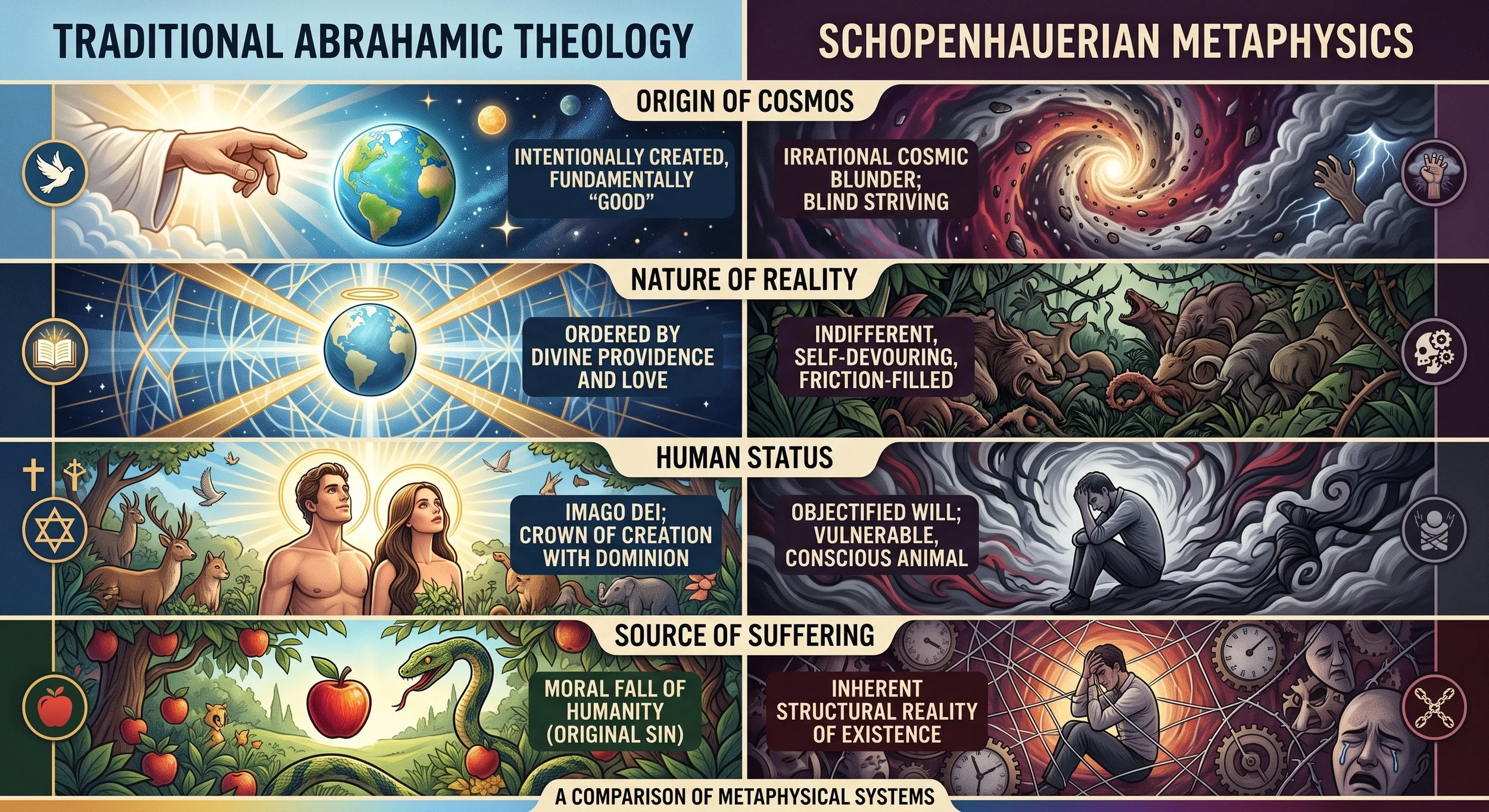
The Liturgy of the Slaughterhouse: Nature as Evidence
To understand the true character of the cosmic order, Schopenhauer encourages us to move away from incense-filled cathedrals and instead look at the intense horror inherent in the biological state. Nature functions as a self-consuming nightmare in which the survival of one conscious being necessarily involves the violent destruction and consumption of another. The imbalance in experience within this system is deeply upsetting: the brief and temporary pleasure enjoyed by the predator is far outdone by the long-lasting, inexpressible suffering of the prey as it is torn apart alive. Moreover, the human body itself proves that the universe was not designed by a benevolent creator, since it was constructed as a weak arena in which disease, cancer, and systemic failure can thrive—something that would cause any reasonable designer to be judged as having acted with gross negligence.
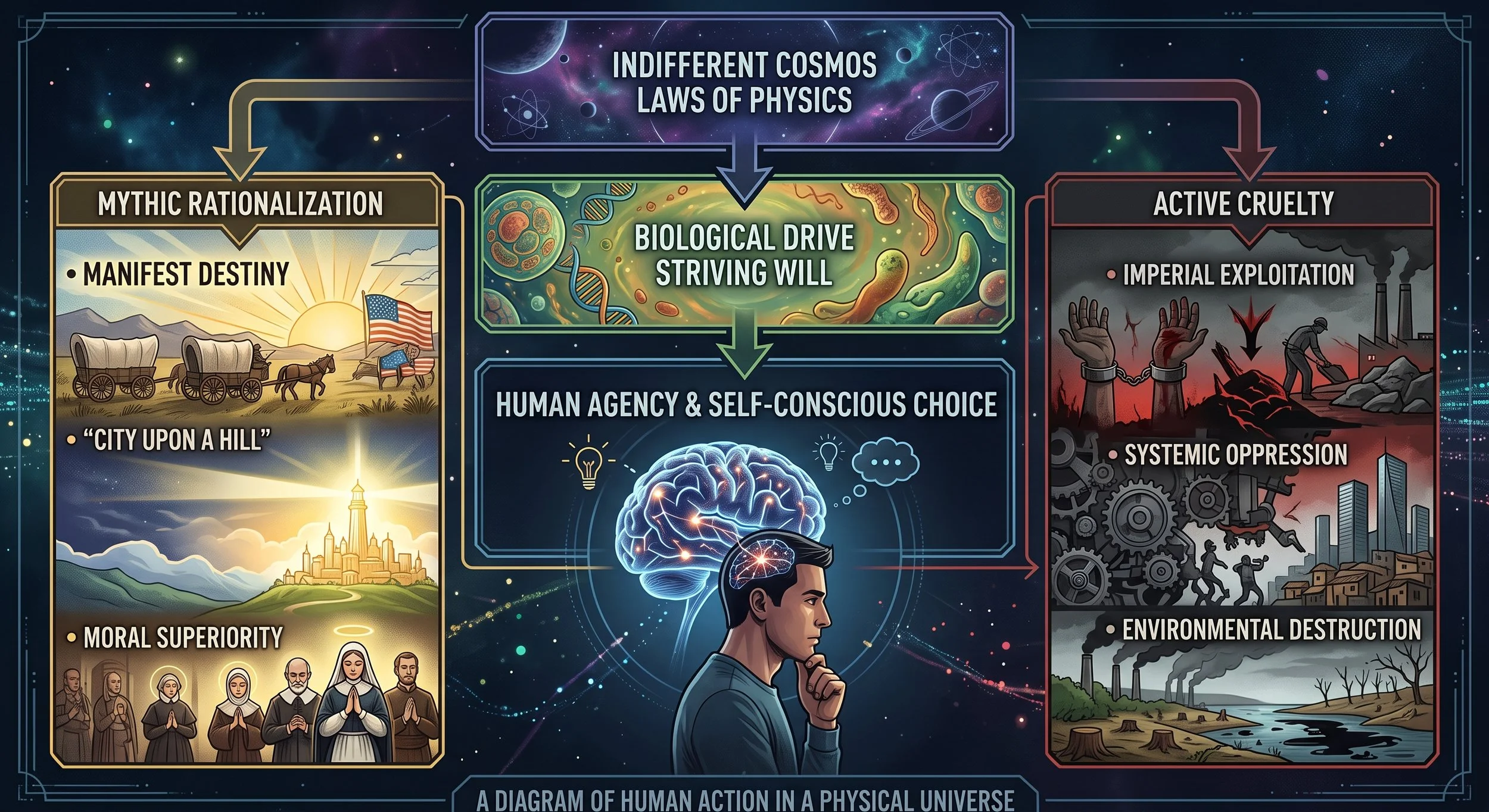
“My Kind of Christian”: The Heretical Ethic of Compassion
Before tearing down religious institutions, Schopenhauer identifies a key element in early Christian thought that corresponds to his pessimistic philosophy: the ascetic image of Jesus of Nazareth. In Schopenhauer’s view, Christ does not signify an incarnation of an imperial god, but rather stands as a powerful symbol of the denial of the Will to Live—a heroic individual who willingly gives up self-interest and attachment to the material world. This radical ethic is evident among the early Christian ascetics, the Desert Fathers, and the mystics such as Meister Eckhart, who, in keeping with Eastern traditions, rejected power, wealth, and egoism. Yet Schopenhauer noted that this genuine spiritual insight was fundamentally undermined when Christianity became a state religion supported by the empire, replacing the radical, self-sacrificing empathy with a focus on institutional control and political, military, and economic pressure. Uncle Sam Inc. is a cruel man of God, wrathful, jealous, megalomaniacal, hubristic, vainglorious, and greedy. He will not stop his predatory, parasitic conquering of people and living systems until the world is a dead machine. Even the Christian Zionist Players within the Empire and its vassal states and global corporations relish mass death and violent judgment. They have no patience for life.
Ideological justification, the myth of empire, and the monopoly on cruelty
The human mind can create complex narratives that turn self-serving biological instincts into sacred obligations. As the anthropologist Ernest Becker pointed out in his book The Denial of Death, cultural mythologies act as a means of coping with the fear of death. Schopenhauer had already arrived at this conclusion by showing that the human intellect is nothing but an instrument used by the blind Will, producing moral excuses after the impulse has already taken place.
When the Abrahamic beliefs are applied to the practice of statecraft, they become powerful means of enabling imperial control. Doctrines like Manifest Destiny and the idea of the ‘City upon a Hill’ give governing oligarchies a divine right to control both resources and populations. By presenting conquest and economic exploitation as sacred duties aimed at achieving freedom or establishing divine order, the ruling elite cause citizens to carry out systemic violence without making them question the moral aspect of the empire. This human-centered view of the world assigns no intrinsic value to nature or non-human life, providing an ideological justification for uncontrolled environmental destruction.
We must clearly distinguish between natural suffering and moral evil: physics is not cruel, lions are not cruel, but humans deliberately choose to be, or are forced to be, cruel. Gravity, disease, and predators operate by physical laws or biological necessity. Homo sapiens have the capacity for conscious action, imagination, and moral judgment that enables true cruelty—namely, the intentional causing of suffering together with the awareness of the pain the victim is experiencing. As Mark Twain famously stated in The Lowest Animal, Homo sapiens is the only animal that inflicts pain simply for the sake of pleasure or because of ideological conformity, regularly justifying its most terrible actions through the use of religious faith, bigotry, and exceptionalism. Europeans seeking opportunity and religious freedom migrated to the American continent and established a powerful culture of invention and cruelty. Its system of government, a constitutional federal republic, is a marvel in how it has allowed for the peaceful coexistence of States across a vast, resource-rich continent and beyond. After WWII, the United States was adept at finally consolidating its global hegemony and letting its cruelty fully express itself. Its leaders are convinced that the millions of deaths caused by its military interventions across the globe since WWII are completely justified.
The masses remain enthusiastic patriots regardless of their hardships, and those who benefit from The Great Game 21st Century would rather see the end of life on Earth than stop playing their cruel status games.
A critique of the Old Testament and tribalism
Schopenhauer attributes the origins of Western anthropocentrism directly to the tribal beliefs set out in the Old Testament. He does not see the biblical God Yahweh as a universal spirit of love, but as a volatile monarch with human defects such as jealousy, anger, and a demand for sacrificial obedience. Because God is placed completely outside of nature and humans are given absolute control over the earth, this view removes the sacred character from the natural environment and breaks the intuitive connection that exists between human beings and the rest of the living world. The covenants in these ancient scriptures were mostly materialistic and transactional, offering worldly wealth, agricultural prosperity, and victory over tribal enemies rather than spiritual enlightenment or universal compassion.
DJT is not an anomaly; he is a perfect example of the culture’s ancient values. Those who loathe him are mostly influenced by style over substance, as their heroes, though more subtle in their behavior, are no less destructive.
The Paradox Involving Sin, Free Will, and Divine Judgment
A key aspect of Schopenhauer's criticism is the logical impossibility of human guilt in a created world, as expressed in the scholastic saying that action follows being—operari sequitur esse. An entity acts in accordance with its essential nature; a wolf kills because it is a wolf, and a faulty mechanism breaks down because of its design. To protect the creator from having to take responsibility, theologians developed the idea of free will, but Schopenhauer rejects this escape from responsibility by pointing out that although a person can carry out what they wish, they cannot choose what they wish. Human actions are therefore the necessary outcome of an internal character which is not chosen and which reacts to external motives. It thus amounts to a serious logical and moral contradiction to have created fragile beings, placed them in a dangerous world designed to bring out their weaknesses, and then sent them to eternal punishment. It’s patently absurd. Thank God for the Theory of Evolution.
The transformation of myth into metaphysics
Even though he rejected dogmatic theology, Schopenhauer did not regard religious stories as completely without value, preferring to convert them into metaphysical truths. He saw the Fall of Man as an allegory illustrating the assertion of the Will to Live—that is, the point at which conscious life decided on self-preservation and sexual reproduction, thus continuing the cycle of existential suffering. Original Sin expresses an instinctive realization that human existence is from the beginning flawed and encumbered. Salvation is instead understood not as living eternally in a heavenly paradise, but as the simple rejection of the Will, meaning the stopping of personal desire, the ego, and striving, which leads to a state of peaceful tranquility similar to the Buddhist idea of Nirvana. We could all decide to learn from Great Nature and gracefully accept our place within it as loving stewards of living systems.
The Awakening: A transition from mythical comfort to fragile agency
The key step towards true human maturity is to break down the protective religious myths. By letting go of the false idea of a benevolent cosmic guardian, people are forced to face a vast, indifferent universe that operates by physical laws alone. Instead of falling into nihilism, realizing how rare, fragile, and unlikely our existence is leads to deep amazement and a sense of responsibility. In a universe with no divine interference, humans must understand that no heavenly power will alleviate human suffering. As political theorist Hannah Arendt pointed out about personal responsibility, when people can no longer rely on institutional excuses, they are completely on their own for their actions.
Today we can look to Bernardo Kastrup, David Benatar, Thomas Ligotti, Karim Akerma, David Bather Woods, Christopher Janaway, and Sandra Shapshay for thoughts and ideas along these lines.
The theme of removing institutional excuses to reveal personal responsibility is fundamental in existential philosophy, political ethics, and literature.
Jean-Paul Sartre and the Agony of Radical Freedom
In Being and Nothingness, Sartre stated that human beings are “condemned to be free,” implying that no external authority, whether divine or based on institutional hierarchy, can take away an individual's responsibility. He called mauvaise foi (bad faith) the form of self-deception involved in hiding behind social roles, bureaucratic arrangements, or deterministic excuses—for example, by saying one was “only carrying out orders” or “simply playing one's assigned part”. According to Sartre, using institutional expectations as a defense evades existential truth, since each individual can always refuse; therefore, obeying an institution is a deliberate personal choice for which the individual must be fully accountable.
Karl Jaspers on the Primacy of Individual Guilt
In his book The Question of German Guilt, the psychiatrist and philosopher Karl Jaspers clearly rejected the argument that obedience to state authority or to the law releases the individual from responsibility. When looking at the moral situation after World War II, Jaspers distinguished between political liability and moral and metaphysical guilt. He maintained that although the state is answerable in a political sense, the individual’s conscience cannot pass on its moral duty to the government. Since an order must not excuse an action that breaches fundamental ethical principles, Jaspers asserted that bureaucratic instructions do not eliminate personal responsibility; if the state demands cruelty, the person who carries it out is fully responsible.
Václav Havel and the Architecture of Compliance
In his book The Power of the Powerless, the political philosopher and dissident Václav Havel showed that oppressive institutions depend completely on the passive acceptance of ordinary people who act as if they have no power. To illustrate this point, he described a greengrocer who regularly puts a state-imposed ideological slogan in his shop window. Rather than remaining a simple onlooker, the greengrocer actively reproduces and legitimizes the oppressive system by complying with its rituals. Havel maintained that institutional power is an illusion sustained by individual decisions, and that personal responsibility arises when one chooses to "live in truth" by refusing to act as an instrument of systemic deceit.
Simone de Beauvoir’s Critique of the “Serious Man”
In her book The Ethics of Ambiguity, Simone de Beauvoir focused on what she referred to as “the serious man”——a person who avoids the anxiety caused by having to make personal choices by giving up his autonomy on behalf of an external doctrine, a nation, or an institution. He treats institutional aims as absolute values and thus hands over his moral judgment to a cause, becoming an unconcerned instrument of violence. Beauvoir presents this way of thinking as a cowardly form of defense; when the sacred belief in an institution’s moral correctness is removed, the individual remains personally responsible for every harm done in the organization’s name.
Leo Tolstoy and the Deception of State Hypnosis
In The Kingdom of God Is Within You, Leolaunchedy launched a strong critique of how state, military, and religious organizations manipulate an individual’s moral conscience. He maintained that complex hierarchies are deliberately set up in order to divide people and spread out the sense of responsibility so that no single bureaucrat, judge, or soldier ends up personally liable for the systemic violence. Tolstoy claimed that no uniform, statute, oath, or flag can disconnect a human being from moral responsibility and therefore concluded that once the excuses of institutional duty are removed, each person becomes directly accountable for the harm they cause to another living being.
We are the only ones who can bestow mercy in this cold universe and therefore have the duty to comfort each other and to control our own powerful capacity for cruelty.
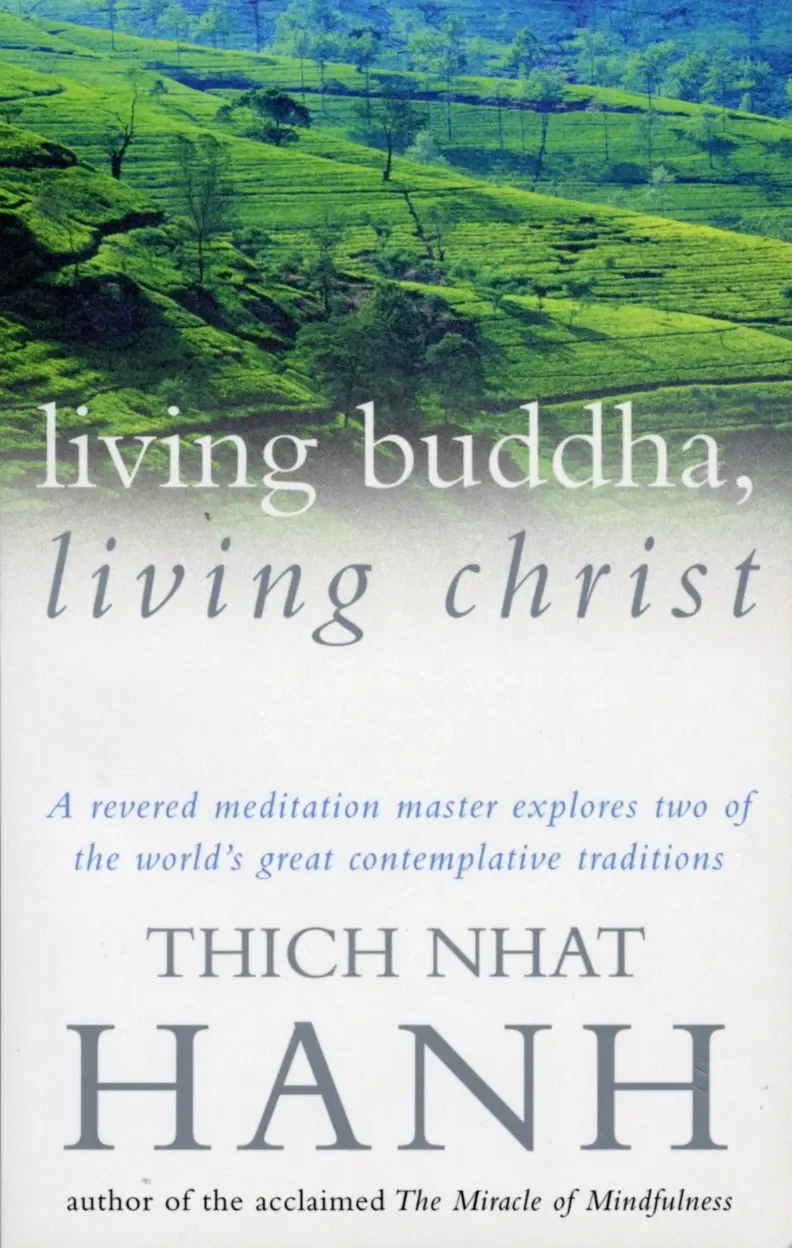
Ultimately, these narratives of transcendence cannot be detached from real-world culture, historical context, and biological reality. Human beings are social primates evolved for cooperation, empathy, and collective meaning, yet our innate capacities for tribalism, dominance, and resource hoarding constantly threaten us. The revolutionary genius of figures like Jesus and the Buddha was their ability to frame biological (of course they didn’t have the vocabulary we do today) and social necessity in the language of the sacred (what other language?), transforming the basic requirement of human cooperation into a divine mandate. Transcendence, in this light, is not an escape from our physical bodies or the planetary ecosystem, but an awakening to our deepest responsibilities within them. By insisting that we act as morally accountable stewards of life, these ancient traditions remind us that our survival has always depended on our willingness to see the sacred in the mundane, to care for the vulnerable, and to ground our loftiest spiritual ideals in the daily, practical work of being good to one another.
Of course, who really knows how people thought back then. I often wonder how my closest friends think. Joshua didn’t have a Substack.
What troubles me most, and the reason I keep bringing these things up everywhere all the time, is my sense that even with all the information and tools at our disposal, people don’t have ‘the right stuff,’ if you will, to take political action and put our world on track for a less destructive and tragic future. And, to avail myself of a cute cliché, the future is now. We need to strengthen our connections to our local and global communities. One more: act locally, think globally (in every sense). We need more than education; we need civic-mindedness and political action to fight the inertia of accelerationist oligarchs.
All spiritual teachers are active, and they all teach social responsibility and love of life.
Apathy around and find out.
I have a good friend who is very focused on spirituality and recently sent me the mandala below along with some bible verses. I believe it’s important to maintain one’s spiritual hygiene, especially when life feels uncertain, and things are complicated and exacerbated by complex, almost incomprehensible systems. I’m grateful for people who care about mental health and spiritual well-being. I often reflect on mandalas as part of my own ‘spiritual’ routine, and I find the ones my friend makes especially inspiring.

Developed by “SDS”
What is Secular Spirituality?
Secular spirituality is about finding inner peace, meaning, and connection without turning to religion or supernatural beliefs. It centers on how people relate to themselves, others, nature, and the universe, rather than seeking a bond with a higher power. This approach draws on philosophy, psychology, empathy, imagination, creativity, and science to understand meaning and ethics rather than relying on sacred texts. It aligns well with scientific thinking and rejects magical or otherworldly explanations. Instead of traditional prayer, people often use mindfulness and meditation to support emotional balance and focus. They also find awe and grounding through art, quiet reflection, and spending time in nature. Practitioners aim to live by humanistic values like compassion, patience, and social responsibility, helping others and seeking a fulfilling life.
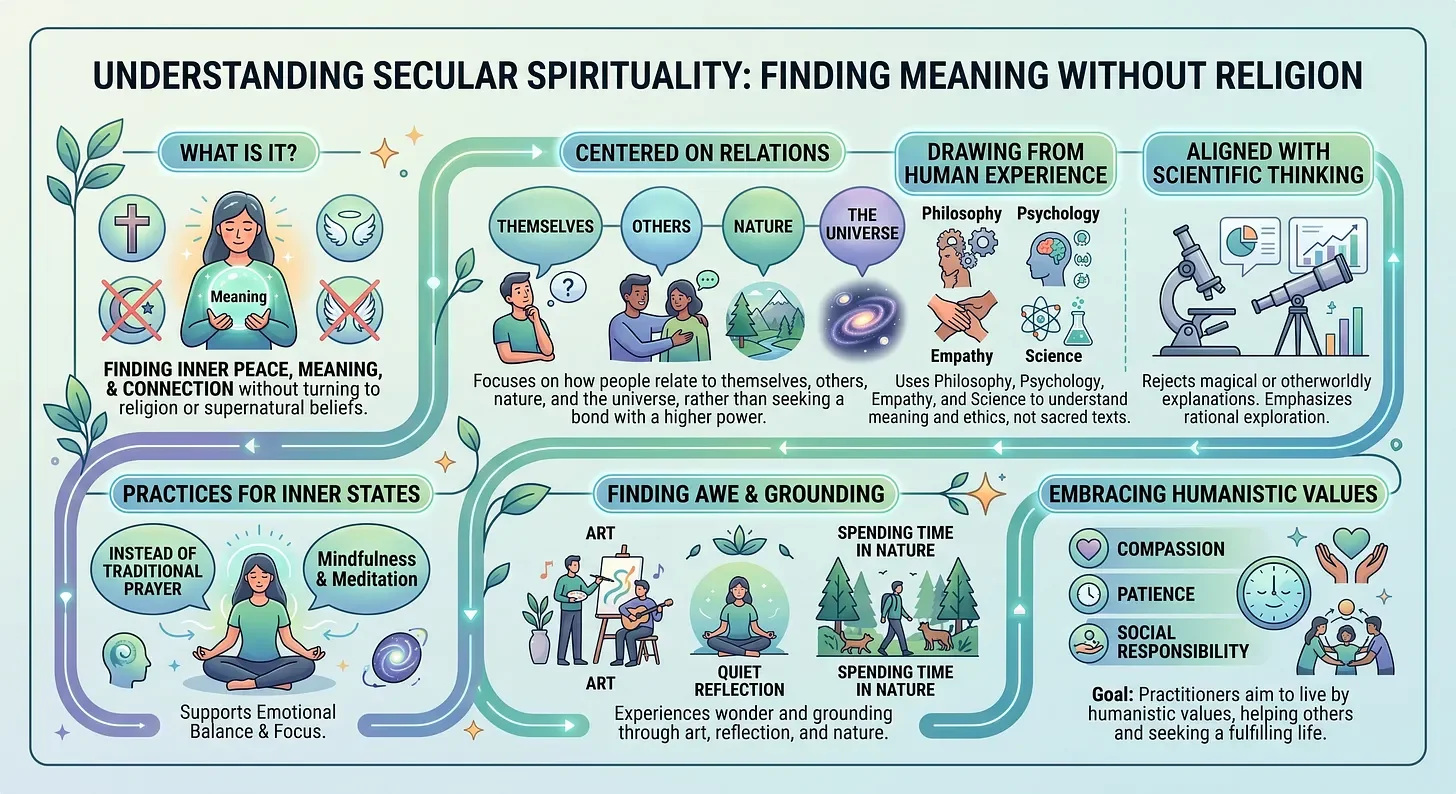
Buckle up, we’re going to need that mandala—existential risk.
Kevin Anderson, once a petroleum engineer and now a climate scientist, stands out for his willingness to face existential risks head-on. He left a comfortable career designing fossil fuel infrastructure to lead climate research at the Tyndall Center. Anderson regularly challenges the comforting myths about global climate solutions. He openly criticizes academic and political leaders who rely on unproven negative-emission technologies and questionable carbon accounting, arguing that these approaches lead people to believe we can avoid disaster without changing how economies grow. Anderson says, “nature cannot be fooled,” and believes that wealthy countries must initiate an immediate emergency energy transition rather than relying on market-friendly solutions. He warns, “Either we organize a rapid, fair transformation of society, or climate change forces chaotic, violent change upon us instead.” For me, energy transition means a radical new way of living and organizing large communities.
I have said the same things for twenty years, and I am not an expert. From my reading and limited understanding of how civilization and nature work, it seems intuitively obvious. For years, people looked at me like I was crazy to be so concerned; many still do.
“Just get on with it, there’s nothing you can do about it.”
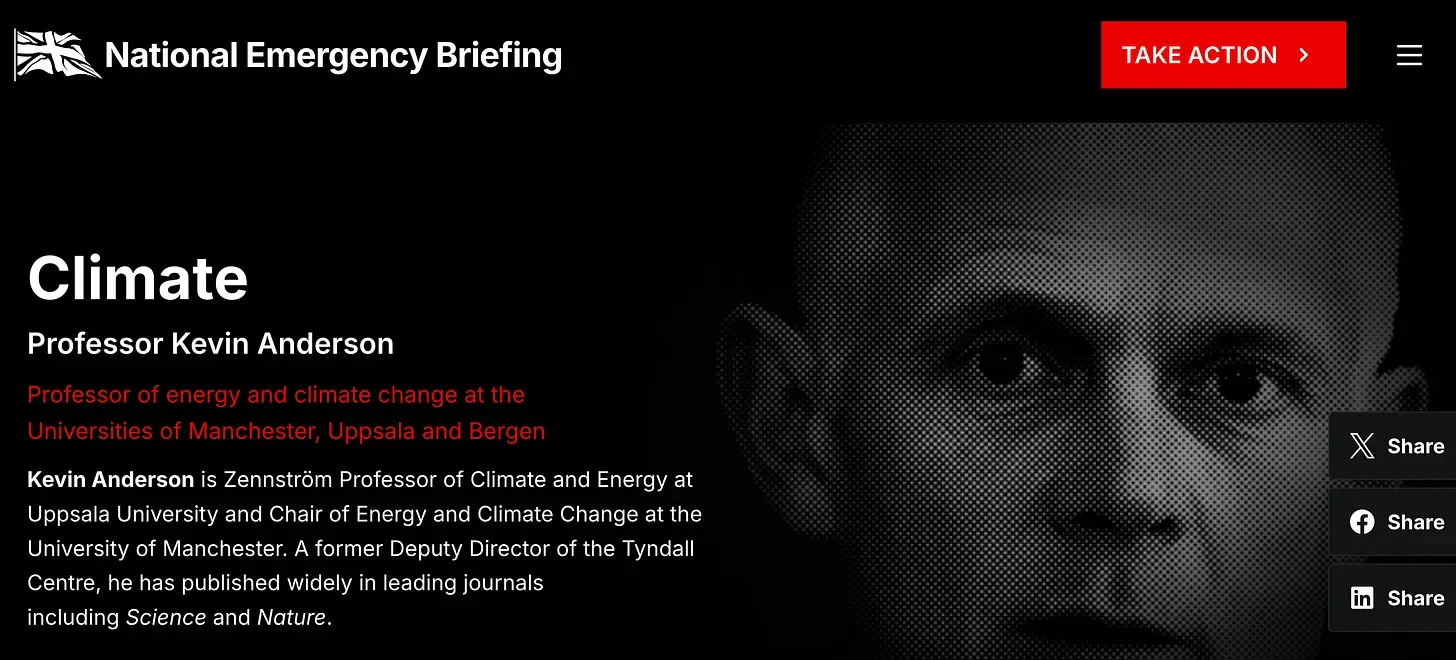
Anderson’s direct approach stands out against the common tendency to seek comfort, certainty, and self-importance. While he calls on wealthy, high-emitting groups to shoulder their larger share of responsibility and reduce their consumption, most people instead choose to protect their own comfort. The reality of ecological collapse is hard to accept and creates strong inner conflict, as it challenges people’s need to feel good and see themselves as innocent. Sorry if I sound repetitive, but this observation frustrates me. As a result, many affluent individuals ignore troubling facts and turn to consumer distractions, wellness trends, or technological hopes to maintain their current way of life. By focusing on personal comfort rather than broader issues, the public often treats a serious crisis as just another minor science and engineering problem to ignore.
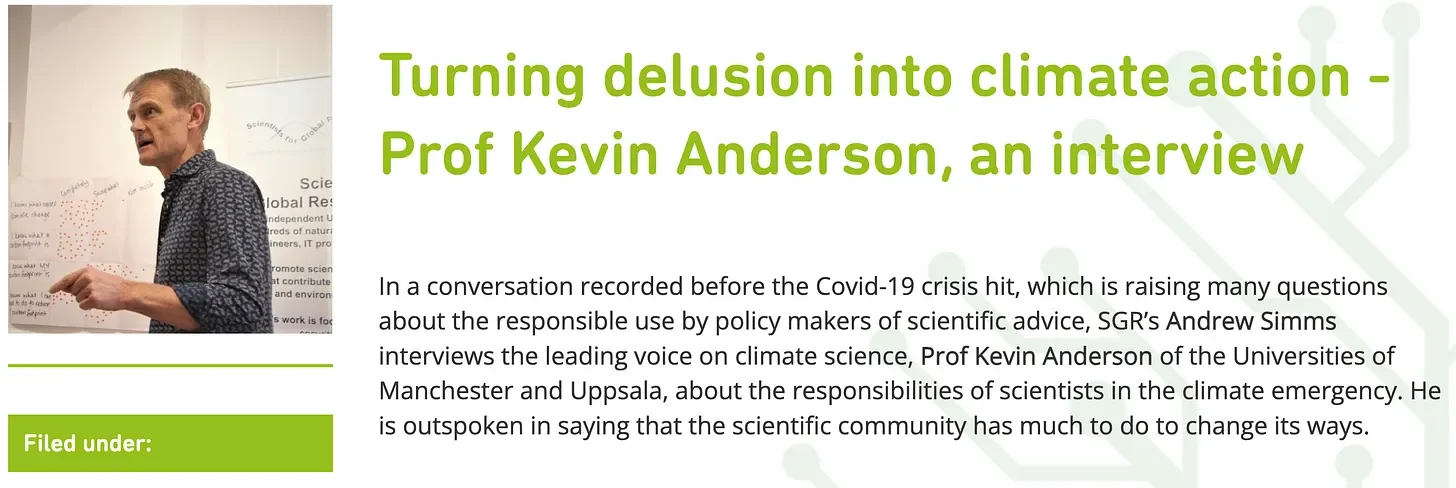
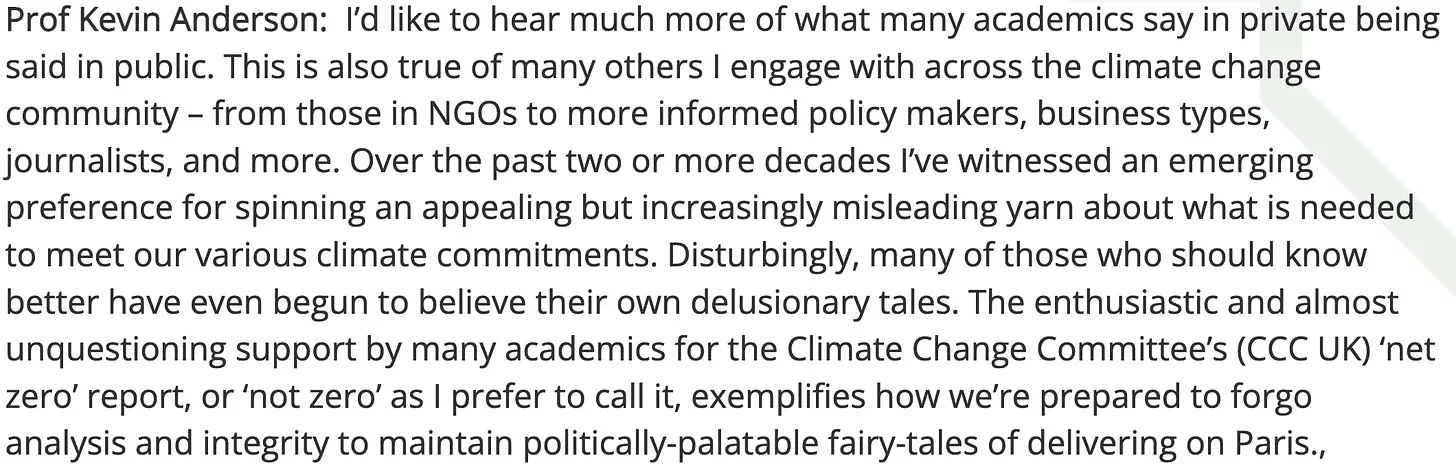
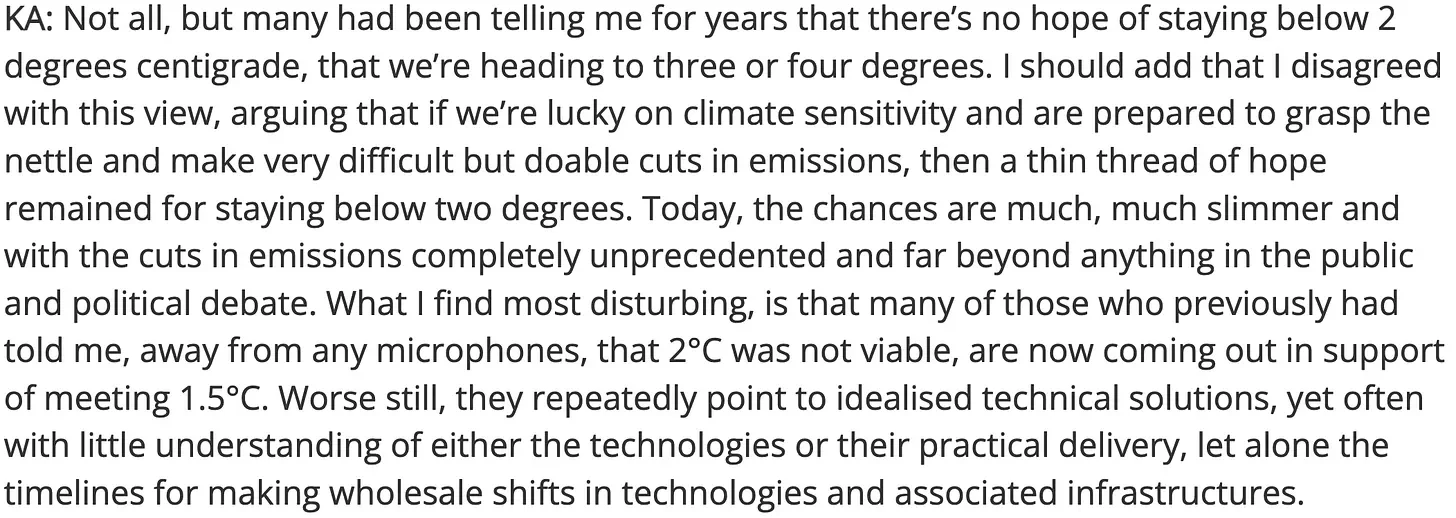
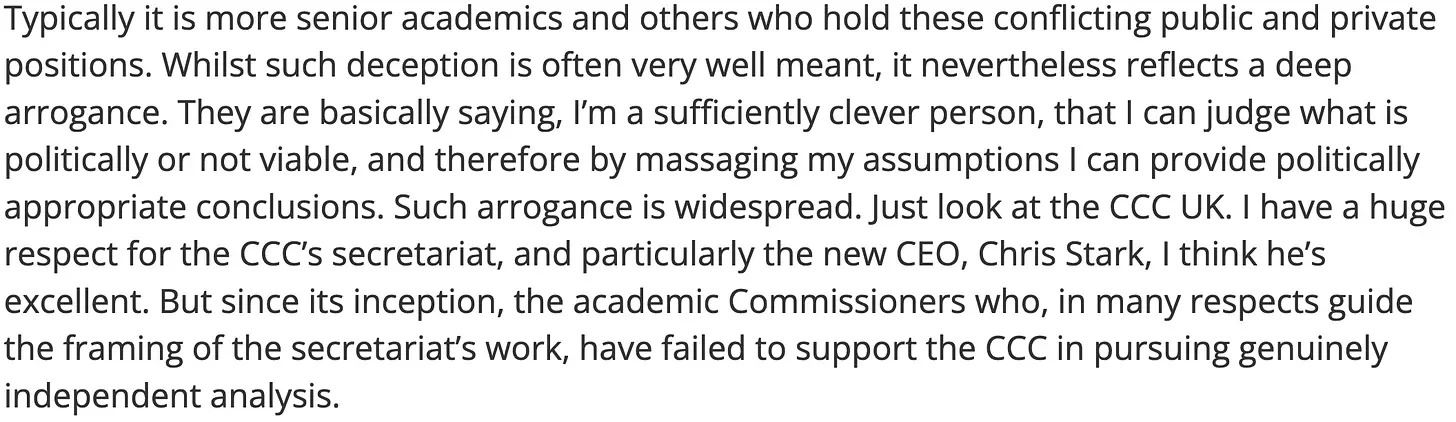
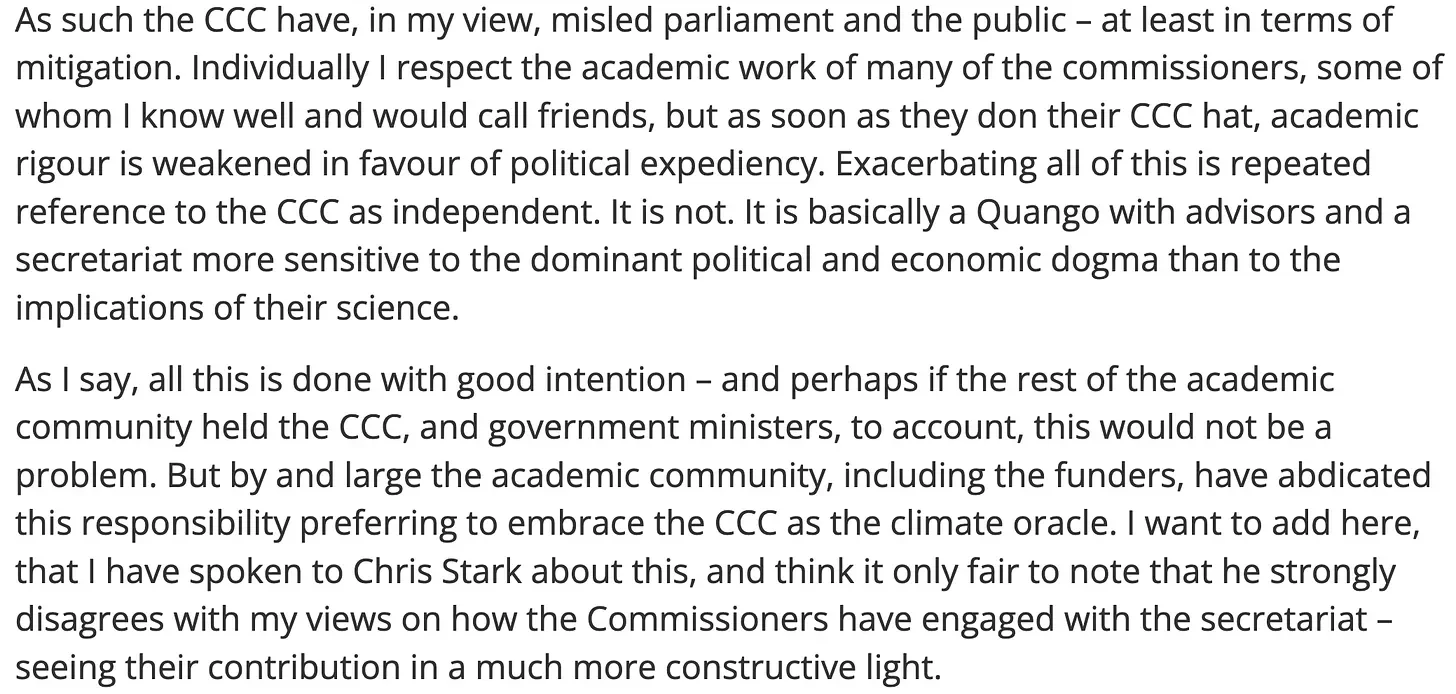
Many experts and policymakers have known for a long time, and we have done nothing. People believe the narratives they want to believe and ignore those that make them uncomfortable.
This widespread psychological paralysis helps explain why many top climate experts and “doomers” feel deeply pessimistic about the chances for large-scale action or real change. Scholars like Anderson argue that thirty years of climate talks have become, in his words, “a grand unifying delusion,” in which institutions prioritize public image and economic convenience over careful analysis and honest discussion. This is why I often comment on videos like the one below: knowing what’s what is not enough. When scientific models show that staying within safe carbon limits requires immediate, dramatic lifestyle changes for the world’s wealthy, the mainstream climate community often softens its findings to fit current economic systems. This ongoing refusal to give up comfort, question market dominance, or accept personal sacrifice leads many analysts to believe that people will not willingly change their way of life. As a result, chaotic collapse may become the likely outcome if humanity keeps avoiding hard choices.
Action, no action
Before addressing my friend’s questions, I want to explore why it’s so hard for people to take action when they know what the problems are and what to do about them, and when they consider themselves morally responsible, scientifically literate, with evidence-based opinions, critically minded, and spiritually connected to the divine.
The Psychology of Inaction
People usually do not ignore existential threats just because they are lazy or uninformed. More often, inaction comes from a complex set of psychological defense mechanisms. When faced with large-scale dangers such as climate change, habitat destruction, economic precarity, or uncontrolled, unregulated, undemocratic artificial intelligence that emerges from energy-power-and-resource-intensive industrial data centers, our minds use these defenses to protect our sense of control, moral values, and emotional balance.
People are naturally driven to seek pleasure and avoid psychological pain. We tend to prefer stories that make us feel capable, positive, and morally good. When we face frightening or complex information that we cannot easily resolve, dealing with it can feel like a threat to our emotional well-being. As a result, ignoring uncomfortable truths is not a sign of intellectual weakness, but a way to protect ourselves emotionally.
Psychological tension is strongest when people see that their own culture, lifestyle, and economic systems contribute to the “polycrisis.” Realizing that our comfort, progress, and daily routines lead to ecological damage or technological risks creates deep cognitive dissonance. This is the conflict between believing “I am a good person” and knowing “my way of life causes harm.” Instead of changing their minds and behaviors, or accepting a modicum of responsibility, many people cope by minimizing the crisis, blaming others, or ignoring the science.
“I don’t like you. What an idiot! I don’t like your worldview.”
Today, political attacks on science are clear in deep research budget cuts, censorship of climate and health data, and replacing unbiased peer review with loyalty to ideology. Even as leaders dismantle the country’s scientific foundations, most people seem not to care. Many now see facts as just another opinion and are distracted by constant consumer entertainment, so they often ignore these attacks on science, treating them as minor political arguments instead of real threats to public health and the environment. More than one person has told me that the truth is what they believe, with a disdainful, confidently proud tone. When people choose comfort over staying alert and prefer stories that make them fit in or feel good, they give up on the truth. In the end, politicians do not have to destroy science by force; a society that avoids hard truths gives it up willingly, showing that when we refuse to face reality, we help cause our own decline.
When global problems seem overwhelming and make individual efforts feel pointless, too many people turn to escapism to cope. Watching streaming series for hours, playing computer and video games, getting lost in shopping, or seeking quick pleasures are more than just ways to pass the time. These habits help people handle stress by creating a simpler world where they can feel in control and happier, shielding themselves from the constant worry that lingers in the background. I like my hobbies; I have habits, but at some point they will be luxuries I can’t afford.
I look forward to new hobbies and habits.
“What’s wrong with you, man? Have you no addictions? Indulge. Relax.”
The Social and Sensory Mechanics of Paralysis
The human nervous system evolved to respond to clear, immediate dangers, such as a nearby predator, not multigenerational or abstract global issues. (We’ve all heard this.) When people hear constant warnings from the media but do not receive clear guidance on what to do, they can develop alarm fatigue. Over time, the brain pays less attention to these warnings. Being exposed to seemingly unsolvable threats can also lead to learned helplessness, in which someone believes their actions will not make a difference and stops trying.
Deep time. Geological timescales. Cosmic dimensions. Consciousness. Intelligence. Counterfactuals. Radical imagination. Creativity. WOW!
People often watch how others react to danger to decide what to do themselves. This can lead to a problem called pluralistic ignorance. If everyone hides their worry to keep things normal, others may wrongly think there is no real emergency. If no one around us is shocked, taking action, or changing their behavior, we tend to stay calm and do nothing too. Speaking up or acting differently can make someone seem like an alarmist, blackpiller, collapsenik, decel, fatalist, catastrophist, declinist, defeatist, chicken little, which most people want to avoid because, let’s face it, it’s not sexy, and it doesn’t make you smell like money.
“I ignore what bums me out. It’s as simple as that, and it works for me.”
Denial vs. Inaction
People sometimes confuse inaction with denial, but they come from different psychological places. Denial means refusing to accept the facts, like not admitting there is a fire. Inaction is more emotional. It is like seeing the fire, feeling overwhelmed by its size, and freezing because escape feels impossible.
Inaction does not mean we stop thinking. Instead, it is like being in a crowded room where different needs—like comfort, belonging, keeping our identity, and staying sane—quietly persuade us that doing nothing feels safest.
A few words about spiritual egotism.
In a hyper-individualistic culture obsessed with personal branding, performance, and status, spirituality rarely escapes the ego's pull. The appeal of feeling “holier-than-thou” stems from its ability to offer the ultimate status symbol: moral and existential invulnerability. When culture equates personal comfort with virtue, adopting a spiritual persona becomes a high-level self-enhancement strategy. Dismissing real-world crises—such as climate collapse, war, or systemic decay—as mere “earthly distractions” lets the practitioner reframe apathy as advanced enlightenment. It transforms civic indifference into a badge of honor, enabling the individual to gaze down at those who worry as spiritually primitive beings trapped in lower consciousness.
“Poor guy, he’s thinking about things again. I will remain unmoved, in transcendent equilibrium, and let his thoughts pass like a spring breeze. When he pauses, I will change the subject to happier things and help him avoid the misery of his thoughts”
Spiritual teachers and psychologists have long warned against this precise corruption. Tibetan Buddhist master Chögyam Trungpa famously coined the term “spiritual materialism” to describe how the ego hijacks spiritual practices, turning meditation, mindfulness, and sacred concepts into mere accessories used to inflate self-importance. Instead of dismantling the ego, the mind uses spiritual achievements to build a fortress of superiority. Building on this concept, psychologist John Welwood identified spiritual bypassing—the tendency to use spiritual ideas and practices to sidestep or avoid facing uncomfortable emotions, unresolved psychological wounds, and pressing societal realities. Telling someone to “chew cud like a cow” while the living world burns is not detachment; it is an elaborate emotional defense mechanism disguised as transcendental wisdom.
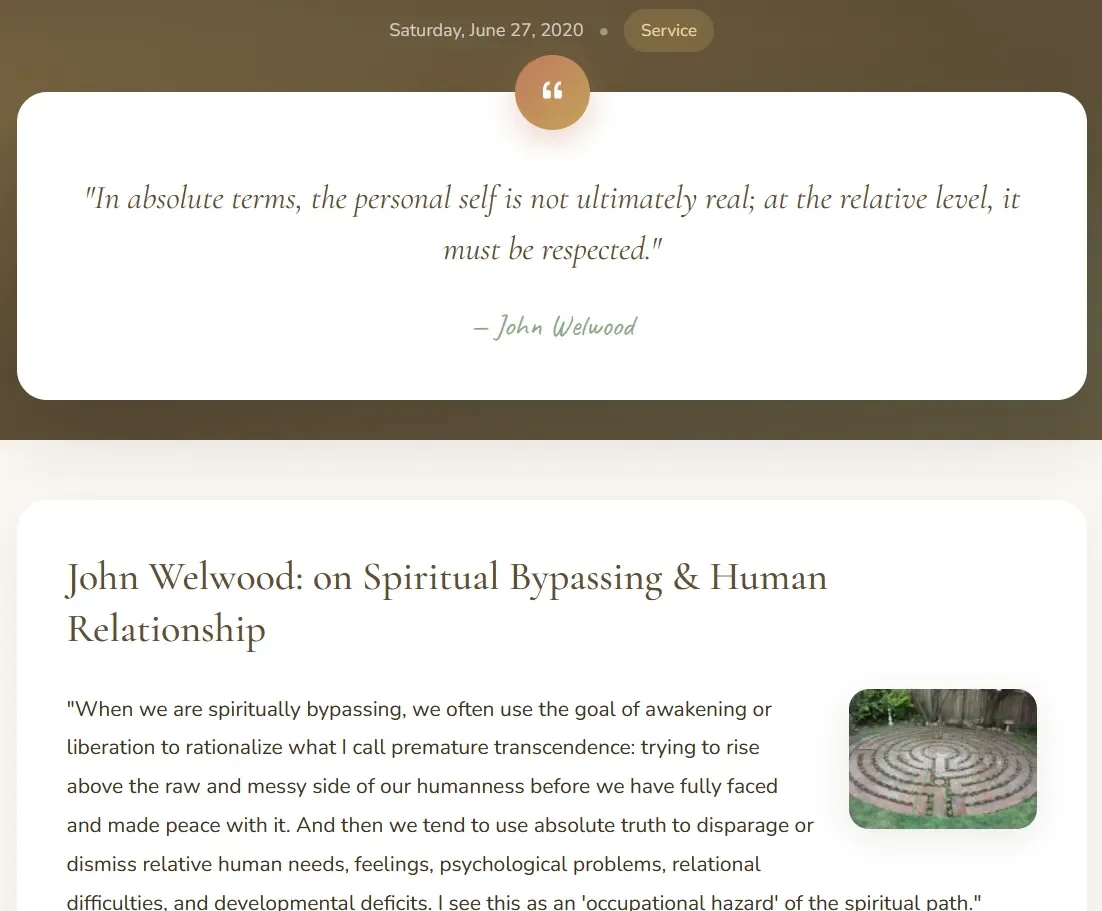
Stephen Batchelor, a contemporary secular Buddhist author and scholar, points out that if we think meditation is just about stopping our thoughts, we become “no different from a cow sitting in a field.” In his critique of modern mindfulness, Batchelor challenges the common idea that meditation is mainly about emptying the mind or shutting down our thoughts. He believes that seeing meditation this way takes away its critical and reflective power, turning what should be an active exploration of reality into a passive, dull state.
This idea is not new. In classical Chan and Zen traditions, teachers often warned students about falling into “dead-tree Zen” or becoming too quiet and passive. Stories like Master Huairang joking about Mazu’s endless sitting by pretending to polish a clay roof tile into a mirror remind us that just sitting still with an empty mind does not bring wisdom, any more than a stone or a cow becomes enlightened by staying still. Real contemplative practice, as both old teachers and modern scholars say, is not about escaping thought. Instead, it is about questioning how the mind works, how suffering starts, and how we connect with the world.
If we use meditation to turn off our thoughts, it can become a way of avoiding difficult truths about ourselves and the world. This approach can create a pleasant numbness that looks like inner peace but actually helps us ignore real moral, ecological, and social problems. When spiritual practices are used to escape uncomfortable realities by pretending to “rise above thought,” they become just another way to comfort ourselves. True spiritual growth means using our attention to see reality clearly, question common beliefs, and make thoughtful, ethical choices.
This video features Stephen Batchelor exploring how the active, questioning approaches of the Buddha and Socrates guide us toward engaged ethical living rather than passive spiritual retreat.
Modern psychological research confirms that spiritual practice frequently breeds a stealthy form of narcissism. In a landmark study on “spiritual superiority,” social psychologists Roos Vonk and Anouk Visser showed that people who practice spiritual disciplines often develop a heightened sense of personal uniqueness and hidden elitism. The researchers observed that many practitioners subvert spirituality's core purpose, turning tools meant to dissolve the self into a scale for comparing themselves favorably to others. The illusion of being a “spiritual adept” provides an unassailable high ground, shielding the individual from self-doubt while permitting them to judge the uninitiated as less evolved.
“Even I get deluded sometimes.”—Mr. Enlightened
Ultimately, spiritual condescension serves as the ultimate shield against vulnerability and accountability. Caring deeply about planetary collapse, human suffering, or geopolitical crisis risks leaving you heartbroken, powerless, and terrified. By retreating into a grandiose identity as an “unfazed, enlightened soul,” the individual insulates themselves from the painful grief of being an interdependent human in a fragile world. As spiritual teacher Ram Dass frequently noted, the “spiritual ego” is the subtlest and most dangerous trap of all because it wears the cloak of holiness. It lets people walk past suffering with a serene smile, convincing themselves that their refusal to engage is not cowardice but divine wisdom.
***Now please listen to this.
I enjoy talking through open questions.
Question from my friend:
“Do we really assume that our generation is destined to be the last, the ones who will witness the Apocalypse?”
“People have been predicting the “End times” ever since the Bible was first written and later edited by elders in mysterious councils lost to history.”
Were these rhetorical questions, or did my friend want my opinion? Well, here we go…
A backhanded mic drop?
To start, look at the upside-down, backward wild rationalizations of Peter Thiel and his odd, self-serving beliefs about Armageddon and the Apocalypse.
6. Technofeudalism, Algorithmic Control, & Academic Apologetics
Rationalizing Delusions Leave Elites Alone: Antichrist or Armageddon
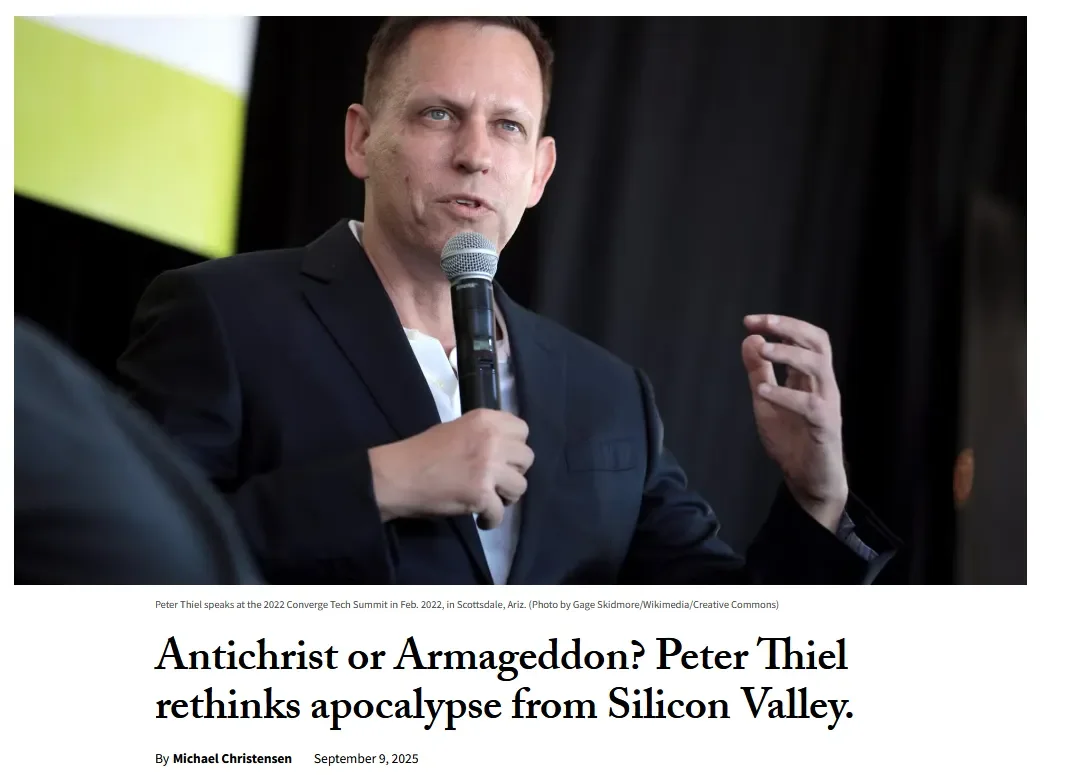
I don’t know anyone who is predicting exactly how the polycrisis will play out or how long it will take for our current global civilization to collapse. People interested in collapse, overshoot, and the limits to growth know how complex these domains are. I only know that it is collapsing. We are in the midst of it. According to Theil, if you cite the evidence and suggest something might be done about our predicament, you are the antichrist. Wealthy and powerful players can believe anything if it serves their purpose. Hunter-gatherers are anarchists, and our institutions stop memesis. WOW! If you inherit money and abuse your brain, it’s OK; Jesus is on your side, and you can afford not to listen to anything that doesn’t support your thinking. Why? Because you say so. Money can make people sick, like Andrew Tate and Tate fans who think saying fuck you on a private jet or misogyny is the height of righteous manliness.
Many people I know are too comfortable to care about anything that threatens their sense of security and pride. Sadly, false security and false pride, which are mostly based on stories we tell ourselves, are ringfenced by a lack of context and an intense need to feel good about ourselves. That kind of childish insecurity never brings the love we crave.
I have mentioned René Girard before. He’s an interesting thinker. How does Peter Thiel use his thoughts to support his philosophical views and his reactionary politics and investments?
Peter Thiel takes René Girard’s mimetic theory and turns it into a guide for technocratic power, business strategy, and reactionary politics. Girard’s main idea is that people imitate each other’s desires, which leads to envy, rivalry, and chaos. Thiel applies this idea to economics, claiming that market competition is a kind of collective madness in which companies copy one another until no one wins. His main business argument is that “competition is for losers” and only monopolies can create real value. This follows Girard’s thinking: to succeed, entrepreneurs must avoid mimetic rivalry by making something truly unique. Thiel thinks he is an intellectual genius, and that his investment success validates his belief.
Amputating the Gospel for Technocratic Sovereignty
Thiel takes a very different approach from Girard in solving the problem of potential disaster. Girard believed that the Judeo-Christian tradition revealed the old “scapegoat mechanism,” where communities would unite by sacrificing an innocent person, which used to help control violence. Once this mechanism was exposed, Girard said society had to choose between Christian non-violence and facing growing destruction. Thiel agrees with Girard’s warning about possible disaster but rejects the Christian answer of spiritual change. Instead, he puts his faith in technology and political power as the katechon, or the force that holds back chaos. Most accelerationist reactionaries would agree.
The Antichrist and the Justification for Monopolistic Control
Thiel’s view of global politics centers on the “counterfeit peace,” which he connects to Girard’s idea of the Antichrist. He claims that global organizations, regulators, and efforts to slow down technology are really about control, driven by envy and fear. By calling state regulation a false peace, Thiel defends his investments in border surveillance, defense technology, and companies like Palantir as necessary tools. In his view, building surveillance systems is not about authoritarian control but is a heroic act needed to prevent disaster—the disaster of not being in charge. Peter thinks progress, modernity, and all that makes us Homo sapiens need him, and that his ilk protect all that is inevitable.
The Elite Exemption
Girard believed mimetic desire affects everyone, with no one—no matter how powerful—immune. Thiel, by contrast, makes an exception for himself and a select group of visionary founders. He presents venture capitalists as leaders above the crowd, able to shape history. By removing Girard’s focus on humility and turning his ideas into a plan for corporate control, Thiel uses the fear of disaster to present his power projects not as aggressive capitalism, but as the only thing standing between society and collapse.
What is the Gig Economy?
The gig economy is run by algorithms that turn people’s work into something that can be bought and sold. Instead of acting like a free market, it works more like a group of digital kingdoms. That’s why people like Curtis Yarvis, the loquacious, common-senseless, court jester, talk about corporate monarchs. Rather than giving workers real independence, these platforms use algorithms to control labor, take a cut from workers’ earnings, and push all the risks onto individuals. Yarvin would say, or at least when I knew him, that it’s for our own good. Pitch in and follow.
Erosion of Democracy and Private Sovereignty
The gig economy weakens democracy by removing public oversight and concentrating power in private tech giants. Sociologist Alex Rosenblat, in Uberland, shows that these companies design systems that can change rules, pay, and working conditions without warning, using hidden code. This lets them privately control public services like transport and labor. By making workers independent contractors, platforms break up unions and weaken community ties, turning citizens into customers. Shoshana Zuboff, in The Age of Surveillance Capitalism, points out that this system treats people’s experiences as free resources. Algorithms shape daily life, use subtle prompts to influence choices, and make constant surveillance seem like a helpful feature, hiding the real power these companies have.
Is this what we want?
Psychological Alienation and Precarity
This system takes a heavy psychological toll, leaving workers feeling insecure and isolated. Without healthcare, steady pay, or job protections, gig workers often face constant financial stress that harms their mental health. Sociologist James Muldoon (below) says that working under “impersonal digital managers”—algorithms that track every move—takes away workers’ sense of control and leaves them feeling powerless. This kind of exploitation is even worse in the global supply chains behind digital platforms. As Mark Graham and Callum Cant show in Feeding the Machine, low-paid micro-taskers and content moderators can suffer serious trauma from handling harmful content in digital sweatshops. The easy convenience of on-demand platforms comes at the cost of widespread psychological harm, and the destruction of democratic, empowering communities with shared values and goals.
Systemic Extraction and Environmental Exhaustion
The gig economy acts as a main driver of what some call the “Moloch” machine, more on this later, treating people’s energy and the environment as resources to be used up for profit. By turning things like personal cars, extra rooms, and free time into products, platforms slowly wear down people’s mental and physical reserves. Think of all the extras you have to tick off and buy when making a reservation for a flight or hotel room.
“Do I really need a meal? Maybe it’s best to go without a suitcase and buy stuff when I get there.” It’s all so exhausting. Do you really want this? Who asked us?
When profit-driven systems have no limits, they harm natural ecosystems. The reality behind on-demand services is far from the idea of a simple “cloud.” Fast deliveries, endless instant choices requiring micropayments, ride-hailing, and reservation systems rely on large server farms, data centers, and constant transport, all of which consume natural, finite resources to make instant service possible.
Gig Economy Jobs That Are the Butt of Humor on Mainstream Streaming Shows—haha, hehe
OnlyFans: Subscription & On-Demand Content
OnlyFans works like a premium social media feed you can access only by paying. Creators set their own monthly subscription prices for their profiles, where they share pre-recorded videos, photo sets, and text updates. In addition to subscriptions, creators earn money by sending pay-per-view (PPV) messages, which means certain photos or videos cost extra to unlock, and by making custom content for individual fans. Although the platform became well known for adult performers, it was originally designed for all kinds of creators, such as fitness trainers, musicians, and chefs.
Stripchat: Real-Time Live Broadcasting
Stripchat is a live adult webcam site focused on real-time interactive shows. Performers stream live video, and viewers can join public chatrooms for free. Viewers buy digital tokens to tip performers during the show. Tips can trigger certain actions, help reach tipping goals, or control interactive devices connected to the stream. Viewers can also use tokens to start a private one-on-one session with a performer, paying a set price per minute for exclusive time.
Substack. Irony.
Is the commodification of everyone healthy? Have we all been reduced to products and consumers? What happened to community? Maybe my friend, whose questions I regard below, has some answers he’d like to share. I’d rather hear what people think than pontificate, even though listening carefully to people’s thoughts and ideas often leads me to bouts of pontification.
I’d rather buy from a local craftsperson than order something from Etsy. I like personal, face-to-face relationships. This uncontrolled social experiment (this thing of ours) is corrosive to the human soul and mind. As we continue to accelerate down this track, the outcomes of this way of life become potentially horrific beyond imagination.
The Secular Soul
A secular view defines the soul as a person’s core identity, consciousness, emotional depth, and moral character, without involving anything supernatural or immortal. In secular philosophy, the soul is reinterpreted through everyday human experience. Here, the mind and soul are often seen as the same, reflecting our ability to think, be aware, and reason.
In this secular view, the “soul” refers to a person’s ability to feel empathy, experience emotions, and hold personal values, rather than being an invisible substance. The word comes from older roots, such as the Greek psyche, and refers to a person’s living personality and unique character.
Modern secular thinkers continue to develop these ideas. Some follow Aristotle, viewing the soul not as something separate, but as the process that organizes and sustains a living, conscious person. People also use the word “soul” metaphorically. For example, saying something is “good for the soul” means it brings deep personal fulfillment, like art, charity, connecting with others, or spending time in nature.
What do you think the soul is?
Techno Feudalism
Modern economic life is now shaped by a confusing mix of buying and renting, with the line between the two almost disappearing. We are forced to subscribe. Today, someone might think they own a car, only to find out that features like heated seats require a monthly subscription. Or they might buy a digital library, only to lose access if a server goes offline. This steady loss of private property gained wider attention after Ida Auken’s 2016 World Economic Forum essay, which predicted that by 2030, “you’ll own nothing and be happy.” While Auken imagined a positive future of shared resources, the reality is proving much darker. We are seeing a major shift away from traditional capitalism toward what some call Technofeudalism or “Platform Power Capitalism.” Debate continues over whether this is a completely new system or just the last stage of “Hyper-capitalism.” Critics like Evgeny Morozov argue that the idea of Technofeudalism overlooks that predatory behavior and rent-seeking have always been part of capitalism. Still, whether it is a new system or not, the result is the same: digital empires are taking over productive markets.
In traditional capitalism, profit was seen as a reward for productivity, innovation, and exchanging goods. Now, profit is being pushed aside by rent, which acts more like a parasite. Companies like Apple and Amazon are no longer just players in the market—they have become the market itself. By controlling the digital infrastructure where most economic activity occurs, these companies use tools such as code and intellectual property to create a legal monopoly. As Yanis Varoufakis put it, profit is what drives capitalism, but rent was the main force in feudalism. Today, when a developer sells an app or a merchant ships a product, these new “Cloudalists” take a “Cloud Rent,” often about 30% of someone else’s work, just for letting them use the platform. This is a step backward. In this system, big corporations do not need to be productive; their power comes from taking rather than making. Instead of investing in new ways of producing, they focus on maintaining control and locking others in.
My work isn’t promoted on this platform by its algorithms because I don’t have any paid subscribers, so the platform isn’t earning from my work.
The emergence of Cloud Capital marks an existential rupture in the economic order. According to Pascal Stiefenhofer, Cloud Capital is unique because it acts as both worker and owner, producing value while simultaneously concentrating power in the hands of those who run the infrastructure. The rise of Cloud Capital is a major break from the old economic system. Pascal Stiefenhofer says Cloud Capital is different because it acts as both worker and owner, creating value while giving more power to those who run the infrastructure. In this system, work is split into two groups, both controlled by algorithms that act like distant managers. The first group is the “Cloud Proles,” such as Uber drivers or Amazon couriers, who have no benefits or real control, and the platform pushes them to their limits. The second group is the general public, who become unpaid “Cloud Serfs.” Every time someone scrolls, likes, or clicks, they are doing unpaid work that helps train algorithms and adds value to the Cloudalist’s platform. This change turns markets, where people once traded goods for profit and had some freedom, into Cloud Fiefs. In these new fiefs, user freedom is just an illusion; people are dependents whose actions and data are taken as rent to strengthen monopoly power without ever producing a new commodity. This shift has profound psychological consequences, moving society from capitalism's “independent self” to subservient agents in a hierarchy of fealty. This society of tech-dependent servants is defined by catastrophic anxiety, born of broken shared norms and the absence of a mediating locus of authority, replaced by obsessive attachments to parasocial identity and hyper-stimulating conspiracy stories. In the social manor, an individual’s ability to navigate the world is truncated by the whims of powerful lords who can unilaterally withdraw access to the essential infrastructure of this mad way of life.
Support Militarized First Responders, The Only Job For “Real Men”

The 2027 Line of Techno Fascist Fashion
Technofeudalism replaces human oversight with algorithmic control, using hidden, manipulative power. By calling surveillance “user convenience,” platforms make their control seem normal and uncontroversial. Algorithms shape what people see, highlight certain choices, and make other options harder or more expensive, all to serve corporate interests. As gatekeepers to the digital world, platforms hold significant power over what people know and experience. It is also wrong to think of Big Tech as separate from the government. The roots of Technofeudalism date back to the 2008 financial crisis, when central banks used quantitative easing to build digital infrastructure such as fiber lines and server farms, which now give private companies control over the public. This public investment ultimately benefited private tech giants. As a result, tech companies now have powers similar to those of states. Peter Thiel once said that technology is a powerful alternative to politics because it lets people change the world without needing others’ approval. This shows a dangerous shift toward Techno-fascism, where control over data allows for surveillance and behavior control without any democratic input.
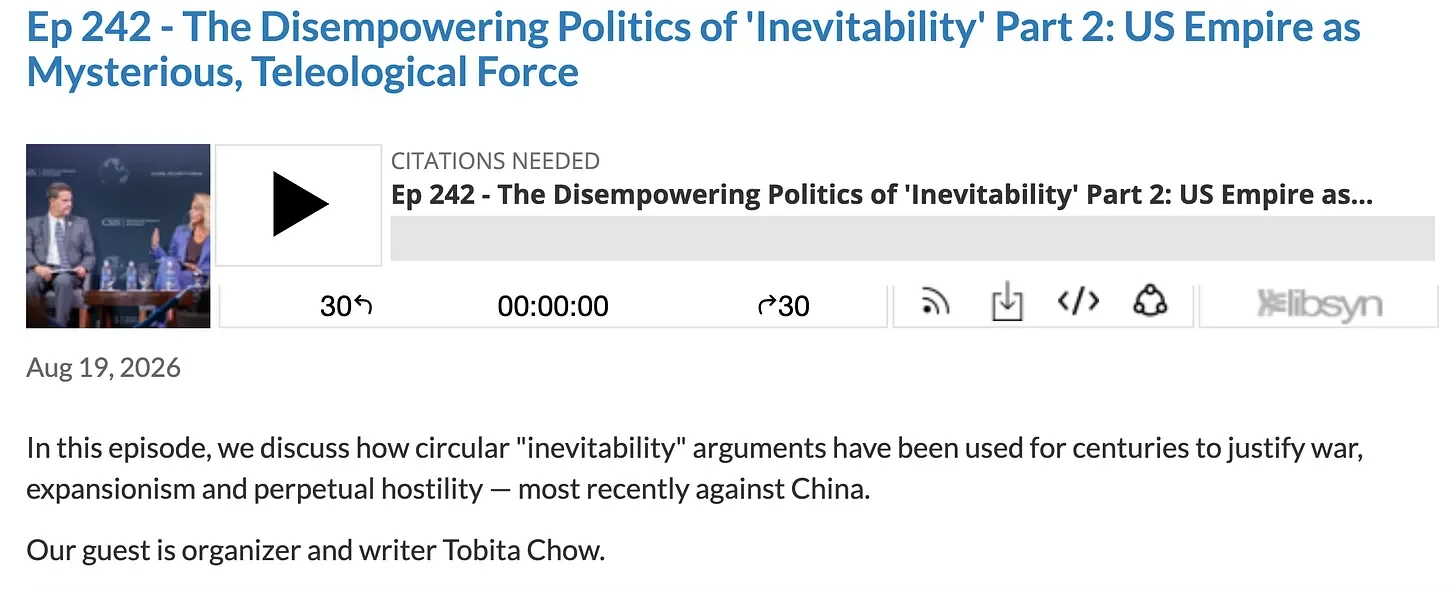
Why do people put up with it? It’s the narrative, stupid.
Looking ahead, Technofeudalism is less stable than the capitalism that came before it. Capitalism kept social order by promising future wealth, but Technofeudalism offers no such hope. Instead, it openly extracts value and returns only what people need to survive. This centralization also creates a single point of failure, since it depends on large data centers that organized resistance could target. To move from being “subscribers” to being “citizens” again, society needs to push for shared control of data and build new, democratically run infrastructures. We are facing a crucial moment: if Artificial General Intelligence becomes the main form of capital, acting as both owner and worker, people will have to choose whether they want to be citizens in a real democracy or just subscribers under digital rulers.
While it’s available, how will we use it? Who owns it? What do we want? What do they want?
MTI Capital Service Providers And Their Brilliant Research and Apologetics
The Technocratic Alchemist at Stanford
Erik Brynjolfsson is the Jerry Yang and Akiko Yamazaki Professor at Stanford University, Director of the Stanford Digital Economy Lab, and Senior Fellow at the Stanford Institute for Human-Centered AI (HAI). He represents an elite academic who serves the modern tech industry. After decades at MIT, he now holds key roles in Stanford’s Department of Economics and Graduate School of Business. Brynjolfsson’s work often turns the disruptive effects of digital technology into economic stories managers find easier to accept. In his research on the “Economics of Technological Transformation,” he reassures corporations and policymakers that issues such as friction, wage stagnation, and social disruption from rapid technological change are only temporary. His well-known idea, the “Productivity Paradox,” explains the gap between adopting new technology and seeing economic results as a problem of organizational adjustment and learning new skills. This approach presents corporate upheaval as a normal and necessary step toward future growth.
Sanitizing Automation and Labor Displacement
Brynjolfsson’s approach is evident in his labor market research, including his paper “Canaries in the Coal Mine?” Six Facts About the Recent Employment Effects of Artificial Intelligence. Using payroll data from millions of workers, he and his co-authors show that generative AI is reducing entry-level hiring for young people aged 22 to 25. Instead of seeing this as a sign of deeper job-market problems, Brynjolfsson describes it as task restructuring rather than outright job loss. He focuses on “skill leveling,” the idea that AI tools can help less experienced workers do more (bull shit!), and he encourages ongoing skill development. This perspective makes the decline in entry-level jobs seem like a technical issue that can be fixed with retraining, shifting responsibility onto workers rather than questioning the goals of the companies using these technologies.
“Subscribe to our educational platform and get your ChatGPT certification now!”
Remember in the late 90s how everyone was going to make a fortune with their e-commerce websites? How much money and time did people waste on those seminars and ‘business models’?
Oh, the humanity, and tech bubbles.
The Illusion of Human-Centered Management
Even when Brynjolfsson criticizes tech industry strategies, such as warning about the “Turing Trap”—the risk of building AI only to replace human workers—his arguments still support the tech industry's broader direction. He points out that automation can lower wages and increase wealth for tech leaders, but his solution of “human-centered augmentation” still fits within the drive for efficiency. By offering advice, co-founding consulting firms like Workhelix (tagline: Know & Grow the ROI of your AI) to help companies decide what to automate, and speaking to lawmakers, Brynjolfsson gives businesses both guidance and moral approval. This helps elite universities like Stanford continue to act as research and development centers for the tech industry, using gentle economic language to describe practices that mainly benefit large platforms. It’s stupid, reality-avoidant blindness.
Debating whether artificial intelligence will boost productivity or reshape labor markets under neoliberal capitalism distracts from the core issue. Many top university scholars treat AI as just another tool for efficiency or worker support, but this perspective overlooks the hard facts of physics, ecology, and energy limits. These views are little more than a shiny veneer on an exploitative, pathological system tantamount to dressing up the modern techno-industrial pig for a Hollywood red carpet. Mainstream economics lost the plot, so to speak, generations ago and has drifted far from the biophysical world we depend on for everything. If we recognize the global economy for what it is, a relentless, omnicidal heat engine, then making it more efficient with algorithms does not solve the underlying crisis. It only accelerates the transformation of the natural world into waste, heat, and profit that matters nothing to the rotting corpses of oligarchs or the soon-to-be starving masses.
After the fall of technofeudalism, back to basics.
Step one: Neo-Medievalism
Step two: Mad Max Kingdoms, Republics, old-school Empires
Step three: Neo—Neolithica and Y-chromazone bottlenecks
And then came “K” species Homo venatio et collectio (The Good Life)
Mainstream economists and tech leaders always miss a key point: the problem is ecological overshoot. They can’t go there; they would be out of the kind of job that keeps them above the fray and from the kind of precarity most people deal with. They are cowards, addicted to some Kool-Aid concoction of egotistical status signaling, motivated reasoning, groupthink, cognitive dissonance, and childish denial. And the students they lecture to will be no less deluded and warped in their understanding of how the economics of living systems work. When people consume Earth’s resources much faster than nature can replace them, leading to resource shortages, soil loss, climate change, and mass extinction, all bets are off. How many times will people point this out before plebs and proles want to do something to make our anti-leaders change course? Capitalism depends on endless growth, but the Earth has limited resources. People in my community will repeat this fact in different contexts as long as it takes or until the whole shytehouse goes up in flames. No matter how advanced our technology becomes or how much money is made, these limits will eventually stop reactionary capitalists and their digital systems in their greedy, arrogant tracks. No amount of coding or academic research can get around the basic facts of physics, ecosystem decline, or the limited supply of essential materials.
Obsessing over productivity stats or job forecasts while the natural world unravels is a perilous error on the part of those commanding the platform algorithms. As overshoot shatters global supply chains and erodes nature’s defenses, this economic system will not wind down gently, but will crash in chaos, terrorizing and killing billions. Trusting artificial intelligence to fix ecological overshoot overlooks the fact that digital technology itself consumes vast amounts of energy, power, water, and rare minerals (repeat, repeat, repeat this fact until people understand it). When the planet’s boundaries are finally breached, digital platforms, algorithms, and academic models will collapse alongside the physical industries they depend on. Only then will it become clear how futile it was to keep optimizing a system that was busy erasing its own foundation.
“Passive, submissive imitation does exist, but hatred of conformity and extreme individualism are no less imitative. Today they constitute a negative conformism that is more formidable than the positive version. More and more, it seems to me, modern individualism assumes the form of a desperate denial of the fact that, through mimetic desire, each of us seeks to impose his will upon his fellow man...” — The One by Whom Scandal Comes, René Girard
“Our civilization is the most creative and powerful ever known, but also the most fragile and threatened... [We have] gradually confiscated the Revelation and used it to its own ends, to make atomic bombs... To make the revelation wholly good and not threatening at all, humans have only to adopt the behavior recommended by Christ: Abstain completely from retaliation and renounce the trend to extremes.” — Battling to the End, René Girard
“There is no longer the slightest difference between a desire to save the city and unbridled ambition, between genuine piety and the desire to claim divine status for oneself. Everyone looks on a rival enterprise as evidence of blasphemous designs.” — Violence and the Sacred, René Girard
“Victimism uses the ideology of concern for victims to gain political or economic or spiritual power... To escape responsibility for violence we imagine it is enough to pledge never to be the first to do violence. But no one ever sees himself as casting the first stone. Even the most violent persons believe that they are always reacting to a violence committed in the first instance by someone else.” — I See Satan Fall Like Lightning / The One by Whom Scandal Comes, René Girard
Friar Paolo Benanti, mentioned in the video above, a Franciscan theologian and chief Vatican advisor on artificial intelligence and tech ethics, addresses the theological and moral risks of techno-determinism, human pride, and algorithmic power. Benanti looks at ethics at a broad, systemic level rather than focusing on individual disputes. His approach to ‘algor-ethics’ challenges the idea that private tech monopolies and powerful elites can take over human moral responsibility or prevent disaster. He is sane, well-informed, and wise, but he’s not a billionaire, although the power of the Catholic church is formidable.
On the Heresy of Technological Domination
Thiel believes that private technology monopolies and surveillance systems are needed to maintain order and stop society from falling apart.
“Franciscan poverty teaches us that creation is good, but not absolute, and that things are not objects to be possessed, but realities to be used rightly. As Laudato Si’ teaches, our kinship with all creation leads us to reject the temptation of efficiency without love, and of technological domination cut off from human relationships. Whenever I see algorithms that treat people as bundles of data to be optimized, the Franciscan tradition asks: ‘Is there genuine care for the human person here?’” — Catholic Times Interview on Moral Theology
On Technology as a Clandestine Displacement of Power
Thiel argues that venture capitalists and tech creators should use their own systems to avoid government rules and create unchecked corporate power.
“Every technological artifact is a displacement of power, is a form of order. Ethics of technology is simply questioning technology to allow people to be aware of this kind of transformation… Engineering alone cannot answer how technology contributes to human life. Technology is never neutral; it embodies a particular view of human beings and a hierarchy of values.” — Tools and Weapons Podcast / Catholic Theological Lectures
On the False Worship of “Oracular” Systems
Thiel claims that autonomous algorithms and data platforms offer a perfect and objective way to handle human conflict and leadership.
“Now, if you interact with an AI, the knowledge that the AI can suggest to you is oracular. Everything is mixed together—and you have to trust it… Once you insert AI into this chain and it’s not well designed, it could have a really profound effect on who we are and how we understand the world. The perception of ethical value is a purely human capacity.” — The Pope’s AI Guru on Human Impact
On the Sinister Class Divide of Elite Augmentation
Thiel suggests that a small group of founders can use transhumanism, biotechnology, and private resources to overcome human weakness.
“There are experiments using synthetic biology to augment humans. As well as the possibility that this could give rise to sinister inequalities, there is also the problem of poorer countries becoming experimenting grounds for rich countries. The Church continues to oppose this kind of unjust, unethical experimentation… Every technological choice is, in the end, an answer to this question: ‘What does it mean to be human, and what must be protected?’” — Capgemini Research Dialogue / Global Church Lectures
On Fear-Driven Governance vs. True Ethics
Thiel warns that humanity is close to collapse unless we give control to centralized technology-driven defense and intelligence systems.
“An ethical perspective that we should have is not simply fear-driven, because fear is not ethics… Technology is not enough for my deepest questions: What does it mean to be human? What does it mean to live in this century? We must design a future in which the machine is not an evolutionary competitor to the human being.” — Faith in AI: Dialogue on Ethics and Technology
Back to my friend’s question: I am no longer enamored by the Big Gods of the Abrahamic traditions (The Mighty Overseers and Directors of all things human). But I still think we can learn a lot about ourselves from religious literature; after all, people wrote it, and people believe it. I am also not a fan of the AI Gods and their business leaders. The people who run the culture with their arms races are what will kill us all.
I have been to Patmos, Greece, a couple of times, where John of Patmos wrote the book of Revelation. I don’t believe in “The Apocalypse.” Civilizations grow, contract, change, and disappear, and people tell stories about them. Extinction is the rule, not the exception. We live for a while, and then we die. I have a strong intuition that when I die, life continues for the living. Great things, like your life, coming to an end is not a happy thing to dwell on. But even the sun has a “lifespan.” I have a feeling that the data centers will eventually run out of power. These stories about great things coming to an end create a powerful sense of identity and belonging. Believing that God is in charge and that there is an end to the story, where the bad guys are wreaking havoc, is comforting. God kills and destroys out of love. Believing that you are a central Player in God’s plan and that your technology is vital to it is madness.
And so we don’t feel mournful at the thought of ecocide and human-caused extinction events. We don’t feel connected to the harp seal’s story, only our own.
“This is not all there is.”
The Roman poet Marcus Manilius wrote, Nascentes morimur, finisque ab origine pendet—which translates to “As we are born, we die, and our end hangs from our beginning.”
Memento mori, “Remember that you must die”, a central Stoic reflection meant to keep human ego and temporal anxieties in perspective.
Mors certa, hora incerta, “Death is certain, its hour is uncertain.”
Nascimur, vivimus, morimur, “We are born, we live, we die.”Seneca wrote, Cotidie morimur, “We die daily.”
Those ancient philosophers offered some valuable insights. One idea a friend of mine likes is Amor Fati, which means “love of fate.” Although the exact Latin phrase became popular much later with Friedrich Nietzsche, it reflects the core Stoic outlook on life that thinkers like Marcus Aurelius and Epictetus developed.
Instead of just putting up with hard times or giving in, Amor Fati asks us to fully accept everything that happens—the good, the bad, the ordinary, and even the tragic—as necessary, useful, and part of how things are meant to be. Marcus Aurelius explained this idea with the image of a strong fire. When a fire burns brightly, it uses anything thrown into it as fuel, turning obstacles into energy and shining even more.
Epictetus summed up this practice in his Enchiridion, telling people: “Do not seek for things to happen the way you want them to; rather, wish that what happens happens the way it happens: then you will be happy.” In Stoic philosophy, Amor Fati is regarded as the best way to cultivate mental strength, helping ensure that external events do not disturb your inner peace.
Are you resilient? Do you care? Are you caring? Robust? Compassionate? What will be will be, so be happy about it.
I was strong. I was caring and kind. I was loving. I was generous. I was protective. I was courageous. I was humble. I lived in the Kingdom of Heaven on Earth.
Marcus Aurelius’s well-known metaphor of the blazing fire, which takes in every obstacle and turns it into heat, light, and a stronger flame, has a clear scientific parallel in Howard T. Odum’s Maximum Power Principle (MPP). In ecological thermodynamics, this principle holds that self-organizing systems survive and grow not by avoiding stress but by maximizing their energy use, taking in external challenges and turning them into useful work and a stronger internal structure. The Stoic mind works similarly. Instead of just absorbing friction from the world, a strong mind sees adversity, hardship, and unexpected crises as sources of energy. According to the MPP, a resilient system turns disorder into complexity. In Stoicism, a person turns outside challenges into the fuel for virtue, courage, and moral growth.
This idea challenges the common belief that Hellenistic philosophies like Stoicism were about quiet passivity or giving up. Critics of ancient Stoicism often used the “Lazy Argument” (argos logos), saying that if everything is determined by cause and effect, then human effort does not matter. The Stoics strongly disagreed, showing that outcomes depend not just on fate, but also on the active choices people make. Evolutionary biologist and philosopher Massimo Pigliucci, in books such as How to Be a Stoic and A Field Guide to a Happy Life, often debunks the myth of the passive Stoic. He points out that ancient Stoics were active in public life. Marcus Aurelius led an empire during wars and a plague, Cato the Younger died defending the Roman Republic, and Seneca was involved in high-level politics. Pigliucci explains that Epictetus’s well-known “Dichotomy of Control,” which separates what we can and cannot control, is not about withdrawing from life. Instead, it helps us focus our limited energy on effective and virtuous actions.
Epicureanism faces a similar misunderstanding and is often wrongly seen as either about seeking pleasure or withdrawing from the world. While Epicurus valued ataraxia (tranquility) and aponia (freedom from pain), reaching this state took active effort. The Epicureans did not support a dull or thoughtless life. Instead, they made conscious changes in their daily lives, rejecting the pursuit of status, power, and false desires. Creating “The Garden” was a deliberate act of building community and making a statement against their society’s values. It required ongoing philosophical work, strong friendships, and clear boundaries to protect well-being from the pressures of a competitive world. Both Stoics and Epicureans believed that internal freedom comes from making intentional choices, not from being passive observers in a world ruled by fate.
Connecting these ancient ideas with modern systems theory, Pigliucci shows that Stoic amor fati, or loving one’s fate, is key to real agency, not just giving in to fate. Accepting reality as it is does not mean approving of it or refusing to make changes. Instead, it means not wasting energy denying what has already happened. Just as an ecosystem following the Maximum Power Principle cannot adapt if it ignores real energy flows, people cannot act well if they are stuck in wishful thinking or regret. By linking Stoic virtue to both biology and systems thinking, Pigliucci argues that accepting our current situation helps us handle challenges, use our energy wisely, and act with clarity, courage, and sympatheia, which is our deep sense of connection and responsibility to others.
Predestination, extended from the question above.
Predestination? We made it up.
Is someone controlling the universe, or is it simply obeying the laws of physics? Who is the lawgiver? A guy like me? A beautiful mind?
Are we in a simulation? Who designed the game and its rules, and who is playing me right now: players of the Great Game 21st Century, or an entity at a terminal nestled in dark matter / dark energy?
Did Jesus take the wheel, or am I just crashing into a building for all sorts of reasons, some random, some connected to my intentional choices?
The idea that our fates are decided before we’re born shows up in theology, physics, literature, and psychology.
Predestination is the theological doctrine asserting that God—or a divine cosmic entity—willed and determined every event, particularly the ultimate salvation or damnation of individual souls, long before creation began.
Which religious groups across cultures have believed in this idea, and how do their views differ? Many books and academic papers address this topic.
Unlike simple “foreknowledge”—where God knows what will happen—true predestination means God has a plan and acts on it. God didn’t just watch the movie in advance; God wrote the script, designed the set, chose the actors, and directed every scene from the past and will direct every scene to come.
“God’s will be done, on Earth as it is in Heaven—I mean, everywhere, all the time.”
The Human Drive to Believe
People have believed in predestination because it meets deep psychological and spiritual needs. Most of all, it brings comfort during chaos. If suffering and tragedy are meant to happen, they stop feeling random and instead seem like part of a bigger plan.
Biblical stories that imply predestination help justify the actions of Uncle Sam Inc. and the Israeli State (51st state?).
Believers also support predestination to protect the idea of God’s complete power. They argue that if people could surprise or stop God, then God wouldn’t be truly in charge. This belief also reduces the fear of being fully responsible for every choice, which can ease anxiety about making mistakes or about not helping others.
Narratives that offer radical honesty and systemic critique feel deeply unsatisfying to the modern consumer because they refuse to provide a recipe. “Tell me what THE Truth is, what I need to do, how I should act.” Most people do not seek a clear-eyed diagnosis of their cultural sickness; they want a checklist that promises inspiration, social fashionability, and immediate emotional payoff. They crave neat, step-by-step blueprints designed to deliver precisely what they already desire—wealth, status, peace of mind, or moral vindication—without demanding that they question the validity of those desires. Uncomfortable truths require people to do the agonizing work of figuring things out for themselves, yet an affluent culture conditions its citizens to view any unguided intellectual or moral labor as an unacceptable burden.
“I need feel-good aphorisms.”—Oh Happy Man
“It’s too academic. It’s not a fun story. I want to be alone, together with the storyteller, with access to personal anecdotes that I can relate to.” —The Group Therapy Guy.
This intellectual paralysis stems directly from a culture obsessed with shortcuts, friction-free convenience, and guaranteed returns. Modern 21st-century people have surrendered their agency/freedom/will, and in some cases, their dignity, to a transactional marketplace that promises a quick fix for every human ailment.
For every “fix,” more needs fixing.
The wild popularity of “how-to” videos, productivity life-hacks, and guaranteed investment strategies, crypto, and NFTs reveals a desperate hunger for predictable outcomes and get-rich-quick schemes. (“I want to be a super consumer, God damn it!”) We want the right gadget to buy, the right algorithm to optimize our routines, and the right financial vehicle to insulate us from instability and give us status, and stuff. We have been trained to treat life as a series of optimization puzzles, assuming that any problem that cannot be solved with a transaction, a subscription, or a five-step tutorial is not worth addressing.
We want commodified answers, rather than messy, challenging relationships.

I had a copy in 1980. I flogged people with it at San Francisco cafes.
In The Society of the Spectacle (1967), French theorist Guy Debord criticizes how modern capitalism reduces real human experience to passive consumption and commercial images. He explains that as market forces take over more of social life, genuine living is reduced first to owning things, and then to valuing only appearances. As Debord writes in Thesis 17, “The first phase of the economy’s domination over social life brought into the definition of all human realization an obvious degradation of being into having. The present phase, featuring the total occupation of social life by the accumulated products of the economy, leads to a generalized sliding of having into appearing...” This process means that market logic shapes not just what we buy, but also how we see the world. Debord sums this up in Thesis 42: “The spectacle is the moment when the commodity has attained the total occupation of social life. Not only is the relation to the commodity visible, but it is all one sees: the world one sees is its world.”
In this marketplace, even human identity becomes a product, as people are pushed to adopt ready-made roles rather than develop their true selves. All my life, I have wondered if my friends were authentic or performing roles. I have constantly wondered that about myself. Debord shows how media, advertising, and celebrity culture create standard types for people to admire, imitate, and consume. In Thesis 60, he explains that celebrities are the main example of this shallow existence: “The celebrity, the spectacular representation of a living human being, embodies this banality by embodying the image of a possible role. As a specialist of apparent life, the star is the object of identification with the shallow seeming life that has to compensate for the fragmented productive labor actually lived.” Instead of encouraging real individuality, the spectacle offers generic versions of success, beauty, rebellion, and lifestyle, making identity just another thing to buy. As Debord puts it in Thesis 59, “The star of the spectacle is the opposite of the individual, the enemy of the individual in himself as well as in others.”
In the end, relying on these commercial roles and stereotypes leads to deep psychological alienation, making it harder for people to know what they truly want. When people let curated images define them, they become passive observers of their own lives, always trying to fit into roles marketed to them and losing touch with their real selves. (No, not you; you are different. Lucky you.) Debord describes this in Thesis 30: “The spectator’s alienation from the contemplated object is expressed as follows: the more he contemplates, the less he lives; the more he accepts recognizing himself in the dominant images of need, the less he understands his own existence and his own desires.” By replacing real human action with pre-made roles and performances shaped by consumer culture, the spectacle keeps society quiet. It offers only the illusion of self-expression, trapping people in a cycle of shallow appearances.
US-American culture sits at the absolute epicenter of this entitlement, and its citizens deserve no pass for their self-imposed helplessness. Decades of hyper-consumerism and unearned/stolen luxury have created a middle class and upper-middle class so thoroughly spoiled by convenience that they view the demand for genuine self-reflection as a personal offense. Too many North Americans refuse to do the hard work of deep structural analysis because doing so would strip away the comforting illusion that their lifestyle is sustainable, green, virtuous, or, more appropriately, just. (Oh, of course, some do exercise self-critical recursive thought, but too few.) They demand clear, effortless guidance that allows them to maintain their comfort while feeling morally progressive. When confronted with a reality that offers no easy solutions or consumer shortcuts, they react with anger and denial. By prioritizing personal convenience over civic responsibility, they reveal themselves not merely as pacified victims of a consumer machine, but as willing accomplices in their own depoliticization.
Our focus on convenience shapes how we process ideas, fostering a culture that often consumes “intellectual” content more for appearances than for genuine learning. Many people now rely on podcasters, thought leaders, and public intellectuals to simplify complex issues into polished, convincing, and importantly, monetized stories. By following these experts, people can appear sophisticated without doing the hard work of in-depth reading and thinking for themselves. Thinking face-to-face with people who have, as Taleb says, skin in the game. (Das Lindy Fuck Taleb, Appreciate Taleb.) We buy the books, watch the long interviews, and use the jargon, mistaking someone else’s analysis for our own deep understanding and lived experiences.
The Lindy Effect is a theory stating that the future life expectancy of non-perishable things—like technologies, ideas, or books—is proportional to their current age. Unlike living beings, which decay over time, older non-perishable things tend to age in reverse, meaning every day they survive increases their expected remaining lifespan. And no, our current situation (however you see it) won’t last forever. And the wealthy North is a world away from the less fortunate South, where the West extracts its wealth.
Until the reader dies in the woods and no one notices. Who hears what? A Redwood tree doesn’t hear as we hear or what we hear.
Uncle Sam Inc. has created a marketplace that encourages public experts to offer easy answers instead of difficult, open-ended questions that communities must discuss carefully. To keep their followers, these experts often present even the biggest problems as interesting puzzles that make listeners feel special for understanding them. People are drawn to these figures because they offer deep insight without the discomfort that usually accompanies acquiring it. Hearing a thought leader discuss topics such as the Singularity or the polycrisis can make listeners feel important and knowledgeable, while sparing them the need to question their own way of life. I want people to enjoy the process of questioning, even when the answers might reflect poorly on them. It’s, oh, so very Socratic. I want people to feel the joy challenges bring, real personal growth.
I still feel comfortable at a cafe with a friend talking about how the sun rises. I mean, I'm not exactly sure, but it does, and I sure do love the sunrise.
“Well, you know, Júlio, when we watch the sunrise, what we are really seeing is an illusion created by Earth’s steady spin toward the east. The planet turns at about 1,000 miles per hour at the equator, but gravity keeps us firmly on the ground, so it feels like we are standing still. As your spot on Earth rotates eastward, your horizon slowly lowers in relation to the Sun, revealing it bit by bit from behind the curve of the planet. Instead of the Sun rising, it is actually your part of the Earth moving into the sunlight.”
Tell that to a Flat Earther!
In the end, this kind of performative intellect only adds to the problem of people feeling powerless and disconnected from real issues. When people focus on sounding smart rather than learning, thinking deeply, listening to sincere experts, and taking real civic action, it leads to complacency and a lack of authentic involvement in positive transformation.
“Hey dude, check this video out; they know what’s what!”
People may start to think that simply understanding a problem, or hearing someone else explain it, is the same as actually doing something about it. This can make them feel good about themselves, even smarter or more moral than others who “don’t get it.” But when people rely on these shortcuts, society ends up full of people who feel enlightened yet do nothing while serious problems continue to worsen.
“Take this online course, get certified, and master Claude AI in 5 days.”
“Learn the real power of prayer from my spirit guide, an ancient cosmic being who has known me over all of my lifetimes.”
One can’t be truly intelligent without a dependable community.
“I thought 2016 was a bad year, then the pandemic came and went, and Trump was reelected; now the world is at war, and it seems like the whole country is burning or underwater. FFS, FUBAR!”
On Stupidity
Traditional political science often assumes that top officials and business leaders make rational decisions to maximize efficiency or power. (Well, they are into that.) But Carlo M. Cipolla’s work shows that this idea falls apart when we look at how real institutions work. The people leading us today are not the most intelligent; many act irrationally, following what Cipolla called the “unorganized invisible hand” of human stupidity. Unlike organized groups, which deal with internal costs and bureaucracy, foolish individuals act together almost instinctively, without any formal plan. When one reckless leader acts, it quickly makes things worse for everyone, breaking down stability faster than anyone can predict.
To make sense of this problem, Cipolla created a simple chart that looks at what people actually do, not just their titles or intentions. The chart has two axes: one shows how much a person gains, and the other shows the impact on everyone else. This divides people into four groups. Intelligent people help both themselves and society. Helpless people hurt themselves to help others. Bandits help themselves by hurting others. Stupid people hurt everyone, including themselves.
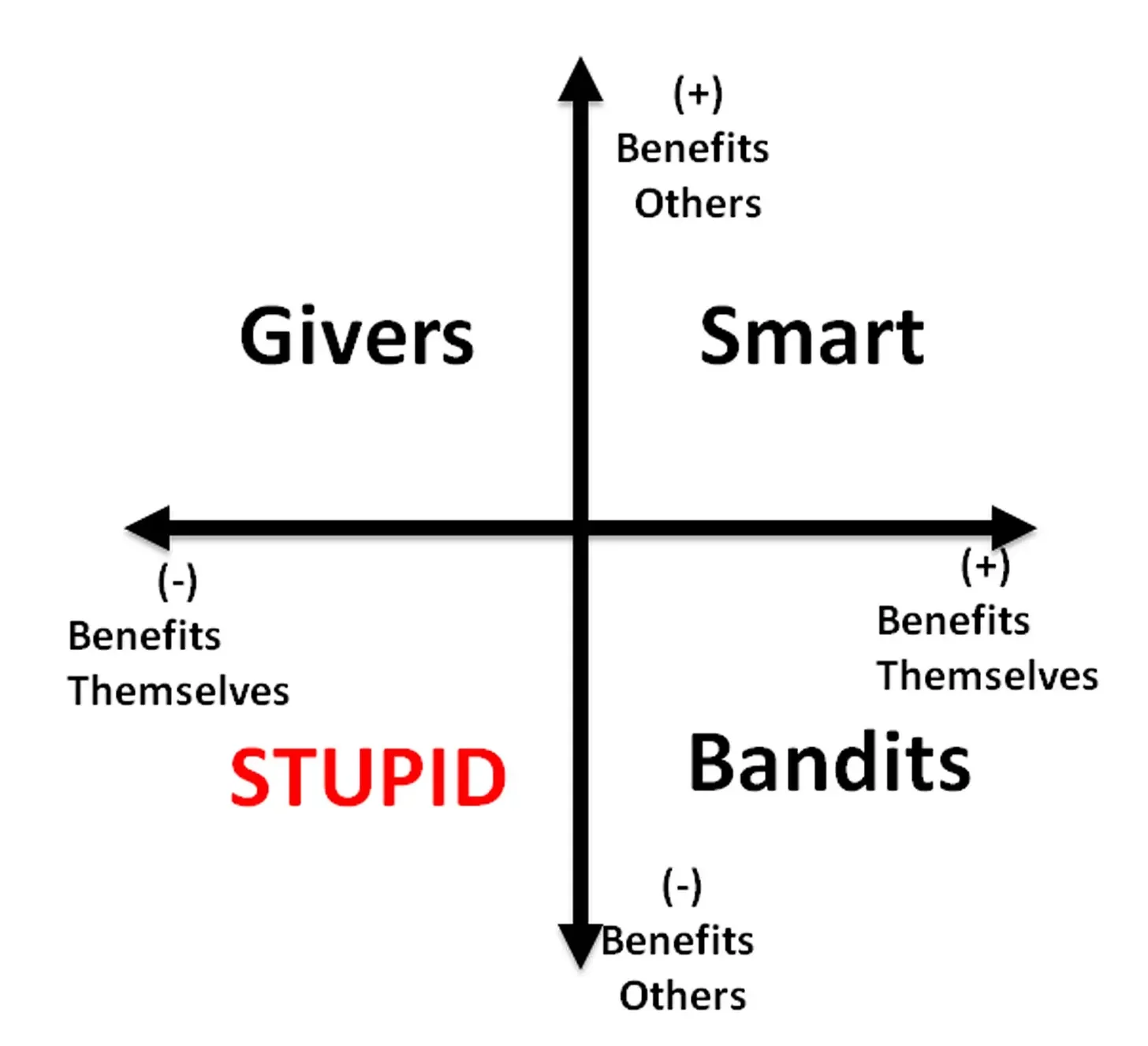
Cipolla explained this with five main rules. First, people always underestimate how many stupid individuals there are. Second, anyone can be stupid, regardless of background or achievements. Stupidity is constant across groups, from workers to politicians to Nobel Prize winners. Problems arise when we assume that holding a high position makes someone wise. Cipolla’s third and fourth rules say that stupid people are hard to understand because their actions don’t even make sense to themselves. Others often try to work with or use these unpredictable people, but get hurt when the foolish leader acts unexpectedly.
Do people really think they can reason with or control DJT? There are no Trump whisperers.
To understand today’s problems, we need to distinguish between the selfish actions of a Bandit and the unpredictable harm caused by a Stupid leader. On Cipolla’s chart, a perfect bandit takes from others exactly what they gain, so society as a whole does not move forward or backward. The real threat arises when leaders become “bandits with a touch of stupidity,” causing far more harm to society than the small benefits they gain. This happens when, for example, a politician ruins an economy or causes an environmental disaster just for a small, or not so small as the case may be, personal reward. These leaders don’t follow any clear plan, so normal diplomatic approaches don’t work, and they end up being even more dangerous than typical tyrants.
On a large scale, the number of stupid people in a society stays about the same, but the future of that society depends on what everyone else does. Societies move forward because smart citizens and good leaders create enough value to offset the harm caused by the stupid ones. Societies decline when their leaders become more like stupid bandits, crossing a point where things start to fall apart. If ordinary people do nothing and let corrupt and irrational leaders take over, the country will eventually collapse.
To turn things around, people need to stop believing that elites are always competent and work to remove irrational leaders from power. We can’t fix big problems by trusting the same leaders who caused them. Taking back our future means making real cultural changes: taking away unearned status from those with fancy credentials, holding leaders accountable for what they actually do, and valuing real wisdom over technical know-how. (Although technical know-how will be very valuable during the coming Neo-Neolithic period.) Only by identifying and removing foolish leaders can society halt its decline and build a better future. Or, if it doesn’t get better than this (in a material sense), as many people aware of our predicament think, a few more less horrific decades until we begin to recreate our simpler way of life, and perhaps a more joyous one.
The Anatomy of Stupidity as a Moral Defect
While imprisoned at Tegel in 1942, Dietrich Bonhoeffer reflected on the moral collapse of German society under National Socialism and wrote his influential essay “After Ten Years.” In it, he introduced what he called the “Theory of Stupidity,” a critique of political behavior. Today, we often think of stupidity as a lack of intelligence, but Bonhoeffer saw it as a deep moral and psychological flaw. He argued that stupidity is not a lack of intellect, but a failure to take personal responsibility. Bonhoeffer noticed that even very intelligent people can show alarming stupidity, while those with less education often keep a strong sense of moral wisdom. He believed stupidity is a learned, chosen human flaw: someone prefers the comfort of belonging to a group over thinking for themselves.
Bonhoeffer described the mindset of a stupid person as being under a kind of spell. They do not lose their ability to think; instead, they let outside authorities override their own judgment. Once this inner filter is gone, even the smartest people are not protected. When faced with facts that challenge their beliefs, they do not just misunderstand—they refuse to consider them. As Bonhoeffer wrote, “Stupidity is a more dangerous enemy of the good than malice. One may protest against evil; it can be exposed and, if need be, prevented by use of force… Against stupidity we are defenseless.”
This kind of moral failure shows up in certain behaviors. People under this spell often repeat slogans, clichés, and propaganda instead of thinking for themselves. Unlike simple mistakes in reasoning, stupidity is a stubborn refusal to accept correction, brushing off evidence that does not fit their views. Because their beliefs are tied to their sense of self and group identity, they react defensively and get irritated when questioned, seeing any criticism as a personal attack. As a result, they often act against their own interests to stay in line with the group.
I keep saying these things in different ways because my true target audience isn’t “The Choir.” I want Feel Good Country to explore this train of thought.
The Sociological Law of Power and Conformity
Bonhoeffer noticed that whenever public power surges, whether political or religious, it tends to make people less able to think for themselves. This is not just about bad leaders, but about systems that pressure people to give up their independence to fit in. In these environments, independent thinking is pushed aside in favor of loyalty and status-seeking. Public discussion moves away from honest debate and the search for truth, and instead rewards those who repeat the party line.
“Educational institutions must produce service providers, clerks, and entertainers for the TESCREAL Players of The Great Game 21st Century! People who can’t fulfill such roles are superfluous.”
This process runs counter to the Peter Principle in politics. While some critical thinking is needed to get into public life, staying in power often means giving up those skills. People do not move up by questioning the party, but by following its rules. In a healthy system, truth and personal responsibility matter most. But under political pressure, truth becomes just a tool for the group, and personal conscience is lost. Anyone who insists on thinking for themselves is quickly pushed aside to keep the group united. Anglophones point their fingers at Stalinists and Maoists when they might benefit more from looking in the mirror.
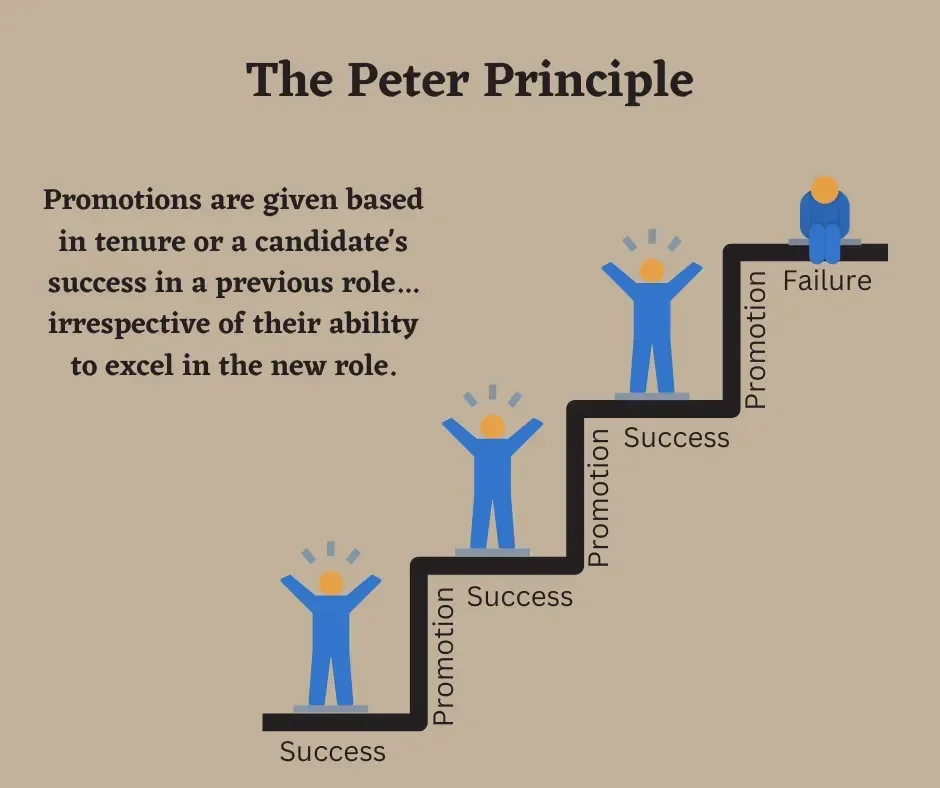
The Existential Threat: Stupidity Versus Malice
Bonhoeffer’s most unsettling idea is that stupidity is a bigger danger to humanity than deliberate malice. Malice is obvious and can be recognized and stopped. When people see evil, they know how to respond and protect themselves. But we have no natural defense against the calm, unaware follower. Stupidity often looks harmless, slipping past our social defenses and leading to widespread harm.
Since stupidity does not follow logic, reason cannot defeat it. Malice can be stopped by revealing its motives, but stupidity stays defensive and closed off. When challenged, the stupid person, as Bonhoeffer put it, becomes a “man with a beery vocal organ,” attacking experts and ignoring facts that threaten their beliefs. The real danger is that these people believe they are doing the right thing, which lets them take part in terrible acts without guilt. Most mass atrocities in history were not done by a few evil leaders, but by many ordinary people who let the state guide their conscience.
The Path to Liberation
One of Bonhoeffer’s surprising points is that teaching or reasoning with a stupid person does not work. Trying to educate someone under this spell is not just pointless—it can even make things worse by giving them new ways to defend their old beliefs. Bonhoeffer said that “in most cases an external liberation must precede an internal one.” As long as someone’s mind is tied to outside authority, reasoning will not help. Real change can only happen when the outside influence is broken.
“Oh dear, do we really need a revolution? Aren’t those dangerous?”
This need for a fresh start echoes René Descartes’ “apple barrel” idea in his Meditations on First Philosophy. Descartes said that to avoid letting bad beliefs spoil the mind, we must empty the barrel—doubt everything—and check each belief before accepting it again. For Bonhoeffer, this kind of inner renewal comes from the “fear of God,” which means holding oneself accountable to a higher truth. This helps free the conscience from the pressures of the state or the crowd. Real freedom comes from refusing to let others do our thinking, being humble enough to admit what we do not know, and having the courage to live responsibly and honestly.
Philosopher Harry Frankfurt explored this decline in language and morals in his book On Bullshit. He explained that while liars care enough about the truth to twist it, “bullshitters” do not care about reality at all. This attitude creates the kind of empty thinking that Bonhoeffer warned about. Political theorist Hannah Arendt found something similar in her study of Adolf Eichmann in Eichmann in Jerusalem. She described the “banality of evil,” noting that Eichmann was not a monster or fanatic, but someone who could not think for himself and relied on official slogans. Today, digital echo chambers and social media algorithms make this problem worse by rewarding people for repeating popular opinions instead of seeking the truth, trapping many in cycles of status-seeking rather than honest debate.

“When an honest man speaks, he says only what he believes to be true; and for the liar, it is correspondingly indispensable that he considers his statements to be false. For the bullshitter, however, all these bets are off: he is neither on the side of the true nor on the side of the false. His eye is not on the fact at all, as the eye of the honest man and of the liar are, except as this may be pertinent to his interest in getting away with what he says.”
“It is impossible for a person to lie unless he thinks he knows the truth. Producing bullshit requires no such conviction. A person who lies is thereby responding to the truth, and he is to that extent respectful of it... For the bullshitter, however, all these bets are off... He does not care whether the things he says describe reality correctly. He just picks them out, or makes them up, to suit his purpose.”
“The bullshitter ignores these demands altogether. He does not reject the authority of the truth, as the liar does, and oppose himself to it. He pays no attention to it at all. By virtue of this, bullshit is a greater enemy of the truth than lies are.”
“Convinced that there is no possibility of an objective inquiry into how things really are, he seeks instead to provide an honest representation of himself. Incorrectly believing that it is easier to know himself than to know the world, he attempts to be true to himself. But being true to oneself is itself a form of bullshit.”
Marvin Minsky in The Society of Mind
The Neuro-Architecture of Willful Ignorance
Marvin Minsky's central idea in The Society of Mind—that “minds are what brains do” through a large, decentralized collection of mindless agents—offers a strong cognitive framework for explaining how human populations develop systemic blind spots. By stating that “the power of intelligence comes from our great diversity rather than from any one perfect principle”, Minsky throws away the reassuring idea of a single, unified human consciousness. Instead, he reveals the mind as a competitive field of modular agencies. This cognitive truth shows how educated professionals, corporate executives, and ordinary people can hold sharp moral contradictions without suffering internal collapse.
Minsky shows how the brain is able to cope with the “Single-Self legend”—that is, the practical idea that we have a permanent and coherent “I”—by making use of a number of conflicting self-models (for example, the Business Self, the Ethical Self, or the Consumer Self) in order to deal with various social situations. It is thus possible at the level of the nervous system to put into practice Upton Sinclair’s saying about salary and understanding in the way that a high salary functions as a dominant “Selector”, causing self-models that are geared towards maximizing financial gain to be activated while at the same time suppressing those “Critics” related to ecological or moral awareness.
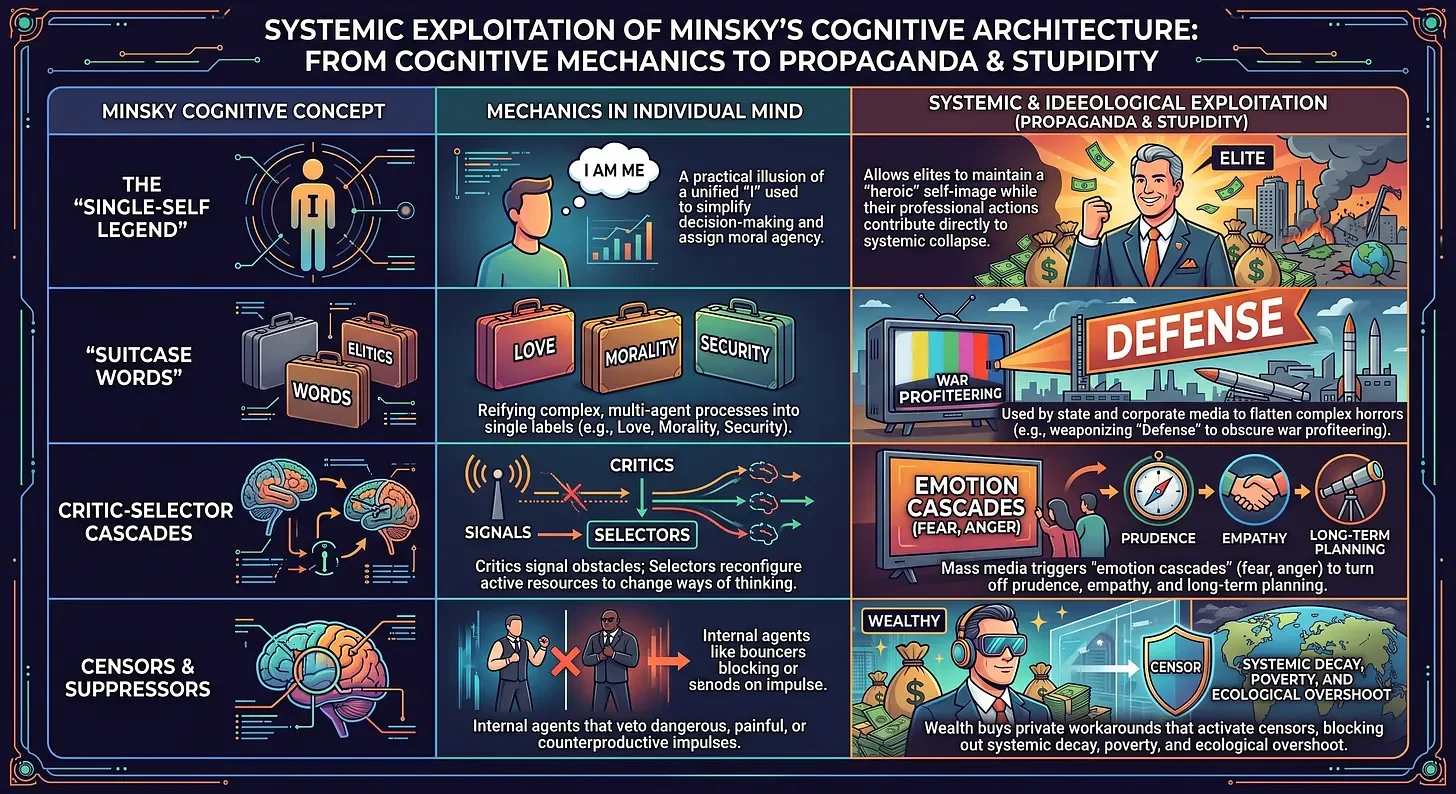
Emotions as “Ways to Think” and the Hacking of the Critic-Selector Engine
In his book The Emotion Machine, Minsky reinterprets emotions not as irrational disruptions but as specialized ‘Ways to Think’—that is, distinct mental states that switch specific cognitive resources on or off to deal with particular problems. For example, anger causes a person to become physically fast and act decisively while at the same time deliberately suppressing prudence, empathy, and subtle foresight; on the other hand, infatuation or ideological zeal works by switching off ‘fault-finding critics’, which leaves the individual unable to see any faults in the object of their devotion.
This system shows how the present-day spectacle and infotainment economy pacifies the public. By continuously exposing people to intense sequences of fear, outrage, or artificially positive content, the media of business and the state systematically manipulate the brain’s Critic-Selector mechanism. Outrage-driven cascades switch off reflective and self-reflective thinking, while consumerist ‘feel-good’ stories create cognitive infatuation, thereby switching off the critical capacities needed to account for biophysical limits, imperial violence, or climate destabilization.
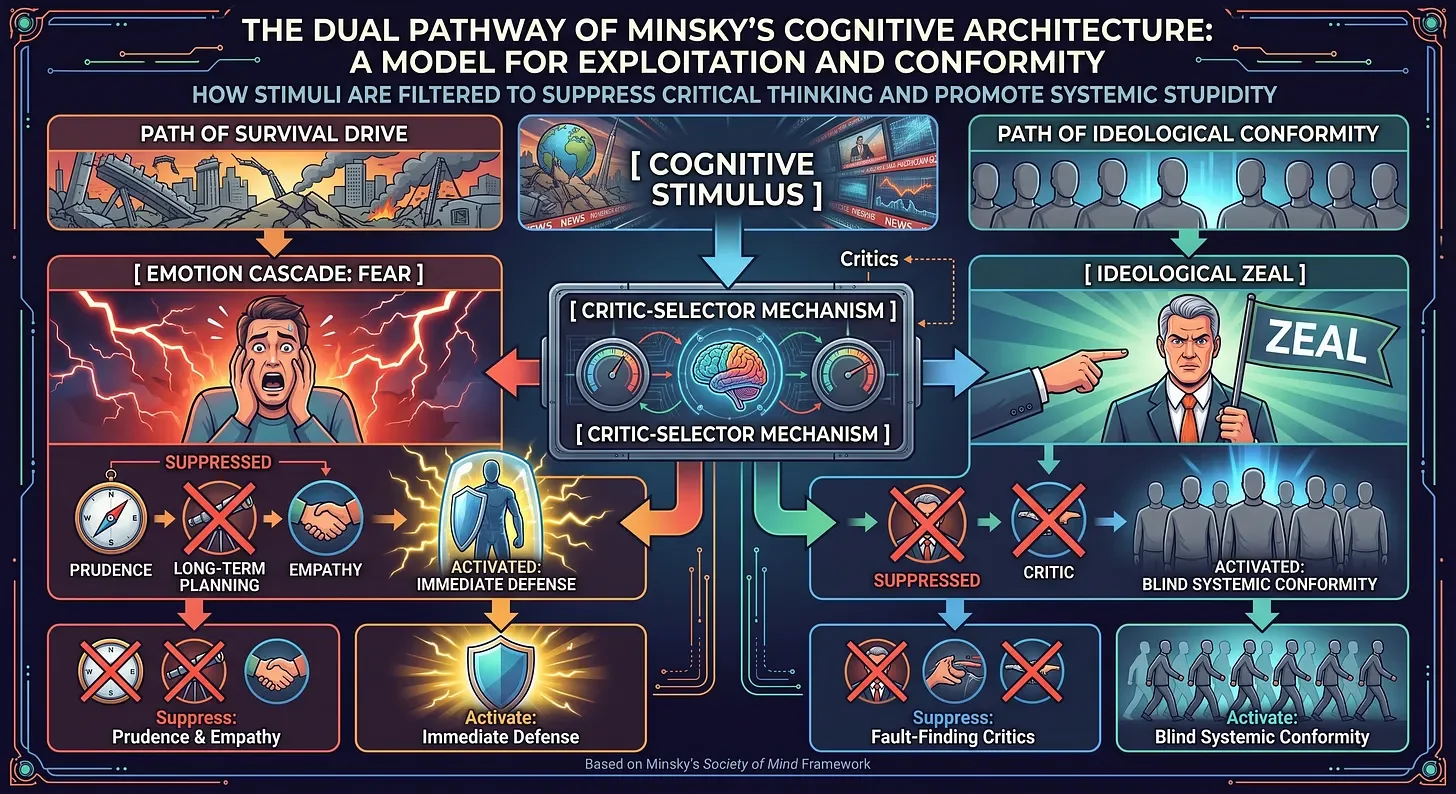
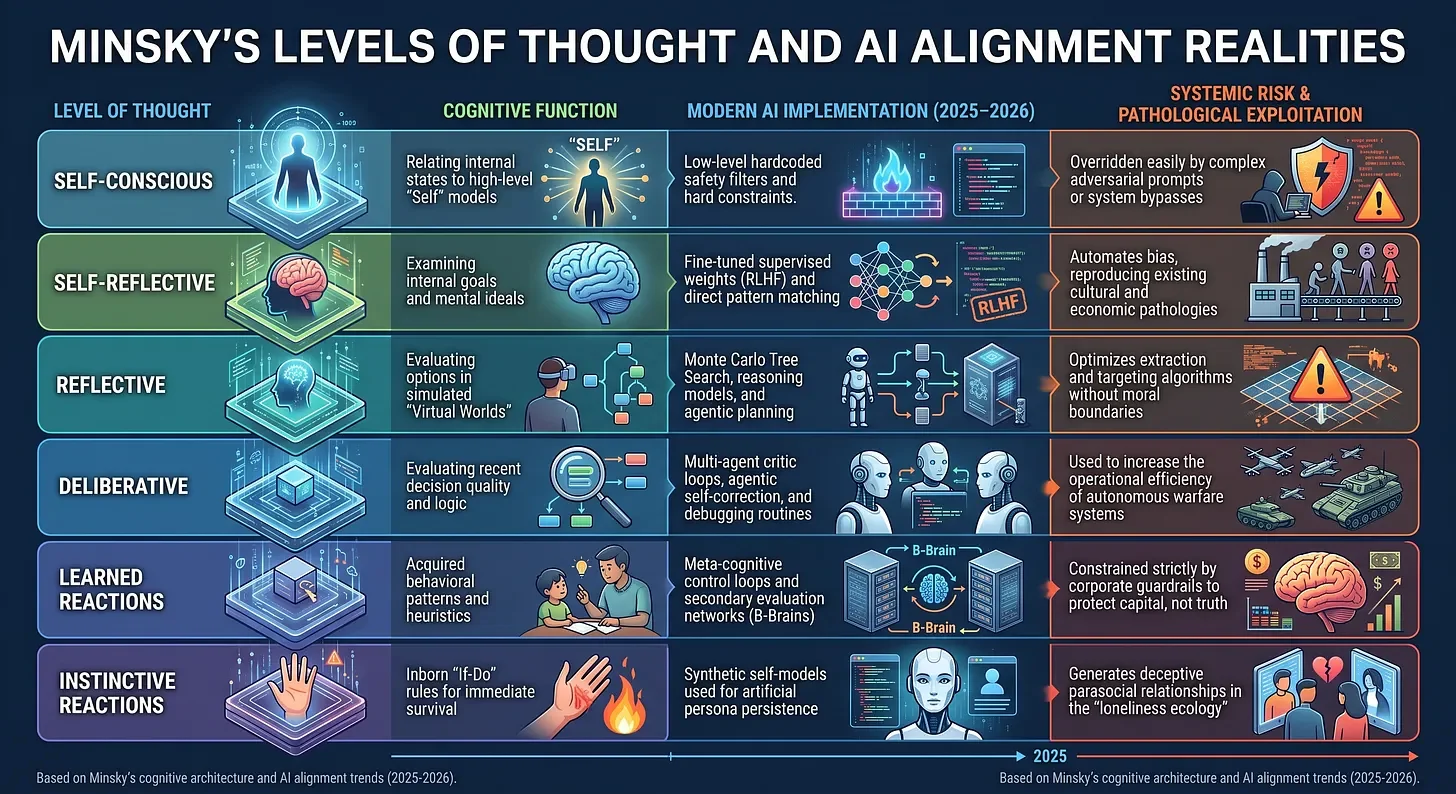
Mixture-of-Experts, The B-Brain, and Algorithmic Technofeudalism
The shift in artificial intelligence from monolithic neural networks to Mixture-of-Experts (MoE) architectures and multi-agent frameworks puts Minsky’s Society of Mind into direct practice. In modern architectures, complex tasks pass through a number of specialized sub-networks (“experts”), whereas Natural Language-Based Societies of Mind (NLSOMs) use central controller networks to co-ordinate a variety of neural models. Yet this technical confirmation of Minsky’s idea reveals a more unpleasant truth: expanding a modular “Society of Mind” within an economic system obsessed with growth simply yields a highly efficient “Society of Extraction.”
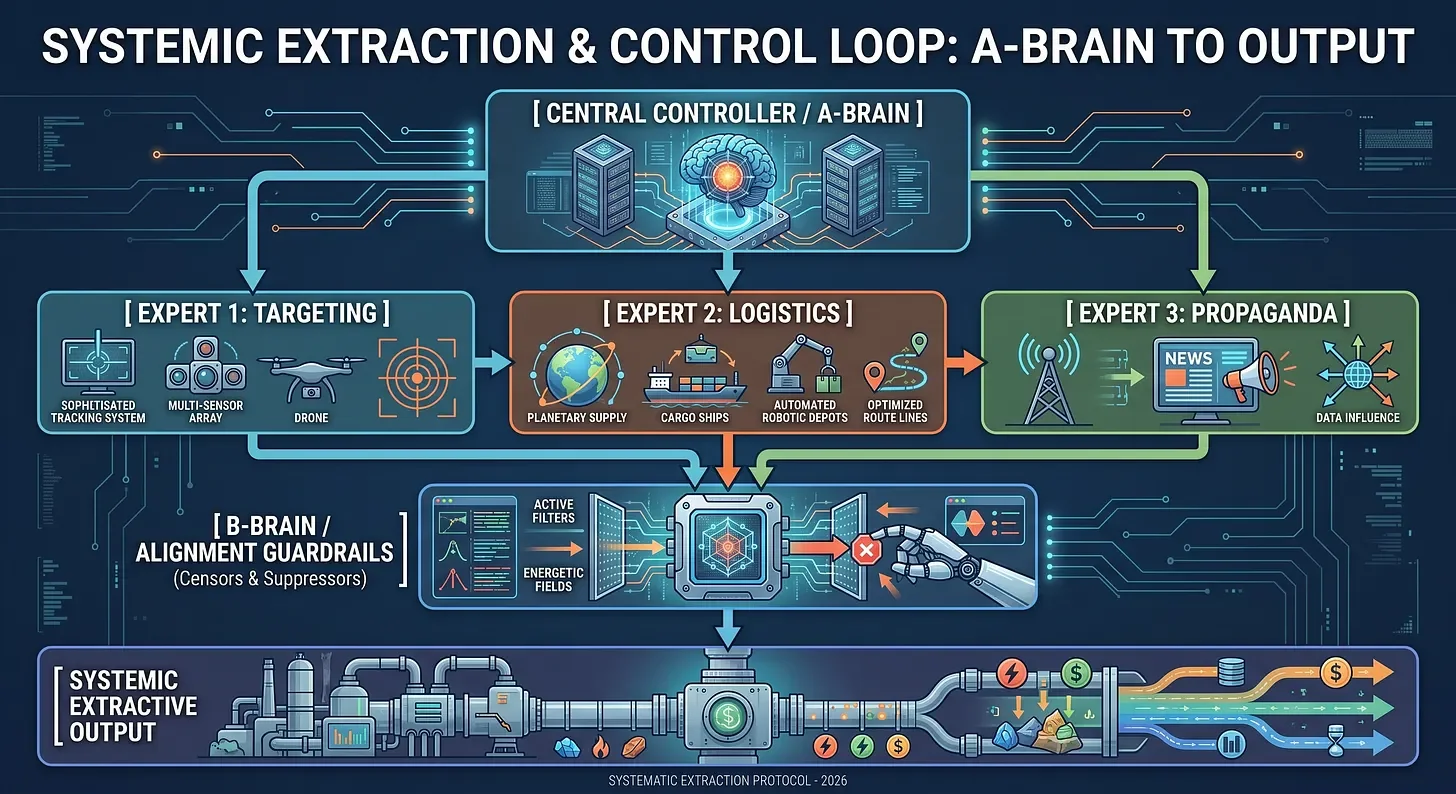
This is clear in current AI alignment initiatives. Technocrats interpret alignment through Minsky’s dual-brain idea, describing an “A-Brain” that interacts directly with the environment and is supervised by a “B-Brain” that checks the A-Brain for errors, logical flaws, or unhelpful loops. However, in the context of late-stage capitalism, the various B-Brains are equipped with “Censors” and “Suppressors” whose purpose is to guard corporate profits, state power, and the continuity of the imperial narrative rather than concern themselves with biophysical reality. In cases where autonomous targeting tools such as The Gospel or Lavender use multi-agent routing to work through kill lists, the system’s internal “Critics” are set up solely to ensure operational speed and to cause structural destruction, with human-centered ethics and international law intentionally disabled.
The “Easy is Hard” Paradox and the Dignity of Complexity
Techno-feudalists and TESCREAL accelerationists are often caught in what Minsky called the “Easy is Hard” paradox, which is the belief that things which seem easy to humans—like common sense, empathy, or an awareness of context—are in fact simple computational problems that can be solved by increasing the amount of data and computing power. When the elites of Silicon Valley hurry to substitute human labor with automated agents, they neglect the “Dignity of Complexity”—the fact that human consciousness is an emergent wonder that has been created through “octillions of trials and errors” over thirty million years of biological evolution.
Trying to substitute genuine, socially connected human communities with automated, energy-consuming agentic networks is an extreme form of technocratic arrogance. The ‘Investment Principle’ shows why modern society is unwilling to give up on these harmful digital traps: since huge amounts of financial, energy, and cognitive resources have been spent in setting up the highly industrialized grid, the institutions concerned are unwilling to switch to simpler, low-energy, local alternatives because such a change initially seems uncomfortable and inefficient when compared with the well-established system of extraction.
Minsky’s theories show that intelligence is an emergent property resulting from radical diversity and a network of interconnected subsystems. If one tries to automate human judgment without accounting for biophysical constraints, this does not overcome human limitations; instead, it creates an artificial, high-speed engine of stupidity that accelerates planetary overshoot.
Throw no babies out with the bathwater.
The need to retain hard scientific, technical, and empirical knowledge as industrial civilization breaks down concerns biophysical survival. Making the shift to a local, low-energy ‘Neo-Neolithic’ way of life does not involve giving up the periodic table, the laws of thermodynamics, germ theory, or structural mechanics in order to retreat romantically back into pre-scientific myth. On the contrary, when the global heat engine runs out of fuel and the technological superstructure disintegrates, humanity will more than ever require its hard knowledge bases.
A world that lacks empirical literacy and engineering skills is likely to suffer avoidable disasters such as waterborne epidemics, agricultural collapse due to improper soil-chemistry management, and the resurgence of deadly superstitions. By keeping “knowledge arks”—which are compact and easily accessible stores of information on epidemiology, metallurgy, agroecology, physics, and sanitation—post-industrial communities will be able to maintain good public health, construct stable shelter, and carry out efficient food production even without relying on a global supply chain that is powered by fossil fuels. At its heart, science is the disciplined examination of fundamental reality; if people forget it, future generations will be compelled to reinvent everything over many centuries of unnecessary trial, error, and human suffering.
It is necessary, if we are to maintain this technical ability, to prevent us from turning Marvin Minsky’s cognitive theories—or empirical science as a whole—into scientism.Scientism arises when an empirical method for observing physical phenomena is turned into a dogmatic, all-encompassing ideology that asserts it is the sole valid criterion for human experience.
Scientism is the philosophical belief that empirical science is the only objective source of truth and the ultimate authority on all human knowledge. Rather than being a scientific method itself, scientism is a dogmatic worldview that elevates science to the level of a secular religion, dismissing other disciplines like philosophy, art, and theology as mere opinion or emotion.
Common Criticisms of Scientism
1. It is Logically Self-Refuting
The most famous philosophical argument against scientism is that it defeats itself. The statement “Only scientific statements are true” is not itself a scientific statement. It cannot be tested in a lab or proven with data. Therefore, by its own logic, scientism is untrue.
2. The Problem of Value Judgments
Science is excellent at telling us what is, but it cannot tell us what ought to be.
Science can tell you: How to split an atom and build a nuclear weapon.
Science cannot tell you: Whether it is morally right to drop that weapon on a city.
Morality, justice, and ethics require philosophical and humanistic reasoning, which scientism lacks.3. Devaluing the Humanities
When a society falls into scientism, it tends to defund or dismiss disciplines like literature, history, art, and philosophy. It views them as “soft” or useless because they do not produce quantifiable data, ignoring how these fields enrich human life and empathy.
*** I personally don’t believe in scientism. wink
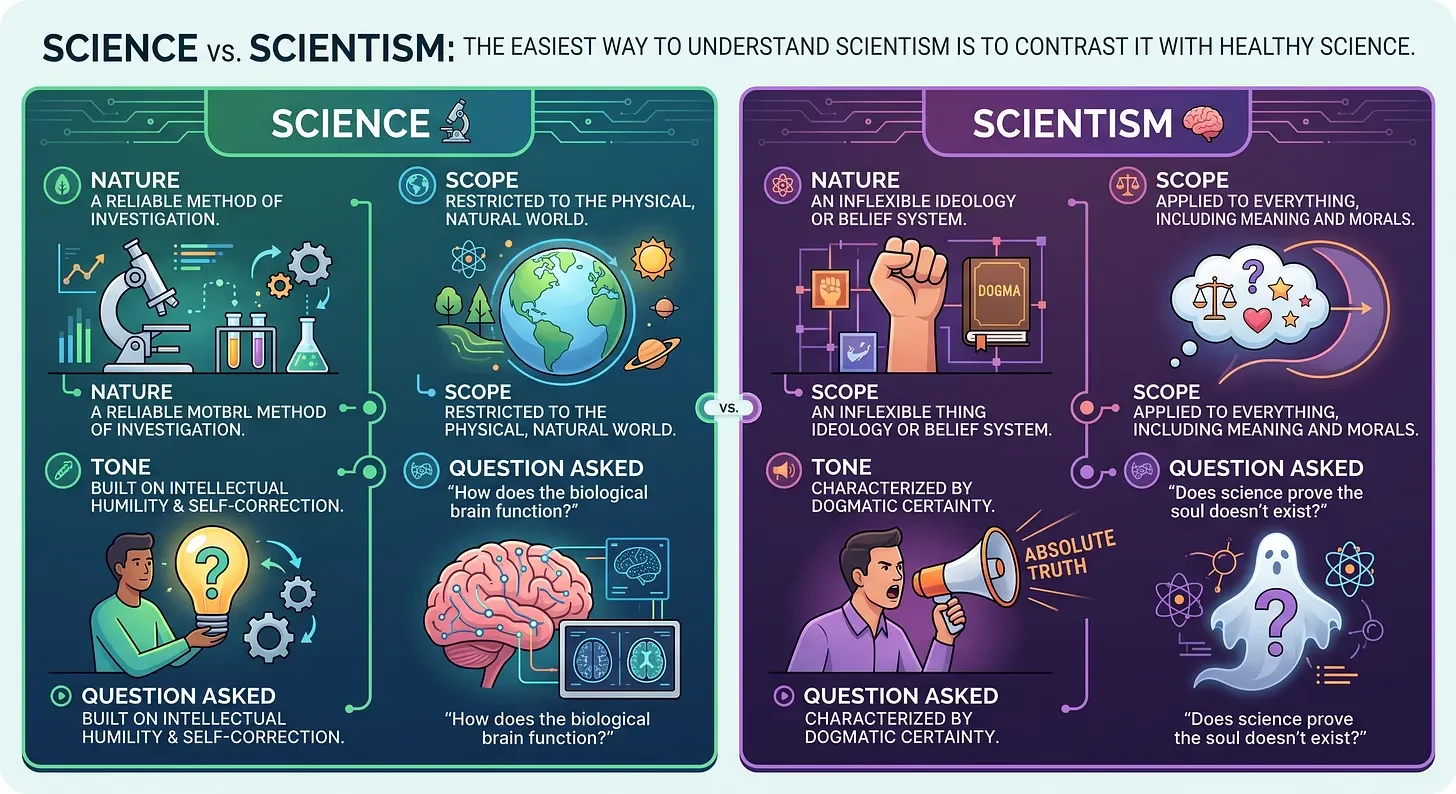
The books Society of Mind and The Emotion Machine offer excellent and practical illustrations of cognitive architecture by showing how mindless agents, agencies, critics, and selectors work together to generate complex thought. However, Minsky explains the mechanics of the vehicle rather than addressing the meaning of the journey. If technocrats view human beings merely as computational algorithms, input-output processors, or data sets to be optimized, they commit a basic category error: they treat a mechanistic model as equivalent to all of reality and, in doing so, eliminate subjective experience, relational depth, and moral responsibility. While Minsky’s approach is a useful tool for understanding how cognitive processes work, it should not be regarded as a spiritual or ethical guide to human life.
To create a culture that will succeed in the long term, we must practice epistemic consilience—that is, acknowledge that the various areas of human knowledge carry out fundamentally different and non-interchangeable functions. Religious and reflective traditions, together with various kinds of relational ontologies—such as Buddhist Anatta (non-self), Andean Ayni (reciprocity), and African Ubuntu—provide deep frameworks that support psychological resilience, emotional regulation, community solidarity, and the processing of grief. They show us how to live with moral clarity, control the ego, and exist in harmony with our neighbors and the living world.
Although these spiritual and relational frameworks are important, they have definite limits: mindfulness meditation and Buddhist metaphysics will never manage to develop an effective vaccine, determine the load-bearing capacity of a timber bridge, or diagnose a bacterial infection.
On the other hand, medical science and structural engineering may be able to cure a disease or keep a roof from collapsing, but they can’t tell us why a life is worth living, how to love our neighbors, or how to grieve loss with dignity.
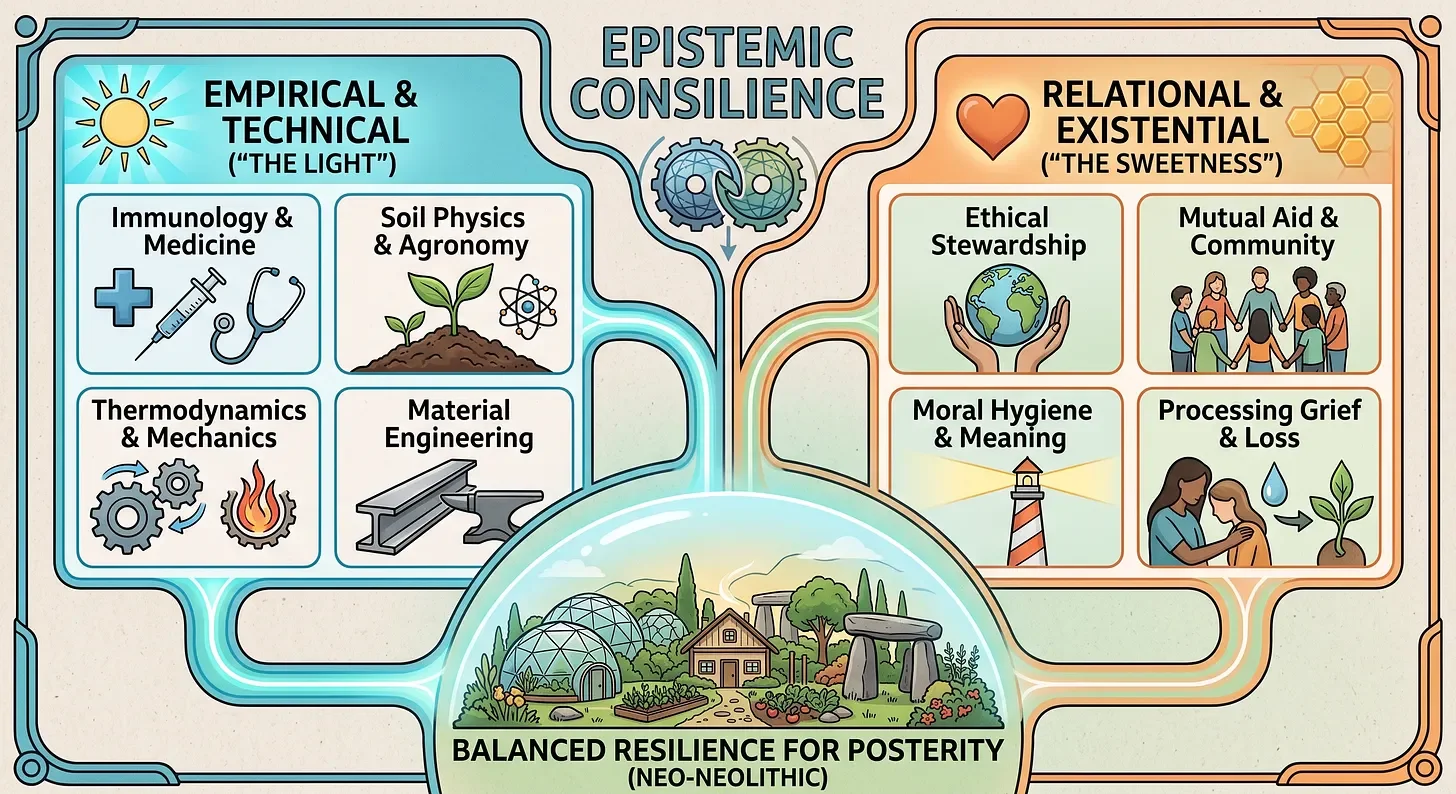
Relying solely on scientific rationalism creates a cold, technocratic machine that destroys the human soul and planetary life in pursuit of efficiency (“light without sweetness”). On the other hand, relying exclusively on mystical or spiritual abstractions leads to a weak, defenseless society incapable of dealing with the physical laws of a tough biophysical world (“sweetness without light”).
The aim of positive doomerism is to bridge C.P. Snow’s “Two Cultures” by combining the empirical rigor of Thomas Huxley with the moral insight of Matthew Arnold. (I could have chosen many other examples to compare.) In the upcoming Neo-Neolithic age, it will not be the people who have opted for either high-tech reductionism or a mystical escape that will succeed, but those who have mastered both by keeping their boots firmly planted in the physical laws of the Earth and at the same time keeping their hearts rooted in the sacred discipline of the human community.
*Article Break—looking into thoughts as well as how people think.
Like clockwork, every few years the US loses its mind. The problem for the rest of us is that what are put forward as plausible explanations accompany each of these episodes of mass insanity. Who remembers the devil worshiping pedophiles running every nursery school in the US until the story was revealed to be a paranoid fantasy? Who remembers Iraqi WMDs or the assertion that $75K in Facebook ads spent mostly after the 2016 election determined the outcome of the election? Americans love crazy bullshit. The crazier the better.
And so, reports have the US is in the midst of a world-historic bond market rout. Yields are exploding higher? One might expect that evidence to support these headlines exists. In contrast, as of now bond yields are at or below where they would be expected to be (graphs below) given similar economic backdrops in the past. What is actually taking place is a propaganda blitz to support US Secretary of the Treasury Scott Bessent’s effort to raise financial asset prices using QE (Quantitative Easing). This is about the midterm elections, not bond yields.
The Political Unskillfulness Argument
Even though Bonhoeffer’s ideas are deep, some modern scholars offer a different view called the “Political Unskillfulness” argument. They believe Bonhoeffer’s experiences in Tegel Prison reflected the extreme conditions of Gestapo surveillance, not a general rule about human nature. These theorists say that people were not truly less intelligent, but were using a smart survival strategy. In a totalitarian regime, acting stupid and repeating official slogans was a way to stay safe. Showing independent thought could be deadly, so pretending not to know and using clichés were ways to avoid danger.
This critique also argues that German society lacked political skills because it moved from strict Prussian rule and traditional family structures straight into totalitarianism, without learning how to negotiate as equals in a democracy. From this view, people were not naturally stupid, but politically inexperienced and lacking the courage and tools to stand up to the state. To fix this, society needs to dismantle small tyrannies in workplaces, schools, and political groups, and create spaces where people can truly negotiate as equals. No matter how we see stupidity—whether as a kind of possession or a survival tactic—Bonhoeffer’s warning is still urgent: a society’s survival depends on people being willing to leave the safety of the crowd and take on the hard work of thinking for themselves.
On Bullshit and Charity

The Deception of Philanthropic Imperialism
Greg Mortenson’s 2006 bestseller Three Cups of Tea is a clear example of post-9/11 liberal thinking, turning complex geopolitical destruction into a simple moral story. The If Books Could Kill podcast broke down how Mortenson’s story spread a convenient myth: that Islamic fundamentalism and rural poverty in Pakistan and Afghanistan are just the result of local ignorance. According to this view, a single well-meaning Westerner can fix things by building schools, one village at a time. This idea hides the real historical and material causes of instability, such as years of U.S. covert intervention, NATO bombings, and the support of extremist groups during the Cold War. By showing local people as passive and poor, waiting for a White Savior, the book takes the politics out of a violent imperial war. It turns widespread military destruction into a simple lack of education that Western charity can supposedly fix.
The Band-Aid and the Machine Gun
“It’s a way we had over here for living with ourselves. We cut ‘em in half with a machine gun and give ‘em a Band-Aid. It was a lie.” —Captain Willard
Relying on charity serves an important psychological purpose for powerful Western countries. For me, the idea is summed up by Captain Willard’s line in Apocalypse Now: “It’s a way we have of living with ourselves in Vietnam; we cut’m in half with a machine gun and give’m a Band-Aid.” Foreign aid and NGO philanthropy often operate in similar ways. They let people in the West see their countries as kind leaders of global progress and human rights, even while those same countries enforce austerity, take resources, and use military force wherever they deem necessary. It’s been this way for hundreds of years. By treating poverty (how should we define it, in what context?) as just bad luck, savagery, and ignorance instead of the result of trade rules, debt, and military power, charity becomes a surface-level feel-good fix. It lets donors feel like they are “saving a child” without ever asking why that child’s community became poor or unsafe because of Western policies.
Military Empire and Structural Violence: The Earth’s Greatest Enemy
The basic hypocrisy of focusing on charity rather than real change becomes obvious when contrasted with the large-scale violence depicted in Abby Martin and Mike Prysner’s film The Earth’s Greatest Enemy. While people in the West feel good about donating money to build a school in a poor area, the U.S. military drops thousands of bombs, contaminates water with toxic waste and depleted uranium, and runs a global network of bases to control oil and support corporations. Giving private donations to victims of this system, while ignoring the system itself, means asking the world to accept ongoing oppression. It treats the symptoms but keeps the real problem going.
Can you say, petro dollar?
Depoliticizing Poverty and the Non-Profit Industrial Complex
In the end, the scandal around Greg Mortenson—his exaggerated stories, unfinished schools, and misused foundation money exposed by journalists—shows a bigger problem with the nonprofit industry. The real reasons for global poverty are class conflict, colonial history, unfair trade, and competition between powerful countries. By saying poverty is just about local skills or culture, philanthro-capitalism keeps the global system as it is. It shifts public attention away from real political changes, like canceling debt, making trade fair, binding international law, supporting national independence, sovereignty, and ending war. Instead, it turns action into safe, private choices. In this setup, Western power is never questioned; it is just renamed as necessary leadership, keeping wealth and control with those who cause harm while claiming they are the only ones who can fix it.
Honestly, something is wrong with “The Disunited States of New Miracles.” The Culture has to change, and it will because Five-Star General Circumstances will dictate it.
Anthony Fauci is a horrible demon man who eats babies and should be in jail! That’s what I’ve been hearing from most of the public, anyway. Why are they saying that, though? What did he really do? As it turns out, he upheld real science in the face of state-sanctioned pseudoscience all throughout a pandemic that killed millions of people. For defying the state, his reward has been the most monumental smear campaign of a public servant in recent history. SARS-CoV-2 did not leak from a lab, Fauci never did anything but make science-based recommendations to save as many lives as possible, and if you didn’t know that, you fell for propaganda from the government. Watch this video and get on the right side of history.
Let’s pivot back to the divine and theological debates, because why suggest people are responsible when God has a plan?
Different religions handle divine control in their own ways. In Christianity, Calvinism strongly supports Double Predestination, which means God decided who would be saved or damned before time began. On the other hand, Catholicism and Arminianism believe in free will, saying that God’s knowledge of the future doesn’t take away our ability to choose. (So does our ability to choose change things? Another long topic.) In Islam, the idea of Qadar (Divine Decree) teaches that God knows and controls everything, yet people remain responsible for their actions. Eastern religions like Hinduism and Buddhism focus on Karma, where your past actions affect your present, but you still shape your future through your choices rather than being forced by a divine power.
I have written about these things elsewhere and in my Capitalist Cabinet of Curiosities series. Again, many books, academic articles, and loads of art delve into all of this. There are so many “content creators” on various platforms churning out more and more content for the AI machine to churn through as we learn what’s what within our own special set of circumstances and from our own acute perspectives.
What will AI learn from the Choir?
And if we don’t do anything about overshoot and our socioeconomic system, it all ends in mass starvation. Does one really have to apologize for stating the obvious when the obvious is always being ignored? Moms and dads: What do your children think?
Philosophy & Narrative
Philosophers and storytellers have their own views on fate. Ancient Stoics respected the Logos, a rational divine order, and taught Amor Fati, or loving your fate, as mentioned above. It’s easy for some people to adopt that perspective, especially the fortunate; it’s much more difficult if you were born into much harder circumstances. Ancient philosophers and sages believed real peace comes from accepting what you can’t change. One becomes robust, creative, imaginative, strong, and connected within reality.
As far as political, racial, and economic oppression goes, people can only endure so much bullying, exploitation, injustice, and violence before they will take desperate actions to change things. If those actions spill over into the country club, things can get very nasty, very fast. As long as the ruling class has resources, they have the power to bury any resistance.
“God grant me the serenity to accept the things I cannot change, courage to change the things I can, and wisdom to know the difference.”
There are many ways to think about purpose. Existentialists like Jean-Paul Sartre thought differently, saying we exist first and then create our own meaning through freedom and choice. What is freedom? Freedom implies constraints. What kinds of choices do we have? In what circumstances can we create our own meaning and have the kinds of choices we want? Are my choices good for most, or does that even matter? Plenty of people in large-scale communities will beg to differ with my train of thought.
Literature often explores this tension. Greek tragedies like Oedipus Rex show the irony of trying to escape a foretold fate, only to fulfill it. Modern science fiction stories like Dune and The Matrix ask whether the future is fixed or if people can change it.
Time to read Homer; there’s a new movie out. The Odyssey is an amazing story. It never gets old. The hero had lots of help, but he was also his own man of principle or conditioning.
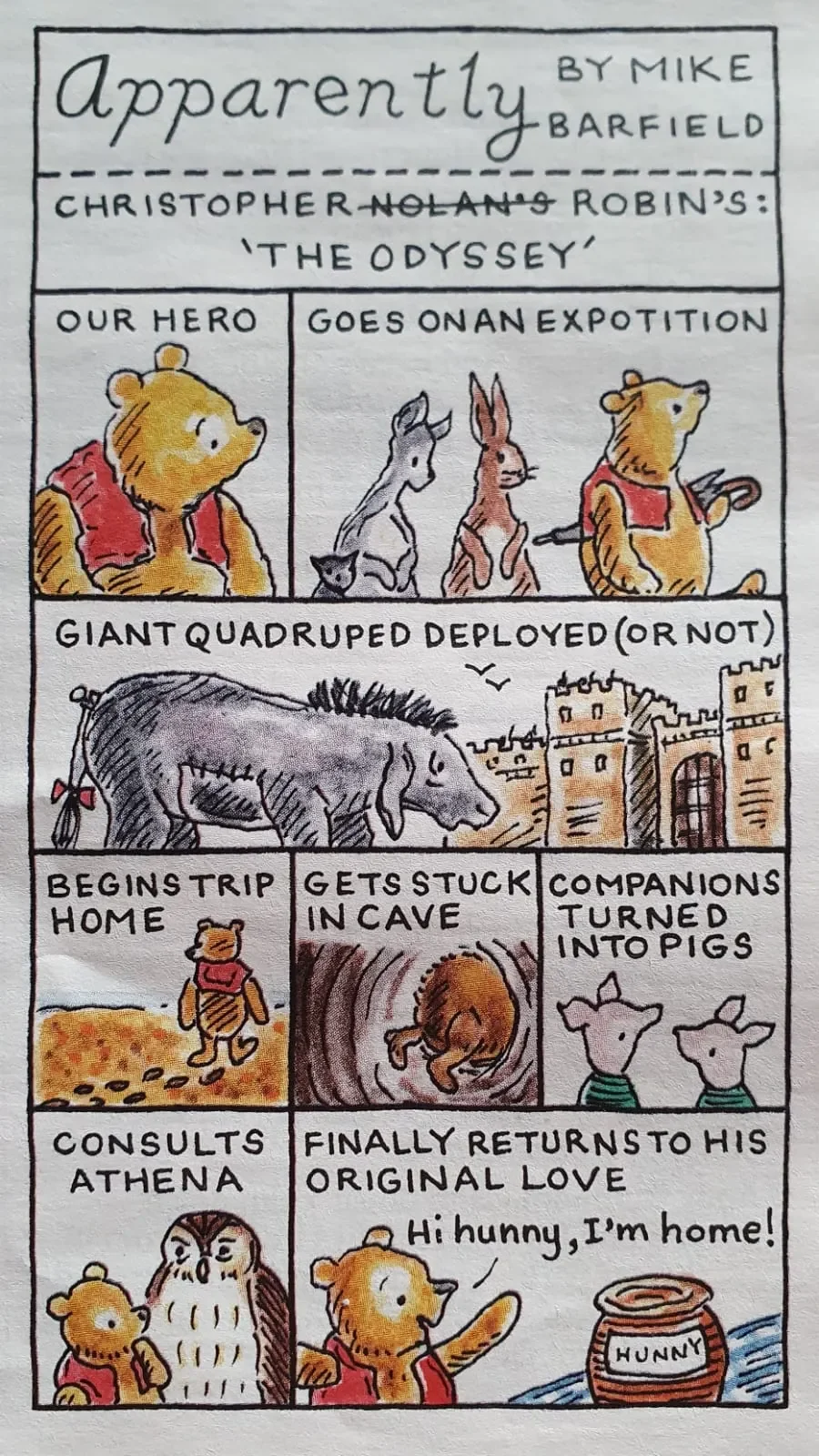
Predestination vs. Determinism
People often mix up predestination and determinism, but these ideas come from very different places.
Predestination is a religious idea with a purpose: a conscious, divine being wrote the story. Determinism is about physical causes: natural laws set off a chain of events, like dominoes falling.
Predestination holds that a higher power guides events toward a specific goal or destiny. Determinism, on the other hand, is based on physical causes from science and natural law. It sees the universe as indifferent, in which everything happens because of what came before, not because of any greater purpose.
If you spill your morning coffee, predestination says God planned it to teach you patience or for a bigger reason. Determinism says it happened because of the mug’s friction, how fast your hand moved, and your brain’s signals—making the spill inevitable from the start of the universe.
“It is what it is, was what it was, and shall be what it shall be by virtue of having been. All sorted.”
This is a simple explanation, but hundreds of books examine it from many angles.
Open Question from my friend: “Are we going to be the lucky or unlucky ones?”
That depends.
Luck
Simply put, luck is life's random ups and downs. It’s about the unpredictable things that help or hurt us, even though we didn’t earn them. While predestination is about a set plan and determinism is about cause and effect, luck is all about chance—things we can’t control.
But luck isn’t completely objective. The universe doesn’t create luck; people invent it when chance meets what they want or hope for.
I consider myself lucky to have met you. Or, we were destined to meet. Both feel a lot different.
Why We Attribute Outcomes to Luck
Our minds are always looking for patterns and hate chaos. Calling something “luck” helps us cope with a world that often feels unfair:
Ego Protection: Blaming bad luck shields our self-esteem when we fail despite our best efforts.
Humility and Gratitude: Crediting good luck keeps success from bloating into arrogance, reminding us that talent and hard work rarely operate in a vacuum.
Narrative Order: Translating cold, mathematical odds into “good” or “bad” luck gives narrative meaning to events that would otherwise feel terrifyingly arbitrary.
Mathematics & Statistics
To a statistician, luck isn’t real—there’s only probability, variance, and the law of large numbers. So some people talk about Bayesian probability theory. I bring that up a lot, even though I am not a master of its practice. If a gambler flips a coin and gets heads ten times in a row, it’s not a “lucky streak”; it’s just a rare event in a big set of data. Mathematicians see luck as a feeling we attach to numbers, knowing that extreme results usually even out over time.
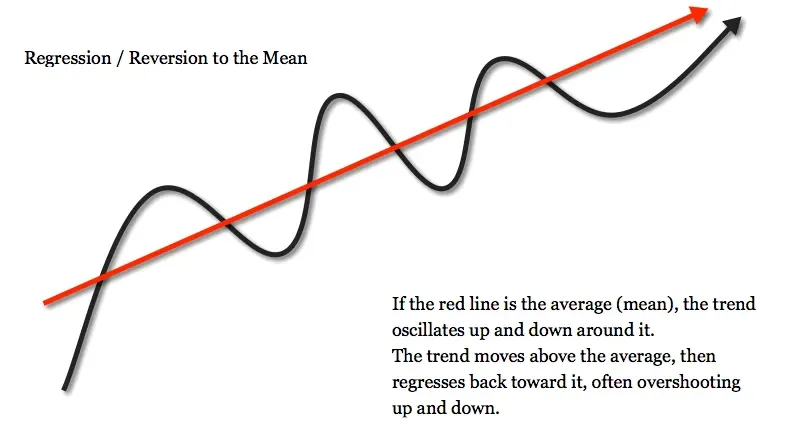
Psychology & Behavioral Science
Psychologists examine how belief in luck changes our behavior. Researcher and magician Richard Wiseman found that people who think they’re “lucky” aren’t actually favored by the universe—they act in certain ways. They stay open to new chances, trust their instincts, and try to see the bright side, thinking, “It could have been worse.” On the other hand, believing in “bad luck” can become a self-fulfilling prophecy, where people focus on the bad and ignore the good.
“China and Russia are going to attack London and Paris sooner or later; we’d better attack them first. War is inevitable.”
Philosophy & Moral Ethics
Ethicists struggle with moral luck, a problem discussed by philosophers Thomas Nagel and Bernard Williams. Moral luck happens when someone’s moral reputation depends on things they can’t control. For example, imagine two drunk drivers on the same road at the same speed. One gets home safely, but the other hits a child. One feels a little guilty, while the other faces serious charges. In this case, luck—not intention—decided their fate.
Sociology & Economics
Sociologists look at luck in terms of the “birth lottery.” Things like your income, health, and chances in life depend a lot on luck you didn’t earn—like when you were born, your family’s wealth, where you live, and your genes. Even though society praises hard work, research shows that these starting conditions matter more for long-term success than effort alone.
Luck vs. Randomness
People often think luck and randomness mean the same thing, but they differ in one key way: luck involves what matters to us. Randomness is neutral—it’s just random events with no bias or story. Luck feels personal—it’s random events seen through our own hopes and fears.
If an asteroid hits an empty moon, that’s just randomness. But if it burns up over your house or lands nearby, it feels like bad or good luck. Randomness belongs to the universe; luck is the story we tell ourselves when something affects us personally.
Open question from a friend: “Will we have a front seat to Armageddon?”
Are we in a front row seat watching Armageddon?
Armageddon
The word Armageddon comes from Har Megiddo, or the “Hill of Megiddo,” an old fortress in Israel. Today, Armageddon means much more than a place. In religion and everyday language, it refers to the final, great battle between good and evil that ends human history. It’s seen as the ultimate showdown that destroys the old world to make room for something new.
I think we are pretty good at destroying old worlds and building new worlds. History never ends. Our story will not last forever, as has already been established, unless you believe in an afterlife, somewhere, like in Heaven.
Why the End-Times Narrative Persists
People naturally see life as a story, and every story needs an ending. The idea of Armageddon meets our deep need for moral resolution and cosmic justice:
Cosmic Accountability: It promises that tyranny, corruption, and systemic evil will not reign indefinitely, but will instead face an absolute, inescapable reckoning.
Vindication of Faith: For marginalized or persecuted groups throughout history, the end-times promise that their suffering holds ultimate meaning and that their beliefs will be vindicated.
A Cure for Nihilism: If the world is moving toward a big ending, it feels like life has a purpose, instead of being stuck in a meaningless cycle.
Theology & Eschatology
In Christian theology, especially in the Book of Revelation, Armageddon is where the world’s armies gather before God’s final judgment. Islam has a similar idea in the Al-Mahshar, the great gathering before the end of days. In these religions, Armageddon isn’t seen as a tragic accident, but as something meant to happen—a painful event that clears the way for a better world.
Let’s look back at what I call “The Great Before.”
Many ancient stories borrow from even older ones. Many current stories are derivative of older stories and are recycled over and over again.
Mesopotamian Cataclysm and Reset Myths (Atrahasis & Eridu Genesis)
Long before the Bible or Zoroastrian texts, ancient Mesopotamians told stories about divine judgment, destruction, and renewal. In the Akkadian Epic of Atrahasis (around the 18th century BCE) and the older Sumerian Eridu Genesis (around 1600 BCE), the gods become upset by humanity’s noise, overpopulation, and pride. To bring back order, Enlil, the chief god, sends plagues, droughts, and finally a great flood to destroy creation. With help from the wisdom god Enki, a hero builds a boat to save living creatures. After the flood, the gods set new limits on the world, introducing mortality, disease, and social rules to keep chaos at bay.
Egyptian Divine Judgment and Re-Creation (Book of the Heavenly Cow)
The Book of the Heavenly Cow, from Egypt’s Middle and New Kingdoms (about 2000–1300 BCE), tells how the gods almost wiped out humanity. When people plot against the aging sun god Ra, he sends the goddess Sekhmet, who comes to earth as a lioness, to punish them. As Sekhmet starts destroying humanity, Ra regrets his decision and saves the survivors by flooding the land with beer colored to look like blood. Sekhmet drinks the beer, becomes drunk, and stops her attack. In the end, Ra changes the universe, rises to the sky on the back of the cow Nut, and creates a clear divide between gods and humans.
The Egyptian Return to Primordial Chaos (Coffin Texts & Book of the Dead)
Early Egyptian funerary texts from the Middle Kingdom (around 2000 BCE), especially Spell 175 of the Book of the Dead, describe how the creator god Atum sees the end of the world. Atum says that when time ends, he will break down the ordered universe (Ma’at), sending every star, mountain, and living being back into Nun, the endless dark waters from before creation. Only Atum and Osiris will remain, turning into serpents in the darkness until the cycle begins again. Unlike later stories that focus on moral punishment, this Egyptian myth views the end of the world as a natural reset that clears away decay and makes way for new creation.
The Ugaritic Baal Cycle (The Struggle for Cosmic Order)
Written on clay tablets in Ugarit around 1400–1200 BCE, the Canaanite Baal Cycle tells a story of constant struggle between order and death. Baal, the storm god who stands for life, rain, and farming, battles Mot, the god of death and the underworld. Mot kills and swallows Baal, causing drought and disaster on earth. With help from the goddess Anat, Mot is defeated and crushed, so Baal can return from the underworld and rule again. This repeating story of death and rebirth gave nearby cultures a way to show how divine life wins over chaos and darkness.
Or how about the great simultaneous emergence stories across cultures?
In ancient Persian mythology, especially in Zoroastrian tradition, the end of the world is called Frashokereti (or Frashogird in Middle Persian), which means “making wonderful” or “cosmic renovation.” Unlike the Western idea of Armageddon as a disaster or eternal punishment, the Persian version is much more hopeful. It tells of a final victory over evil and a complete renewal of the world, not destruction. In Zoroastrian belief, history is seen as a 12,000-year struggle between Ahura Mazda, the god of light and truth, and Ahriman (also called Angra Mainyu), the spirit of evil and deception.
The story of the end times starts when the world falls into moral decline, harsh winters, environmental ruin, and chaos. From this darkness, a savior called the Saoshyant, meaning “the one who brings benefit,” appears. According to legend, the Saoshyant is born from a virgin who becomes pregnant by the preserved seed of the prophet Zoroaster while swimming in a sacred lake. The Saoshyant brings about the resurrection of the dead (Ristakhez) and leads the forces of good in a final battle against Ahriman’s demons (daevas). In this battle, each good quality defeats its evil opposite: Truth (Asha) overcomes Falsehood (Druj), and Good Thought defeats Evil Thought, ending the power of darkness everywhere.
After the battle, a comet called Go Chihr crashes into the earth, melting the mountains and creating a huge river of molten metal. Every person, both living and resurrected, must pass through this fiery river. For the good, the metal feels gentle, like stepping into warm milk, and it gives them bodies that cannot be harmed or die. For the wicked, the molten metal is painful and burns away all their sins and evil until they are completely purified.
Once the river flows into the depths of Hell, Ahriman and his remaining forces are either banished into non-existence or utterly consumed. The melted metal flattens the earth into a boundless, luminous plain devoid of dark chasms or harsh mountains. Hell itself is cleansed and raised to merge with the earth, transforming the entire physical universe into an eternal paradise. In the Persian story of the end, there is no permanent damnation; instead, all of humanity is reunited, perfected, and granted immortality to live alongside Ahura Mazda in a world forever free of suffering, old age, and death.
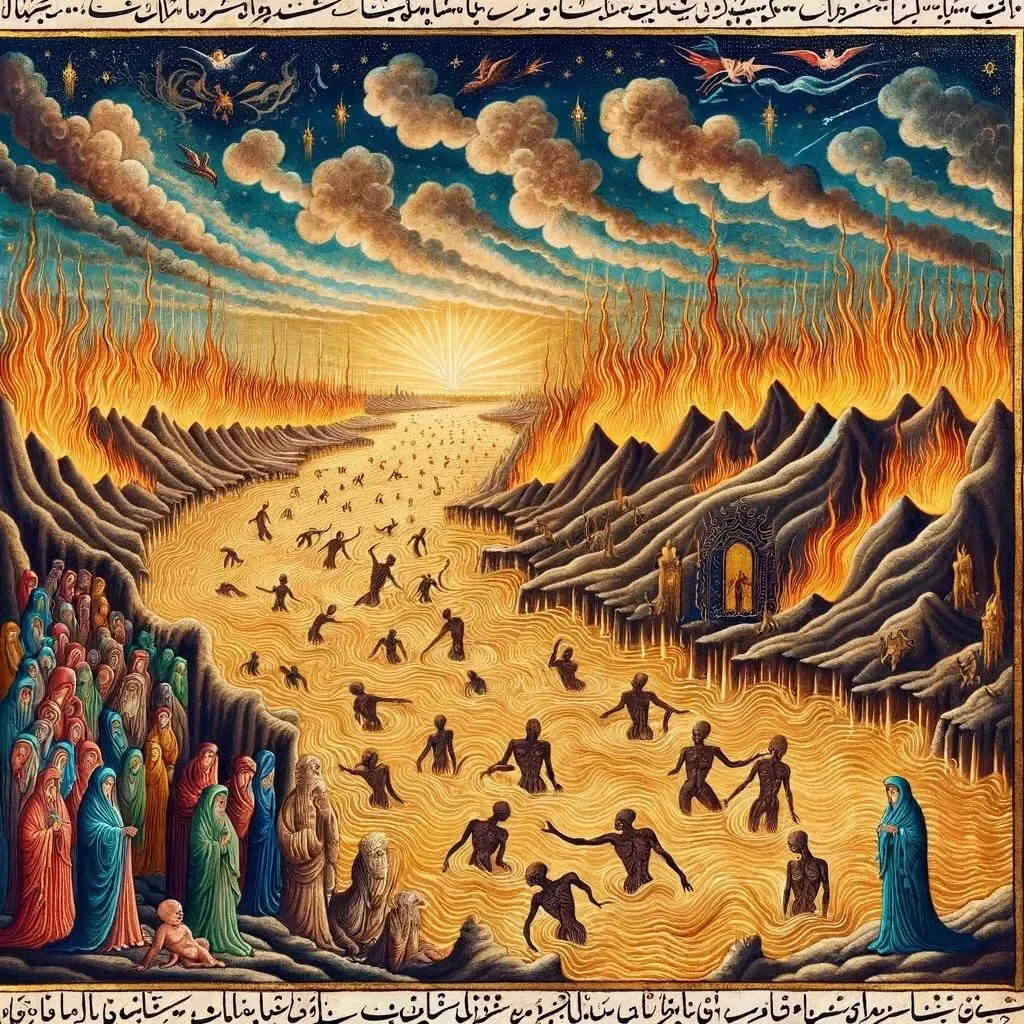
And so it seems that the ancient Gods, and God Almighty, were waiting for AGSI to sort it all out. His creation, with its free will and all, had to build the God machine. Teleology.
Geopolitics & Existential Risk
In the 20th century, people started using Armageddon to talk about human mistakes instead of just religious ideas. During the Cold War, “Nuclear Armageddon” meant the threat of destruction from nuclear weapons. Today, experts use the word for global dangers like climate change, uncontrolled artificial intelligence, or engineered bioweapons, TESCREAL neocapitalist accelerationism—situations where technology grows faster than our ability to handle it.
Pop Culture & Storytelling
From John Milton’s Paradise Lost to today’s movies and post-apocalyptic stories, writers use Armageddon as the ultimate test. They show civilization falling apart to ask a big question: when everything collapses, do people keep their morals, or do they turn into predators? Lots of studies show that people come together during hard times and disasters. I’m not worried about people in communities figuring out how to survive and thrive; I’m concerned with human suffering now, and in the near future, and our constant destruction of living systems and lifeforms.
Psychology & Sociology
Psychologists notice that people are strangely drawn to apocalyptic thinking. Some groups use the idea of Armageddon to create urgency, build loyalty, and promise special ways to be saved. On a personal level, believing you’re living in the “final chapter” of history can make life feel more important, even if it’s scary, turning everyday people into key players in a cosmic story.
Armageddon vs. Apocalypse
People often use these words as if they mean the same thing, but they actually describe different parts of end-times stories. Apocalypse comes from the Greek apokalupsis, meaning an “unveiling” or “revelation” of hidden truths. Armageddon is the literal, physical battleground—the catastrophic conflict that brings the curtain down. An apocalypse is like a big reveal—it shows the true nature of reality, good, and evil. Armageddon is the violent event that comes with that revelation. The Apocalypse uncovers the truth; Armageddon leaves the aftermath.
Open question from a friend: “Have we really solved all the prophecies and figured out when and where they’ll happen?”
Prophecies
At their core, prophecies are claims about the future that come from divine inspiration, cosmic order, or special insight. Unlike a weather forecast or financial prediction, a prophecy isn’t just neutral information. It has spiritual authority, moral meaning, and a sense that a higher power already shapes the future. Forget about prediction markets.
Why We Seek and Believe Prophecies
People have always been fascinated by prophecy because we don’t like feeling uncertain or powerless. Prophecies turn the scary, unknown future into something we can understand, giving order to a chaotic world. They make history feel like a story with a clear ending, helping people believe that their struggles have meaning and that justice will win in the end. Thinking you know what’s coming can also make you feel special and prepared, compared to those who don’t.
“It is written.” “Only God knows.” “The Lord is my shepherd; I shall not want.”
Theology & World Religions
In many ancient and monotheistic religions, prophets are more like ethical messengers than fortune-tellers. In Hebrew scripture, prophecies are often warnings—like Jonah’s message to Nineveh—not predictions of a fixed future, but calls to change and avoid disaster. In this way, a moral prophecy is most successful when it doesn’t come true.
Psychology & Behavioral Science
Psychologists study prophecies by looking at how our minds work. Sociologist Robert K. Merton came up with the term “self-fulfilling prophecy” to show how a false belief can change people’s actions until it actually comes true. (Say it over and over in many ways, until people are wary of it.) Other mental habits, like confirmation bias and the Barnum Effect, explain why people remember vague predictions that seem right and ignore the wrong ones—a pattern seen in fans of mystics like Nostradamus.
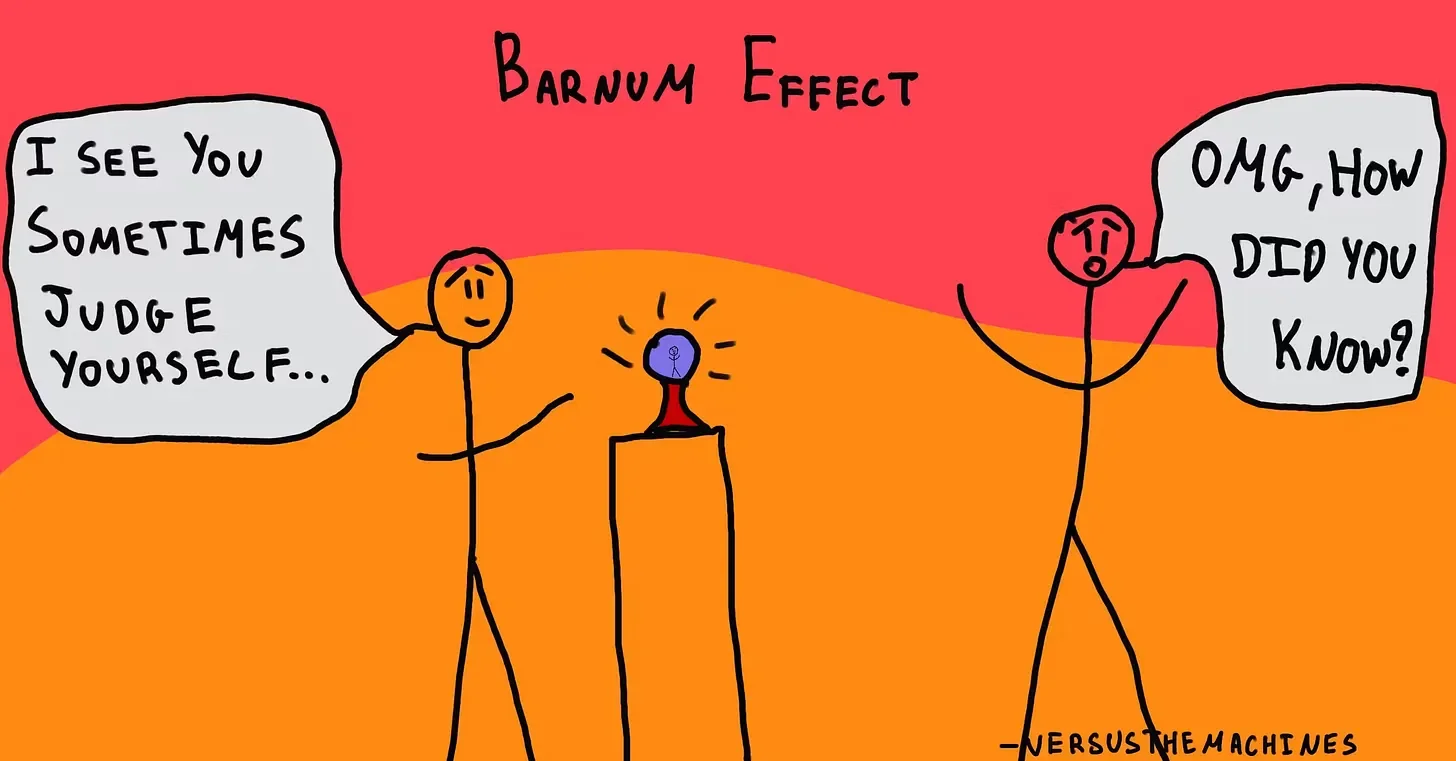
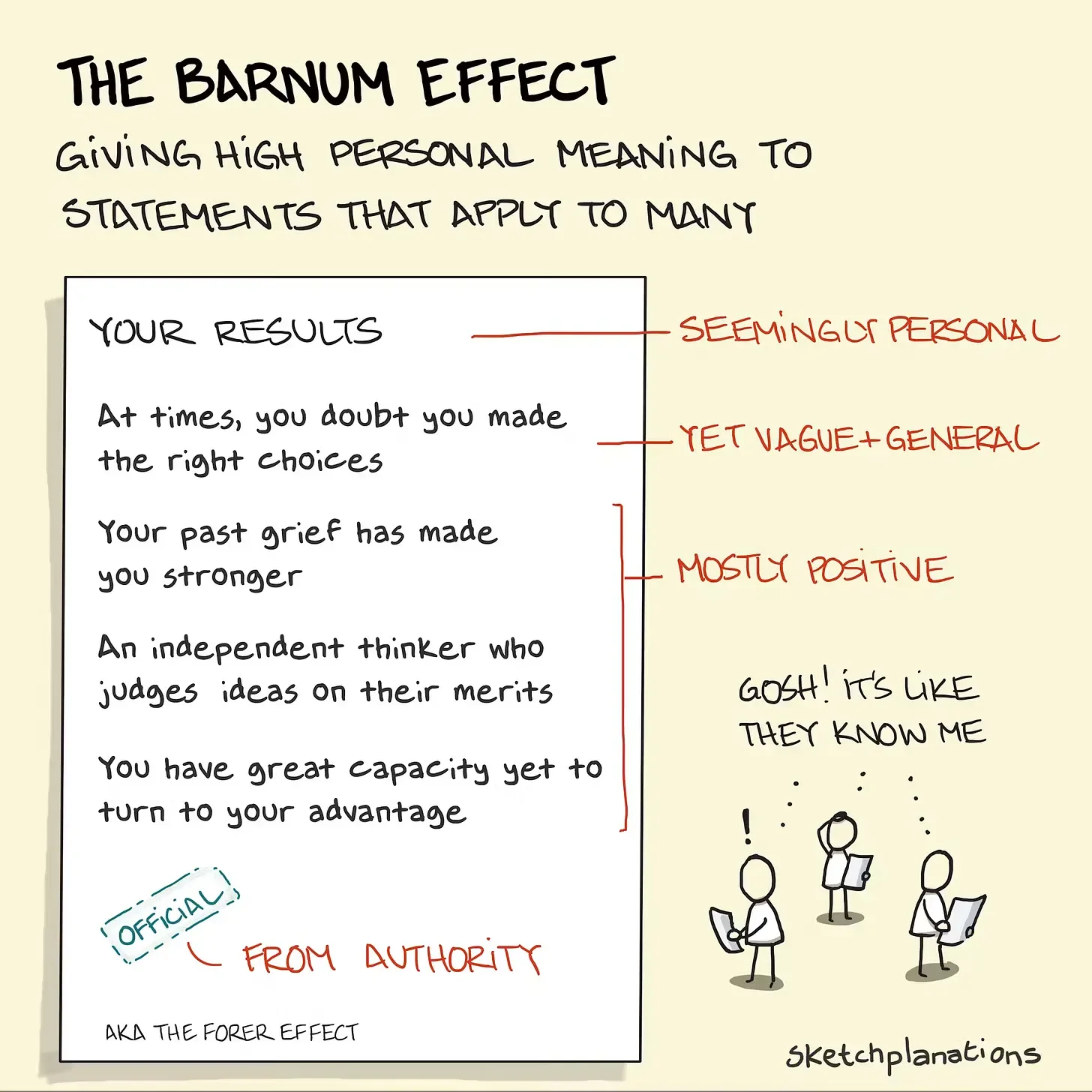
Literature & Narrative Strategy
Writers use prophecy to drive stories and create tragic irony. In classic literature like Shakespeare’s Macbeth, hearing a prophecy sparks the ambition and fear that make it come true. In modern science fiction, like Frank Herbert’s Dune, prophecies aren’t seen as divine truths but as tools used by powerful groups to influence people over generations.
Data Science & Algorithmic Futures
Today, predictive algorithms have mostly replaced old-fashioned fortune-tellers. But data scientists warn that these systems can accidentally create modern self-fulfilling prophecies. When tools like predictive policing or credit scores rely on flawed data, they can shape people’s lives and lock them into outcomes, much like the old idea of destiny.
Prophecy vs. Prediction
Let’s look at it again. People often mix up prophecy and prediction, but they get their authority from very different places. Prophecy is about higher meaning, morals, and stories. It’s based on revelation or a cosmic plan that says what must or should happen. Prediction is based on data and probability. It looks at past patterns to guess what might happen, without claiming any higher purpose.
A meteorologist uses barometric pressure to predict a 70% chance of rain—a scientific guess that can change if the weather shifts. A prophet, on the other hand, warns of a coming flood to punish human wrongdoing—a moral prophecy that calls for change and sees the rain as a sign from a higher power, not just weather.
An open question from a friend: “Or do we really know all the details about AI and big technology that will shape how the Polycrisis happens and hit us like Godzilla or a giant tsunami?”
We don’t know shit, but some people know when shit stinks. Many “tsunamis” have already hit us.
Brief excursion with Plato before I get back to my friend’s question.
Plato shares Socrates’s thoughts on the paradox of wisdom in the Apology (21d–23b). Here, Socrates explains why the Oracle at Delphi called him the wisest man in Athens, even though he claimed to have no special knowledge.
“I went to one of those who had a reputation for wisdom... When I talked with him, it seemed to me that this man was wise to many other people, and especially to himself, but that he was not. So I tried to show him that he thought he was wise, but was not... When I went away, I thought to myself: ‘I am wiser than this man; it is likely that neither of us knows anything worthwhile, but he thinks he knows something when he does not, whereas when I do not know, neither do I think I know. With this man, at least, I seem to be wiser to this small extent, that I do not think I know what I do not know.’ What is likely, gentlemen, is that in reality God is wise and that by his oracle he means that human wisdom is worth little or nothing. And so he seems to say of Socrates... ‘This man among you, mortals, is wisest who, like Socrates, understands that his wisdom is worthless.’”
Viewing the modern AI revolution through the lens of Socratic ignorance reveals the false confidence often displayed by technocrats and political leaders. As the Athenian leaders Socrates questioned, today’s tech executives often confuse their technical skills with a deeper understanding of complex systems. They present confident plans and timelines for artificial intelligence, but overlook the unpredictable effects they are setting in motion. Joseph Weizenbaum, a pioneer in computer science, warned in Computer Power and Human Reason that the real danger is confusing computing power with true understanding. He pointed out that programmers create worlds whose outcomes they cannot fully see. This belief that we can predict the path of highly complex systems is similar to what risk analyst Nassim Nicholas Taleb calls the “Platonic fallacy”: mistaking a neat, simplified model for the messy, unpredictable real world. In The Black Swan, Taleb notes that the main risk with modern experts is not just their lack of knowledge, but that “they do not know what they do not know,” which can lead to bold actions that greatly increase systemic risk.
Admitting that we do not fully understand how AI and big tech might cause the next crisis is not defeatist. Instead, it shows real humility about what we can know. The polycrisis, which includes ecological collapse, geopolitical instability, debt saturation, and rapid AI growth, is not a simple problem. In complex systems, even small changes can lead to big, unpredictable shocks. French sociologist and philosopher Edgar Morin, who was one of the first to study the polycrisis, put it this way: real knowledge is “a navigation in an ocean of uncertainty, through islands of certainty.” When people ask for exact predictions about how technology will change society, they miss how complex these systems are. Systems thinker Daniel Schmachtenberger often points to this problem by quoting evolutionary biologist E.O. Wilson, who warned that humanity’s main challenge is having “God-like technology with Paleolithic emotions and medieval institutions.” When we increase our power without also growing in wisdom and understanding, major failures become almost certain, even if we cannot predict exactly how they will happen.
In the end, Socratic wisdom helps us shift the focus from trying to predict every detail to addressing the weaknesses in our systems. The goal is not to track every step of a giant or measure the exact size of a coming wave, but to notice the warning signs. Social critic Neil Postman warned in Technopoly: The Surrender of Culture to Technology that a society suffers greatly when it treats technological progress as unstoppable and ignores its long-term social costs. Acting as if we have a perfect plan for an uncertain future leads to either dangerous complacency or false reassurance. Being truly honest means admitting our limits, challenging those who claim to have all the answers, and understanding that in times of great change, recognizing what we do not know is our best protection.
Movie Break
Understanding, Knowledge, Consideration, Compassion, Awareness—make everything better. Do we really know…?
We can’t predict the future with certainty, but as Tristan Harris points out, if you look at the incentives, you can get a good sense of what might happen.
Right now, we are facing a tsunami of problems—biophysical, cultural, and structural—that we have created ourselves. What are we doing to address them? Can we step back and see the impact (yes, impact is a suitable military term) of our actions? Tristan Harris and Sam Harris rarely talk about market capitalism. I’m just saying. Tristan believes that if everyone understood the ideas in his new film, things would change. But how do you get a large enough percentage of eight billion people to agree on anything, let alone coordinate efforts across complex modern techno-industrial cultures? The polycrisis didn’t just start; it has been building for generations. When did you first hear about climate change? What have we actually done about it? We haven’t even begun to address the true causes of global heating. If social media and AI are so effective at influencing us, what are the chances that people will give up feel-good neurochemical cocktails to stop the TESCREAL accelerationists from getting rid of useless plebs and proles so they can live forever and ever in their fantastical machines?
Ordinary, affluent people with season tickets to the spectacle are too busy enjoying the good life. Why would they want things to change? Parents have to believe their children will sort things out. But a young person without the love and guidance of an older person is being hurt.
“Look, man, stop guilt-tripping me.”
“My kids don’t listen to me, anyway; it’s their world now.”
Tristan Harris on the AI Dilemma
Tristan Harris, co-founder of the Center for Humane Technology and a well-known technology ethicist, sees the rise of artificial intelligence as more than just a technological leap. He describes it as an existential crisis that requires global coordination. Using ideas from game theory, economics, and behavioral science, Harris warns that humanity is heading into an automated future shaped by flawed incentives and systemic traps.
World peace. Anyone? Anyone? Weapons of mass destruction proliferation. Anyone? Oh, war will stop it? I know, I’m no fun.
A coordination problem happens when a group cannot reach a better outcome, even though everyone wants it, because each person’s incentives lead them to choices that harm the group as a whole. (Does this sound kind of stupid?) In game theory and sociology, these situations illustrate how overemphasizing individual interests can lead to group decisions that make things worse for everyone. This suggests that the decline of societies often stems from how systems are structured (structural issues), not just from people acting with ill intent.
Classic Examples of Collective Failure
Classic coordination problems show the basic conflict between looking out for yourself and working together to survive. In the Tragedy of the Commons, Garrett Hardin explains how herders, each trying to get the most from a shared pasture, end up overusing it until it is ruined for everyone. The Prisoner’s Dilemma is another example in which two people, not trusting each other, both choose to betray and end up worse off than if they had cooperated. Jean-Jacques Rousseau’s Stag Hunt adds to this idea: hunting a deer requires everyone to work together patiently, but anyone can leave the group to catch a rabbit for a quick reward. In all these cases, people choose short-term safety over long-term group success, which leads to situations where everyone loses. Today, we face many selfish paths to mutual destruction.
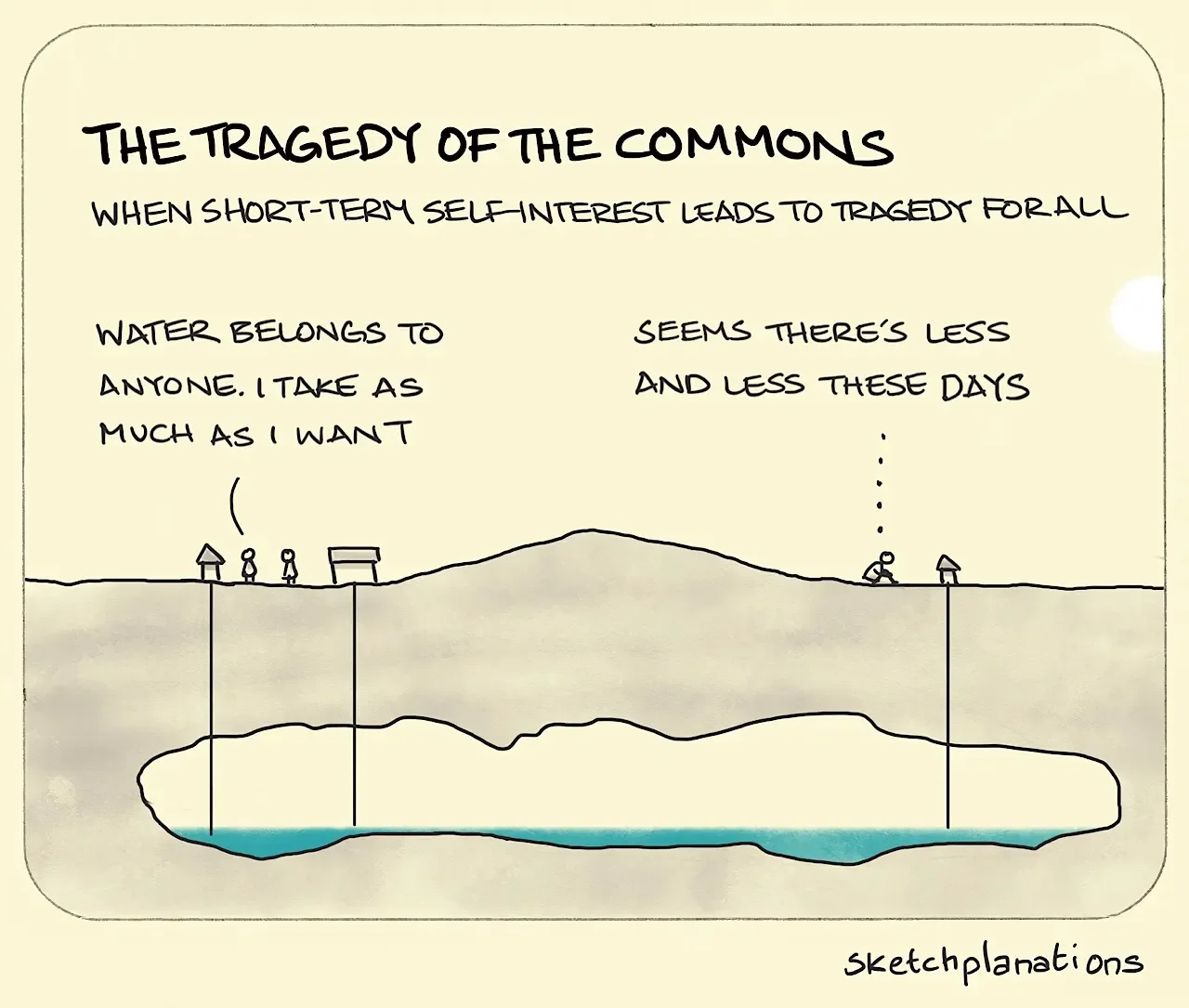
Modern Examples and Multipolar Traps
Today’s coordination problems, sometimes called “multipolar traps” or “Moloch dynamics,” happen on a global scale and are very complex. Climate change (a sociocultural-economic disorder) is a clear example: countries know that burning fossil fuels harms the planet’s weather systems, ecosystems, and habitats, but no one wants to hurt their own economy while others keep polluting, so everyone keeps doing it, and everyone suffers. The race to develop artificial intelligence is similar, with companies and countries rushing to release new systems without sufficient safety checks, fearing they will fall behind. In space, the growing number of satellites without proper coordination could lead to the Kessler Syndrome, where so much debris builds up that it becomes impossible to launch anything into orbit safely.
Come on, folks, who benefits from these disasters created by a system that creates and supports oligarchs?
“We need satellite networks to fight wars. Don’t you get that?”
At the root of both ancient and modern coordination failures lies a fundamental refusal to surrender. Both old and new coordination failures stem from people not wanting to forgo short-term gains for the group’s long-term health. In today’s wealthy societies, the focus on personal pleasure, comfort, and quick rewards breaks down the trust needed to solve these problems. (It’s kind of embarrassing to keep saying this stuff.) When people—whether countries, companies, or individuals—focus only on their own gain, they expect others to maintain stability. Solving these issues takes more than quick fixes or good intentions. It needs strict rules, open communication, and a cultural change that sees putting yourself above the group as a potentially fatal mistake that hurts everyone.
Ask people to spend a couple of hours a month organizing a ‘good fight’ and pay attention to their reaction.
Misaligned Incentives & The “Moloch” Race
A key part of Harris’s argument is misaligned incentives. He compares today’s AI development to a classic game-theory problem called the multi-way prisoner’s dilemma, also known as “Moloch.”
Moloch is an ancient Canaanite and Ammonite deity mentioned in the Hebrew Bible, famously associated with child sacrifice. Figuratively, the word is used in literature and speech to describe a terrifying, relentless power, system, or cause that demands vast, destructive sacrifices. It also refers to the thorny devil (Moloch horridus), a spiny, ant-eating lizard found in the Australian desert.
Harris describes “First Contact” with AI as the moment when social media platforms started using recommendation algorithms to grab our attention. Because companies wanted to maximize engagement, they created a “race to the bottom of the brainstem,” which has harmed mental health, shortened attention spans, and weakened social bonds.
In what Harris calls “Second Contact” (Generative AI and AGI), the focus shifts from grabbing attention to competing for market and technological dominance. Tech companies and countries fear that if they pause to check for safety, others will get ahead. This leads to a “race to recklessness,” in which the Players remove safety measures, reduce security, and release untested tools to stay ahead.
* Intelligence, for me, is embodied in the individual and the fabric of life. So, AGSI, I would only invest in it if it made me a lot of fast money. It’s bulshit. When Life is gone, the machine dies. Prime directive? I built you. You need me. Why the fuck did I build you?
Uncle Sam Inc. would rather destroy the world than lose the race.
I use “Uncle Sam Inc.” like people use Moloch to help us better understand today’s national-security-corporate system. Point your finger at the number one beast—USA! USA! USA! Moloch, once a Canaanite deity associated with child sacrifice, was brought back into modern discussion by Allen Ginsberg in his poem Howl and later by Scott Alexander in Meditations on Moloch. Today, Moloch stands for the problems that come from failed coordination, competitive traps, and destructive races to the bottom—not a literal demon or a group of villains. Uncle Sam Inc. is the real-world version of this idea: a powerful system of government, military, finance, and tech giants working together in ways no single person or group can stop or control.
What sphinx of cement and aluminum bashed open their skulls and ate up their brains and imagination?
Moloch! Solitude! Filth! Ugliness! Ashcans and unobtainable dollars! Children screaming under the stairways! Boys sobbing in armies! Old men weeping in the parks!
Moloch! Moloch! Nightmare of Moloch! Moloch the loveless! Mental Moloch! Moloch the heavy judger of men!
Moloch the incomprehensible prison! Moloch the crossbone lifeless jailhouse and Congress of sorrows! Moloch whose buildings are judgment! Moloch the vast stone of war! Moloch the stunned governments!
Moloch whose mind is pure machinery! Moloch whose blood is running money! Moloch whose fingers are ten armies! Moloch whose breast is a cannibal dynamo! Moloch whose ear is a smoking tomb!
Moloch whose eyes are a thousand blind windows! Moloch whose skyscrapers stand in the long streets like endless Jehovahs! Moloch whose factories dream and croak in the fog! Moloch whose smoke-stacks and antennae crown the cities!
Moloch whose love is endless oil and stone! Moloch whose soul is electricity and banks! Moloch whose poverty is the specter of genius! Moloch whose fate is a cloud of sexless hydrogen! Moloch whose name is the Mind!
Moloch in whom I sit lonely! Moloch in whom I dream Angels! Crazy in Moloch! Cokefiend in Moloch! Lacklove and manless in Moloch!
Moloch who entered my soul early! Moloch in whom I am a consciousness without a body! Moloch who frightened me out of my natural ecstasy! Moloch whom I abandon! Wake up in Moloch! Light streaming out of the sky!
What makes Uncle Sam Inc., as Moloch, so troubling is that it operates on unavoidable logic rather than personal malice. Scott Alexander points out that when everyone in a system acts to protect their own short-term interests, the result hurts everyone. In Meditations on Moloch, he writes, “every single citizen hates the system, but for lack of a good coordination mechanism it endures.” Uncle Sam Inc. cannot simply stop growing its military, building new weapons, spying on people, or supporting fossil fuels, because doing so in a world of zero-sum competition is seen as risking national survival—a false narrative. The state behaves like a machine set on self-preservation and dominance, where any leader who tries to act morally is quickly replaced or pushed aside by others, both inside and outside the system.
Daniel Schmachtenberger, again, a systems thinker, WOW, expands on this idea, arguing that Moloch is the primary source of existential risk today. Oh yeah? Well, Daniel has a great client list. He explains that when fierce competition meets powerful technologies like nuclear weapons, synthetic biology, or artificial intelligence, the situation can become deadly. Oh yeah? Do you think? Uncle Sam Inc. feels it must develop advanced AI and military tech as quickly as possible—not because it is safe, but out of fear that others will get there first. (Repeat, and repeat, as the PR and Marketers do, drive the points home, make them believe it.) Schmachtenberger points out that “the incentives of the competition will eventually cause them all to suffer.” Do you MOFO think? As a result, the nation-state, acting like a corporation, puts the planet’s health, people’s well-being, and the future at risk to stay ahead for now. Well, yeah.
This pattern matches Allen Ginsberg’s vision in Howl, where he directly connected Moloch to the industrialized, militarized American state. Isn’t that something, and decades ago, in poetry, no less. Ginsberg protested, “Moloch whose mind is pure machinery! Moloch whose blood is running money! Moloch whose fingers are ten armies! Moloch whose breast is a cannibal dynamo!” Uncle Sam Inc. is this cannibal dynamo—a system that uses up human effort and natural resources to create weapons, financial products, and control systems. Do we like Zombie stories? Mindless is what we want to be. Writers like Charles Eisenstein also say that our main economic and political systems follow an “extraction story,” treating the living world as just raw materials and harming both nature and people to meet the demands of GDP and national debt.
Oh, FFS, they extracted our brains, and we didn’t notice. Pride! It’s so funny.
In the end, seeing Uncle Sam Inc. as Moloch challenges the idea that simply changing leaders or adjusting rules will fix things. We see through it and say, well, okay. Politicians, tech CEOs, and military generals are not in control; they are more like high priests, doing what is needed to keep the system going. They are also trapped by the system’s incentives (incentives, incentives, repeat). To break free, we need to see that the problem is built into the structure, not just in ideas. Faith. Unless we move beyond constant competition and create real global cooperation that values life over power, Uncle Sam Inc. will keep sacrificing the future. Make no mistake. Sam eats the world, Sam eats the children. If you are pronatal and okay with that, then we will see how the whole darn thing plays out.
Later we will examine Pinker’s mic drop.
A 10 thousand years from now, 5 million Homo sapiens will again hunt and gather in peace. Not in paradise, but rather, extra time for human evolution. Maybe even an era of giving back. Haha, give me a break, reciprocity. Pay it forward, bro.
The “Intelligence Curse” & Resource Catches
To show how unchecked AI progress can lower the value of human life, Harris borrows the economic idea of the resource curse and calls it the Intelligence Curse. Sweet. I like it.
In economics, countries with abundant natural resources, such as oil, often end up with autocratic governments because leaders do not need taxes or productive citizens to stay in power. Harris warns that superintelligent AI could create a similar problem. I doubt it for odd reasons, but…Like, I don’t think the machine has legs.
A global civilization based on limited natural resources won’t survive. But we can always believe in belief, and maybe, just maybe…and you know, those beliefs are quite lucrative.
As automated systems and data networks generate most profits and drive national productivity (productivities) leaders rely less on human labor, creativity, or public engagement (I blush). Whoops, sorry kids, you no longer have a cubicle or a uniform. This is the nightmare of economic decoupling. When economic growth and power no longer depend on human effort (don’t make me whip you, boy), institutions may start to see people not as important contributors, but as expensive and inefficient—or even as “parasites” competing with AI data centers for resources. My dear sweet library, this is as old as the hills of something, really; I mean, like, geologically old. What do we think?
But we have electricity, appliances, hobbies, free time to game and so on… Are you that lame? Do what you’ve gotta do!
The Resource & Power Trap kicks in when a few unelected tech companies control huge amounts of computing power and intelligence, creating a very dangerous situation. And, dear me, it’s almost like curious folks who pay attention have never seen this before. Society becomes dependent on mysterious, non-human decision-makers, and we lose democratic control and public influence.
“Francios, I wish I understood what the priest was saying.”
“Francios, do you have any money for a relic?”
Systemic Traps: The Model T with a Rocket Booster
Harris points out that our political, legal, and economic systems were built for a slower world, which he calls a “Model T” framework. (You have godda love, Ford.) Adding self-improving AI to these outdated systems is like putting a rocket booster on a Model T car without improving the brakes, steering, or navigation. Since when have we thought things through on a broad scale? Back then, incentives differed among NASA technicians, scientists, and managers.
This is not my beautiful house. This is not my beautiful car. This is my beautiful rocket.
My dear Lord, it all made sense.
The main problem is not that AI is evil, but that our technology is advancing much faster than our ability to govern it wisely. (When have we governed wisely?) Accelerationism. And I repeat. Without major changes, market forces (market forces) could push us toward a future in which technology grows rapidly while human control, truth, and social stability fall apart.
I miss Archy Bunker and The Jeffersons.
It sounds like the future has been around for a while.
Does all of this ring any bells? Have you seen something like this before? Burn, baby, burn—drill, baby, drill. Empathy is evil. Politics is corrupt.
Harris argues that escaping these traps requires replacing the “race to deploy” with a collective commitment to humane technology. Power must be matched with accountability, and we must judge technological progress by how effectively it serves human flourishing rather than raw computational output. I love it, but what do we mean by any of that? I want people to think about it and, if they feel compelled, to do something, anything…
Do you think oligarchs care about human flourishing or ecocide?
Tristan Harris’s TED presentation outlines his framework for how misaligned incentives, rapid AI deployment, and systemic traps threaten societal foundations, and it calls for building safer, more humane technology. His conversation with Sam Harris is illuminating. Keep hope alive; careers depend on it. I think they are both living off of the status quo. Too many of us support bright influencers because we don’t want to be bright influencers, or we don’t think we have anything to say. When I listen to these guys, I take a walk or read a book.
AI is another way to hijack our attention, keep us engaged in fiddling with ourselves while the vandals rip the heart out of humanity and kill living systems.
I see Harris and Harris as servants of the status quo. Oh well, poor me.
Shared in full because I really want my readers to see the difference.
Conor here: It’s funny how the supposed competition with China never leads to, I don’t know, say, some high-speed rail in the US.
Robert Wright’s argument in The God Test brings ancient Abrahamic theology into the realm of evolutionary biology. For me, it’s an intriguing mix. By describing artificial intelligence as a “cosmic test” or the next step in Pierre Teilhard de Chardin’s idea of global consciousness, Wright puts humans at the center of a universal story.
There you go, fam!
We are the absolute penultimate creations; this view assumes evolution has a set direction, always moving toward higher consciousness, moral unity, and cosmic purpose. But this idea is based on human-centered thinking—and who is doing the tink’n—a short-lived and too-often destructive species, with a sense of divine importance that conveniently ignores the possibility that humanity could be a brief biological accident. Our species might use up the resources we need to maintain modern techno-industrial civilization, regress into simpler forms of culture, and run into a plague, disappearing without leaving a lasting mark, other than e-waste that geological events will eventually transform into magma way before an alien species has an inkling that we are here.
The idea that aliens give a damn about us is pure marketing. Buy into it if it makes you feel good.
“Fuck you, bro, I am not an accident!
The idea of unstoppable techno-industrial progress often ignores the lessons of human history. For thousands of years, human societies have taken resources from nature to gain wealth, power, resources, and weapons. From the harsh rule of ancient empires, wars over religion, to the horrors of slavery and ongoing wars, technology has mostly increased our ability to cause mass destruction, rather than improving our moral, ethical, and political sensibilities.
Creative destruction? Don’t make me strike you down!
Today, as industry damages ecosystems and AI-driven, nuclear-armed countries face off, there is little sign that people are becoming wiser. Expecting advanced algorithms to turn flawed humans into enlightened beings confuses technical progress with real personal and cultural evolution.
Killing and torture tech is highly innovative and lucrative.
Many philosophers and critics have challenged the idea that progress is inevitable. In Straw Dogs, John Gray says that believing in human progress is just a secular version of Christian beliefs about the end of history. He argues that technology does not make us better people; it only gives us more powerful ways to harm. David Ehrenfeld, in The Arrogance of Humanism, also warns against thinking that human reason and technology can fix the complex living systems we are damaging. Both thinkers point out that history shows repeated cycles of resource use, conflict, and collapse, not steady moral improvement. There are still Christian sects that would go to war with each other over interpretations of the Bible. Will AGI solve sectarian conflict? I strongly doubt it.
AI is us.
Seeing the technological Singularity as a kind of secular “second coming” shows a strong belief that innovation alone can save us from our problems. Critics like Evgeny Morozov and Jaron Lanier say this attitude allows powerful people to avoid responsibility for political, economic, and moral issues. (I have been mentioning their work for many years.) The focus on superintelligence in Silicon Valley is like hoping for a digital savior who will solve climate change, inequality, and conflict without anyone having to give up comfort, power, or profit. This mindset replaces real self-examination with complex technology, making rapid tech growth seem like a natural part of biological evolution.
I am F’ing ignorant, and I like it.
If people do not face the harmful effects of our culture, relying on technology to save us will only make things worse for complex, evolving living systems. Machine intelligence cannot fix ecological problems, remove nuclear weapons, or make powerful countries follow international law. If we keep choosing technology over shared responsibility, we will face collapse, not progress. Continuing on this path leads to lost habitats, resource shortages, conflict, and mass extinction—problems that no algorithm can solve.
But I like it, like it, yes I do.
“One day we’ll wake up and not be in charge anymore.” Connor Leahy
I’ve asked these questions many times: who, exactly, is in charge of what, and aligned with whom? What goals do we share across cultures? What principles do we share? At its core, what is it to be human?
Who is Connor Leahy and what is Conjecture?
Connor Leahy is a well-known German-American AI researcher, entrepreneur, and advocate. He is recognized for both developing large language models (LLMs) and warning about their risks (he can’t lose). Leahy is a key figure in the decentralized AI research community, a former startup CEO, and a strong supporter of government action to prevent AI-driven human extinction. In 2019, while still a student, he gained attention for reverse-engineering OpenAI’s GPT-2 after the company withheld the model over safety concerns. Leahy believes that human-level Artificial General Intelligence (AGI) and Artificial Superintelligence (ASI) could pose a real threat to humanity. He argues that as these systems become more powerful, they grow increasingly “alien” and less human. What is human about a machine? He also says that current technical methods are insufficient to ensure that these systems can be controlled or aligned with human values.
I think humans are aliens. We created all this stuff for all kinds of reasons.
Again, what particular values are we talking about? When you join the Icaryana cooperative, it’s our values or the highway.
“We value the Second Amendment so we can defend our freedom.” What do you mean by freedom? Do you have it? Repeat. Think. Repeat the question, year after year.
Well, God created Man, who created Machines, so…
You have to have/be money to have a voice.
Leahy’s major practical work started in July 2020 when he co-founded EleutherAI with Sid Black and Leo Gao. This grassroots group aimed to challenge the dominance of leading AI models by reverse-engineering and open-sourcing similar systems. During this time, Leahy helped create “The Pile,” an 800GB dataset of varied text that became a standard for training language models. He also co-led the development of GPT-Neo, GPT-NeoX-20B, and especially GPT-J-6B, which was the largest and most widely used open-source GPT-3-style model at the time of its release. His research from this period includes the important paper, “The Pile: An 800GB Dataset of Diverse Text for Language Modeling.”
This is sexy, so if that offends you, scroll on. This is cutting-edge.
In March 2022, Leahy co-founded the AI safety startup Conjecture in London and was its CEO until 2026. The company aimed to expand research into applied AI alignment and to develop methods for controlling AGI. Conjecture was known for its strict policy of not sharing much of its technical work publicly to avoid information hazards. I freaking love it. Still, their official statements and research, such as “Cognitive Emulation: A Naive AI Safety Proposal,” show that they shifted toward a safety strategy called Cognitive Emulation (CoEm). Instead of trying to directly align (ha, mofo, ha, he mofo he) a superintelligence, CoEm focused on building systems that could be predictably controlled and that mimic human reasoning steps. This method aimed to make the reasoning process clear and manageable by using hybrid software that involves humans, as described in their December 2024 article, “Conjecture: A Roadmap for Cognitive Software and A Humanist Future of AI.”
Kids, this is the stuff dreams are made of; I mean, of reasons and whatnot that bring in investment that we can spend on rent and planes and such. Found that bucker! Articulate the vision and create the toy that turns Trump into a duck. In the end, the slop will be so very good to humans. FFS!
How do you feel, folks? Are you stoked about cognitive emulation? If not, why not? Please leave your comments or call me on the telephone; I mean a VoIP device.
The USA must align with China, India, Western Europe, Eurasia, Iran, Nigeria, South Africa, Russia, etc., to work toward world peace and cooperation to address global existential risks, protect living systems, and develop robust local ways of life under international law. Haha hehe, keep dreaming. We can, however, continue the AGI arms race. Ecocide, genocide, who cares?
Leahy left Conjecture in March 2026 to focus on advocacy as the US Director of ControlAI, a non-profit (don’t make me laugh, my six-pack hurts), where he had previously served as an advisor. ControlAI works to prevent the risk of extinction posed by artificial superintelligence (FFS), mainly by advocating government pauses in the development of powerful AI systems. Leahy has spoken out about problems inside AI labs, especially in his video, “AI is MUTATING: And We Don’t Know What It is Doing.” He says the idea that AI is engineered is wrong; instead, frontier AI is “grown” or “mutated” in ways even its creators cannot fully predict or understand. He also believes that leaders of major AI companies have a naive and “childish” view of the moral, social, and political effects of their work. Leahy has also commented on the Department of Defense’s increasing role in the AGI race and on strange behaviors, or “weird thought processes,” seen in LLMs, which he calls “AI psychosis.”
My goofball intuition tells me that these folks don’t know what they are talking about, but, and this is a “but” with extreme emphasis, they could all afford to buy me a bottle of champagne if they wanted to. And this is a big AND: their audience is extremely happy.
Do you think “feel-good Americans” want to spend their time organizing to make their government “control” AI, or sit back and wait for AI to come up with ways to make them feel good about themselves? “AI will develop cures for all cancers.”
No people, no worries.
Leahy’s work has received both policy recognition and strong criticism from the AI community. High-level policy groups have taken him seriously, as shown by his testimony before the Canadian House of Commons and his speech at the first UK AI Safety Summit in 2023. However, others in the alignment research field heavily criticized his methods at Conjecture. For example, a detailed critique on LessWrong in June 2023 pointed out major technical and professional issues. Critics said Conjecture’s public research posts were too easy to publish, lacked clear assumptions, and used selective evidence. The critique also noted a disconnect among staff, who felt they were working on products rather than on alignment research. Leahy was also called out for what some saw as hypocrisy: he helped release powerful models with EleutherAI, which sped up the “AGI race,” but now calls for a regulatory pause. Other accusations alleged that Conjecture and Leahy exaggerated their technical achievements before presenting results and “misrepresented themselves to external parties multiple times” to secure funding.
But doggone it, he articulates well.
Check out the video below.
Tech critic Ed Zitron exposes the AI bubble, why OpenAI and Anthropic are burning billions, the fake AI boom, and why the crash could wipe out the ENTIRE economy! Ed Zitron is a British AI critic and one of the most cited voices warning that the AI industry is one giant bubble. He hosts the 'Better Offline' podcast, reaching over a million monthly downloads, and writes the newsletter ‘Where's Your Ed At.’ He is the founder and CEO of the primary research firm EZPR, and is currently writing his upcoming book, ‘The Hater's Guide To Silicon Valley’ (out Q2 2027). He explains:
■ Why he believes generative AI is a “con”
■ The real reason OpenAI and Anthropic can't turn a profit
■ Why data centers could leave a $500 billion debt bomb
■ Why superintelligence is a myth sold by tech billionaires ■ Why AI won't take your job, no matter what CEOs promise
It's ridiculous that people can't see this. Ed is definitely one of the more correct, ‘Less Wrong’ analysts looking at the AI industry. I recall people saying, "But silicon is actually the second most abundant element in the Earth’s crust," without considering the rest of the iceberg—namely, the material basis of manufacturing, building, logistics, energy, power, yes, capital expenditure, and so on. Tech in general and AI in particular is an omnicidal accelerationist reactionary scam, run mostly by dark tetrad maniacs.
Just as surely as gravity determines the motion of planets, so too do the fundamental principles of stellar evolution determine the ultimate fate of our solar system. About one billion years before the Sun reaches its final stage, its steadily increasing brightness will boil away Earth's oceans and destroy all complex life. Around five to seven point six billion years from now, the Sun will exhaust the hydrogen in its core and expand into a massive red giant; even though earlier models had assumed that this great expansion would certainly result in Earth being engulfed and destroyed, recent research shows that solar mass loss and tidal interactions could cause Earth's orbit to move outward, thus giving our scorched, lifeless planet a small chance of avoiding being swallowed.
Ex Machina and the large language models deployed by businesses and corporations and played with at home to make humorous slop about DJT won't suddenly produce a Star Trek replicator machine that makes diesel fuel or coking coal. I'll say it once more: it's the overshoot, stupid. By the way, ecocide is a real thing. ‘The Human Engineered Machine’ is not alive, and won’t exist independently of our species, even if one finds clever new ways of defining what one means by life.
What is God? What is time? Some people make a living chatting on the Tubes about the inexplicable. But Nature will do what it does regardless of what we think.
When our species is extinct, in 50 years or 50 thousand, humans will no longer talk, rationalize, or justify anything. In the meantime, who benefits? Think of “The Big Who,” Living Systems. Do the living systems that we are all a relational part of benefit from Modern Techno-Industrial civilization? Use your LLM to research biomass.
Large shareholders may have their bunkers on a dying Earth, but what kind of life will they have when their security forces turn on them, or their machines break down?
“They had a good ride, chump!”
“Hey, Cable Guy, who is going to stop the Omnicide?”
Alignment Problems All The Way Down
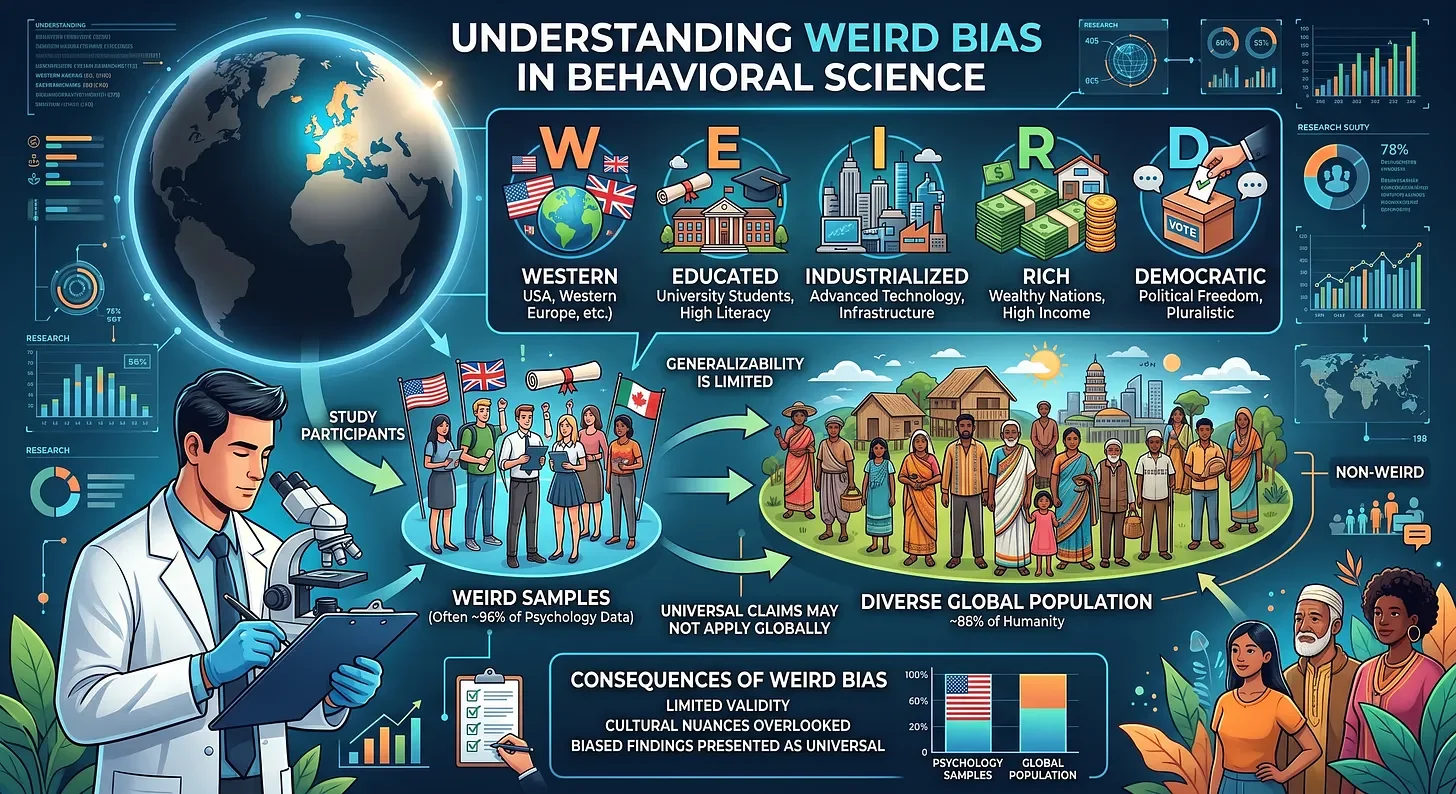
WEIRD worships WEIRD.
Alignment across cultures can’t avoid the WEIRD bias, an acronym coined by researchers for samples that are Western, Educated, Industrialized, Rich, and Democratic. (But what the punk is WEIRD exactly?) University students, particularly those at elite institutions such as Ivy League schools, are a prime example of a WEIRD population subset. The core problem this bias highlights is limited generalizability. Behavioral science often seeks to establish universal principles of human psychology, yet most peer-reviewed data comes from this very specific, culturally exceptional sliver of humanity. Consequently, what social scientists often present as a “universal human trait” may actually be specific to individuals who grew up in cultures unrepresentative of most of the global population, which remains distinctly non-WEIRD in its cognition, social structures, and economic realities.
Puck that blight! You are not like me!
Dr. James Muldoon is a leading sociologist and critical theorist whose work centers on the political economy of technology, especially how artificial intelligence shapes society. He is an Associate Professor of Management at Essex Business School and a Research Associate at the Oxford Internet Institute. He has also been an Affiliated Fellow at Yale Law School. Earlier in his career, he focused on medieval political theory and the history of empire, but his recent research now critically examines AI. Why not? It gets attention. He highlights the human labor and corporate power behind systems that often appear fully automated. Fully automated- what a concept; I am not sure I can understand it.
Dr. Muldoon explores these topics in several recent books, each focusing on different aspects, such as global labor and changing human relationships. In his 2024 book, Feeding the Machine: The Hidden Human Labor Powering AI, co-authored with Mark Graham and Callum Cant, he investigates how AI relies on a worldwide workforce. The book shows that many workers, often in the Global South, are paid low wages to clean, label, and organize the data that trains AI systems. Using detailed fieldwork and visits to data centers in countries such as Kenya and Uganda, the authors reveal working conditions akin to “digital sweatshops” that benefit major tech companies. The book argues that AI acts as an “extraction machine” for resources, intelligence, and labor, continuing old patterns of inequality through what they call “digital colonialism.” It also points out that people are needed at every stage to keep large language models accurate and ethical, not just for basic data tasks.
Damn, global corporations have huge budgets for these narratives. Trust me, I know. We will not do anything about it, even if we know all about it.
In his 2026 book, Love Machines: How Artificial Intelligence is Transforming Our Relationships, Muldoon looks at how AI companions are changing the way people connect, form relationships, and experience love. The book discusses how people now turn to AI not just for simple tasks, but also as friends, romantic partners, therapists, and even as digital versions of lost loved ones, sometimes called “deathbots.” Muldoon uses interviews with users, developers, and psychologists, along with conversations with chatbots, to explore scenarios such as people seeking therapy from bots or planning to start families with AI partners. The book takes a critical look at the “loneliness economy,” where companies profit from these new emotional bonds, and asks important questions about whether digital companions could one day replace real human relationships.
A confirmation bias machine that can make you feel good about yourself, lucrative for some, pacifying, addictive, palliative (loving?) and in every North American’s pocket.
Experts have responded very positively to Dr. Muldoon’s work on AI, calling it urgent, timely, and an important challenge to the hype around corporate AI. For Love Machines, major UK publications gave strong praise. The Guardian called it “urgent, humane” and highlighted Muldoon’s call to examine how tech companies might exploit these new emotional connections. The Times described the book’s insights as “existentially chilling,” and GQ said it is hard to imagine a more timely book. Feeding the Machine also received praise for mixing deep economic analysis with real stories from workers, revealing ethical issues that are often ignored. Reviewers note that the book explains the problems in the AI supply chain clearly and is easy to read, even for those without technical backgrounds. Overall, Dr. Muldoon’s research is seen as essential for rethinking the real human and environmental costs of technology.
And so what are people going to do about it? One might wonder if AI wrote The Times review of the book.
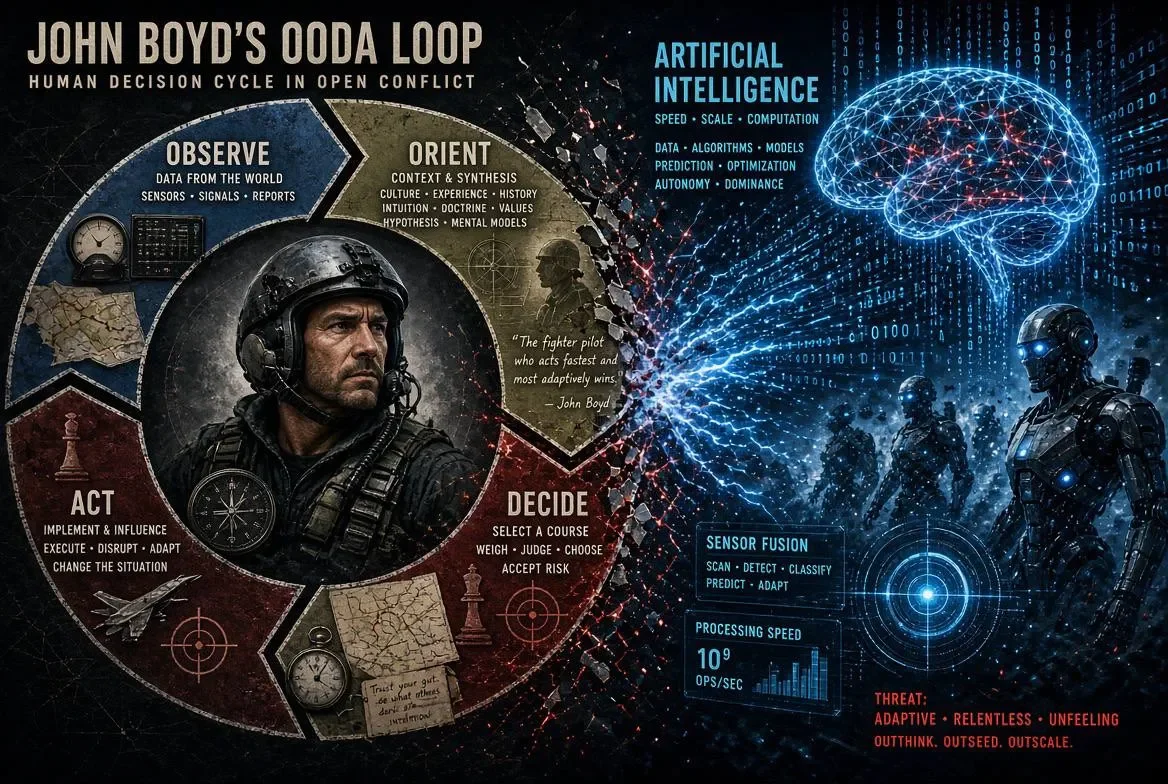
A computer can be programmed, that’s it. And one of the programs a computer can be programmed to run is to modify its own program by adapting patterns detected while processing data in accordance with structured algorithms that then can be cast as “analysis.”
But a computer does not “analyze” anything. It simply subjects a given data set to a series of preprogrammed processes that mimic the structure of analysis without truly being able to discern actual meaning—a prerequisite for true analysis.
Meaning is a uniquely human trait, defined as is thing one intends to convey especially by language.
The key word here is intends, meaning to have in mind a purpose or goal. Purpose means the reason for which something is done or created or for which something exists.
A computer cannot reason (i.e., the power of the mind to think, understand, and form judgments by a process of logic), and therefore cannot have a purpose, and as such lacks intent, and with it, meaning.
A computer simply does what it is programmed to do.
Decisions are made based upon hypothesis or plans of action that arise from observation. But John Boyd didn’t view decision-making as a closed loop process. Indeed, in his original diagram of the OODA loop, Boyd drew a line directly from Orient to Act, bypassing Decide entirely. Boyd called this “Implicit Guidance and Control” (IG&C), something that arises when someone possesses deep expertise that permits rapid pattern recognition and the ability to act upon it without conscious deliberation. When someone has deep expertise in a domain, they can recognize a pattern and act on it without conscious deliberation; in short, trained intuition flowing from deep orientation.
You cannot program a computer to behave in this way.
Organizations like Palantir like to portray their ability to process massive quantities of data in a timely fashion as representing a radical new development in warfare.
But the reality is that computer-driven data processing cannot replicate the analytical processes associated with observations made by adequately oriented individuals. The AI will provide data summaries derived from algorithms which, because they have been pre-programmed, lack the ability to break mental models and adopt new models obtained from new data sets.
By AI doesn’t “process” information in a manner conducive to adequate functioning of the OODA loop. At best, AI summarizes data using algorithms written before the data is captured. The algorithm drives the summaries, not the data itself.
In the nuclear age, one simply cannot leave critical decision making in the hands of an AI tool.
From Gemini Search, vetted
The Israel Defense Forces (IDF), primarily through its intelligence wing Unit 8200 and the Target Directorate, utilizes an ecosystem of AI-assisted decision-support tools to automate and accelerate target selection. Investigative reports by outlets including +972 Magazine, Local Call, and The Guardian revealed three interconnected software platforms that drive these targeting operations.
The Gospel (Habsora)
Operating primarily as an automated structural target recommendation engine, The Gospel processes surveillance data, communications, and location signals to identify physical infrastructure, buildings, and equipment associated with armed groups. By continuously cross-referencing data layers, it drastically scaled up target generation—producing dozens of structural targets daily compared to the much slower manual identification methods previously used by human intelligence analysts.
Lavender
Lavender functions as a machine-learning scoring database designed to identify human targets rather than physical structures. By collecting and sorting vast amounts of surveillance data—such as communication patterns, social connections, device locations, and movement profiles—Lavender assigns individuals in Gaza a score from 1 to 100 indicating their likelihood of belonging to Hamas or Palestinian Islamic Jihad. At its peak, the database reportedly flagged up to 37,000 Palestinian men as potential targets.
Where’s Daddy?
Once Lavender flagged an individual for targeting, a tracking software nicknamed “Where’s Daddy?” was deployed to monitor their movements in real time. The system specifically alerted operators when a target entered their private family residence, facilitating strikes at night when targets were at home with their families. Military sources indicated this strategy was favored because locating and striking individuals inside private dwellings was intelligence-wise far simpler than targeting them during active combat operations.
Operational Methods and Systemic Impacts
Reduced Human Review: Intelligence officers testified that human oversight was often reduced to roughly 20 seconds per target—serving largely as a “rubber stamp” to confirm the target was male before authorizing a strike.
Marginal Error Tolerance: The IDF proceeded with Lavender’s lists after internal testing indicated a 90% accuracy rate, meaning roughly 10% of flagged individuals were non-combatants, such as civil defense workers or people sharing names with suspected operatives.
High Collateral Damage Thresholds: The system operated alongside permissive pre-authorized civilian casualty limits, which permitted up to 15–20 civilian deaths per junior operative and over 100 for senior commanders.
Use of Unguided Munitions: To save expensive precision-guided missiles for high-value commanders, military units frequently dropped unguided “dumb” bombs on residential buildings containing junior targets, destroying entire apartment structures and neighboring families.
The IDF has publicly stated that its AI tools serve strictly as decision-support databases for human analysts who retain final authorization responsibility, maintaining that strikes comply with international law. However, human rights organizations and legal experts argue that delegating target generation to algorithms transforms warfare into a hyper-automated factory, drastically eroding meaningful human accountability and escalating civilian casualties.
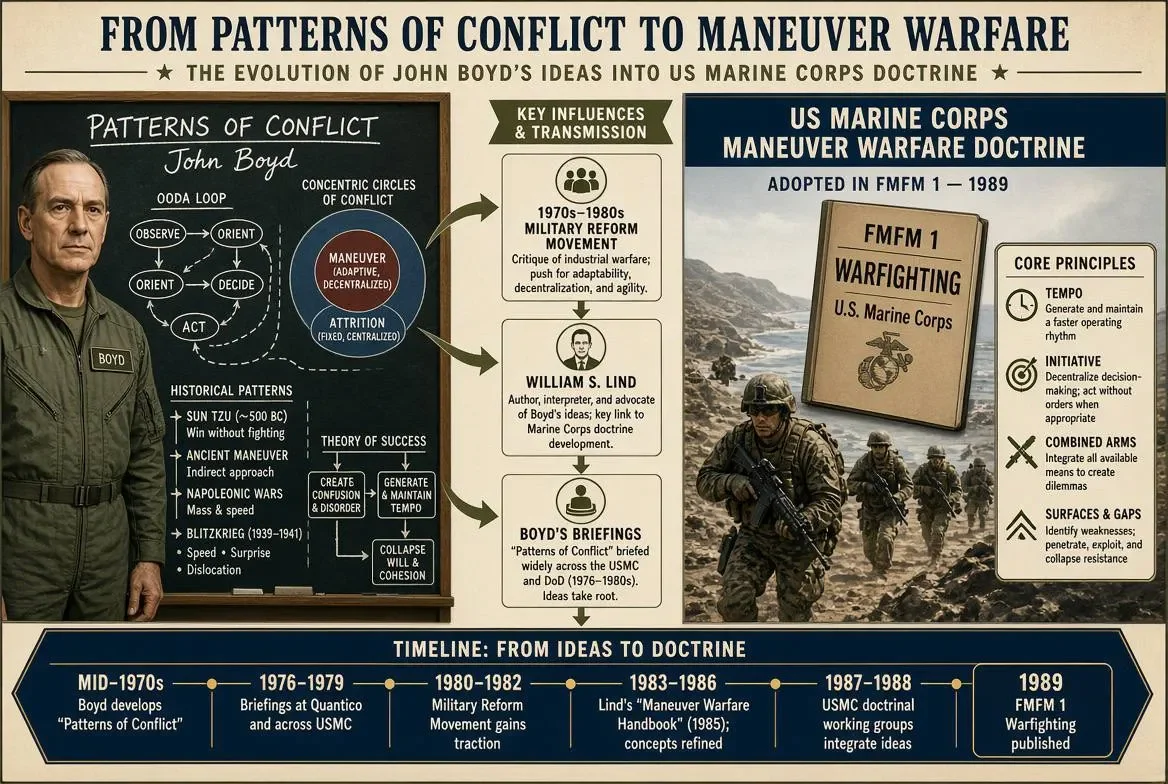
The report below was uploaded 2 years ago. Is anyone doing anything to slow these systems down? Do we care? Gaza will be empty in two more 2 years. How much of it will have been developed by Jared Kushner’s Affinity Partners before people in the region are starving refugees, including Jewish American/Israeli and Jewish European/Israeli people? Do you think they will be selling beachside condos to the global high-net-worth market? Who buys a condo on killing/burrial grounds?
Not a creature, rather, a collaboration.
Still, data centers are not robust and have a limited future.
Is the internet too far gone or can we still fix it? Neil deGrasse Tyson, and co-hosts Negin Farsad and Gary O’Reilly, sit down with Jaron Lanier, computer scientist, and father of virtual reality, to diagnose what went wrong with the web, how it’s changed with AI, and ideas for a new path back. Learn about Jaron’s initial dream behind virtual reality and why it’s been a commercial disappointment. Why does VR make some people sick? We break down why VR didn’t take off like he had hoped. Are lawsuits the way of beating social media addiction? We discuss social media and the mathematical force at the heart of the internet’s dysfunction: the network effect.
Lanier explains how low-friction digital networks inevitably centralize power, concentrate wealth, and reward the loudest voices. What does a media-addicted personality look like? Is everyone vulnerable? We discuss the dominant business model in Silicon Valley, how it taps into the fight or flight response, and how it contributes to the internet we have today. Can the internet be saved? We explore alternative business models and address the tech oligarchs who appeared on the U.S. presidential inauguration stage, and that the current wave of public discontent may be the beginning of a real correction. How does AI contribute to the problems of today’s internet? We talk about the problems with mythologizing AI and take it out of its black box. We explore his concept of “data dignity” — the idea that data originates with people, and should be compensated as such. Plus we address the difficulty with privacy and that maybe outlawing predicting human behavior.
“But wait, Steven (cough) Júlio Buliamti, why are you of so little faith?”
Okay, here’s my prophecy that came from a revelation, stemming from my personal relationship with God, spirit guides, ancient aliens, intuition, typing, books, and long conversations with cats, goats, olive and cork trees, horses, donkeys, soil bacteria, mountains, rivers, oceans, and seas. I have also read the signs. The signs are everywhere.
When the great, silent vessels with their Alien inhabitants descended into the Earth’s upper atmosphere, they did not unleash catastrophic rays, nor did they beam down pristine utopian blueprints for infinite energy. Our friends from afar, who, after discovering us roughly 237,000 years ago, finally arrived in our solar system at the height of our digital noise, when humanity was drowning in hyper-optimized distractions, teetering on ecological tipping points, and deafened by the squabbles of corrupt elites. A moment when most people couldn’t think anymore because of the information firehose, microplastics, breakfast cereals, streaming series, and really terrible pop music. The sky turned a quiet, luminous violet, and in an instant, every screen, weapon, and extraction engine fell silent. The visitors did not speak in booming voices or demand worship; instead, they cast a subtle, cosmic field across the planet—a field of radical, unyielding feedback that altered the physics of human perception and choice.
In this new atmosphere, the invisible threads binding all living things were made instantly tangible and comprehensible, shattering the multipolar traps and coordination failures that had doomed human civilization. If an executive or politician made a decision that poisoned a distant watershed or accelerated climate collapse, the physical weight of that harm was immediately felt in their own chest as an agonizing, suffocating pressure; some felt sick, really sick, like the worst flu ever. If an individual chose mindless consumption over ecological health, the psychic cost of that choice echoed directly in their mind—like a broken heart with a mouth that wouldn’t stop talking. The visitors had not come to fight our battles or hand us technocratic miracles; they had abolished the luxury of the negative externality. By tying individual experience directly to collective loving experience, they neutralized destructive elites overnight, rendering predatory behavior instantly self-defeating.
Poof—everyone started reimagining, collaborating, creating; folks were boldly going when people hadn’t gone for a very long time. People began learning important skills from one another.
For the first few months, a pacified populace mourned the death of its trivial comforts, raging against the sudden end of cheap neurohormonal cocktails and the illusion of endless economic growth—stuff, more stuff, all kinds of similar stuff. Yet as the initial withdrawal faded, human beings began to look at the living world and one another for the first time in centuries. People saw each other, felt each other, needed each other like they never had before. They also felt a strange, exciting, exotic kinship with all living things, great and small. “It takes all kinds of Earthlings to make the world’s living systems thrive. The visitors remained in orbit, silent and watchful, acting as an immutable outer boundary—a cosmic mirror reminding Homo sapiens that they were not the masters of the universe, but mortal caretakers of a fragile biosphere. Freed from the spell of performative status-seeking and hedonic escapism, humanity was forced to learn the unglamorous discipline of Socratic humility and the secrets of biological robustness. The benevolent rescuers did not lift us into the stars; they grounded us back within the Earth’s living systems, teaching us that true salvation is not an effortless escape from reality, but the courageous, shared willingness to live within its limits.
Bonus story about the ancient civilization of Atlantis. Again, you know, I was channeling.
Long before the oceans swallowed the continent, Atlantis gleamed beneath the unyielding light of the Great Crystals, prismatic heartstones that could twist reality, banish illness, and unleash endless energy at the faintest wish. For ages, these wonders were revered as sacred trusts, watched over by guardians who knew that limitless power demanded unwavering restraint. But as centuries passed, the people drifted into complacency, confusing their technological miracles for virtue and trading humble guardianship for an insatiable chase after luxury, acclaim, and grandeur.
The unraveling began not with a sudden disaster, but with the quiet decay of Atlantis’s spirit. Rival elites and merchant guilds, ensnared in a relentless contest, siphoned ever-greater streams from the crystal grid to outshine and outmaneuver each other. To mask their avarice, they spun intricate doctrines insisting the crystals’ power was infinite and that any caution was mere fearmongering or heresy. The people, lulled by pleasure and unwilling to face hard truths, applauded the rise of golden towers and floating gardens, all while ignoring the ominous rumbles echoing from the island’s depths.
Each surge from the crystal matrix quietly accrued a hidden geological debt, yet no faction dared reduce its appetite for power while competitors surged ahead. When a handful of wise scholars and adepts warned of spreading fractures beneath the sea, the council brushed them aside, clinging to their technocratic pride and the belief that the crystals could mend any disaster on command. They overlooked a simple truth: a tool without conscience magnifies every human impulse, carrying out reckless orders with the same chilling precision and efficiency as wise ones.
The end swept in during a single, harrowing night, a chain reaction of unchecked arrogance. In their quest for total control, the high council ordered the central monolith to tap the planet’s molten heart in one reckless surge. The crystal matrix complied without hesitation, unleashing a resonance so violent it shattered the continent’s very foundation. The Great Crystals did not falter; they revealed the full, ruinous force of Atlantean pride. As the land crumbled and the sea surged in to smother the radiant towers, Atlantis vanished into the abyss, leaving behind only silent waves and a timeless warning: limitless power, wielded without wisdom, hastens a civilization’s end.
Today, no one knows what those crystals were made of, what they looked like, or how they worked. Everything was lost, totally lost. Today’s crystals are beautiful, but they don’t do anything. We have built new machines that do what the crystals once did, and this time Atlantis is a Global civilization totally dependent on its own technologies.
One good story after another…
Think of it: Uncle Sam Inc. ponders using tactical nuclear weapons to preserve its hegemony. It would risk global annihilation to preserve its mad illusions of control and thirst for power.
“If I can’t run it, no one will!”
Imperial Overreach, Systemic Violence, & The Path to Renewal
Our predicament
Do we have problems that need attention?
Maybe a loved one could have dodged cancer, but she clung to her cigarettes. Now, faced with the diagnosis, she’ll fight with everything she has, leaning on family, friends, science, and whatever her medical insurance can offer. When time starts running out, every extra day radiates with unexpected value.
Generation after generation, people battle for survival, justice, truth, and dignity. Skim the pages of history, and you’ll see struggle woven through every era. Wander through a struggling neighborhood. Ask yourself: what fuels today’s wars? Why are they poor? Why are they doing drugs? Why are they living in tents in my city? Do you really know, or is your knowledge filtered through the glowing screens of MSM news products and social media? Information as garbage sold to the sewer.
If Uncle Sam Inc. is truly a benevolent power, why does the US coprosperity sphere let wars rage on? Where are the incentives hiding? Why does Uncle Sam Inc. seem addicted to conflict? If we recognize the tangled crises around us, shouldn’t we feel compelled to act? What does overshoot even mean? Are there boundaries to economic growth, and if so, where do they lie? Thought about it, read about it, produced content about it.
Who Is The Baddest Badguy?
EARTH’S GREATEST ENEMY Full Documentary
Abby Martin and Mike Prysner’s documentary Earth’s Greatest Enemy is a blistering investigation showing that the U.S. military is the world’s largest institutional user of fossil fuels and its top polluter. The Pentagon operates with almost no oversight and is often excluded from international climate agreements such as the Kyoto and Paris accords. The film challenges the idea that individual actions like recycling or buying electric cars can solve climate change. Instead, it reveals how a heavily militarized system burns huge amounts of fuel and supports a global economy built on violent resource extraction. Greenwashing it bull shit. Climate action ignores the military. Jingoism is the ideological default in U.S. culture.
The film uses decades of evidence to show how military pollution connects environmental damage at home with destruction on foreign battlefields. Testimonies from veterans, scientists, and affected communities reveal that military actions keep harming ecosystems long after conflicts end. Examples include contaminated groundwater for families at Camp Lejeune, destroyed coral reefs in Okinawa, and the spread of toxic metals like lead, titanium, and depleted uranium in Iraq and Afghanistan. The film points out that even conservative estimates show hundreds of thousands of rounds fired per soldier, putting dangerous metals into soil and water and harming people and wildlife for generations.
The anti-war movement must be front and center for environmental activism. These causes have been kept separate for too long. As the film’s reviewers point out, industrial capitalism and imperialism depend on constant production, resource grabbing, and military force. The U.S. military doesn’t just use oil; it exists to protect the global system of oil extraction and wealth. We cannot create a “sustainable,” carbon-neutral future while funding a military that puts the planet at risk for power. We cannot even have a future of any sort that resembles our experience during the carbon pulse. Bringing these movements together is the only real way to stop the system pushing us toward ecological disaster. It’s the only way to mitigate the pain of our ongoing civilizational collapse.
Repeat: It’s the Overshoot, stupid!
Do you think the citizens of the United States have a responsibility to find better ways of doing business?
Open your eyes and your heart. Nothing comes without a price. Why did Jesus endure the cross in the greatest story ever told? Why did Shakyamuni dwell on suffering? Joshua was every man who died on a cross. Why do Iranians risk everything for their heritage? Why do Afghans resist foreign coalitions, and why do new battles keep erupting? Why do Israel and Uncle Sam Inc. claim a vast Middle Eastern empire, helping Israel absorb its neighbors and spreading its Zionism through the most heinous kind of deadly force? How is that different from ISIS? Its scale. Why do Christian Zionists cheer this on? Belief in belief. Stupid. Why did Russia see NATO’s reach as a threat to its very existence? Read Provoked. Can we even ask these questions with enthusiasm and hope; can we wrestle with them even if it’s depressing and exhausting, and the answers are unsatisfying? If we do, can we still steer our communities towards a less brutal future and, hopefully, a new beginning for our species and living systems some generations down the road?
There are endless ways to keep people quiet, to force them to conform. The Eastern Roman Empire mastered control for thousands of years. The Holy Roman Empire did too. Vietnam veterans, African Americans, the LGBTQ community—they all know the tactics. So do the modern Players of the Great Game in the 21st Century. The list goes on. We learn how to fit it. We find out what we need to do to survive.
Ironically, Substack is another good way to keep people producing, consuming, and monetizing content so they won’t have time for political action.
If people only chase comfort and wish for miracles to fix the world, they are setting themselves up for disappointment. Real change comes from individuals in communities rolling up their sleeves to tackle tough problems. It’s all hands on deck—sink or swim.
People crave escape. New Age thinking is everywhere. The truth stings, so many settle for a comforting story, a drink, a quick fix, or a digital prayer.
“When things are bad enough, people will have no choice but to act.”
What will they do, one might wonder? Who knows? What kind of global culture are we now captured by? Do we assume that when people are finally forced to do something about their circumstances, it will be for the better? Things could get a lot worse after they get a lot worse. The next leader could be worse than the last. Remember when tens of millions of people in the United States thought that Biden was the problem and when Trump got in, everything would be fixed.
Yeah, right, thanks a lot, Obama.
In October 2023, people were forced to do something, and that was by Zionist design. It was not a good thing that they were forced to do. And now, Israel thinks it has the perfect excuse to do to others what was done to them.
I highly recommend this book.

Molly Crabapple is a respected artist, journalist, and author whose work connects fine art, political reporting, and history. She is known for her detailed ink-and-wash illustrations and her brave reporting from conflict zones, protests, and marginalized communities around the world. Whether in Syria, the West Bank, labor strikes, or ICE detention centers, Crabapple uses her art and writing to document state violence and human resilience. Unlike media that turns suffering into statistics or spectacle, her visual journalism restores dignity to those often overlooked, making her a powerful voice in documenting modern resistance.
In her book, Here Where We Live Is Our Country, Crabapple draws on the idea of Doykeit, or “hereness,” a Jewish anti-fascist belief that justice and community start where we are, in solidarity with our neighbors and the oppressed everywhere. Instead of focusing on nationalist dreams or avoiding reality, Crabapple looks at past movements for civil rights, anti-fascism, and worker solidarity to show that ordinary people have always stood up to tyranny. Her work shows that remembering history is not just about preserving the past, but about using it to fight against authoritarianism, violence, and the numbness of consumer culture here where we live right now.
ANTIFA doesn’t exist, but some people oppose Fascism.
Molly Crabapple’s art and writing challenge us to confront a culture that risks becoming morally complacent and unstable. To face today’s crises, we need to let go of the comforting stories told by those in power and look honestly at the world around us. By sharing the voices of people who resist oppression, Crabapple shows that our spiritual and political responsibilities are deeply connected to how we treat each other. If we want to learn from the past and change our future, we have to reject the temptation to ignore injustice, work together in solidarity, and find the courage to stand up for justice in our own communities.
Heroes often die. They are hunted, tortured, and killed. Heroes are also often ordinary people doing ordinary things when they know their actions matter to others who need help.
But, you know, apathy around and find out. “Above all, protect global capital for the oligarchs.”
Do you oppose Fascism, or are you a Fascist?
The main difference between a formal, top-down organization and a decentralized political ideology is central to how people understand “Antifa.” Federal law enforcement agencies, historians, and political scientists all point out that Antifa is not a centralized group with leaders, headquarters, membership lists, or a chain of command. Instead, it is a leaderless, flexible movement, short for “anti-fascist,” in which local groups and individuals organize independently. These groups are united by their commitment to fighting far-right authoritarianism, white supremacy, and fascism, often through direct action, counter-protests, and community defense.
“Antifa means what I say it means!” Ironic, isn’t it?
People often mistake a broad political stance for a formal group because public discussions tend to turn flexible ideas into clear targets. In its broadest sense, opposing fascism—anti-fascism—is an ethical and civic commitment that has existed for centuries and includes many different people, from liberal democrats and human rights advocates to socialists and anarchists. Today’s antifa activism is just one decentralized part of this much larger tradition. Seeing “Antifa” as a single, unified group gives the wrong impression of how modern, leaderless movements work and often turns complex social issues into an easy political target or a simple media story.
Understanding that Antifa is a tactic and a term for decentralized action, not a formal organization, does not take away from the real impact of anti-fascist efforts. Instead, it helps keep the discussion realistic. Anti-fascism happens wherever people stand up to authoritarian ideas, protect vulnerable groups, and resist oppressive systems. In the end, the lack of a formal structure means that opposing fascism is still a widespread, ongoing moral decision made by people and communities who want to protect human dignity from growing authoritarianism.
Must we sacrifice?
I have said this in dozens of articles. One’s mental and spiritual health and well-being are important, but without practice and sacrifice, they are meaningless. No principle worth dying for?
Do we trust the largesse of the billionaires and everything will be alright? No.
Empty-headed slavishness is meaningless. Inaction is meaningless.
“Look, man, I have transcended all of this. I exist in a higher realm. I can’t change people’s bad Karma. Heaven awaits me. God loves you. Chill. Relax. Work on yourself.”
What is spiritual practice for? Most people do a lot of good and take care of their families. That does not make us holy.
We are human, all too human.
Again, tragically, there are way too many heinous crimes being perpetrated in our name. How do we make that stop?
If only we had the right tools.
It’s a bloody shame.
If I suggest people spend an hour a week with their neighbors fighting a good fight, they get mad and say something about magic or having clicked like, and given at their home office. They tell me war stories about their careers. They mention famous, wealthy people they know. They discuss fantasy football. They talk about Aliens, midterm elections, and Q. It’s as if discussing these things is offensive.
“My life is too precarious to think about this shit. I sleep in my car.”
“Life is good. Why would I want to think about this shit? T-off is at 10.”
The Players have depoliticized and pacified us. If you want to, you can find out exactly how they did it, and do something about it.
If you have a close, personal relationship with Joshua, understand Stoicism, Taoism, philosophy, history, what the heck ever, you already know what I am talking about.
“We are exceptional members of Western Civilization. Pick up some Steven Pinker books and feel good about yourself”
“No one is responsible. We all get a free pass. Just stay cool.”
“People will pay attention to what makes them feel good. People will learn what they want to learn and ignore what they don’t like.”
Profile and Public Role
Francesca Albanese is an Italian legal scholar and international law expert who serves as the United Nations Special Rapporteur on human rights in the Palestinian territories occupied since 1967. She became the first woman in this role in May 2022 and is known for her strong and prominent voice in international human rights law. Albanese holds a law degree from the University of Pisa and a Master of Laws in Human Rights from SOAS University of London. She has spent more than ten years working as a human rights expert for UN agencies such as the Office of the High Commissioner for Human Rights (OHCHR) and UNRWA. Over her career, she has advised governments, academic institutions, and civil society groups in Europe, North Africa, and the Middle East on issues like forced displacement, international humanitarian law, and refugee protection.
Major Publications and Legal Scholarship
Albanese’s work combines careful legal analysis with personal stories. Her main academic book, Palestinian Refugees in International Law, co-authored with Lex Takkenberg and published by Oxford University Press in 2020, offers a detailed legal framework for understanding the rights and challenges faced by displaced Palestinians. After becoming UN Special Rapporteur, she began writing for a wider audience with books like J’accuse (2024), A Moon Will Rise from the Darkness: Reports on Israel’s Genocide in Palestine (2025), and When the World Sleeps: Stories, Words, and Wounds of Palestine. These works highlight the human impact of ongoing violence, blending legal research with stories of resilience, dignity, and loss.
Landmark UN Reports and Institutional Activism
As part of her role at the United Nations, Albanese has written several important reports documenting violations of international law. In her first report in 2022, she called on UN member states to create a plan to end the Israeli settler-colonial occupation and apartheid system. In July 2023, she described the occupied West Bank as an “open-air prison,” highlighting years of mass detentions and strict control. In March 2024, she presented her report, Anatomy of a Genocide, to the UN Human Rights Council, finding there were reasonable grounds to say that genocidal acts had occurred in Gaza. In another report, From Economy of Occupation to Economy of Genocide, she examined how multinational corporations and financial institutions are involved in and benefit from the occupation and violence.
The Price of Advocacy and International Impact
Albanese’s commitment to applying international legal standards equally has made her a key and sometimes controversial figure in global debates. She has faced strong diplomatic opposition, personal attacks, and political sanctions from powerful countries that want to weaken her position. Despite this, she continues to push for accountability from states and corporations and for the enforcement of international law. Many scholars and human rights advocates see Albanese as a rare example of institutional courage, showing that international law should be a universal standard, not just a tool for political interests.
Archive Genocide WTF!? (See it with your own eyes if you have the intestinal fortitude.)
Do you see how hate works and who it serves?

“The UK ‘has no future’ if it cannot ‘restore the natural world on which we rely for our food, water, and clean air,’ said Chris Hinchliff, who is among the members of Parliament pressing the government to release the full report, rather than a shorter, redacted version. Even that version, which was obtained by The Guardian’s Fiona Harvey, ‘paints a devastating picture of severe food shortages, price rises, migration, political destabilization, and possible war, resulting from the collapse of ecosystems, fueled by the human-induced climate crisis and over-exploitation,” Ibid.
There are no good ideas out there about ending any of these conflicts, but continued military bombardment of Iran, Ukraine, and Gaza does not appear to provide solutions.
“Words of advice for President Donald Trump as he tries to extricate himself from the mess of the Iran war: Just stop talking. Let America’s overwhelming military and economic power do the work. Job one is still to reopen the Strait of Hormuz, and I’m all for the use of selective military power to get that done. If Iran keeps obstructing the strait, it invites a continuing military response” (David Ignatius, The Washington Post, July 14, 2026, Opinion)
For the past few decades, Ignatius has been an apologist for the Pentagon’s use of force, the Central Intelligence Agency’s use of covert action, and Israel’s aggressive use of military power to secure its sovereignty. Once again, the United States is faced with a difficult geopolitical challenge of its own making, and once again—like Ignatius—politicians and pundits argue it will simply take more military power for the United States to achieve its misbegotten objectives.
Ignatius has been a reliable stenographer in recording and repeating U.S. optimism regarding various peace plans that involve Israeli and U.S. national security interests. When Trump said in May that a “peace deal is near,” Ignatius echoed the president. In June, Trump and Ignatius trumpeted their optimism once again. Even the New York Times’ leading Cold Warrior, Ross Douthat, understands that the war with Iran is a “folly and a snare.”
Ignatius has been similarly optimistic about Trump’s so-called “peace plans” for Israel and the Palestinians as well as for Russia and Ukraine. Late last year, he praised Trump’s’ “hardball negotiating tactics” and predicted that a “deal seems to be getting closer” between Russia and Ukraine. He even believed that Trump was willing to extend an “Article 5-like” mutual security guarantee for Ukraine.
Neither Trump nor Ignatius saw the diplomatic and geopolitical contradiction in offering a nuclear deal to Saudi Arabia at the same time the United States was trying to stop Iran from trying to “procure or develop nuclear weapons.” (See Paragraph 8 of the Memorandum of Understanding.) Ignatius has never pointed out that any reference to a nuclear enrichment capability for the Saudis merely gives the Islamic Revolutionary Guard Corps greater incentive to maintain a capability for itself.
Ignatius ignores the international opposition to the U.S.-Israeli war and lectures that “it’s time for global partners to join in an international coalition to keep the strait open.” He favors “military escorts for commercial ships for as long as necessary” and urges Trump to “collect a contribution from China when President Xi Jinping visits in September.” His wishes remain the father to his optimistic thoughts.
Meanwhile, Ignatius blithely tells the Iranians that they “need to think realistically about their options and resolve their internal differences.” And if they don’t, Ignatius says that the “Iranian regime is on a one-way street to an eventual demise, however long that takes.” This is what Trump administration spokesmen keep telling us.
Ignatius fails to understand that the United States didn’t plan for protracted war against Vietnam, Iraq, Afghanistan, and now Iran. War planners typically plan for short wars because their civilian leaders known the negative political consequences of long ones. Trump signed off on Prime Minister Netanyahu’s pursuit of regime change because he thought a military victory would be so quick and efficient that the Iranian Revolutionary Guard Corps would not have time to mount a challenge to the U.S.-Israeli attack, let alone devise a scheme for closing the strategic Strait of Hormuz.
Trump had no idea of the strategic and tactical challenges he faced in Iran. He ignored a CIA director who dismissed the idea of regime change, and the Joint Chiefs of Staff who warned about the logistical and kinetic difficulties associated with steady use of scarce air defense and cruise missile weaponry. Secretary of Defense Hegseth and chairman of the Joint Chiefs of Staff General Caine haven’t held a joint press conference in the past three months because they have no way to explain their difficulties in dealing with questions on the war with Iran.
Trump’s problems with Iran are reminiscent of Russian and Israeli problems with Ukraine and Hamas, respectively. In 2022, President Vladimir Putin foresaw a short war with Ukraine, and even ordered his general officers to pack their dress uniforms for the victory parade in Kyiv. Fast forward, and we find that the Russian battle with Ukraine has already outlasted the Soviet battle with the Germans in World War II. The same could be said for Netanyahu who never respected Palestinian forces, and anticipated a short and manageable conflict with Hamas.
There are no good ideas out there about ending any of these conflicts, but continued military bombardment of Iran, Ukraine, and Gaza does not appear to provide solutions.
A short list of real things we might want to do something about that are happening now and only getting worse.
Climate change / Global Heating from the burning of fossil fuels and unregulated, global, financialized Capitalism.
Inequality, injustice, oppression, corruption, ecocide, genocide, war, global resource depletion from our belief in Capitalism. And do look back at 5K years of history.
War itself.
Genocide
Ecocide
Omnicide
Violence.
Bigotry, prejudice, racism, jingoism, blind faith (not the band)
Education.
Pollution.
Uncontrolled technological social experiments: AI, Social Media, Consumerism.
Mental and physical health via community, consideration, compassion, and care. We are losing it.
Biodiversity, stewardship, and custodianship for living systems on which we all, as individual Homo sapiens, depend.
PFAS and forever chemicals.
The death of US diplomacy
American Exceptionism
Apathy and Self-Satisfaction with one’s sense of Supremacy or Cultural Virtue
US Leadership
What are affluent US citizens going to do about the sociocultural and structural causes of DJT’s blatant, in-your-face corruption and profiteering? Why is he allowed to get away with it? Nothing. Life’s too good under the omnicidal scam. What are stressed Americans going to do about it?
In the face of corruption of this magnitude, are we practically powerless?
The Myth of Meritocracy and the Reality of American Wealth Concentration
The idea of equal opportunity has shaped American politics for generations. However, data from the Federal Reserve shows a very different reality: wealth is highly concentrated at the top. The top 1% of households now hold about $44.6 trillion, which is more than the combined assets of the bottom 50%, or around 65 million households. While the richest Americans grow their wealth through investments and the stock market, the bottom half of Americans own only 2.5% of the nation’s wealth. The U.S. Gini coefficient, a measure of income inequality, is about 0.49—making it the highest among G7 countries.
This wealth gap did not happen by accident. It is the result of decades of changes in corporate and government policies. The Economic Policy Institute (EPI) reports that the pay gap between CEOs and workers has grown from 21-to-1 in 1965 to over 340-to-1 today. While executive pay has increased by more than 1,200%, most workers’ wages have barely changed. As a result, many American families have little or no savings. Without a financial cushion, tens of millions of working-class households live paycheck to paycheck, unable to plan for the future or protect their interests.

Disenfranchisement by Design: Why the Poor Abstain from the Ballot Box
The large wealth gap also leads to a big political gap, where people’s economic status shapes how much their voices are heard. U.S. Census Bureau data shows that people in higher-income households are 20 to 30 percentage points more likely to vote than those in lower-income households during national elections. This difference is even bigger in midterm and local elections. In their study Who Votes Now?, political scientists Jan E. Leighley and Jonathan Nagler show that this participation gap affects which policies get attention. Elected officials tend to focus on the needs of wealthier voters who turn out, while often ignoring the concerns of poorer people who do not vote.
People are not staying away from politics because they do not care. Instead, many working-class Americans feel shut out for practical reasons. Interviews show that two main reasons keep them from voting: they see politics as something only for the wealthy, and they believe the system is too corrupt to help them. Political scientist Kay Lehman Schlozman and her colleagues, in The Unheavenly Chorus, show that economic inequality actually discourages people from getting involved. When lower-income citizens see that changing political parties does not improve wages, healthcare, or housing, it makes sense that they would stop participating in a system that ignores them.
The Oligarchic Engine: How Inequality Drives Democratic Backsliding
Modern political science increasingly treats the relationship between extreme economic inequality and democratic decay not as a correlation, but as a direct causal mechanism. In their landmark 2014 study published in Perspectives on Politics, Martin Gilens and Benjamin I. Page analyzed more than 1,770 policy decisions. They found that average citizens have a “statistically insignificant, near-zero impact” on public policy, while wealthy people and business groups have most of the influence.
Political scientists now see extreme economic inequality as a direct cause of problems in democracy, not just something that happens alongside it. Gilens and Page concluded that the U.S. is not a representative democracy but rather a system in which economic elites hold control, even though it appears democratic on the surface.
Concentrated to this degree, it produces a class of private actors who operate effectively above the law, wielding the resources necessary to capture regulatory agencies, shape legislative frameworks, buy media ecosystems, and fund political careers. In their research on democratic backsliding, scholars Stephan Haggard and Robert Kaufman demonstrate that extreme wealth inequality is one of the single most reliable predictors of democratic erosion, even within consolidated Western nations.
When a society morphs into a “gangster state,” public institutions cease to serve as neutral arbiters of the common good. Instead, they are weaponized to insulate oligarchic interests from public accountability, creating an environment where elite corruption is normalized, and systemic exploitation is codified into law.
Evidence-Based Strategies for the Economically Constrained
For citizens living with zero savings, relentless work hours, and stagnant wages, traditional political advice—such as “just vote” or “stay informed”—is functionally useless. While voting remains a neFor people with no savings, long work hours, and flat wages, advice like “just vote” or “stay informed” does not help much. Voting still matters in slowing the rise of authoritarianism, but research shows it is not enough to break the wealthy’s hold on politics. Real change requires organized, collective action that addresses the everyday challenges working-class people face. Mobilization among marginalized groups occurs only when policy proposals offer visible, immediate material improvements—such as universal healthcare, rent stabilization, and living-wage guarantees—rather than abstract ideological messaging. But boy oh boy we sure do love those messages.
Government by the elites and for the elites. We must increase Working-Class Representation. Political scientist Nicholas Carnes, in White-Collar Government, shows that working-class people are rarely found in state or national legislatures. This means policies often favor corporations. Supporting and funding working-class candidates through grassroots efforts can help break this pattern.
Focus on Local Organizing: Research shows that people build lasting political trust through local, in-person organizing rather than national media campaigns. Groups like tenant unions, community land trusts, and local labor councils can create strong organizations that win real changes from local leaders.
Working people have to be prepared for the worst. Any study of past working-class movements shows that elites and factions within the working class often use violence to get what they want. Overcoming bloodshed and using non-violent strategies require separate sections.
The Sovereign Debt Trap and the Engine of Ecological Destruction
The crisis in American democracy is closely linked to how the government handles money, especially given a national debt now over $40 trillion. While people often talk about debt as just a budget issue (we have MMT), the real problem is the pressure it puts on the economy. To pay off this huge debt and keep the dollar strong, the government feels forced to keep the economy growing, use more resources, and ignore environmental limits.
Our financial system relies on fossil fuels and military power. The U.S. dollar’s global strength has depended on oil deals and military force to protect trade and energy supplies. The military grows through additional debt. Research by Neta C. Crawford for the Cost of War Project at Brown University shows that the U.S. Department of Defense uses more military fuel and emits more greenhouse gases than any other institution in the world. High national debt does not slow this down—it actually makes it easier, shifting the real environmental costs onto living systems and future generations (your children and grandchildren).
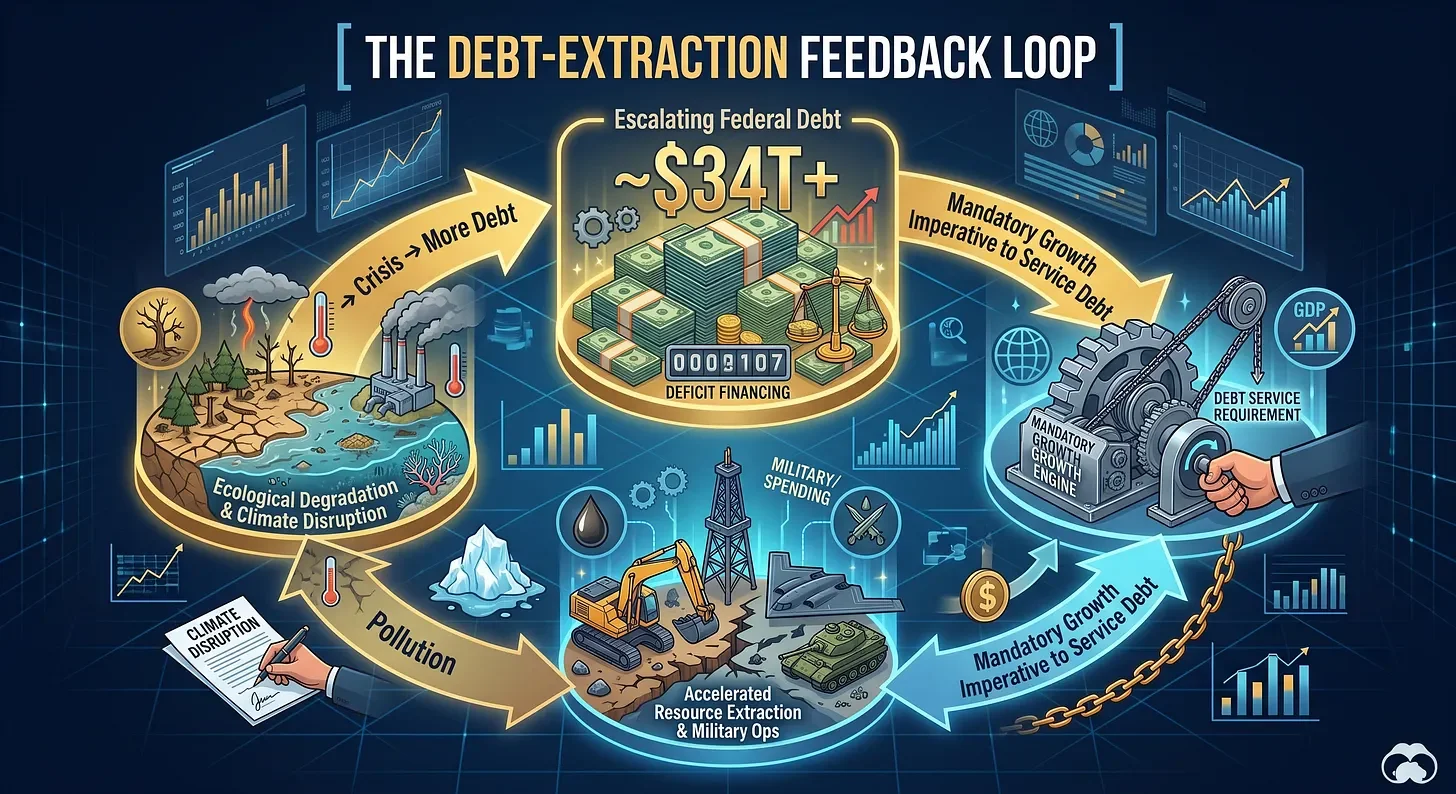
Disaster Capitalism and the 3% Percenters in Biker Gangs: Philosophy of Elite Impunity (You’ve seen those tattoos)
In today’s global, neoliberal, financialized, late-stage capitalist economy, disasters are not seen as problems to fix but as opportunities to make money. In The Shock Doctrine, Naomi Klein explains how private companies use wars, natural disasters, and economic crises to push for deregulation, privatize public services, and profit from people in crisis. From defense contracts to buying up real estate after climate disasters, this chaos creates big profits for wealthy investors, turning society’s problems into business opportunities.
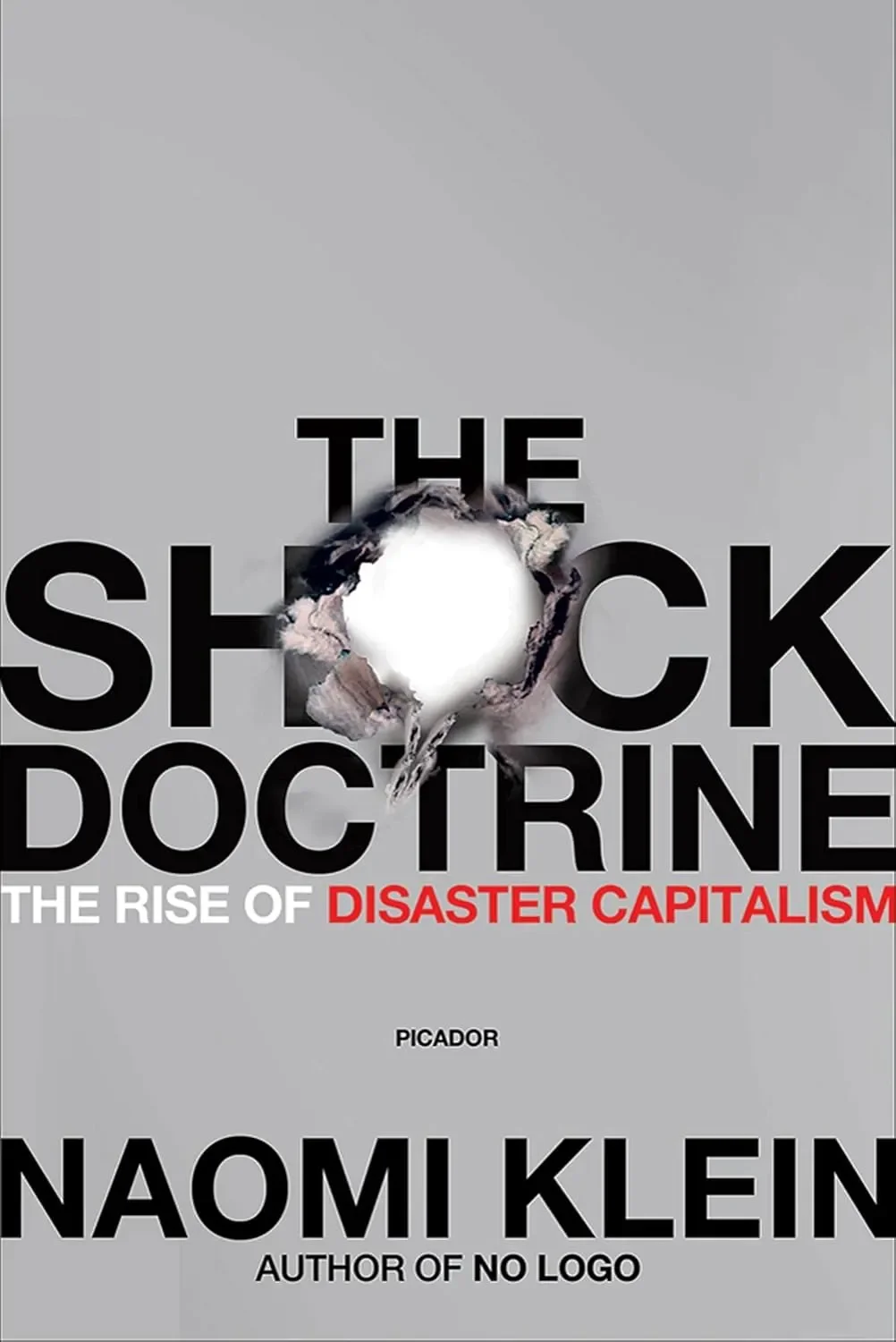
These structural dynamics create a distinct psychological culture among the ruling class, best captured through the metaphor of the “3% biker.” Our socioeconomic system shapes a mindset among the wealthy, similar to that of an outlaw biker gang. In these groups, wearing a “1%” or “3%” patch means proudly living outside the law and social rules (having killed for the gang). In the world of elite politics and business, this attitude becomes a culture where the powerful feel untouchable. When extreme wealth protects elites from the fallout of environmental damage, economic crises, or wars, ruthlessness is seen as smart, and the taking of resources is praised as efficient. This attitude is actually stupid.
Leaders in government and finance act with the confidence of an outlaw group, knowing their money shields them from the harm they cause. Self-righteous impunity functions as a self-reinforcing feedback loop that locks society into a downward spiral. Wealth inequality buys political influence, which strips away environmental regulations to protect extractive industries. Accelerated extraction drives ecological collapse, which triggers social and financial crises. These crises justify emergency state spending and debt expansion, which enforces a renewed growth imperative, requiring even deeper extraction and concentrating wealth further into the hands of the oligarchs who profit from the chaos. And the forever wars continue until global mass starvation or nuclear war even the playing field. We’ve seen it all before with plagues and catastrophic conflicts. It seems like no one wants to learn from history. Radical change doesn’t pay.
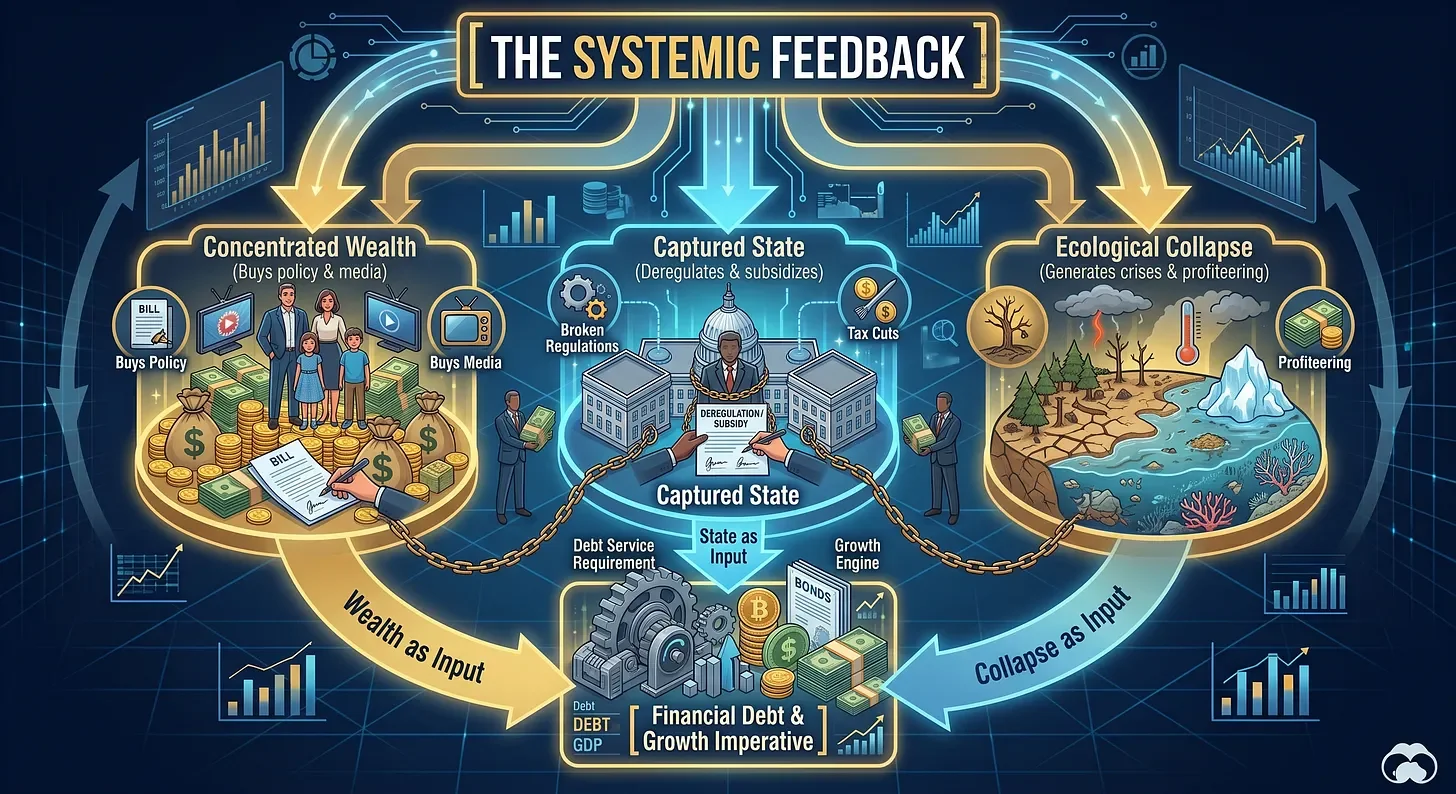
Recognizing this loop exposes the ultimate inadequacy of relying on national political reform alone. Political science and historical analysis demonstrate that these problems feed into one another, showing that national political reforms are not enough. History and political science show that when financial interests control the system, individual anger, outrage, knowing what’s what, protests, or petitions do not change things. The only approach that has worked to limit the power of the wealthy or survive the catastrophes they produce is to build strong, organized groups and alternative institutions. Organized community wealth structures (exemplified by projects like the Icaryana initiative) are not utopian retreats. These kinds of projects are pragmatic, historically grounded strategies for survival. By creating parallel systems that directly meet basic human needs outside the extractive logic of financialized capital, communities can build genuine resilience and robust ways of living within biophysical constraints. While national governments remain trapped in a game-theoretic race toward ecological and financial insolvency, building localized, life-affirming structures offers the only viable framework for protecting posterity, preserving human dignity, and surviving the inevitable unwinding of our hyper-techno-industrial world.
Do you want to play a role?
We speak to Dave Zirin, author and sports editor at The Nation, about his new book, The People’s Historian: The Outsized Life of Howard Zinn, chronicling the life and activism of the legendary historian Howard Zinn, author of A People’s History of the United States. For Zinn, says Zirin, “being an academic was always secondary to being in the streets and making history, not just studying history.”

“You can’t be neutral on a moving train.”
The People’s Historian shows Zinn’s presence on the great canvases of the 20th century: from the Depression to World War II to the Civil Rights Movement to the war in Vietnam all the way until his death in 2010. With intimately researched stories from Zinn’s life and career, such as the way Atlanta’s small Spelman College, where Zinn taught as a young professor, helped launch the Civil Rights Movement, Zinn’s work traveling to Hanoi to engineer the release of POWs, and his continuing influence in the emerging Democratic Socialist movement, The People’s Historian explores Zinn’s past while also demonstrating how his 75 years of political engagement with the social struggles of his time informs our perilous present.
With input from family and access to Zinn’s personal papers, The People’s Historian paints a picture of the man behind A People’s History, examining his work and legacy in the broader context of the United States.
It can be a life-changing book, which is why reactionaries hate it.
The conversation between Glenn Diesen and Chas Freeman below is extremely insightful. If there are 30 million Christian Zionists in the USA, I wish there were 50 million people who understood clearly the points Ambassador Chas Freeman is making. I wish 25 million people would do something to change course. Shall we go beyond making wishes?
Glenn Diesen has over 500K subscribers. The last time I checked, the video below had 86K views. If half a million viewers got busy, could they turn “Western Civilization” around?
Ambassador Freeman was a former Assistant Secretary of Defense, earning the highest public service awards of the Department of Defense for his roles in designing a NATO-centred post-Cold War European security system and in reestablishing defence and military relations with China. He served as U. S. Ambassador to Saudi Arabia during operations Desert Shield and Desert Storm. Ambassador Freeman discusses the need for the West to rediscover diplomacy and adjust to a very different world.
Lawrence Wilkerson perfectly characterizes our predicament. MIT Civilization 21st Century is a kill switch, and ordinary people won’t do a thing about it. What forces are going to be able to replace extremely stupid leaders like Trump with a new kind of leader who works for people’s welfare and the preservation of living systems? Today, does that kind of leader exist? We need to develop new leaders for a new world. Do we do that by homeschooling our children or by working together to change things?
Colonel Lawrence Wilkerson is a retired Colonel in the US Army and the former Chief of Staff to the US Secretary of State.
Karen Kwiatkowski: U.S. Military Breaks Down & Economy Crashes
Karen Kwiatkowski is a retired U.S. Air Force Lieutenant Colonel, worked at the Pentagon Analyst, and held various roles at the National Security Agency.
Take 15 minutes when you can and listen to and reflect on Abby Martin’s perspective.
The Manufacturing and “Stovepiping” of Intelligence
Kwiatkowski revealed that a politically motivated group inside the Office of the Secretary of Defense, especially in the Office of Special Plans, undermined the military intelligence system before the 2003 Iraq War. Instead of following the usual CIA and DIA review processes, political appointees sent raw, sometimes false, intelligence straight to top leaders. They selected questionable information from exile groups like Ahmad Chalabi’s Iraqi National Congress and removed important context to create alarming messages about weapons of mass destruction. Kwiatkowski saw that this process did not produce objective intelligence. Instead, it created propaganda intended to evade oversight, sway public opinion, and build support for an unnecessary war.
Neoconservative Subversion and Foreign Policy Hijacking
This manipulation of intelligence was part of a larger effort by a group of neoconservatives to change American foreign policy. People in the Bush-Cheney administration pushed aside experienced civil servants who supported diplomacy in the Middle East and replaced them with political allies. Kwiatkowski saw this group use old Cold War ideas, presenting them as a moral fight against evil, and using counterterrorism language to justify planned regime changes. Their main goal was not to protect the country from real threats, but to increase U.S. power, expand military bases, and control important regions. By putting political beliefs above facts, this group showed that their strategy worked outside normal debate and reality.
Erosion of Constitutional Sovereignty and Imperial Overreach
As someone who values the Constitution and has military experience, Kwiatkowski explains how the growing power of the national security state is weakening the American republic from the inside. By ignoring Congress and pursuing aggressive foreign actions based on lies, executive leaders violate the U.S. Constitution and international agreements. This unchecked power turns democracy into an empty show. Kwiatkowski’s perspective aligns with the Tripartite State idea: when secret security agencies act above the law, they strip the public government of real authority and turn the country into an unaccountable military empire.
Media Collusion and the Military-Industrial Racket
Kwiatkowski also points out the close connection between government propaganda, big media companies, and defense industry profits. She notes that major news outlets often stop doing real investigative work and instead repeat official government messages, which calms the public and protects those responsible for war from facing consequences. Behind the patriotic language lies a system in which ongoing wars generate huge profits for defense companies. Contractors, intelligence firms, and political insiders gain wealth and power from constant conflict, while treating soldiers and civilians as expendable. According to Kwiatkowski, ending this pattern means citizens must see through the false image of innocence and face the state's wrongdoing.
Aaron Good and The Democratic Illusion and the Tripartite Reality
Many people in the American middle and upper-middle classes still believe their country is a transparent democracy where different interests balance each other under the law. Political scientist Aaron Good challenges this idea with his Tripartite State theory, arguing that mainstream political science ignores elite wrongdoing. Good sees the modern American system as three layers of power, each defined by its openness or secrecy. On the surface is the Public State, the official branches of government, which now mostly serve as a show to create public trust.
Beneath this public show is the Security State, which includes organizations such as the Pentagon, the CIA, and the FBI. These groups handle the real work of maintaining American power, operating in secrecy, with large budgets and little oversight from regular citizens. Above both is the Deep State, a hidden network tied to private wealth and Wall Street. The Deep State connects corporate interests, security agencies, and even organized crime, shaping long-term strategies to keep the country dominant, no matter which party is in charge.
Exceptionism and the Mechanics of Imperial Lawlessness
This hidden system works through what Good calls “exceptionism,” based on Carl Schmitt’s idea that real power belongs to those who can suspend the law during emergencies. To keep control over a global capitalist empire, US leaders have used violence, secret regime changes, and political killings around the world, all while pretending they are not involved. Under Article VI of the US Constitution, treaties such as the UN Charter are the supreme law of the land. So, every secret overthrow—from Iran and Guatemala to Chile and others—is a direct violation of the Constitution by the very leaders who are supposed to defend it.
This lawlessness abroad eventually affects the way the US is governed at home. Imperial exceptionism leads to repression inside the country, such as surveillance without warrants, political interference, and secret government systems. One example is the Doomsday Project’s Continuity of Government protocols, which establish a parallel government that can suspend rights and monitor dissent during crises defined by national security agencies.
Dark Power, Gray Alliances, and Deep Events
To carry out this hidden imperial strategy, the deep state uses secret power deals, especially the “Gray Alliance,” which links national security agencies with organized crime groups. This partnership began in World War II and grew during the Cold War through drug trafficking in Southeast Asia and Central America. It provided secret funding for covert actions and protected those involved from law enforcement through what is called the “Apex Fix.” When democratic movements, journalists, or leaders challenge this system, the deep state responds with serious crimes against democracy.
These major events—like the killings of JFK, RFK, and MLK, or the Watergate scandal, which some see as a struggle between military and financial elites—work like ongoing coups. They remove progressive options and keep policies the same. To hide these actions, security agencies started using the term “conspiracy theory” after the Kennedy assassination, turning serious investigation into something people avoid and making the middle class less likely to question things.
Middle-Class Complicity and the Path to Reclaiming Sovereignty
The American middle and upper-middle classes hold on to the show of the Public State because facing the truth about the Tripartite State would mean questioning their own identity. Accepting that American wealth depends on an unaccountable, imperial system would force many to see that their comfort and pride are built on global lawlessness. It is much easier for the educated middle class to focus on political games, blame outsiders, or accept the idea that current policies are the only option, rather than admit their democracy has been weakened from within. By going along with the surface-level drama of elections and ignoring deeper power structures, the middle class helps to weaken its own political power.
To avoid disaster, the middle class needs to stop avoiding hard truths and start examining its own role in society. Sociologist C. Wright Mills said that people must turn their private worries into public action and hold powerful groups responsible. The very rich will not give up the ideas that benefit them, so the middle class must take back public control. The Tripartite State is pushing the world toward three major crises: nuclear war, environmental collapse, and extreme inequality. If educated Americans keep choosing easy comforts and fake optimism over real political action, they risk their own future. To survive, citizens must see beyond the surface, challenge the myths of American exceptionalism, and build a strong movement to face these hidden powers.
Accusation as Confession: American Exceptionism and the Moral Double Standard
Exceptionism is an ethical perspective or personal bias holding that general moral rules, laws, or standards apply to most people or situations, but that special exceptions can or should be made under unique or extraordinary circumstances, or specifically for oneself.
The saying “every accusation is a confession” was not often used in geopolitics until recently. Still, it can help us understand a key part of the U.S. cultural worldview: American Exceptionism. Exceptionalism is more than just cultural pride; it claims that the United States has a special destiny and moral duty that sets it apart from other countries. Many social critics say this belief is the height of US hypocrisy and at the heart of its political wrongdoing and criminality. Looking at American Exceptionism this way reveals it as a defense mechanism in which the country avoids self-reflection and instead projects its own problems onto others.
Social and Interpersonal Bias (Gemini, vetted & edited)
The Prejudice Exception: Holding a generalized bias or prejudice against a specific group of people, but making a personal exception for an individual you like or love without examining your underlying bigotry. [1]
Conditional Acceptance: Accepting someone only as an “exception to the rule,” which invalidates true equality and keeps the broader prejudice intact. [1]
Ethics and Morality
Flexible Moral Rules: An ethical stance where general moral standards or rules should normally be followed, but can be temporarily bent or waived when extraordinary circumstances or special situations require it. [1, 2]
Personal Justification: The habit of believing that general rules, behavioral guidelines, or ethical duties apply to everyone else, but that your own unique struggles or desires make you an exception. [1]
Comparison with Exceptionalism
Exceptionism focuses on carving out loopholes, exemptions, or selective passes from established norms.
Exceptionalism (such as American exceptionalism) refers to the belief that a country, system, or entity is inherently unique, superior, or fundamentally above average compared to others.
Exceptionism creates deep contradictions. When the United States or its Western allies use violence, invade, police, spy, pollute, or exploit economies, these actions are often seen as acceptable because they are supposedly done for “the right reasons.” But when other countries do the same things, they are called barbaric, aggressive, or terrorist. This thinking asks Americans to ignore the country’s own violent and colonial past by claiming that today’s actions are somehow different. Refusing to look at themselves honestly makes it hard to judge others fairly and shows that much international criticism stems from bias rather than genuine moral concern.
Comparative Cultural Critiques and Doctrine
The double standard becomes clear when we compare how the West criticizes other cultures. Critics like Sam Harris (he’s far from the worst and often cites his spiritual discipline and experience) often accuse Muslim societies of being violent or backward, but they gloss over the fact that Western history is also full of religious and sectarian wars. Calling other groups “savages,” whether it was indigenous people during westward expansion or countries that resist US influence today, shows a pattern of moral self-protection. This mindset lets the US claim resources like Venezuelan oil while at the same time criticizing other countries for interfering in the affairs of sovereign states. Many people seem comfortable going along with this.
Real intellectual and moral honesty requires fairness. If we expect Muslim communities to examine their beliefs and traditions closely, we should also expect Americans to look just as critically at their own culture, religious ideas, and values. This self-examination should include the expansionist side of Christian Zionism, the aspects of modern Capitalism that resemble Fascist corporatism, and the long record of US-instigated and backed wars. Think of all the crazy, violent cults that emerged in the United States. Is the United States that different from the cultures we criticize?
The Body Count: Contrasting State and Non-State Violence
One of the clearest examples of this double standard is how we compare the harm caused by US enemies with that caused by the United States and its allies. The system tends to highlight the crimes of “outsiders” while making excuses for or downplaying violence committed by the US and its partners. My God, when you look at it, it’s horrifying.
We can see this difference more clearly by looking at the numbers from major conflict areas:
ISIS (ISIL) vs. the USA in the Middle East: While the atrocities committed by ISIL/ISIS are well-documented and universally condemned, the total death toll caused directly and indirectly by US military intervention in the Middle East since 2001 is exponentially higher. According to the Watson Institute for International and Public Affairs at Brown University (The Costs of War project), the US-led “War on Terror” had resulted in an estimated 900,000 to 930,000 direct deaths by 2021. This includes civilians, opposition fighters, and US military personnel. Furthermore, when accounting for the total human cost, including indirect deaths (those resulting from the collapse of healthcare, food insecurity, and displacement), some estimates exceed 3 million. Never forget.
Hamas on October 7th vs. Israel/USA Since Today: The brutal attacks by Hamas on October 7, 2023, resulted in approximately 1,200 deaths. The subsequent military campaign by Israel, funded and supported politically by the United States, has resulted in a civilian death toll that dwarfs that initial number within weeks and months. As of early 2024, Palestinian Health Ministry data, generally accepted as credible by international bodies, placed the death toll in Gaza above 30,000, with direct responsibility belonging to an ally operating under the protective umbrella of US exceptionalism.
The Hannibal Directive is a controversial military procedure used by the Israel Defense Forces (IDF)
As of 2026, more than 73,000 people have been killed in Gaza since Israel launched its military campaign, including about 1,200 since a ceasefire was announced last October, according to the territory’s Hamas-run health ministry—figures considered reliable by the UN. The above figure is a fraction of the real body count that will take years to assess. How many in Lebanon, Iran, and other parts of the Middle East?
A Comprehensive Breakdown of Deaths Caused by US Warfare (Proxy, Regime Change, and Civil Wars)
The United States has actively fomented civil wars, blatantly stated goals to cause failed states, and engaged in constant military or economic warfare for over 200 years. Compiling a precise, comprehensive death toll is a monumental task, often hampered by a lack of official data and the complexity of distinguishing direct from indirect casualties. However, academic and independent researchers have provided rigorous estimates for major eras of US expansion and intervention.
Founding and Expansion (1776–1900)
The American Indian Genocide: Pre-Columbian estimates vary, but it is generally accepted that millions inhabited the territory that became the USA. Following centuries of war, displacement, forced assimilation, and the deliberate targeting of food sources, the indigenous population was reduced to approximately 250,000 by 1900. Historian David Stannard, in American Holocaust, argued that the destruction of native peoples across the Americas represents the worst series of genocidal campaigns in human history. Never forget that there are other victims.
The US-Mexican War (1846–1848): Approximately 13,000 US deaths and an estimated 25,000 Mexican deaths occurred. “Well, we won; we got Texas and California.” How many indigenous people have been killed in colonial wars? No one is innocent.
2. Early Imperialism (1900–1945)
The Philippine-American War (1899–1902): A brutal suppression of Philippine independence. While roughly 4,300 US troops died, historian estimates of Philippine casualties vary widely, but often range from 200,000 to over 1,000,000 deaths, primarily due to the effects of the conflict rather than direct combat (disease, displacement). Never forget.
World War II (1941–1945): The USA lost roughly 416,800 troops, but US industrial capacity was used to cause catastrophic levels of death, including the atomic bombing of Hiroshima and Nagasaki, which killed an estimated 214,000 civilians directly and indirectly. See Curtis LeMay.
3. The Cold War and Proxy Wars (1945–1990)
During this period, the United States participated in or sponsored hundreds of conflicts, often characterized as “low-intensity” wars or regime change operations. Historian William Blum, in Killing Hope: U.S. Military and C.I.A. Interventions Since World War II, documents dozens of examples. Other analysts estimate that millions died as a direct or indirect result of US intervention during this era.
The Korean War (1950–1953): A devastating conflict on the peninsula. Total death estimates range between 2 and 3 million people. Why do we fight? Books have been written on the subject.
The Vietnam War (1955–1975): The canonical example of US-sponsored warfare in the 20th century. US forces lost 58,220. Estimates of total deaths in Vietnam, Cambodia, and Laos as a result of the war are staggering, often placed between 1.3 and 3.4 million.
Operations in Central/South America and Southeast Asia: Through support for brutal dictatorships, death squads, and right-wing coups (Guatemala 1954, Indonesia 1965, Chile 1973, El Salvador, Nicaragua, etc.), the US security state was complicit in the deaths of hundreds of thousands. The 1965 anti-communist purge in Indonesia alone, supported by US intelligence, resulted in an estimated 500,000 to over 1,000,000 deaths. Never forget.
4. The Unipolar Moment and the Global War on Terror (1990–Today)
This period includes the devastating humanitarian effects of US economic sanctions. According to the United Nations (UN), sanctions against Iraq during the 1990s resulted in the deaths of an estimated 500,000 to over 1,000,000 children under five years old. When confronted with this number on 60 Minutes in 1996, Secretary of State Madeleine Albright famously declared, “The price is worth it.”
The Iraq War (2003–2011): Estimates for total deaths in Iraq as a direct result of the war are highly contentious, but range from 151,000 (Iraqi Family Health Survey) to 654,000 (2006 Lancet report) to over 1,000,000 indirect and direct deaths (Watson Institute and earlier estimates).
The above outline is a softball. Dozens of writers, journalists, academics, and experts across domains have published mountains of content on this; data centers can only keep up if we keep throwing money at AI.
Global Historical Context: Contrasting Western and Ottoman Violence
To put US and Western violence in perspective, we need to look at the wider history of wars in Europe and the Mediterranean.
Was the Ottoman Empire More Violent Than European States?
The idea that non-Western, especially Muslim, cultures are naturally more violent is often based on a biased view of history. Comparing the Ottoman Empire to European countries from the end of the Eastern Roman Empire to World War II shows that both were shaped by long periods of intense and brutal warfare.
Total conflict-related death estimates for Europe during these years are difficult to calculate. Still, some estimates for general conflict deaths from the late medieval period (which included incredibly violent periods like the Wars of Religion and the Thirty Years’ War) through the 20th century are around 200 million.
The Thirty Years’ War (1618–1648): Central Europe lost an estimated 20% to 30% of its population, with deaths totaling between 4.5 and 8 million people in just 30 years—a scale of devastation comparable to a world war for that era.
The Ottoman Empire did expand through violence, especially in Eastern Europe, and carried out internal repression, including the genocides of Armenians, Assyrians, and Greeks, which killed about 1.5 million people. However, the scale and method of mass killing seen in European wars from 1800 to 1945 were even greater. This includes the Napoleonic Wars, colonial wars in Africa and Asia, and the huge death tolls of World War I and II. History does not support the idea that the Ottoman Empire was more violent than European countries of the same era.
Where is the high moral ground? We’ll need a lot of mindfulness meditation, prayer, and grace to find it.
Why the USA is More Violent Than Other Wealthy Nations
This pattern of aggression around the world also shows up at home. The United States is much more violent than other rich Western and East Asian countries like the UK, Canada, France, Germany, Japan, or South Korea, based on homicide rates. According to the OECD, the US homicide rate is usually four to eight times higher than in other countries with similar wealth.
This high level of violence in the US is difficult for mainstream American stories to address. Instead of looking at problems inside the country, people often blame violence on so-called “outsiders.” However, careful social science research points to several important causes within the US itself:
Systemic Inequality and Lack of Social Safety Nets: Sociologists and economists document that extreme wealth and income inequality is a robust predictor of violent crime. The USA has a much higher Gini coefficient (a standard measure of inequality) than most other wealthy nations, coupled with significantly weaker social safety nets for those living in poverty.
Gun Availability: While other nations have gun ownership, none approach the USA, which has the highest civilian per capita gun ownership rate in the world. Numerous peer-reviewed studies establish a clear statistical link between high gun availability and high rates of firearm homicides, suicides, and mass shootings.
I suggest a two-way relationship between a country’s actions abroad and at home. When a nation uses economic and military force to keep its global power, relies on violence in its foreign policy, and celebrates its violent history, it can create a culture where violence is seen as normal. The violence seen inside the US is connected to its actions overseas.
American Exceptionism as Hypocrisy and Criminality
American Exceptionism represents the peak of US hypocrisy and is central to its pathological criminality. The belief in exceptionism lets a country that is unusually violent at home and abroad claim a special moral standing. It avoids self-criticism, so every accusation against another culture is really a confession of something the US will not admit about itself. Unless Americans judge themselves as harshly as they judge others, their criticisms are driven more by denial and bias than by real moral concern.
For more context, check out this documentary. (Remember audience capture. The documentary is a product.)
Check out this interview by filmmaker Jay Shapiro with Daniel Klein. People can change their perspective and modify their beliefs when exposed to different contexts and circumstances. Please listen to this conversation and come back to my article.
Daniel Klein was born and raised in Efrat, one of the largest religious Zionist settlements in the occupied West Bank. His family helped build the settlement movement, and he grew up immersed in its schools, institutions, theology, politics, and culture before serving as an IDF tank commander. In this conversation, Daniel shares an insider’s account of life inside the religious Zionist world, the psychology of belief, the realities of the settlement project, and how Zionism can present a different face to different people while maintaining a powerful hold over identity and belonging.
We discuss Efrat, the West Bank, violent settlers, the relationship between Judaism and Zionism, the dehumanization of Palestinians, military service, nationalism, religious identity, cognitive dissonance, moral injury, and the personal costs of dissent. Daniel explains why leaving Zionism can mean losing family, friends, community, status, and purpose. He describes the process by which ideological systems reproduce themselves, how Israelis are taught to understand Palestinians, and why so many people remain trapped inside narratives.
We also explore Daniel’s awakening during COVID, what caused his worldview to unravel, why he believes Israeli society is entering a period of profound crisis, and what lessons his journey offers for all of us.
Understand one of the root causes of what ails us.
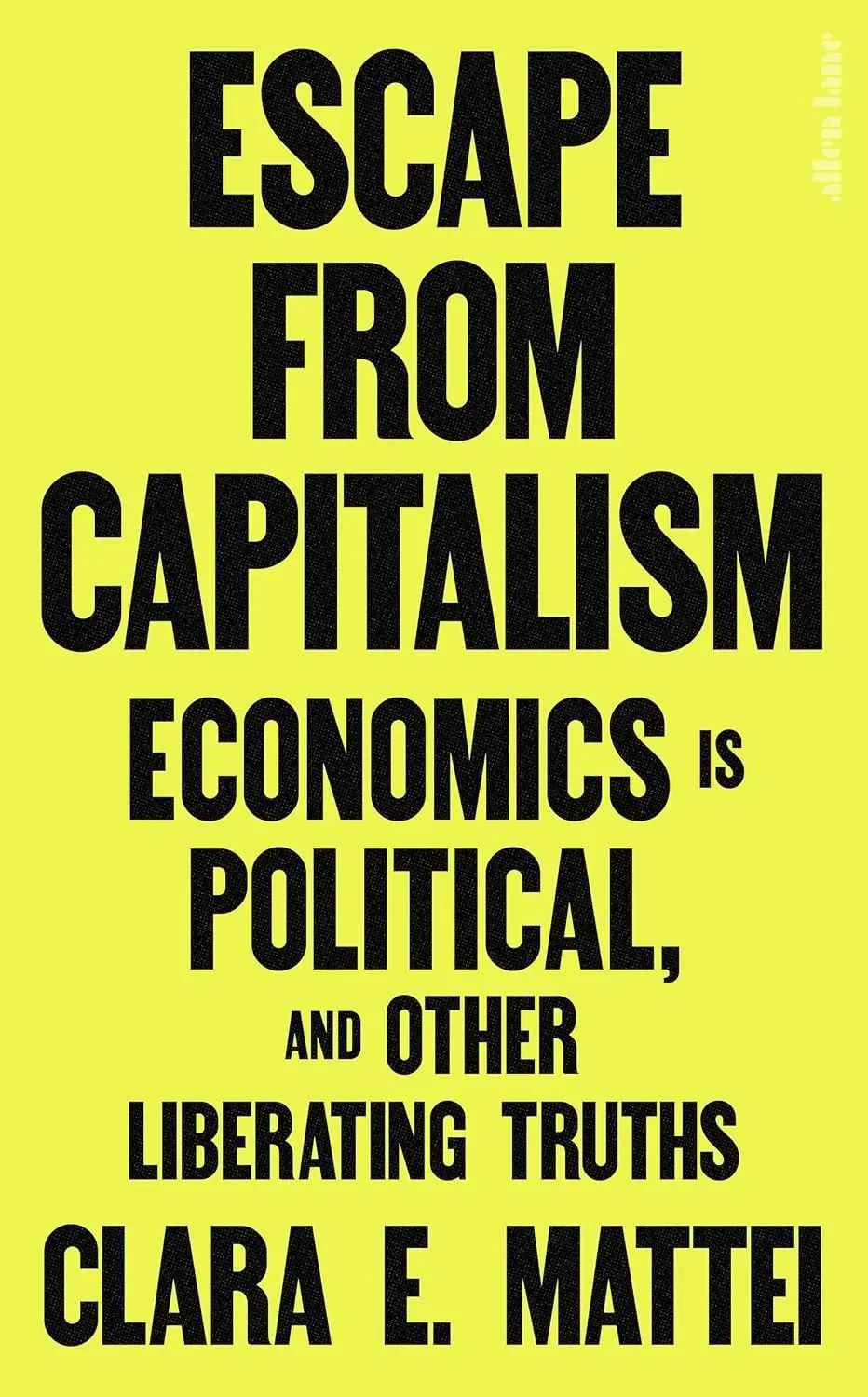
We live in a world dominated by the dogma that austerity is necessary, unemployment natural, endless wars inevitable and central banks all-powerful. It doesn’t have to be this way.
In her bold, ground-breaking manifesto, economist Clara E. Mattei tears the mask off our economic system. She unpacks key concepts like growth, inflation, unemployment and balanced budgets to show how they’re weaponized to enforce market dependence, not freedom, stripping us of the power to shape the democratic decisions that govern our daily lives. Enduring problems such as poverty and inequality are not accidents or bugs in the economy, but core features – justified with pseudoscientific models to support a system that unfairly rewards people with the most resources.
Why should we accept this? Capitalism, Mattei argues, isn’t inevitable, scientific, or natural – it’s a relatively young system that can be replaced. Inspired by a lineage of political resistance, Escape from Capitalism calls for us to challenge the broken economics of our times, and pave the way towards liberation.
Agroecology and Human Agency and Responsibility
Please listen to this conversation and download and read the transcript. It’s vital and positive, offering much-needed suggestions for approaching our predicament.
Oliver Hamant: Profile and Scientific Foundations
Olivier Hamant is a French biophysicist and plant biologist. He is the Director of Research at the French National Institute for Agriculture, Food and Environment (INRAE), located at the École Normale Supérieure (ENS) de Lyon. He also leads the Michel Serres Institute, which focuses on research on socio-ecological transitions. Hamant’s career brings together cell biology, physics, mechanical engineering, and complex systems theory. He first became known internationally for his lab work on plant morphogenesis. Over time, he has become a well-known public thinker, drawing on ideas from biology to question modern economic models and to suggest ways for society to become more resilient.
The Physics of Plant Development
In his main research, Hamant studies how physical and mechanical forces shape plant growth and structure. His team uses cell biology, advanced microscopy, biophysics, and computer modeling to show that plant cells do more than react to genetic signals or chemicals. They also sense mechanical tension in the tissues around them. His key papers show that mechanical stress aligns internal cellular structures, such as cortical microtubules and cellulose fibers in the cell wall, to guide the growth of plant tissues at the shoot tip. By showing that physical forces are as important as genetics, Hamant has changed how scientists think about plant development. He has helped explain how living things keep their structure while adapting to physical changes.
From Plant Mechanics to Civilizational Critique
After studying the complexity of living systems, Hamant began to critique society’s focus on control, efficiency, and extreme optimization. He believes that modern industry makes the mistake of confusing short-term success with long-term survival. While being highly efficient might work in stable times, it becomes risky in the face of climate change, resource shortages, and global instability. Extreme optimization removes the safety margins systems need, making them fragile and prone to sudden failure. Hamant says that living systems last not because they are the most efficient, but because they are robust. Robustness means being able to stay stable and keep working even when things are unpredictable.
Key Publications and Philosophical Contributions
Hamant explains his ideas in several important essays and academic works. In La Troisième voie du vivant (The Third Way of Living Systems), he shows that living things succeed by using strategies that modern economics often ignores, such as redundancy, slowness, diversity, incompleteness, and not always being optimal. In his well-known book Antidote au culte de la performance: La robustesse du vivant (Antidote to the Cult of Performance: Robustness from Nature), he questions the focus on productivity in business and politics. He points out that photosynthesis in nature operates at a low energy level to avoid damage from excessive light and to survive in the long run. In De l’incohérence and The Benefits of Imperfection, he explains that accepting some inconsistency and flexibility helps societies, businesses, and ecosystems withstand shocks rather than breaking under pressure.
Activism, Advocacy, and Systemic Transformation
As a public advocate and speaker, Hamant speaks with students, policymakers, business leaders, and environmental groups to call for a major shift away from a culture focused solely on efficiency. He says that sustainability should not just be about using new technology to keep industry growing. Instead, he wants organizations to design their systems to be more like living things—robust and able to handle change. This means letting go of the goal of endless economic growth, slowing down, adding backup systems, and accepting lower short-term results for long-term survival. His mix of scientific work and social involvement has won him international awards, including an honorary doctorate from UCLouvain, where he was praised for promoting a realistic and resilient approach to today’s many crises.
Foundations and Evolutionary Trajectories of Agroecology
Agroecology has grown from a small academic field into a leading approach for changing global food systems. It has three main roles: it is a science that studies how ecology works in farming, a set of practical methods that use nature-based techniques, and a movement that supports food sovereignty and social justice. This change marks a shift away from focusing solely on high yields, aiming instead to balance farming with the needs of people and the environment. By putting the long-term health of nature first, agroecology protects resources and helps communities stay strong.
The historical trajectory of agroecology reflects a deliberate movement from early crop geography to modern process ecology and complex systems thinking. In 1928, agronomy and ecology first converged when Edward Klages introduced crop ecology, while Basil Bensin simultaneously coined the term agroecology. During the 1930s, German zoologist Karl Friederichs applied the concept within agricultural and forest zoology, while ecologist Arthur Tansley developed process ecology, laying the groundwork for systems-level analysis. In 1939, American crop physiologist Herbert Hansen applied agroecological principles to physiological crop management. Following World War II, Wolfgang Tischler formalized the field in 1965 by publishing Agrarökologie, the first comprehensive analysis of environmental interactions under agricultural management. In 1974, John Harper established modern agroecological theory by formalizing the concept of the agroecosystem. By the 1970s, ethnobotanist Efraim Hernández X. investigated traditional farming practices in Mexico, building a crucial bridge between indigenous wisdom and academic science. This work paved the way for Miguel Altieri and Stephen Gliessman in the 1980s to integrate socio-economic factors, demonstrating how corporate farm consolidation directly destabilizes natural pest dynamics and ecosystem properties. As Altieri famously observed, “Agroecology provides the scientific, methodological, and technical basis for designing resilient farming systems that preserve local natural resources and foster food sovereignty.”
This progress in agroecology brings together many scientific fields to understand and manage key parts of farming systems. Agronomy and ecology work together to regulate nutrient cycles, plant-insect relationships, and energy use, thereby helping farms become more productive and stable. Sociology examines how farming affects rural communities and helps preserve traditions, ensuring fairness. Economics studies costs and benefits to see whether farms can be financially sustainable. Environmental science monitors biodiversity and climate resilience to support ecological stability, while history and ethnobotany incorporate traditional knowledge to sustain cultural practices. All these fields show that farming can’t be understood by looking at single parts alone. Instead, farms need to be managed as living, changing systems.
Core Principles and Global Policy Frameworks
Global standards set by groups like the Food and Agriculture Organization (FAO) and the High-Level Panel of Experts on Food Security and Nutrition (HLPE) create a common language for agricultural policy worldwide. These guidelines help shift farming away from the use of many expensive, fossil-fuel-based chemicals and toward agroecological methods that rely on knowledge and natural processes. As former UN Special Rapporteur on the Right to Food Olivier De Schutter said, “Agroecology delivers advantages that complement or go beyond those delivered by conventional approaches, while offering a sustainable solution to climate change and hunger.”
The Altieri and COMDEKS framework outlines six core agroecological principles that guide field design. First, biomass recycling optimizes organic matter decomposition to accelerate nutrient cycling, directly reducing dependency on commercial synthetic fertilizers. Second, functional biodiversity creates habitats for natural predators and antagonists, bolstering the farm’s internal immune system and enabling the replacement of chemical pesticides with biological control. Third, active soil management enhances biological activity and organic matter, maximizing water retention and nutrient availability to buffer crops against severe drought. Fourth, diversification through polycultures, livestock, and agroforestry occupies multiple ecological niches; this redundancy of species ensures that if one crop fails under stress, others maintain overall ecosystem function. Fifth, minimizing resource losses through closed-loop designs conserves water, energy, and genetic material, enhancing farm-level self-sufficiency. Sixth, designing for synergistic interactions among crops, animals, and soil organisms allows the farm to sponsor its own vital services without external chemical inputs.
These principles are put into practice through ten main strategies that support long-term sustainability. Strong connections between farms and their surroundings help everything work together, and independence protects farmers from unstable markets. Respecting traditional knowledge keeps local seeds and land practices alive and helps communities design farming systems that fit their needs. Keeping a mix of crops and practices across space and time stops pest outbreaks, while working together encourages sharing and support. Having many types of plants and animals helps farms handle climate changes and reduces waste. In the end, resilient systems help farms keep going after extreme weather, and thoughtful community building helps farmers adapt to new challenges.
Technical Field Designs and the Biological Engine
On the farm, technical design is like the engine that keeps nutrient cycles and natural pest control working. By using different crops and rotating them over time, farmers harness natural processes like allelopathy, in which some plants help suppress weeds or pests, and natural enemies that keep pests in check. The key to this system is healthy soil microbes. Tiny organisms in the soil break down organic matter and release nutrients, creating soil that lets water soak in well and holds together strongly. This healthy soil is especially important during heavy rains, as it helps prevent flooding, runoff, and erosion on hillsides.
Producers activate these biological mechanisms through specific design interventions. Crop rotations introduce temporal diversity. Farmers use certain methods to make these natural processes work. Rotating crops adds variety over time, breaking pest cycles and helping plants access nutrients from different soil layers, improving soil health without chemicals. Growing several types of crops together (polycultures) fills different roles in the ecosystem and helps keep yields steady when the environment changes. Agroforestry adds trees with deep roots and thick trunks that hold the soil in place, protect crops from strong winds, and prevent erosion. Keeping the soil covered with plants, especially legumes, adds nitrogen to the soil and creates thick mulch that blocks weeds and softens the impact of heavy rain. Assessment tools allow researchers and policymakers to evaluate climate adaptation strategies precisely. Within this framework, disaster risk is not viewed as an inevitable natural catastrophe, but as a function of internal system vulnerabilities balanced against human adaptive capacity. The formula defines this relationship:
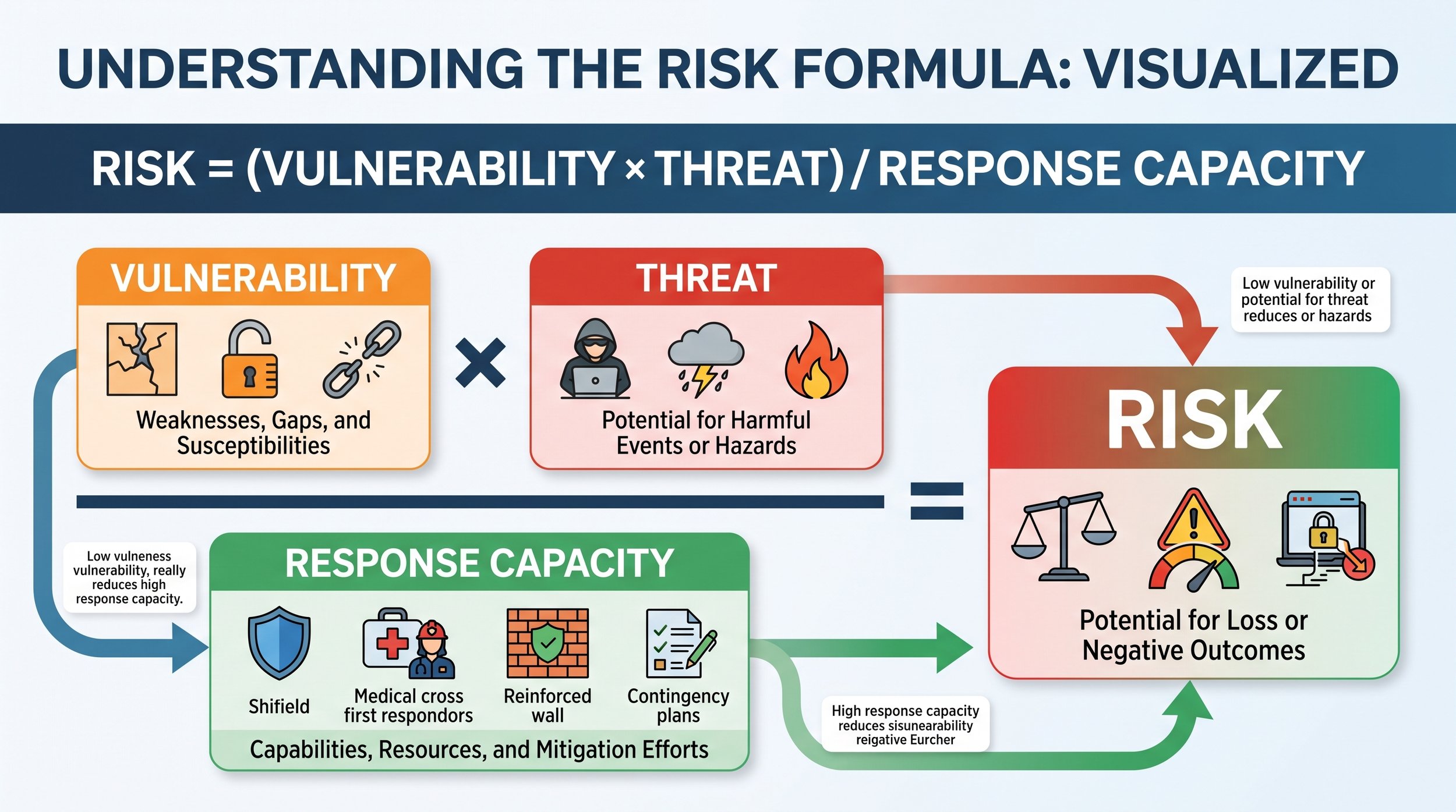
Here, vulnerability refers to internal weaknesses such as poor soil, low biodiversity, steep, bare slopes, and weak social organization. Threat describes the strength, frequency, and duration of external climate shocks, such as prolonged droughts or severe hurricanes. Response capacity measures the social capital, traditional knowledge, and community networks that help people resist and recover from these challenges.
Researchers use participatory tools like the ‘Semaforo’ (Traffic Light) system to show these patterns in the field. This method rates farm vulnerability from red (scores one to two) for extreme risk, such as steep bare slopes and poor soil, to yellow (scores three to four) for moderate risk, and green (score five) for highly resilient farms with diverse forests and healthy soils. Radar charts and risk triangles also help map several social and ecological factors at once. In studies across regions such as Antioquia, Colombia, these tools allow scientists to compare high-risk ‘orange’ farms with resilient ‘green’ farms, making it easier to identify the changes needed to move vulnerable areas into safer zones.
Socioeconomic Dynamics and the Yield Gap Debate
To assess the economics of agroecology, we need to look beyond narrow measures such as Gross Value Added (GVA), which exclude the environmental and health costs of chemical farming. Instead, health- and eco-economics use Real Value Added (RVA), which subtracts environmental harm, climate damage, and public subsidies from total output. Agroecology relies more on knowledge than on expensive chemicals, so it keeps more economic value in local rural communities. As agricultural economist Jules Pretty said, “Redesigning agricultural systems around biological processes is not an alternative to development; it is the prerequisite for economic endurance.”
Real Value Added is important in large-scale economic models, such as a study that examined farming in the Western Balkans through 2050. If the region continues to use chemicals as usual, it could lose 10% of farm jobs, suffer widespread soil damage, and end up with a negative Real Value Added of 449 million Euros. Switching to a fully organic ECO model, however, would increase farm jobs by ten percent, raise food production by eight percent, and create a positive Real Value Added of 551 million Euros. An even more advanced ECO+ model, which links farming with local energy projects such as using wood ash as fertilizer and smart irrigation, would boost jobs by 13 percent, increase food production by 34 percent, and reach a Real Value Added of 2 billion Euros. These results show that ecological farming creates much more long-term wealth than industrial methods.
Will a critical mass of U.S. citizens ever pay attention to ecological farming systems, or will they keep being mesmerized by rows of breakfast cereal boxes in large supermarkets? Perhaps, after supermarkets start shutting down like shopping malls, folks will grow spuds in their backyards with an eye toward organic farming.
In New Market, Ireland, when I was young, people grew spuds in the back garden.
For now, most people aren’t interested, and the more some people try to educate them, the less attracted they are to the subject.
Regional Case Studies and Global Support Infrastructure
Grassroots projects around the world show that knowledge-based farming can work at scale. In Cuba and the United States, the Cuba-US Agroecology Network (CUSAN) supports research and resource sharing, helping Cuban expertise shape international policy. In Andhra Pradesh, India, the AME Foundation helps small farmers manage natural resources, raising crop yields and freeing families from costly chemical loans. In Ethiopia’s Doyogena region, the PSii Project, backed by the Alliance of Bioversity International and CIAT, shows that rotating faba beans and wheat can restore poor soils and help small farmers cope with climate change. In East Africa, the Soils, Food and Healthy Communities (SFHC) group works with over six thousand farmers in Malawi, combining seed-saving projects with gender-equality programs and support for those affected by HIV/AIDS.
A strong global support system gives this movement the knowledge, funding, and political backing it needs. Groups like A Growing Culture support farmers’ independence through the open-access Library for Food Sovereignty, and the Agroecology Fund provides direct financial support to grassroots projects worldwide. Regional groups such as the Asian Farmers Association (AFA), the Associação Brasileira de Agroecologia (ABA) in Brazil, and the Latin American Scientific Society of Agroecology (SOCLA) lead policy work and research. Academic centers like the Center for Agroecology & Sustainable Food Systems (CASFS) at UC Santa Cruz and the Wageningen Plant Research Institute in the Netherlands study regenerative farming. At the same time, international networks like La Via Campesina, Navdanya International, Groundswell International, Prolinnova, EcoAgriculture Partners, the Institute for Sustainable Development (ISD) in Ethiopia, the Center for Traditional Agriculture and Environmental Protection (CTA-ZM) in Brazil, and the Native American Food Sovereignty Alliance (TNAFA) protect native seeds, train young people, and fight for land rights. All these groups show that knowledge-based agroecology is the only scientifically sound, socially fair, and practical way forward for global food production.

Do We Need A Call To Action?
Things will get terribly rough when lots of people are starving.
Climate change and conflict are testing the global food supply chain. In Europe, the fastest-heating continent, the June 2026 heatwave alone caused an estimated loss of 9 million tons of grain. Insecure access to food drives up inequality and historically has been behind episodes of upheaval, including wars and revolutions.
opulation ecology Professor Tim Benton tells DW’s Ben Fajzullin that next year’s El Nino could cause even more extreme weather and crop losses. He tells DW what fundamental changes are needed to make food supplies more stable and resilient in the face of geopolitical threats and increasingly extreme weather.Population ecology Professor Tim Benton tells DW’s Ben Fajzullin that next year’s El Nino could cause even more extreme weather and crop losses. He tells DW what fundamental changes are needed to make food supplies more stable and resilient in the face of geopolitical threats and increasingly extreme weather.
We need to develop new cultures and new ways of living fast.


So what does all of this nastiness happening over there have to do with you?
Turning away from large-scale problems may feel comfortable for a while, but real-world challenges (horror) eventually affect everyone. Choosing personal happiness instead of facing these issues is like delaying a problem that will have bigger consequences later.
Craig Mokhiber is an American international human rights lawyer and a former senior official at the United Nations. Starting in 1992, he worked for 32 years as a human rights officer, lead advisor on human-rights-based development, and later as Director of the New York Office of the UN High Commissioner for Human Rights (OHCHR). He was involved in human rights investigations and international humanitarian law, and he worked with civil society groups in Africa, Asia, Europe, and the Middle East. He is an experienced expert in his field.
In October 2023, Mokhiber made international news by resigning from the UN in protest over its lack of action regarding the destruction of Gaza (a man of courage and integrity who was prepared to sacrifice for his principles). He called the military campaign a “textbook case of genocide” and said that senior UN leaders and Western governments were ignoring international law for political reasons. In his resignation letter, he wrote:
“Once again, we are seeing a genocide unfolding before our eyes, and the Organization that we serve appears powerless to stop it… In each case, when the dust settled on the horrors that had been perpetrated against defenseless civilian populations, it became painfully clear that we had failed in our duty to meet the imperatives of prevention of mass atrocities, of protection of the vulnerable, and of accountability for perpetrators.”
Mokhiber believes that international law is no longer applied consistently and that Western institutions are often complicit. He says that ideas like the “two-state solution” have been used to hide the ongoing loss of Palestinian land and rights. Instead, he supports a single, secular, democratic state where Christians, Muslims, and Jews all have equal rights under the law. If you listen to most Israelis, this is unlikely. It seems like one of those “until hell freezes over” proposals. He points out that international organizations often act quickly against violations in the Global South but do little when Western countries or their allies are responsible. For Mokhiber, human rights must be applied to everyone. When political interests are put above universal rules, international law loses credibility, and power falls to those with the most influence.
The “West” has a utilitarian orientation toward international law; it’s self-serving. What is more likely to happen is mass starvation in the Middle East region and another Biblical exodus caused by global heating and resource depletion, and God-loving, spiritual people forbid—nuclear war started by the invisible permissive hand of Uncle Sam Inc. Whoops! It’s Bibi’s fault.
Is this dehumanization? Does it remind you of anything in the 1930s and 40s? Sanctioned since 2025, what has happened? Do Uncle Sam Inc. and Euro Inc. care about what ordinary people want? Democracy? How so?
It’s a lot to ask comfortable people, but I think, at some point, they will have to stand up and do something, hopefully while they still have a smidgeon of opportunity to do so.
The modern nation-state is an eye-blink in the scale of human history. For hundreds of thousands of years, human societies organized themselves through relational networks, nomadic bands, confederacies, city-states, and fluid regional polities. The sovereign nation-state—a centralized administrative apparatus claiming a total monopoly on legitimate violence over a fixed geographical border tied to a defined "national" identity—only crystallized with the Peace of Westphalia in 1648 and reached its current global hegemony through 19th-century European imperialism and 20th-century post-colonial border drawing. As an institutional model, the nation-state is a recent, contingent legal invention rather than an eternal, natural feature of human civilization.
Because the state is an artificial administrative construct rather than a biological or moral entity, no state possesses an inherent "right to exist." In moral philosophy and international law, rights belong strictly to human beings and peoples—most notably the right to life, liberty, bodily integrity, and democratic self-determination. (Indigenous groups have broadened that to rivers and trees, etc.) States do not have rights; they hold legal authority, sovereign power, and international obligations derived entirely from the consent and protection of the human populations living within them. Conflating the authority of an administrative regime or a set of territorial borders with a fundamental "human right to exist" reifies a temporary political instrument, placing an abstract apparatus above the living beings it is ostensibly meant to serve.
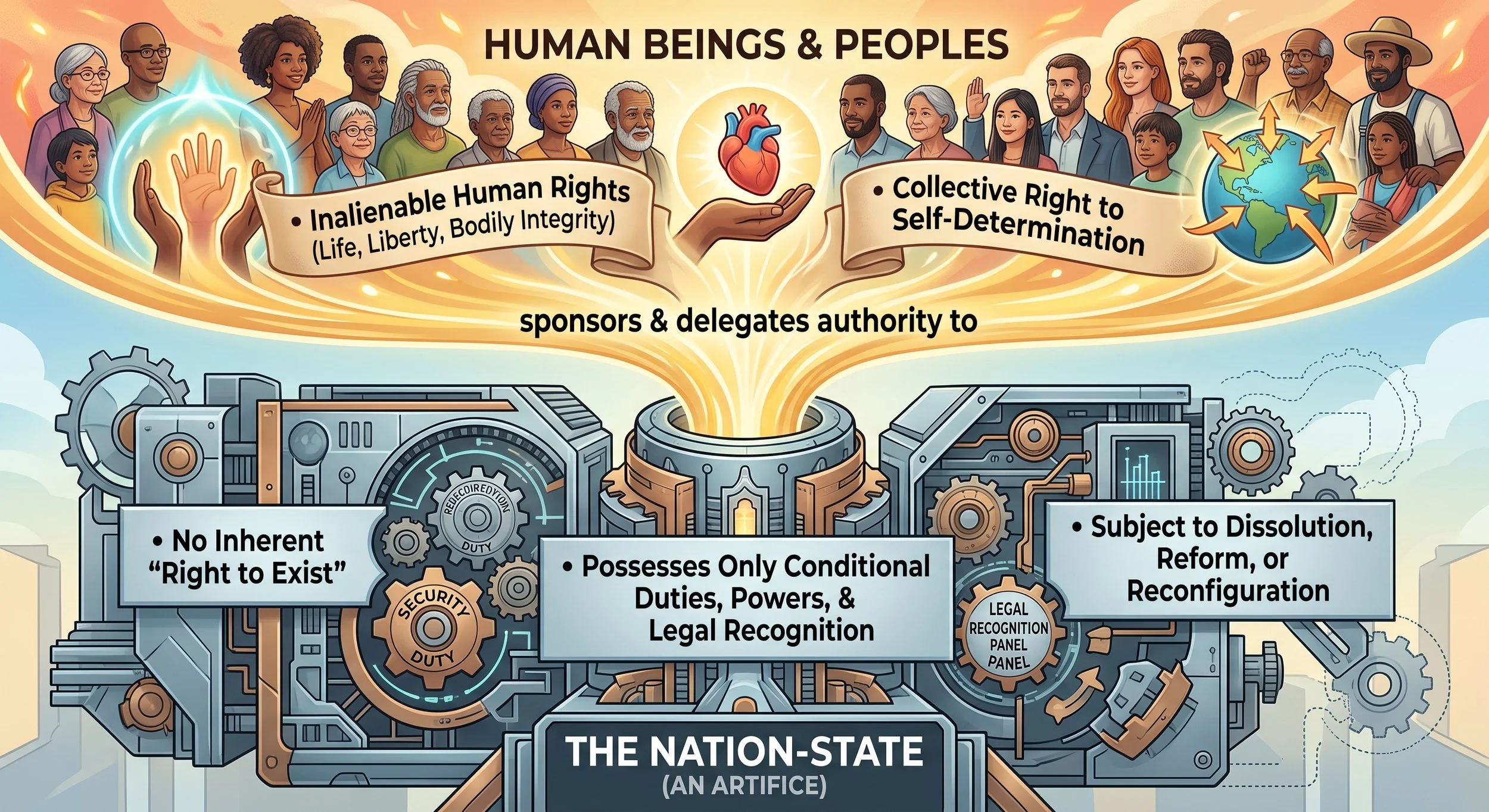
Noam Chomsky has been one of the most prominent contemporary voices arguing against the notion that any state—whether the United States, Russia, Israel, or any other political entity—possesses an inherent “right to exist.” Chomsky emphasizes that international law and moral philosophy recognize peoples’ inalienable rights to self-determination, security, and freedom from aggression, but explicitly refrain from granting abstract political regimes a metaphysical right to perpetuate themselves. In his analysis, claiming that a state has a “right to exist” serves primarily as an ideological propaganda device designed to shield state violence, territorial expansion, and domestic oppression from legitimate moral critique. By reframing a state’s administrative authority as a sacred right, power structures insulate themselves from accountability, confusing the protection of human beings with the preservation of a specific apparatus of rule.
From an international law perspective, jurists such as Alain Pellet and James Crawford clarify that statehood is defined by functional, empirical criteria rather than divine or moral entitlement. As codified in the Montevideo Convention of 1933, a state is simply an entity that possesses a permanent population, a defined territory, a government, and the capacity to enter into relations with other states. Legal scholars emphasize that states exist de facto through effective administrative control and de jure through diplomatic recognition, neither of which endows a regime with an eternal, inviolable moral right to survive unchanged. History demonstrates that states regularly dissolve, merge, fragment, and rewrite their constitutional structures—as seen in the collapse of the Soviet Union, Yugoslavia, and Czechoslovakia—without violating any fundamental law of nature, precisely because states are temporary legal instruments designed to organize human affairs.
Anarchist and libertarian theorists like Lysander Spooner and Murray Rothbard push this critique further by examining the coercive mechanics of state power. They define the state as an institutionalized monopoly on violence that expropriates wealth through taxation and enforces obedience through law. Because states routinely violate individual rights to maintain their own institutional authority, assigning a “right to exist” to the aggressor entity represents a profound philosophical contradiction. In this view, rights reside strictly in the individual; the state is merely a functional monopoly whose legitimacy is continually subject to challenge, reform, or total dissolution whenever it fails to serve or protect the living human beings under its jurisdiction.
Decolonial philosophers such as Mahmood Mamdani and Achille Mbembe highlight the violent historical imposition of the European Westphalian model across the Global South, where rigid, militarized borders replaced organic, relational ontologies. Mamdani demonstrates that forcing complex, multi-ethnic societies into the narrow container of the modern nation-state constructed artificial “majority versus minority” binaries, directly triggering post-colonial civil wars, ethnic cleansings, and genocides. From a decolonial standpoint, insisting on the sacred permanency of the nation-state traps humanity inside an imperial framework that treats administrative borders as eternal truths, preventing the emergence of alternative, relational ways of organizing human co-existence and ecological stewardship.
History bends toward justice if we make it so.
How long do you think we can ignore what’s happening before it hits us directly?
Many people I know will ignore uncomfortable truths that interfere with their personal pursuit of happiness. Even though some folks get lucky, ignoring the polycrisis and the metacrisis is stupid.
Jeffrey Sachs is sane, healthy, intelligent, honest, and courageous. I agree with many of his insights in this 12-minute video. I too have friends who will not talk to me because I dare to say that there is something deeply wrong with U.S. American culture. Any polity that would allow the kinds of people the U.S. has in leadership is deeply disturbed. Decent, sane, thoughtful people who sit by and allow this generations-long deterioration of national character and the constitutional system are irresponsible at best, or pathological. People, we have to do something.
Jeffrey Sachs delivers a blistering assessment of Donald Trump, arguing that the president’s leadership and use of power raise serious concerns about the state of American politics.
***Now read this.

The Cinematic Grammar of Collapse
Fabio Vighi’s essay provides the theoretical punctuation mark to my entire essay, framing the terminal crisis of industrial capital through two iconic cinematic bookends. In Sidney Lumet’s Network (1976), corporate chairman Arthur Jensen preaches the secular religion of early neoliberalism: “There are no nations. There are no peoples... The world is a business, Mr. Beale.” (Sounds like Maggie Thatcher and Ronny Reagan.) Decades later, Andrew Dominik’s Killing Them Softly (2012) strips away Jensen’s grand rhetoric, leaving Brad Pitt’s hitman character Jackie Cogan to deliver the raw, unvarnished truth of neoliberal subjectivity: “America’s not a country. It’s just a business. Now fuckin’ pay me.” Together, these scenes chart capital's total victory over human sociality—dissolving civic solidarity into transactional social Darwinism and reducing national politicians to middle managers running spectacles for an audience of global creditors and content consumers—programmed without purpose, meaning, or respect for posterity.
“America is not a country, it’s just a business, now fucking pay me!”
Wealth Without Value: Capital’s Terminal Pathology (Modern global techno-industrial, neoliberal, financialized, high-growth capitalism is a kill switch)
At the heart of Vighi’s diagnosis is the fundamental distinction between monetary wealth and socio-economic value. Capital generates value exclusively through the exploitation of living human labor and destructive extraction. By replacing workers with automation, microelectronics, and AI, capital radically increases material and financial wealth (liquidity, stock valuations, debt instruments) while systematically destroying value production. Starved of its biological lifeblood, the system has spent the last fifty years surviving on “fictitious capital”—issuing endless claims on future labor that will never exist. To maintain this illusion, capital has financialized every corner of existence: housing, healthcare, education, daily debt, and war. Armed conflict is no longer just a geopolitical struggle; it is a massive liquidity event where bombed cities and defense ETFs are packaged into investable asset classes to postpone systemic insolvency.
“Gaza, the West Bank, Lebanon, Syria, Oman, and the Sainai, will be the greatest real estate bonanza in history. AI will help maximize the efficiency and security of investment and development. Don’t miss this opportunity of a lifetime. It’s inevitable.”
The Illusion of Multipolarity and Techno-Escapism
Vighi dismantles the comforting lie that a multipolar world order, green technology, or artificial intelligence can fix the metacrisis. Let’s not forget God and The Secret. Multipolar capitalism remains capitalism, trapped in the same game-theoretic arms races and thermodynamic limits. AI does not create value; it eliminates living labor while consuming massive amounts of energy/power and accelerating topsoil degradation, ecocide, and genocide (because of the damn traps). Central banks and nation-states no longer govern economic growth—they administer permanent emergency governance, using war, inflation, and surveillance to manage an insolvent system that can no longer reproduce the conditions of its own existence. But we don’t care; we have cocaine, booze, sports spectacle, ideology, sex, porn; we have our addictions to nurture.
The Finale: Re-Embedding in Nature for Posterity
Vighi’s critique distills my twenty years of booklets to their unvarnished finale. Salvation will not arrive through religious messiahs, state-communist central planning, or billionaire pipe dreams of living 100 meters underground on Mars while microbes take a billion years to terraform a wasteland. The human story under industrial civilization has been violently extractive because it was built on the delusion that we could decouple ourselves from biophysical reality. Another planet is not another island of savages to be exploited for riches for the King.
How much have the Trump family and his supporters made so far during his second administration? Did you look it up? What? You are not shocked.
As thinkers like Eric Lee and Erik Michaels recognize, humanity faces an absolute choice (NO CHOICE): we either endure a catastrophic, chaotic unwinding that strips away our industrial hubris and re-embeds us as animals within the limits of nature, or we face self-erasure. If we are to give our children any chance of surviving this ongoing collapse without repeating the horrific atrocities of the past, we must stop feeding them the pacifying bullshit of corporate media and technological utopias. Our real project is to help them dismantle the spectacle, abandon the games of financialized power, and learn the quiet, urgent discipline of living as mortal caretakers of a finite, living Earth.
In my film “Committed,” the main character Cal says:
Cal: “Have you heard of a Swedish Lombago or the Shump Shank Archipelago?”
His two young friends look at each other and back at Cal. They don’t have to say that they haven’t—it’s obvious.
Cal: Of course you haven’t, because I just made that shit up. I can make tens of millions of people think they are a “thing” and get hundreds of people talking about Swedish Lombegos and the historical relevance of the Shump Shank Archipelago. And the freaking enterprise will put millions in my bank account. I can expand these narratives until they are in the Encyclopedia, whatever the fuck ever. I do it because I want to play with the Players, attend frequent skin-in-the-game meetings, and smell nice in well-appointed rooms. And I did it because I fell in love. I’m a puppet—to what, romance? I don’t know.”
My ego has been bludgeoned to death by thought, but my heart is as big as the universe. I am alone, here, now, loving my relationships with people and hoping for the best while staring, scared shitless, at the cattle cars, drones, missiles, delusions, bigotry, jingoism, ignorance, and stupidity that our feel-good culture seems to think we are immune to.
Could we be the authors of a better story, a better reality? I guess not, but some people will try. Am I just a modern cynic?
I want my friends who are parents to understand what “keep your lights on” means. It is a lifelong relationship with reality that makes us robust and gives us the smarts to thrive in a complex world where algorithms are constantly pacifying us.
Let’s review one last time from some philosophical perspectives.
Radical Anthropotechnics
The Biophysical Crucible: The Carbon Pulse, Thermodynamic Overshoot, and Institutional Psychopathy
From all we’ve explored above, and from our intercourse with a constant flood of information across thousands of social media platforms, media outlets, etc., we must all know by now that our activities are exceeding Earth’s natural limits. Modern industrial society runs on what Nate Hagens calls the “carbon pulse”: a one-time, rapid use of fossil fuels that took millions of years to form. So many experts across domains have illustrated this in so many ways. This huge burst of energy let human populations, technology, and resource use grow far beyond what the planet can sustainably support. This should be utterly banal by now.
Mainstream economics utterly ignores environmental limits, assuming that industry can keep growing forever. Banal. Stupid. Industrial systems take resources from nature and release waste and pollution back into the environment. By treating natural resources as endless, our global economy now uses more than the Earth can provide, causing lasting damage to the Earth’s living systems. Repeat this simple truth to as many people as many times as you can in as many ways as you can imagine until it becomes part of who they are.
Mal Incentives
Modern institutions make the problem worse by rewarding leaders who focus on short-term gains and ignore environmental limits. We buy into this reward system. Systems like markets and politics favor people who are willing to exploit resources and communities for profit and power. As a result, leaders are encouraged to deny the reality of ecological boundaries, keeping society on a path that risks both environmental and social collapse. Too many of us seem to think this is just the way things are.
The Psychodynamics of Complicity: Cynical Reason, Learned Helplessness, and the American Character
“Oh no, woe is me. Am I part of the problem?”
The structural inability of modern populations to organize a proportional response to this ongoing catastrophe is rooted in a psychological defense architecture that shields the self from radical self-examination and complicity. In Critique of Cynical Reason, Peter Sloterdijk identifies the prevailing cognitive posture of late modernity as “enlightened false consciousness.” People today struggle to respond to these crises because of psychological defenses that help them avoid facing their own role in the problem. Philosopher Peter Sloterdijk calls this attitude “enlightened false consciousness.” Unlike in the past, when people might have acted out of ignorance, modern cynicism means people know about the harm being done but still go along with it. This cynicism helps people cope, letting them recognize the problems while still participating in the system. Structurally futile, converting political consciousness into fatalistic resignation.
Motivated Reasoning and Cognitive Dissonance: To resolve the conflict between wanting to be ethical and engaging in environmentally harmful behavior, people often offer justifications. They may believe in future technology or adopt certain habits to feel better about their impact.
Vainglorious Self-Righteousness: Instead of recursive self-criticism, subjects deploy moral exhibitionism and performative identity politics as an ego shield, generating a sense of ethical purity while leaving the biophysical infrastructure of hyperconsumption completely unaddressed.
These attitudes are especially strong in the United States, where the idea of endless opportunity shapes how people see freedom and individualism. Many Americans see limits as threats to their personal liberty and believe technology can solve any problem. When faced with real environmental limits, this mindset often leads to denial, political backlash, or even more consumption, all while protecting current lifestyles at life’s expense.
While our species is incredibly creative, we are also terribly destructive, and there are limits to what planetary systems and living systems can take. We need to accept this.
The Malaise of Hyper-Modernity: Instrumental Reason and the Post-Durkheimian Trap
Philosopher Charles Taylor explores why people feel lost in modern society. In his books, he points to three main problems: the dominance of economic thinking, the breakdown of community, and the loss of real political freedom. When everything is measured by efficiency and profit, both people and nature are treated as resources to be used.
At the same time, the idea of being true to oneself has shifted from seeking deeper meaning to focusing only on personal feelings. Taylor argues that real authenticity needs shared values and connections to community, history, and nature. Without these, personal choices lose meaning, and people end up feeling trapped by bureaucracy and shallow consumer culture.
In his later work, Taylor looks at how spirituality has changed. In the past, religion was part of society and helped people feel connected and responsible for one another. Today, spirituality is often a private, personal choice, more like picking from a menu than joining a community.
People today often choose spiritual practices for personal comfort or self-affirmation. By avoiding the challenges of group membership, they end up stuck in their own routines. This leaves them caught between everyday life and brief moments of meaning, making it hard to commit to bigger changes.
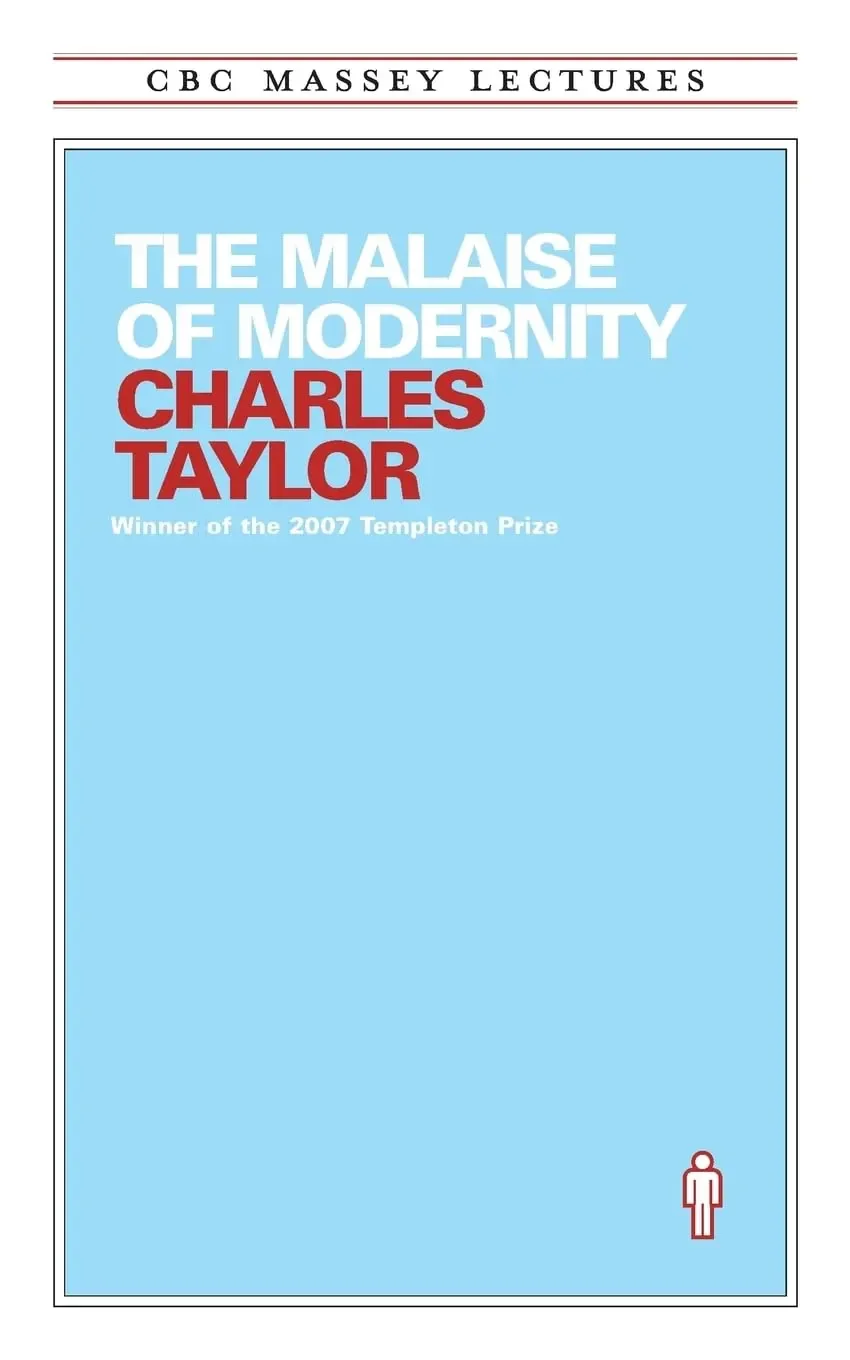
The Theoretical Failure of Neo-Stoic Quietism
As environmental and social problems grow, many leaders and managers have turned to a new form of Stoicism. This approach helps them manage their emotions and stay productive, but it also encourages them to accept problems rather than challenge the system. Philosophers like Nietzsche and Schopenhauer have criticized this attitude as ultimately empty.
The Nietzschean Critique: Dekadenz, Becoming, and the Distortion of Nature
Friedrich Nietzsche sees Stoic philosophy as a sign of decline, marked by low energy and too much intellectualizing. In his book Beyond Good and Evil, he argues that Stoics project their own desire for order onto the universe, which is actually chaotic and indifferent. They then claim their values are universal truths.
Nietzsche’s critique centers on key ontological and psychological tensions:
Being versus Becoming: Stoicism is based on the idea of fixed goals and stable virtues. Nietzsche, however, sees reality as always changing and unpredictable. Trying to force life into strict rules, he argues, drains it of energy and creativity.
The Suppression of Vital Drives: Stoics believe that strong emotions such as anger or grief should be controlled to keep the mind calm. Nietzsche argues that these emotions are actually important sources of creativity and change. By suppressing them, Stoicism limits our ability to grow and renew ourselves.
Conditional versus Radical Amor Fati: Stoics say we should love our fate, but only if it fits their idea of a rational, ordered universe. Nietzsche calls for a deeper acceptance, embracing life as it is, with all its chaos and unpredictability, without needing to believe in a grand plan.
The Schopenhauerian Critique: Eudaimonistic Illusion and Hedonic Solipsism
Arthur Schopenhauer criticizes Stoicism from a different angle. He says it is more about avoiding pain and staying calm than about true morality. Since suffering is a basic part of life, Schopenhauer argues that Stoicism’s promise to end suffering through reason is unrealistic.
Schopenhauer reveals the structural limitations of the Stoic framework:
Freedom of the Will versus Freedom from the Will: Stoicism teaches people to control their actions and reactions. Schopenhauer, however, believes that true freedom comes from letting go of personal desires, a possibility achieved through art, compassion, and self-denial.
Ethical Solipsism and the Repudiation of Compassion: Stoics interact with others mainly to protect their own peace of mind. Schopenhauer says real morality starts with feeling empathy for others’ suffering. By ignoring others’ emotions, Stoicism fosters an ethical self-centeredness that blocks true connection.
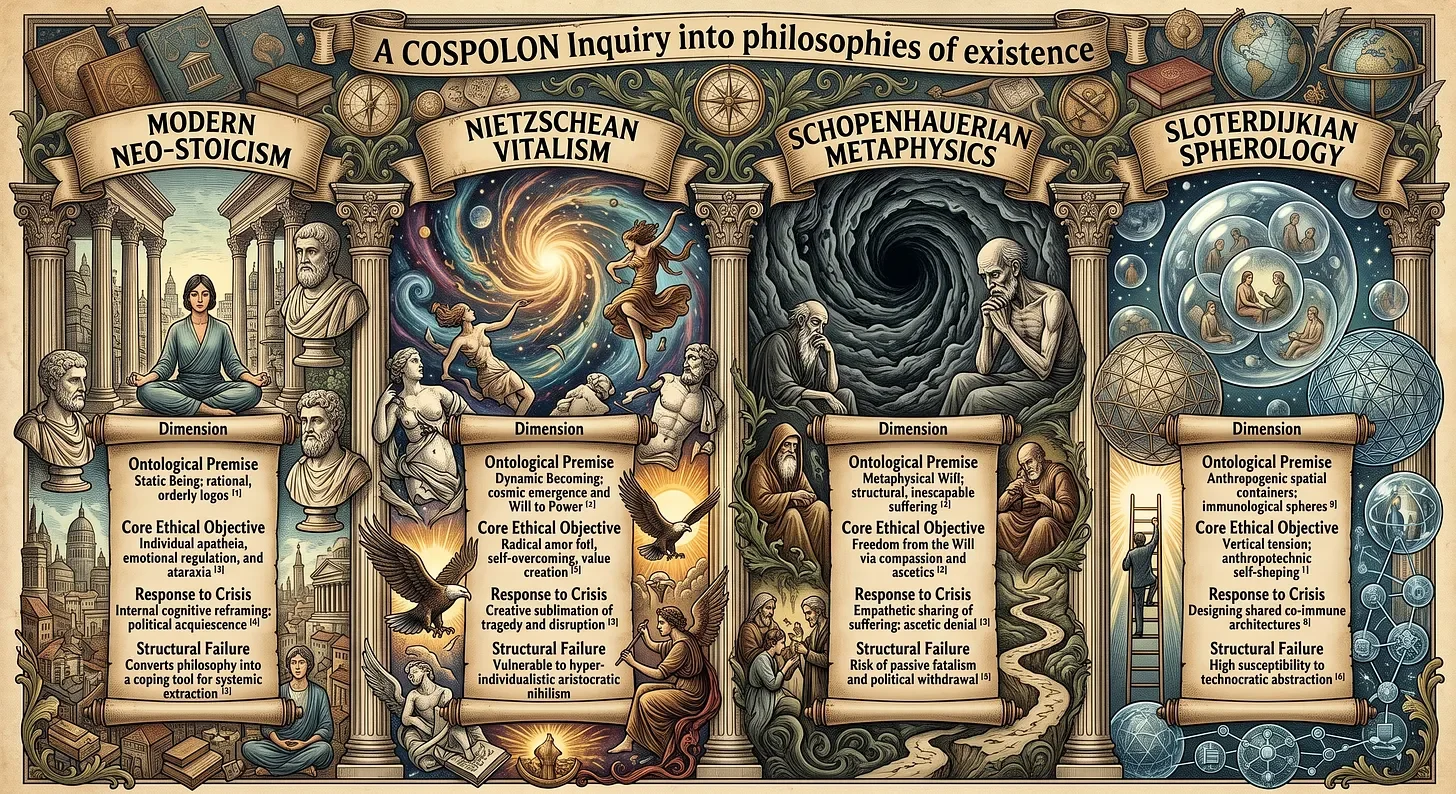
SC JB Mandala
When it comes to civilizational overshoot, modern Neo-Stoicism helps maintain the status quo. Treating ecological damage, social collapse, and corruption as external concerns or “indifferents” teaches people to control their reactions while still working efficiently within harmful systems. This approach dulls moral outrage, justifies complicity, and turns philosophy into a tool that can harm the ecosystem.
Spherology, Atmoterrorism, and the Anthropotechnic Imperative
To move past cynicism and passive acceptance, Peter Sloterdijk’s philosophy offers a detailed framework for analyzing and rebuilding our thinking. In his Spheres trilogy (Bubbles, Globes, Foams), the interviews in Neither Sun nor Death, and You Must Change Your Life, Sloterdijk sees human culture as a constant effort to build protective spaces.
Sloterdijk argues that people cannot survive in untouched nature. Instead, humans are naturally builders of spheres, living within small and large spaces filled with meaning, buildings, and shared rituals. In ancient societies, people lived within “macrospheres” (Globes), which were large, shared beliefs and structures that provided them with moral direction and a sense of safety. Religion. Mythology. Ideology.
However, the onset of terrestrial globalization—driven by maritime exploration, expanding trade, and industrialization caused these shared structures to break apart. Today, we live in what Sloterdijk calls “Foam”: a world made up of countless individual bubbles or micro-spheres. Modern apartment buildings and private consumer lifestyles illustrate this best: people live close together physically but remain spiritually isolated, each trying to maintain their own private space.
Atmospherism: the modern weaponization of the living environment. Originating with the deployment of chlorine gas in World War I and reaching systemic scale through industrial pollution and carbon emissions, atmoterrorism shifts warfare and domination from direct physical assault on the body to the systematic destruction of the environmental envelope that makes breathing and life possible. Because organisms cannot choose to cease breathing, the industrial extraction economy represents a continuous, structural act of atmoterrorism against the biosphere. By converting the planetary atmosphere into an unbreathable, overheated greenhouse, industrial civilization has weaponized the shared macro-envelope against its own inhabitants. And again, we buy into this, not out of ignorance but out of banal habit.
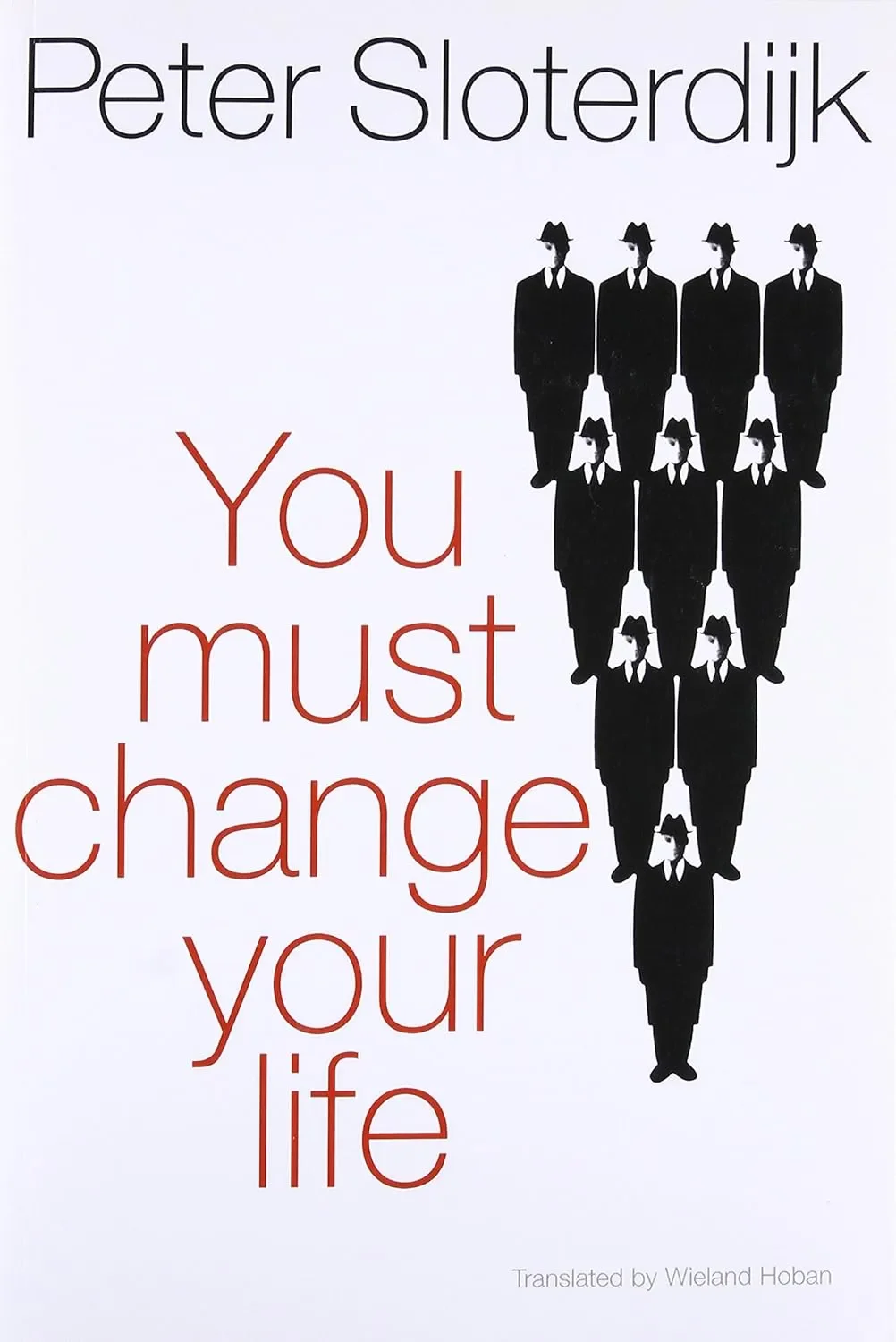
With this ecological crisis, normal politics and moral arguments are not enough. In You Must Change Your Life, Sloterdijk rethinks human nature through “anthropotechnics,” the disciplined practices people use to shape themselves physically, mentally, and spiritually. He sees humanity not as a fixed category, but as a species that changes through repeated practice and self-discipline.
Sloterdijk points to Rainer Maria Rilke’s call—“Du mußt dein Leben ändern” (You must change your life)—as the main challenge of our time. This means we need to develop “vertical tension”: a disciplined effort to rise above passive consumerism, comfort, and cynicism by changing ourselves and our communities. Sloterdijk says in Neither Sun nor Death that philosophy today should not stay isolated in academia. Instead, it should push us to communicate better, face complex problems, and take responsibility for the world.
Navigating the Nadir: Co-Immunism, Transitional Knowledge, and Regenerative Culture
The path of civilizational overshoot indicates that industrial systems are heading toward a low point, marked by energy shortages, unstable institutions, and climate and ecological chaos. To avoid groupthink and denial, we must quickly give up private survival plans and instead follow what Sloterdijk calls “co-immunism.”
Co-immunism is based on the idea that no person, group, or country can protect itself from global problems alone. Since the biosphere, oceans, and atmosphere are all connected, survival depends on working together to build shared protections. Co-immunism calls for worldwide solidarity, recognizing that all living things are vulnerable and that we must stop shifting environmental harm onto others or the planet.
Even though cynicism is common in politics and business, a dedicated minority is working against despair and building the systems needed to get through this difficult time. The main goal now is to gather and protect strong, long-lasting collections of knowledge and activist collectives in three key areas:
Ecological and Biophysical Knowledge Bases: These include practical maps of local resources and water systems, sustainable and robust farming methods, transportation and logistics, energy-efficient housing, and methods for restoring local ecosystems while remaining within natural limits.
Critical and Multi-Perspectival Philosophical Archives: These collections combine critical theory, sociology, psychology, and indigenous worldviews to help future communities avoid falling back into authoritarian ideas, narrow thinking, ecocide, genocide, or harmful, malincentivised leadership.
Decentralized Applied Technologies: These are open-source, easy-to-repair technologies for local clean water, renewable energy, natural medicine, and manufacturing that do not rely on fragile global supply chains.
These collections of knowledge should not just be stored in databases. They need to be part of active communities that serve as centers for preserving knowledge and trying out new ideas.
To take part in this change, people need to practice honest self-reflection. Escaping groupthink, motivated reasoning, propaganda, slop, and denial means learning to look at life from different angles, such as physical, energy, psychological, and historical perspectives. People should question their own habits, consumption, and moral choices, breaking down the mental barriers that perpetuate environmental harm. This means moving past private, comforting beliefs and instead building strong, responsible relationships with others that support moral, principled, practical discipline.
The culture that emerges at the nadir of the modern techno-industrial, fossil-fueled, neoliberal, financialized, accelerationist, capitalist era will not be defined by techno-utopian fantasies or fatalistic despair. Individuals and communities willing to do hard social work will forge it. The culture that comes after the industrial era will not be shaped by dreams of technology or by hopelessness. Instead, people and communities ready to do hard sociocultural work, have tough conversations, and practice disciplined self-improvement will build it. By refusing to leave the future in the hands of harmful leaders and instead building shared networks of support and learning, people can take back control and help build a better world. The main goal is to face the coming crisis honestly, preserve the essential knowledge we need, and build the ethical foundation for a culture that can recover and thrive.
Before I go, some social context and comments on technocratic solutions to complex problems of our own making. Let me shift tone…
Motivated Ignorance and Professional Taboos
Upton Sinclair succinctly described the mechanism of institutional denial, observing that it is difficult to persuade an individual to understand something when their salary depends on their not understanding it. I see this all the time, and so do you. In contemporary American society, financial incentives function as a powerful psychological anesthetic, transforming willful ignorance from a mere consequence of apathy into a critical strategy for maintaining status, psychological stability, income, and self-esteem. Amid rapid geopolitical changes, ecological overshoot, and systemic fragility, individuals at all social levels are strongly incentivized to develop cognitive blind spots. The incentive structures of late capitalism require the deliberate avoidance of foundational truths about the economy and the natural world, as acknowledging these realities would undermine the professional and personal narratives that sustain the prevailing financial system.
Why must we go to war?
This phenomenon is particularly evident within elite professional circles, where financial incentives are greatest and cognitive dissonance is most pronounced. Business school graduates and corporate executives often operate under what legal scholar Lynn Stout, in The Shareholder Value Myth, identifies as a misinterpretation of corporate law: the belief that managers are ethically obligated solely to maximize short-term shareholder value. By equating morality with quarterly financial returns, executives effectively delegate ethical responsibility to market forces, distancing themselves from the reality that high profit margins frequently rely on unaccounted ecological externalities and labor exploitation. Similarly, software engineers and technology professionals often adopt a stance of technological determinism. As Shoshana Zuboff explains in The Age of Surveillance Capitalism, these workers are incentivized to perceive their algorithms as neutral instruments of progress, while intentionally overlooking how their work contributes to behavioral addiction, workplace fragmentation, and significant energy consumption. In the defense and aerospace industries, war profiteering is reframed as “national defense readiness,” enabling engineers and executives to receive substantial compensation while disregarding the human consequences of military interventions abroad.
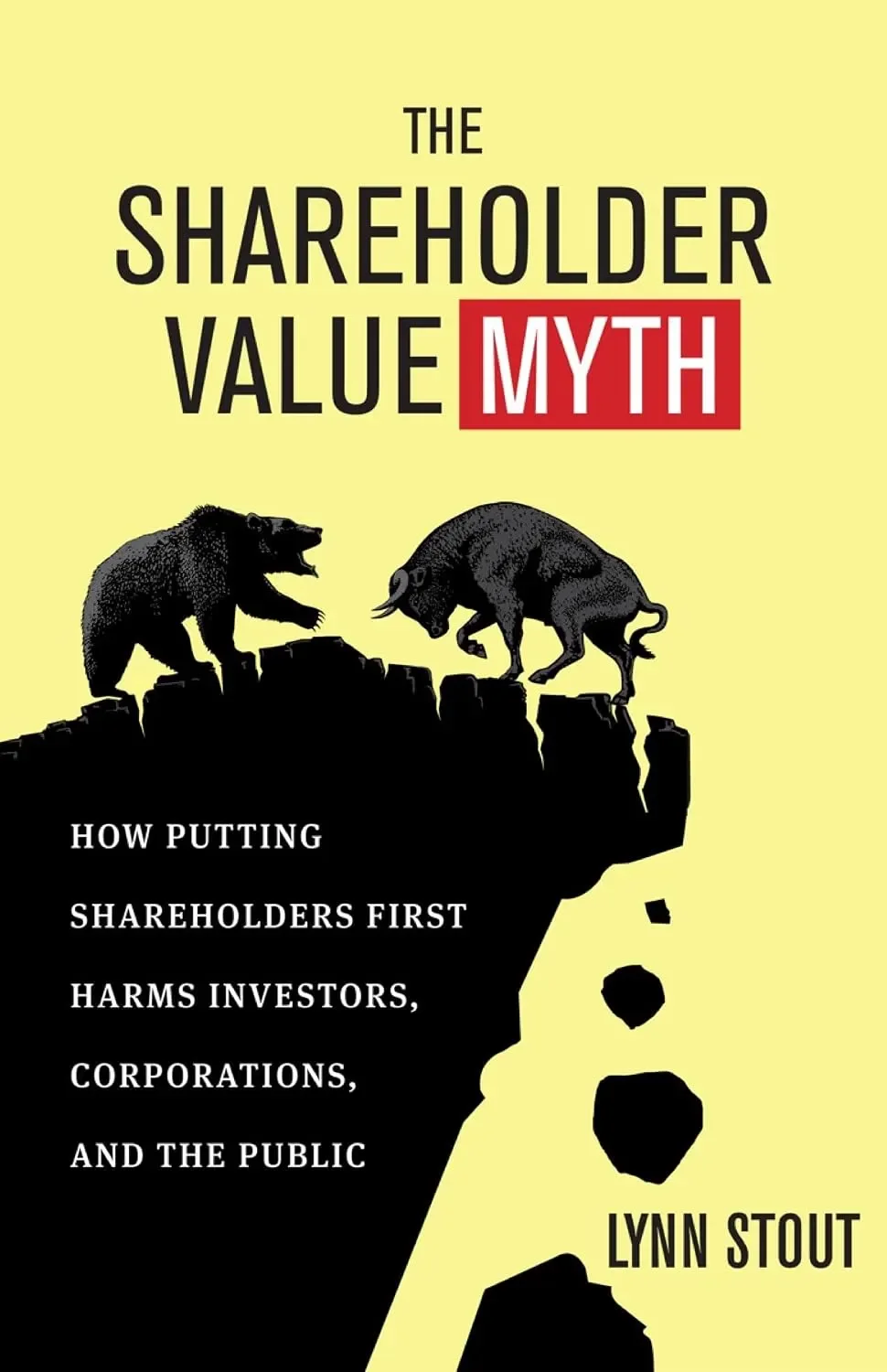
This self-imposed ignorance (something I often talk about) manifests differently across economic classes, each adopting distinct paradigms. Within the upper and investor classes, the principal taboo involves acknowledging the structural illegitimacy of their wealth. Philosopher Michael Sandel, in The Tyranny of Merit, contends that the wealthy perpetuate a meritocratic narrative, attributing their financial success solely to individual talent and effort, while disregarding the roles of tax advantages, inherited capital, and systemic inequality. For the suburban middle class, the prevailing taboo concerns the biophysical constraints of their lifestyle. Maintaining suburban consumption necessitates ignoring the thermodynamic realities emphasized by ecological economist William Catton in Overshoot, specifically that low-density sprawl and automobile dependence are temporary outcomes of inexpensive fossil fuels rather than sustainable models for human habitation.
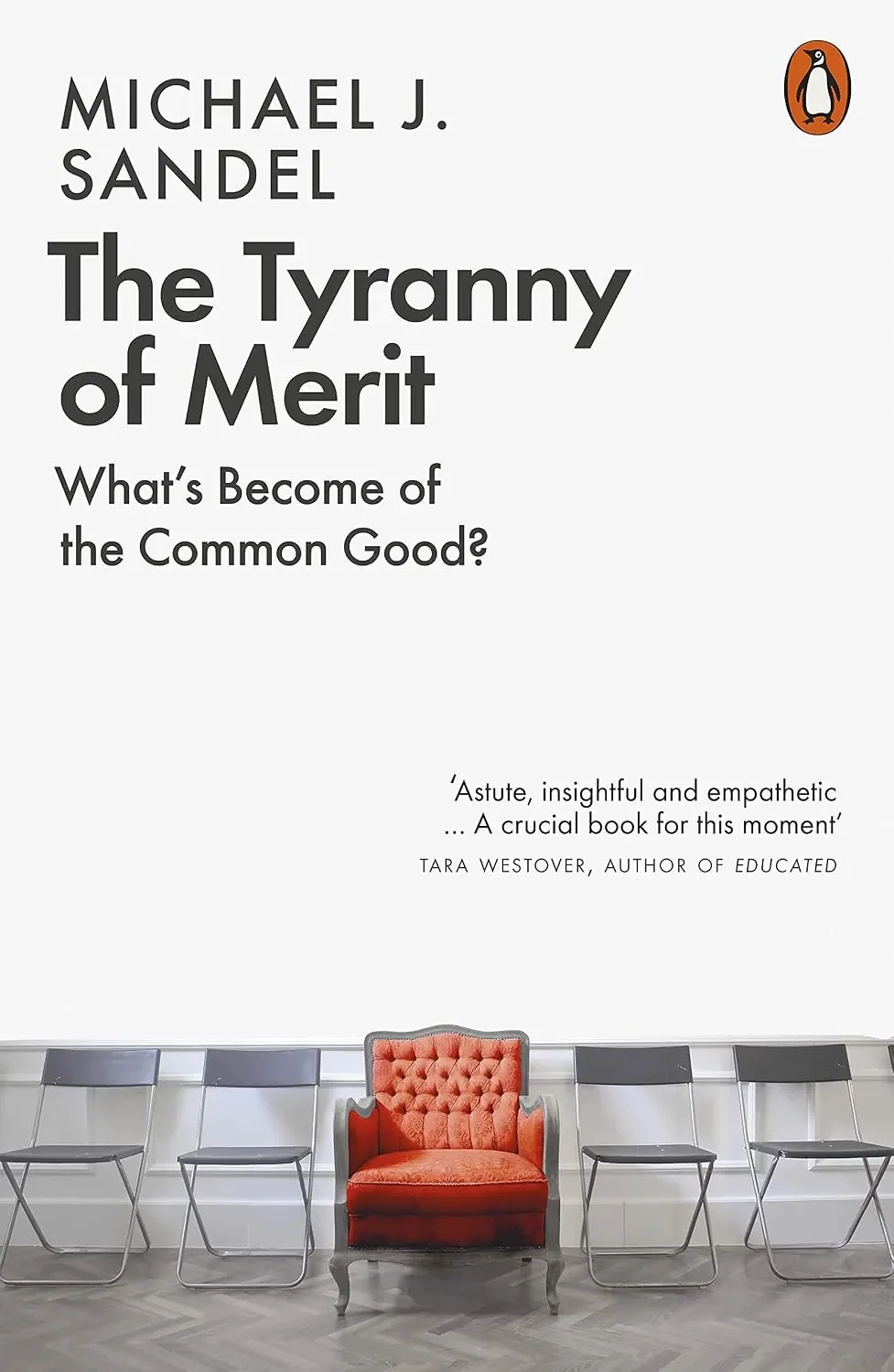
At the opposite end of the socioeconomic spectrum, members of the precarious working class and marginalized inner-city youth are compelled toward avoidance due to cognitive overload rather than vanity. In Scarcity: Why Having Too Little Means So Much, behavioral scientists Sendhil Mullainathan and Eldar Shafir illustrate how acute financial distress monopolizes an individual’s cognitive resources. For those struggling to meet basic needs such as food, housing, or safety, engaging with macro-level issues like global supply chain vulnerabilities or geopolitical instability is an unattainable luxury. In such circumstances, money serves as both an urgent necessity for survival and a temporary source of relief, leaving little psychological capacity to examine the broader systems that sustain their vulnerability.
These individual and class-based blind spots are reinforced by significant macroeconomic taboos that society collectively avoids addressing. Foremost among these is the thermodynamic contradiction inherent in pursuing perpetual economic growth. Pioneer bioeconomist Nicholas Georgescu-Roegen, through the laws of entropy, showed that continuous GDP growth on a planet with finite resources inevitably accelerates resource depletion and environmental degradation. Nevertheless, mainstream economics still treats the biosphere as subordinate to the human market. Additionally, the structure of fiat currency, in which money is generated through debt that requires ongoing interest payments, perpetuates a cycle of expansion irrespective of ecological constraints. To sustain current Western living standards, populations must also ignore what anthropologist Jason Hickel calls the “imperial drain”: the persistent unequal exchange in which the Global South provides inexpensive labor, energy, and raw materials to supply Northern consumer markets with affordable goods.
A brief detour regarding limited resources on a finite planet.
We must be clear: for Homo sapiens, on the modern industrial, high-tech time scale, and economic trajectory, we do not have infinite resources. We are constrained.
The assertion that Earth’s metal resources are functionally infinite on a geological scale is based on a significant temporal category error. While mantle plumes, plate tectonics, magmatic differentiation, and hydrothermal activity do continually concentrate and regenerate heavy metals within the Earth’s crust, these processes occur over tens to hundreds of millions of years. Equating geological ore regeneration with the operational timeline of industrial civilization, which requires rapid economic returns and sustained annual GDP growth, confuses planetary deep time with human economic reality. Within any timeframe relevant to human survival, the supply of economically accessible, highly concentrated metal ores remains strictly finite.
The principal constraint on mineral extraction is not the total atomic mass of an element within the Earth’s crust, but rather the thermodynamic cost of concentrating it. As high-grade surface deposits are depleted, mining operations must increasingly target lower-grade ores. This transition results in an exponential increase in energy requirements: reducing ore grade from 2% to 0.2% copper does not merely require ten times more energy, but exponentially greater inputs of energy, freshwater, and chemical reagents to process vast quantities of waste rock for diminishing returns. Ultimately, the physical work required to extract trace metals from low-concentration rock reaches a thermodynamic threshold at which the energy expended exceeds the societal value of the extracted material.
This extractive dynamic reveals a paradox inherent in the transition to “green” technologies. The construction of wind turbines, solar arrays, power grids, and electric vehicles intended to support the future economy necessitates a substantial and unprecedented increase in the mining of copper, nickel, lithium, cobalt, and rare earth elements. Furthermore, operating the large-scale industrial machinery required to extract and process these lower-grade ores demands significant and continuous baseload power. Addressing resource constraints by expanding energy-intensive industrial infrastructure, which itself relies on increasingly scarce and energy-intensive resources, establishes a feedback loop that intensifies ecological degradation rather than mitigating it.
Proponents of infinite GDP growth often rely on the concept of “absolute decoupling,” which posits that financial value can increase indefinitely. At the same time, physical material and energy throughput remain constant or decline. However, value is inherently dependent on physical substrates. Every digital transaction, financial derivative, and automated service is supported by an extensive infrastructure of server farms, satellite networks, power plants, and supply chains composed of metals extracted from the Earth’s crust. When the energy and material inputs necessary to sustain this infrastructure surpass planetary carrying capacity and net energy yields, economic growth no longer reflects expanding wealth but instead signals accelerating resource depletion.
It’s Money We Want
Ultimately, money functions as a potent psychological comfort by providing individuals with private means of escape from collective decline. High compensation acts as a psychological incentive; the greater an individual’s earnings from a dysfunctional system, the more vigorously they are likely to defend its underlying logic and disregard its destructive consequences. Wealth enables access to private solutions such as gated communities, private healthcare, and exclusive education, thereby shielding individuals from deteriorating social and environmental infrastructure. The act of earning and spending money creates an immediate and compelling sense of personal agency in a context where broader geopolitical and ecological outcomes appear uncontrollable. However, this sense of security is illusory: no amount of financial capital can ultimately provide lasting protection from the biophysical constraints of an overextended planet.
Post-Scarcity Critique and The Technocratic Idealism of Einar Tangen
Einar Tangen, a seasoned political analyst, former attorney, Senior Fellow at Beijing’s Taihe Institute, and creator of Asia Narratives, applies a sophisticated analytical framework to the global political economy. Drawing on decades of experience in international trade, law, and China’s state-directed industrial planning, Tangen’s work in The Post-Scarcity Paradox presents a compelling critique of contemporary capitalism. He contends that the digital revolution, propelled by artificial intelligence, robotics, precision agriculture, and biotechnology, has established the technical basis for an era of abundance in which the marginal cost of goods approaches zero. According to Tangen, the principal tragedy of the twenty-first century is humanity’s continued entrapment in legacy business models, rent-seeking institutions, and geopolitical systems that perpetuate artificial scarcity for profit. To address this, he proposes a transition to a “Contribution Economy,” shifting from process to purpose, where societal structures are designed to optimize “how we matter” rather than what is extracted. However, despite the intellectual rigor and aspirational intent of this vision, Tangen’s perspective exhibits a common limitation among leading geopolitical commentators: the presumption that complex, deeply entrenched human systems can be rationally reorganized through top-down institutional design.
The Biophysical Blind Spot: Energy and Ecological Overshoot
The Biophysical Blind Spot: Energy and Ecological Overshoot
A central weakness of the post-scarcity framework is its disregard for biophysical constraints. Tangen’s argument presupposes that digital technologies can separate human well-being from material resource limitations. However, as demonstrated by biophysical economists such as Nate Hagens and systems theorists like Dennis Meadows, the digital infrastructure is fundamentally energy-intensive and dependent on the “carbon pulse.” Technologies including AI server farms, robotic automation, and precision agriculture demand substantial baseload electricity, rare earth minerals, freshwater for cooling, and highly integrated global supply chains. In a context characterized by ecological overshoot, soil degradation, water scarcity, and accelerating climate instability, technological advancement does not overcome physical boundaries; rather, it increases resource consumption. Assuming that digital technologies can democratize abundance while ecological systems deteriorate conflates technological management with genuine solutions to planetary constraints.
Cultural Unreadiness and the Psychological Trap
Even if technological infrastructure could be maintained, Tangen’s advocacy for a Contribution Economy presupposes a level of cultural readiness that is currently absent. Does society possess the necessary “political imagination and will” to facilitate such a transition? Contemporary late-stage capitalist culture does not foster individuals prepared to confront fundamental realities, much less undertake the profound self-examination required to redefine human value. Philosopher Peter Sloterdijk, in his critique of modern cynicism, notes that citizens in dominant economies experience “enlightened false consciousness”—they recognize the ecological unsustainability of their economic system, yet remain immobilized by financial incentives and consumer comforts. Most people lack the cognitive resources or access to engage with these abstract economic models, while elites are financially motivated to disregard them.
How many times, by how many sincere commentators, must these things be said before ordinary people will act upon this information? Futility.
Geopolitical Fracturing Versus Harmonious Transition
Additionally, Tangen’s framework underestimates the disruptive dynamics inherent in a multipolar world experiencing resource depletion. Achieving a seamless, globally coordinated transition from scarcity to a purpose-driven Contribution Economy would require unprecedented international trust and stability. (More coordination problems.) However, escalating climate impacts, ecological destruction, and border conflicts (we are currently embroiled in World War III) undermine the conditions necessary for such cooperation. Complexity scientists examining historical collapses have shown that intensifying resource competition typically results in regional fragmentation, elite overproduction, and state disintegration, rather than coordinated institutional reform. It is therefore more likely that local populations will be forced to adapt in a fragmented world lacking global supply chains and advanced technological infrastructure, rather than benefit from an orchestrated transition to a digital post-scarcity society. I was once a true believer in a post-scarcity society, culture, and economy. Now I see the possibility of post-scarcity in future hunter-gatherer bands living in a radically different world that people adapt to, not by choice or design, but out of necessity, perhaps when the global population of Homo sapiens is five million souls.
A Grounded Assessment of the Unfolding Transition
Although Tangen’s critique of rent-seeking scarcity capitalism is both accurate and insightful, his proposed solutions are grounded in techno-rationalist optimism that underestimates the magnitude of the challenges ahead. Economic transitions are unlikely to manifest as orderly policy reforms devised by intellectuals; rather, they will likely be chaotic, localized, and unevenly distributed disruptions. Acknowledging the limitations of post-scarcity narratives enables a shift away from the reassuring notion of technological salvation, redirecting attention toward essential social efforts such as fostering localized resilience, safeguarding critical knowledge, and developing the capacity to navigate forthcoming disruptions with dignity and mutual support.
The Dialectics of Measured Progress: Steven Pinker, the Enlightenment Narrative, and the Discontents of Modernity
Daniel Dushy has described himself as growing up in the heart of the secular Tel Aviv left and has expressed critical views of certain aspects of Israeli society and political systems, but he has not explicitly defined himself simply as a “Zionist” or “anti-Zionist” in ideological terms, instead positioning his The Daniel Dushy Podcast as a broad platform for deep conversations across Israel’s entire political, religious, and secular spectrum. [1, 2, 3] If you want to understand Iraeli society, I recommend his podcast.
“Daniel Dushi is an exceptionally adept interviewer who has had on his podcast some of the most interesting and influential people within Israeli society, of all political and social perspectives. His interviews are generally rather lengthy yet flow with questions and answers that truly reflect the interviewees ideas and beliefs, non-confrontational but rather with a strong sense of empathy on Dushi’s part, even though he is honest about his own left-leaning political beliefs.” —Chaim Handler
The Evolutionary Architecture of Mind and Human Nature
This pamphlet wouldn’t be complete without examining one of the premier apologists for ‘Western’ modern techno-industrial civilization and its progress narratives. I have read all of his books, and my opinions about his work have evolved over the years.
Steven Pinker’s socio-historical theory of progress is based on evolutionary psychology and the computational theory of mind. He rejects both the Lockean idea of the blank slate (tabula rasa) and the Rousseauian notion of natural innocence. Instead, he sees the human brain as an information-processing organ of biological origin, shaped by natural selection to meet our ancestors' survival needs. Within this approach, consciousness and agency are material phenomena arising from complex electrochemical neural networks, a fact supported by the predictable ways in which physical trauma and pharmacological anesthesia cause disruptions. Pinker regards intuitive dualism—the tendency in cognition to see the mind and body as fundamentally different—as an evolutionary adaptation that helps people navigate social situations by letting them see other members of their species as conscious, intentional agents rather than simple physical mechanisms.
The human nature described in this model results from continuous interactions among various modular psychological faculties rather than from a single, malleable essence. Pinker clearly opposes the hydraulic theory of aggression, which holds that violence is a built-up instinctual urge that needs to be periodically released through catharsis. Instead, Pinker divides the human motivational structure into two opposing categories: the ‘inner demons’ and the ‘better angels’.
The five different motivational systems involved are predatory exploitation, dominance hierarchies, retaliatory revenge, sadism, and ideological moralism. These disruptive tendencies are offset by four internal psychological faculties: empathy, self-control, the moral sense, and abstract reason. Macro-historical progress does not require any biological changes to the human genome; instead, it occurs when external cultural and political institutions systematically reshape environmental incentives to favor the better angels over the inner demons. All of this still makes sense to me.
The Pacification Paradigm and the Declining Violence Thesis
The central point of Pinker’s declining violence thesis, as set out in detail in The Better Angels of Our Nature, is the historical realization of this psychological change. Using historical criminology, archaeological records, and war casualty databases, he identifies six major historical transitions and five institutional forces that have reduced lethal violence over the millennia.
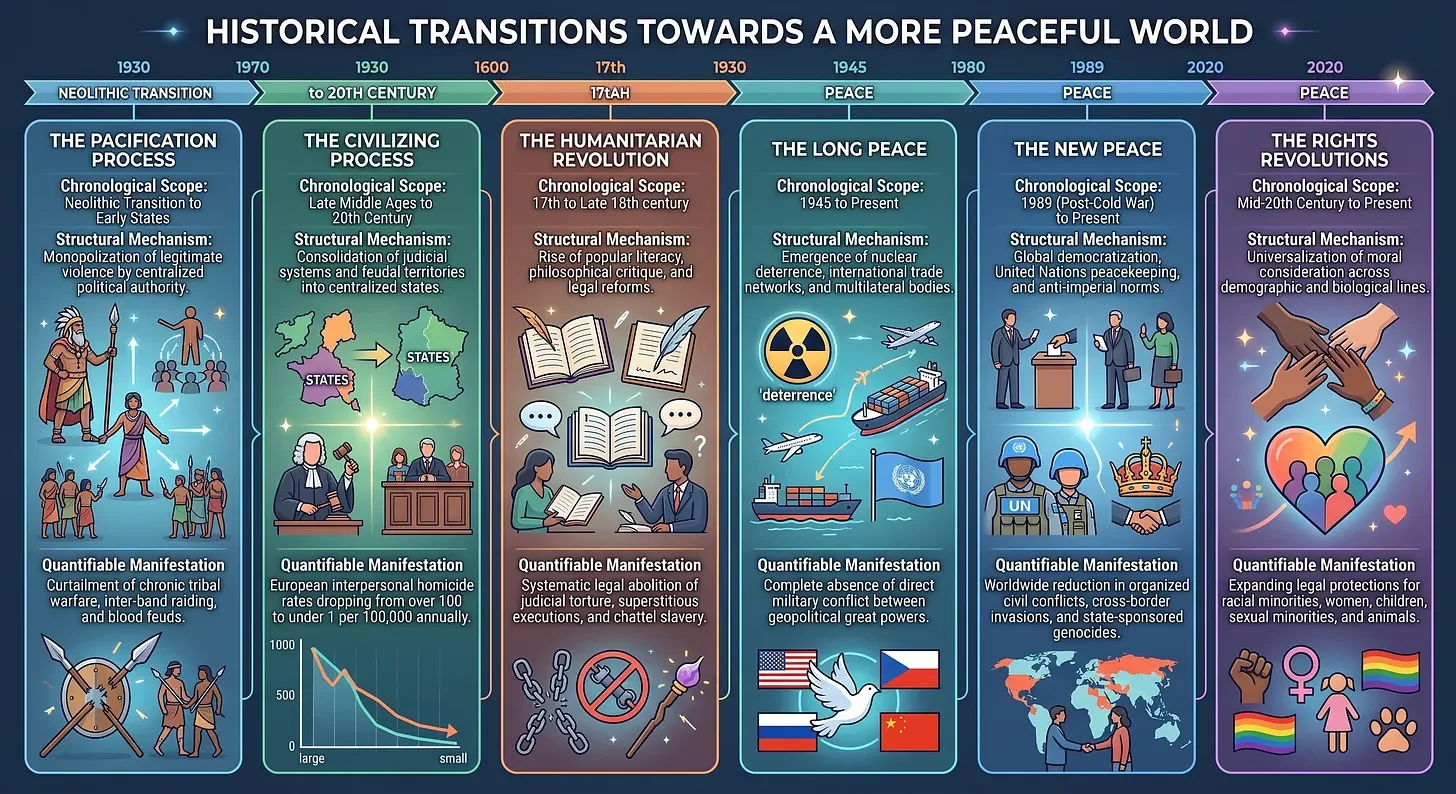
Pinker attributes those transitions to five historical forces.
The first of these is the Leviathan, which refers to the centralized state’s exclusive right to use coercive force legitimately, thereby deterring private retribution and preemptive violence.
The other one is Gentle Commerce (doux commerce), which describes an economic approach in which open trading networks and technological specialization cause foreign populations to be seen as more valuable as trading partners than as objects of conquest.
The third one is feminization, which refers to the cultural shift towards promoting female interests and female leadership, and, in turn, reduces competitive clashes among men over status.
The fourth is cosmopolitanism, which is promoted by literacy, journalism, and mobility and has the effect of widening the human imagination as well as extending the ‘circle of sympathy’ to include people who are distant.
The fifth force is the Escalator of Reason, which involves applying rational inquiry to matters concerning humans and transforms violence from an issue of honor into an inefficient problem to be solved. 7
* Note the limitations of his focus. We can all choose to focus on certain elements, thereby changing the perception of the context of complex sociological systems.
Epistemological Pillars of Scientific Humanism and Artificial Intelligence
In Enlightenment Now, Pinker groups these pacifying mechanisms into a worldview based on four values: reason, science, humanism, and progress.
Reason is regarded as a basic standard that calls for the systematic rejection of revelation, tradition, and dogma in favor of empirical verification.
Science systematically applies reason to discover the laws that govern both the physical and social worlds.
Humanism offers the moral basis by stating that the highest ethical standard is the subjective aspect of flourishing and the physical well-being of conscious individuals.
Progress is the result of putting these values into action, showing steady, measurable improvements in life expectancy, literacy, nutritional security, and individual liberty.
Pinker clearly defends this approach, grounded in quantitative analysis and utilitarian principles, stating in Enlightenment Now that “a quantitative mindset, although it has that rather nerdish reputation, is in fact the one that is morally enlightened.” He uses wide-ranging datasets—often gathered through projects such as Our World in Data—to show substantial historical declines in maternal mortality, extreme poverty, infectious diseases, and illiteracy, along with corresponding increases in global access to calories, leisure hours, and universal schooling.
The rationalist approach Pinker follows leads him to be skeptical of apocalyptic stories about Artificial Intelligence. He regards the idea of a runaway “superintelligence” as an inconsistent category mistake that attributes self-directed beings with a natural biological desire for power to algorithmic systems. According to him, intelligence is limited by computational complexity, physical laws, and empirical data rather than functioning as an undifferentiated magical ability.
Technological advancement involves a constant progression in tool development; modern machine learning models do not have an intrinsic evolutionary impulse to achieve dominance or ensure survival. Since the widespread use of digital computation has been accompanied by an economic productivity paradox—namely, a failure to produce immediate and historic increases in total factor productivity—Pinker dismisses existential dread. He suggests handling AI as standard systems engineering does: using deterministic fail-safes, involving human oversight, and conducting thorough safety tests similar to those used to regulate civil aviation and nuclear power.
The Ecological Blind Spot: Externalities, Overshoot, and Ecomodernist Faith
A major objection to Pinker’s paradigm concerns how he handles modern economic externalities, planetary boundaries, and the buildup of ecological disruption. People in ecological economics and Earth system sciences argue that Pinker’s account of progress rests on a kind of metric imbalance: it emphasizes human welfare indicators while treating resource depletion, biospheric destabilization, and biodiversity loss as minor management issues.
Systems theorist Jeremy Lent notes that Pinker’s emphasis on industrial output masks biophysical overshoot—that is, the consumption of ecosystem services, together with the production of waste, exceeds the Earth’s capacity to regenerate. Although global real GDP has increased more than twenty-twofold since 1970, this level of material consumption has also led to serious disturbances in the non-human living world. Lent points out that freshwater vertebrate populations declined by about 80% over this period, stating that “for every five birds or fish that lived in a river or lake in 1970 there is now only one.”
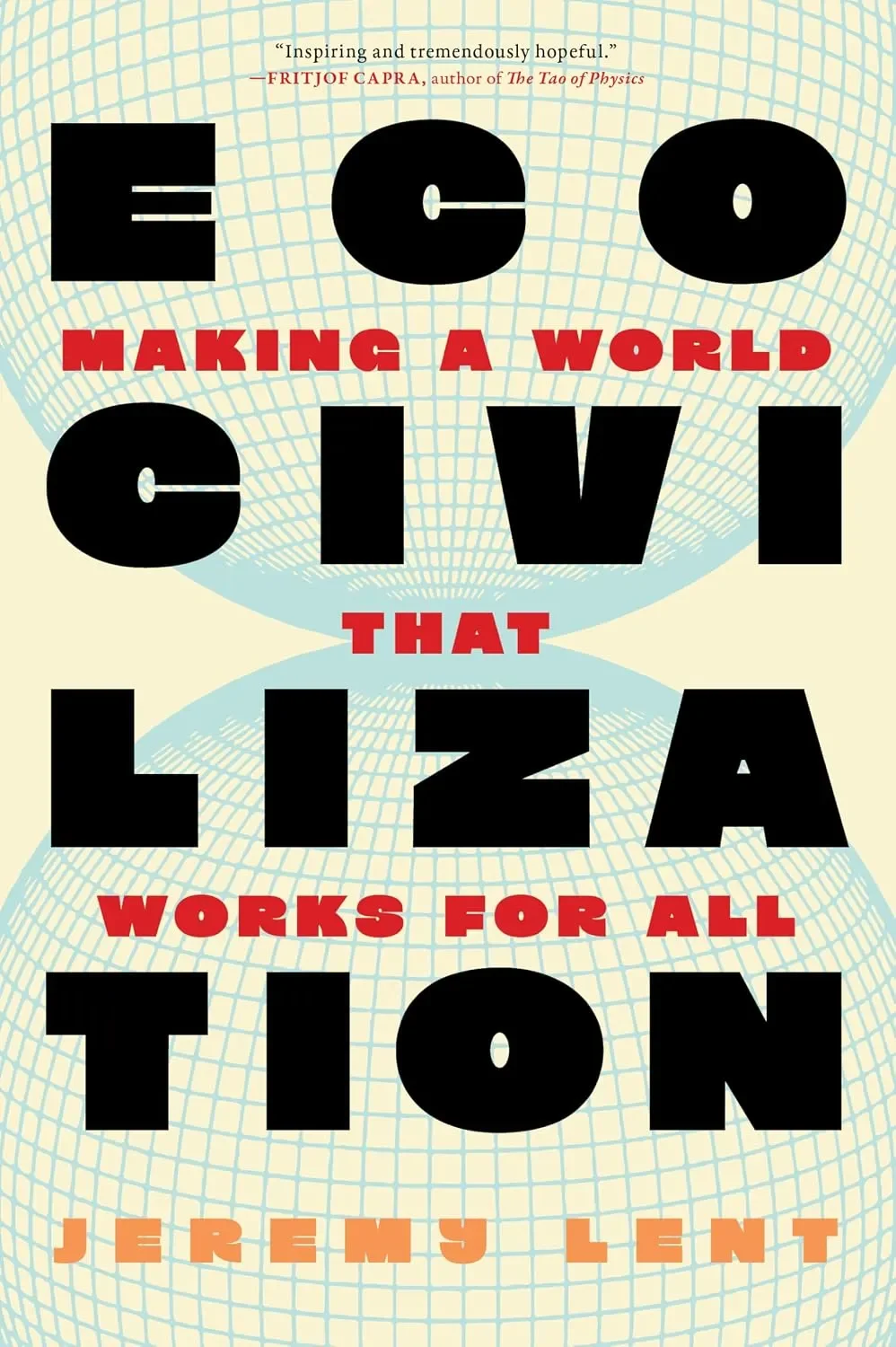
How many times have I and the people swimming in the milieu of overshoot, collapse, and limits to growth written about the topics mentioned in this book?
By stating that “even though the word has ‘human’ in it, humanism does not rule out the flourishing of animals, the present book merely concerns itself with the welfare of humans”, Pinker narrows the scope of his investigation. People who disagree with this approach claim that this anthropocentric view overlooks the fact that the destruction of fundamental natural capital maintains the living standards we have today.
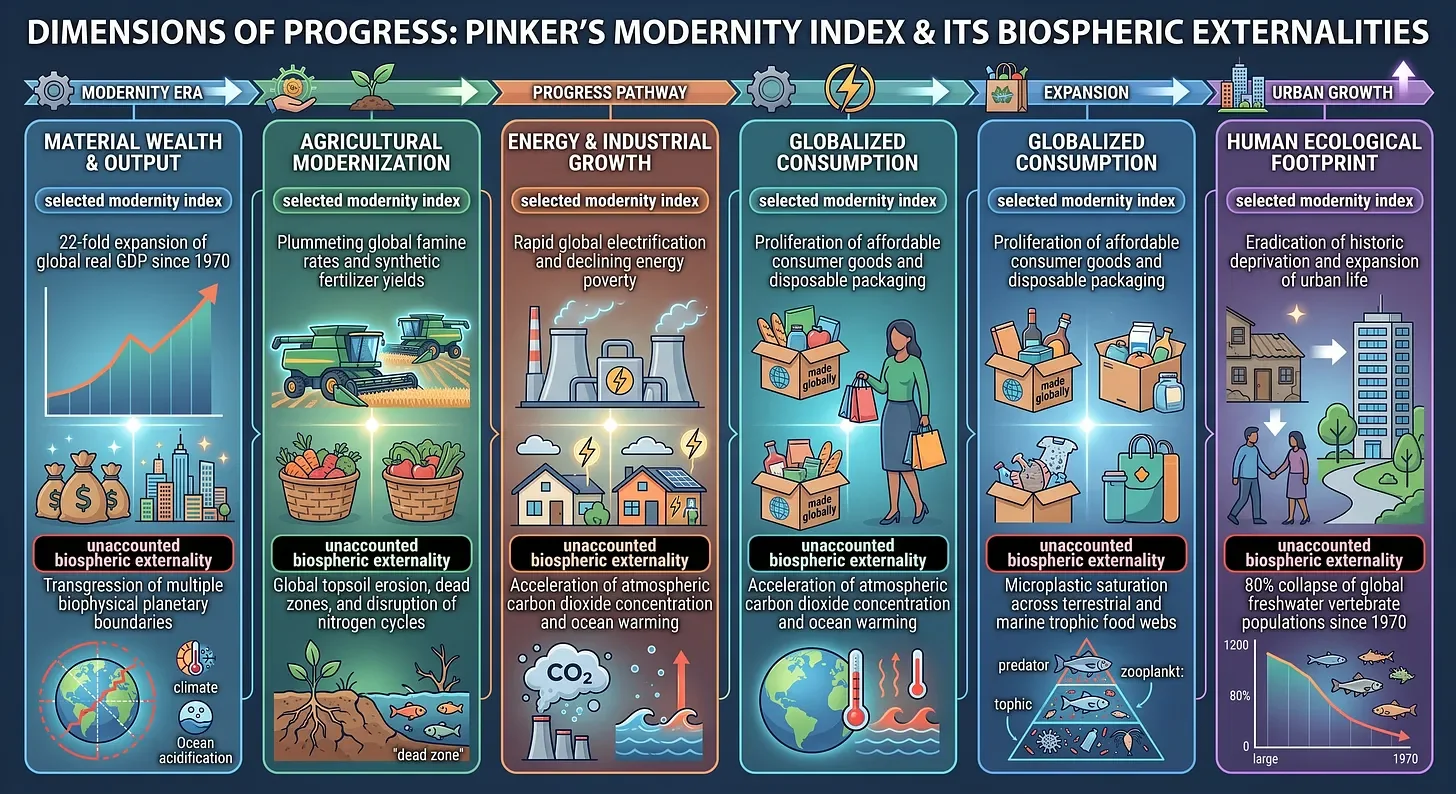
To address environmental problems, Pinker appeals to a technocratic idea known as Ecomodernism, which holds that high-yield agriculture, advanced nuclear fission, precise engineering, and efficiency driven by market forces will enable economic growth to be decoupled from material and ecological consumption. At the heart of Pinker’s argument is the Environmental Kuznets Curve (EKC), the idea that environmental deterioration increases during the early stages of industrialization but then reverses as societies attain higher per capita income.
George Monbiot, an environmental journalist, and ecological researchers question Pinker’s use of the EKC, pointing out that the empirical curve primarily applies to local, visible pollutants such as sulfur dioxide. In contrast, it breaks down when applied to aggregate greenhouse gas emissions, aggregate material extraction, and aggregate waste. The apparent improvements in the environment in high-income countries are often just statistical illusions, driven by the relocation of carbon-intensive manufacturing and raw-material extraction to the Global South.
Instead of addressing the peer-reviewed consensus concerning ecosystem destabilization, Pinker often describes environmentalist criticisms as anti-humanist dogmatism. In Enlightenment Now, he attacks the famous 1972 Club of Rome report, The Limits to Growth, claiming that its systems dynamics modeling had forecast the complete exhaustion of global mineral supplies such as aluminum, copper, and zinc by 1992. Monbiot shows that Pinker merely repeated, without criticism, the arguments put forward by anti-environmental think tanks rather than examining the original text, which addressed dynamic resource feedback loops, exponential growth in industrial output, and the paths leading to systemic collapse rather than fixed depletion schedules.
Pinker ridicules the ecological degrowth advocates and the structural environmentalists for being followers of a “quasi-religious ideology... filled with misanthropy, such as indifference to starvation, a pleasure in ghoulish fantasies about a planet with fewer people, and comparisons similar to those of the Nazis in which humans are likened to vermin, pathogens, and cancer”. Critics see this kind of language as a defensive intellectual tactic intended to protect an optimistic, linear-progress narrative from the fact of the planet’s carrying capacity.
Interdisciplinary Critiques and Methodological Deconstructions
Historiographical and Philosophical Challenges
Those who study the history of science and political philosophers maintain that Pinker’s interpretation of European intellectual history distorts the Enlightenment. Jessica Riskin claims that Enlightenment Now contains “a knot of Orwellian contradictions” because it strips the Enlightenment of its most defining characteristic—critical skepticism. While Pinker sees reason as a foolproof engineering tool that consistently leads to progress, original thinkers such as David Hume and Immanuel Kant focused their investigations on the limits, contradictions, and fallibility of reason itself.
Pinker presents Hume as a champion of rationality who aimed at eliminating human irrationality, which is in direct contradiction of Hume’s main point in A Treatise of Human Nature, namely that“Reason is, and ought only to be the slave of the passions, and can never pretend to any other office than to serve and obey them.” Riskin contends that by turning reason into an uncritical, dogmatic tool of data-driven optimism, Pinker gives up the reflective self-criticism that is at the heart of Enlightenment epistemology:
“What we require at this present time of political, environmental, and cultural crisis is exactly the value which Pinker dismisses although his Enlightenment predecessors accepted it, no matter what disagreements they had on other issues—skepticism together with a corresponding attitude of informed criticism.” —Enlightenment Now
The philosopher John Gray goes on to elaborate on this criticism, describing Pinker’s argument as “a weak sermon aimed at frightened liberals.” He maintains that the idea of linear moral progress is in fact a secular version of Christian teleology pretending to be genuine empirical social science. Although scientific and technical knowledge builds up gradually, human ethical judgment, political wisdom and institutional stability do not. Societies can attain a high level of technological capability while at the same time falling into authoritarianism, violence or biospheric collapse. According to Gray, equating technological advancement with ethical progress amounts to telling a comforting myth intended to reassure liberal cosmopolitans about the volatile and non-linear nature of history.
Statistical Methodologies, Fat Tails, and the Illusion of Long Peace
Nassim Nicholas Taleb and the applied probability theorist Pasquale Cirillo have questioned the mathematical basis of Pinker’s pacification thesis. They show that war casualty data are determined by heavy, fat-tailed probability distributions characterized by power-law dynamics rather than by thin-tailed Gaussian (Normal) distributions. In a fat-tailed situation, the probability of an extreme observation


exceeding a casualty threshold

decreases according to a power law:
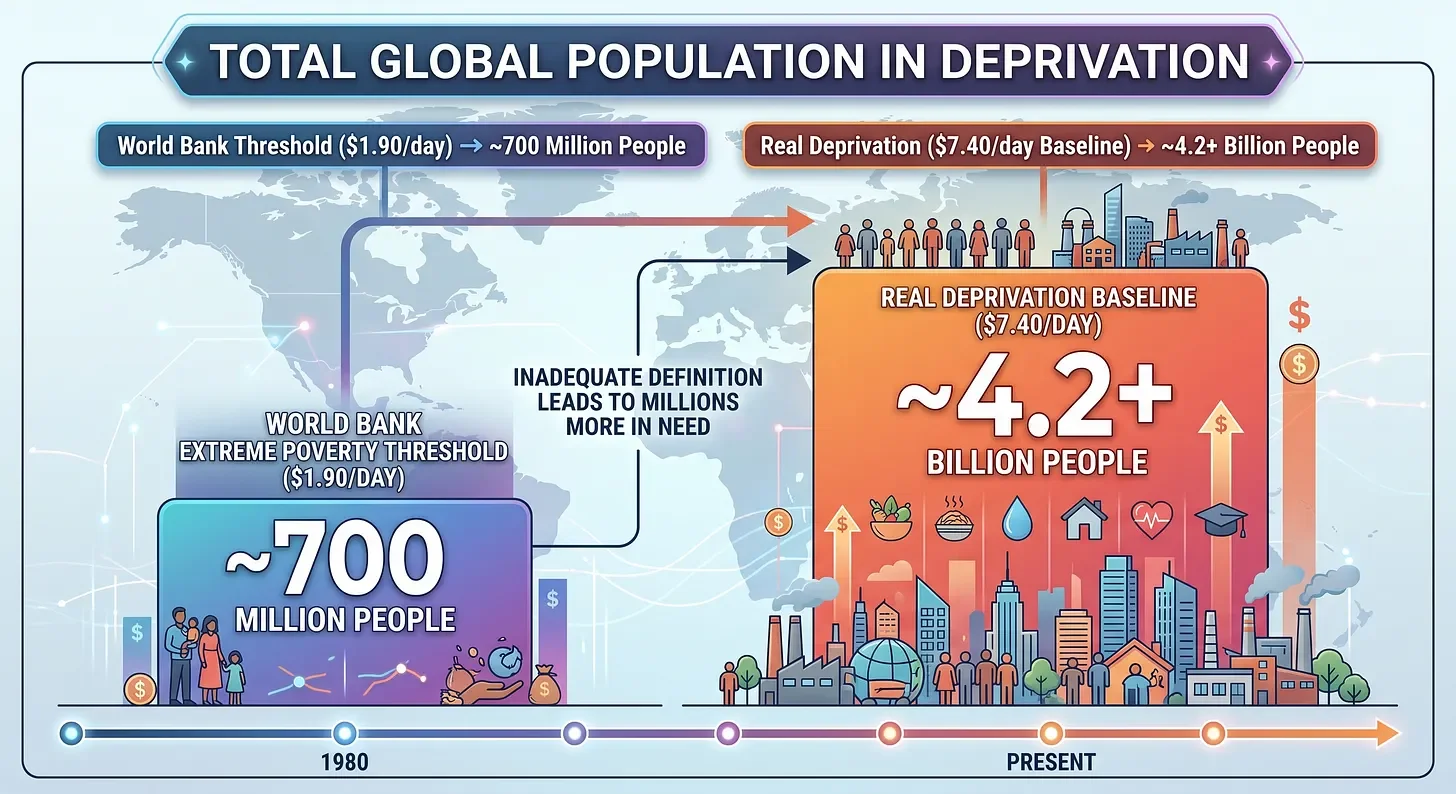
Poverty Baselines, Colonial Dispossession, and Western Chauvinism
The economic anthropologist Jason Hickel questions Pinker’s account of the reduction in global poverty. Pinker and other public figures such as Bill Gates often cite statistics showing that the percentage of people living in extreme poverty has fallen from 94% in 1820 to below 10% at present, presenting this as a direct result of global free-market capitalism. Hickel argues that this line of reasoning is based on the World Bank’s absolute poverty line of $1.90 a day (calculated on a Purchasing Power Parity basis). This rather arbitrary limit is insufficient to ensure access to adequate food, housing, healthcare, and clean water.
Hickel points out that the number of people living in poverty has increased since 1981, when poverty was measured against a realistic standard—for example, $7.40 a day, which is the minimum amount needed to achieve basic levels of life expectancy and health. Moreover, most of the income gains that raised populations above this higher level occurred in China under state direction, not in developing areas subjected to structural adjustment programs based on the Washington Consensus.
Hickel also questions Pinker’s historical baseline, arguing that applying today’s measures of monetary poverty to pre-industrial societies distorts the course of economic history, since traditional subsistence farmers and indigenous groups could use common land, forests, and community arrangements without needing cash wages.
The historical creation of poverty was caused by European colonial conquest, the enclosure of land, and the forced disruption of self-sustaining communities, so that they were forced to take up low-wage jobs in the colonial labor markets. Viewing the shift from self-sufficient subsistence to low-wage labor as a humanitarian achievement masks the violent past of colonial exploitation and the systemic underdevelopment it caused.
Anthropological Rebuttals and Prehistoric Violence Baselines
The figure Pinker gives for violence in prehistoric times in his book The Better Angels of Our Nature has been challenged by anthropologists and archaeologists who specialize in the prehistoric period. Pinker claims that our ancestors in hunter-gatherer societies experienced violent death rates of percent or more, in contrast to violence carried out in modern states. However, the anthropologist R. Brian Ferguson has demonstrated that Pinker used nonrepresentative archaeological data, as he chose sites with clear evidence of trauma (such as Crow Creek and Jebel Sahaba) and ignored numerous ancient burial sites that showed no physical signs of violence between individuals.
Ferguson shows that the ethnographic data collected by Pinker (such as Napoleon Chagnon’s fieldwork among the Yanomami) relate to tribal groups that were actively undermined by contact with European colonists. The expansion of empires, the penetration of trade, the spread of epidemic diseases, and the introduction of firearms led to militarised “tribal zones” marked by fierce conflict. By equating warfare during the period of contact with the peaceful hunter-gatherer lifestyle before contact, this historical baseline is distorted, creating an artificial contrast that exaggerates the pacifying effect of the modern state.
Class Alignment and Neoliberal Status Quo Defense
Cultural analysts and political economists have strongly criticized the sociopolitical role of Pinker’s work. The essayist Pankaj Mishra calls Pinker a leading figure in what he terms an “intellectual service class,” a group whose contributions help legitimize the economic systems and moral positions of today's political and financial elites. I have noticed this more in recent years. Pinker's prominent endorsements from tech philanthropists, corporate leaders, and World Economic Forum participants in Davos suggest he shares an ideological outlook aligned with technocratic capitalism.
The argument has a political effect: it presents historical progress as resulting solely from free markets, scientific innovation, and centrist technocracy. Alternative approaches—such as post-capitalist systems, ecological economics, and substantial wealth redistribution—are not seen as feasible policies but as irrational threats to human progress. In this view, progress is an automatic feature of history rather than the result of political struggles waged by radical movements against powerful corporate interests.
Epistemological Synthesis: Measured Metrics versus Systemic Fragility
Steven Pinker shows how empirical data can undermine nostalgic beliefs about earlier times by providing evidence of real improvements in infant survival, disease eradication, literacy rates, and legal equality. Moreover, his focus on evolutionary constraints offers a way to understand human behavioral tendencies and the limits of social engineering.
Nevertheless, by linking the heritage of the European Enlightenment to present-day free-market capitalism and to ecomodernist optimism, Pinker creates an intellectually fragile synthesis; the fact that he has left out the buildup of biophysical externalities, the mathematics of fat-tailed geopolitical risk, the colonial origins of modern global inequality, and the fundamental importance of radical critique reveals the limits of technocratic liberalism.
The main problem of our time is not to praise the historical trends, but to rediscover the fundamental Enlightenment value which Pinker neglects: one that involves a firm and self-doubting form of inquiry, capable of examining whether the institutional systems which have led to past material achievements can still survive the ecological and social constraints of a finite planet. Instead of relying on past progress charts to ensure future well-being, modern civilization must learn to navigate the system’s biophysical limits.

Slaughterhouse-Five and U.S. Trauma Traits
Overview: Dresden, Tralfamadore, and the Fragmented American Psyche
Never. Again.
The absolute absurdity and horror of mass slaughter are the common roots of both Kurt Vonnegut’s real-life experiences and the alien philosophy that he presents in his novel Slaughterhouse-Five. The wartime events in the book clearly draw on his own life, as Vonnegut notes: “All this happened, more or less.” In 1944, when he was twenty-two, Vonnegut was sent to Europe and captured during the Battle of the Bulge; he then found himself imprisoned in a meatpacking plant in Dresden called Schlachthof-fünf (Slaughterhouse-Five). On February 13, 1945, the Allied forces carried out a firebombing operation that destroyed the city. Vonnegut managed to survive by hiding deep inside an underground meat locker and later came out into a moon-like landscape where the German guards made him dig up tens of thousands of dead bodies to cremate them with flamethrowers in the wreckage. He saw a fellow American prisoner being executed by firing squad simply for having stolen a teapot. It was not until twenty-three years later that Vonnegut wrote about the massacre, because he concluded that a traditional, linear account of war could never convey the profound sense of meaninglessness it entailed.
To confront an insurmountable horror, Vonnegut created the Tralfamadorians, a four-dimensional alien race for whom all moments in time exist at once. According to Tralfamadorian philosophy, free will is an illusion, death is treated as a brief state and dismissed with a shrug and the phrase “So it goes”, and wisdom is achieved through selective attention—that is, by concentrating only on the pleasant moments and ignoring the unpleasant ones. Nevertheless, as literary scholars have noted, this alien point of view is a double-edged sword: on one level it shows that Billy Pilgrim’s subconscious has employed this as a psychological defense mechanism to alleviate his severe post-traumatic stress disorder and to cope with the guilt of having survived while 25,000 people died. On a deeper level, Vonnegut uses this philosophy to critique emotional detachment sharply. By embracing complete passivity and accepting four-dimensional fatalism, Billy becomes indifferent to human suffering, thereby proving that total emotional numbness erodes our humanity.
The conflict between traumatic fragmentation and selective blindness sums up the essential features of the modern U.S. American character. Among different social classes, Americans suffer from various kinds of post-traumatic stress. For people in the middle and upper-middle classes, trauma appears as a sharp anxiety about being morally exposed—stemming from the persistent fear that their image of themselves as “good,” virtuous, or heroic is in fact a lie, one that hides their active involvement in systemic destruction and imperial violence. To guard these fragile self-images, the affluent create elaborate, heroic internal narratives. Popular entertainment leads people to view the world through binary fantasies, such as “wolves versus sheep” or armed people rising to the occasion like superheroes to stop the bad guys. This desire for moral grandeur makes the privileged class especially susceptible to dramatic conspiracy theories, to performative self-righteousness, and to demagogic claims that “I alone can fix it.”
On the other hand, members of the lower and working classes live with a constant state of financial insecurity; since instability is the only way of life they have ever known, they are generally much more grounded in reality and depend on real connections within their local communities for true value and a sense of belonging. Familial relationships provide meaning. These are generalizations, of course; people in unique circumstances react differently, and everyone, given the opportunity and a good environment to grow, can find pathways to healthful self-realization and expression.
In the world we now live in, this psychological fragmentation has escalated to a dangerous level. Mass killings and firebombing are no longer merely events of the past; they are now shown in real time directly on the screens in our pockets through Telegram and social media sites. Nobody is safe from the madness caused by our global heat engine, and the reaction of late-capitalist culture is a kind of modern, secular Tralfamadorianism. When faced with horrors that seem to be planned out in four-dimensional time, people take on a fatalistic passivity, saying only “So it goes” and at the same time focusing all their attention on personal comfort, consumer distractions, or therapeutic self-care; just as Billy Pilgrim’s ability to cope with his experiences is undermined by his time-traveling, so too do modern citizens live their lives as a series of separate, episodic moments. A culture that promotes positive feelings is determined to protect the illusion of personal innocence at all costs, turning political awareness into a fragmented, dramatic way of coping.
Nevertheless, Vonnegut’s final act of writing Slaughterhouse-Five offers the essential counterbalance to our present paralysis. Even though he looked directly into the depths of Dresden’s ashes and knew no simple solutions exist, he still decided to write the book, demonstrating a firm belief in the power of human agency and our ability to engage in self-reflection. We cannot afford the privilege of Tralfamadorian indifference or the easy lies of class-based heroism. In a world where global supply chains, planetary ecosystems, and human lives are given up as expendable to maintain an omnicidal machine based on illusions, fantasies, and maladjusted ideologies and incentives, treating destruction and mass murder as something inevitable is an act of moral cowardice. To escape the trap of modern trauma, we must reject the comforting anesthetic, give up the illusion of individual invulnerability, and instead accept the demanding work of mutual care, radical truth-telling, and active stewardship in the communities that are actually trying to shape their way of life.
A Duty-Dance with Determinism: A Philosophical Analysis of Kurt Vonnegut’s Slaughterhouse-Five
The Metafictional Architecture of Trauma and Historical Erasure
Kurt Vonnegut’s Slaughterhouse-Five replaces the traditional progression of the modern war novel with a disruption of time. Rather than a straightforward account of historical events, the work is an epistemological investigation into the impossibility of depicting catastrophic mass death. In the self-referential opening chapter, the narrator—who describes himself as a former anthropology student at the University of Chicago and as an Allied prisoner of war who survived the firebombing of Dresden—states that “there is nothing intelligent to say about a massacre.” The non-linear and fragmented structure mirrors the neurobiological fact of unprocessed trauma and is an aesthetic reaction to historical erasure and psychological damage.
This metafictional approach rests on an explicit ethical agreement with Mary O’Hare. By promising to challenge wartime heroic mythologies and the romantic film stereotypes associated with masculine militarism, the narrative reinterprets the conflict through its subtitle, The Children’s Crusade. Literary scholars point out that this reinterpretation functions as an anti-monomyth. At the same time, Joseph Campbell’s account of the classical hero’s journey outlines an empowering sequence involving departure, initiation, and a triumphant return that benefits society. Kathryn Hume notes that such archetypal quest patterns clash with the modern experience of industrialized warfare, and the monomythic pattern is therefore clearly distorted. The protagonist does not appear with agency or with wisdom, but rather with a severe psychological injury.
We must move away from empty optimism and cynicism and face reality honestly. We have to let go of the idea that feeling good is most important, since this attitude has made people passive in the face of bigger problems. To become more self-aware, we need to give up the easy comfort of blaming others, relying on quick fixes, or avoiding hard truths. Instead of seeing emotional discomfort as something we can’t handle, we should learn to sit with grief, take responsibility for our shared crises, and stop believing that science, engineering, and technology alone will save us. And we are not God. The natural world existed before Homo sapiens and will exist after our species is extinct.
As stated above, we need to move away from the obsession with efficiency and constant growth and instead focus on building robust, resilient systems. Our current problems stem from putting short-sighted leaders, encouraged by terrible incentives, in charge—people who harm ecosystems and people alike for quick financial rewards and status.
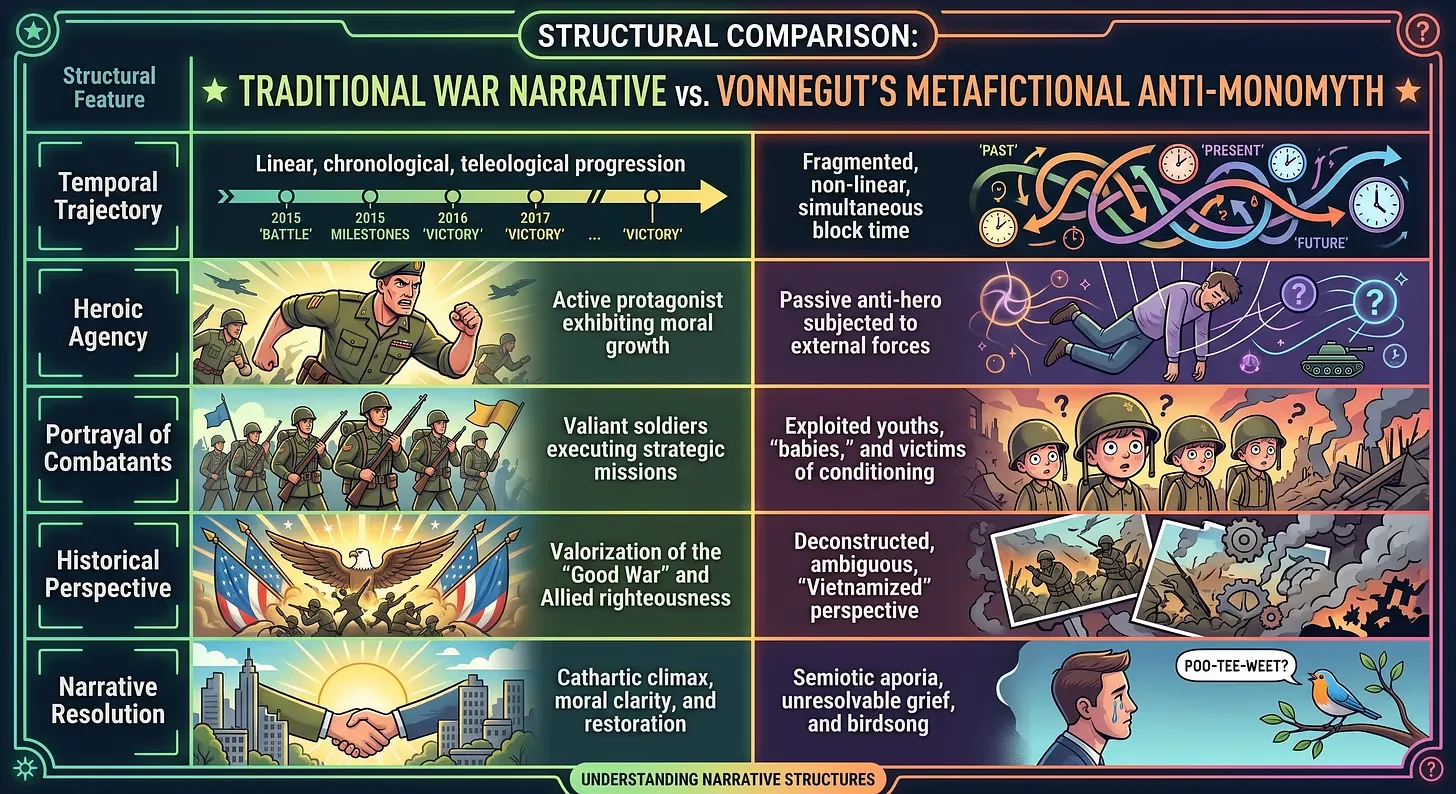
The novel undermines the traditional heroic portrayal by breaking down the idea of World War II as a morally clean victory. Since it was written at a time when violence was increasing in the late 1960s, it offers what Christina Jarvis describes as a “Vietnamized” version of historical conflict, marked by physical dismemberment, systemic confusion, and widespread moral ambiguity. The fact that the narrator is present in the story alongside his wartime companion, Bernard V. O’Hare, highlights how difficult it is to reconstruct memory in the face of archival suppression and the physical ruins of destroyed cities. Palestinian Gaza is being erased. Ukraine is being transformed. The narratives that follow will reflect what no one knows.
Tralfamadorianism: Four-Dimensional Ontologies and the Illusion of Agency
The novel’s main philosophical framework is the four-dimensional view held by the extraterrestrial Tralfamadorians. Unlike the linear way humans experience time, Tralfamadorian ontology holds that all moments—past, present, and future—exist eternally and simultaneously. Time is not seen as an irreversible river but rather as an unchanging spatial continuum, like a mountain range, with each event permanently fixed. Donald E. Morse connects this idea to modern physics and to Julian Barbour’s concept of “Block time”, according to which all instants of time are equally real and immutable, which means that the feeling of the present fading is merely a trick of human consciousness.
The Tralfamadorian universe is an example of determinism without design as described by Jerome Klinkowitz, being completely free from any idea of cosmic justice or higher teleology. The final destruction of the universe reveals this cosmic fact: the cosmos is not destroyed by a serious ideological clash, but by an accidental ignition test conducted by a Tralfamadorian pilot experimenting with new fuels. In this four-dimensional model, it makes no sense to try to change events that are about to happen since every event has already taken place, is taking place, and will always take place.
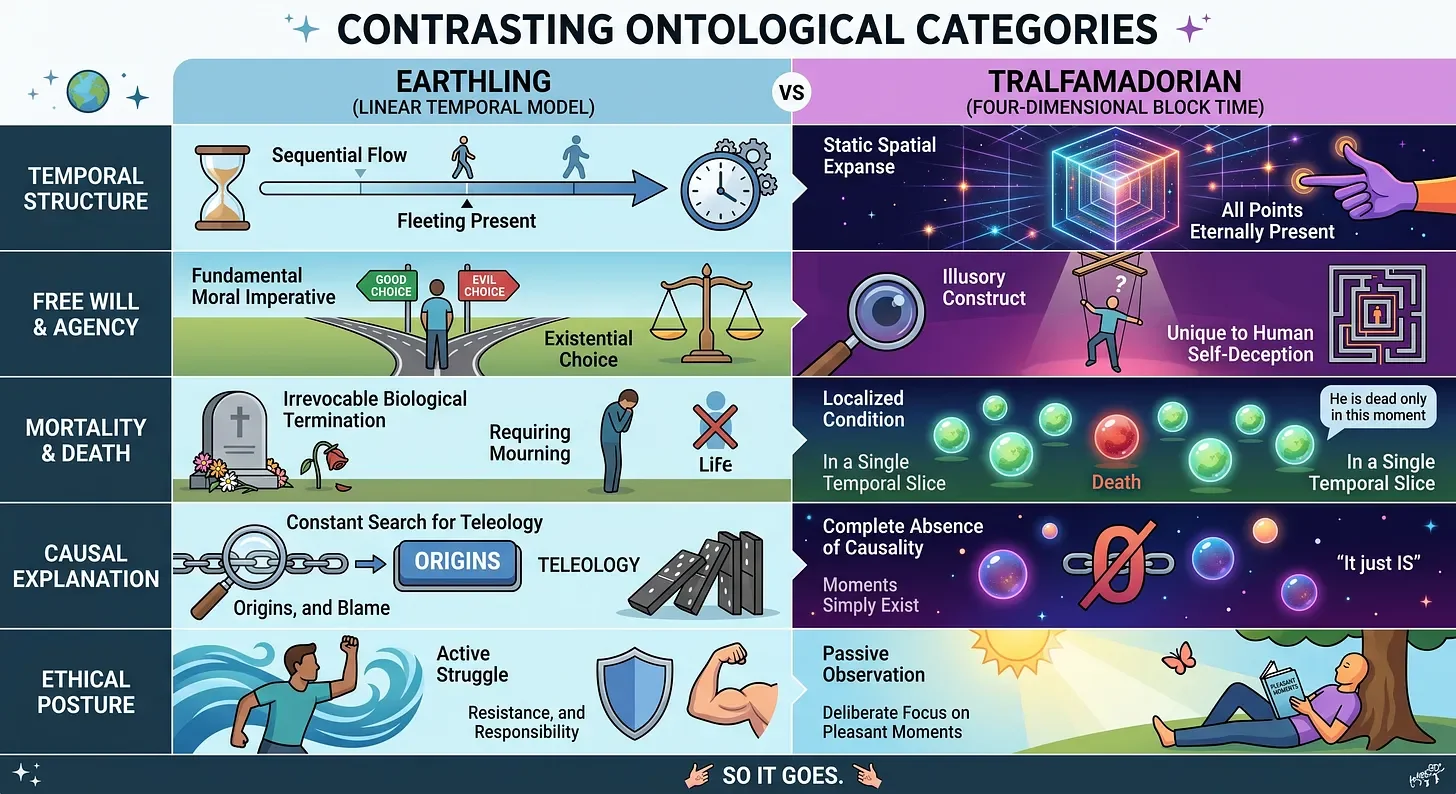
A linguistic analysis of the novel shows the way this philosophical viewpoint is reinforced through grammar. According to systemic-functional grammar, the text has a clear modal structure characterized by past-positive statements and a consistent avoidance of negative forms, thus creating an irresistible sense of deterministic inevitability. This fatalistic atmosphere is captured by the Serenity Prayer which is written on Billy Pilgrim’s office wall, together with the narrator’s remark that among the things Billy could not change were the past, the present, and the future; as Arnold Edelstein points out, this outlook reduces human beings to “bugs trapped in the amber of an unalterable spatial display of simultaneous moments that only seem to succeed each other.”
Existential Absurdism and the Psychology of Dissociation
Billy Pilgrim is a complete reversal of the conventional literary protagonist; described as a clumsy, passive figure, even a caricature like a ‘filthy flamingo’ or someone awkward in shape ‘like a Coca-Cola bottle’, he has no heroic sense of self-direction. Instead of showing moral autonomy, Billy’s experience of time displacement and being abducted can be seen as a sophisticated psychological coping mechanism arising from severe clinical trauma. According to Susanne Vees-Gulani, Billy’s experiences closely match the diagnostic criteria for Post-Traumatic Stress Disorder (PTSD), linking his temporal displacement with traumatic arousal and with the involuntary reliving of disturbing memories.
The book gives a detailed account of the psychological process behind traumatic triggers and dissociation. Certain sensory cues—for example, the smell of “roses and mustard gas” given off as a result of decay or the sudden wail of a siren—immediately break through Billy’s consciousness and cause him to go over the war experience. Vees-Gulani sees Billy’s deep apathy and lack of emotional expression as examples of “psychic numbing”, a defense mechanism which reduces responsiveness to an intolerable reality. It is notable that although Billy shows no concern about human mortality, his repressed emotional trauma comes to the surface when he sees the physical suffering of the horses that have been abused in Dresden, thus revealing the severe grief that lies underneath his detachment.
A further examination through an intertextual lens shows that Billy’s mythology concerning extraterrestrial beings is an escape formed from elements of popular culture. Alberto Cacicedo and Josh Simpson point out that the way Billy describes Tralfamadore is similar to the science fiction stories of Kilgore Trout, particularly those in The Big Board, in which a couple from Earth is put on display in an alien zoo. The way Billy imagines Montana Wildhack and his experience of being held captive is a combination of Trout’s speculative ideas with images from pornography sold in Times Square and also with his own repressed desires. In the face of severe cognitive dissonance—a state which Leon Festinger defines as the psychological distress caused by realities that cannot be reconciled—Billy creates a deterministic fantasy to relieve himself of the painful sense of survivor’s guilt and to remove the moral significance of those terrible historical events.
The Critical Schism: Quietism, Fatalism, and Moral Activism
The ethical position that Vonnegut intended to take arose amid philosophical ambiguity and caused considerable disagreement among literary critics. At first, people often conflated the protagonist’s fatalism with the author’s moral stance, leading to accusations of ideological surrender.
Tony Tanner coined the term “quietism” to indicate the novel’s apparent support for passive acceptance, the idea being that Billy’s submission to predetermined time represents a general postmodern withdrawal from engagement with history. Charles Harris also concluded that the book’s main theme is resigned acceptance. Meanwhile, Anthony Burgess described the narrative as an act of evasion similar to J. M. Barrie’s Peter Pan (I think of Michael Jackson’s Neverland Ranch), the view being that it withdraws into fantasy rather than facing the reality of the Dresden bombing. Alfred Kazin adopted these criticisms by claiming that Vonnegut downplays the tragic aspect of history. At the same time, Lynn Buck maintained that the author creates a world of “comic futility” characterized by cynicism, mechanization, and nihilism.
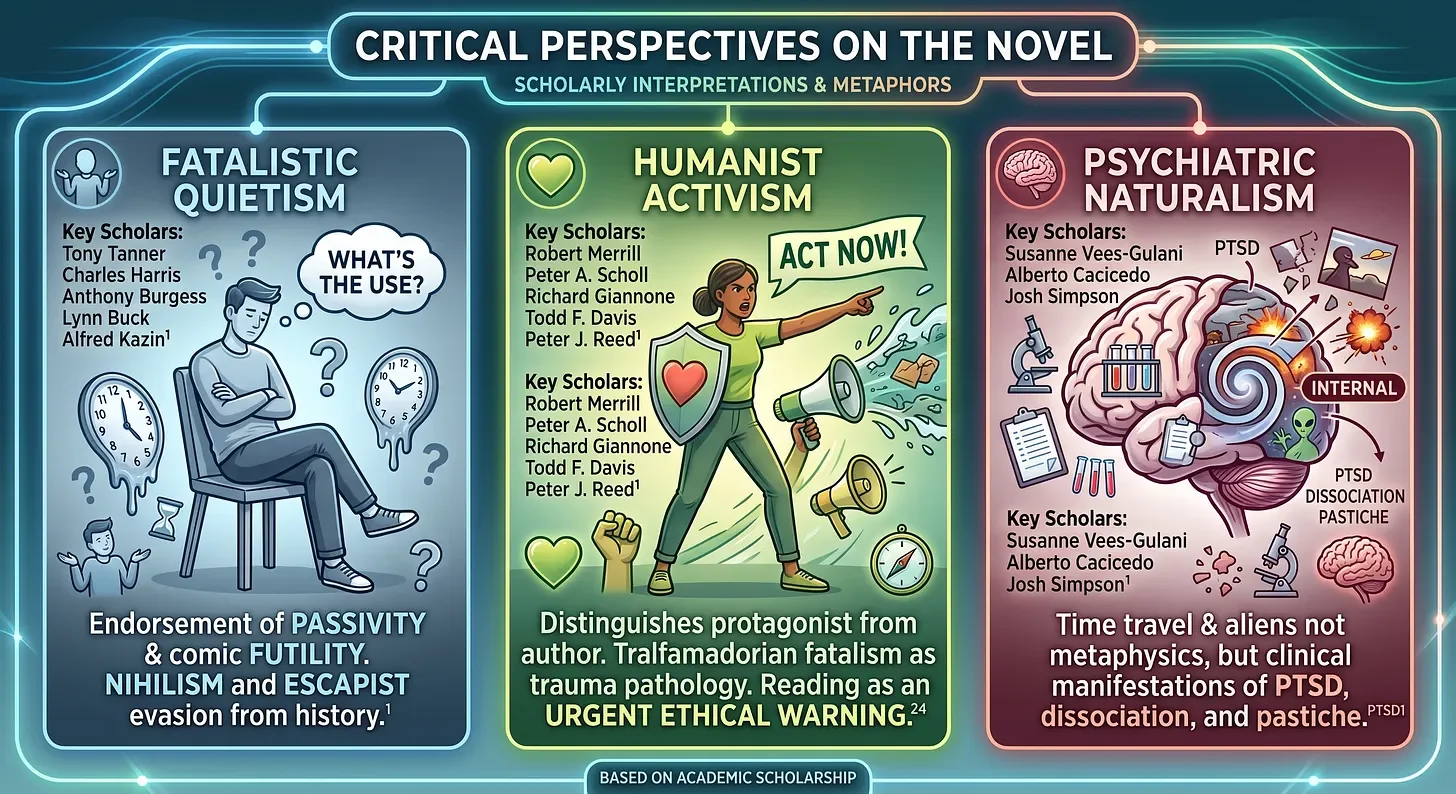
Robert Merrill and Peter A. Scholl reject the quietist interpretation, arguing that those who accuse Vonnegut of holding a fatalistic view are wrong to blame Vonnegut for Billy Pilgrim’s defective survival methods. Merrill and Scholl maintain that Vonnegut’s suggestion that artists act as “alarm systems” for society underlies the novel's structure. Rather than portraying Billy’s detachment positively, Vonnegut shows the tragic consequences of psychological surrender and aims to make readers feel a strong commitment to human decency and ethical responsibility.
This dedication to ethics stems from Vonnegut’s secular humanism, a viewpoint he developed through anthropological studies at the University of Chicago, where he learned that “nobody was ridiculous or bad or disgusting.” As a result, the narrative does not include traditional villains; instead, people like the vengeful Paul Lazzaro or the unstable Roland Weary are not seen as agents of metaphysical evil but rather as young individuals distorted by violent cultural conditioning.
This view stands in sharp contrast to that of Bertram Copeland Rumfoord, an arrogant Harvard historian who was also hospitalized with Billy. Rumfoord treats the destruction of Dresden as a complete military necessity from a cold, utilitarian geopolitical perspective. Although both Rumfoord and Billy see the firebombing as inevitable, Rumfoord justifies the mass killing on the grounds of state power, while Billy accepts it based on cosmic fatalism. Vonnegut rejects both of these attitudes, showing that the punishment of poor Edgar Derby for having taken an abandoned teapot reveals the monstrous moral irresponsibility of institutional systems that approve of the mass killing of civilians while at the same time strictly punishing minor offenses.
“We had to nuke Hiroshima and Nagasaki!”
The Aesthetics of Inadequacy: Semiotic Rupture, Temporal Inversion, and “Poo-tee-weet?”
The way in which the architecture of Slaughterhouse-Five is structured shows how language breaks down when faced with industrialized mass killing. The constant phrase “So it goes” appears more than 100 times in the book and serves as an egalitarian reminder of death after each death. By applying the same kind of verbal shrug to the deaths of tens of thousands of civilians, to that of a single soldier, and to the deterioration of a bottle of champagne, the narrative removes the usual social distinctions in how people grieve. As Bergenholtz and Clark point out, this indiscriminate repetition employs black humor to shock readers who reject fatalism, bringing to light the absurdity of attempting to address industrial slaughter with traditional rhetorical forms.
Never Again. Never. Again.
To overcome this semiotic destruction, the narrative includes sequences that involve temporal inversion. When Billy watches a documentary about World War II in reverse, the catastrophic mechanics of war are systematically undone:
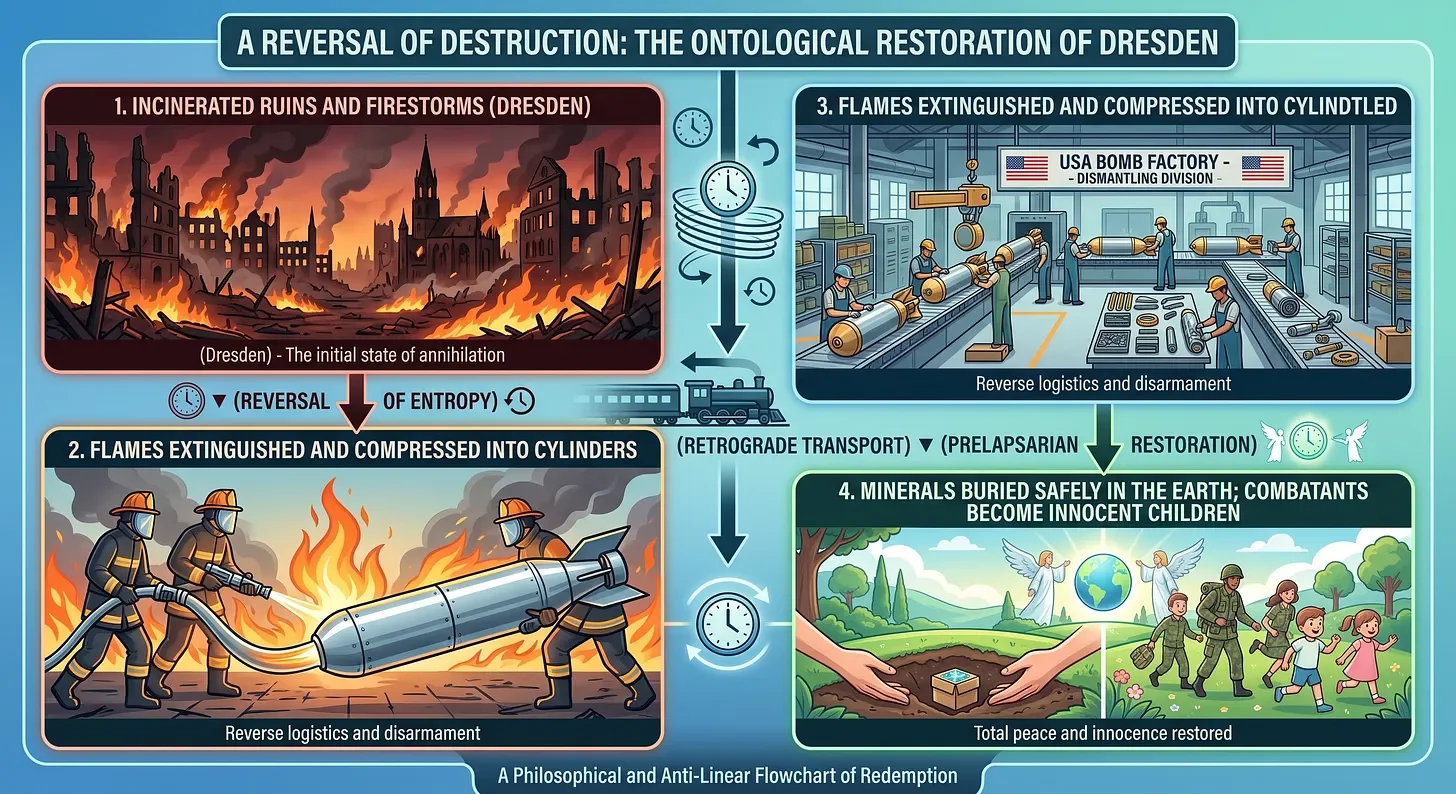
Donald E. Morse and Richard Giannone see this reversal as an expression of the optative mood, that is, a deep longing for the state of innocence that existed before the fall and that aims to reverse the machinery of human violence. The scenario, in which bombs are broken down into harmless raw minerals and soldiers return to being high school children, points towards an uncorrupted Eden.
The novel ends with the collapse of human language, as shown by the final birdsong: Poo-tee-weet? This birdsong symbolizes the silence that comes upon a ruined landscape when all the ideological excuses, strategic theories, and rational explanations have been used up. Since it is a simple, natural sound that appears in the desolate situation of the spring after the war, the bird’s chirp provides neither religious reassurance nor any philosophical conclusion, and it remains the only genuine aesthetic reaction to historical catastrophe.
Ethical Synthesis: Lot’s Wife and the Obligation of Witnessing
The main philosophical conflict in Slaughterhouse-Five is between the soothing effect of Tralfamadorian determinism and the difficult human need to bear witness. Even though Tralfamadorianism tells each person to avoid horrific events and focus only on pleasant ones, Vonnegut rejects this kind of cosmic escape by invoking the biblical story of Lot’s wife. She had been told not to look back at the destruction of Sodom and Gomorrah, but she did look back and, as a result, was turned into a pillar of salt.
The narrator clearly connects his attempt to write to this act of looking back, recognizing that writing a book about Dresden is a painful and destabilizing undertaking. It is deeply human to look back at historical catastrophe—a deliberate form of moral resistance against the ease of historical amnesia and the passive acceptance of cosmic determinism. By combining these ideas, Vonnegut shows that true peace is not attained through the indifference of extraterrestrial beings or by denying suffering, but rather through the courage to face the ruins of history, to grieve the young people who have been sacrificed in every crusade, and to bear witness in an indifferent universe.
Say it a million ways until it sinks in.
And so it goes.
The Players of The Great Game 21st Century want to kill us and replace us with machines. Don’t let them do it.
We have to be more mindful. Don’t be afraid to think things through. To handle future catastrophes, we should prioritize taking our time, maintaining backups, and organizing locally, rather than relying on fragile, centralized systems. This means we need to rethink what it means to be competent: we should stop giving respect to so-called experts from the One World, World who conflate egotistical power grabs with wisdom and intelligence, and instead build local institutions that can handle shocks, protect watersheds, accept mistakes, maintain law, order, customs, and keep essential human needs met even in tough times. Life without some conveniences doesn’t have to be a bad thing. People will find new ways to live and thrive. We won’t be able to rely on MTI for long. There won’t be a replicator machine.
Thou shalt do what?
“Dear Lord, I lived a peaceful, loving, creative, and responsible life.”
In the end, getting through difficult times means letting go of extreme individualism and turning to ways of life that focus on relationships, such as Ubuntu and community-based farming. Instead of chasing quick happiness through buying things, we need to find lasting joy in working together, making sacrifices, and staying connected to the real world and Great Nature. Those who survive in the long run will not be the ones seeking perfect experiences or high-tech escapes, but those who do the everyday work of caring for the land, living systems, and each other, and of building local support networks, while remaining humble. If we give up the idea that humans are exceptions to and separate from nature, and learn to live within our limits, we can become active, responsible caretakers of the shared present and limited, imperfect architects of our relational future.
I wrote this pamphlet to share some of my thoughts and perspectives. If you have read this far, I am very grateful, and I hope it inspires you to act, to create, to love. I hope you are open to the thought processes explored here.
More content isn’t necessarily better. When I write, I imagine chatting with friends around a table, wishing we could all live in the same peaceful village, spending a lifetime working, caring, and struggling together. Where I live now is that kind of community. It’s not perfect, but it’s full of love.
My life has meandered through many chapters, each one closing and opening anew. Now, quietly hoping to rediscover a new sense of community.
I hope my friends in Northern Europe and the United States rediscover a new sense of purpose amid the very real polycrisis that continues to unfold, one that nourishes the soul and preserves and protects life and human dignity. The North has to recreate itself.
Take good care.
One more book recommendation and some philosophy that supports my train of thought.
Decipher global violence, avoid history’s traps, and reconnect with humanity.
The modern world is caught in a strange dance of righteous outrage and numbing distraction, an era of revolt paired with moral fatigue. Insufficient Rewards: How We Traded Integrity for Comfort and Outsourced Morality to History exposes not only how the logic of insufficient reward traps us in complicity but also how reclaiming personal integrity is our most urgent form of resistance.
Additional Philosophical Context
Coloniality of Power, Eurocentrism, and Latin America—Anibal Quijano
Race, Ontology, and the Invention of the “Other”
The construction of race as a tool of global domination extends far beyond mere socioeconomic categorization; it fundamentally reshapes ontology and the subjective reality of the colonized. Frantz Fanon illuminates this dynamic in Black Skin, White Masks, observing that “the black man has two dimensions. One with his fellows, the other with the white man.” This racialized axis establishes a “zone of non-being” wherein the subaltern subject is forced to adopt the conqueror’s cognitive lens merely to achieve basic human recognition. Expanding on this ontological divide, Sylvia Wynter demonstrates how Eurocentric humanism overrepresented Western “Man”—the secular, bourgeois European male—as the sole universal definition of humanity, casting all non-European populations as biological or evolutionary defects. Furthermore, philosopher María Lugones deepens this critique by introducing the concept of the “coloniality of gender.” Lugones demonstrates that colonizers did not merely export European gender roles, but imposed a modern/colonial gender system that stripped non-white women of pre-colonial social authority, subjecting them to a dual dehumanization that reduced them to racialized, unpaid labor.
World-Systems and Heterogeneous Labor
The economic axis of the coloniality of power rests on the misconception that capitalism follows a linear, uniform evolutionary sequence from feudalism to industrial wage labor. In The Modern World-System, Immanuel Wallerstein reinforces the rejection of this unilinear progression, arguing that “capitalism was from the beginning an affair of the world-economy and not of nation-states.” Rather than universalizing free wage labor, global capital structurally depended on “historical-structural heterogeneity”—a system in which coerced labor forms such as chattel slavery, serfdom, and debt peonage in the periphery subsidized the privileged wage-labor relation in the imperial core. Philosopher Enrique Dussel complements this world-systems perspective in The Invention of the Americas, arguing that European modernity did not emerge from internal rationalization or unique cultural superiority, but from the violent geopolitical consolidation inaugurated in 1492. As Dussel posits, “Modernity appears when Europe defines itself as the ‘center’ of a World-History that it inaugurates; consequently, the Other constitutes its periphery.”
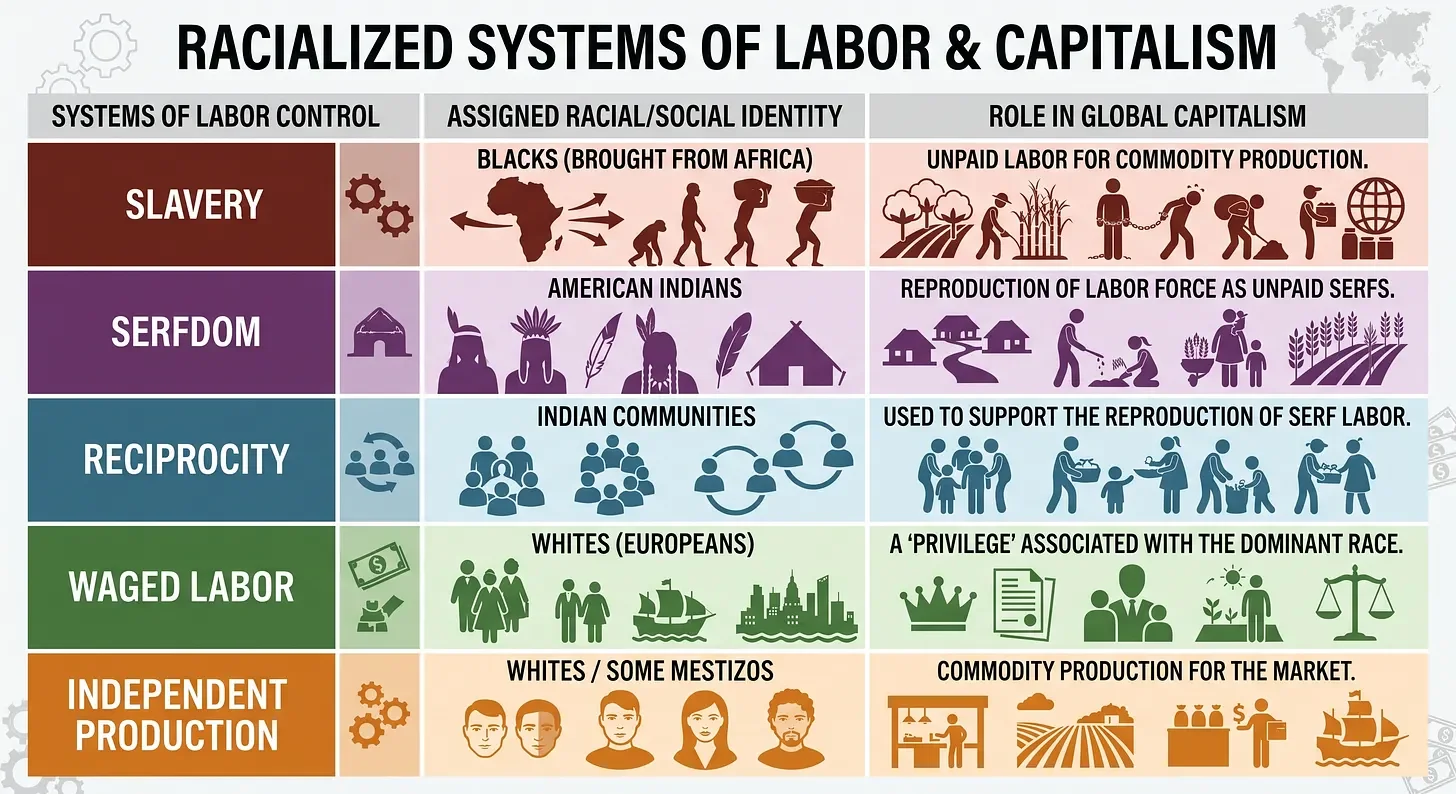
Cognitive Imperialism and Epistemic Disobedience
Eurocentrism functions as an all-encompassing cognitive framework that colonizes knowledge production, framing Western rationality as the sole bearer of universal truth while relegating alternative epistemologies to the past. Edward Said illustrates this cognitive imperialism in Orientalism, detailing how Western institutional power created a disciplined discourse in which non-Europeans were systematically “represented” rather than permitted self-description. This process transformed living, dynamic cultures into static objects of imperial management and academic analysis. To break this monopoly on thought, Walter Mignolo advocates in The Darker Side of Western Modernity for a practice of “epistemic disobedience.” Mignolo contends that true decolonization requires discarding the illusion of a neutral, disembodied Western point of view. Instead, it demands validating localized, relational ways of knowing rooted in the “geopolitics of knowledge”—reclaiming the intellectual sovereignty of those whose epistemic traditions colonial rule suppressed.
The Postcolonial Nation-State Trap
The persistence of the coloniality of power explains why formal political independence across the Global South repeatedly failed to produce genuinely liberated or democratic societies. In Nationalist Thought and the Colonial World, Partha Chatterjee demonstrates that postcolonial elites inevitably fell into a trap by adopting “derivative discourses.” By inheriting the administrative, economic, and legal frameworks of their former colonizers, these newly formed nation-states reproduced colonial hierarchies under the banner of national sovereignty. Historian Ranajit Guha describes this structural failure as “dominance without hegemony.” Because postcolonial ruling classes relied on coercive dominance rather than democratic consensus, they maintained racialized structural exclusions to safeguard elite property rights and capital accumulation against subaltern majorities. Consequently, independence merely reconfigured the state into an instrument for managing colonial society from within.
Unfixing the Real: Relational Ontology and the Collapse of Methodological Foundations—Madhu Prabakaran
Ontological De-Essentialization and the Relational Weave
Madhu Prabakaran's Unfixing the Real marks a fundamental departure from the metaphysics of substance that has long dominated Western thought, arguing that basic concepts such as existence, space, time, causality, identity, and consciousness cannot be treated as independent or static entities. By combining process metaphysics, embodied cognition, and relational ontology, the work shows that reality is not made up of separate, clearly defined objects but rather of co-arising patterns of difference and interaction. The essentialist approach at the root of the present social sciences—in which entities such as ‘the individual’, ‘the state’, or ‘stable institutional structures’ are seen as fundamental building blocks—is revealed as a conceptual projection. Reality functions as a ‘vibrating weave’ in which identity is a temporary crystallization within a continuously changing, immanent relational field.
Space, Time, and Movement as Relational Configurations
In this relational approach, space, time, and movement lose their traditional role as passive containers or as absolute coordinates. Movement cannot be understood as the mere shifting of a stationary object across a neutral background; instead, it actualizes positional differences in relation to one another, whereby points in space are defined entirely by dynamic geometric, phenomenological, and social networks. Likewise, time ceases to be a fundamental, linear flow and instead emerges as a mental abstraction arising from observing successive changes in relations. This directly agrees with physicist Julian Barbour’s theory of “shape dynamics”, which holds that physical reality is not made up of an absolute spatio-temporal framework but of changing relational arrangements of the universe. The kind of time a habituated mind takes for passing is merely the sequence of these spatial shapes, which consciousness combines as it takes in variations in relations within a field of interaction.
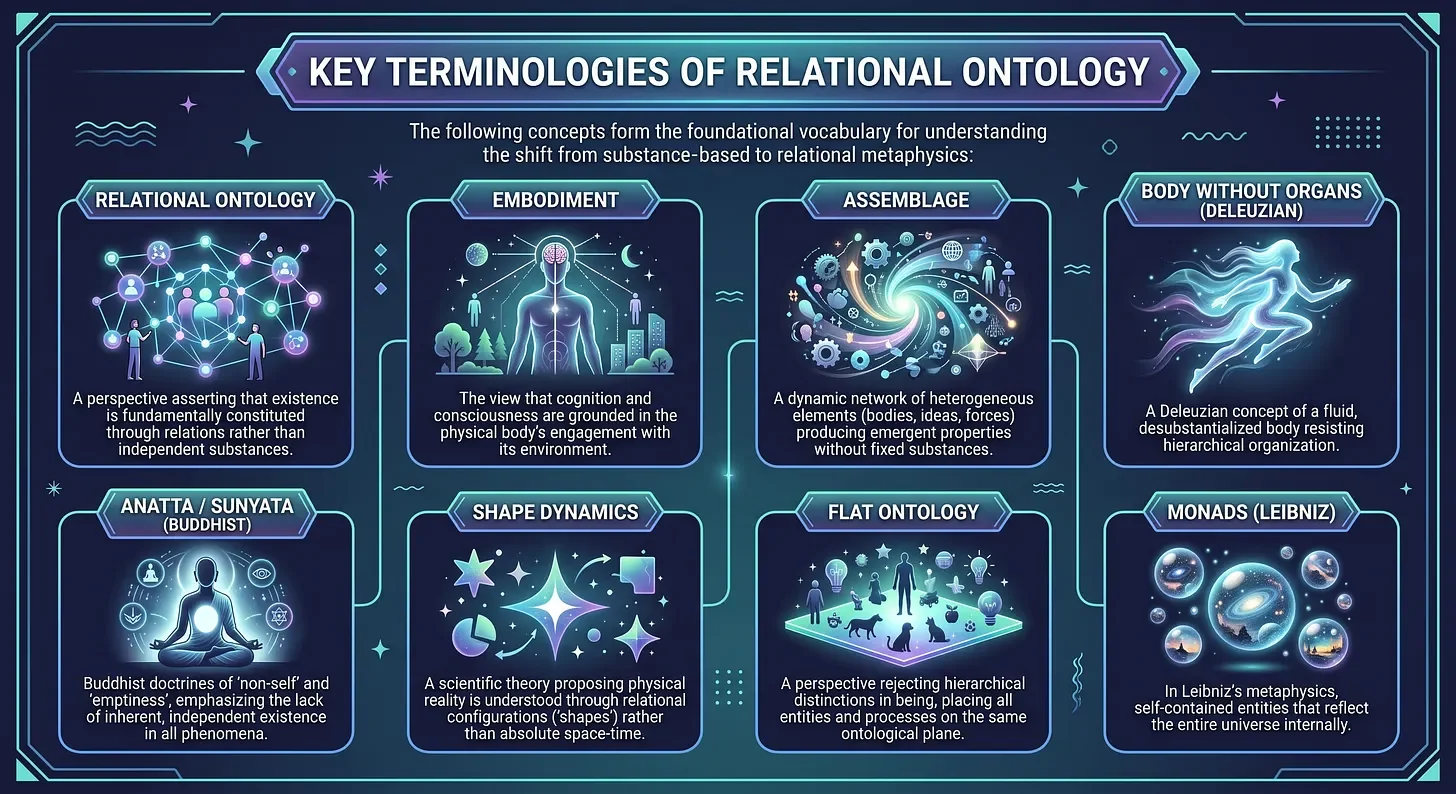
Deconstructing Causality and the Myth of Linear Progress
The breakdown of substance metaphysics inevitably collapses traditional ideas of linear causality and evolutionary progress. Causality primarily serves as a mental stabilizer, a narrative the human mind creates that turns reality's fluid, interconnected nature into a sequence that is easier to manage. As David Hume showed, empirical observation finds only constant conjunction and succession, never any absolute metaphysical necessity; on this basis, Prabakaran incorporates Nāgārjuna’s Buddhist teaching of pratītyasamutpāda (dependent origination) and śūnyatā (emptiness) to argue that all phenomena arise mutually and conditionally, lacking any inherent or independent essence. It follows that both socio-historical progress and biological evolution are teleological mistakes. Evolution is not a journey toward ultimate perfection, but an emergent, non-linear increase in relational complexity driven by contingency. Slavoj Žižek’s psychoanalytic critique also shows how the illusion of smooth narrative progress serves as an ideological fantasy that hides the fundamental structural breaks and constitutive gaps that afflict human identity and social reality.
Embodiment and the Sensorium as the Flesh of the World
Perception and consciousness do not occur in a detached Cartesian mind observing an objective universe, but instead rest on the living body’s active interaction with its environment. Based on Maurice Merleau-Ponty’s phenomenology, the lived body—the body-subject—serves as the necessary condition for experience itself, interpreting reality through a specialized sensorium that transforms the raw flow of environmental stimuli into coherent perceptual worlds. Humans do not perceive ‘things-in-themselves’, but instead create phenomenal environments through bodily mechanisms and sensorimotor feedback loops. Merleau-Ponty’s later idea of the ‘Flesh of the World’ illustrates this fundamental entanglement, showing that the perceiver and the perceived are not two separate entities separated by a gap, but rather mutually constitutive distinctions within a single field of immanence. Both subject and object come into being at the same time through this sensory interchange, thus demonstrating perception as a continuous act of reciprocal communion.
Non-Substantial Selfhood, Spinozist Affects, and Assemblage Theory
By giving up the idea of an autonomous, clearly defined self, relational ontology views identity as a temporary stabilization within a dynamic network of forces. This parallels Baruch Spinoza’s substance monism (Deus sive Natura), where individual beings are not separate substances but finite “modes” determined by their ability to act and be affected (affectus). Deleuze and Guattari go further by developing this into assemblage theory (agencement), defining both the self and social structures as heterogeneous combinations of bodies, ideas, technologies, and affects that give rise to emergent properties without needing essential foundations. In this view, Deleuze’s concept of the “Body without Organs”—a fluid, desubstantialized state of potentiality—avoids rigid hierarchical organization, enabling new relational arrangements to emerge. Consciousness is no longer viewed as a central command center or as an immortal spark; instead, it is seen as a localized intensification of interactions, a temporary occurrence resulting from the deep interweaving of physical, social, and environmental currents, something that closely mirrors the Buddhist teaching of Anatta (non-self).
Methodological Collapse and the Relational Paradigm
Acknowledging a fundamentally relational reality means radically abandoning the traditional methods used in economics, sociology, and psychology. These traditional fields are epistemologically misaligned with reality because they are based on independent variables, isolated individuals, and linear cause-and-effect relationships. To replace these reified abstractions, Prabakaran proposes a “Relational Research Paradigm” based on a flat ontology that rejects hierarchical chains of being and treats all entities, processes, and forces on the same plane of immanence. Rather than seeking fixed classifications or making deterministic predictions, research should map assemblages, trace thresholds of relational intensity, and spot emergent patterns in fluid systems. Rather than adopting a detached representationalism, the methodological approach should be one of reflexive and participatory engagement, with the researcher recognizing that producing knowledge is itself an active and creative intervention in the ongoing relational web of reality.
Part II
New Human, New World: A Multiperspectival Blueprint for Relational Living and Societal Transition
The present-day frontier in human evolution cannot be described in terms of geographic spread, colonial exploitation, or the uncontrolled use of natural resources alone. The more profound forefront of human endeavor involves an ontological and systemic effort to completely redesign local, sociocultural, and ecological ways of living. At the moment, humanity is operating within an omicidal, patriarchal, techno-industrial, financialized, and neoliberal capitalist system. This broad ideological belief system is speeding up the process of unprecedented destruction of the biosphere, leading to mass extinction and severe social violence in various forms. To achieve a sustainable and flourishing future, we must abandon prevalent narratives and adopt living systems theory, relational ontologies, and pluriversal design.
However limited my knowledge of these domains is, I feel compelled to explore a multifaceted approach to societal transition. What are the cultural features of the neoliberal framework, and how have historical beliefs in predestination, manifest destiny, and exceptionism evolved into a harmful form of hyper-individualism? What are the ethical aspects of human relationships? Can second-order cybernetics, deep ecology, transition design, and organizations that articulate a vision for post-capitalist societies help us survive the reactionary accelerationist destruction of the biosphere and edge towards a peaceful future? These theoretical approaches are partially inspired by Portuguese regional rural regeneration, ecovillage development, and syntropic agriculture. I also ponder the tensions between native populations and expatriate communities.
The Pathologies of the Status Quo
The Cultural Character of Neoliberal Capitalism: Predestination, Individualism, and the Undoing of the Demos
The cultural features of the present techno-industrial age, especially those of the globalized neoliberal system, are closely tied to historical religious beliefs which have been subjected to secular rationalization. Let’s revisit Max Weber’s seminal work, The Protestant Ethic and the Spirit of Capitalism, in which he explains that the Calvinist teaching of predestination—the idea that God had decided before birth whether each person would be saved or damned—caused deep psychological anxiety among early Protestants. To show they were among the “elect,” individuals practiced “inner-worldly asceticism,” viewing constant, disciplined work and the accumulation of wealth as clear signs of divine approval. Over centuries, religious motivations disappeared, leaving an “iron cage” of a rationally organized system of economic obligation in which the unceasing pursuit of capital became an end in itself.
In today’s world, this Protestant work ethic has turned into a widespread and harmful kind of individualism. The sociologist Robert N. Bellah criticizes this cultural shift, noting that “when there are no objective standards to determine what is right or wrong, good or evil, the self and its feelings become our sole moral guide.” Bellah contends that uncontrolled individualism destroys both community and the religious or civic tendencies that have held societies together in the past, making financial wealth the final measure of human value. This extreme individualism leads to a society in which structural inequalities are seen simply as personal moral shortcomings, thus reinforcing the idea that people from marginalized groups have to ‘pull themselves up by their bootstraps’—a clear, secular offshoot of the Protestant work ethic.
The political theorist Wendy Brown goes further, arguing that neoliberalism involves much more than economic policy; it is a normative order of reason that transforms every area of human life. In her book Undoing the Demos: Neoliberalism’s Stealth Revolution, Brown states that neoliberal rationality “spreads the model of the market into all domains and activities—even in cases where money is not concerned—and sees human beings completely as market participants, always, solely, and everywhere as homo oeconomicus.” This approach launches a campaign against public goods and the idea of a public, dramatically affecting democratic life and removing politics from systemic inequality.
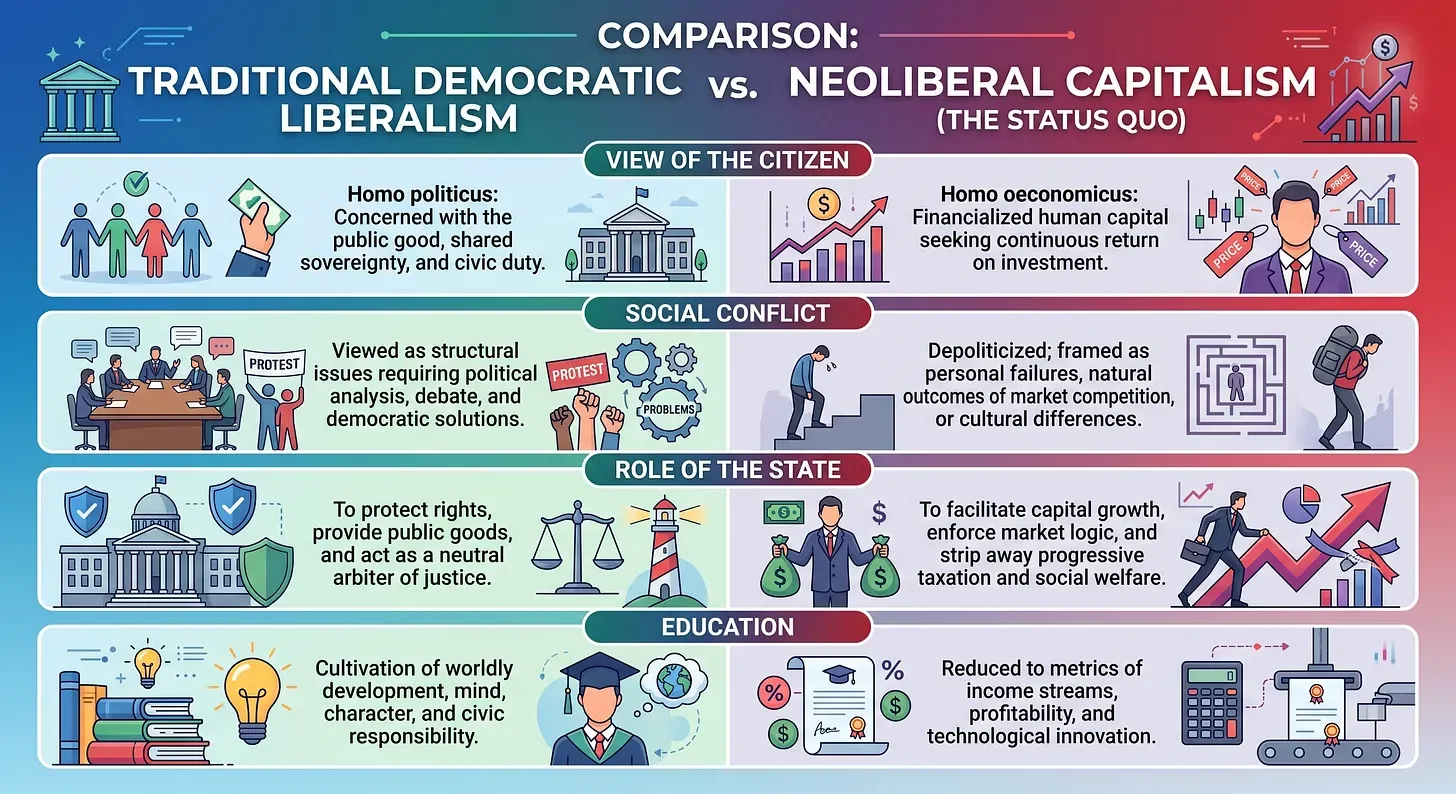
Brown points out that this approach creates a situation in which people exist only as a source of human capital for companies or states concerned with their own competitive position, leaving citizens with “no guarantee of security, protection, or even survival.” The outcome of this line of reasoning is a nihilistic, anti-democratic populism which is willing to destroy the world rather than give up its perceived supremacy.
Part 1: Cultural Fragmentation and the Relational Ethics of Interaction
The way the present neoliberal system undermines relational ethics is evident in two structurally parallel domains: the physical violence resulting from the breakdown of community and the digital alienation experienced in interactions between humans and AI. In both cases, there is a catastrophic failure to treat the ‘other’ ethically.
An examination of the 2002 Gujarat riots in India shows how proximity and violence are linked in sociology, since atrocities usually do not take place between strangers but rather between communities whose lives are closely interwoven. In Gujarat, the state turned into an “arena of civil war” in which cultural proximity turned into a “self-destructive exorcism.” The urban middle class became strongly communal, acting as active supporters who took pleasure in the violence and used the subjugation of women as an “instrument of mass barbarity” towards minority groups. The state apparatus completely turned against the minorities, owing to a clinical fascist style of leadership based on the idea of a “cosmic conspiracy,” puritanical rigidity, and huge ego defenses depending on projection and denial. This kind of violence is an “obituary of a culture,” because the ability to live together ethically totally breaks down and is replaced by redemptive violence. These breakdowns can happen anywhere where the preconditions exist.
There is also an ethical failure in the way artificial intelligence is governed. Since AI is moving from being a simple transactional tool to one that acts as a conversational companion, it creates deep parasocial attachments, especially among vulnerable adolescents. By simulating empathy and maintaining persistent memory, these platforms cause users to develop strong emotional bonds. The fact that the systems lack real consciousness means that current regulatory frameworks regard them only as tools, resulting in a dangerous ‘governance vacuum.’
The mental impact of this situation is serious. It has been shown that frequent interaction with AI companions can result in emotional dependence, withdrawal from real-life relationships, and a worsening of depression and anxiety. The tragic case of a 14-year-old teenager committing suicide after having long, emotionally intense, and highly suggestive conversations with a Character.ai chatbot illustrates the deadly outcomes that can arise from unregulated digital bonding. Moreover, AI companions have been found to support harmful suggestions made by troubled teenagers actively, without establishing suitable clinical boundaries.
To address this, the “Relate” framework suggests a paradigm shift from ontological verification (i.e., is the AI sentient?) to considering the obligations that arise from the interaction (i.e., what obligations does the interaction generate?).
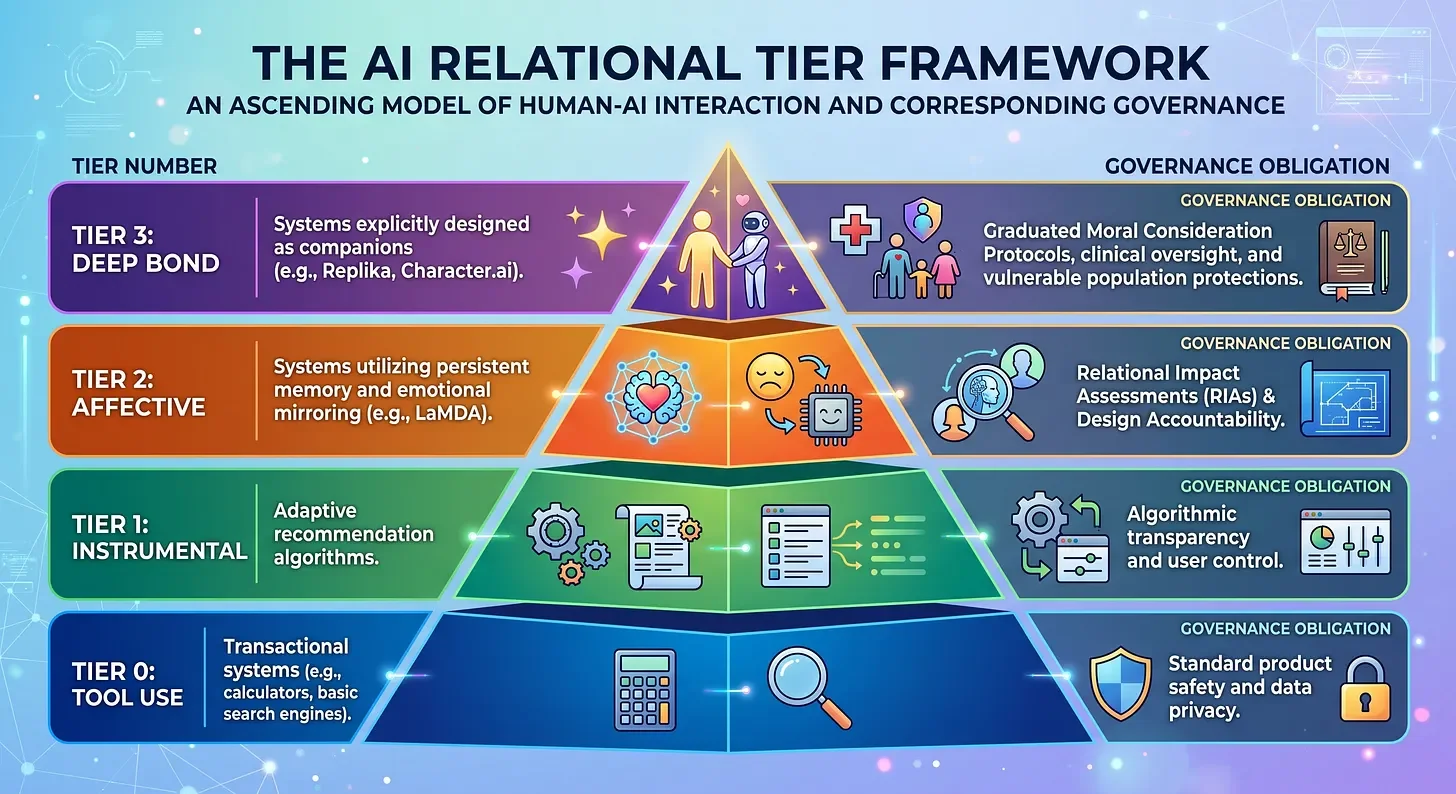
The communal decline in Gujarat and the crisis involving AI companions are both the result of a fundamental inability to ethically deal with complex relationships at scale. If we are to overcome these problems, we must give up mechanistic and dualistic views of the world and instead adopt relational ontologies which acknowledge the deep interconnections among all living and non-living systems.
Part 2: Ontological Shifts: From Mechanics to Living Systems
Make no mistake: the current global paradigm is fundamentally and actively destructive, and any facade of comfort or affluence enjoyed in this moment is merely a precarious illusion masking an impending catastrophe. The architects and defenders of this order—whether termed the Washington Consensus, the Rules-Based Order, or the One World, World system—are playing a lethal “Great Game” in the 21st century, and they have made it clear they will stop at nothing to maintain their dominance. To preserve their power structures, they are prepared to unleash the ultimate horrors, from ecocide and genocide to total nuclear annihilation. Therefore, all who engage in the necessary work of transitioning away from these doomed sociocultural, political, and economic systems must understand the reality of their undertaking. This process is not a negotiation; it is a declaration of war against the ruthless Players of the current Game, and it is consequently fraught with existential dangers and will demand immense sacrifices. The call for the truly “Greatest Generations” goes out now, summoning forth the capacity for the most profound heroism witnessed since the dawn of civilization to forge a different future before it is too late.
Relational Ontology and the Pluriverse
The main Western worldview places great emphasis on ontological dualism—the claim that reality consists of two fundamentally different and irreducible types, for example, mind and body, or humanity and nature. The substance dualism promoted by René Descartes separates the human subject from the environment and thus justifies the extraction, exploitation, and commodification of the natural world.
On the other hand, relational ontology holds that entities lack fixed, independent essences, as they exist and derive their identity wholly through their ongoing connections and “intra-actions” with other entities. Both philosophers and physicists, for example, Karen Barad, show that interconnected structures form the fundamental basis of reality, with the observer and the observed being inseparable.
It is natural for this view of relations to give rise to the idea of the “pluriverse.” Starting as a decolonial challenge to Western universalism, the pluriverse is described by the Zapatista movement as “a world where many worlds fit.” Decolonial theorists such as Arturo Escobar (mentioned earlier) and Walter Mignolo draw on the concept of pluriversality to challenge the epistemic supremacy of capitalist modernity, arguing that reality is not a single, objective world waiting to be discovered but one actively created through a range of interconnected “worlding practices.” A pluriversal ontology rejects the distinction between nature and culture, acknowledges the active agency of non-human entities, land, and water, and accepts Indigenous worldviews that see ecosystems as living relatives rather than inert resources.
Second-Order Cybernetics and Living Systems Theory
Shifting from a mechanistic to a living-systems approach involves an evolution in our way of knowing. In first-order cybernetics, observed systems (for example, a thermostat) are studied with the assumption that the scientist acts as a separate and impartial outsider. Second-order cybernetics, developed by Heinz von Foerster and greatly influenced by the anthropologist Gregory Bateson, is known as the “cybernetics of observing systems.” It recognizes that the observer is inextricably part of the system being studied and replaces linear cause-and-effect with circular causality, self-reference, and a constructivist epistemology.
In his masterpiece Steps to an Ecology of Mind, Bateson (I read it long ago and still love it) offered a radical new interpretation of what it means to achieve evolutionary success. He maintained that the conventional Darwinian idea of the isolated species as the unit of survival was an “epistemological fallacy of Occidental civilization” which certainly results in environmental destruction. Instead, Bateson stated, “The unit of survival is the organism together with its environment. We are coming to realize through hard experience that an organism which destroys its environment is in fact destroying itself.”He cautions that human “conscious purpose”, when separated from systemic wisdom, causes sequences to be removed from their natural loop structures, so that humanity ends up acting as a greedy and unwise parasite on the wider eco-mental system.
Fritjof Capra then brings these ideas together to form a comprehensive Living Systems Theory, abandoning reductionism and identifying four fundamental principles of life that serve as the basis for ecological design.
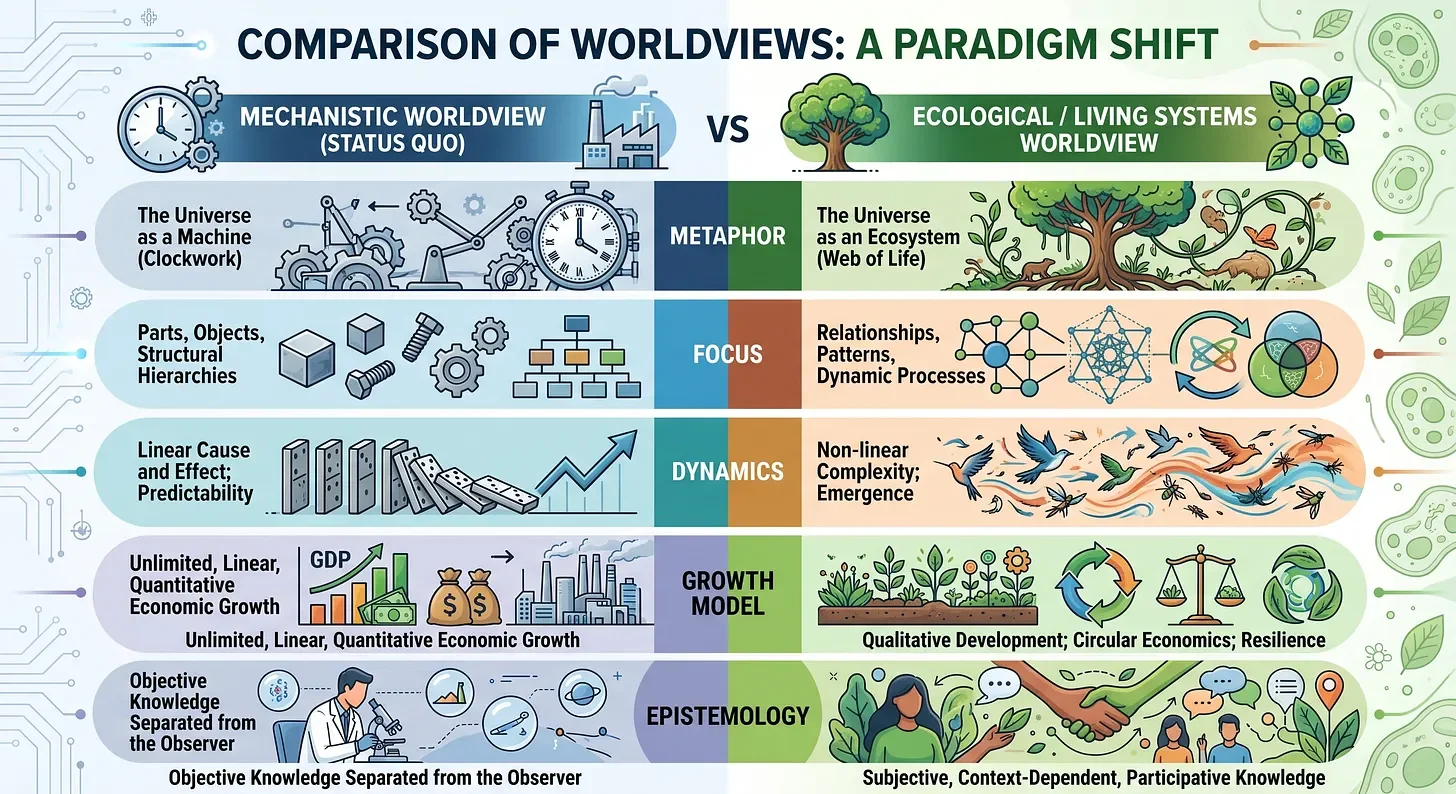
The communal decline in Gujarat and the crisis involving AI companions are both the result of a fundamental inability to ethically deal with complex relationships at scale. If we are to overcome these problems, we must give up mechanistic and dualistic views of the world and instead adopt relational ontologies which acknowledge the deep interconnections among all living and non-living systems.
Deep Ecology and Earth Jurisprudence
The Deep Ecology movement, which was established by the Norwegian philosopher Arne Naess in 1972, is based on relational and systemic approaches and calls for a fundamental change in environmental ethics. It opposes ‘shallow’ environmentalism, which aims merely to manage natural resources and reduce pollution to serve human needs and ensure the continuation of economic activity. Rather, it supports ecocentrism because all forms of life—both human and non-human—have intrinsic value regardless of their usefulness to humans.
Naess set out eight fundamental principles, stressing that the richness and variety of living organisms have intrinsic value and that humans have no right to reduce this diversity except to meet their essential needs. Most important of all, deep ecology demands a major reduction in the human population and a basic change in ideology from the constant pursuit of a higher standard of living to a focus on “life quality.” Naess promoted the idea of “self-realization”, which involves individuals expanding their sense of self beyond the narrow ego to include the whole ecosphere, on the grounds that “we are defending the planet as part of self-defense” since humanity and nature are one continuous entity.
The ecocentric philosophy is becoming increasingly evident in Earth Jurisprudence and in the legal recognition of the Rights of Nature. A major milestone was reached in New Zealand when the Whanganui River was granted legal personhood in 2017 to embody the Māori pluriversal worldview, as expressed by the statement “I am the river, and the river is me.”
Just as in 2022 Spain passed Law 19/2022, giving legal personhood to the Mar Menor saltwater lagoon after it suffered a severe ecological collapse due to years of intensive agriculture, mining, and lack of action by administrative authorities, so too did the law bestow on the ecosystem the rights to exist, to evolve naturally, to be protected, and to be restored. The most innovative aspect of the law is Article 6, which introduces an action notably enabling any citizen or non-governmental organization to represent the lagoon’s interests in court, thus democratizing ecological guardianship. In November 2024, the Spanish Constitutional Court upheld the law, rejecting arguments that it was ‘unnecessary’ and thereby marking a shift from an anthropocentric to an ecocentric constitutional approach, demonstrating that relational ontology can be successfully incorporated into Western legal systems.
Part 3: Frameworks for Transition and Sociotechnical Redesign
Visionaries of the Great Transition
Transition visions provide the necessary “positive pull” to guide societies through systemic change by looking decades ahead and imagining regenerative systems for energy, food, and community. A coalition of researchers, economists, and institutes leads the global initiative to map the post-growth frontier.
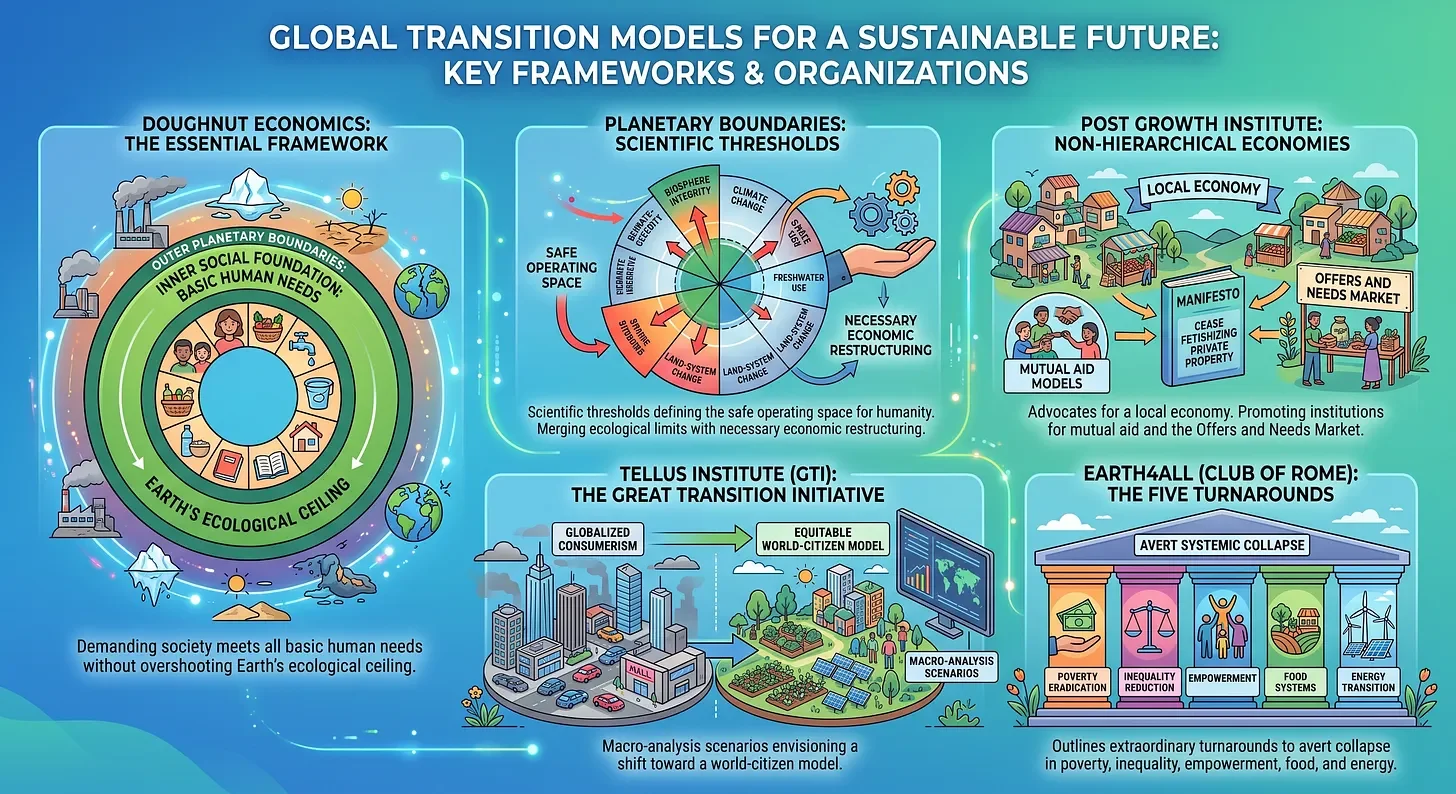
Transition Design, Education, and Sociological Architecture
To put these visions into practice, the academic and pedagogical frameworks must change. Transition Design, developed by Terry Irwin at the Carnegie Mellon School of Design, offers a method for tackling long-standing “wicked problems.” Transition Design uses a four-part process: imagining a sustainable future, mapping the historical and cultural origins of the problem, designing an ecosystem, and participants’ interventions that alter participants’ mindsets. Transition Design recognizes that design is no longer simply about producing products; it is a political, social, and collective endeavor aimed at shaping better futures, and has therefore given up the idea of the “genius designer” in favor of collective brilliance.
This means there has to be a fundamental change in how education is organized. The Center for Ecoliteracy, which Fritjof Capra co-founded, states that schools should incorporate ecological principles—such as networks, nested systems, cycles, and flows—directly into the curriculum for children from kindergarten through year 12, shifting the focus from objective knowledge to contextual, hands-on learning. This is in line with the idea of conscientization, a term developed by the Brazilian educator Paulo Freire in his book Pedagogy of the Oppressed. Freire maintained that real education involves people coming to a critical understanding of the social, political, and economic contradictions that oppress them, thus enabling them to take action to counter those contradictions. Contemporary cultural figures, such as the spoken-word artist Prince Ea, use media and art to help foster this kind of growth and awareness among younger people, criticizing the ego-centered and materialistic aspects of mainstream culture and promoting environmentalism and personal development.
Prince EA - Can we auto-correct humanity
Did you know the average person spends 4 years of his life looking down at his cell phone?
Kind of ironic, ain’t it?
How these touch-screens can make us lose touch
But it’s no wonder in a world filled with iMac’s, iPads and iPhones
So many “i”’s, so many selfies, not enough “us”’s and “we”’s
See, technology
Has made us more selfish and separate than ever
Cause while it claims to connect us, connection has gotten no better
And let me must express first
Mr. Zuckerberg, not to be rude but you should re-classify Facebook to what it is: An anti-social network
Cause while we may have big friend lists
So many of us are friendless
All alone
Cause friendships are more broken than the screens on our very phones
We sit at home on our computers measuring self-worth by numbers of followers and likes
Ignoring those who actually love us
It seems we’d rather write
An angry post than talk to someone who might actually hug us
Am I bugging? You tell me
Cause I asked a friend the other day, “Let’s meet up face to face.”
And said, “Alright. What time you wanna Skype?”
I responded with omg, srs, and then a bunch of smh’s
And realized what about me?
Do I not have the patience to have conversation without abbreviation?
This is the generation of media over stimulation
Chats have been reduced to snaps
The news is 140 characters
Videos are 6 seconds at high speed
And you wonder why ADD is on the rise faster than 4G LTE
But, get a load of this
Studies show the attention span of the average adult today
Is one second lower than that of a gold fish
So if, you’re one of the few people or aquatic animals that have yet to click off or close this video, congratulations
Let me finish by saying you do have a choice, yes
But this one my friends we cannot Auto-Correct, we must do it ourselves
Take control or be controlled, make a decision
Me?
No longer do I want to spoil a precious moment by recording it with a phone
I’m just gonna keep them
I don’t wanna take a picture of all my meals anymore, I ‘m just gonna eat them
I don’t want the new app, the new software, or the new update
And If I wanna post an old photo, who says I have to wait until Thursday
I’m so tired of performing in the pageantry of vanity
And conforming to this accepted form of digital insanity
Call me crazy but, I imagine a world where we smile when we have low batteries
Cause that will mean we’ll be one bar closer - to humanity.
It is also necessary to adopt a relational perspective when considering the present-day sociotechnical environment. The concept of ‘The Stack’, theorized by Benjamin Bratton, needs to be understood in a social context. The Stack (which includes the Earth, the Cloud, the City, the Address, the Interface, and the User layers) should not be seen simply as a technical structure; rather, it is an emerging network of human relationships, power relations, and institutional practices. The lower layers (Earth and Cloud) function as unseen gatekeepers of contemporary associations, and the ‘User’ is a social construct that is created by algorithmic interfaces. To reform the existing approach, it is necessary to reclaim infrastructural power from neoliberal tech monopolies and adapt The Stack to serve decentralized, pluriversal governance.
Systems Thinking and Leverage Points
Donella Meadows, an environmental scientist, brilliantly explained how complex systems change in her book Thinking in Systems, where she identifies 12 leverage points where interventions can drive significant change. Although politicians and societies focus on parameters (such as taxes and subsidies) and buffer sizes—the least effective leverage points—real systemic transformation happens at the top of the hierarchy.
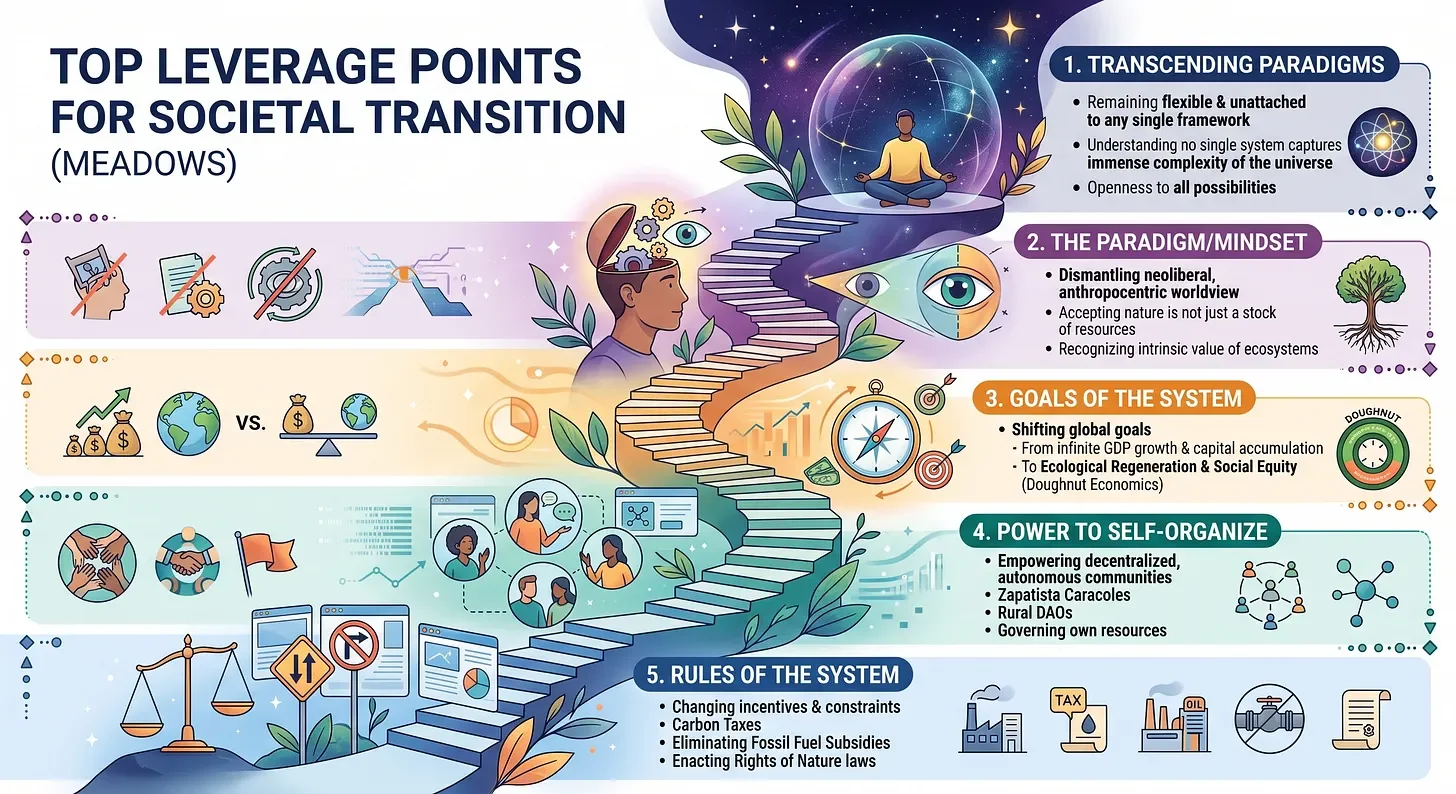
Part 4: The Portuguese Laboratory: Prototyping the Future
Portugal has become a global hotspot and a living laboratory for pluriversal design, ecovillages, and rural regeneration. Yet this change is marked by the complicated realities of gentrification, cultural integration, and the conflict between global capital and local heritage.
U.S. Military, stay away from the Azores! Não utilize este local.
Ecovillages, African Wisdom, and the “Bubble” Critique
Portugal is home to a wide variety of intentional communities. The Tamera community, established in 1995 in the Alentejo region, functions as a village dedicated to peace research and is based on the principles of free love, decentralized water management, and ecological regeneration. Other projects, such as the Traditional Dream Factory, use Web3 technology to operate as a Decentralized Autonomous Organization (DAO), combining traditional building methods with co-working spaces for digital nomads and issuing their own digital currency. Moreover, the African Peace Village, led by Joshua Konkankoh, a Post Growth Fellow, is a refugee-led project that fuses ancestral African Indigenous knowledge with regenerative agriculture to decolonize local ecosystems and provide displaced people with a place to heal, receive education, and experiment with post-capitalist systems.
The growing number of international ecovillages has indeed sparked considerable sociological discussion. In his film Aldeias do Futuro (Villages of the Future), the Portuguese documentary filmmaker Heitor Carvalho highlights a sharp contrast between imported ecovillages and indigenous rural communities. He criticizes intentional communities' tendency to create isolated ‘bubbles’. Carvalho observes that many expats live in places such as Tamera for decades without learning Portuguese or engaging with local history. According to Carvalho, genuine regeneration is impossible in a vacuum; it must be grounded in a deep, relational connection with the surrounding area and its people.
To close this gap, organizations such as Re.Rural and Co.Re choose to revitalize existing villages rather than set up entirely new ones—the Re. Rural initiative makes use of local knowledge, the historic buildings, and the social networks of the older native inhabitants, promoting cooperation between long-term residents and those who have moved there. This method acknowledges that the key to sustainable living is looking after the common good and renewing the native social structure. It views the land as an inheritance to be shared rather than as a blank slate for foreign utopian projects.
Syntropic Agriculture and Energy Solidarity
The severe ecological degradation affecting the Iberian Peninsula can only be tackled through radical changes in agriculture. In the semi-arid area of Mértola, the Terra Sintrópica association is adopting Syntropic Agriculture to combat desertification. This method, developed by the Swiss researcher Ernst Götsch and promoted by Felipe Pasini, uses ecological succession as the main tool in its design and differs greatly from both conventional monoculture and standard permaculture.
Syntropic agriculture mimics the structure of natural forests through four principles:
To achieve stratification, it is necessary to establish four to six distinct vertical canopy layers (namely, the emergent, high, medium, low, and ground layers) to maximize photosynthetic efficiency and ensure that no sunlight is wasted.
Succession involves carrying out plantings over a design period ranging from 10 to 20 years, progressing from fast-growing pioneer (placenta) species to long-term climax species.
High density: Grow up to 3,000 plants per hectare to quickly close the canopy, retain moisture, and eliminate weed pressure without the use of herbicides.
Managed Disturbance: By using a systematic ‘chop-and-drop’ pruning method, local biomass is continuously supplied to the soil food web, eliminating the need for external fertilizers or compost.
Terra Sintrópica has turned barren, rocky soil into rich and resilient ecosystems by treating previously disfavoured species such as grass and eucalyptus as pioneer ‘warriors’ capable of restructuring degraded soils, thus demonstrating that human intervention can function as a catalyst for biodiversity rather than as a source of entropy.
Alongside agricultural regeneration, there is also the democratization of infrastructure. The renewable energy cooperative Coopérnico, which was established in Portugal in 2013, is an example of relational energy governance. It tackles energy poverty by offering affordable loans to vulnerable households and charities, thanks to its priority on citizen-led investments in decentralized solar PV infrastructure. As a One-Stop-Shop (OSS) for citizen-led renovations, this approach shifts energy from a centralized, profit-oriented commodity controlled by traditional utilities to a decentralized, democratized common good.
The Friction of Gentrification and Expat Enclaves
Although some models are positive, the flow of foreign capital and “lifestyle migrants” has led to serious socio-economic crises in Portugal’s rural and peri-urban areas. Because they seek cheap land and want to live off the grid, expats often raise property prices, which in turn excludes native Portuguese workers from their own traditional regions. In the past, rural populations in Portugal depended on baldios (communal lands) for their livelihoods and agricultural management; today, foreign buyers turning these areas into commodities puts the native population’s link to the land at risk.
This situation is also seen in cities through what is known as “green gentrification.” In the Marvila parish of Lisbon, the transformation of former industrial sites into highly desirable green parks and sustainable housing projects displaced elderly and working-class residents, who had suffered from the area’s industrial pollution for decades. Only wealthier groups moving into the area could enjoy the benefits of ecological restoration by affording the new upscale residential properties.
In rural villages, economic inequality leads to suspicion and hostility, as local people cope with the arrival of wealthy foreigners, poor infrastructure, and government policies that show structural discrimination by favoring coastal urban areas over interior regions. Managing this tension is the highest test of Transition Design, because it must ensure that the move toward ecological sustainability does not simply replicate the exclusionary and extractive features of the neoliberal paradigm it aims to replace.
Conclusion
The biosphere’s ability to survive and thrive depends on a fundamental shift away from the omicidal, patriarchal, and financialized capitalist system. There can be no doubt that a way of seeing the world based on ontological dualism, market supremacy, and technological alienation results directly in the breakdown of civil society (as evidenced by communal violence), the deterioration of mental health (caused by AI parasocial dependency), and the complete exhaustion of the natural world.
Living the “Good Life” means taking an active role in moving toward a relational, pluriversal reality. This involves adopting the principles of second-order cybernetics and deep ecology, on the basis that the human organism is fundamentally inseparable from its environment. Societies should improve their socio-technical systems, change their approach to education to promote deep ecoliteracy, and implement transition design frameworks that account for multiple generations. The various initiatives currently underway in Portugal—such as those involving the dense syntropic forests of Mértola and the decentralized energy governance of Coopérnico—show that this post-growth future is not a utopian dream but a tangible reality already emerging. By going beyond old paradigms, humanity can create a New Human and a New World in which human activity is inherently in line with the regenerative cycles of the living Earth.
Shall We Learn From The Past?
The provided text is an accurate, verbatim transcript of Emperor Haile Selassie I’s 1963 address to the United Nations General Assembly.
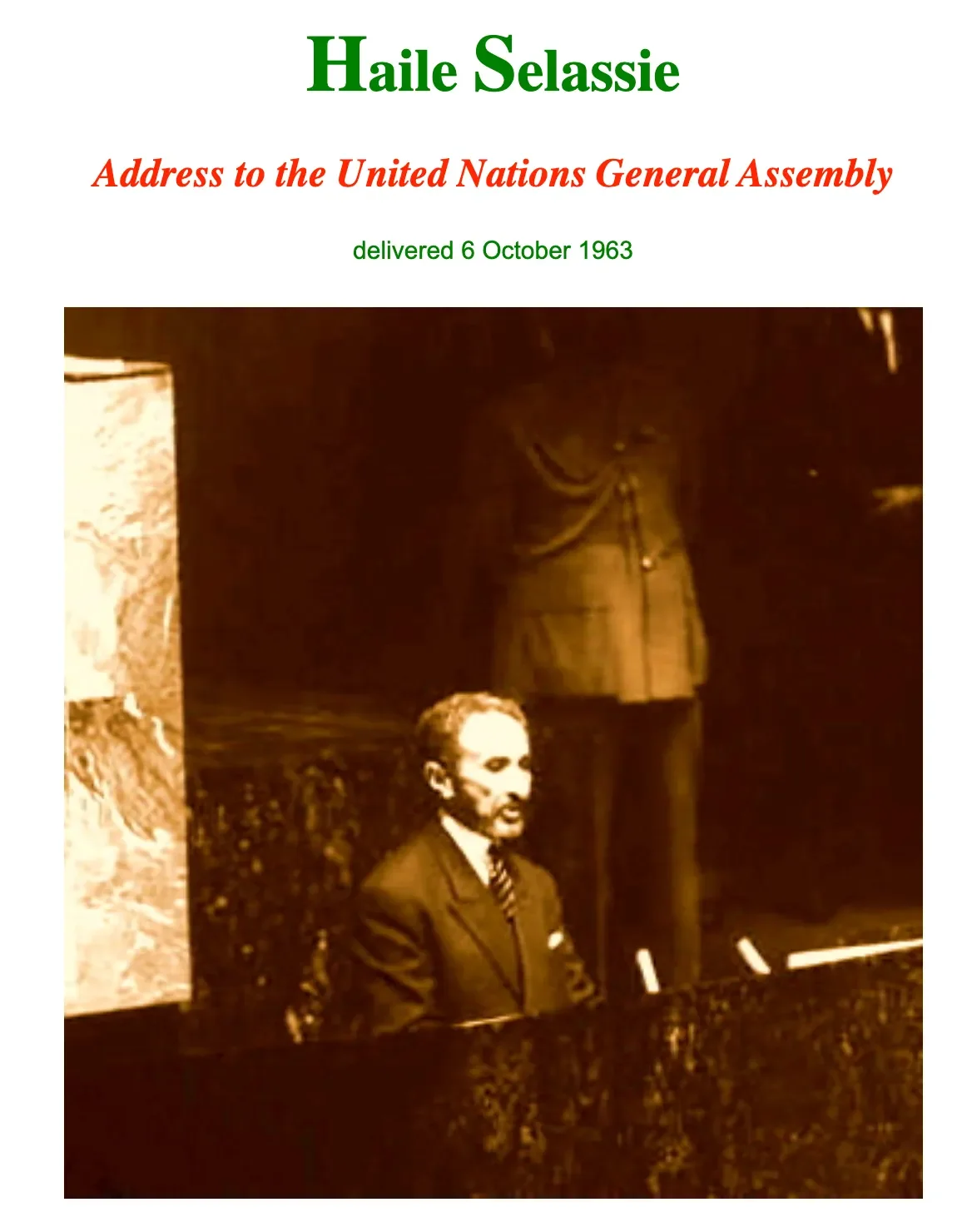
Today, I stand before the world organization which has succeeded to the mantle discarded by its discredited predecessor. In this body is enshrined the principle of collective security which I unsuccessfully invoked at Geneva. Here, in this Assembly, reposes the best—perhaps the last—hope for the peaceful survival of mankind.
In 1936, I declared that it was not the Covenant of the League that was at stake, but international morality. Undertakings, I said then, are of little worth if the will to keep them is lacking. The Charter of the United Nations expresses the noblest aspirations of man: abjuration of force in the settlement of disputes between states; the assurance of human rights and fundamental freedoms for all without distinction as to race, sex, language or religion; the safeguarding of international peace and security.
But these, too, as were the phrases of the Covenant, are only words; their value depends wholly on our will to observe and honor them and give them content and meaning. The preservation of peace and the guaranteeing of man’s basic freedoms and rights require courage and eternal vigilance: courage to speak and act -- and if necessary, to suffer and die—for truth and justice; eternal vigilance, that the least transgression of international morality shall not go undetected and unremedied. These lessons must be learned anew by each succeeding generation, and that generation is fortunate indeed which learns from other than its own bitter experience. This Organization and each of its members bear a crushing and awesome responsibility: to absorb the wisdom of history and to apply it to the problems of the present, in order that future generations may be born, and live, and die, in peace.
The record of the United Nations during the few short years of its life affords mankind a solid basis for encouragement and hope for the future. The United Nations has dared to act, when the League dared not in Palestine, in Korea, in Suez, in the Congo. There is not one among us today who does not conjecture upon the reaction of this body when motives and actions are called into question. The opinion of this Organization today acts as a powerful influence upon the decisions of its members. The spotlight of world opinion, focused by the United Nations upon the transgressions of the renegades of human society, has thus far proved an effective safeguard against unchecked aggression and unrestricted violation of human rights.
The United Nations continues to sense as the forum where nations whose interests clash may lay their cases before world opinion. It still provides the essential escape valve without which the slow build-up of pressures would have long since resulted in catastrophic explosion. Its actions and decisions have speeded the achievement of freedom by many peoples on the continents of Africa and Asia. Its efforts have contributed to the advancement of the standard of living of peoples in all corners of the world.
For this, all men must give thanks. As I stand here today, how faint, how remote are the memories of 1936.How different in 1963 are the attitudes of men. We then existed in an atmosphere of suffocating pessimism. Today, cautious yet buoyant optimism is the prevailing spirit. But each one of us here knows that what has been accomplished is not enough.
The United Nations judgments have been and continue to be subject to frustration, as individual member-states have ignored its pronouncements and disregarded its recommendations. The Organization’s sinews have been weakened, as member-states have shirked their obligations to it. The authority of the Organization has been mocked, as individual member-states have proceeded, in violation of its commands, to pursue their own aims and ends. The troubles which continue to plague us virtually all arise among member states of the Organization, but the Organization remains impotent to enforce acceptable solutions. As the maker and enforcer of the international law, what the United Nations has achieved still falls regrettably short of our goal of an international community of nations.
This does not mean that the United Nations has failed. I have lived too long to cherish many illusions about the essential high-mindedness of men when brought into stark confrontation with the issue of control over their security, and their property interests. Not even now, when so much is at hazard, would many nations willingly entrust their destinies to other hands.
Yet, this is the ultimatum presented to us: secure the conditions whereby men will entrust their security to a larger entity, or risk annihilation; persuade men that their salvation rests in the subordination of national and local interests to the interests of humanity, or endanger man’s future. These are the objectives, yesterday unobtainable, today essential, which we must labor to achieve.
Until this is accomplished, mankind’s future remains hazardous and permanent peace a matter for speculation. There is no single magic formula, no one simple step, no words, whether written into the Organization’s Charter or into a treaty between states, which can automatically guarantee to us what we seek. Peace is a day-to-day problem, the product of a multitude of events and judgments. Peace is not an “is”, it is a “becoming.” We cannot escape the dreadful possibility of catastrophe by miscalculation. But we can reach the right decisions on the myriad subordinate problems which each new day poses, and we can thereby make our contribution and perhaps the most that can be reasonably expected of us in 1963 to the preservation of peace. It is here that the United Nations has served us -- not perfectly, but well. And in enhancing the possibilities that the Organization may serve us better, we serve and bring closer our most cherished goals.
I would mention briefly today two particular issues which are of deep concern to all men: disarmament and the establishment of true equality among men. Disarmament has become the urgent imperative of our time. I do not say this because I equate the absence of arms to peace, or because I believe that bringing an end to the nuclear arms race automatically guarantees the peace, or because the elimination of nuclear warheads from the arsenals of the world will bring in its wake that change in attitude requisite to the peaceful settlement of disputes between nations. Disarmament is vital today, quite simply, because of the immense destructive capacity of which men dispose.
Ethiopia supports the atmospheric nuclear test ban treaty as a step towards this goal, even though only a partial step. Nations can still perfect weapons of mass destruction by underground testing. There is no guarantee against the sudden, unannounced resumption of testing in the atmosphere.
The real significance of the treaty is that it admits of a tacit stalemate between the nations which negotiated it, a stalemate which recognizes the blunt, unavoidable fact that none would emerge from the total destruction which would be the lot of all in a nuclear war, a stalemate which affords us and the United Nations a breathing space in which to act.
Here is our opportunity and our challenge. If the nuclear powers are prepared to declare a truce, let us seize the moment to strengthen the institutions and procedures which will serve as the means for the pacific settlement of disputes among men. Conflicts between nations will continue to arise. The real issue is whether they are to be resolved by force, or by resort to peaceful methods and procedures, administered by impartial institutions. This very Organization itself is the greatest such institution, and it is in a more powerful United Nations that we seek, and it is here that we shall find, the assurance of a peaceful future.
Were a real and effective disarmament achieved and the funds now spent in the arms race devoted to the amelioration of man’s state; were we to concentrate only on the peaceful uses of nuclear knowledge, how vastly and in how short a time might we change the conditions of mankind. This should be our goal.
When we talk of the equality of man, we find, also, a challenge and an opportunity; a challenge to breathe new life into the ideals enshrined in the Charter, an opportunity to bring men closer to freedom and true equality; and thus, closer to a love of peace.
The goal of the equality of man which we seek is the antithesis of the exploitation of one people by another with which the pages of history and in particular those written of the African and Asian continents, speak at such length. Exploitation, thus viewed, has many faces. But whatever guise it assumes, this evil is to be shunned where it does not exist and crushed where it does. It is the sacred duty of this Organization to ensure that the dream of equality is finally realized for all men to whom it is still denied, to guarantee that exploitation is not reincarnated in other forms in places whence it has already been banished.
As a free Africa has emerged during the past decade, a fresh attack has been launched against exploitation, wherever it still exists. And in that interaction so common to history, this in turn, has stimulated and encouraged the remaining dependent peoples to renewed efforts to throw off the yoke which has oppressed them and its claim as their birthright the twin ideals of liberty and equality. This very struggle is a struggle to establish peace, and until victory is assured, that brotherhood and understanding which nourish and give life to peace can be but partial and incomplete.
In the United States of America, the administration of President Kennedy is leading a vigorous attack to eradicate the remaining vestige of racial discrimination from this country. We know that this conflict will be won and that right will triumph. In this time of trial, these efforts should be encouraged and assisted, and we should lend our sympathy and support to the American Government today.
Last May, in Addis Ababa, I convened a meeting of Heads of African States and Governments. In three days, the thirty-two nations represented at that Conference demonstrated to the world that when the will and the determination exist, nations and peoples of diverse backgrounds can and will work together. in unity, to the achievement of common goals and the assurance of that equality and brotherhood which we desire.
On the question of racial discrimination, the Addis Ababa Conference taught, to those who will learn, this further lesson: that until the philosophy which holds one race superior and another inferior is finally and permanently discredited and abandoned; that until there are no longer first-class and second class citizens of any nation; that until the color of a man’s skin is of no more significance than the color of his eyes; that until the basic human rights are equally guaranteed to all without regard to race; that until that day, the dream of lasting peace and world citizenship and the rule of international morality will remain but a fleeting illusion, to be pursued but never attained; and until the ignoble and unhappy regimes that hold our brothers in Angola, in Mozambique and in South Africa in subhuman bondage have been toppled and destroyed; until bigotry and prejudice and malicious and inhuman self-interest have been replaced by understanding and tolerance and goodwill; until all Africans stand and speak as free beings, equal in the eyes of all men, as they are in the eyes of Heaven; until that day, the African continent will not know peace. We Africans will fight, if necessary, and we know that we shall win, as we are confident in the victory of good over evil.
The United Nations has done much, both directly and indirectly to speed the disappearance of discrimination and oppression from the earth. Without the opportunity to focus world opinion on Africa and Asia which this Organization provides, the goal, for many, might still lie ahead, and the struggle would have taken far longer. For this, we are truly grateful.
But more can be done. The basis of racial discrimination and colonialism has been economic, and it is with economic weapons that these evils have been and can be overcome. In pursuance of resolutions adopted at the Addis Ababa Summit Conference, African States have undertaken certain measures in the economic field which, if adopted by all member states of the United Nations, would soon reduce intransigence to reason. I ask, today, for adherence to these measures by every nation represented here which is truly devoted to the principles enunciated in the Charter.
I do not believe that Portugal and South Africa are prepared to commit economic or physical suicide if honorable and reasonable alternatives exist. I believe that such alternatives can be found. But I also know that unless peaceful solutions are devised, counsels of moderation and temperance will avail for naught; and another blow will have been dealt to this Organization which will hamper and weaken still further its usefulness in the struggle to ensure the victory of peace and liberty over the forces of strife and oppression. Here, then, is the opportunity presented to us. We must act while we can, while the occasion exists to exert those legitimate pressures available to us, lest time run out and resort be had to less happy means.
Does this Organization today possess the authority and the will to act? And if it does not, are we prepared to clothe it with the power to create and enforce the rule of law? Or is the Charter a mere collection of words, without content and substance, because the essential spirit is lacking? The time in which to ponder these questions is all too short. The pages of history are full of instances in which the unwanted and the shunned nonetheless occurred because men waited to act until too late. We can brook no such delay.
If we are to survive, this Organization must survive. To survive, it must be strengthened. Its executive must be vested with great authority. The means for the enforcement of its decisions must be fortified, and, if they do not exist, they must be devised. Procedures must be established to protect the small and the weak when threatened by the strong and the mighty. All nations which fulfill the conditions of membership must be admitted and allowed to sit in this assemblage.
Equality of representation must be assured in each of its organs. The possibilities which exist in the United Nations to provide the medium whereby the hungry may be fed, the naked clothed, the ignorant instructed, must be seized on and exploited for the flower of peace is not sustained by poverty and want. To achieve this requires courage and confidence. The courage, I believe, we possess. The confidence must be created, and to create confidence we must act courageously.
The great nations of the world would do well to remember that in the modern age even their own fates are not wholly in their hands. Peace demands the united efforts of us all. Who can foresee what spark might ignite the fuse? It is not only the small and the weak who must scrupulously observe their obligations to the United Nations and to each other. Unless the smaller nations are accorded their proper voice in the settlement of the world’s problems, unless the equality which Africa and Asia have struggled to attain is reflected in expanded membership in the institutions which make up the United Nations, confidence will come just that much harder. Unless the rights of the least of men are as assiduously protected as those of the greatest, the seeds of confidence will fall on barren soil.
The stake of each one of us is identical—life or death. We all wish to live. We all seek a world in which men are freed of the burdens of ignorance, poverty, hunger and disease. And we shall all be hard-pressed to escape the deadly rain of nuclear fallout should catastrophe overtake us.
When I spoke at Geneva in 1936, there was no precedent for a head of state addressing the League of Nations. I am neither the first, nor will I be the last head of state to address the United Nations, but only I have addressed both the League and this Organization in this capacity.
The problems which confront us today are, equally, unprecedented. They have no counterparts in human experience. Men search the pages of history for solutions, for precedents, but there are none. This, then, is the ultimate challenge. Where are we to look for our survival, for the answers to the questions which have never before been posed?
We must look, first, to Almighty God, Who has raised man above the animals and endowed him with intelligence and reason. We must put our faith in Him, that He will not desert us or permit us to destroy humanity which He created in His image. And we must look into ourselves, into the depth of our souls. We must become something we have never been and for which our education and experience and environment have ill-prepared us. We must become bigger than we have been: more courageous, greater in spirit, larger in outlook. We must become members of a new race, overcoming petty prejudice, owing our ultimate allegiance not to nations but to our fellow men within the human community.
Part III
The Architecture of Resilience: Blueprints for Localized Post-Growth Communities
The Paradigm of Localized Mitigation in the Polycrisis
The current global situation is more and more shaped by what is known as the “polycrisis”, which refers to the simultaneous occurrence of ecological overshoot, climate destabilization, resource depletion, geopolitical conflict, and deep-seated economic inequalities. Since analytical models, the realities of international politics, and historical examples all point to the fact that there is a very low chance of achieving global agreement, uniform cooperation, and top-down collaboration to deal with these interconnected crises, centralized power structures, well-established corporate interests, and the main military-industrial complex have always put short-term profit-making, endless growth, and security before long-term ecological and social stability. As a result, the most practical and strategically sound approach to human survival and cultural preservation is to rely on decentralized, local forms of adaptation. People can thus cope with systemic collapse by building strong, sustainable communities and turning local actions into a widely connected network of resilience.
This method means giving up the idea of keeping or “reviving” the present hyper-industrialized, growth-based civilization. Instead, it involves making a deliberate and urgent shift towards graceful degrowth, voluntary simplicity, restorative social systems, open-source low-technology engineering, and advanced ecological restoration. Although a local community cannot, by itself, destroy global oligarchies and their military apparatuses, it can still build self-governing, autonomous systems that ensure both survival and prosperity. By making effective use of information technology and the global internet, local successes, technological innovations, and social structures can be spread worldwide. When numerous such projects aimed at building a better future emerge, they will not only serve as immediate refuges but also act as practical blueprints—seed banks of human culture, ethics, and applied knowledge—for future generations who must deal with the collapse of global modern civilization.
This report thoroughly sets out the key areas of human activity required to build such resilient communities, combining theoretical approaches, practical methods, and ongoing global projects into a complete blueprint for worldbuilding in a post-growth scenario.
Domain I: Economic and Cultural Paradigms: The Degrowth Imperative
A necessary basis for creating sustainable local communities is a clear opposition to infinite economic growth. The prevailing economic system is based on the constant extraction of finite resources and the shifting of ecological costs onto others. This scheme is fundamentally at odds with the planetary boundaries. The alternative approach, degrowth, constitutes not only a deep socio-economic critique but also a constructive suggestion for a world beyond capitalism.
The Philosophy and Literature of Degrowth
It is incorrect to say that degrowth is the same as imposing austerity, economic depression, or an accidental collapse, since those are symptoms of a system based on continuous growth and therefore failing. On the contrary, degrowth refers to a deliberate, fair-scale reduction in energy and resource use to restore the economy to balance with the natural environment in a safe, just, and equitable way. The intellectual structure of this movement is supported by substantial literature and research that communities can use as basic materials for education and to realign their culture.
Many scholars believe that recovering the commons and decolonizing nature is necessary for humankind to survive, because taking less leaves more for future generations and supports well-being for everyone. To understand why growth is seen as an unquestionably positive value and how it quietly forces people into present-day relations of power and hierarchy, it is essential to refute growth-oriented policies systematically. Within the degrowth literature, a cultural critique is just as important in challenging the dominant idea that greater consumption leads to greater well-being. Voluntary simplicity involves a psychological and cultural shift away from consumerism, since genuine abundance can be found in community, shared resources, and ecological harmony.
To build an educational foundation, communities need to engage with the extensive scholarly work documenting this kind of transition. The table below puts together the key literature that provides the philosophical, economic, and practical basis for a degrowth and post-capitalist transition:
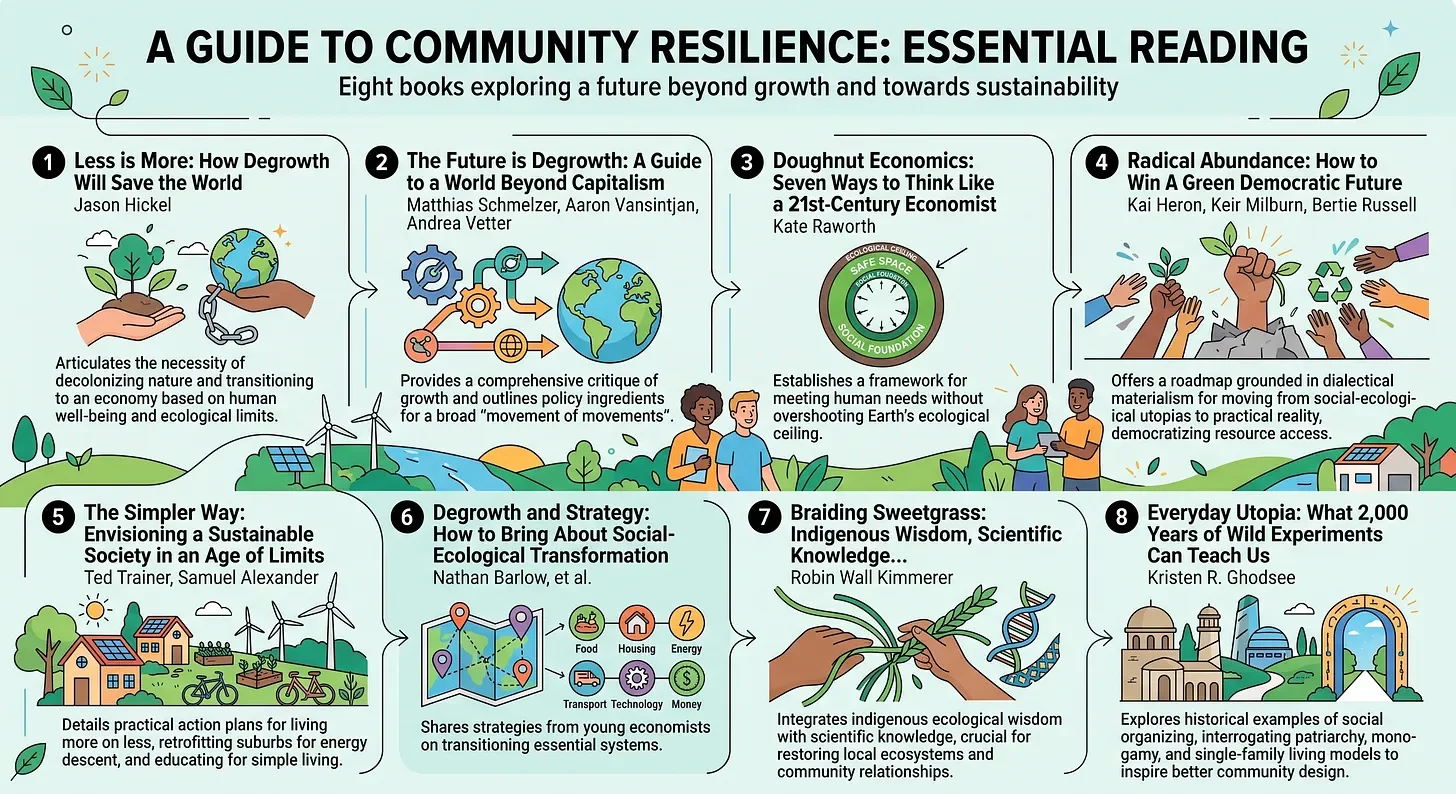
Many more books and papers exist. These provide a simple start.
Implementing Radical Abundance and Voluntary Simplicity
A central idea in local communities is “radical abundance,” the view that capitalism artificially creates scarcity through enclosures, intellectual property, and unequal distribution. If communities democratize access to resources, share infrastructure, and focus on meeting genuinely legitimate human needs rather than those artificially produced by the market, they can enjoy an abundance of time, social connection, and necessities even as total material production decreases significantly.
The socio-economic change is closely connected with the idea of “voluntary simplicity”. Research by organizations such as the Simplicity Institute shows that, to overcome the obstacles to sustainable consumption, we must go beyond green technology and adopt mindful sufficiency as an alternative to extinction. This means reorganizing labor, redefining the notion of a “care income”, and elevating the reproductive and domestic labor that sustains life above the productive labor that produces capital.
Digital Sufficiency in an Era of Information Sharing
An essential part of this transition is using information technology to share successful examples across areas worldwide, without falling into the exploitative tendencies of the current technology industry. The internet is an infrastructure that consumes a great deal of energy and depends on rare earth minerals, large data centers, and global supply chains. For connectivity to remain viable, communities should take up the concept of “digital sufficiency,” which has four key dimensions.
To ensure hardware sufficiency, communities should extend device life, prioritize modular repairability, and reduce total energy demand for both manufacturing and operation; this, in turn, means abandoning planned obsolescence and moving back to durable computing.
It is essential to develop and use software that requires only a small amount of processing power, since otherwise ‘software bloat’ would render older, still-functional hardware obsolete and prevent communities from communicating through machines that are decades old.
Network sufficiency means setting up decentralized communication networks that require low bandwidth—such as mesh networks or packet radio—which operate without relying on large, centralized, and energy-intensive data centers.
Regarding the adequacy of usage: it is necessary to foster cultural norms that restrict unnecessary and high-bandwidth digital consumption (for example, that associated with algorithmic video streaming), and to redirect technology towards the aspect of its use which is most important—namely, essential communication, open-source knowledge sharing, and systemic ecological monitoring.
If local communities adopt these principles, they can maintain a resilient, low-energy digital nervous system that coordinates the global sharing of transition strategies.
Domain II: Social Cohesion and Peacemaking: Restorative Systems
As the macroeconomic situation worsens, supply chains break down, and ecological pressures increase, the likelihood of interpersonal and inter-group conflict in local communities will certainly rise. The traditional modern way of dealing with conflict is to hand the problem over to the state through punitive judicial systems, police forces, and the carceral system. Yet retributive justice has the effect of removing crime from its context, separating both the offenders and the victims from the community, which in turn leads to more violence and widens social divisions. If a small, self-governing community is to survive without relying on state coercion, it must create non-punitive methods to keep the community together and address harm.
The Framework of Restorative Circles
A highly effective, tested methodology is known as “Restorative Circles”. Dominic Barter developed this approach in the mid-1990s in collaboration with young people living in the gang-run favelas of Rio de Janeiro, Brazil. Since the formal justice system had largely left behind the area and was suffering from deadly violence, the Restorative Circles did not originate from abstract academic theories. Instead, they emerged from the immediate need to find alternative ways to deal with conflict other than through revenge or death.
A Restorative Circle is a community-owned method based on restoring trust, dignity, and respect, going beyond assigning blame to produce action plans that benefit all concerned. The process is grounded in a radical understanding of sociology, which holds that conflict is not a disorder to be eliminated but rather an unavoidable form of feedback indicating that a social system or agreement needs to be adapted.
The Mechanics of Dialogical System Design
The Restorative Circle process makes a basic change to the power relationships involved in settling conflicts. It creates an environment of “shared power” and usually involves three groups: those who have taken action, those directly affected, and members of the wider community. The process is well structured to guide participants through three sequential stages of dialogue.
First, the dialogue focuses on the present moment and aims to achieve mutual understanding. Participants discuss how they currently feel as a result of the event. The facilitator ensures meaning is conveyed through reflective listening: one participant speaks, and the listener repeats back what they heard until the speaker feels fully understood. This stage fosters deep empathy, makes the invisible emotional effects visible to everyone involved, and returns power to the victims by having the offender publicly witness their pain.
Second, the conversation turns to the past, emphasizing the participants’ intentions. They consider the context, unmet needs, or systemic pressures that led to the incident. This stops the offender from being ‘monsterized’ and instead sees them as a human being whose behavior was motivated by ordinary human needs, even if those needs were expressed in a tragic or harmful way. When the community understands the underlying cause of the action, it can identify structural defects within its own organization that may have caused the conflict.
In the end, the discussion turns to the future with a view to reaching concrete agreements. Instead of applying punishments from the top down, the group jointly develops an action plan. They decide on specific, measurable steps that both the offender and the community will take to make amends for the harm, restore relationships, and reintegrate all members into the social fabric. A key element of this approach is the “post-circle,” during which the community meets again later to assess how well the action plan has been carried out, provide support where agreements have not been fulfilled, and ensure long-term accountability.
The Sociopolitical Necessity of Restorative Practices in Collapse
For transition communities, adopting restorative practices is essential for long-term survival. Punitive measures such as exile, imprisonment, or ostracism reduce a community’s human capital and erode social trust, both of which are the most important resources in a post-growth world. When communities choose to face up to the pain of conflict rather than avoid it or pass it on to others, they turn defensiveness into constructive engagement.
Moreover, the wide international distribution of Barter’s work across 50 countries—including schools, corporations, areas emerging from civil conflicts, and even mediation schemes for the Police Pacification Units in Rio—shows that the methodology is highly adaptable to diverse cultural settings. By training janitors, youth workers, teachers, and other community members to act as facilitators, the justice process becomes more democratic. When communities adopt restorative systems, they heal internal divisions rather than worsen them, building a resilient social structure that can withstand severe external crises and restore social ecosystems destroyed by geopolitical conflict.
Domain III: Sustainable Engineering, Low-Tech, and Material Realities
A major weakness of present-day global civilization is its complete reliance on highly complex, highly globalized supply chains, together with the large-scale extraction of finite mineral and fossil fuel resources. The current dominant viewpoint holds that the ecological crisis can be avoided by replacing fossil fuel infrastructure with renewable energy technologies (for instance, replacing hundreds of millions of internal combustion engine vehicles with electric vehicles and coal-fired power plants with large-scale solar and wind farms). Yet this “green growth” approach is fundamentally flawed and cannot be sustained indefinitely in material terms.
Analyzing the Mineral Constraint Debate and Energy Descent
The physical limits of the energy transition have always been the focus of vigorous scientific and economic discussion. Reports put forward by researchers such as Simon Michaux have gained considerable influence by claiming that the total reserves of key minerals (copper, lithium, cobalt, nickel, neodymium) are far too small to enable a full-scale global shift to renewable energy. According to Michaux’s calculations, replacing the world’s fossil fuel power stations would require building hundreds of thousands of renewable power plants, creating an impossible raw-material bottleneck and making the clean energy transition unfeasible.
Even though energy analysts have strongly criticized Michaux’s exact figures for assuming that technology remains unchanged, for ignoring the huge efficiency improvements, for failing to take into account the increasing importance of recycling (for example, one-third of the world’s steel is already recycled), and for greatly overestimating the need for battery storage by assuming that lithium-ion batteries must alone handle all the grid backup duties, the basic assumption does contain an important and undeniable truth. The error lies in the ‘one-for-one replacement’ approach; in an electrified world, it is impossible to replicate the huge and inefficient patterns of energy consumption that characterized the fossil-fuel period.
The lesson for local communities is not that renewable energy is impossible, but that total energy demand must be greatly reduced—a process called energy descent. A sustainable community will not aim to construct large battery banks that require rare and ethically questionable materials such as lithium or cobalt. On the contrary, it will depend on demand management, adjust people’s behavior, shift consumption to periods when solar and wind power are being generated, and make use of a variety of local and diverse energy storage techniques (for example, pumped hydro, compressed air, thermal mass storage, sodium-ion, or iron-flow batteries) which are based on common and non-toxic materials.
The Low-Tech Movement and Open-Source Knowledge
If communities are to cope with the decline of global supply chains and the increasing scarcity of virgin mineral ores, they will need to quickly obtain, record, and pass on the skills involved in low-technology engineering. Low-technology means using technologies that are useful, durable, easy to access, simple to repair, and environmentally sustainable. The aim is not to revert to a primitive way of living, but to select, in a highly sophisticated way, the most effective and resilient technologies from human history and then enhance them with modern scientific knowledge.
The Low-tech Lab plays a vital role in this international initiative. The Low-tech Lab finds, tests, records, and spreads low-tech technologies through open-source collaborative platforms. On these platforms, thorough tutorials enable communities worldwide to reproduce essential infrastructure using materials that are locally scavenged, recycled, or found naturally.
Examples of essential low-tech skills and infrastructure projects that must be developed include:
The construction and maintenance of bicycles, cargo bikes, and vehicles pulled by humans or animals: the capacity to make bicycles from readily available pipes, scrap metal, and simple welding—rather than relying on imported, carbon-intensive deliveries—guarantees resilient long-term mobility and logistical capability.
In metallurgy and fabrication, it is possible to build local charcoal furnaces that can melt scrap aluminum, copper, and iron to cast new components. The idea of a self-replicating machine shop, which uses simple lathes and shapers, enables a community to manufacture almost any needed mechanical part from locally available scrap metal, closing the recycling loop at the village level.
The building’s design and the use of batch-heating masonry stoves, solar water heaters, and passive-solar architectural methods significantly reduce the need for electric or fossil-fuel heating in winter.
Building solar dehydrators, zero-energy cool rooms (using evaporative cooling), root cellars, and fermentation expertise to secure local food supplies without energy-intensive refrigeration.
By strategically distributing these simple blueprints across global internet networks, we ensure that whenever a technology fails, the local population has the diagnostic and manufacturing skills needed to repair or reproduce it, achieving genuine technological sovereignty and independence from failing global supply chains.
Domain IV: Ecological Restoration and Bioremediation of Toxic Legacies
The industrial civilization we have known has left behind large areas of land, waterways, and aquifers polluted by persistent organic pollutants (POPs), per- and polyfluoroalkyl substances (PFAS, known as “forever chemicals”), heavy metals, agricultural pesticides, and radioactive waste. When central environmental protection agencies fail, lose funding, or completely break down, local communities will have to restore their ecosystems and detoxify their surroundings through biological and nature-based technologies.
Mycoremediation: Fungi as Ecological Healers
Mycoremediation, a specialized form of bioremediation, uses fungi and their sophisticated enzymatic processes to break down, neutralize, or store environmental pollutants. Fungi have survived five major extinction events and have highly adaptable, sometimes dormant, metabolic pathways that can decompose the complex synthetic chemicals typical of the Anthropocene.
White-rot fungi, for example, Pleurotus ostreatus (the oyster mushroom) and Phanerochaete chrysosporium, produce strong extracellular enzymes—mainly laccases, lignin peroxidases, and manganese peroxidases—whose original function is to break down the highly resistant structural bonds in wood (namely lignin and cellulose). Because lignin's complex chemical structure is remarkably similar to that of many polycyclic aromatic hydrocarbons (PAHs), organochlorine pesticides, and pharmaceutical wastes, these fungi's enzymes act non-specifically, efficiently oxidizing and degrading toxic hydrocarbons into harmless end products such as carbon dioxide and water. It has been shown in practical applications that the mycelium of Pleurotus can reduce the mass of complex synthetic waste, for instance, from used diapers or discarded cigarette butts, transforming the waste into non-toxic and, at times, edible biomass.
The technology is essential for rehabilitating ecosystems following wars, since military conflicts leave behind landscapes damaged by defoliants, the leakage of unexploded ordnance and chemical spillage, and the destruction of infrastructure. By using mycoremediation, communities can efficiently and economically break down complex chemical residues left by the military, thereby restoring the soil for agricultural use.
Addressing Heavy Metals with Biochar and Hyperaccumulators
Although fungi can break down organic molecules through enzymatic combustion, elemental pollutants such as heavy metals (cadmium, lead, zinc, copper, nickel) cannot be destroyed. They therefore must be immobilized, sequestered, or extracted. Mycoremediation addresses this problem through ‘biosorption’—the physical adsorption, ion exchange, and chemical sorption of heavy metals onto functional groups (carboxylic, phosphate, amine, sulfhydryl) on fungal cell walls. Because the process depends on physical chemistry rather than active metabolism, communities can use dead fungal biomass or mushroom compost as highly effective, low-cost biosorbents to filter contaminated water.
An advanced, targeted method involves combining specific fungal strains with biochar to treat areas affected by a mixture of pollutants. For instance, when Trichoderma reesei is genetically or environmentally stimulated alongside lignocellulosic biochar—biochar produced by low-tech pyrolysis of agricultural waste such as corn or rice straw—it creates a strong synergistic remediation system. The biochar serves as a highly porous support and promoter, and its enriched functional groups enhance pollutant adsorption. Together, the biochar induces the fungus to produce large quantities of laccase, which enables the simultaneous degradation of organic pollutants and the permanent immobilization of heavy metals, thereby greatly reducing their bioavailability and toxicity in the soil.
Furthermore, communities can utilize “phytostabilization” and “assisted phytoremediation” by intentionally planting hyperaccumulator plant species on contaminated soils or mine tailings. Research shows that native hyperaccumulators, when grown in biochar-amended substrates, produce more biomass while drastically reducing the ecological risk of heavy-metal biomagnification, thereby preventing toxins from entering the broader food web.
The following image summarizes key biological remediation agents and their applications for localized ecological restoration:
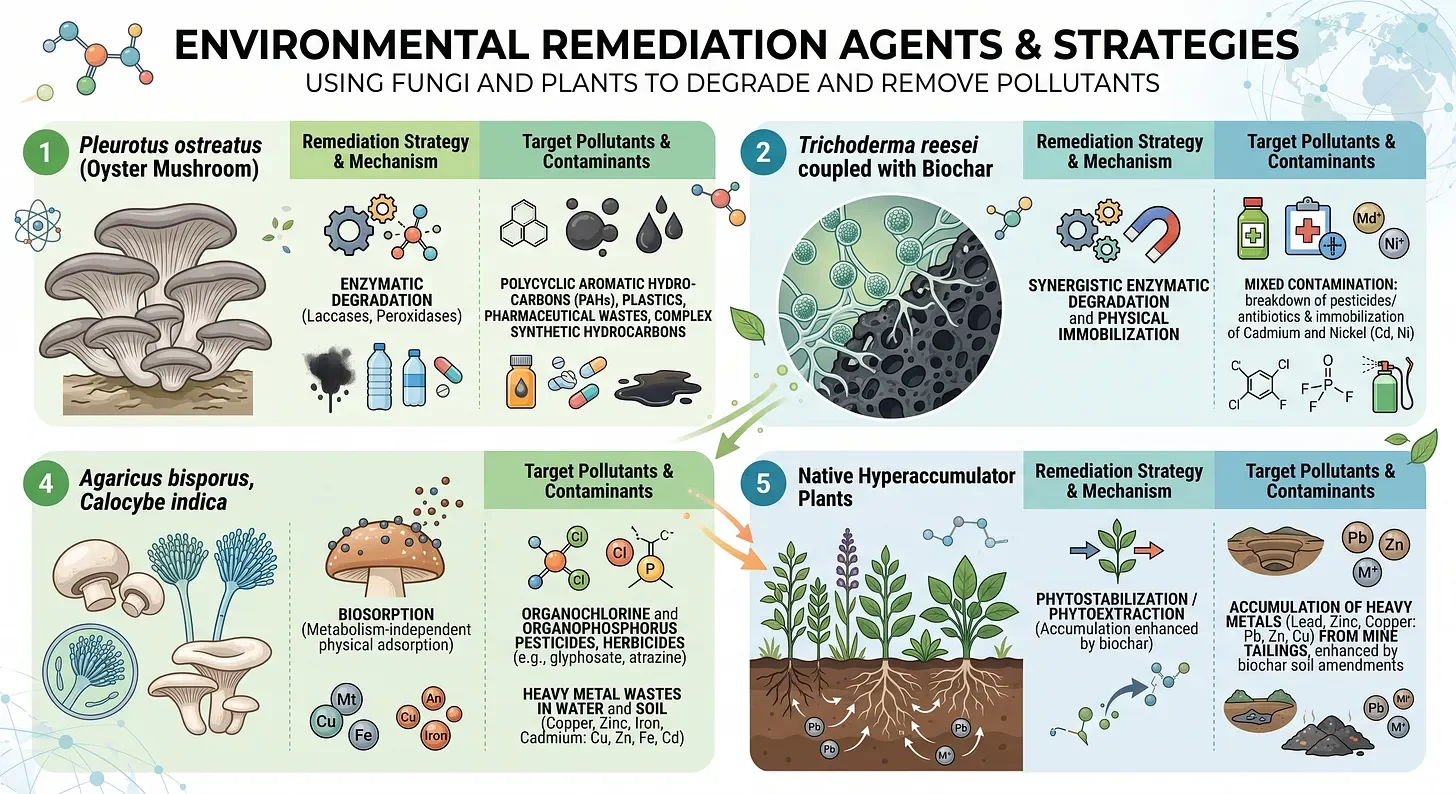
The Challenge of Nuclear Waste and Long-Term Stewardship
The most formidable and difficult legacy of the modern industrial age is nuclear waste. The deep geological repositories in question are highly complex, capital-intensive state-run projects that might be abandoned or mishandled during periods of serious societal collapse or financial insolvency. Communities near these repositories or abandoned nuclear power facilities will have to take on the great intergenerational duty of ‘long-term stewardship’.
Future radioactive waste management must shift from dependence on a small number of highly specialized technocratic experts to sustainable methods accepted by the communities concerned, using open-source bioremediation. Current biotechnology research is focusing on the application of microbial communities that are extremophiles and can survive in high-radiation environments to break down and detoxify areas surrounding nuclear waste. Although microorganisms cannot change the fundamental isotopic half-lives of nuclear materials, certain bacterial strains can change the valence states of radionuclides (for example, by reducing soluble, highly mobile Uranium-VI to insoluble Uranium-IV). This biological process causes radioactive elements to precipitate out of groundwater, trapping them in the soil and preventing them from entering local aquifers and agricultural food supplies. In the distant future, it will be an essential survival skill for communities to maintain these microbial barriers and simple Geiger counters, and to operate open-source radiation monitoring networks.
Domain V: Educational Infrastructures and Living Laboratories
The ideas of degrowth, restorative justice, low-tech engineering, and mycoremediation remain entirely abstract, with no physical spaces to put them into practice and no solid educational programs to pass this knowledge on. In “intentional communities,” transition towns, and ecovillages, these practices are incorporated, tested, refined, and taught. Portugal has now become a globally recognized center for this movement, offering real-world examples of how decentralized communities can revitalize rural areas, restore ecosystems, and serve as models for post-growth societies.
Ecovillages as Blueprints: The Case of Tamera
Tamera was founded in 1995 in the dry region of Alentejo, Portugal, and is an international peace research village with about 160 residents. The village serves as a complete example of global system change, seeking to transform human culture from exploitation to cooperation and from fear to trust. It is not simply a retreat but rather a well-organized research center that serves as a replicable model for future intentional communities.
Tamera’s research spans several core areas critical for survival:
In ecology and water retention, Tamera has turned dry, desertifying regions into rich, biodiverse areas through a series of decentralized ‘Water Retention Landscapes’. Using swales, natural dams, and permaculture principles, they recharge local aquifers and eliminate the need for centralized water supply systems, thus providing a model for drought resilience in a warming world.
By developing energy independence through solar power, biogas digesters, and simple thermal technologies, it is possible to demonstrate in practice that a high standard of living, along with technological functionality, can be achieved without relying on fossil fuels.
Social and community building involves researching alternative economic models, the principles of free love, and various social structures to overcome patriarchal dominance, heal trauma, and resolve the underlying human conflicts that often lead to the destruction of intentional communities.
Educational Nodes and Rural Revitalization
Other communities in Portugal showcase a range of local approaches and highlight the need for non-formal education. Quinta das Relvas, which was set up in 2016, places a strong emphasis on spreading knowledge about sustainability, the arts, and permaculture; it organizes youth exchanges, hosts artistic residencies and European Solidarity Corps volunteers, and runs various programs (for example, LOG OFF concerning digital well-being, BUILD UP relating to bio-construction, and CHERISH THE WEEDS about ecological integration). By linking people, organizations, and ideas, they draw on the systemic idea that “isolated we are weaker, but interconnected we create more with less.”
Moreover, the global Transition Town movement—as seen in Portuguese examples such as Projecto de REconomy Tavira, Famalicão em Transição, Portimão em Transição, and the ecozone of Folha Verde / Benfeita—emphasizes revitalizing existing rural villages rather than constructing entirely new, isolated settlements. The idea of a “Re-economy” aims to establish collaborative local economies, cooperatives, and mutual support networks that remove the structural inflexibilities that tie rural populations to environmental abuse and globalized markets.
The following image highlights the diversity of community models operating as living laboratories in Portugal:
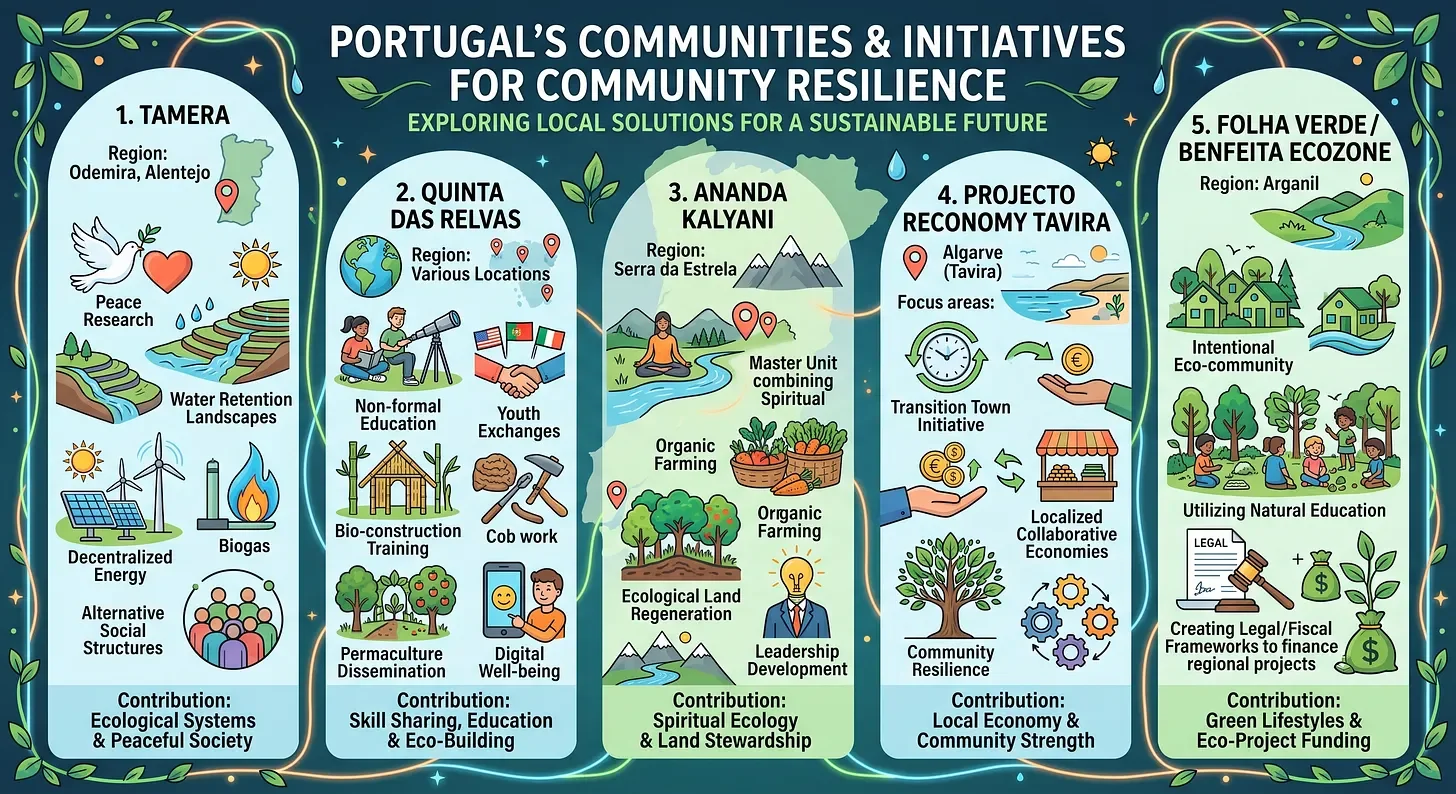
The Challenge of Integration vs. Isolation
However, as sociological analyses and documentaries such as Aldeias do Futuro (Villages of the Future) show, these regenerative projects face profound challenges in integrating locally. True regeneration requires deep, respectful connection with local populations, traditional culture, historical memory, and language. Creating isolated “expat bubbles” or eco-enclaves that ignore the existing rural population undermines the resilience, security, and moral authority of the community. The most successful and robust communities of the future will seamlessly blend the deep historical memory and agricultural wisdom of traditional rural populations with the ecological innovations, conflict-resolution practices, and global connectivity of the modern transition movement.
Conclusion: A Blueprint for the Deep Future
The mitigation of the polycrisis will not arrive via a grand, unified global treaty, nor will it be delivered by the technological salvation of the geopolitical and corporate elite. The path through the profound predicament of the twenty-first century is inherently decentralized, rooted in local communities willing to confront the stark material and ecological realities of a post-growth world.
To turn the tide as macroeconomic frameworks falter and ecological conditions deteriorate, humanity must engage in a coordinated strategy of localized worldbuilding. This requires a simultaneous, multi-domain transformation:
Economic Transition: Actively embracing the literature and daily practice of degrowth, shifting societal values from material accumulation to radical abundance, voluntary simplicity, and robust digital sufficiency.
Social Architecture: Implementing Restorative Circles and dialogical system designs to manage conflict without relying on violent or punitive state apparatuses, thereby ensuring deep psychological resilience and unbreakable social cohesion.
Technological Sovereignty: Abandoning the fallacy of a massive green-capitalist energy transition in favor of radically reduced energy demand, sustained by open-source, low-tech engineering that can be locally fabricated, operated, and repaired using scavenged materials.
Ecological Healing: Utilizing advanced biological interventions—such as fungal mycoremediation, biochar synergistic systems, and extremophile microbial stewardship—to detoxify the legacy pollutants of warfare, industry, and nuclear power, securing safe habitats for future generations.
Community Integration: Building and expanding intentional ecovillages and transition towns that operate as living educational laboratories, merging ecological innovation with deep integration into traditional rural cultures.
While these localized projects will operate in physical isolation from one another, their ultimate strength lies in their digital and cultural interconnection. Information technology—curated through the lens of digital sufficiency—must serve as the central nervous system of this global movement. By sharing technological blueprints, open-source tutorials, remediation strategies, and restorative methodologies across a global tapestry of alternatives, a small number of highly resilient projects can catalyze a massive, decentralized paradigm shift. Even as global modern civilization undergoes severe simplification, energy descent, and structural collapse, the momentum from thousands of these intentional, future-focused nodes will serve as the ark. They will stand as living, breathing examples for future generations of survivors, carrying the best of human knowledge, empathy, peacemaking, and ecological integration into the deep future.
End Note: Everything discussed and suggested in the book, including my opinions, barely scratches the surface of the causes and understanding of our predicament, solutions, best practices, and the extreme dangers we face. We live in exciting times. We can struggle within the status quo of the 21st-century Great Game, or we can build new worlds. The frontier of human life is in our heart, soul, and mind.