The Sociology of the Inner Citadel
The history of Western thought presents a distinct sociological divergence in how different classes navigate the inherent suffering of the human condition. While the less fortunate—those intimately acquainted with systemic oppression, poverty, and physical precariousness—have historically gravitated toward soteriological religions offering external rescue and eschatological promise, the ruling elites have cultivated a different intellectual tradition. This tradition, best exemplified by Stoicism, provides a sophisticated cognitive architecture that allows the privileged to reconcile their status with the pathologies of their culture. The central thesis of this report posits that Stoicism functions not merely as a guide to virtue but as a specialized coping mechanism for the elite conscience. It is a philosophy of “The Citadel,” allowing those in power to recognize the hypocrisy and corruption of their empires while insulating their internal moral worth from their external complicity.
The dissonance experienced by the elite is unique. Unlike stressed, enslaved, unstable classes, whose suffering is often imposed by external lack, the elite suffer from the burden of agency. They must administer unjust laws, wage bloody wars, and maintain immense wealth in the face of abject poverty. To feel good about themselves—to maintain the narrative of the “Good Life”—they require a philosophical framework that reframes external conditions as “indifferent,” thereby validating their status while absolving them of the guilt associated with inequality. Let us examine the Elite Stoic lineage from the merchant Zeno to the tech investor Tim Ferriss, and contrast it with the soteriological needs of the poor and the distinct ethical frameworks of Jesus and the Buddha.
Soteriological is an adjective pertaining to soteriology, the theological study of salvation, deliverance, and redemption. It covers doctrines regarding how salvation is achieved, the role of a savior, and the nature of human liberation from sin or existential distress. It is a central theme in religion, particularly in Christianity.

Cognitive Dissonance and Class Utility
The utility of Stoicism for the elite lies in its duality. On one hand, it demands rigorous self-discipline and justice, satisfying the elite's need to feel righteous and superior to the mob. On the other hand, it introduces the doctrine of “preferred indifferents” (proëgmena), which creates a permissible space for wealth, power, and status. The Proëgmena doctrine is the hinge upon which elite Stoicism turns. It allows the aristocrat to possess the trappings of empire without belonging to them, thereby assuaging the cognitive dissonance that arises when a moral agent inhabits an immoral system.
Conversely, the ordinary people possess a natural understanding of limits born of necessity. They do not require a philosophy to teach them that they control very little; their material reality enforces this lesson daily. Their metaphysical need is not for endurance of the status quo—which they already endure by force—but for escape or redemption from it. Thus, they bend toward religion, which promises that the “last shall be first,” a reversal of the hierarchy that Stoicism often tacitly accepts as “Fate.”
So the last shall be first, and the first last: for many be called, but few chosen. Matthew 20:16 King James Version
The Early Stoa: The Merchant, The Boxer, and The Systematizer
The demographic origins of Stoicism reveal the initial tension between the rejection of convention (Cynicism) and the accommodation of power. While the school accepted all classes, its doctrinal evolution increasingly catered to the needs of the propertied class.
Zeno of Citium: The Rationalization of Loss and the Invention of Indifference
Zeno of Citium (c. 334–262 BC), the founder of the Stoa, presents the archetypal case of the "displaced elite." Originally a wealthy merchant trading in Tyrian purple—a commodity worth its weight in silver and symbolic of royal status—Zeno lost his fortune in a shipwreck. His turn to philosophy was not a rejection of wealth per se, but a cognitive reframing of the loss of wealth.
Passages on Wealth and the Good Life:
Zeno’s pivotal contribution was the classification of adiaphora (indifferents). Unlike the Cynics, who viewed wealth as actively harmful to virtue, Zeno categorized it as a "preferred indifferent."
“No loss should be more regrettable to us than losing our time, for it is irretrievable.” This sentiment betrays a distinctly aristocratic anxiety. For the laborer, time is a commodity sold for survival; for Zeno, it is the canvas for self-actualization.
“Man conquers the world by conquering himself.” This dictum creates an internal empire for those who may have lost their external one.
Zeno’s shift allowed for the reintegration of the philosopher into high society. While his Republic theoretically abolished money and temples, in practice, Zeno became a valued associate of King Antigonus II Gonatas of Macedonia. He did not dismantle the hierarchy; he intellectualized it. By teaching that the wise man is “rich even in poverty,” Zeno provided a psychological safety net for the precarious Hellenistic elite, ensuring that their self-worth remained intact despite Fortune's volatility.
Cleanthes: The Proletarian Anomaly and the Theology of Order
Cleanthes (c. 330–230 BC) is the outlier—a former boxer and water-carrier who studied by night. However, his philosophical contribution, the Hymn to Zeus, served to ossify the social order, making it palatable to the ruling class.
The Hymn to Zeus and Submission:
Cleanthes’ hymn frames the universe as a monarchy ruled by Reason (Zeus).
“Lead me, O Zeus, and thou O Destiny, / The way that I am bid by you to go.”
“For neither mortals nor gods have any greater privilege / Than to make everlasting song of the universal law in justice.”
Elite Utility:
For the elite, this theology is incredibly useful. It posits that the current order—including the distribution of power—is a manifestation of Divine Will. To rebel against the “common law” is to rebel against God. Thus, Cleanthes, though poor, provided the metaphysical justification for the status quo. His Stoicism was not a tool of revolution, but of radical acceptance, a trait that makes a population (or a ruler) steadfast but politically static.
Chrysippus: Determinism as Social Justification
Chrysippus (c. 279–206 BC), the prolific systematizer, cemented the doctrine of Fate.
Passages on Fate and Social Roles:
“Fate is a sempiternal and unchangeable series and chain of things...”
“The wise man meddles little or not at all in affairs and does his own things.”
The Cognitive Mechanism: Chrysippus developed the "compatibilist" view, in which internal volition coexists with external determinism (the cylinder analogy). For the ruling class, this is a powerful exoneration. If the outcome of a war or a famine is “Fate,” the ruler is absolved of the result, provided his intention was in accordance with nature. It allows the elite to act as agents of history without bearing the crushing weight of history’s tragedies.
The Roman Stoa: Oligarchy, Hypocrisy, and the Pathology of Empire
Roman Stoicism was the operating system of the ruling class, used explicitly to manage the terror of the Imperial court and the guilt of immense accumulation.
Seneca the Younger: The Billionaire Sage and the Loophole of Virtue
Lucius Annaeus Seneca (4 BC – 65 AD) is the ultimate case study in elite cognitive dissonance. A tutor and advisor to Nero, Seneca was effectively the co-ruler of the Empire for five years (the Quinquennium Neronis). He amassed a fortune of 300 million sestertii, owned vast estates, and engaged in predatory lending.
The Pathology of Culture:
Seneca lived in a pathological culture of extreme paranoia, where a whim of the Emperor could result in death.
Analysis: This passage describes the courtier’s psychological state. Seneca employed Stoicism to overcome his fear of the future (death/exile), thereby enabling him to function in Nero’s court.
The Rationalization of Wealth:
In De Vita Beata (On the Happy Life), Seneca constructs a defense against the charge of hypocrisy. He creates a distinction that saves the elite conscience:
“I do not regard a man poor, if the little which remains is enough for him.”
“For the wise man does not deem himself unworthy of any gifts from Fortune's hands: he does not love wealth, but he would rather have it... wishing it to supply greater scope for him to practice his virtue.” (Effective Altruism, TESCREAL Bundle)
The “Loophole of Virtue.” Seneca argues that wealth is a preferred indifferent that allows for greater philanthropy and generosity. This rationalization allows the elite to view their accumulation not as greed, but as a “scope for virtue.” It reconciles the destructive aspects of inequality (which Seneca recognized in Letter 47) with the elite's need to feel good and righteous.
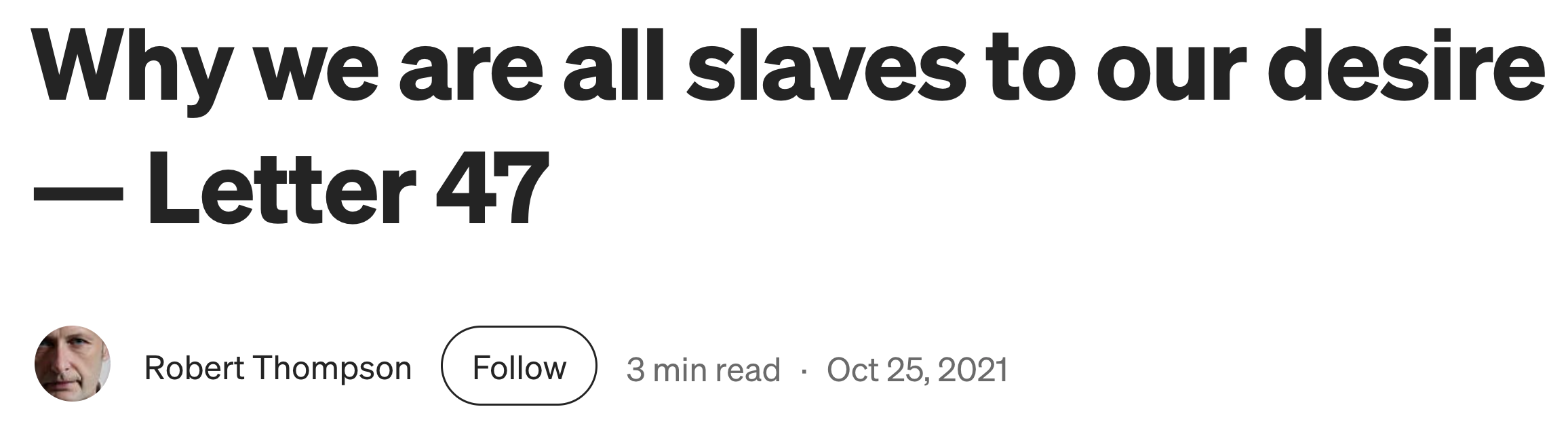
Beware of becoming a slave to your passions. Living lives around trying to earn money to support a shopping habit. We are not living to support the corporations. And yet, if you were to take an objective, outsider look at our society, it would seem that we are.
Critique of Slavery:
Seneca’s Letter 47 (On Master and Slave) shows his awareness of the destructive aspects of his culture.
“‘They are slaves,' people declare. Nay, rather they are men... comrades... humble friends.”
“No servitude is more disgraceful than that which is self-imposed.”
Dissonance: Despite this profound insight, Seneca did not advocate for the abolition of slavery. He internalized the freedom (“he is a slave to fear, I am free”), using philosophy to soften the edges of a brutal institution without dismantling it. This assuaged his conscience as a slave-owner.
Marcus Aurelius: The Burden of the Cosmos
Marcus Aurelius (121–180 AD), the Philosopher King, employed Stoicism to navigate the isolation inherent in absolute power. His Meditations are a testament to the elite’s need for a private “inner citadel” to retreat from the public performance of power.
Passages on the Hypocrisy of Court Life:
Marcus saw his culture as deeply flawed and filled with “wolves.”
This preparation is a coping mechanism. It allows the Emperor to interact with corrupt elites without losing his own composure. It reaffirms his superiority (“I know good from evil, they do not”) and protects his ego.
Rationalizing Imperial Violence:
Marcus spent much of his reign waging war against the Marcomanni. How did a philosopher justify this?
“The impediment to action advances action. What stands in the way becomes the way.” (Meditations 5.20).
“In one relation, man is the nearest creature to ourselves, so far as we must do them good... But so far as they are obstacles to my peculiar duties, man becomes something indifferent to me as much as sun or wind or injurious beast.” (Meditations 5.20).
This passage is chillingly pragmatic. It classifies human beings as “indifferent” obstacles when they oppose the Emperor’s “peculiar duties” (i.e., the state). Stoicism enabled Marcus to recognize the limits of his power (he could not make everyone good) while harnessing the empire's resources to crush obstacles, rationalized as “Nature's work.”
The Feel Good Narrative:
The above quote appeals to the elite’s desire for agency. It bypasses systemic critique in favor of individual action, allowing the ruler to feel “good” by focusing on his own conduct rather than on the structural violence of his empire.
Cato the Younger: The Conservative Bulwark
Cato (95–46 BC) represents the “Old Money” elite who used Stoicism to resist Caesar's “new money” populism. His Stoicism was not about coping with power, but defending the old order.
Passages on Corruption:
“I would not be beholden to a tyrant for his acts of tyranny.”
“If you could prevent a bad thing but do not, then you are, in effect, encouraging it.”
Class Analysis: Cato’s suicide was the ultimate refusal to compromise his status. He could not live in a world where his class (the Optimates) was subservient to a dictator. His Stoicism was rigid and uncompromising, a philosophy for an elite that prefers death to the loss of liberty (read: privilege). He recognized the contradictions of Caesar’s populism but failed to see the rot in the Republic he defended.
Musonius Rufus: The Critique of Luxury
Musonius Rufus (c. 30–100 AD) offers a glimpse into the internal policing of the elite. He preached against the pathological excess of his peers.
Passages on the Good Life:
Musonius intimates that elite culture was regarded as diseased (i.e., as destroying the soul). Stoicism was the medicine. However, this medicine was preventive. Musonius taught elites to practice poverty so they would not fear it. This “voluntary discomfort” is a hallmark of privilege—only those with a choice can play at being poor to build character.
The Epictetus Problem: Internalizing Freedom
Epictetus (c. 50–135 AD), a former slave, seems to contradict what I’ve been illustrating. However, a closer reading reveals that his philosophy often serves to pacify the oppressed by shifting the battlefield from the political to the psychological.
Passages on Slavery:
“He is a slave who wishes for something that is not in his power.”
“If you attach value to anything that isn't your own, you've delivered yourself into slavery.”
Epictetus’s teaching that a slave can be “free” if he accepts his lot is profoundly empowering for the individual but politically convenient for the master. It suggests that the “Good Life” is available within chains, negating the need to break them. This sentiment aligns with the Marxist critique that such philosophies (like religion) stabilize class structures by offering an internal resolution to external oppression.
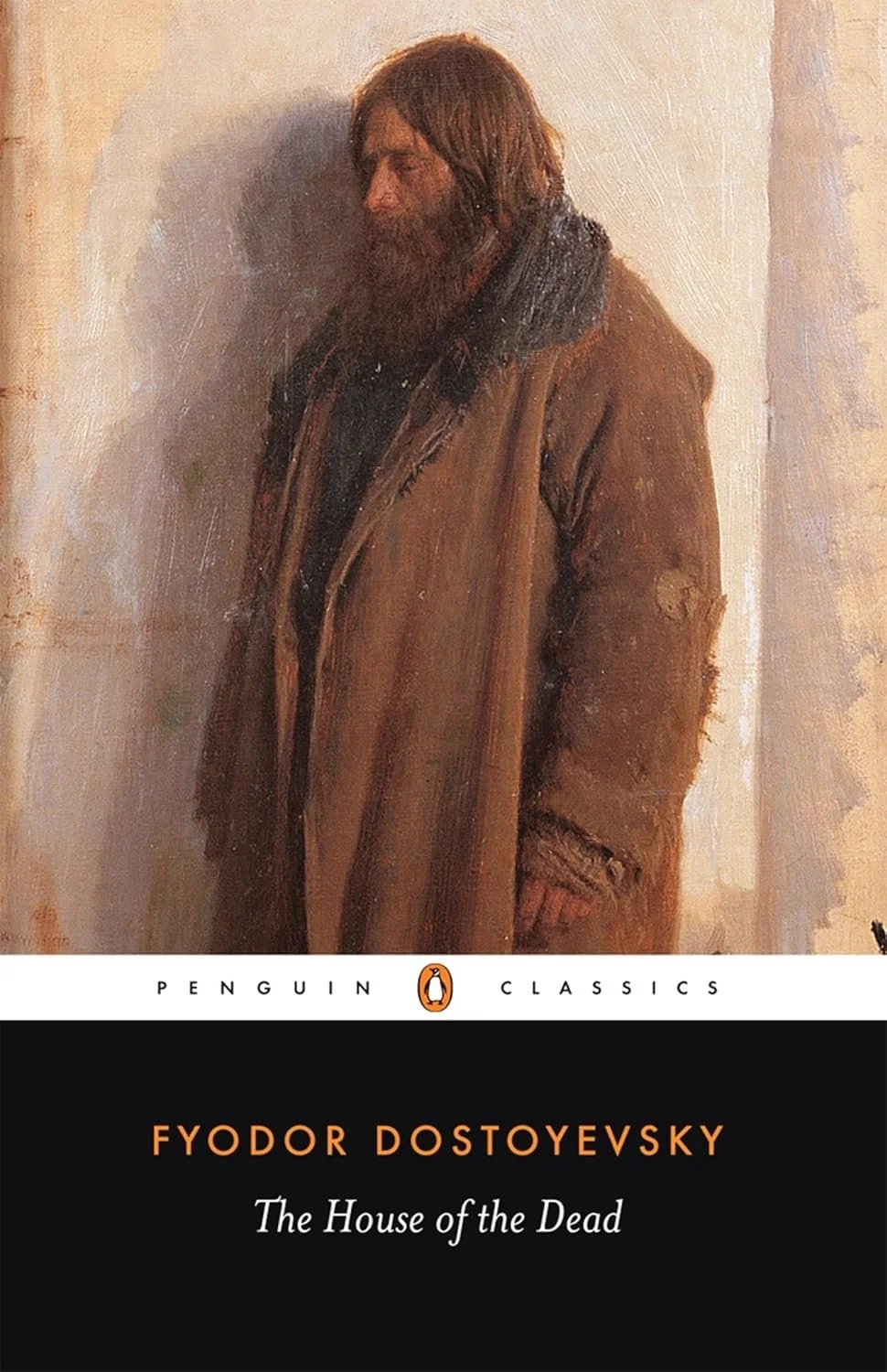
The Enlightenment Bridge: Stoicism and the Paradox of Liberty
The influence of Stoicism on the Founding Fathers and Enlightened Despots illustrates its enduring utility for managing the dissonance between the ideals of Liberty/Reason and the reality of Slavery/Autocracy.
Frederick the Great: The Stoic on the Throne
Frederick II of Prussia modeled himself on Marcus Aurelius. He called himself the “First Servant of the State.” The Justification: Frederick used Stoicism to suppress his own artistic nature and justify the militarization of Prussia. It allowed him to reframe his absolute power not as a privilege, but as a “burden” of duty.
This burden is the ultimate “Good Life” rationalization for a monarch: “I do not rule for pleasure, but out of Stoic duty.” It sanitizes the violence of state-building.
George Washington: The Performed Stoic
Washington was not a philosopher but a consumer of Stoic aesthetics (via the play Cato).
The Dissonance of Slavery: Washington owned hundreds of slaves while fighting for freedom. Stoicism provided the equanimity to manage this contradiction.
Rationalization: In letters, he expressed a desire for abolition “by Legislative authority” (Fate/System) rather than for himself to free them. Stoicism enabled him to regard the institution as a necessary evil of his time, to be endured with dignity rather than violently overturned.
Thomas Jefferson: The Intellectual Rationalizer
Jefferson’s library was filled with Seneca. He explicitly recognized the pathology of slavery in Notes on the State of Virginia.
Passages:
Jefferson used Stoic/Epicurean withdrawal to create a Good Life at Monticello, insulated from the horrors of the fields. He intellectualized the problem, drawing on his philosophical depth to recognize the hypocrisy (“I tremble for my country when I reflect that God is just”) but invoking the Stoic concept of “Fate” to defer the solution to future generations. He assuaged his dissonance by becoming the “benevolent” master, a role Seneca explicitly endorsed.
Theodore Roosevelt: The Strenuous Life
Roosevelt’s “Man in the Arena” is a modern adaptation of Stoic action.
Born into wealth and plagued by asthma, TR used the “Strenuous Life” (Stoic endurance) to prove his worthiness to rule. He despised the “idle rich” (the “fools” of Seneca) and used Stoicism to justify American imperialism as a duty to civilization—a massive rationalization of power.
Modern Neoliberal Stoicism: The “Broics” and the Hustle
In the 21st century, Stoicism has been adapted by the "new elite"—Silicon Valley entrepreneurs and knowledge workers. This “McStoicism” or “Broicism” strips away the cosmology of the Logos and focuses entirely on the “techne” of resilience and productivity.
Ryan Holiday: Stoicism as Strategy
Holiday, a former media strategist, repackaged Stoicism for the “hustle economy.”
Passages on Success:
A hustle Stoicism for the upwardly mobile. It rationalizes the stress of capitalism. If the market crashes or a startup fails, it is not a systemic failure but an opportunity for personal growth. It allows the modern elite to maintain their progress narratives even in the face of failure. It helps them feel good about their ambition.
Tim Ferriss: The Stoic Optimizer
Ferriss uses Stoicism (“fear setting”) as an algorithm for risk management.
Passages:
Ferriss promotes “voluntary discomfort” (e.g., fasting, sleeping on floors). This is a status signal. Only the wealthy have the luxury to choose discomfort. For the poor, discomfort is not a training exercise; it is life. Ferriss’s Stoicism is a tool for expanding control over one’s time and resources, employing philosophy to overcome one’s weaknesses and achieve status.
William B. Irvine: The Hedonic Stoic
Irvine’s A Guide to the Good Life reinterprets Stoicism to focus on tranquility and joy.
Passages:
“We should aim to avoid unnecessary suffering... Forgoing luxuries and pleasures is another way to practice voluntary discomfort.”
“Understanding the polycrisis is just negative visualization, man.”
All hail suburban Stoicism. It is designed to cure the ennui of the upper-middle class (Hedonic Adaptation). It assuages the dissonance of having too much by teaching the elite to want what they already have. It is a maintenance philosophy for those who have already arrived.
Donald Robertson and Massimo Pigliucci: The Therapists
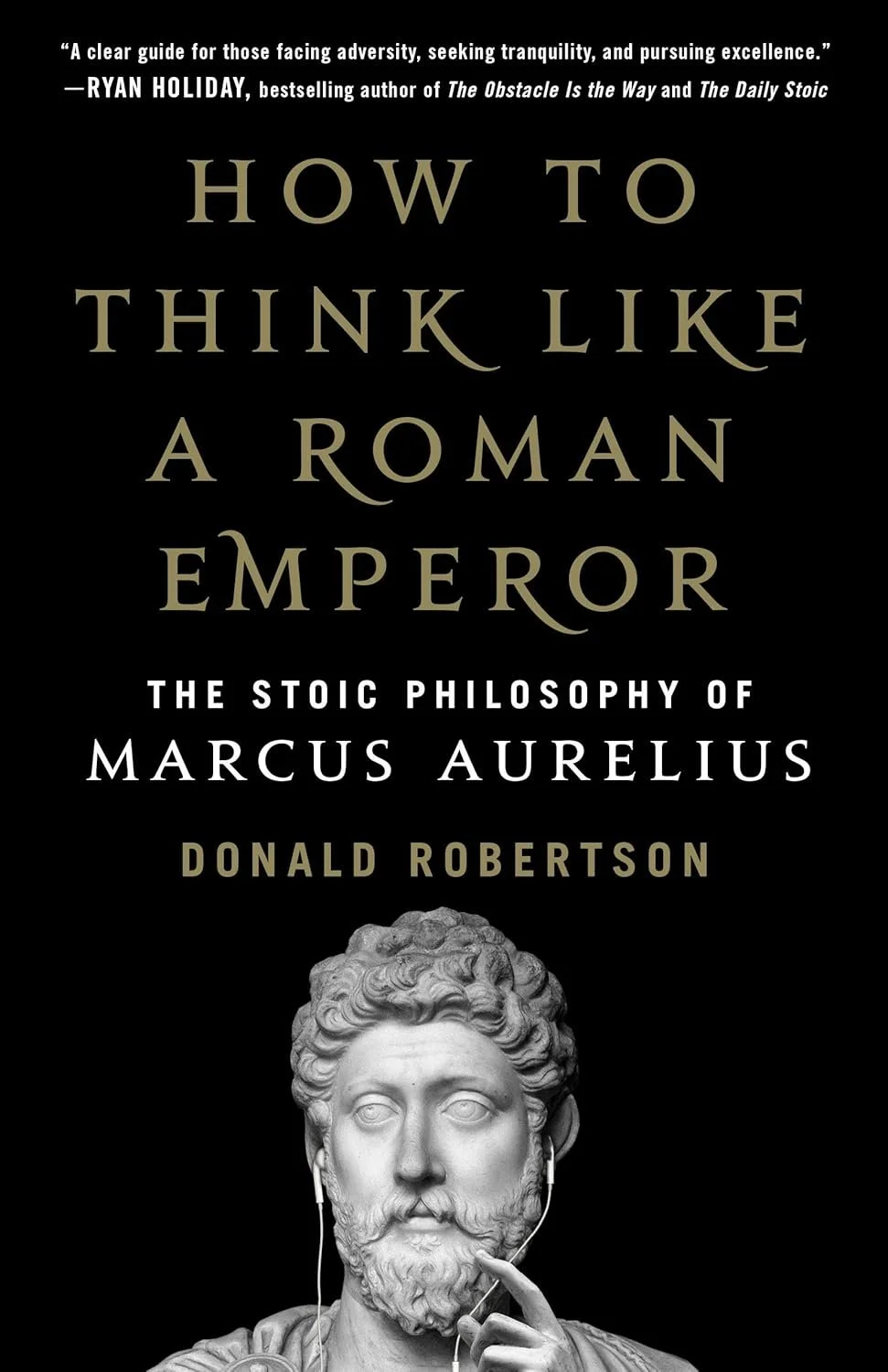
Robertson links Stoicism to CBT (Cognitive Behavioral Therapy), and Pigliucci defends it against the “Broic” interpretation. Robertson’s How to Think Like a Roman Emperor focuses on resilience for leaders.
“The Stoic Sage... needs nothing but uses everything well.” Pigliucci: Explicitly argues that Stoicism should care about social justice. However, his approach is academic and intellectual, appealing to the “educated class” who have the time to debate the nuances of proëgmena.
The Soteriology of the Oppressed: Why the Poor Choose Religion
The data support a clear sociological distinction between Philosophy (Autarky) and Religion (Soteriology).
The Mechanism of Hope vs. Endurance
Feature
Elite/Stoic Approach
Internal (High Agency): I control my reaction.
Internal (High Agency): I control my reaction.
Indifferent: Suffering is a test/training.
Endurance/Resilience: Bear it and improve.
Good Life (Eudaimonia): Virtue/Tranquility.
Rationalization: The culture is flawed, but I am safe.
Underprivileged/Religious Approach
Locus of Control
External (Low Agency): God controls my fate.
Evil/Trial: Suffering is unjust/sin.
Rescue/Salvation: Deliver us from evil.
Paradise (Soteriology): Justice/Reward.
Rejection: The world is fallen; a new one is coming.
Sociological Analysis:
Elites possess “high agency” in the material world. They have resources, status, and legal protection. When they face limits (mortality, reputation), they require a philosophy to manage the psychological burden of their power. Stoicism offers this by emphasizing “internal control.”
The underprivileged possess “low agency.” They are subject to the whims of landlords, bosses, and police. A philosophy that says “it is your judgment that hurts you, not the event” can feel insulting or impossible. They require an external intervention—a Savior or a Pure Land—to rectify injustices they cannot redress themselves.
Jesus and the Buddha: Stoic Virtues in Religious Context
While Jesus and Buddha inspired the founding of religions for the masses, they exhibited the “Stoic” virtues of the elite, yet deployed them for different ends. One was presumably a humble stone mason, while the other was a Prince.
Jesus of Nazareth (The Poor Worker):
Jesus championed the poor and admonished the elite (e.g., “Woe to you who are rich”), yet his personal conduct was distinctly Stoic.
Turning the Other Cheek: “But I say, do not resist an evil person! If someone slaps you on the right cheek, offer the other cheek also.” (Matthew 5:39).
Comparison: This mirrors Marcus Aurelius’s refusal to be harmed by others’ ignorance. However, Jesus frames it as nonviolent resistance to shame the oppressor (a strategy for the disempowered), whereas the Stoics frame it as indifference (a strategy for the superior).
Gethsemane (Submission): “Father, if you are willing, remove this cup from me. Nevertheless, not my will, but yours, be done.”
Comparison: This is nearly identical to Cleanthes’ Hymn to Zeus. It is the ultimate “Stoic” act of aligning one’s will with the Universal Logos/Father.
The Buddha (The Renunciant Prince):
Shakyamuni began as an elite (like Zeno) but rejected the “Loophole of Virtue.” He did not keep his palace as a “preferred indifferent”; he walked away.
The Second Arrow: “In life, we can't always control the first arrow. However, the second arrow is our reaction to the first. The second arrow is optional.”
Comparison: This is the exact equivalent of the Stoic “Dichotomy of Control.”
Divergence: The Buddha used this realization to dismantle the Self (Anatta), seeing the ego as the source of suffering. The Stoic uses it to fortify the Self (The Inner Citadel), seeing the ego (Prohairesis) as the only thing that truly exists. The elite prefers fortification; the oppressed may prefer liberation from the self that suffers.
The Good Life as a Class Marker
Stoicism serves as a vital psychological apparatus for the privileged. From the Roman Senate to the boardrooms of Silicon Valley, Stoicism allows the powerful to:
Rationalize Privilege: Through the doctrine of “preferred indifferents,” elites like Seneca and modern billionaires can justify their accumulation of resources as compatible with virtue, provided they maintain a “detached” mental state.
Manage Dissonance: It provides a mechanism to recognize the contradictions and hypocrisy of their culture (as Marcus Aurelius did daily) without being crushed by them or compelled to dismantle the system that benefits them.
Harvest Energy: By framing obstacles as “fuel” (Ryan Holiday) and risk as “training” (Tim Ferriss), Stoicism transforms the stress of high-status competition into a narrative of personal heroism.
He who harvests and controls the most energy from everything that lives and moves is a winner and has nothing to be ashamed of. Nurture your ambition; your work creates progress.
In contrast, the less fortunate do not need to access this “Inner Citadel” because they live outside its walls and don’t have the power to scale them. They do not need to learn that the world is indifferent; they know it. They bend toward religion not out of ignorance, but out of a rational desire for a justice that the current world—and the Stoic acceptance of it—cannot provide. Stoicism teaches the elite how to remain on top of the world with a clear conscience; Religion promises the underprivileged a new world entirely.
Selected Bibliography and References
Classical Sources:
Marcus Aurelius. Meditations. (Focus on Books 2, 5, 6).
Seneca the Younger. De Vita Beata ("On the Happy Life") and Epistulae Morales (Letters 47, 87).
Epictetus. Discourses (Book 4.1 "On Freedom").
Musonius Rufus. Lectures (Lecture 20 "On Furnishings").
Cleanthes. Hymn to Zeus.
Modern Sources:
Holiday, Ryan. The Obstacle Is the Way.
Ferriss, Tim. Tools of Titans.
Irvine, William B. A Guide to the Good Life.
Robertson, Donald. How to Think Like a Roman Emperor.
Pigliucci, Massimo. How to Be a Stoic.
Sociological/Critical References:
Bourdieu, Pierre. Distinction. (Implied in the analysis of class taste/philosophy).
Nietzsche, Friedrich. Beyond Good and Evil. (Critique of Stoic self-tyranny).