
In any collective social and political configuration, do people have the power to influence how we navigate our global predicament? What will bring our world down?
This article was inspired by discussions surrounding this article:
Civil War Comes to the West
Civil War Comes to the West, Part II: Strategic Realities
The first part lays out Professor David Betz’ arguments and perspectives, while the second puts the discussion under my usual lens of living systems, overshoot, and limits to growth.
I believe people concerned about the polycrisis should debate ‘status quo apologists’. Many steeped in the polycrisis/metacrisis domain quickly dismiss and turn away from those who ‘don’t get it’. This attitude is far from helpful, given their desire to help people understand our predicament and, hopefully, make “The Great Simplification” process less destructive and violent.

Introduction: The Convergence of Conflict, Capital, and Biophysical Limits
The current crisis of Western stability is not simply a collection of isolated tactical military problems, domestic policy missteps, or passing cultural complaints. It is a genuine civilizational inflection point at which the globalized, financialised, neoliberal model of culture, society and economy has run headlong into the hard biophysical realities of planetary overshoot and the thermodynamic limits to growth. For a long time, the Western strategic paradigm rested on two very comfortable assumptions. The first was that technological superiority alone would make warfare a clean, precise, and decisive instrument of geopolitical power. The second was that as long as you had perpetual economic growth driven by global capital flows, you could pacify the population at home, absorb the various ethnicities and groups you might encounter or need, and, in that way, permanently secure the democratic project.
Both of those assumptions are rapidly falling apart. On the external front, the fantasy of war in the information age has failed to deliver on its promise to overcome the fundamental realities of friction, inconclusiveness, and attrition. On the internal front, the neoliberal economic model (debt expansion, labor market deregulation, industrial offshoring, the systematic extraction of capital upwards) has eroded the fabric of society, undermined many nation-states’ physical infrastructure, and produced a profound crisis of trust in global and domestic institutions.
Here, I will explore internal ‘Western’ conflict through a strategic lens against the backdrop of late-stage modern techno-industrial civilization. I weigh Professor David Betz’s argument on internal fragmentation, infrastructure fragility, and the mechanics of modern civil conflict against Professor Jonathan Portes’ robust institutional counter-argument. I do so, as always, in the context of wider issues of ecological overshoot, declining returns on complexity, elite narrative construction, and the epistemic failure of the digital public sphere.
We consume and produce content and do little else to build the world we want. So much for democracy.
1. The Strategic Landscape: Warfare Transformation, Internal Conflict, and Systems Vulnerability
The Transformation of Warfare and the “Fantasy of War”
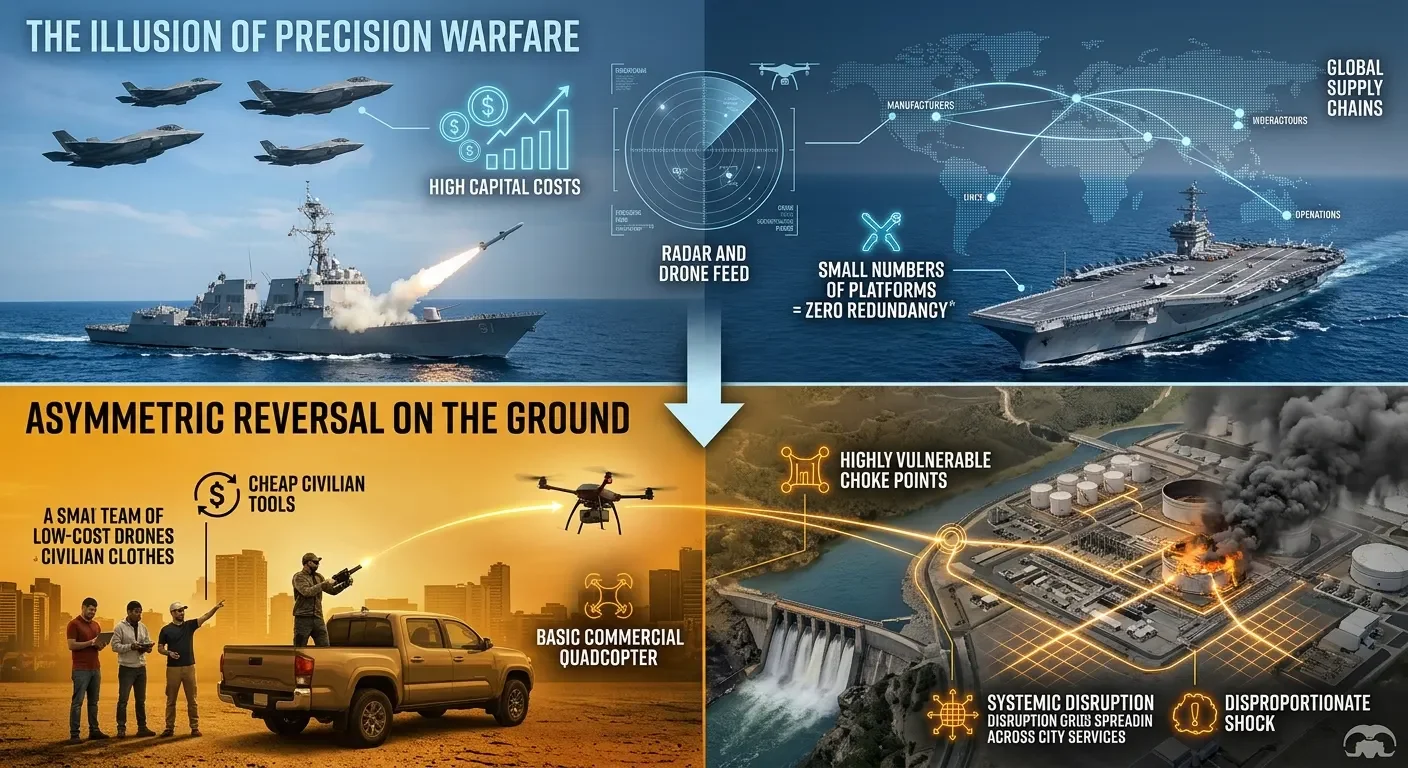
In Carnage and Connectivity: Landmarks in the Decline of Conventional Military Power (2015), David Betz examines how ubiquitous global connectivity (the linking of ideas, people, and things) has fundamentally unmoored Western military thinking. Traditional Western strategic institutions have long seen war as an exceptional, remote, and distinct event. In the world of modern hyper-connectivity, now the norm, that framework has been washed away and replaced by a constant, diffuse stream of ‘carnage’ and ‘connectivity’ in the form of ambient conflict and systemic crises.
The linking of ideas, people, and things were largely responsible for the Age of Discovery (Age of Sail (c. 1600–1750/1760 CE), The Enlightenment (c. 1500–1800 CE / peak 1650–1800 CE), the Industrial Revolution (c. 1760–1900 CE), the Machine Age (c. 1500–1800 CE / peak 1650–1800 CE), Atomic / Nuclear Age (c. 1945–present), Space Age (c. 1957–present), Information Age / Internet Age (c. 1970s/1990s–present), and what have you has the development of civilization happened in a cultural vaccume.
At the same time, military and political leadership have been seduced by an information-technology doctrine of speed, precision targeting, and assured victory. Betz calls this the ‘fantasy of war.’ In leadership’s obsession with technological dominance, they have failed to appreciate war’s reality: chance, friction, and political ambiguity. Rather than enhancing military effectiveness, the information age’s technological engine has reduced the practical value of conventional armed forces and left the West unprepared for the low-tech, asymmetric vulnerabilities now manifesting in its own backyards.
The Thesis of Western Civil Conflict: Causes and Drivers
The prevailing political science literature long maintained that rich, democratic, and structurally sound states were immune to civil war. Betz argues that the very mechanisms thought to protect against civil war have fallen apart in the West because of five successive structural failures.
The erosion of social capital and the collapse of public trust underpin this phenomenon. The numbers speak for themselves: the Edelman Trust Barometer shows distrust in institutions is the norm. Pew Research has found that over two-thirds of Americans see restoring public trust as an urgent priority, and many view the decline in trust as a cultural disease.
The failure of state multiculturalism and the rise of identity politics are the second major drivers. Many high-profile statements have reflected this, most notably from former German Chancellor Angela Merkel in 2010 and former UK Prime Minister David Cameron in 2011, both of whom warned that state multiculturalism had fragmented society into cultural enclaves without a shared civic culture. We can also look at Sweden today. The digital world and the algorithmic amplification of ideological divides will only serve to exacerbate these divisions, turning a state of ideological alienation into actual physical confrontation, as was the case with the communal violence between the Hindu and Muslim communities in Leicester.
The third driver is the closure of the post-war window of broadly based prosperity through deindustrialization, structural inflation, escalating food and energy prices and global currency instability. In the language of James Davies’ J-Curve theory of revolution, social stability breaks down after a long period of rising expectations, followed by a sudden, severe contraction. As the state’s material capacity to provide the basic consumption and mass distraction (the old ‘bread and circuses’ formula) diminishes, alienation of the populace increases.
The fourth failure is the rise of what political theorist Samuel Francis called ‘anarcho-tyranny.’ Betz identifies this as the essence of modern Western governance: a state that can impose pervasive surveillance, speech codes, and bureaucratic control on citizens who are, in all other respects, law-abiding, yet is completely incapable of carrying out the basic functions of sovereignty. A classic example in the UK is the decades-long institutional failure to investigate and prosecute the systematic grooming and sexual exploitation of working-class children, in stark contrast to the very rapid and aggressive manner in which the state will go after native political dissent.
Within any national majority identity there exists petty and viscious disagreement between cliques within and across class lines.
The fifth driver is what we might call majoritarian ‘downgrading.’ In the civil war literature, downgrading is the profound psychological and political shock that strikes a historic majority or a well-established substantial minority when it suddenly realizes that its cultural traditions, linguistic norms, and legal priorities no longer govern the country. That realization is the direct precursor to all sorts of radical theories of cultural replacement, from the ‘Great Replacement’ of Renaud Camus to the more subtle forms of ‘cultural replacement’ that you see in the writings of others.
Historical majorities exist within particular time frames and contexts, constantly changing over long periods.
The Spectrum of Societal Breakdown and Quantitative Risk Modeling
Betz models the degradation of civic order along a defined conceptual continuum:
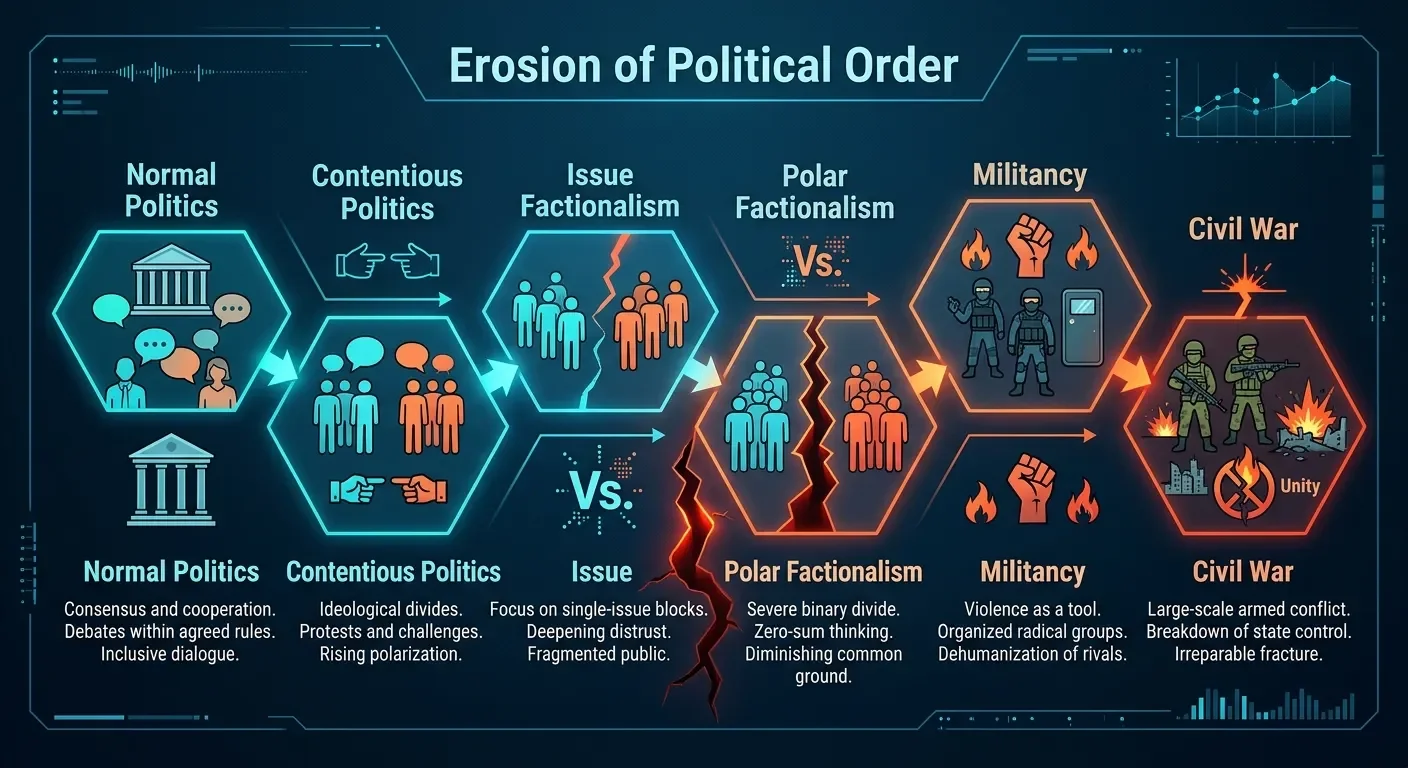
Under that model, Britain and France are well past issue-based factionalism and into entrenched polar factionalism along cultural cleavages. They are also seeing the first signs of localized militancy in the form of organized coercion, arson of public infrastructure, and street-level violence between communities.
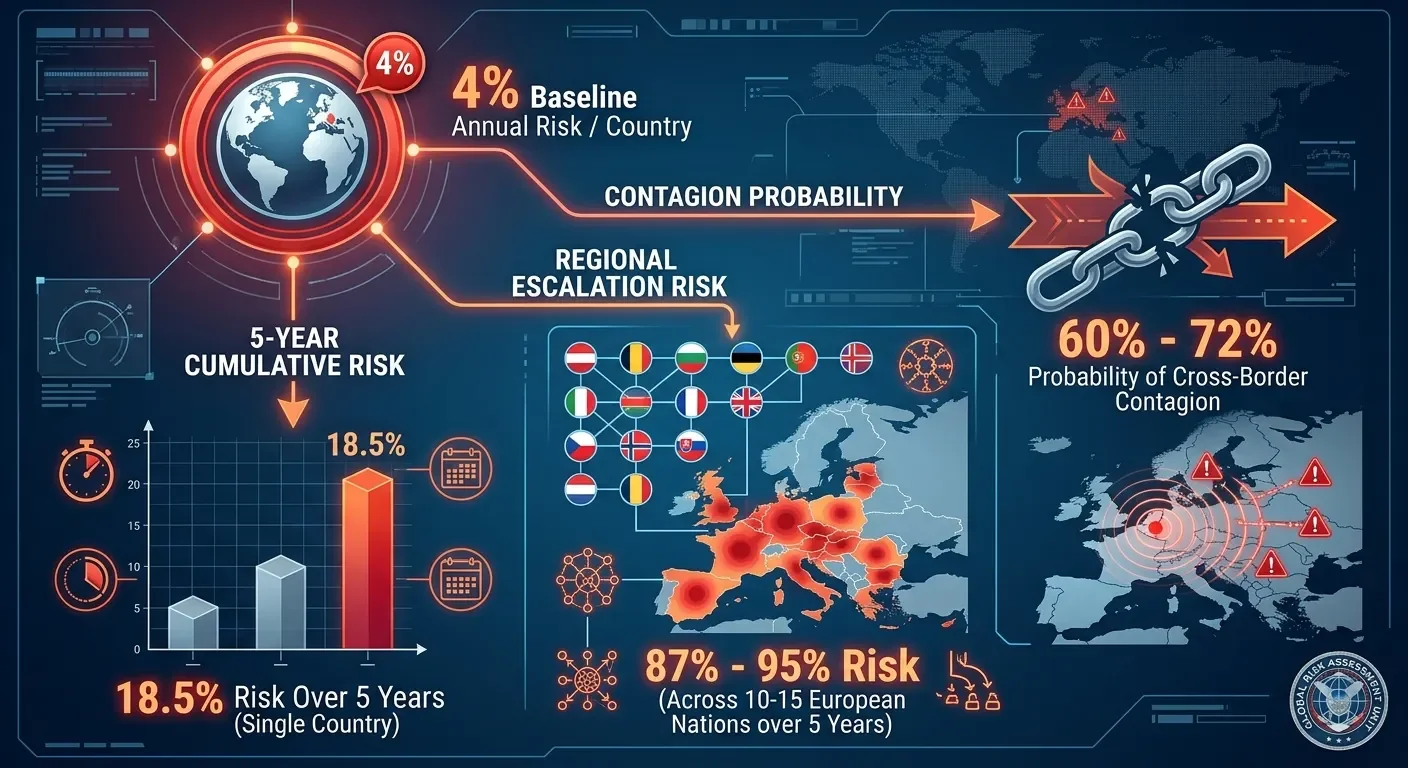
Drawing on quantitative models from Barbara Walter’s How Civil Wars Start, Betz frames conflict risk in terms of probabilities. In states that have the baseline preconditions for civil conflict, the historical probability of outbreak is 4% per year, which works out to an 18.5% cumulative probability of outbreak in any one country over five years. When that same analysis is applied to a sample of 10 to 15 Western European countries all under similar stresses, the probability that civil conflict will break out in at least one of those countries over the five years is between 87% and 95%. With a 50% probability of international spillover, the probability of contagion across Western Europe is 60% to 72%.
UK polling data fully reflect the statistical projections. 31% of the UK public think a civil war is likely or very likely to happen in the next 10 years. 80% of the public say the country is in a very bad state and 60% expect it to get worse. Institutions are losing significant legitimacy. (These statistics fluctuate wildly depending on the source, when the polls were taken, and how they were framed in context.) The British Social Attitudes Survey found that only 9% of the public believe their elected representatives act in the public interest, and 72% believe they are entirely self-interested. The Hansard Society found that 53% of people believe voting doesn’t affect who actually has power, and 32% accept the idea of the ‘Great Replacement’. Radicalism is particularly high among the 18- to 34-year-old cohort, with 60% in favor of hostile direct action to achieve political change and 17% in favor of political violence (a theoretical pool of around 2.25 million young people). Alienation from institutions is so strong that 31% of respondents agree that when they think about the UK’s political and social institutions, they “can’t help but think burn it all down.”
We must learn more about the ‘science’ of polling and the interpretation of polling data by special interest groups.
Geographic Mechanics and Asymmetric Infrastructure Vulnerability
The geography of potential conflict is determined by demographic imbalance. Post-conflict migration concentrated diverse, multicultural populations in major metropolitan areas, while outer provincial and rural areas remained comparatively homogeneous.
This aligns with Norton’s (2003) ‘feral city’ taxonomy, in which cities progressively deteriorate through Green, Amber, and Red stages of institutional collapse. A feral city is one where the central state can no longer enforce the rule of law or provide domestic security, even though it remains connected to the world via communications and trade. This is the spatial manifestation of the divide we saw in the 2024 French European Parliament elections, where cities voted for the status quo, and the hinterlands voted for radical anti-establishment candidates.
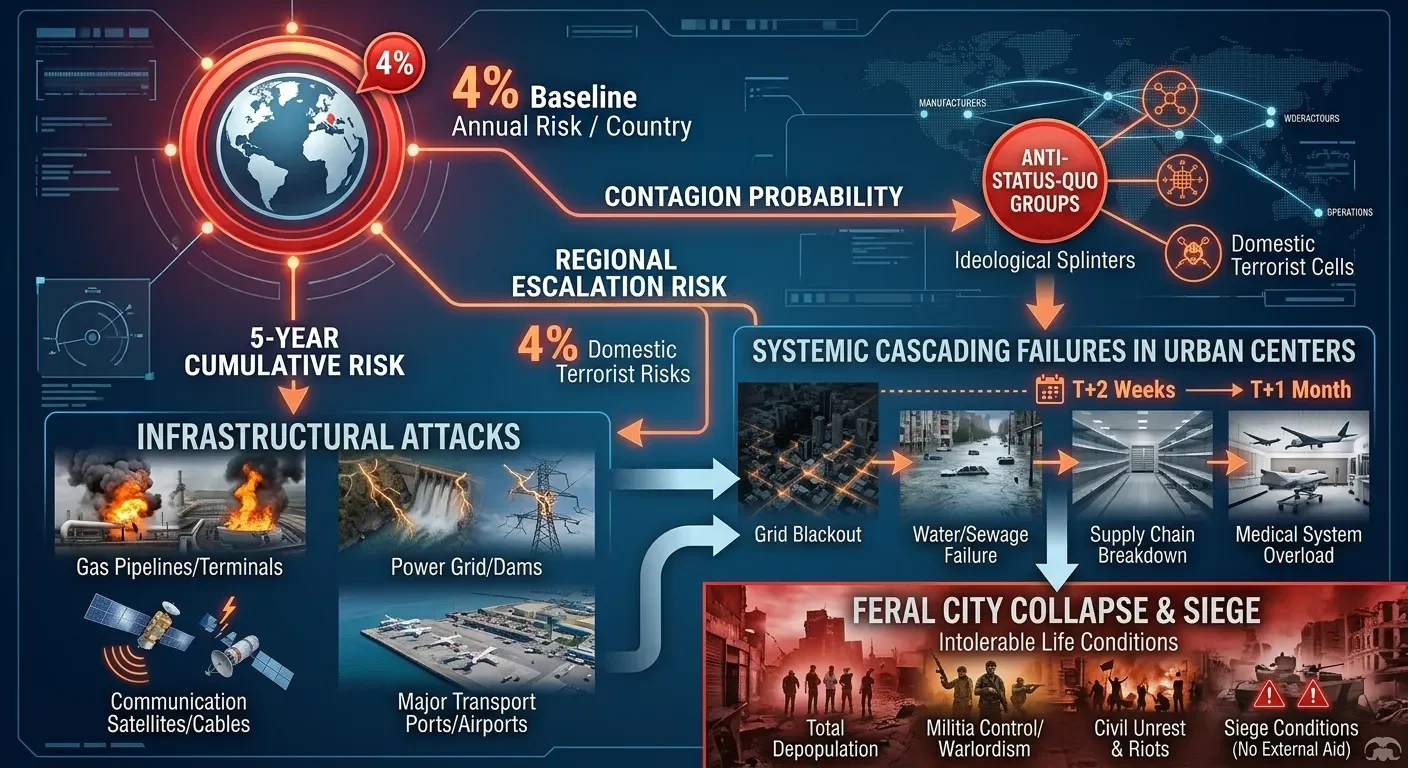
The fundamental strategic rationale of anti-status quo groups is to collapse the primary metropolitan centers through asymmetric system disruption. Modern cities produce none of their own food, fuel, or electricity and therefore rely entirely on life-support systems in undefended rural provinces.
In the UK, 24 semi-rural gas compression stations (including two that serve London) and MAHPs are critical vulnerabilities. The same applies to the electrical grid and telecoms, with remote high-voltage transmission pylons, switching nodes, microwave repeater masts, and long-distance trunk fiber optic cables all exposed. The transport network is, of course, riddled with bottlenecks: key bridges, rail arteries, and river tunnels. The fuel supply network is particularly vulnerable; you can bring the urban food supply network to a standstill within days by disrupting primary tanker routes or regional distribution depots. You can neutralize these nodes without any military hardware. The tools of the trade are angle grinders, sledgehammers, and acetylene torches.
Recent infrastructure incidents clearly illustrate these asymmetric vulnerabilities. During the Paris Olympics in July 2024, there was a series of coordinated arson attacks that brought the high-speed rail lines to a standstill, and there were also several acts of sabotage that cut the long-distance fiber optic cables. Between 2023 and 2024 in London, the direct action group ‘Blade Runners’ systematically destroyed or damaged an estimated 1,000 to 1,200 ULEZ traffic cameras. In March 2025, a fire at a Heathrow electrical substation shut down operations and canceled 1,300 flights, with significant knock-on effects for the international logistics sector.
Belligerents and Strategic Imperatives for Defense Planning
Betz identifies three main dynamics that would underlie a domestic conflict. The first is an agrarian or conservative insurgency in which the provinces direct their anger at the political and cultural elites. The war gaming suggests that the first targets would be the judiciary and media executives, given their low security and the general perception that they run a two-tiered justice system and coordinate media deception.
The second dynamic is a balkanized ethnic conflict marked by inter-communal violence and defensive migration, leading to a significant degree of territorial segregation. In this scenario, major urban areas would face low-tech sieges aimed at disrupting municipal services and forcing non-native groups to leave city centers.
The third dynamic is one of government paralysis and tactical neutrality. Domestic security forces and the armed forces as a whole are too small to handle urban unrest on multiple fronts at once. The rank and file of those forces will likely come from the working classes and may be unwilling to carry out mobilization orders against native uprisings. As a result, the security forces would defend key government installations and elite enclaves, leaving the provincial and urban uprisings to run themselves dry.
Betz argues that the defense establishment needs to shift its operational planning away from external expeditionary operations towards domestic damage limitation. He cites Soviet General Boris Gromov, who left the military in 1989 to coordinate internal security during the USSR’s collapse.
The mitigation posture is based on four operational legs. The first is to shorten the conflict. The historical record (conflict databases 1945-1999) shows that internal civil wars have a median duration of six years and result in 16.2 million deaths (five times the total number of deaths in all interstate conflicts). So the key variable in reducing a conflict’s human cost is how quickly it is contained or ended. The second is to protect cultural capital. Internal conflicts are notorious for the iconoclasm they generate to demoralize the opposing group (the anti-clerical purges in the Spanish Civil War and the destruction of the Bamiyan Buddhas are the most obvious examples). Therefore, a dedicated force is needed to protect cultural assets, a ‘Monuments Men’ or Kunstschutz (German for ‘art protection’) type force, trained to UNESCO standards and British WWII evacuation protocols. The third is to establish secure domestic zones to prevent the state’s total collapse and the exodus of the technical cadre. These would be defensible geographic areas, capable of self-sufficiency with independent maritime access, airfields, off-grid power generation, and isolated water supplies. The fourth is to secure the WMD. Dedicated containment operations will prevent the seizure of conventional radiological material, civil nuclear energy facilities, or biological research caches in the event of institutional collapse. The US-Russian Cooperative Threat Reduction (CTR) program provides the framework for this.
One might ask: What do we want to protect and preserve and why?
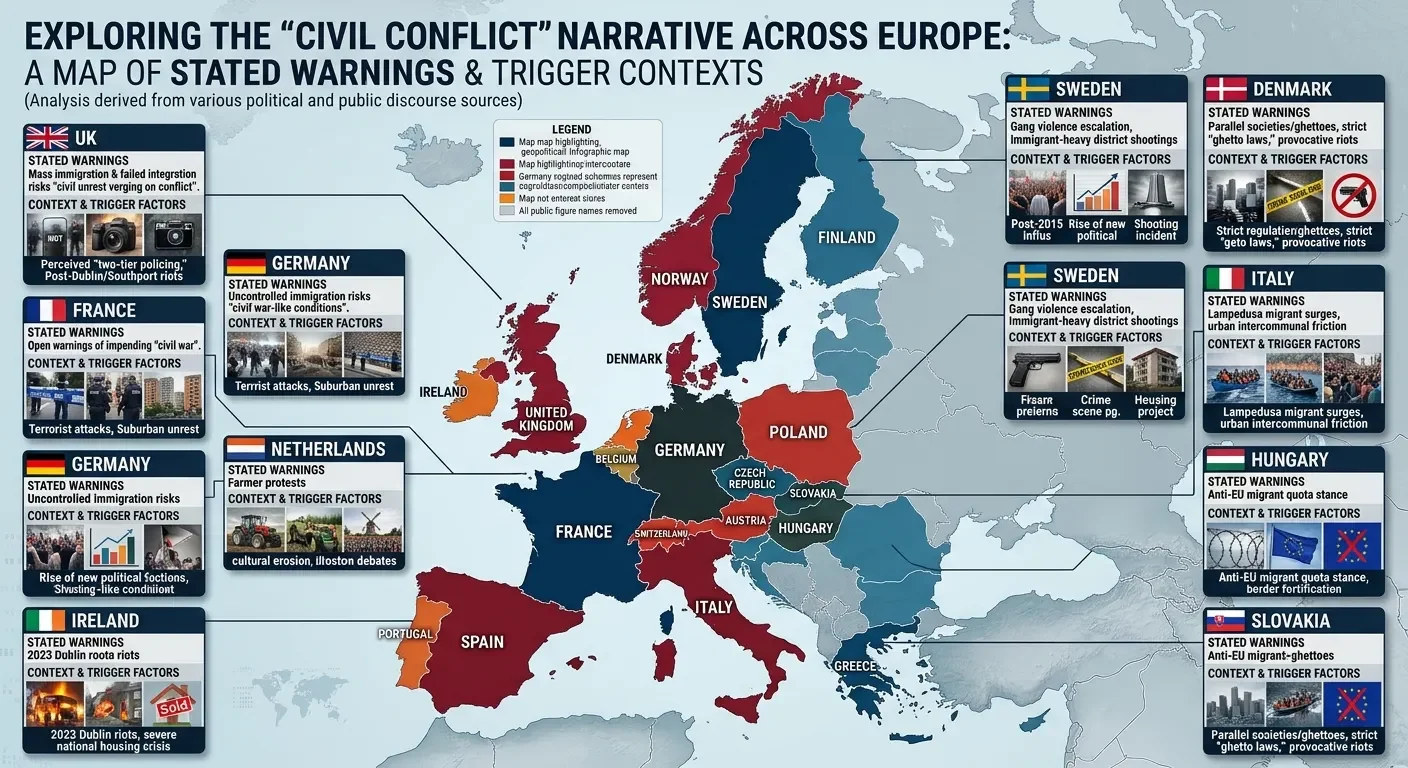
2. Cross-National European Political Discourse
The following synthesis shows how the narrative of an imminent internal conflict is being deployed across the 20 European countries, demonstrating the extent to which the civil war narrative is a political reality in that region.
3. The Macro-Systemic Architecture: Overshoot, Capitalism, and Deep History
Ecological Overshoot, Diminishing Returns, and Societal De-complexification
The weaknesses revealed in the military and strategic assessments are simply downstream effects of a global industrial system operating well beyond the Earth’s carrying capacity. The neoliberal economic model treats capital and labor as the only inputs to production, treating energy and physical inputs as infinite and interchangeable. In reality, human civilization is a thermodynamic dissipation structure that can expand only by accessing surplus energy.
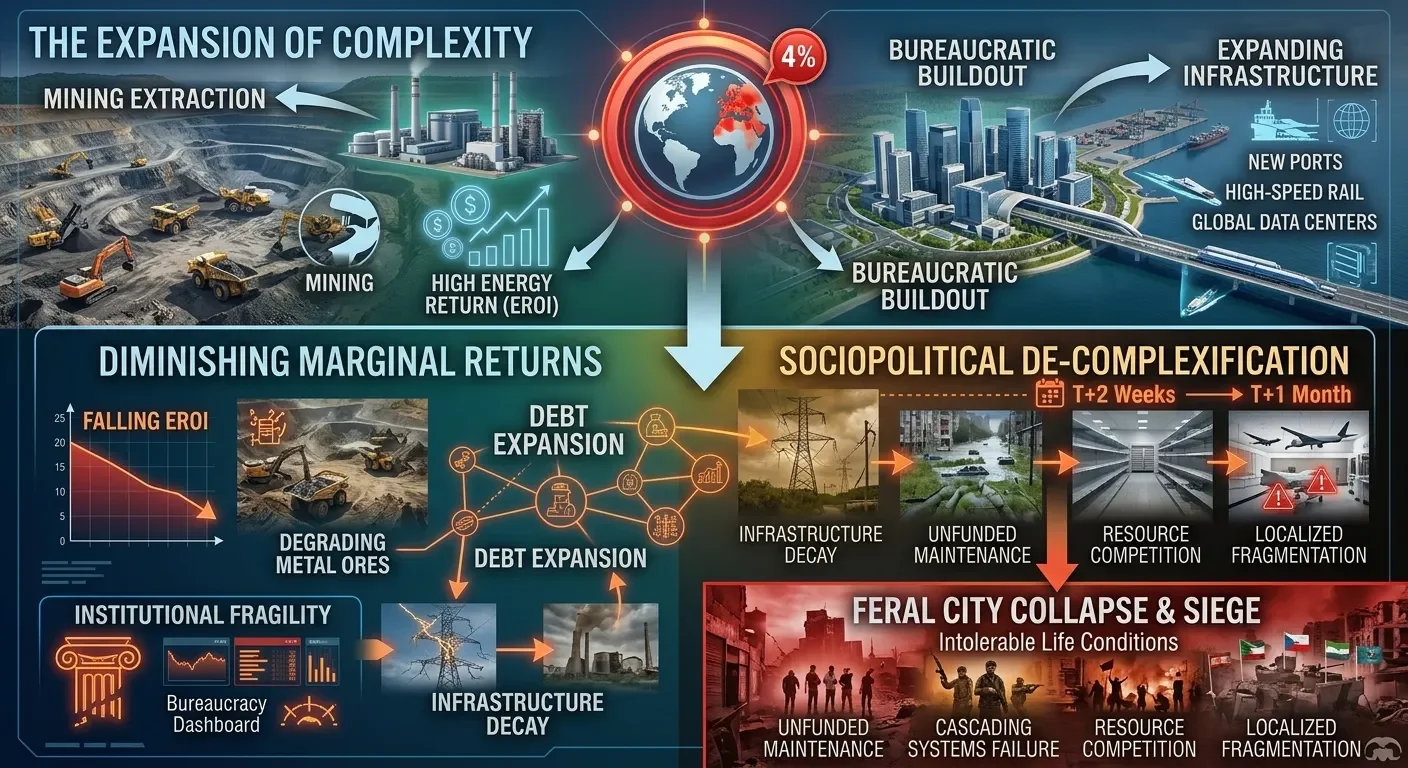
In Overshoot: The Ecological Basis of Revolutionary Change (1980), William R. Catton Jr. argued that modern industrial society had temporarily increased its human carrying capacity by drawing on ‘fossil acreage’ (fossilized solar energy stored as fossil fuels over hundreds of millions of years). He argued we were living on phantom carrying capacity and that, having overshot our habitat’s carrying capacity, we were on a path to a descent into a lower state of sociopolitical complexity.
This is exactly the line of argument that Joseph Tainter sets out in The Collapse of Complex Societies (1988). He shows that societies deal with problems by increasing their level of organization, administration, and technology. While this works when you have plenty of surplus energy to spend, the returns on such investment eventually diminish. Each additional layer of bureaucracy or technology requires ever more surplus energy to maintain. As society’s complexity increases, the cost of solving problems rises, and the net benefit of that complexity starts to fall. Tainter defines collapse not as a collapse into anarchy but as a rapid descent to a lower level of complexity when the marginal return on organizational problem solving becomes negative.
The phenomenon Betz calls ‘anarcho-tyranny’ is precisely the governance outcome of this thermodynamic bottleneck. As the Energy Return on Energy Invested (EROI) of the primary fossil fuels upon which our civilization is based falls (as Charles Hall has demonstrated) and as the high-grade mineral ores that we have traditionally mined become progressively more scarce (as Simon Michaux has shown), the net surplus available to the state shrinks. The state doesn’t have the fiscal, energetic, and material resources to maintain both the extensive infrastructure and the full range of public order we have come to expect. Under such dwindling-surplus conditions, governance reverts to administrative edicts, automated surveillance, and targeted coercion. The citizenry bears the cost of compliance, and the underlying physical infrastructure is allowed to rot.
Deep Historical Precedents: Migration, Extraction, and Warfare
The usual discussion of majoritarian displacement and cultural replacement is to treat demographic friction as some new pathology of late modernity. But its deep history shows that warfare, territorial conquest, and demographic displacement have been fundamental to sedentary societies since the start of agriculture.
The history of the British Isles is the history of this very same process. The transformation of Celtic Britain under Roman rule, the Anglo-Saxon settlement that followed, the Norse incursions, and the Norman conquests were none of them peaceful or integrated. They were all disruptive processes, driven by the need to extract resources and accommodate a growing population. The Roman occupation was, in essence, a military extractive regime, designed to extract metals, agricultural surpluses, and human captives to feed the imperial core. After the Romans, Anglo-Saxon settlement reordered the political and linguistic map of lowland Britain through settlement, displacement, and warfare.
Warfare is a feature of complex sedentary societies, not an administrative oddity. That’s the thrust of Charles Tilly’s famous historical thesis in Coercion, Capital and European States, AD 990-1992 (1992):
“War made the state and the state made war.”
Tilly argued that the European state didn’t emerge from a voluntary social contract, but through coercive competition. Rulers built administrative, legal, and fiscal apparatuses to extract the capital, grain, and men they needed to wage war and survive against rivals. Carneiro’s theory of environmental circumscription reinforces this: once an agricultural population has filled a basin, it has no more land or water to move into. The subordinates can’t just go and colonize the frontier. They have to either submit to a centralized tax system, be enslaved, or be violently driven out.
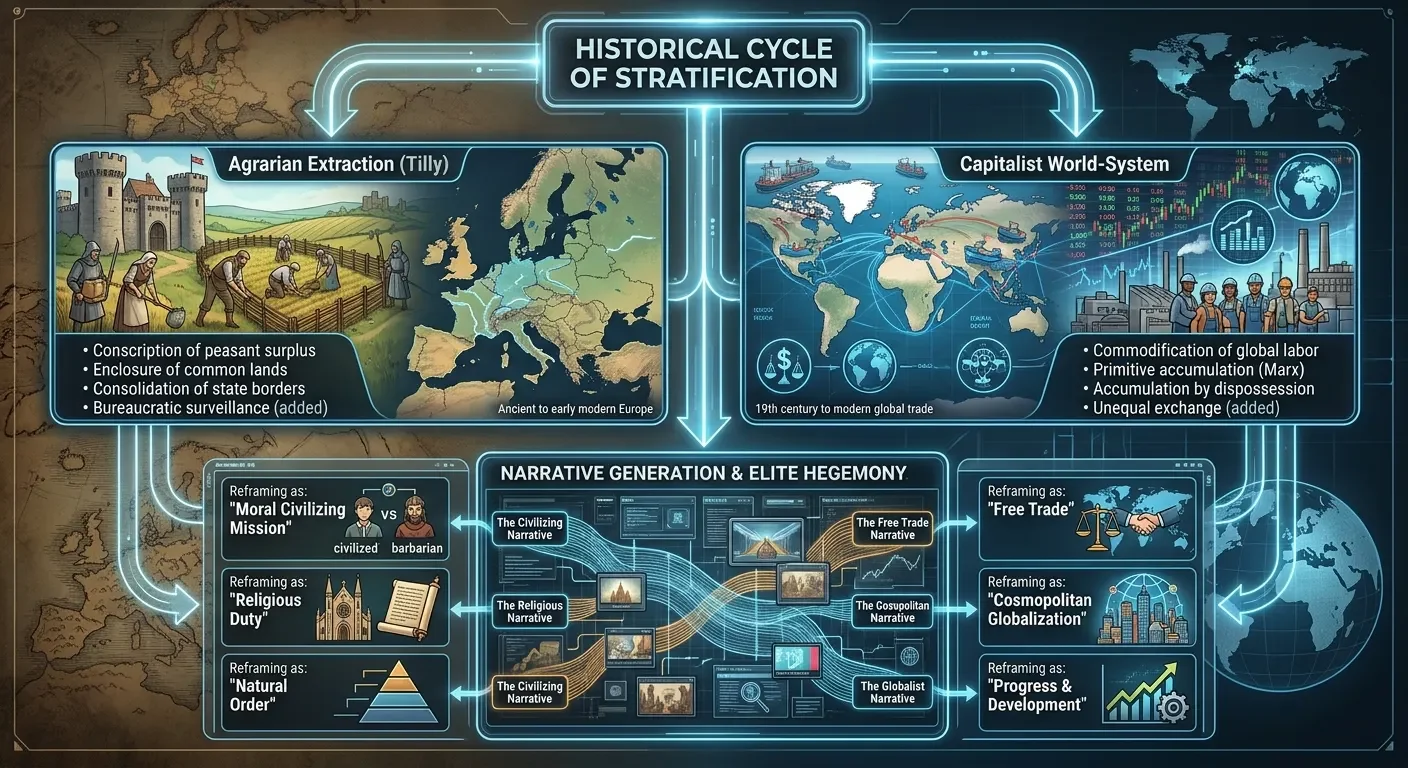
The European Age of Discovery was also governed by material logic. It wasn’t about religious liberty or some universal moral principle. It was about accumulating capital and outcompeting rivals in the mercantile world. Wallerstein, in The Modern World-System (1974), showed that European capitalism needed an expanding world-system division of labor to extract raw materials (precious metals from the Americas, sugar and timber from colonial plantations, spices from Asia) that would then enrich the sovereign metropoles. Marx in Capital (Vol. 1) describes the process of primitive accumulation (ursprüngliche Akkumulation) as one of colonial plunder, the transatlantic slave trade, and the violent enclosure of the commons. He notes that the discovery of gold and silver in America, the extirpation and enslavement of the indigenous peoples, and the commercial hunting of human bodies were the very dawn of the capitalist era.
Throughout history, the ruling classes have produced a cultural mythology to moralize these transfers of wealth and power. The religious crusades of the Middle Ages, the imperial “civilizing missions” of the 19th century, and the market-led cosmopolitanism of today’s neoliberal world all serve the same function: converting the imperatives of labor arbitrage and capital accumulation into moral imperatives.
Elite Hegemony, Narrative Warfare, and the Cognitive Crisis
In late-stage financialised capitalism, cultural production is of course subservient to the dictates of capital preservation. As the geographer David Harvey clearly set out in A Brief History of Neoliberalism (2005), the shift that began in the 1970s was a deliberate political project to re-establish the economic elite’s power through financialization, industrial deregulation, and the dismantling of the organized labor movement. To maintain the system’s political stability as real wages stagnated and public wealth was systematically privatized, the ruling classes relied on a range of ideological mechanisms to shape how the public thought.
Gramsci set this out in his Prison Notebooks with the notion of cultural hegemony. He argued that the ruling class maintains its power not through force of arms or law alone, but by making its own economic and social values the common sense of subordinate classes. Herman and Chomsky, in Manufacturing Consent: The Political Economy of the Mass Media (1988), take this further, showing how market filters limit public debate to issues that do not threaten the power of corporations or institutions. Market filters include concentrated ownership, corporate advertising revenue, reliance on elites for information, and a ‘flak’ system.
In Edward S. Herman and Noam Chomsky’s seminal 1988 book, Manufacturing Consent: The Political Economy of the Mass Media, the “flak” system acts as a disciplinary filter designed to marginalize dissent and police the boundaries of acceptable public debate. [1, 2]
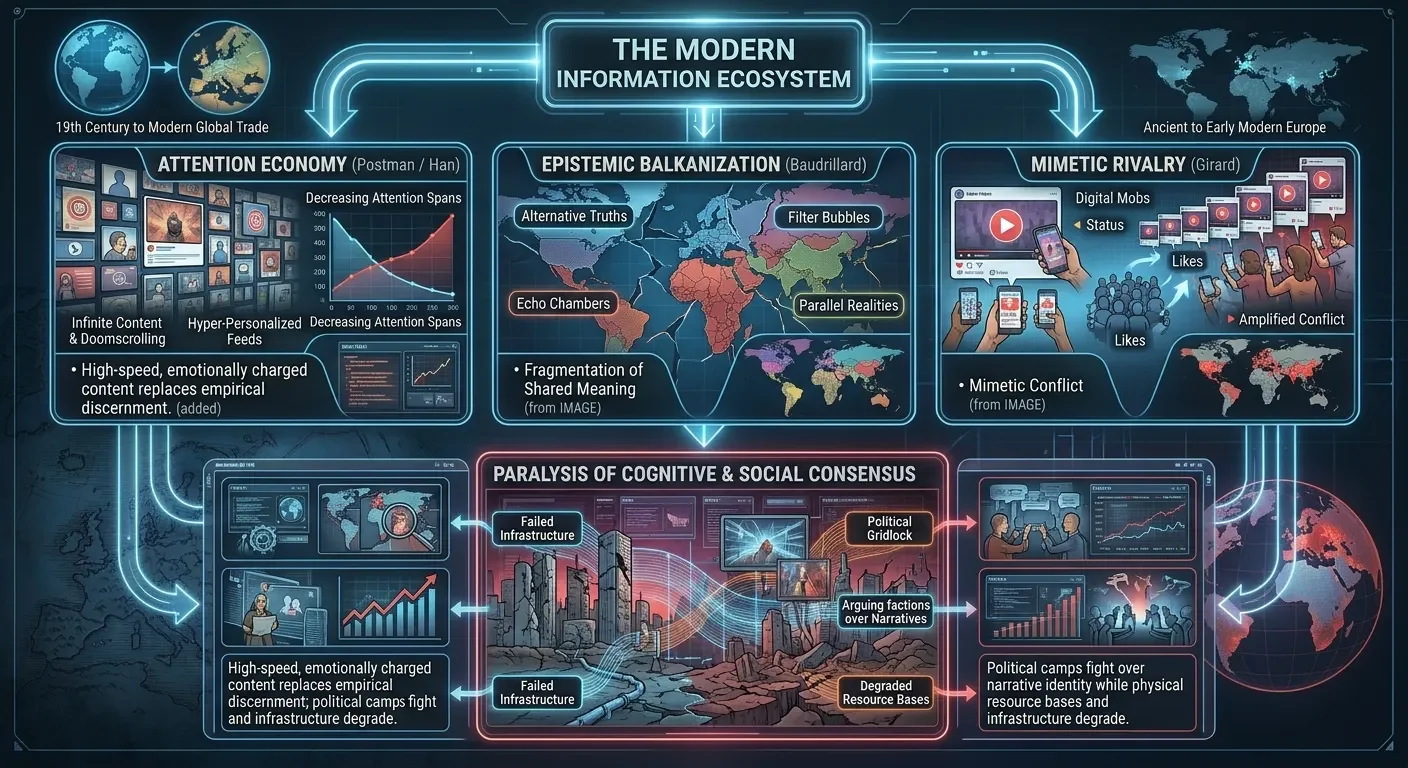
The explosion of algorithmic digital networks has exacerbated these dynamics and, in fact, destabilized traditional elite control of narrative. Rather than creating an informed citizenry, we have in effect created a state of profound cognitive fragmentation.
Han in Infocracy: Digitization and the Crisis of Democracy (2021) argues that algorithmic feeds are designed to promote outrage and volatility rather than deliberation. The sheer volume of information we are bombarded with creates a kind of perceptual disorder, and democracy collapses into communicative capitalism, which in turn destroys the shared public space that preconditions any form of collective action. In Simulacra and Simulation (1981), Baudrillard contends that modern societies have traded material reality for simulations and media spectacles, leaving us as citizens to wander through the abstract world of media and politics, entirely disconnected from the material conditions of our existence. In Things Hidden Since the Foundation of the World (1978), Girard argues that social conflict stems not from fundamental differences but from mimesis (one group’s desire to have the same status and consumption as another). As consumer capitalism erodes distinct local cultures, the narcissism of small differences grows, and groups become increasingly polarised into tribal identities precisely because their material conditions have become so similar.
In this milieu, disciplined empirical analysis gives way to low-effort, emotionally charged narratives. Sophisticated rhetoric is constantly used to justify bad economic policy and absurd political dogma. The thoughtful individual is easily persuaded by a coherent narrative that ignores the basic laws of thermodynamics and biology. As a result, our society is structurally incapable of reaching any trusted consensus on the big issues. Public debate runs out of steam in a series of symbolic fights while society’s actual physical structure deteriorates.
I’ll leave for another time commenting on the corrosive aspects of parasocial relationships.
The Thermodynamic Bottleneck of Modern Warfare
The military doctrine David Betz criticizes (the techno-industrial fantasy of war in the information age) is a temporary artifact of cheap fossil energy. Advanced C2 networks, precision-guided munitions, satellite nav arrays, and automated logistics are all fragile, energy-hungry systems that rely on long, unbroken global supply chains.
This technological paradigm faces insurmountable resource constraints:
First, as EROI declines, the net energy available to run society’s complex military and industrial machines shrinks. Unconventional oil extraction yields lower net energy, so the financial capacity to field and maintain capital-intensive weapons systems declines. Secondly, depleting critical minerals directly constrains production. Modern military platforms depend on rare earths, high-grade copper, cobalt, and specialized semiconductors. As ore grades fall, the energy, water, and processing infrastructure required to extract and refine equivalent volumes of metal will rise exponentially. Third, the industrial base is so fragile that it cannot be rapidly replenished in a crisis. The most advanced military platforms consist of thousands of specialist sub-assemblies manufactured worldwide. A single systemic shock to a maritime strait or a semiconductor manufacturing hub can bring end-stage production to a standstill.
Modern techno-industrial warfare won’t just move into an era of autonomous networked dominance. As habitat loss, topsoil degradation, water shortages, and the depletion of cheap fossil fuels erode the industrial base, high-tech warfare will become logistically unsustainable. The armed forces will lose their expeditionary capability, and conflict will de-escalate down the technological ladder from capital-intensive precision maneuver back to low-tech warfare over arable land, freshwater, and regional energy supplies.
4. Counter-Analysis: Democratic Resilience and Institutional Critique
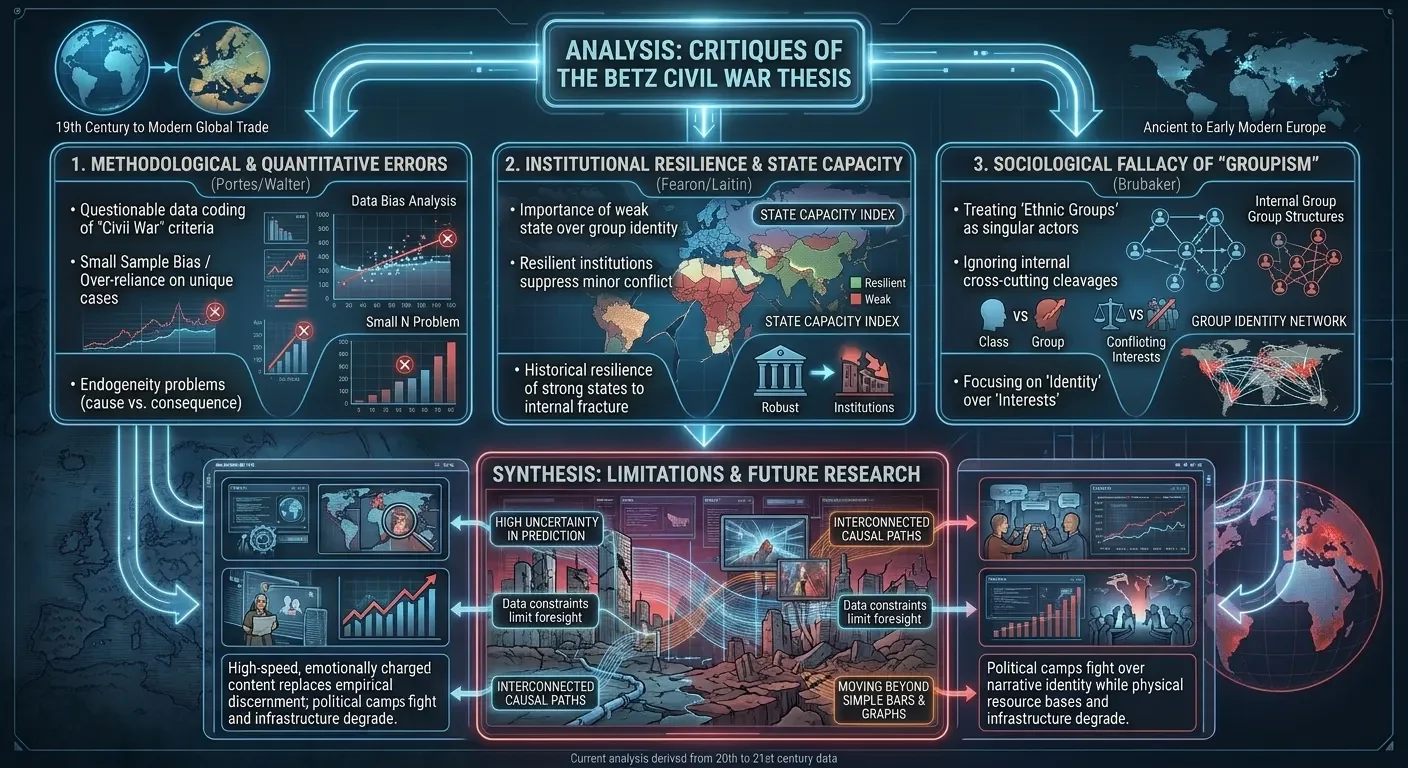
While Prof David Betz is quite clearly spot on in his identification of the real infrastructure weaknesses and the real social fractures, the major social scientists, economists and institutional analysts all argue that his central contention that the West is on the very brink of a systemic civil war is riddled with serious empirical, methodological and sociological flaws.
Methodological Misapplication of Civil War Metrics
Writing in UK in a Changing Europe (April 2026) following a debate at the Oxford Literary Festival, Professor Jonathan Portes offers a direct refutation of Betz’s thesis and dismisses the claim of an 18.5% risk of a five-year civil war as a wholly speculative extrapolation of entirely invented numbers, which is to bring quantitative political science into disrepute.
Portes stresses that the quantitative models that Betz refers to (particularly those championed by Barbara F. Walter in her book How Civil Wars Start (2022), which utilizes the Political Instability Task Force (PITF) database) were in fact developed to look at civil conflict in the context of fragile states, post-colonial states and low-income countries. The PITF datasets show that the two variables which best predict civil conflict are:
Anocracy: regimes which are neither fully democratic nor fully autocratic, characterized by profound institutional vacuums and highly erratic state behavior.
Factionalized party systems without the rule of law: polities without judicial independence, administrative continuity, or institutional shock absorbers.
The established Western democracies (UK, France, Canada, etc.) are by no means anocracies. They are institutionalized ‘democracies’ with independent judiciaries, professional civil services, regular ‘competitive’ elections, and a well-established tradition of peaceful transfers of executive power.
State Capacity and the Mechanics of Insurgency
In their seminal paper “Ethnicity, Insurgency and Civil War” (American Political Science Review, 2003), Fearon and Laitin looked at civil wars from 1945 to 1999. They found that ethnic diversity, ethnic grievances, and political polarization are not the key statistical predictors of civil war.
“The main factors determining both the ever-presence and the onset of civil war are not ethnic or religious diversity, nor are they measures of cultural grievance. Instead, they are conditions that favor insurgency: poverty, which marks financially and administratively weak states; political instability; rough terrain; and large populations.”
Fearon and Laitin have shown that per capita GDP and administrative state capacity are the two most important factors in preventing internal armed conflict. High-income democracies have enormous intelligence, communications, logistics, and legal capacity, which enables them to spot, contain, and destroy organized insurgent groups well before they become operational. Low-level civil unrest, isolated acts of vandalism (the anti-ULEZ activists, for instance), and sporadic urban riots are not in any way an active insurgency in the sense of being an armed campaign to take state territory or to overthrow the government. To treat public discontent as an insurgency is a fundamental category error.
The Fallacy of “Groupism” and Complex Identity Structures
In Ethnicity Without Groups (2004), Brubaker strongly criticizes the intellectual tendency to treat ethnic, racial, and political categories as real groups, bounded, homogeneous, and possessing collective agency and common interests. He calls this ‘groupism.’
Betz’s “conflict scenario” of a native peasantry rising in siege of the multicultural “feral city” is predicated entirely on this groupist fallacy. In the real world, contemporary Western societies are defined by complex, layered and interlocking identities. Families, work relationships and communities cross ethnic, geographical and ideological boundaries all the time. The rural hinterland depends entirely on the urban metropolitan core for tertiary medical care, specialist industrial inputs, advanced communications, and financial markets. The city, in turn, depends on the regional supply base. Thus, a web of interdependence makes the kind of violent division Betz postulates entirely unfeasible. Most people are embedded in the formal economy through their jobs, mortgages, and pensions, so the individual cost of any form of violent political mobilization is too high. ACLED and other tracking programs show there is absolutely no evidence at all of armed groups taking control of territory or of any form of organized anti-state campaign in Western Europe.
Institutional Plasticity and Adaptive Feedback
In Why Nations Fail: The Origins of Power, Prosperity and Poverty (2012), Acemoglu and Robinson show that “inclusive institutions” (those which spread economic and political opportunity throughout society) are remarkably resilient to internal collapse. Inclusive institutions create institutional feedback loops that constrain executive power, provide mechanisms for resolving factional disputes peacefully, and allow institutions to respond to structural economic crises without descending into a zero-sum civil war.
Established Western democracies have endured considerable polarisation, economic depression, and social unrest over the 20th century. The Great Depression, urban violence, the mass industrial strikes of the late 1960s and 1970s, and the sustained sectarian campaigns of the Troubles in the UK didn’t destroy the state in any way. Democracies are institutional shock absorbers because regular elections, legislative course corrections, and redistributive fiscal interventions let them defuse social tensions before they reach the point of revolution.
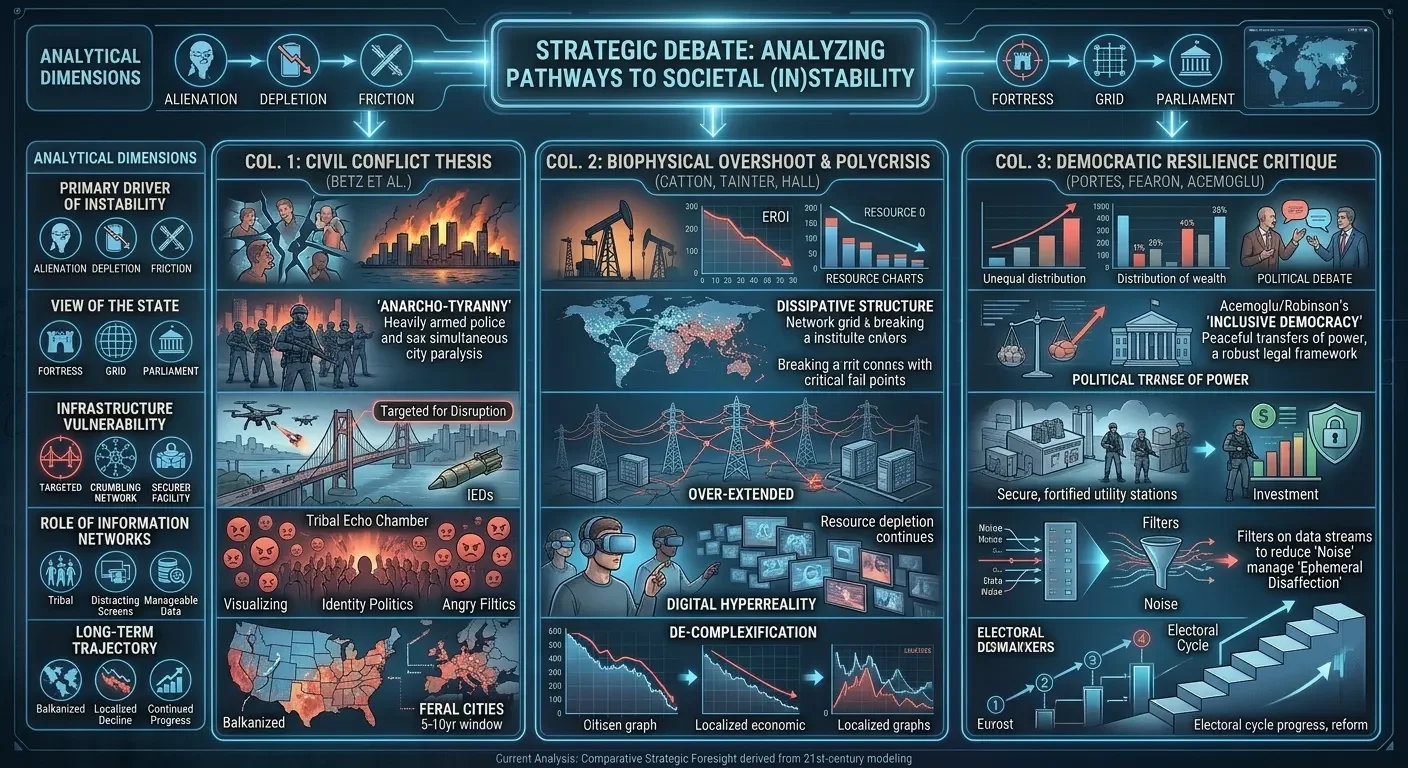
5. Comparative Theoretical Matrix: Western Conflict Dynamics
The following matrix synthesizes the three primary frameworks analyzing the future of Western stability:
6. Technical Retrospective Appendix: Hardware Paradigms of the Early Information Age
Western civilization’s shift toward an information-based society is fundamentally a hardware shift. Let’s keep it simpler and leave ‘AI’ data centers aside. The Commodore 128 (C128), produced by Commodore International from 1985 to 1989, is a useful historical reference point for personal computer architecture before the advent of the modern distributed network.
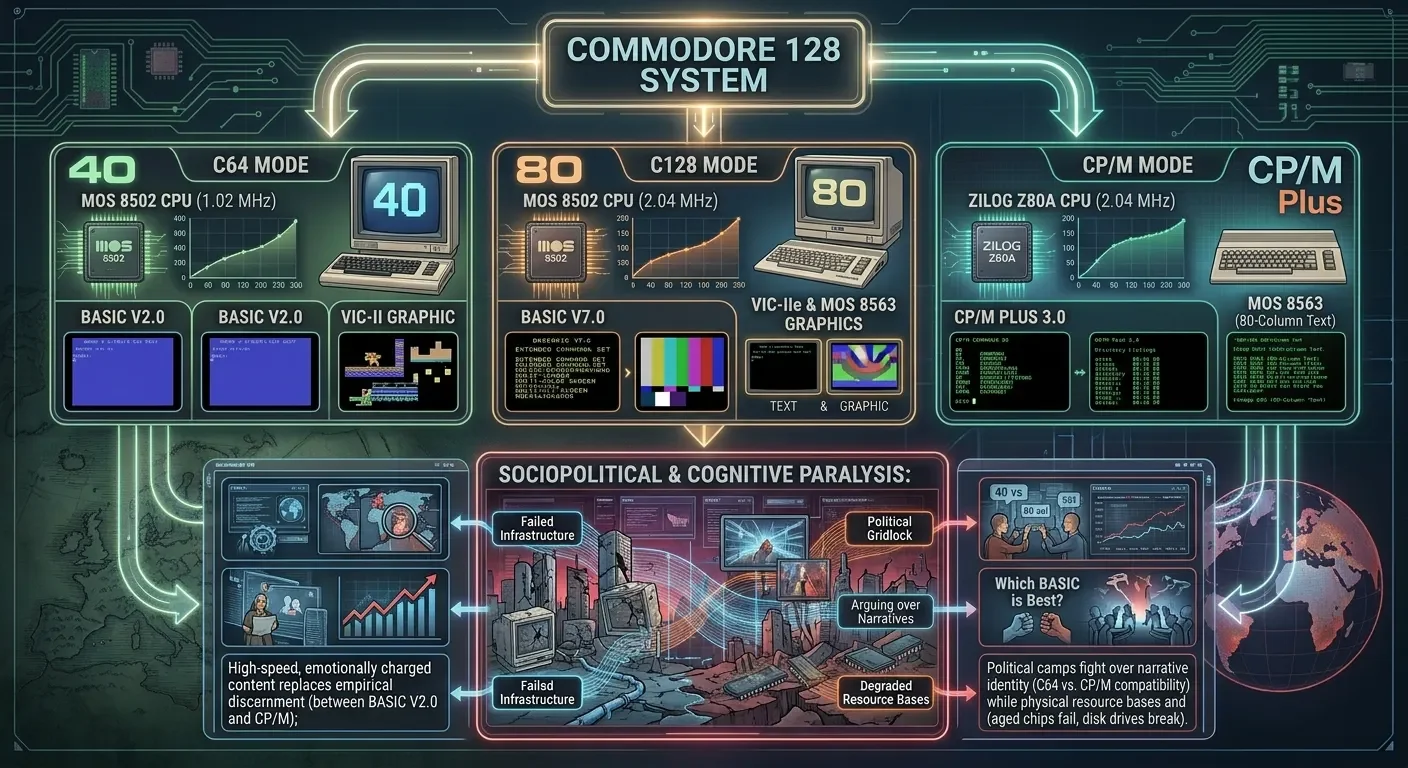
The C128 was Commodore’s last 8-bit PC. It debuted in January 1985 at the Winter CES in Las Vegas and sold about 4 million units before production ended in 1989. Engineering director Bill Herd developed it in just four months under CEO Marshall F. Smith’s guidance. It was a dual-processor machine with a primary 8-bit MOS Technology 8502 (1.02MHz or 2.04MHz) and a secondary Zilog Z80A (2.04MHz) that ran the CP/M business software.

Cute, isn’t it.
The system offered three separate operating modes: native C64 mode (which provided full hardware compatibility with the C64 and ran BASIC V2.0); C128 mode (which provided 128KB of RAM (expandable to 512KB or 1MB via bank switching), BASIC V7.0 and 2MHz operation); and CP/M mode (which ran CP/M-Plus Version 3.0).
Two separate display chips handled graphics. The standard 40-column display used the MOS 8564/8566 (VIC-IIe), which provided 320x200 resolution in 16 colors with 8 hardware sprites. The 80-column display used the dedicated MOS 8563 (later MOS 8568), which provided 640x200 resolution, its own video RAM (16KB to 64KB), and RGBI output. Sound came from the MOS 6581 SID chip (MOS 8580 in the desktop versions), with three synthesis channels and four waveforms.
Hardware iterations were the basic wedge-shaped keyboard unit; the European C128D (Jan’ 1986) with the plastic desktop case, external keyboard, and integrated 5.25 “C1571 drive; and the C128D-CR (Jun’ 87 US$550), which was a cheaper version with a stamped metal case to meet the FCC interference requirements and an integrated single board layout. Unreleased prototypes included the C128D/81 (“Kentron”), with an internal 3.5 drive, and the Commodore 256 (C256), with 256 KB of RAM and a 4MHz Z80A CPU.
Supported peripherals included the VC1570, VC1571, and VC1581 disk drives; the 1700, 1750, and 1764 RAM Expansion Units; the 1350 and 1351 computer mice; and the 1901/1902 dual-frequency monitors.
Launched at US$300, £269, and 1,198 DM, the C128 was positioned as the bridge between home computing and the professional workstation, competing with the Apple IIc, the IBM PCjr, and the Amstrad CPC6128. Software houses were largely unwilling to write native C128 software given the huge C64 user base, so most C128 owners effectively operated in legacy C64 mode. At the same time, the arrival of 16-bit machines (the Atari 520ST and the Amiga 500) rapidly superseded the C128 in both the consumer and business markets.
Well then…
The whole business of strategic debate around Western internal security, infrastructure vulnerability and civil conflict is really the friction of an industrial society hitting the limits of its energy and resource base. Betz et al. are right to point to the systemic fragility of highly centralized, high-tech infrastructure and the political alienation that decades of financialization have left as a legacy. However, assuming this instability will lead to a conventional civil war underestimates the institutional resilience and state capacity that Portes and others have so much to say about.
The real story is that the fantasy of precision military supremacy or the political myth of cultural replacement doesn’t run modern society. The future of Western or Global Modern Techno-Industrial civilization will be determined by the thermodynamic constraints of falling net energy, resource depletion, and ecological overshoot. Those are physical realities no political ideology, military doctrine, or financial model can avoid.
Given the fundamental tension between the physical constraints on growth and the narratives political and economic elites maintain about the world, which do you think will fail first? The financial system’s ability to price real assets? The physical integrity of the basic infrastructure networks? Or the general public’s faith in the legitimacy of our democratic institutions?