
Become Aware Of It, Pay Attention To It. Read About It, Learn About It, Write About It, Talk About It. Teach It.
Reflections upon anything under the sun and beyond. It may not be easy to be a Global Citizen, but it's not hard to engage the Globe.

Strive To Understand The Whole Picture
When Steven Pinker says, I'm paraphrasing, that all that's required to tackle the worst probable outcomes of climate change is knowledge, I must beg to differ. Complex problems require a lot more than that.

Who would argue that climate science isn't complex and climate, as it relates to functions of civilization, aren't complex? The climate affects every aspect of our lives in many ways. I won't go into systems theory, complexity science, climate science, and how those domains relate to economics, politics, food, ecosystems, etc. You can read up on those things as you wish. I have posted book recommendations and website links on my website at globe hackers.
The main point I am trying to make is that when we point to various areas of progress that we have experienced since, say, 1750, we need to understand it within an ever-changing context.
If we notice that a woman in China might prefer a factory job over working in rice paddies because the money she would earn from the factory will impact her life in more positive ways, we also need to understand the many changes that go along with that, their probable directionalities and cultural impacts; issues of sustainability and so on. They may all be good but will they always be good and relative to what? It is likely that when the woman working at the factory makes enough money, she might want to start a business or be a real estate investor or broker. Who knows, but she will probably move on from the factory if she can and wants to.
Immigrants to Brooklyn in the eighteenth century may have sewn caps in their tiny apartments and worked the docks to earn money to pay for their children's education, a noble thing, by the way. Still, their children will be working within a vastly different context with different desires and needs. Everything we inherit these days is in flux—today, much more so than in the early eighteenth century.
We have taken for granted fossil fuel energy, what Nate Hagens metaphorically refers to as 50 billion "slaves" (because fossil fuel energy allows us to do much more work than a mule fed with oats) for many generations, and it's given us more wealth than anyone in the seventeenth century could have possibly imagined. But things change, and it turns out fossil fuels have some economic externalities and environmental impacts that are not good for the health of ecological systems and public health.
We have known about climate change for decades, and our leaders and people have chosen to ignore the problem and instead carry on as if this particular set of circumstances can last forever without a hitch.
We all hope that free enterprise, science, engineering, and technology will facilitate solutions to our problems and allow us to continue our GDP based economic growth forever so that all people around the world can have air conditioners, white goods, shopping malls, Amazon warehouses, cars, medicine and so on. That is perfectly reasonable. However, it may require that we modify our way of doing things to achieve this constantly evolving state of progress.
We can do so many positive things to ensure a brighter future for most people and maintain a healthy balance in the natural services surrounding us and upon which we depend. Again, I refer you to books and internet resources if you feel you want to educate yourself regarding the various challenges we are facing.
We need to understand the broader and constantly evolving and changing context we are in both on a micro and macro level. We need to ensure that our way of life allows us to maintain good health and a positive mental attitude. We need to strive to understand the multitude of perspectives required to understand something well. Staying in our ideological safe space will not do.
When I say context, I mean across domains of knowledge.
Our culture needs to be conscious of the need to do this, as do all of us as individuals. If we are not aware of what is going on, there is nothing we can do to affect what's going on.
We can't assume that people who benefit significantly from how the system works in this era want to change the system as needed because they are rational. (If they don't, it won't benefit them, so they must.) A profits first mentality is horrendously short term.
We need to consider immediate needs, five-year, ten-year, and 25-year blocks at a minimum, and take action for nature's long-term health and welfare. We are part and parcel of the biological systems from which we evolved. People who can't recognize this need help. They need education.
If war is expensive, destructive, and potentially devastating to life, we need to work to end our need to wage war. This project is not some naive hope; it's imperative in a world where technology drives our ability to be more and more efficient at destroying things. We could create a new game that would allow us to compete without the need to kill. If you can't imagine that possibility, then, in many crucial ways, you are a deficient person.
If we want to look back with pride at how things have progressed twenty or one hundred years from now, we will have to recognize how things must change, and we are the only ones who can do that work.
Some things that are needed:
Consciousness-raising
Knowledge
Structural and systemic change
New concepts of economic growth
Better management of crucial global resources
Better environmental stewardship
A better understanding of negative externalities from business
A science-based approach to regulation, health, and business
The above list is not to say that we haven't made progress in these areas. I want to emphasize that we must continually evaluate the effectiveness of what we are doing in light of new information. (Let's pay attention to the data and the science and act accordingly.)
I'll end the bulleted list there. It is by far too short. Let's add all the positive and still relevant things The Enlightenment has given us. I am not for throwing babies out with the bathwater. We should build upon the institutions and systems that have proven to work and stood the test of time.
We need:
More free speech
More freedom
More free enterprise
More creativity
Better critical thinking and sense-making skills
Ethical business leaders
Leaders who are committed to our welfare and general health
We will not get these things through brutal, short-term, game-theoretic competition. As we always have, we will get there through cooperation, broad knowledge networks, economic activity, cultural exchange, etc.
Those of you who believe this is impossible need help. You need to get to work and educate yourself. You need to realize that you can be an active part of the solution.
We have to fight to stop those who would make this project impossible wherever they are, whatever ideology they subscribe to. We need an open society. Going back to closed societies is untenable in the twenty-first century.
We move on, or we go back. One way or another, our choices and actions will bring about the circumstances that will ultimately dictate the result.
DiEM25 Manifesto
Follow the link and read the DiEM25 Manifesto.
Are you in favor of more or less democracy? Do you feel government represents you? Do you feel your elected officials put people first?
Europe will be democratised, once its oligarchy is overthrown!

A MANIFESTO FOR DEMOCRATISING EUROPE For all their concerns with inflation, migration, populism, climate change, pandemics, security and terrorism, only one prospect truly terrifies the Powers of Europe: Democracy! They speak in democracy’s name but only to deny, exorcise and suppress it in practice. They seek to co-opt, evade, corrupt, mystify, usurp and manipulate democracy in order to break its energy and arrest its possibilities.
For rule by Europe’s peoples, government by the demos, is the shared nightmare of:
Big Tech, Big Pharma, permanently bailed out bankers, fund managers, insurers, the security-military-industrial complex – in short, the resurgent tapestry of cartels perpetually contemptuous of the many and their organised expression
Their army of unelected bureaucrats, ‘technocrats’ and lobbyists pulling the strings of governments in general and of EU institutions in particular
Political parties appealing to liberalism, democracy, freedom, environmentalism, social justice etc., only to betray their most basic principles when in power
Governments whose policy of socialism-for-the-financiers and harsh-austerity-for-everyoneelse fuels nativist populism which these same governments audaciously pretend to rail against
Corporations that use terms like “sustainability” and “net zero” to continue with business-asusual, greenwashing their planetary-scale vandalism Media moguls who have normalised disinformation and weaponised fear-mongering
Our pledge We are inspired by the vision of a non-exploitative Europe that nurtures Reason, Freedom, Tolerance and Imagination made possible by real Solidarity, comprehensive Transparency, and authentic Democracy. We aspire to:
1. A Democratic Europe in which all political authority stems from Europe’s sovereign peoples
2. A Postcapitalist Europe that practises democracy at the workplace and in all aspects of life, not just in electoral politics
3. A Social Europe that cherishes not only freedom from interference but also the basic income, care and goods that render one free from need and exploitation
4. A Sustainable Europe that lives within the planet’s means, minimising its environmental impact through living harmoniously with all living beings, conserving and restoring biodiversity, eliminating pollution, and leaving all fossil fuels deep inside the earth
5. An Ecological Europe that leads a green and just transition world-wide
6. An Internationalist Europe that treats non-Europeans as ends-in-themselves and works in active solidarity with exploited peoples across the world
7. A United Europe whose peoples show as much solidarity across nations as they do within them
8. A Pluralist Europe of regions, ethnicities, nations, languages, philosophies and cultures where one can be, at the same time, European and patriotic
9. A Diverse Europe that celebrates difference and ends every discrimination based on social class, education, gender, skin colour, age, national origin, philosophy, faith, disability or sexual orientation
10. A Decentralised Europe that uses central power to maximise democracy in towns, cities, regions and states
11. A Transnational Europe in which political representation transcends national borders
12. A Transparent Europe where all decision-making takes place under the citizens’ scrutiny
13. A Sovereign Europe that presses its home-grown technologies into the service of solidarity
14. An Honest Europe that seeks a bright future without hiding from its imperialist past
15. A Cultured Europe that harnesses its people’s rich cultural mosaic and promotes not only its invaluable cultural heritage but also the work of Europe’s dissident artists, musicians, writers and poets who contribute to a progressive democracy
16. A Creative & Technologically Sovereign Europe that releases and safeguards the innovative powers of its citizens’ imagination
17. A Peaceful Europe de-escalating tensions in its Eastern, Mediterranean and Aegean regions, ending its colonial projects in the Middle East, Africa and elsewhere as well as acting as a bulwark against the sirens of militarism and expansionism everywhere
18. An Open Europe that is alive and attractive to ideas, people and inspiration from all over the world, recognising fences and borders as signs of weakness thus spreading insecurity in the name of security
19. A Welcoming Europe that recognises that, after centuries during which Europeans colonised or dominated the politics of the rest of the world, it is now necessary to welcome migrants and refugees
20. A Liberated Europe where privilege, prejudice, deprivation and the threat of violence wither, enabling people in Europe and beyond to be born into fewer stereotypical roles, to enjoy even chances to develop their potential, and to be free to choose more of their partners in all aspects of life, work and society
Carpe DiEM25
www.diem25.org
Big, Fast and Shameless Growth
"Everyone holds his future in his own hands, like a sculptor the raw material he will fashion into a figure. But it's the same with that type of artistic activity as with all others: We are merely born with the capability to do it. The skill to mold the material into what we want must be learned and attentively cultivated."
Johann Wolfgang von Goethe
When I was a kid, we used to see a lot of westerns. I grew up in the States and spent part of each summer in Ireland. My family there ran the village post office and had a salon where aunt Breeda fixed people's hair. We had a small vegetable garden in the back near a wall that separated our garden from the neighbor's and a few fruit trees at the end of the garden where there was another wall with a small river behind it. My cousins would stick two pitchforks in the ground in front of the orchard, and we'd take shots on goal. Across the street was McConnell's Pub, and to the right, down a few doors, there was a movie house. It was small with simple benches in the front for kids and some raked seating in the back. The last few rows had excellent padded seats with arms like you'd find in a bigger movie theatre in Limerick.
Every Thursday night, they had a film. The most popular ones were American. We lads like Westerns. Much as in the States, I'd play Cowboys and Indians with my friends in the village. The ways Westerns often dehumanized native Americans never crossed our minds. There were good and bad guys, which was all you needed for a good story. I guess that's why we also liked gangster films, full of colorful characters. Gangster films are still universally appreciated. We couldn't get enough.
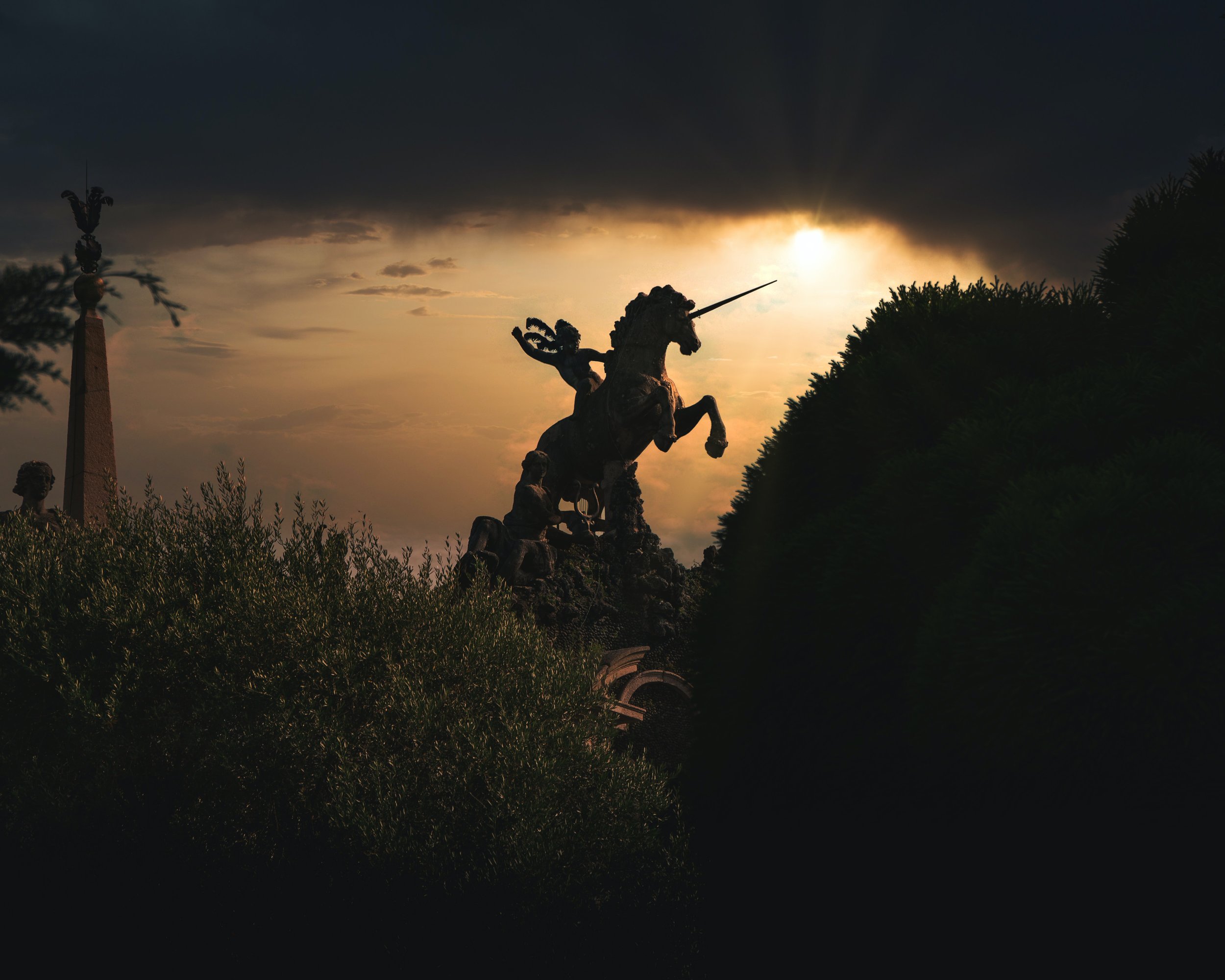
These days I've discovered a new genre that represents our time and American culture like nothing else — The Unicorn film or series. It's my new favorite genre, one that makes me laugh out lough at the outrageousness and ego-bouncing lack of self-awareness of the colorful characters that mark these anti-morality tales.
The messianic cult leader
The coattail riding actual inventor of the goods or services that couldn't sell shit to the sewer
The wisecracking lawyers and consultants who've seen it all before, but not this particular jackass
The woman behind the man
Sexual harassment
A media that can't get enough
Cool-headed investors and bankers
Mentors who just want to see everything work out for the best
and on and on...
Guaranteed belly laughs and downright hysteria if you've actually been around these types.
The story arch is predictable because you followed it in the papers. It's a roller coaster ride with luscious schadenfreude and a climactic crash as the Players move on to the next, next thing.
Anything is possible in a world where everything is a commodity and anyone can become a brand. Hell, with enough money, you can potentially buy trips to Mars and immortality. You can transcend nature.
Welcome back to the real world.
Unicorn is a term used in the venture capital industry to describe a privately held startup company with a value of over $1 billion.
Lately, I've been watching Super Pumped and WeChrashed. Both are stories about hyper-competitive, egomaniacal, narcissistic, sociopathic, and ambitious entrepreneurs trying to get filthy rich by changing the world with their startups. Hubristic: Not for characters like these, the world is progressing fast, can be changed practically overnight, and always for the better.
Anyway, it occurred to me that these films represent the deepest desires of our current culture. Get attention, lead people, inspire people, make as much money as you can doing outrageous things and make sure people know how special you are. We see this with some startup entrepreneurs, and we see this from some of our Tubers and social media influencers. It's all over sports culture and celebrity culture; even our politicians have succumbed.
We think we have to be outrageous, crazy, and reckless to be attractive and successful. Well, these traits have always been American. But one thing struck me. I may be wrong about this, but it seems that the only businesses that matter anymore are businesses that make some asshole obscenely rich no matter how they make their money. They can cheat, lie, and break the law as long as there are potentially billions in the market for their offering. No matter how they make their money, they always get a pass. If you are a Player, you want to become too big to fail and too big to jail. That's the real mark of success, and that's how the big business game is structured.
If you raise money, you are worth money. It's not your money. Your salary is your money, but it's as if the investor's money is your money, and everything depends on the valuation of your company. I'm familiar with this culture, but I won't go into it. This stuff is mundane. What bothers me is that it seems so much like a scam. People make similar bets repeatedly, and win or lose; it doesn't matter. It doesn't matter what happens to people or workers. Individuals should be responsible for their choices—only the markets matter.
VCs and investment banks make intelligent bets and huge sums on service fees and markets.
The Game is everything that matters.
There are no limits to how much money one can make.
The Game is exciting for the players and entertaining for spectators.
Most of us are happy to be spectators, and if we have enough money or credit to buy a ticket to the show, we are delighted. If we have a little more cash and credit, we can ape the behavior of the wealthy entrepreneurs, bankers, venture capitalists, hedge fund managers, sports stars, and celebrities we worship. We just want to fit in. We don't even think of the dehumanizing qualities of the Game.
I was also thinking about the hundreds of thousands of businesspeople running businesses for decades, not to get super rich but to get wealthy in an honest way by providing good products and services to their customers and communities. If we put in a little effort, intelligence, compassion, and care, our businesses allow us to live a good life. That's most of us.
But that's boring.
Lead with the noisemakers. Any publicity is good publicity. The founder makes potentially billions by bringing motivation, energy, excitement, ideas, technology, processes, people, etc., to the company they founded.
Grow fast, get big, establish monopoly power, and exit with billions.
I respect the founders of WeWork and UBER. I don't begrudge them for playing the Game hard and exiting with lots of money. I can't even fault them for how they played the Game because it required them to do precisely what they did. Could they have played nicely? Some people can; some people can't. Maybe Tim Cook is a nice guy. I don't know. Maybe Bill Gurley is a gentleman and only trying to help good people create great businesses.
Ordinary people will always pay attention to, marvel at, and wish they were the tough guy, the hero. The fantasy keeps us going in a world where nothing is more meaningful or valuable than money. If you take risks like the big Players, the worst thing that can happen to you is that you fail before getting started. If you are determined, you start again. Neither of these founders stopped creating startups after they were ousted. They made billions and continue to develop businesses—it's what they do. If they are genuinely fortunate, they've learned from their experiences and might do better next time. If they are psychopathic, they will continue using their talents to wreck things.
Whether a Player is a good guy, a bad guy, or a complex guy with fascinating nuances, they know how to use their money to protect themselves within a culture hungry for winners.
The creative destruction thing is at the core of American values.
Gangsters,
cowboys,
soldiers,
guns,
war,
power,
competition,
spectacle,
entertainment,
drugs,
alcohol,
lots and lots of religions,
speed,
tech,
progress,
life-extension,
the singularity,
AI,
Ex Machina,
Sex robots,
Al Capone,
Scarface,
award shows,
American Idol,
sports stadiums,
skyscrapers,
Ballers,
big oil,
big pharma,
union bosses,
876 military bases around the world,
forever wars,
political correctness,
social justice warriors,
the Far Right, the Alt-Left, Far Left, New Right, Leftish,
WOKE,
graffiti,
jazz,
rap,
hip-hop,
etc., etc.
Live Free or Die.
Go big or go home.
There are no limits.
Everyone can be a winner.
This culture is exciting as hell, and it will terminate our species sooner than we think.
Great stuff!
Be Skeptical of the Western Media's Account of the Ukraine War
There are many ways to look at an elephant as long as you never know it’s an elephant.

azov rehabilitated and the arming of civilians approved—behold, the meat grinder
To arrive at the truth, one must have a fine-grained understanding of many perspectives. Unfortunately, lies win the battles of The Great Game.
How many good Emporers and benevolent dictators have there been? The profit motive will always dictate to a faux democracy beholden to corporations.
I feel it’s imperative to augment your understanding of the war in Ukraine with perspectives from European intelligence experts with a broader understanding of the events in question and not entirely obedient to the status quo.
Rather than understanding the realities, complexities, and the fog of war in an unbiased way, we will follow the media narrative and cheer on a bloody war that could be limited or ended if we could understand the motives of the actors and had the power to do something.
Tragically, we will only watch as the players, the only people and entities that stand to benefit from death and destruction, do whatever they want while passing on the cost of the mayhem to us.
As a minority attempts to mitigate the madness and unravel the misinformation, as protests mount, people in Ukraine will be torn apart and killed.
I feel compelled to share this article because those paying attention over the past forty decades will have recognized a horrific and avoidable pattern. We shall have to repeat the lessons this pattern teaches us as many times as is necessary before we learn how to make and maintain peace or until our species is extinct. —SC
“Treat those who are good with goodness, and also treat those who are not good with goodness. Thus goodness is attained. Be honest to those who are honest, and be also honest to those who are not honest. Thus honesty is attained.” — Lao Tzu
Former NATO Military Analyst Blows the Whistle on West’s Ukraine Invasion Narrative
Posted by SHEERPOST in English from:

THE MILITARY SITUATION IN UKRAINE
JACQUES BAUD
Former Colonel of the General Staff, former member of Swiss strategic intelligence, specialist in Eastern European countries.
What's Wrong With Joe Rogan
So what is wrong with Joe Rogan?

If you find Joe's podcast entertaining, nothing. If you want to learn something, read a book or use some of the thousands of excellent online resources to learn about any domain that interests you.
I think most people enjoy doing the work.
Podcasts, videos on tubes, and blogs have introduced me to many things I would not have known of if I didn't have them.
However, we should be careful to stay humble when our knowledge of a subject is shallow.
Always cross-reference extraordinary claims, and don't be afraid of experts. They are not all bad.
Can you recommend a good book you heard about on the Joe Rogan podcast?

Joe Rogan: Just an average Joe?
Looking into Ontological Coaching with Maximilian Hachtmann
ontological coaching is about generating positive changes in a client’s way of being.
Until I met Maximilian, I was not aware of Ontological Coaching. Through our conversations, I realized it could be a valuable transformational process for people who feel stuck. I’m looking forward to learning more by listening to Maximilian’s podcast.
Below are some takeaways from our conversation. I’m only scratching the surface. Contact Maximilian Casper Hachtmann to learn more.
transforming the way we understand and interpret ourselves and those around us
we are critical observers of ourselves and our relationships
we are constantly growing and changing
we can shape change
we can adapt our way of seeing the world
when we actively change, everything changes in subtle or significant ways
developmental integrated dynamics involve our emotions, language, and thoughts
we can better understand our internal narratives and beliefs
the process involves relationships
somatic psycho/physical awareness
Key Questions
“How am I observing this?”
“What is it about my way of being that has me observe this way?”
“What is it about my way of being that needs to shift so that I can observe differently?”
Ontological coaching helps people feel more confident, empowered, and inspired by letting go of beliefs, behaviors, and patterns that no longer serve them and embracing possibility.
We can change our perceptions, emotions, and attitudes and develop effective language and communication.
Manage one’s responses and emotions.
Recognize and understand the fears, triggers, motivators, and stories that keep us stuck.
find clarity about the following
How do I perceive?
How do I respond?
What thoughts keep me sad, paralyzed, and depressed?
Who and how do I forgive?
How am I taking care of myself?
Am I fulfilled?
What is my purpose?
What behaviors do I need to change to be clear, centered, and confident?


Mad Smile
We had so much; we were so well entertained, and laughter came so easily. When I see carefree young people laughing, my stomach tightens, and my heart feels like it's in someone's clenched fist.
We finally know what it means to be a nanosecond from doomsday.
Can we be forgiven? None of us could have prevented this.
The system's logic was intended to be akin to god's will and who can thwart god's will.
Will wealthy players enjoy a fulfilling existence in their bunkers, knowing that they can eat a month longer than the family in the village?

Will they feel wise that they moved out of harm's way in time?
In Beyond Good and Evil, after cautioning the reader that someone who fights monsters risks becoming a monster himself, Nietzsche said, "if you stare into the abyss, the abyss stares back at you?"
Most of our leaders are narcissistic sociopaths. They believe the destruction they cause is creative. Rewards for taking charge are plentiful in this world and even more significant in the next.
Men of action always know what must be done.
The Abyss represents the parts of ourselves that we fear, the aspect of our creative will that is god, or fears god, or hates, or is hated. When the Abyss stares back, it sees the weakness of the conscious ego that thinks it can control the Abyss. When the conscious self stares into the archaic unconscious, it realizes that we are darker and more animal than we like to admit.
Some may feel guilt or shame.
Ordinary folks don't dare to contemplate the Abyss, so it hypnotizes them.
At the end of the world, we are all monsters afraid to confront that truth. We summon the Devil to make the final, fatal blow, releasing us from fear.
When we fail to confront reality, reality swallows us whole like Moby Dick.

Still, we are assuaged. It is the Devil's fault.
And so, those of us who understand what it means to roll the boulder up the hill keep smiling while we stare into the Abyss.
What's Wrong With Yanis Varoufakis
The answer will quickly be apparent.
Yanis Varoufakis is a deep thinker with skin in the game, and he's been busy fighting for what he believes in for a long time.
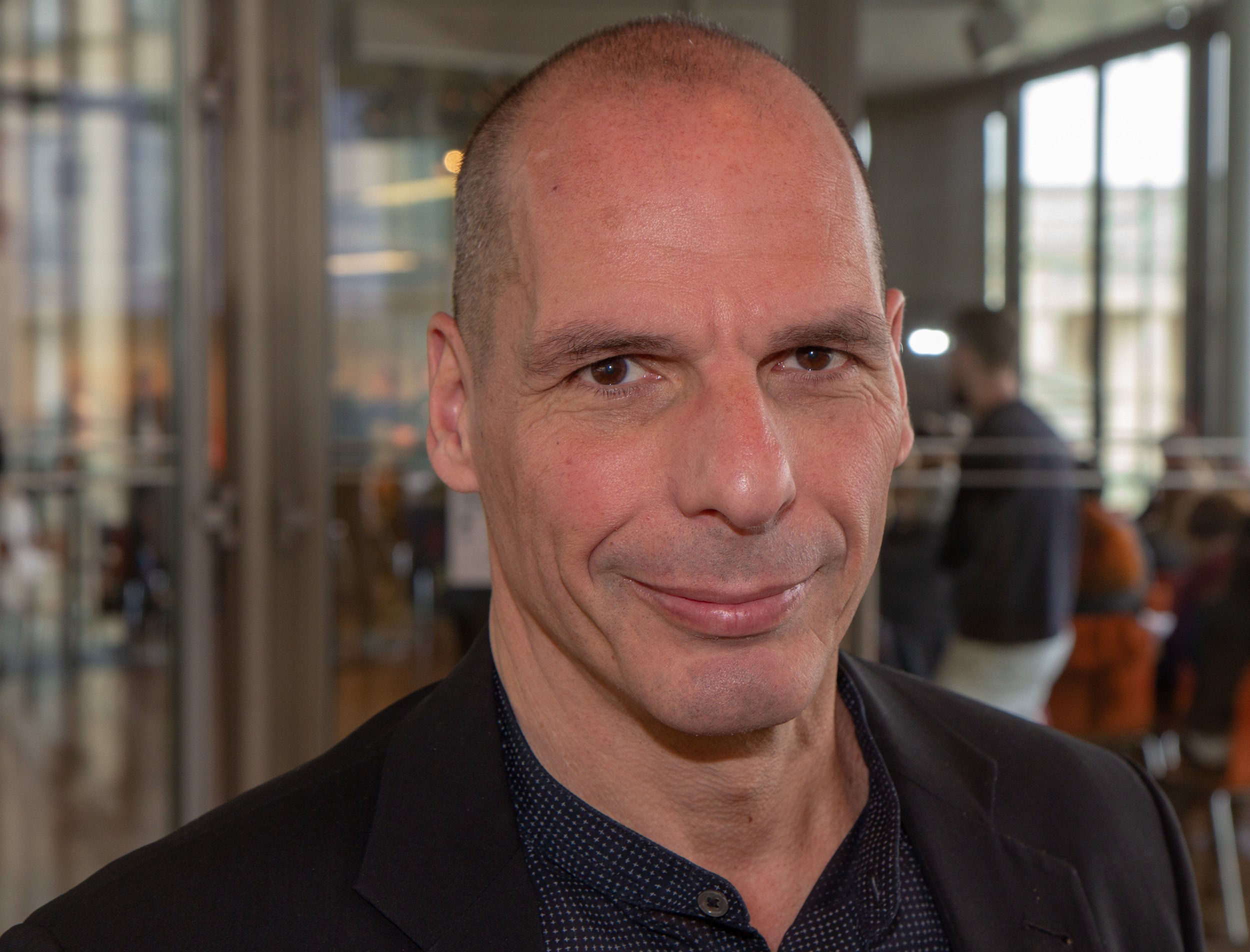
Yanis Varoufakis
Here is a brief bio from Berliner Festspiele. "Berliner Festspiele stand for a cultural programme where the new becomes visible."
Yanis Varoufakis is an economist and politician who, as Greece's finance minister in 2015, led the struggle against the European Union's and the International Monetary Fund's austerity and bank bailout policies. Since then, he co-founded DiEM25 (the Democracy in Europe Movement) and is the leader of MeRA25, DiEM25's political party in Greece. Before his election to Greece's Parliament, Varoufakis taught economics in universities in Britain, Australia, the United States, and Greece for three decades. He holds a chair in economic theory at the University of Athens and is Honorary Professor of Political Economy at the University of Sydney, Honoris Causa Professor of Law, Economics and Finance at the University of Torino, Visiting Professor of Political Economy at King's College, London, and Doctor of the University Honoris Causa at the University of Sussex. His best-selling books include: "Adults in the Room: My struggle against Europe's and America's Deep Establishment" (London: The Bodley Head); "Talking to My Daughter About the Economy: A brief history of capitalism" (London: The Bodley Head), "And the Weak Suffer What They Must? Europe's crisis and America's economic future" (New York: Nation Books, 2016); and "The Global Minotaur: America, Europe and the Future of the World Economy" (London: Zed Books, 2011,2015).
As with any public figure in politics, he has his opponents, detractors, and critics. An excellent place to start to understand what people have made of his work, particularly during the Greek debt crisis, start here: A critical review of the critical reviews of the book' Adults in the Room by Yanis Varoufakis.
As Adam Tooze writes in his indispensable overview of the critiques, the debate around Yanis Varoufakis's account relates to Europe's political economy, and in particular to the question of how to break away from the neoliberal policies that have dominated the history of the "Old World" for decades, and what strategy to adopt to do it.
Here is a review of his recent book, which I have read, "Talking to My Daughter About the Economy."
And for a hard look at his book "Adults in the Room," which I have read, I refer you to this article from The New Republic:
"If you are not the sort of person who is already likely to read a 500-page book on the former Greek finance minister's efforts to save his country from the machinations of the International Monetary Fund, then you aren't going to become one because I leave you in suspense. So let me spoil Yanis Varoufakis's Adults in the Room for you now. He failed."
Yanis Varoufakis is currently active in a political movement he helped found, DiEM25.
"DiEM25 is a pan-European movement of democrats, united under the conclusion that the European Union will only survive if it is radically transformed."
I am sure you know where I stand already. Yanis Veoufakis is a flawed but committed campaigner for the progressive transformation of our current institutions. He is a good man trying his best to make a difference without allaying himself with the destructive forces that run our global political, financial, and economic system.
Have a look at this and decide what you think.
Is neutrality Ukraine's best option?
So let me tell you what motivated me to write this brief post. I often encounter trolls (sorry for the disrespect, but that's all you are) who have read something about someone somewhere and instantly decided that they hated someone based on an article or two. This form of narrow-minded and dogmatic judgment most likely arises because something about the critique of the person in question excited a response. The troll thinks, "Yes, this makes sense, so and so is an idiot, all bad, and I see it now. I vehemently concur with the article in the Economist or the New York Times or so-and-so’s blog.”

Generally speaking, most trolls have a shallow understanding of what they criticize. They may not even know much about the domains surrounding the subject, or if they do have some knowledge, it's based on having read a book or an article. People are three-dimensional, to say the least, and politics, economics, big business, and geopolitics are complex subjects.
A troll is comfortable with one sentence or two parroted from their meager sources that are supposed to sound final—a kind of mic drop. They will say things like: "She messed up this or that!" "He is responsible for wrecking everything!" No further comment needed, nothing constructive, no alternatives, not even an honorable mention of who would have done better, what might have been a better outcome, who might have been a better leader, or how things might have been done more effectively. "He's stupid, he's bad, enough said, and if you post anything ever again about this villain, I'll repeat myself until you finally understand how stupid you are to pay attention to this guy." Trust me, I am not immune to this kind of childishness, we are still living in the Trump era whether you believe it or not. (Giggle.)
I'd suggest people withhold their opinions until they have something constructive to say. Go back and study political philosophy, read up on various points of view on events, read primary sources concerning the subject from earnest people who have formed their opinions through hard work.
What have you done lately? Are you a Player?
Regardless of who you dislike or whether this little blog poster agrees with you or not, make an effort to provide good sources and arguments for your beliefs so I can learn something from you.
Maybe we will all be able to imagine our own, Another Now.
What Is Game B?

For over forty years I have thought that our way of doing things as a global civilization has to be redesigned. We need new systems, new institutions, new structures and most importantly new cultures. This is not to say that there are not many components of what we have now that would help constitute these new ways of managing human affairs.
UNDERSTANDING THE BLUE CHURCH—JORDON HALL
A number of folks noted that they were not familiar with the concept of the Blue Church and wondered what was meant by it. The Democratic Party? Liberalism? Progressivism? As I mentioned in SA:2017, I had originally lifted the idea wholesale from that Reddit post with only an intuitive sense that it (and its juxtaposition with a Red Religion) was useful and pointed at something real.
In this essay, I dive into the concept. Below I endeavor to provide an answer that is adequate to Deep Code. I believe that the results are well worth the effort, but this is not a simple journey. Few things of importance these days are. If we want to get to the bottom of the contemporary situation, we are going to have to get comfortable going deep.
The abstract is this: the Blue Church is a kind of narrative / ideology control structure that is a natural result of mass media. It is an evolved (rather than designed) function that has come over the past half-century to be deeply connected with the Democratic political “Establishment” and lightly connected with the “Deep State” to form an effective political and dominant cultural force in the United States.
We can trace its roots at least as far back as the beginning of the 20th Century where it emerged in response to the new capabilities of mass media for social control. By mid-century it began to play an increasingly meaningful role in forming and shaping American culture-producing institutions; became pervasive through the last half of the 20th and seems to have peaked in its influence somewhere in the first decade of the 21st Century.
It is now beginning to unravel.
Welcome to GameB Home
GameB FaceBook Group
The Emancipation Party
My Intellectual Immune System is Weak
I keep getting PMs from friends on Signal who subscribe to grand conspiracy theories regarding our C19 experience. I replied with links to articles from different perspectives that I thought might inform their thinking for a while. I was wrong to believe that they would be interested in any content that didn't support their narrative.
I will refer to “The Narrative” so allow me to first set the stage. I nicked the quote below from Rebel Wisdom’s latest post regarding their new film.
“Lockdowns are not needed, masks do not work, the safety and efficacy of the vaccines are being oversold, vaccine passports will not only fail but further segregate society, and in the near future we can expect Giradian scapegoating of the unvaccinated. In other words, we are positioned on the precipice of a slippery slope that leads towards increasingly draconian biopolitical control measures, the grip of which is unlikely to release even once the pandemic is over.”
Setting the stage:
Next February, the seventeenth, in the year of a particular Lord, two thousand and twenty-three, there will only be 526,403 people alive on this great earth. Finally, the re-wilding of the "commons" and the building of Golf Courses, pleasure palaces, and sports stadiums will begin in earnest, and everyone, everyone I tell you, will have their own customized, shape-shifting sex robot. Homo Sapiens will have been saved from The Great Game by the Players of The Great Game. It's exciting to know that soon the Players will begin this uber endeavor—culminating with the invention of an even better game. In the not too distant future, they can export this new, and supreme culture to inhabitable planets in this particular Universe. Because, don't you know, that in eight thousand years our sun will be a Dyson Sphere and Elon Musk (he will be alive then) will be using the Penrose Process to find said inhabitable planets. (Elon could do it now, by the way, but that would mean that the Plebs would benefit, and they are simply not worthy.)
This was my final message to one of my Signal interlocutors. From now on, when any of my conspiracy-minded warriors on Signal or even WhatsApp share a link to something regarding our wonderous C19 experience, I will send back a photo of gelato.
I wonder if reading the content at this link will make me roll my eyes? I want to click on the link, but then I ponder, why? It's not like I'm in the tribe. My interests are too broad. I've rummaged around in that bubble for a while, and I get it. Enough. Joe Rogan? LOL! I am beginning to think you are not a reader? Sincerely, should we stop sharing anything except photos of gelato? There are facts to be found within the know-it-all narrative, but the narrative itself is shallow. But fuck me, right? I'm stupid and blinkered. I'm a normie. I'm alt-middle or alt-sensible. I took the wrong color pill. I've been infected by the dreaded "@-the-real-propaganda." I don't consume garbage day and night, which has made me weak. My intellectual defenses are not strong enough because my reading habits are too clean, peppered with authors who are experts in their field, and therefore incentivized by billionaires who fund their research. OMG, maybe that's why I don't do my own research. 😂 I won't click on the link you have shared. I already understand the narrative. I'd rather read a good book that I can learn something from. Pass that crap around to the properly woke-woke people—keep driving your knowledge of the grand conspiracy home. You and yours will save the world. Thank you in advance. 🙏🥰
Bon Appétit!

The New Normal Conspiracy
But whether the Constitution really be one thing, or another, this much is certain — that it has either authorized such a government as we have had, or has been powerless to prevent it. In either case, it is unfit to exist.
— Lysander Spooner
This normie, bog-standard, middle stream, CIA cutout (Cirtifyably Insane Association) scribbler would like to share a piece someone wrote about "The Way Thing Really Are."
"The UK New Normal Dictatorship" UK Column News — Lian Davis
This post title from The UK Column says a lot if you think about it.
Spoiler alert! Everybody's in on it, even the Plebs.
This is a classic and informative piece — it's all there. It parrots every buzzword, pulls every trigger, and has hyperlinks to more of the same. It contains many scary and easily identifiable propositions and big words, some with definitions from mainstream encyclopedias. Peppered with references to ideas and realities that are indeed alarming, it weaves a standard narrative about the powers that be.
And by golly, some of the content contains observations that ring true and may even represent problems worth a mortal struggle. However, I prefer different sources of cultural criticism and polemic to writers who refer to so many worn-out conspiracy theories.
You may feel: #powerless #hopeless #outraged after reading it.
You are not a fan of this genre if you are not entirely familiar with every shocking pseudo revelation.
Would you please tell me what the author's ideological bent is? It has to have a name.
Suppose you are a fan of actually understanding how things work. In that case, you will know we are far from perfect governance systems, whether referring to global corporations, nongovernmental institutions, economic schools, social systems, political systems, etc., in any arena or Nation-State. But you will also know that civilization has always been structured around various messy things, people and institutions.
Systems Theory and Complexity Theory are difficult topics to understand, much less be knowledgeable about to the point where they become valuable tools — so are socioeconomic theories and practices. Let's not mention all the other domains this piece touches upon.
If you genuinely understand how various systems work, you might have some good ideas on how to repair them, reform them, change them, destroy them or even innovate from them.
Do you have to do a lot of reading to achieve that? What kind of reading? You tell me.
These narratives are entertaining but far from empowering, nor do they offer any alternative solutions. The cry is, "Fight back by following “the” narrative!"
One might wonder what a blogger in the early 16th Century might have written about the opaque goings-on in court. Isn't conspiring face-to-face a more satisfying activity? But back then, the powerless people were illiterate, and only the big players played the game. One can imagine conniving goings-on from every class during the Roman Empire.
Perhaps the only times safe from institutions were when there were only bands, tribes, and small nations of indigenous people. You can't conspire very effectively when everyone around the fire is watching. I wonder if large nation-states can ever enjoy perfect governance. I don't think we will ever see a happy-go-lucky world of libertarian tiny states and city-states.
Doggone it, I wish I could be more optimistic. Sometimes a little apathy goes a long way.
But come hither and tell me your ideas, thoughts, and feelings. What should we do about this?
Lian Davis writes for online publications like UKCOLUNM that all have a certain kind of catastrophic color. He seems like a fun man to have a few drinks with; take a look at the rest of the contributors for UKCOLUNM — forget drinks, let's have a party! No pun.
No Jail For The Wicked
I like to read books. I am not sure how much good it’s done me. I wish everyone read more.
Take a look at the bibliography in this short article from Ralph Nader posted at SHEERPOST. Think of the implications of this. Why are normal people so powerless in the face of this kind of corruption and greed? Perhaps, throughout history, the lower classes have always been relatively powerless and lazy.
The “Players” make the rules and have the freedom to break them. There are no crimes they can’t commit with impunity.
We are living in a culture where one only needs money.
Along the same vein, don’t miss this post from Christopher Hedges, American Satyricon.
A licentious, money-drenched, morally bankrupt and intellectually vacuous ruling class, accountable to no one and free to plunder and prey on the weak like human vultures, rise to power in societies in terminal decline. This class of parasites was savagely parodied in the first-century satirical novel “Satyricon” by Gaius Petronius, written during the reign of Nero. Epstein and his cohorts for years engaged in sexual perversions of Petronian proportions, as Miami Herald investigative reporter Julie Brown, whose dogged reporting was largely responsible for reopening the federal investigation in Epstein and Maxwell, documents in her book “Perversion of Justice: The Jeffrey Epstein Story.”

Despite many books being published on corporate crooks, there have been no corporate crime law reforms, no additional prosecutions of these CEOs, not even comprehensive congressional or state legislative hearing. What gives?
Corporate Crime and Punishment: The Crisis of Underenforcement by John Coffee
Mass Tort Deals: Backroom Bargaining in Multidistrict Litigation by Elizabeth Burch
Why Not Jail? Industrial Catastrophes, Corporate Malfeasance … by Rena Steinzor
Empire of Pain: The Secret History of the Sackler Dynasty by Patrick Radden Keefe
Closing Death’s Door: Legal Innovations to End the Epidemic of Healthcare Harm by Michael J. Saks and Stephan Landsman
Who Poisoned Your Bacon Sandwich?… by Guillaume Coudray
The Monsanto Papers: Deadly Secrets, Corporate Corruption… by Carey Gillam
The Age of Addiction: How Bad Habits Became Big Business by David Courtwright
Frankie: How One Woman Prevented a Pharmaceutical Disaster by James Essinger and Sandra Koutzenko
Killer Airbags by Jerry Cox
Making the World Safe for Coke by Susan Greenhalgh
Big Dirty Money by Jennifer Taub
Business and Human Rights by Ellen Hertz
Industrial-Strength Denial by Barbara Freese
Baseless: My Search for Secrets in the Ruins of the Freedom of Information Act by Nicholson Baker
Too Big to Jail: How Prosecutors Compromise with Corporations by Brandon L. Garrett
Capital Offenses: Business Crime and Punishment in America’s Corporate Age by Samuel W. Buell
Profiteering, Corruption and Fraud in U.S. Health Care by John Geyman
Monopolized: Life in the Age of Corporate Power by David Dayen
Global Banks on Trial by Pierre-Hugues Verdier
Triumph of Doubt: Dark Money and the Science of Deception by David Michaels
Murder, Inc.: How Unregulated Industry Kills or Injures Thousands of Americans Every Year…And What You Can Do About It by Gerald Goldhaber
Paradise Lost at Sea: Rethinking Cruise Vacations by Ross A. Klein
Goliath: The 100-Year War Between Monopoly Power and Democracy by Matt Stoller
Crisis of Conscience: Whistleblowing in An Age of Fraud by Tom Mueller
Bottle of Lies: The Inside Story of the Generic Drug Boom by Katherine Eban
GMOs Decoded: A Skeptic’s View of Genetically Modified Foods by Sheldon Krimsky and Marion Nestle
GM: Paint it Red: Inside General Motors’ Culture of Failure by Nicholas Kachman
The Chickenshit Club: Why the Justice Department Fails to Prosecute Executives by Jesse Eisinger
Watchdog: How Protecting Consumers Can Save Our Families, Our Economy, and Our Democracy by Richard Cordray
First Class: The U.S. Postal Service, Democracy, and the Corporate Threat by Christopher Shaw
Un-American: A Soldier’s Reckoning of Our Longest War by Erik Edstrom
Humane: How the United States Abandoned Peace and Reinvented War by Samuel Moyn
Dirty Work: Essential Jobs and the Hidden Toll of Inequality in America by Eyal Press
Why Do We Still Have the Electoral College? by Alexander Keyssar
Public Citizens by Paul Sabin
The United States of War by David Vine
The Wealth Hoarders: How Billionaires Pay Millions to Hide Trillions by Chuck Collins
Fulfillment: Winning and Losing in One-Click America by Alec MacGillis
The Case Against George W. Bush by Steven C. Markoff
Tax the Rich: How Lies, Loopholes, and Lobbyists Make the Rich Even Richer by Erica Payne and Morris Pearl
Salt Wars: The Battle Over the Biggest Killer in the American Diet by Dr. Michael Jacobson
Unrig: How to Fix Our Broken Democracy by Daniel G. Newman
Plaintiff in Chief: A Portrait of Donald Trump in 3,500 Lawsuits by James D. Zirin
Stealing Our Democracy by Don Siegelman
Beaten Down, Worked Up: The Past, Present, and Future of American Labor by Steven Greenhouse
All the President’s Women: Donald Trump and the Making of a Predator by Monique El-Faizy and Barry Levine
Money, Power, and the People: The American Struggle to Make Banking Democratic by Christopher Shaw
Troubled Water: What’s Wrong with What We Drink by Seth M. Siegel
Disrupt, Discredit, and Divide: How the New FBI Damages Democracy by Mike German
United States of Distraction: Media Manipulation in Post-Truth America… by Mickey Huff and Nolan Higdon
The Curse of Bigness: Antitrust in the New Gilded Age by Tim Wu
The End of Ice by Dahr Jamail
Confessions of a Rogue Nuclear Regulator by Dr. Gregory Jaczko
The Age of Surveillance Capitalism by Shoshana Zuboff
America, Democracy & You: Where Have All the Citizens Gone? by Ronald R. Fraser
Unsettled (on Purdue Pharma and the Sackler Family) by Ryan Hampton
Winners Take All: The Elite Charade of Changing the World by Anand Giridharadas
China Rx: Exposing the Risks of America’s Dependence on China for Medicine by Rosemary Gibson and Janardan Prasad Singh
Collusion: How Central Bankers Rigged the World by Nomi Prins
Attention All Passengers: The Airlines’ Dangerous Descent and What You Can Do To Reclaim Our Skies by William McGee
Whitewash: The Story of a Weed Killer, Cancer, and the Corruption of Science by Carey Gillam
The CEO Pay Machine: How it Trashes America and How to Stop It by Steven Clifford
World Without Mind: The Existential Threat of Big Tech by Franklin Foer
The Golden Passport: Harvard Business School, …. and the Moral Failure of the MBA Elite by Duff McDonald
The Culture Seems To Love Gun Violence—is it at war with itself?
Will I be pilloried for mentioning glaring evidence of cultural differences?
The debate about firearms rages on in the United States while gun ownership skyrockets.

Michigan has approximately the same population as Portugal.
In 2019, there were 742 firearm suicide deaths in Michigan, including 31 children and teens (ages 0–19).
According to the latest WHO data published in 2018, Suicide Deaths in Portugal reached 1,450 or 1.61% of total deaths. The age-adjusted Death Rate is 8.62 per 100,000 population ranks Portugal #97 in the world.
In 2019 there were 1,471 suicides in Michigan. Suicide is the 10th leading cause of death in Michigan.
As of Feb. 1, 2018, Michigan had 621,327 active concealed pistol licenses on file — about 8 percent of the state’s adult population.
As of 2021, the number of licensed gun owners in Portugal is reported to be 216,000.
Recent surveys find that about 40% of adult Americans own a gun or live with someone who does. A majority of those gun owners cite protection as their primary reason for owning a gun, and most believe the gun or guns they own make their homes safer. (Why do they need protection?) But research has consistently shown that households with firearms are actually less safe — with markedly higher risks for accidental deaths, suicides, and domestic homicides. AP
I lived in Japan for over 9 years, where the death rate by firearms per 100,000 people is practically nonexistent.
Gun crimes Japan 2011–2020
Published by Statista Research Department, Oct 21, 2021
In 2020, the number of reported cases involving damage caused by the firing of firearms in Japan amounted to 17 cases. This represented an increase compared to the previous year when 13 cases of damage by firearms were reported. The population of Japan was 125.8 million (2020).
Japan’s Homicide by firearm rate was 0.0 (cases per 100,000 population) in 2014.
In 2020, Japan had 4 homicides by firearms. *WORLD DATA ATLAS JAPAN CRIME STATISTICS
I lived in Hong Kong for over 10 years. Between 2003 and 2017, Hong Kong’s homicides by firearm rate remained stable at around 0 cases per 100,000 population.
Hong Kong movies would make you think that there were shootouts every month in Hong Kong. There are shootouts every month in the United States.
In China, the total annual homicides by any means in 2018 amounted to 7,525. The population of China in 2020 was 1.402 billion. (You can find good statistics on worldwide homicide rates from many reputable sources if you want to.)
America seems to think that armed conflicts, no matter how limited, are essential for its security.
THE HUMAN COST OF THE WAR IN AFGHANISTAN:
American service members killed in Afghanistan through April: 2,448.
U.S. contractors: 3,846.
Afghan national military and police: 66,000.
Other allied service members, including from other NATO member states 1,144.
Afghan civilians: 47,245.
Taliban and other opposition fighters: 51,191.
Aid workers: 444.
Journalists: 72.
In 2021 so far there have been 39,654 deaths in the USA due to firearms. Let’s imagine that there has been an average of 12,000 gun-related deaths a year in the USA over the last 20 years. During the 20 year duration of the war in Afghanistan, the death toll in the US due to firearms would amount to 240,000. The total number of deaths during the 20-year war in Afghanistan added up from the above numbers was 171,246.
It seems to me that America is at war with itself.
In a highly armed culture where its leaders seem to encourage violent “police actions” worldwide, what will happen in the United States if its institutions are damaged beyond repair?
I hear people in the United States talking about civil war. Now, please, are you fucking kidding me?
Seek And Your Intuition Will Be Stronger
We all think we know what to do until we know what to do.
intuition
noun
— the ability to understand something instinctively, without the need for conscious reasoning
— a thing that one knows or considers likely from instinctive feelings rather than conscious reasoning.
I also hear heuristics. I think of neuroscience. I think of agency. I think of connections and connectedness.

I've been thinking about intuition lately. I have thought about intuition for decades, and what I think about it is constantly evolving. The evolution of understanding is the core of intuition.
The more curious one is, the more one explores and experiences, the better one's intuition gets.
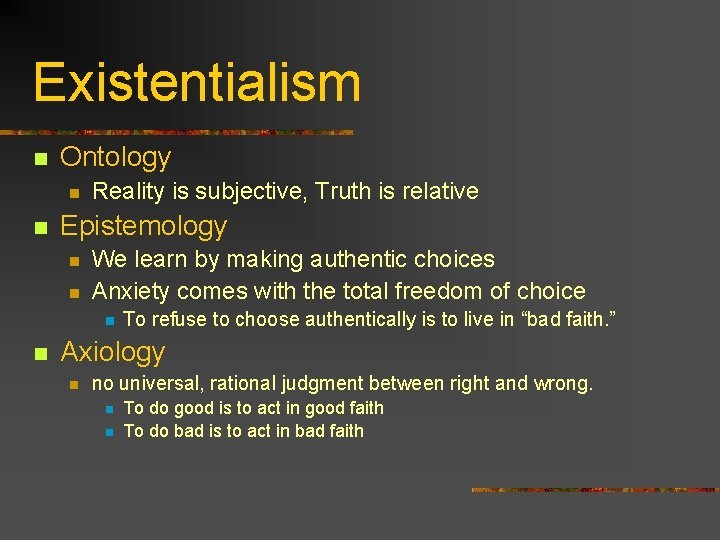
Ontology
Epistemology
Empiricism
If you read a lot across many subjects; if you have traveled and worked in several different businesses or industries; if you are deeply curious about the nature of things and how things work; if you are constantly questioning what you know and what other people seem to know; if you are not afraid of reality or truth no matter how uncomfortable it may be; and, most importantly, if you embrace these experiences and attitudes with openness, a bit of joy and excitement — perhaps even love and compassion — your intuitions will be strong and more accurate than average.
Many people are comfortable on a well-worn path. Most people are happy with what they have learned long ago, are at home in their inherited circumstances, and are uncomfortable with unfamiliar things. Perhaps, we could say that they are more traditional.
We are creatures of habit, all animals are, but homo sapiens have the capacity of profound exploration. The need to explore is one of the traits that make our species unique and successful. Throughout our species history, there have been those who would wander off the path and explore unfamiliar things. In doing so, they ignite their imagination and liberate creative impulses that allow them to discover new things, new experiences, new challenges, and new knowledge. With new knowledge, we would create new stories, ideas, processes, tools, and technologies.
I often wonder about the state of people's minds as they evolved towards the phase transition that brought us language. Can you imagine the first humans in one of our ancestral species that, for some reason, started naming things and later, much later, how grammar spontaneously emerged from the use of those symbols?
And the flesh made word a miraculous being.

It didn't happen suddenly, it only emerged gradually and imperceptibly, and then there were generations of creative people experiencing life in entirely new ways. For a long time, for many generations, we could not easily imagine what we might be able to create. Still, some of us ventured out and randomly discovered new possibilities. We learned through our active existence, acquiring knowledge, and experimenting until we deliberately created something.
The trouble with our civilization is that it doesn't value intuition enough, the kind of intuition that comes from adventurousness, imagination, exploration, curiosity, and a deep appreciation of what one encounters. Here I am not talking about the market of such things — not Instagram. I refer to the intense desire to break free.
We are programmed to be timid and fit into our niche, and do our work. We are programmed to be greedy attention seekers. We are, perhaps, a bit too needy of validation.
I was reading about a study of people who claim to talk to God. It turns out that it takes a lot of practice to experience that. One has to pray a lot. To quiet the mind and experience, one's more authentic nature. One might practice meditation, for example, for a very long time before a profound sense of what one truly is, disperses into one's consciousness. We practice sports, music, and dance diligently over time and experience flow states. You know what I mean. Getting good at anything requires commitment and practice: even our moral intuitions, feelings of compassion, empathy, and love. Before becoming loving, one must practice care, consideration, listening, affection.
Context and Preconditions
One can learn how to kill and how to love.
One can kill with reverence to survive.
There is a context for everything. Depending on the conditions we've grown in and our sensibilities, our intuitions will be different. It takes many kinds of people to make our civilization operate as it does.
Intuition is not magic, and yet it's magical.
I was listening to Liv Boeree talking with Alexander Beiner on the Rebel Wisdom channel on YouTube. Ms. Boeree is an impressive woman. When I hear people like her talk about things they know well, I am always impressed by their epistemic humility, their grappling with reality, and their courage in the face of failed experiments. Even if I don't understand some of the things they refer to, I have a strong intuitive sense that what they are communicating makes sense. I trust them and am inspired to consider carefully what they are trying to say.
People I enjoy listening to have encountered some of the same things I have encountered on my journey. Yet, they have unique ways of expressing their experiences and knowledge that engage my imagination.
We have crossed paths; by that, I mean, explored the same things in different ways and at different times in different contexts from different perspectives. We are moving through reality, building on our experiences and what we've learned from others while feeling an intense need to communicate our experiences with those we've encountered. We are peering out at the world on the shoulders of giants, looking for more, knowing we will never know enough or have enough experience to be satisfied. And we are comfortable with that, even excited by the thought of our limitations and constraints.
Highly intuitive people need to share. Intuitive people need to learn from people. If you seek wisdom, knowledge, and novel experiences unleashing your creativity, you build intuitive power.
I looked at the video description of "A Poker Pro Explains Game Theory" and found a link to a Slate Star Codex post from 2014, Meditations on Moloch. I read that post in 2014. When I first read it, it was at once new, exciting, and very familiar. I reread it this morning and experienced the essay in entirely new ways, and it was still utterly familiar to me.
The magical aspect of a good intuition is that our ideas, thoughts, and feelings broaden as we explore strange things, allowing us to feel familiarity regardless of incomplete understanding.
Where one person is confined to the familiar because of fear or narrowness, a more intuitive person embraces the unfamiliar, no matter how scary or challenging. Seeking out the unknown leads to familiarity — and the world becomes more hospitable.
The more familiar one is with various things, the greater one's intuition.
The tricky question is: What preconditions inspire these traits in some people and not so much in others. I recognize that all people are curious, but clearly, some more than others.
Intuition is still mysterious to me, no matter how much I read, explore, meditate or pray, there will still be new intuitive states I can look forward to experiencing.
In 2010 I would talk with people down the pub about Bitcoin and Climate Change, and they would look at me like I was a foolish goofball. Ten years later, they are trading Bitcoin for a bit of fiat buck and having climate change stories hurled at them from every media source twenty-four seven. You will not be very popular if you bring up strange things with people. Too few will engage with the unfamiliar.
Most of us will stay on the well-worn path until circumstances dictate that we find another way.
The problem today is that we need more intuitive people to help navigate a world where our intuitions and explorations have helped us paint ourselves into a corner where existential risks have the potential to put an end to our species.
If you have been paying attention, you feel it.
What, if anything, will we do about it?
When I encounter intuitive people, I'm thrilled to be in such good company. But what I need is to work with people nearby to cultivate values that lead to a wise, intuitive culture that loves and reveres everything about being alive and life on earth. That’s my utopia — simply doing that.
I want to intuit a loving culture emerging.
Redefining Wealth, Prosperity, and Growth

I'm happy to see Ms. Williamson talking with Peter Joseph. I recommend The New Human Rights Movement to people weekly. Work this train of thought in your communities, and let's hope it scales rapidly. Marianne Williamson is an earnest, wise, and compassionate author whose work has inspired many people. She also ran for President of the United States. Arrogant? Presumptuous? She believed she could do some good. It should be a breath of fresh air to have a woman with her disposition in a presidential race. (Yes, I know, she's Oprah Winfrey's spiritual advisor— we can forgive her for that.) Peter's book is a compelling survey of our socio-economic culture that may spark your interest in delving more deeply into how our system works and why it's not sustainable. He does not have all the answers, nor does he pretend to. Engaging with his train of thought will require a good-faith effort to understand concepts that may be uncomfortable for many people to ponder these days. (How can we criticize a system that got us all this cool stuff, and what about Steven Pinker's take on the glories of Western Civilization? Surely it's all good?) He has a structuralist perspective and talks about structural violence and racism, for example. Today, even bringing up racism will trigger many people in the USA who are tired of the subject. Peter is not utopian in his thought. He simply understands the necessity of imaginative, innovative, and structural change if we intend to sustain civilization. Redefining wealth, prosperity, and growth is a great way to start.
Looking Forward to a Clockwork Orange Horror Show

The Big Lie won't go away. Between now and the 2022 midterm elections, the country will get crazier and crazier. Instead of Left and Right-wing organizations LARPING war with paintball guns, we might see some live-fire battles in the streets of American cities.
Trump won 74,222,958 votes, or 46.8 percent of the votes cast. There are still tens of millions of people in the USA that support The Big Lie and are all in on dozens of insane conspiracies.
What's the percentage of Americans who can think clearly, I wonder?
Forget about the garbage flowing out of cable news networks and ponder for a moment the mad shyte firehosing from alternative media platforms and the good old world wide web.
Things in the United States are at a fever pitch of emotion now. The contagion of inane ideas from America spreads around the world like a memetic mental pandemic. Bad ideas and conspiracies are everywhere. And undergirding it all is a brand of stubborn, willful ignorance unprecedented in world history. People were probably saner when they were illiterate.
We are facing serious existential threats to global civilization, and misinformation and perniciously odious lies are all we can regurgitate as we separate into disastrous clubs and go to war with anyone who doesn't subscribe to our fantasies, illusions, and delusions.
We can look forward to a Clockwork Orange horror show. Perhaps it's time to start a tune-out movement. Do movements even work these days?
https://www.facebook.com/globehackers www.cospolon.eu
LET’S TAKE THE PROFIT OUT OF WAR
We all should know by now that war is a profitable business. It should not be this profitable. We must not incentivize profit-seeking and corruption when we are pursuing rational and moral defense policy.

CEOs shouldn’t have a financial stake in the murderous mass violence of modern warfare.
By Sam Pizzigati | August 25, 2021
In the 21st century, many of us are used to the murderous mass violence of modern warfare.
After all, we grew up living it or hearing about it. The 20th-century rates as the deadliest in human history — 75 million people died in World War II alone. Millions have died since, including a quarter-million during the 20-year U.S. war in Afghanistan.
But for our forebears, the incredible deadliness of modern warfare came as a shock.
The carnage of World War I — with its 40 million dead — left people scrambling to prevent another horror. In 1928, the world’s top nations even signed an agreement renouncing war as an instrument of national policy.
Still, by the mid-1930s the world was swimming in weapons, and people wanted to know why.
In the United States, peace-seekers followed the money to find out. Many of America’s moguls, they learned, were getting rich off prepping for war. These “merchants of death” had a vested interest in the arms races that make wars more likely.
So a campaign was launched to take the profit out of war.
On Capitol Hill, Senate Democrats set up a committee to investigate the munitions industry and named a progressive Republican, North Dakota’s Gerald Nye, to chair it. “War and preparation for war,” Nye noted in 1934, had precious little to do with “national defense.” Instead, war had become “a matter of profit for the few.”
The war in Afghanistan offers but the latest example.
We won’t know for some time the total corporate haul from the Afghan war’s 20 years. But Institute for Policy Studies analysts Brian Wakamo and Sarah Anderson have come up with some initial calculations for three of the top military contractors active in Afghanistan from 2016-2020.
They found that total compensation for the CEOs alone at these three corporate giants — Fluor, Raytheon, and Boeing — amounted to $236 million.
A modern-day, high-profile panel on war profiteering might not be a bad idea. Members could start by reviewing the 1936 conclusions of the original committee.
Munitions companies, it found, ignited and exacerbated arms races by constantly striving to “scare nations into a continued frantic expenditure for the latest improvements in devices of warfare.”
“Wars,” the Senate panel summed up, “rarely have one single cause,” but it runs “against the peace of the world for selfishly interested organizations to be left free to goad and frighten nations into military activity.”
Do these conclusions still hold water for us today? Yes — and in fact, today’s military-industrial complex dwarfs that of the early 20th century.
Military spending, Lindsay Koshgarian of the IPS National Priorities Project points out, currently “takes up more than half of the discretionary federal budget each year,” and over half that spending goes to military contractors — who use that largesse to lobby for more war spending.
In 2020, executives at the five biggest contractors spent $60 million on lobbying to keep their gravy train going. Over the past two decades, the defense industry has spent $2.5 billion on lobbying and directed another $285 million to political candidates.
How can we upset that business as usual? Reducing the size of the military budget can get us started. Reforming the contracting process will also be essential. And executive pay needs to be right at the heart of that reform. No executives dealing in military matters should have a huge personal stake in ballooning federal spending for war.
One good approach: Rep. Jan Schakowsky’s Patriotic Corporations Act.
Among other things, that proposed law would give extra points in contract bidding to firms that pay their top executives no more than 100 times what they pay their most typical workers. Few defense giants come anywhere close to that ratio.
War is complicated, but greed isn’t. Let’s take the profit out of war.
Article from otherwords.org
People like to talk about God's Glory, The Love of God, and God's Love.

I understand the sentiment. If it’s we are referring to a nonegocentric, connection with “Creation,” but I can’t imagine God being prideful of the stuff “He” made. “Glory to badass me.” But people are mostly like that, and people write the stories.
“Pride comes before the fall.”
It's not cool to be a sage these days. Being wise takes a special kind of effort to acquire skills and attitudes that are not popular in schools these days. Education is too narrow, too institutionalized. There has to be a place for community-based education. Perhaps we should think of it as a culture of learning.

I feel it's glorious to be alive, the miracle of nature, and what's wrong with being in awe of particles doing their thing within something we know as the laws of physics — the mysteries of star stuff and all of that.
(We think we know a lot, but we don't know shit.)
I sincerely don't believe that God is needy like humans. I can't imagine God pining away for me to pay attention to "Him," although I do feel God's "love," and since we are part and parcel and all of that, I'm sure he feels "my" love.
(Love is not only a conduit, and it’s surely not a base transaction.)
LOVE is more profound than human love. I can't imagine a Human God. I am not Greek. Perhaps my mystical self is not human. LOL.
One can’t deny our need for love.
God LOVES We Love THE LOVING is the whole thing.
Jesus was co-opted by culture and power and used in various nefarious and also benign ways by people and institutions that needed, for whatever reasons, to use Jesus to parse the narrative for whatever purpose.
Yeshua is someone I know a lot better, and I see reflections of him everywhere — even in people's actions, thoughts and feelings.
I swear I could write his story. I'd call it "Tales of Hippy Yeshua who came to America from Guatemala."
But a God without an institution is very hard to worship. There has to be a hierarchy of commands. People are difficult to control. Or perhaps, too easy to manage?
I'm pretty sure that if people didn't have “The Book,” they’d have met Yeshua anyway.
Facing Facts Allows Us To Reshape The World
This post was inspired by a comment to a comment I left on a video about Climate Change. Sometimes people can be very generous and positively inspiring.

Humans have been changing the landscape and affecting the environment since they started playing with fire and pointy sticks.
Sooner or later, one must face facts.
Everything is interdependent. Your independence is expressed through what you know. Those of us who have stopped learning, know nothing.
Visit the links and understand what it all means. Click on every hyperlink. Take your time.
1 — All civilizations have collapsed into the sand because of the desiccation of the local environment.
2 — Bio-Complexity has been exponentially decreasing since pointy sticks and fire.
Dynamical shifts between the extremes of stability and collapse are hallmarks of ecological systems. These shifts are limited by and change with biodiversity, complexity, and the topology and hierarchy of interactions. Most ecological research has focused on identifying conditions for a system to shift from stability to any degree of instability—species abundances do not return to exact same values after perturbation. Real ecosystems likely have a continuum of shifting between stability and collapse that depends on the specifics of how the interactions are structured, as well as the type and degree of disturbance due to environmental change. Here we map boundaries for the extremes of strict stability and collapse. In between these boundaries, we find an intermediate regime that consists of single-species extinctions, which we call the extinction continuum. We also develop a metric that locates the position of the system within the extinction continuum—thus quantifying proximity to stability or collapse—in terms of ecologically measurable quantities such as growth rates and interaction strengths. Furthermore, we provide analytical and numerical techniques for estimating our new metric. We show that our metric does an excellent job of capturing the system's behaviour in comparison with other existing methods—such as May’s stability criteria or critical slowdown. Our metric should thus enable deeper insights about how to classify real systems in terms of their overall dynamics and their limits of stability and collapse.
3 — The IPCC is vastly understating what is happening.
4 — As much as 80% of all non-human or agricultural life is already gone, and the rate of extinction is increasing.
Plant and animal extinctions are occurring at a rate of at least 1,000 times faster than the time before humans, a new study says.
In the study, published Thursday by the journal Science, lead author and biologist Stuart Pimm of Duke University and colleagues, calculated a “death rate” of species going extinct each year out of 1 million. On pre-human earth, the death rate was 0.1, but that number spiked to between 100 to 1,000.
The main reason is attributed to habitat loss, as animals are left without places to live as areas around the planet are being taken over and changed by human presence. With the added pressures of invasive species and climate change, the study writes, species are vanishing faster.
5 — The Earth has lost one-third of its forest cover since the last ice age.

6 — Anthropogenic global warming or "climate change" is a fact.
The fact is, if you want to, you can do something about this. Start with educating yourself about the topic. Ask yourself, is life on earth important enough for you to take action. Do your children’s future ability to live meaningful lives matter? Choose your leaders wisely. Engage with your local community to solve problems and create new economies.

A rigorous theory of money, credit, and bankruptcy in the context of a mixed economy, uniting Walrasian general equilibrium with macroeconomic dynamics and Schumpeterian innovation.
What is wealth? Wealth is life and conscientiousness. What is economics?
“Every short statement about economics is misleading (with the possible exception of my present one.)”
If you really don’t care about what happens to life on Earth, continue on aping the behaviors you’ve learned and throw away your agency and sovereignty. If you are fortunate, enjoy and be thankful for what you have — come what may.