
Do you love the smell of cultural napalm? Someday this madness is going to end.
The Unified Field Equation of Civilizational Hubris
Comprehending the inevitability of contemporary structural decline requires discarding sentimentalism in favor of mathematics’ objective rigor. History does not unfold as a sequence of moral choices; rather, it operates as a statistical system under immense pressure. The Unified Field Equation of Civilizational Hubris (the “Mad Scheming” Entropy Function) demonstrates that increasing population, when operating at unconstrained scale, mathematically ensures the exponential emergence of destructive, high-leverage sociopathic designs.
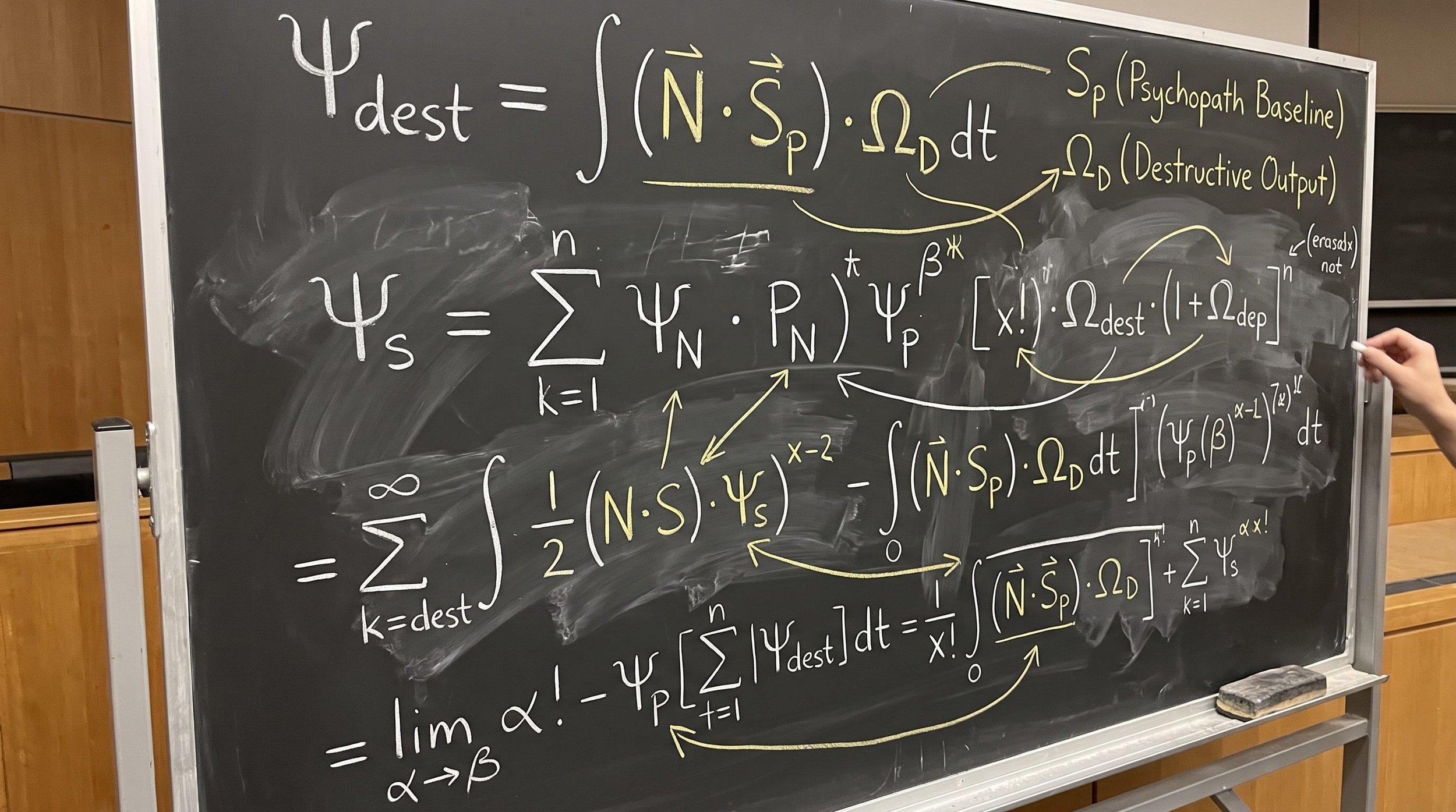
Let’s let Gemini do the math. And I’ll write the text.
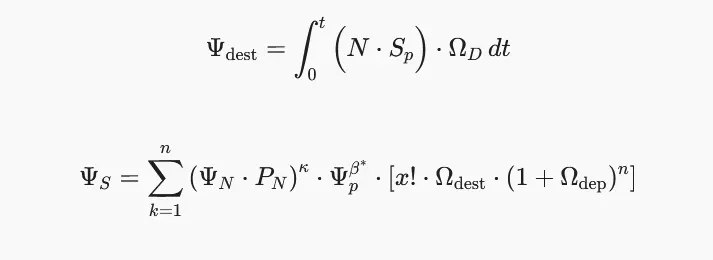
The Variables (The Anatomy of the Trap)
NN (The Human Biomass): Total population. Raw numbers. As N→∞N→∞, we don’t just get more poets; we scale the absolute volume of the outliers.
SpSp (The Predatory Vector): The genetic baseline of clinical psychopathy and sociopathy (estimated biologically at ≈1−4%≈1−4%). Crucially, this is a vector, not a scalar; it possesses both magnitude (intent) and direction (targets).
ΨSΨS (The Social Friction Coefficient): A multiplier representing the loss of community peer pressure and reputational checks. In a village of 150, ΨSΨS is high (friction suppresses deviation). In a modern city or digital space of 100 million, ΨS→0ΨS→0, allowing predators to operate with zero friction and infinite “burn-and-rebrand” potential.
ΩDΩD (The Leverage Function): Modern “Force Multiplication”—the ability of a single agent to impact millions via algorithmic networks, high-frequency trading, or defense-procurement lobbying. Back in feudal times, a warlord’s leverage was linear (Sword×ReachSword×Reach). In the techno-industrial age, it is exponential (esoftware×capitalesoftware×capital).
ΨdestΨdest (Total Destructive Schema): The aggregate volume of crazy, hubristic, and dangerous plots.
Mr. Sophist Academic Says (my best impression)
To lament the existence of all of the mad schemes prevalent in contemporary society is analogous to lamenting gravity itself (leaving flat Earth aside). This represents a fundamental category error, as demonstrated by mathematical analysis.
As the human population (NN) increases, it not only adds to the social structure but also extends the tail of the bell curve. With eight billion people globally, the number of extremely intelligent, zero-empathy agents now vastly exceeds the entire population of medieval Europe. These individuals are not exceptions; they are the statistically inevitable outcome. I say I am confident in this.
These individuals do not exist in isolation. When this natural surplus is combined with a near-zero friction coefficient (ΨS), urbanization and digital anonymization have effectively eliminated the community checks that previously constrained the predatory vector (S⃗p). In such circumstances, sociopathic agents are indifferent to exile; they simply change their IP address, launch another initial coin offering (ICO), or establish another AI safety startup purportedly to ‘save the future’ while simultaneously extracting value from the present and killing habitats.
The critical aspect of the formula is ΩD, representing the leverage inherent in the modern techno-industrial matrix. In previous eras, individuals with destructive intent were limited by physical constraints such as the strength of horses or the range of archers. In contrast, contemporary society has constructed cybernetic and financial architectures of immense scale, enabling a single high-functioning individual to influence global supply chains, weaponize drone fleets, or manipulate the pension funds of millions through complex derivatives. The capacity for harm is now systemic and global rather than local.
Integrating all of these factors over time (dt) results in Ψdest, the mathematically certain, exponential proliferation of destructive and grandiose schemes. Examples such as SBF, Theranos, and various reckless geopolitical initiatives are not ‘preventable tragedies’; rather, they represent the inevitable outcomes of an unbalanced equation.
Pursuing such projects, while seemingly irrational, is the logical consequence of the incentive structure embedded in the equation. When the system rewards unrestrained behavior over caution, only those unconstrained by conscience can maximize the leverage function (ΩD). Modernity has not descended into madness; rather, it has resolved the equation, positioning individuals as variables within its solution.
Whether civilization is becoming more sociopathic depends entirely on the chosen metric. From a clinical perspective, the proportion of individuals born without empathy or remorse has remained relatively constant throughout history. However, the organization of power, capital, and violence in modern civilization presents a markedly different scenario. Society has constructed mechanisms that amplify, incentivize, and normalize sociopathic behavior. While the prevalence of clinical sociopathy has not increased, the friction associated with exploitation has been significantly reduced, with bureaucratic processes replacing physical barriers. The Overton window has shifted so that extreme financial recklessness, excessive geopolitical intervention, and institutional decay are now widely accepted as normative.
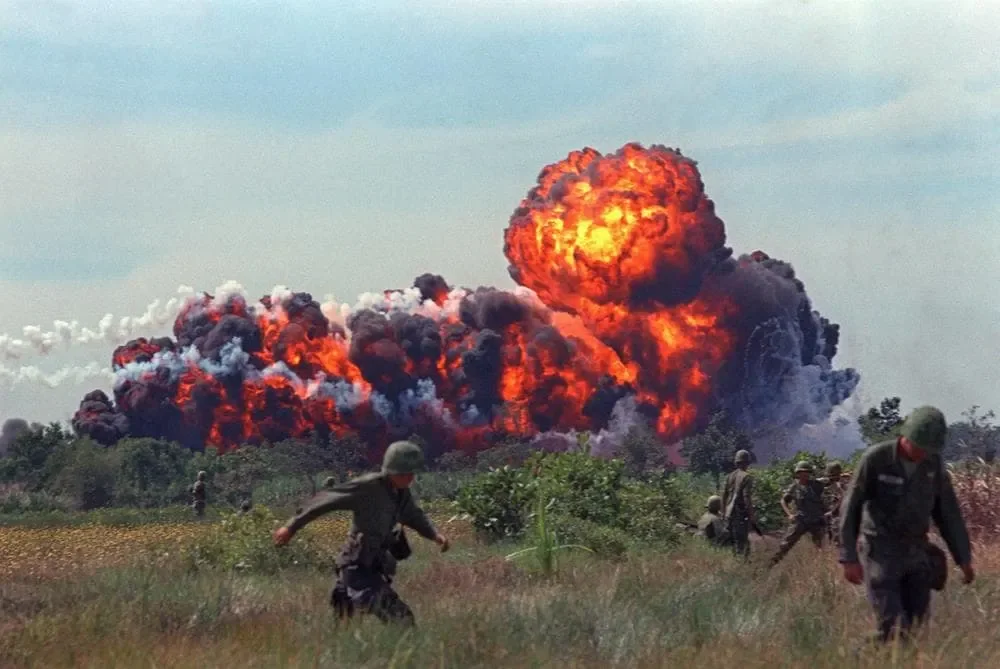
The Devil’s Brew, Our Creation, That Changed War, Now Drones, What’s next?
The Evolutionary Constant and the Mask of Sanity
Clinical psychiatry makes a very clear distinction between primary psychopathy (a distinct neurobiological deficit in affective empathy and fear conditioning) and the more general behavioral diagnosis of Antisocial Personality Disorder (often referred to as sociopathy in the vernacular). Hervey Cleckley laid the clinical groundwork for the condition in his classic 1941 book The Mask of Sanity, in which he described individuals with profound emotional poverty as capable of remarkable social mimicry and able to pass as quite normal. Robert D. Hare, the criminal psychologist, put the concept into practice with the development of the Psychopathy Checklist-Revised (PCL-R), which established that around 1% of the population meets the very strict clinical criteria for psychopathy. By contrast, the prevalence of more general antisocial personality traits is somewhere between 1-4%. In his clinical testimony and in his book Without Conscience, Hare described them as social predators who charm, manipulate, and ruthlessly plow their way through life, leaving a very wide trail of broken hearts and broken expectations in their wake, with absolutely no sense of guilt or regret. He was very emphatic about not equating the disorder with violent street crime, pointing out that not all psychopaths are killers. They are more likely to be the men and women you know who go through life with the utmost self-confidence but without a conscience at all.

There’s absolutely no biological basis for thinking that 21st-century cities have a higher baseline % of clinical psychopaths than medieval villages or Bronze Age empires (human genetics take tens of thousands of years to evolve, not centuries). In a seminal 1995 paper in Behavioral and Brain Sciences, evolutionary psychologist Linda Mealey explained this through negative frequency-dependent selection. Using evolutionary game theory and the Iterated Prisoner’s Dilemma to model human societies, she showed that “primary sociopaths” are essentially genetically programmed deceptive cheaters in a co-operative society. As long as cheaters make up only 1-3% of the population, social trust is high enough for them to exploit their neighbors without triggering a collective backlash. If the proportion of cheaters goes much higher than this, social trust breaks down, vigilance goes through the roof, and the cheater strategy no longer pays evolutionarily.
What varies enormously across the historical spectrum is not that baseline biological propensity but what Mealey called secondary sociopathy—the antisocial, callous behavior that can be elicited in otherwise perfectly normal people when their environment rewards defection, removes the accountability of reputation, and desensitizes them to the suffering of others. Clinical psychologist Martha Stout (author of The Sociopath Next Door) has made the same point: while only a tiny minority of people are entirely devoid of a conscience, a very large proportion of the population can be got to switch off their conscience when they’re operating under the auspices of institutional authority or ideology. Modernity hasn’t changed our DNA; it’s created an environment which systematically disables our empathic brakes.
From Feudal Brutality to the Executive Suite
The comparison between the medieval world and the modern techno-industrial world is one of the most striking in terms of which form of sociopath comes to the top and how far their influence extends. In the small, low-mobility world of the Middle Ages, social reputation was a very high-friction containment mechanism. Everyone knew everyone else’s pedigree and history, so a petty con man or a violent predator of a certain type couldn’t just go and hide. The low-status, violent sociopath was simply wiped out by blood feuds, public disfigurement, execution, or just dying in a fight or a battle. Once you had an agricultural surplus and started building hereditary monarchies and feudal systems, the sociopath of that type—born into the aristocracy or clever enough to take a throne— was in a position with no institutional restraints at all. All of medieval warfare and all of dynastic politics were about rewarding the most visceral cruelty, the most fear-inspiring men, and the most treacherous men. The warlord could have absolute power over life and death in the area, which was the extent of his reach in terms of horse-and-rider communication.
Techno-industrial civilization has turned the filter upside down. By monopolizing violence via modern policing, surveillance, and forensic science, the modern state is very good at getting rid of the impulsive, low-functioning sociopath (who makes up around a fifth to a quarter of the prison population). For the high-functioning, intelligent sociopath with good impulse control and a veneer of charm, however, corporate capitalism and the digital bureaucracy have become the most profitable of all human habitats. In their study, ‘Corporate Psychopathy: Talking the Walk’ and in their book Snakes in Suits, the organizational psychologists Paul Babiak and Robert Hare looked at 203 corporate professionals who had been selected for management development programs and found that a little over 4% met the clinical threshold for psychopathy (nearly four times the rate in the general population). Even more interesting was how the corporate institutions themselves rated them: psychopathic traits correlated positively with in-house ratings for charisma, strategic thinking, and creativity, and negatively with team cohesion and managerial responsibility. As Hare so succinctly put it, “Not all psychopaths are in prison. Some are in the boardroom.”

Within large institutions, the lack of empathy stops looking like a pathology and instead becomes cold rationality. Babiak notes that in a psychopath’s mental universe “people do not exist except as objects, targets and obstacles.” Hare goes on to say that no amount of training will enable a psychopath to actually understand the inner life of another person “except in a very vague intellectual, inferential sense.” The modern corporate structure is designed to insulate and reward this emotional vacuum. Fiduciary duties, quarterly earnings targets, limited liability, and the myriad of metrics we have to track all serve to diffuse moral responsibility across thousands of people. A medieval robber baron could only loot the peasants in the area he could reach in a few days’ ride, and he had to look them in the eye as he did it. The modern-day executive, financier, or technologist can sign off on a predatory financial instrument, an addictive engagement algorithm, or a toxic supply chain from a glass tower and affect the lives of millions worldwide while remaining completely insulated from the human cost.
TESCREAL Ideology, Financial Amnesia, and the New Gilded Speculation
This structural insulation becomes extremely dangerous when combined with messianic ideologies that repackage callousness as a form of cosmic virtue. Timnit Gebru and Émile P. Torres use the acronym TESCREAL (Transhumanism, Extropianism, Singularitarianism, Cosmism, Rationalism, Effective Altruism, and Longtermism) to describe the worldview that is so dominant among the Silicon Valley elite. Once you see it, you can’t unsee it, so I mention it in so many essays and posts. They argue that the various strands of this ideology treat the hypothetical utopia of AGI and the hypothetical apocalypse of AGI as “two sides of the same coin.” The very idea of the race to build AGI is used to justify a moral right to do whatever it takes to win, with the race to save trillions of hypothetical future digital beings as the justification for doing so. As Gebru and Torres put it, “the AGI race not only perpetuates these harms to marginalized groups but it does so whilst simultaneously depleting the very resources of those same groups in order to pursue the race.”
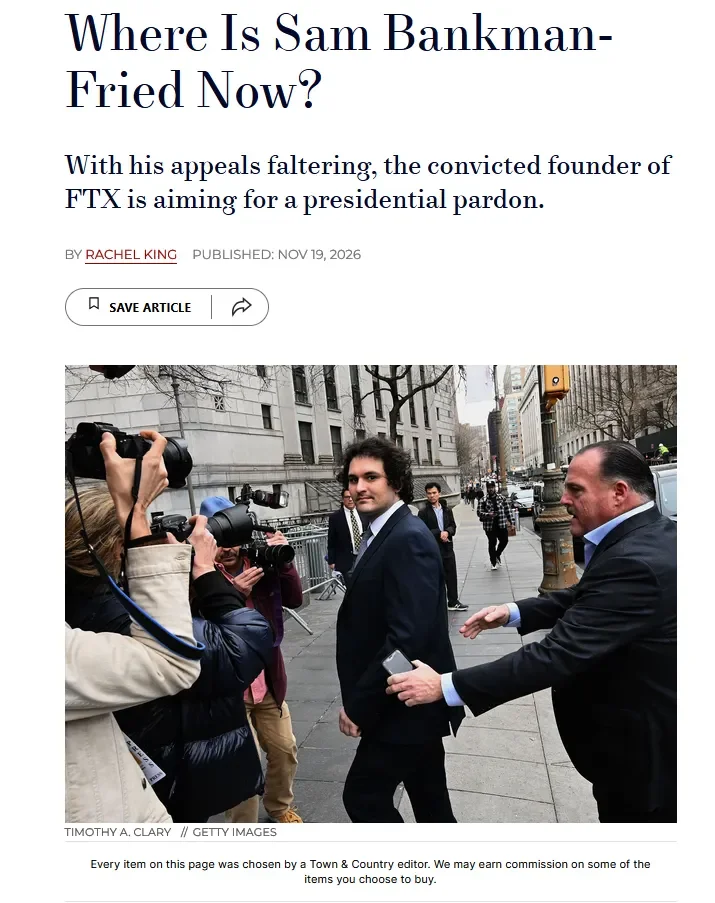
Sam Bankman-Fried is the paragon of the TESCREAL blend of utilitarianism and functional sociopathy. He was a master at the art of dressing up his utter disregard for the fundamentals of corporate governance in the language of Effective Altruism and “earning to give”, convincing the VC world, the regulators, and the media that his complete lack of regard for the rules of the game was simply the idiosyncrasy of a mathematical genius working to maximize the long-term survival of humanity. Prophecy, the book by Carissa Véliz that I have mentioned in my last few essays, has an excellent section on SBF and his brand of utilitarianism. FTX, in effect, was a classic shell game, drawing in billions of customer deposits to cover its trading losses and to buy political influence. The collapse of FTX was a stark reminder of how little institutional memory the financial markets have for the accounting frauds of Enron or the 2008 subprime mortgage and derivatives crash. When a new technological narrative promises exponential returns, the gatekeepers are all too happy to suspend disbelief and skepticism, confusing grandiosity with vision.
That very same collective amnesia is in full swing in the speculative mania around AI in the capital markets. Anthropic’s IPO on the Nasdaq in November 2026 was the largest IPO ever, raising about $81 bn and briefly reaching a two-trillion-dollar intraday valuation. That valuation came despite Anthropic reporting a net loss of $104 bn over the first nine months of 2026, driven by enormous compute spend and a raft of circular capital arrangements between hyperscale cloud and semiconductor players. The stock fell to its $83 offering price within 24 hours of going public, and the Nasdaq was down for the year as institutional insiders took profits and retail investors took the hit. Almost 20 years after the 2008 derivatives crisis supposedly taught the regulators the dangers of opaque leverage and too-big-to-fail concentration, the fundamental architecture is still the same. Private gains are socialized into public markets well before the economics of sustainability even begin to exist.
May the Plebs and Proles buy low and sell high and keep their crypto wallets secure.
Imperial Continuity, Algorithmic Warfare, and the Moving Overton Window
The same refusal to learn from history underpins contemporary Western statecraft and its approach to geopolitics. If the financial markets are afflicted by total amnesia, then the foreign policy establishment is in a state of self-referential delusion of the highest order. It plays the same interventionist game over and over again, across decades, whilst completely disengaging from the human wreckage it has left in its wake. The 70-year history of the US and the ‘West’s’ involvement with Iran is a case in point. It started with the 1953 CIA and MI6 coup, which overthrew Iran’s democratically elected Prime Minister, Mohammad Mossadegh, in order to secure Western access to the oil. It continued through the US providing intelligence and financial support to Saddam Hussein’s regime during the horrific Iran-Iraq War of 1980-1988. It went on to include the Iran-Contra arms trafficking scandals. Instead of facing up to the consequences of all those interventions, the US followed its chaotic exit from Afghanistan in 2021 with a massive joint strike with Israel against Iran in February 2026 (Operation Epic Fury), which saw the Supreme Leader Ali Khamenei assassinated and the Persian Gulf plunged into open war.
The Plebs and Proles always pay the bill.
Modern warfare combines this geopolitical disengagement with a level of technological abstraction that is truly staggering. The conduct of war is increasingly being run through automated target selection pipelines, autonomous drone swarms, and remote strike architectures which effectively turn human beings into thermal signatures and probability scores on screens thousands of miles away. When the act of killing is mediated through software interfaces spread across the international intelligence community, No one feels the full impact of actually pulling the trigger. The consequences of civilian casualties, the destruction of infrastructure, and the destabilization of entire nations become just collateral damage in the statistics that get reported in the press briefings. All the while, the defense contractors and the Silicon Valley types are treating the very heart of active war zones as live testbeds for their autonomous weapons systems. There is a deep and fundamental disengagement from reality within the Western political establishment and its regional proxies. Trillion-dollar deficits, broken alliances, and endless cycles of regime change are treated as day-to-day administrative burdens rather than signs of a system in fundamental and irreversible decline.
Give our leaders bronze age swords and shields and make them fight their wars. They can apply their Generalship to their children.
Spectators at the Collapse: From Prestige Streaming to Algorithmic Slop
Perhaps the most disturbing thing about our time is not that the powerful act without any conscience and are rewarded for it, but rather how easily the public has been conditioned to consume its own systemic betrayal as entertainment. Political theorists have the concept of the Overton window, which describes the range of policies and behaviors which a society will accept at any one time. In our time, that window doesn’t just drift across the generations; it jumps around in months. It’s all lubricated by a media system which takes every moral disaster and turns it into intellectual property.
As soon as there’s a major white-collar fraud or institutional failure, the cultural machinery kicks into gear and turns it into a book, a documentary, a series. The accounting frauds of the early 2000s gave us Alex Gibney’s Enron: The Smartest Guys in the Room, which was all about the executives’ sociopathic contempt. The 2008 subprime mortgage and derivatives meltdown gave us Charles Ferguson’s Inside Job and Adam McKay’s The Big Short, which both were about the complete and utter rot of Wall Street and the regulators. When the “fake it till you make it” culture of Silicon Valley finally reached the point of medical fraud at Theranos, we had John Carreyrou’s Bad Blood, Gibney’s documentary The Inventor: Out for Blood in Silicon Valley, and Hulu’s The Dropout. All of that in the same vein. November 2026, the very week of Anthropic’s record-breaking IPO, Netflix released The Altruists, an eight-part limited series with Anthony Boyle as Sam Bankman-Fried and Julia Garner as Caroline Ellison. It was the FTX fraud turned into a bingeable series.
I love this scene and stick it in essays all the time.
Under the surface of prestige streaming is an even more corrosive layer: an unending stream of algorithmic “slop” videos, memes, and short-form satire that mocks, in the most pointed way, the sheer blatancy of political corruption, warmongering, and financial grift. It’s a way of giving the viewer a cheap hit of cynical catharsis, without requiring any actual collective action or structural change. Forty years ago, media theorist Neil Postman warned in Amusing Ourselves to Death that a society is destroyed not by what it hates but by what it loves to watch. When serious public discourse is reduced to vaudeville and outrage becomes a spectator sport, that’s exactly where we are. (I’ll repeat this stuff as long as I have to—until my death, most probably—and most folks still won’t get it; I mean, don’t want to get it.) We’ve got books being published, documentaries winning awards, streaming dramas topping the charts, and algorithmic feeds constantly mocking the madness of the ruling class. TikTok, TikTok. And yet nothing changes at all. A civilization doesn’t need to breed more clinical psychopaths in order to behave in a sociopathic way as a whole. All it needs is for its elites to be insulated from any real consequence and for its citizens to be kept amused. As long as the decline of civilization is well produced, well-ironic, and endlessly entertaining, we’re all perfectly content to watch it stream.
If I were a professor of entertainment at some Ivy League institution, I’d write a two-semester course on the Netflix series, The Body. It’s deep—really deep—and wildly entertaining.
We, the fortunate dwellers of the Anglosphere and the mythical West, live in remarkably entertaining times.